Democracy and Culture
Section editor: Adrian-George Matus
While the meaning of culture may be interpreted in many different ways, culture can be considered one of the finest barometers of democracy. This section therefore focuses on culture’s connections to politics and influence on democratic dynamics. Specific foci include current cultural trends, with a special emphasis on youth cultures, and the political values they express; ongoing debates concerning culture and democracy in Europe and worldwide; and the role of education, particularly civic education, in fostering democratization.
Former section editor: Katarzyna Krzyzanowska (2021-24)
Democracy and Culture
Stiliagi and Soviet Masculinities- A Conversation with Alla Myzelev
In our latest episode, we discuss with Alla Myzelev about the stiliagi, a flamboyant youth subculture that emerged in the late Stalinist and early post-Stalinist Soviet Union. Myzelev situates the stiliagi not simply as fashion-conscious rebels, but as a distinctly embodied and aesthetic form of dissent that challenged dominant socialist norms of respectability, discipline, and masculinity. Through their brightly coloured clothing, enthusiasm for jazz, and stylised modes of self-presentation, stiliagi exposed the fragility of Soviet ideals of the “proper” socialist male citizen. Rather than overt political opposition, their subversion operated through taste, leisure, and the body, revealing how cultural practices could quietly unsettle authoritarian norms even in highly regulated societies.
8.01.2026

Democracy and Culture
Five Books on Democracy and Culture in 2025
In 2025, our book coverage aimed to explain the long historical processes behind today’s anxieties: environmental breakdown, wars, revolutions and democratic backsliding. These books revisit settled historical narratives and brought into sight systemic invisibilities. They show how crises rarely arrive unannounced. Instead, they accumulate quietly, sustained by myths and convenient misunderstandings.
7.01.2026

Democracy and Culture
Five Ideas Books in 2025
The five titles below are a snapshot of the works we covered in the History of Ideas section at RevDem over the past year. They share a common ambition: to reopen settled stories about democracy, political thought, and crisis by recovering neglected traditions, reframing canonical figures, and widening the conceptual and geographical horizons of our disciplines. Rather than offering neat solutions, each invites us to rethink what democracy and politics have been, and what they still might become.
6.01.2026

Democracy and Culture
Gateway Berlin: Krasznahorkai Awarded the Nobel Prize in Literature 2025
On October 10, 2025, the Swedish Academy announced László Krasznahorkai as the recipient of this year’s Nobel Prize in Literature. A representative reached the audibly flustered laureate by phone in Frankfurt, Germany. Although he had been considered a candidate for a while, the honor humbled a writer whose childhood in 1950s Hungary hardly predicted his rise to global fame and this distinction at the age of seventy-one.
10.12.2025
Democracy and Culture
Social Media, AI-Chatbots and the Death of the Evening News: How to Restore Trust in a Fragmented Media World – A Conversation with Raluca Radu
In a conversation for the Review of Democracy, Raluca Radu explains how social platforms like TikTok, WhatsApp groups, and AI-driven chatbots reconfigure the trust towards information. As Raluca Radu clearly emphasizes, COVID-19 marked a shift in media consumption. During the pandemic, the main source of information became the short-form video content on platforms such as TikTok. Some newsrooms recognized that their audiences migrated elsewhere and rushed to follow. They tried to adapt to this changing landscape by establishing social media presence. By now, social media is not only an additional channel of dissemination but, in some cases, the only way to reach citizens who do not read traditional websites or watch TV. Thus, social media and algorithms redefine the public sphere worldwide.
8.12.2025

Democracy and Culture
Book Presentation: Negotiating In/Visibility: Women, Science, Engineering and Medicine in the Twentieth Century
The Review of Democracy organized a book presentation of ‘Negotiating in/visibility: Women, science, engineering and medicine in the twentieth century’, edited by Amelia Bonea and Irina Nastasă-Matei, published by Manchester University Press this year. This edited volume combines individual and collective portraits of women scientists in engineering and medicine, set in the broader context of institutional structures, STEMM, education, activism, and science policy. As the foreword emphasizes, statistics are revealing: only ten female Nobel Prize laureates in science in the twentieth century, representing only 2.3% of the total awardees (xxvii). Laboratories were among the most exclusionary sites of professional science for women in the twentieth century, as several chapters discuss (14). In turn, mobility, as well as personal and professional networks, played a strong role in facilitating women’s access to scientific careers and recognition (18-19). The contributions to science [...]
4.12.2025

Democracy and Culture
Is Education Always a Form of Dominance?
The state’s intervention in education is rarely an innocent enterprise. Some approaches have an optimistic undertone: they favor the provision of mass education as a policy tool to improve the skills of the population. The reasons that led to the development of primary education, in this regard, are democratization, industrialization and military rivalry. Other intellectuals are more suspicious about the altruistic premise of mass education.
21.11.2025
Democracy and Culture
Georgia’s Higher Education ‘Reform’: The Capstone of an Authoritarian Turn
Georgia’s government has announced a sweeping reform of higher education that pulls more decisions under central control, trims academic diversity, and limits international engagement. This is not an administrative adjustment—it’s a decisive move to bring one of the country’s last relatively plural arenas entirely under political authority. Sandro Tabatadze explains what is at stake.
31.10.2025

Democracy and Culture
Faces of Krasznahorkai
László Krasznahorkai’s complex world is rooted in Central Europe and its literatures, where absurdity and beauty coexist, yet circulate globally. Krasznahorkai’s vision resists mainstream simplification and confronts the “stupidity” of modern civilization. Through dialogues between literature, film, and visual arts, Imre József Balázs traces how an artist’s work transforms despair into a haunting affirmation of art’s enduring power.
28.10.2025

Democracy and Culture
Book Presentation: Flowing Progress: Transforming the Danube through Infrastructure
The Review of Democracy and CEU Review of Books organized this roundtable to present the book “Flowing Progress, Transforming the Danube through Infrastructure,” edited by Ștefan Dorondel and Luminița Gatejel, published at Purdue University Press this year.
24.10.2025

Democracy and Culture
Negotiating Sexuality in Socialist Poland: In Conversation with Anna Dobrowolska
Anna Dobrowolska’s new book Polish Sexual Revolutions. Negotiating Sexuality and Modernity behind the Iron Curtain, published at the Oxford University Press this year, reveals fresh perspectives in the scholarship about the socialist states. In our podcast, she explains how Poland and Eastern Europe developed their own distinct approaches to sexual modernity under state socialism. While Western observers assumed sexual liberation was incompatible with communist rule, Poland was quietly developing its own sophisticated approach to sexual modernity. In her book, Anna Dobrowolska aimed to map these differences and nuances. Throughout the conversation, we learn that the conventional narrative of state oppression versus societal resistance proves to be inadequate when examining Poland’s sexual revolution. Dobrowolska’s archival research reveals a complex ecosystem of actors: sexologists, journalists, cultural institutions, who negotiated sexual discourse largely independent of [...]
20.10.2025

Democracy and Culture
Krasznahorkai and the Art of the Voice
The Nobel Prize committee is possibly the best-known summarizer of entire literary oeuvres in the world, as it purposefully creates one-liners to justify its selection for each year, something that is then picked up and repeated by news organizations all around the globe. This year, the award was given to the Hungarian writer László Krasznahorkai “for his compelling and visionary oeuvre that, in the midst of apocalyptic terror, reaffirms the power of art.” This both makes and misses the point spectacularly.
17.10.2025
Democracy and Culture
The Hungarian Border That Took Years to Draw
Borders are rarely born in conference halls. As the newly edited book The Disputed Austro-Hungarian Border: Agendas, Actors, and Practices in Western Hungary/Burgenland after World War I, published this year by Bergahn Books shows that the borders are created by wars and conflicts and then changed by clerks, soldiers, smugglers and villagers trying to make sense of a new world order. By focusing on one of the seemingly post-1918 quieter frontiers, the line separating Austria from Hungary, the book challenges the narrative that the Treaty of Trianon neatly decided everything with a stroke of the pen.
16.10.2025

Democracy and Culture
The Politics of Fiction: The Author of Satantango wins the Nobel Prize in Literature
Long considered as one of Europe’s most formidable writers, Krasznahorkai’s winning of the Nobel Prize reveals the long process that writers from East-Central Europe need for recognition. His visionary and unsettling work had an almost cult-like group of readers in Hungary already in the 1980s, but the international recognition arrived slowly. Yet through good translators and change of focus, his world of decay and irony gradually claimed its place in the global literature.
15.10.2025

Democracy and Culture
Never Waste a Good (Constitutional) Crisis
The saying goes that you should ‘never waste a good crisis’. The greatest crisis is certainly a constitutional one, and therefore the greatest opportunity. The eighteenth and nineteenth centuries were pivotal in the United States of America, as the country expanded in geography and population, leading to multiple state-level and national constitutional crises. Marcus Alexander Gadson’s latest publication Sedition unpacks these frequent crises, their underlying dynamics and the elite groups seizing opportunities for personal gain, with repercussions for modern-day politics.
2.10.2025

Democracy and Culture
A Polyphonic Chant?
In a world convoluted by a pandemic, questions of grief, identity, and resilience have taken on a polyphonic song, dedicated to women navigating the layered injustices of gender, race, and cultural alienation. Dream Count, Chimamanda Ngozi Adichie’s lockdown memoir hums an existential question just right at the beginning in the opening sentence: “I have always longed to be known, truly known, by another human being” (3), which unveils the subtle theme of the novel: the disconnection between humans as an ontological flaw. Therefore, one could argue that the polyphonic novel contributes to the diasporic estrangement phenomenon not only through grand proclamations of the souls searching for meaning in a solitary marathon but through the everyday rhythms of loss and love.
24.09.2025

Democracy and Culture
When Do Courts Matter? The Rights Enforcement between Aspirations and Inequalities
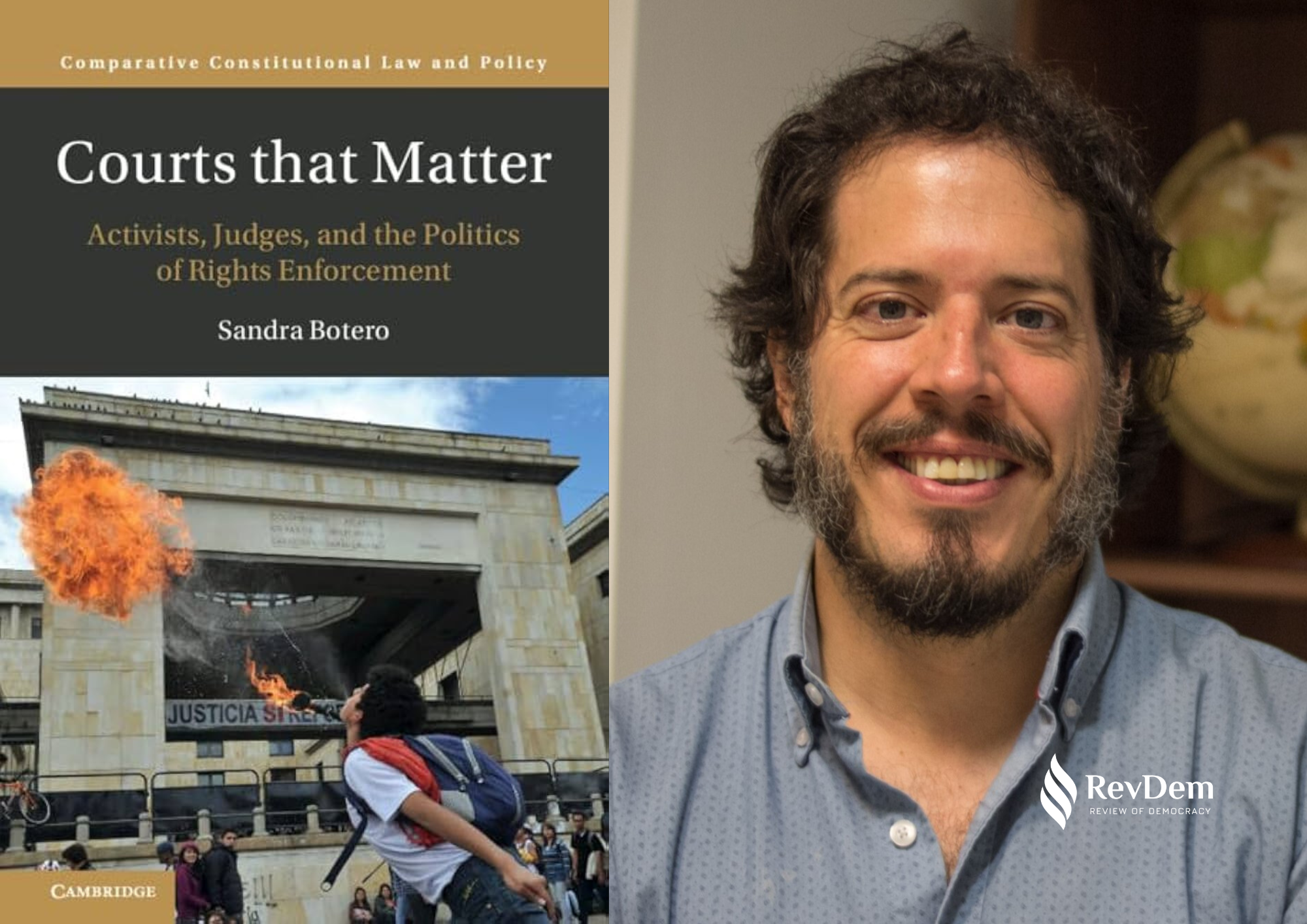
The fields of comparative constitutionalism and socio-legal politics will greatly benefit from political scientist Sandra Botero’s Courts That Matter. At its core lies a question that has long haunted scholars, practitioners, and activists: can courts really advance socioeconomic rights, or are they condemned to issue aspirational decisions that fail to alter entrenched inequalities? Botero tackles this debate directly, weaving together rich empirical evidence from Argentina and Colombia with comparative insights from India.
16.09.2025
Democracy and Culture
Of Grand Designs and Ever Closer Unions: The Unfinished History of European Integration
„Le nationalisme, c’est la guerre”. These words, famously uttered by François Mitterrand in his address to the European Parliament from 1995, are invoked by Frans Timmermans, the former Vice-President of the European Commission, in the foreword to The Unfinished History of European Integration (7). At a time of “the end of history,” when calls for strengthening Europe’s unity and strategic autonomy as the only means of survival in an increasingly unstable world are met with nationalist backlash, studying the history of European integration – and drawing lessons from it – seems pertinent as ever.
9.09.2025

Democracy and Culture
Scripts of Revolutions: A Conversation with Dan Edelstein
In this episode of Democracy and Culture, we speak with Dan Edelstein, William H. Bonsall Professor of French at Stanford University, about his new book The Revolution to Come: A History of an Idea from Stasis to Lenin (Princeton University Press, 2025). His academic investigations range across literary studies, historiography, political thought and digital humanities. Throughout our conversation, we focus on providing a new understanding of the concept of revolution. In his latest book, by tracing the conceptual distinction between stasis and metabolē through Roman, medieval, and Renaissance thought, he recovers the overlooked role of Polybius in shaping the constitutional imagination of early modern Europe.
8.09.2025

Democracy and Culture
Curating Europe’s Memory: A Conversation with Simina Bădică about the House of European History
In this episode of Open Space(s) series, the Review of Democracy brings to your attention one of Europe’s most ambitious cultural institutions: the House of European History. Founded by the European Parliament in 2017 in Brussels, this unique institution explores Europe’s past from a transnational perspective and provides a platform for debating shared memory. The House of European History curates exhibitions, fosters debates, and research the shared European histories.
30.06.2025

Democracy and Culture
Shaping the Culture of a City: A Conversation with Bohdan Shumylovych
In this episode of Open Space(s), the Review of Democracy focuses on Lviv, where the Center for Urban History offers a unique institutional model at the intersection between memory, space, and digital innovation. Founded in 2004 and located at 6 Bohomoltsia Street, Lviv, the Center for Urban History has become a vital node in public history and digital humanities. It defines itself as a hybrid institution with a hybrid audience.
20.06.2025

Democracy and Culture
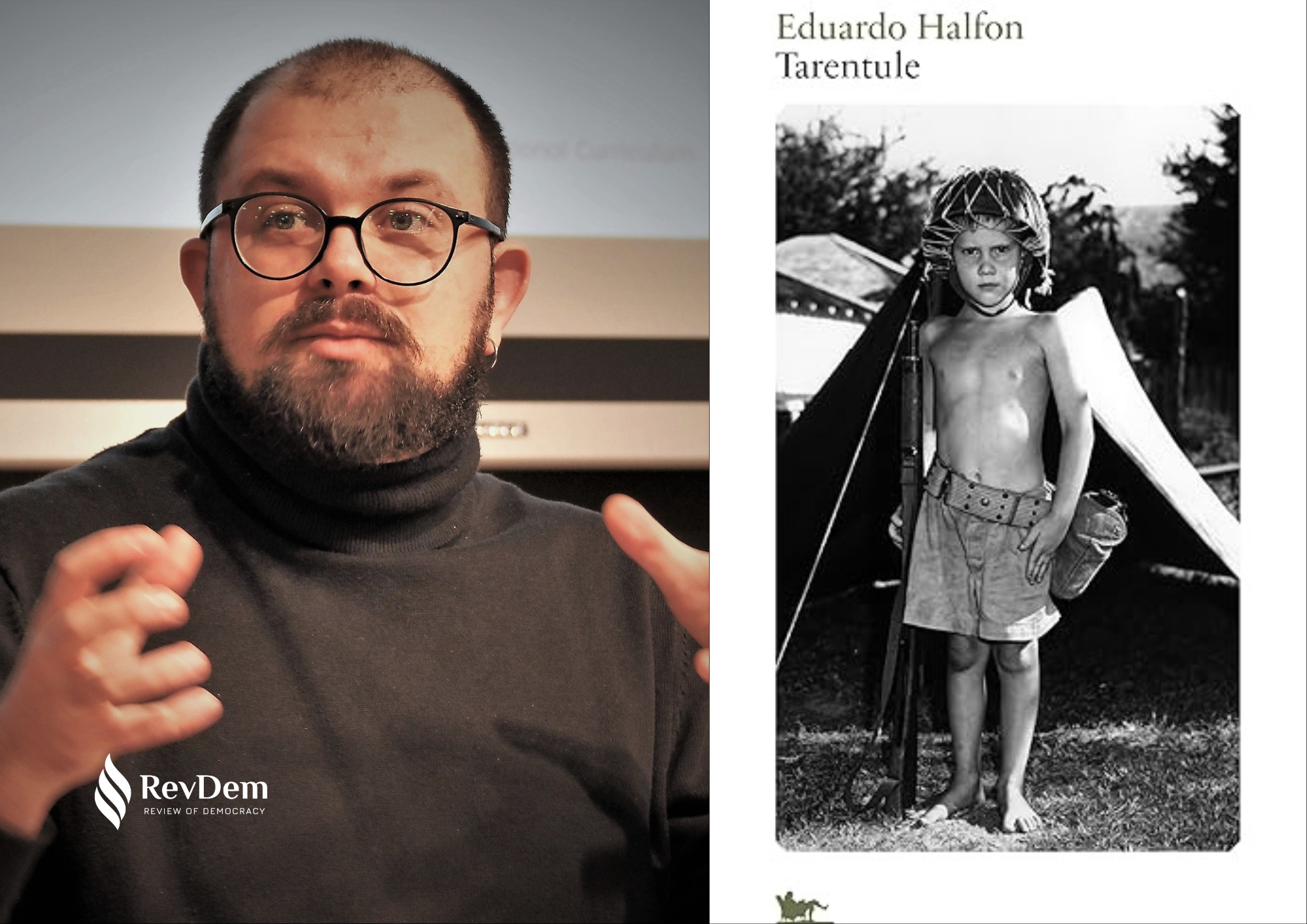
Is Experiential Learning Always the Solution? Eduardo Halfon’s Warnings on the Limits
Adrian Matus reviews Eduardo Halfon’s Tarentule, Quai Voltaire, Paris, 2024, 220p. (originally published in Spanish as Tarántula, Libros del Asteroide, 2024, 184 p.) Adrian Matus is an editor at the Review of Democracy. How should we engage young generations with the traumas of the twentieth century? Pedagogues were aware for decades, if not centuries, that traditional formal reading assignments often fail to convey the emotional gravity of historical events. In this context, experiential learning through re-enactments or simulations seems to be a relevant pedagogical alternative. Historians, museum practitioners, teachers, and non-formal educators use this approach to convey empathy and historical responsibility. Yet, the question that naturally arises is: are there any limitations of this approach? To what extent could experiential learning obscure the meaning of sensitive topics rather than reveal them? Eduardo Halfon’s Tarentule offers an unsettling answer to this [...]
13.06.2025
Democracy and Culture
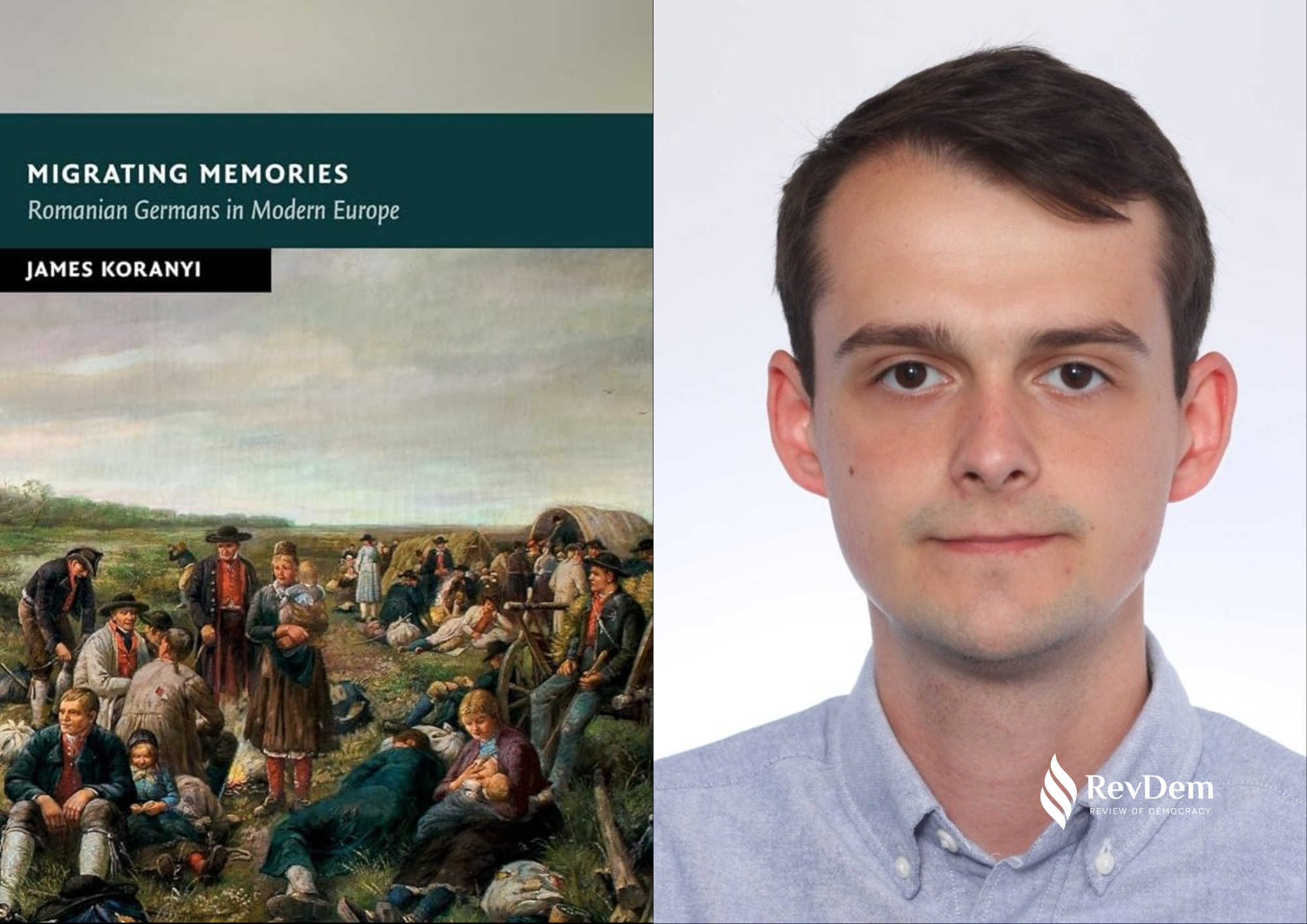
(Re)Making Romanian Germans on the move
The history of the German minorities in Eastern Europe in the 20th century, especially after the Second World War, has been a central focus of historians in recent decades. Their works have generally covered the political history of German minorities between the two world wars, their relationship with National Socialism during the Second World War, and finally, the disappearance of the communities from the region.
6.06.2025
Democracy and Culture
Citizen Marx: A Book Discussion with Bruno Leipold
This book discussion featured Citizen Marx, a groundbreaking book by Bruno Leipold that reinterprets Karl Marx’s political thought through the lens of republicanism. About the Book: Citizen Marx In Citizen Marx, Bruno Leipold challenges conventional interpretations of Karl Marx, presenting a compelling case that Marx’s thought was deeply shaped by republican ideals. Far from being anti-political, Marx envisioned democratic institutions as essential to overcoming the domination inherent in capitalist societies. Tracing Marx’s evolving relationship with republicanism—from early democratic activism, through critical rethinking during his communist transition, to his embrace of popular control after the Paris Commune—Leipold positions Marx as a theorist who placed democratic politics at the core of socialism. About the Author: Bruno Leipold is a political theorist and historian of political thought specialising in Karl Marx, the republican tradition, and theories of [...]
19.05.2025

Democracy and Culture
Unfinished Revolutions: Decolonization and Democracy in a Globalizing World
The title of Martin Thomas’s The End of the Empire and the World Remade: A Global History of Decolonization signals the ambitious and unconventional nature of his now widely acclaimed project. From the outset, Thomas frames decolonization not simply as a linear dismantling of empires, but as a complex and often contradictory process—one that simultaneously disintegrated old hierarchies and gave rise to new, and sometimes equally exclusionary, national orders. His emphasis on decolonization as a reintegrative force highlights how the collapse of imperial structures often yielded unstable, improvised formations of authority and belonging.
2.05.2025

Democracy and Culture
Theoretical Pluralism Meets Western Myopia: The Age of “Global” Populism
The re-election of Donald Trump in 2024 provides a clear answer to the question raised in Still the Age of Populism? Not only does the age of populism persist, but its influence on global politics appears stronger than ever. From Washington to Warsaw and Brasília to Budapest, populist leaders continue to reshape political landscapes. This edited volume takes up the challenge of understanding populism’s enduring appeal, bringing together an impressive array of scholars to advance our understanding of this complex phenomenon.
25.04.2025

Democracy and Culture
Neofascism and the Far Right in Brazil
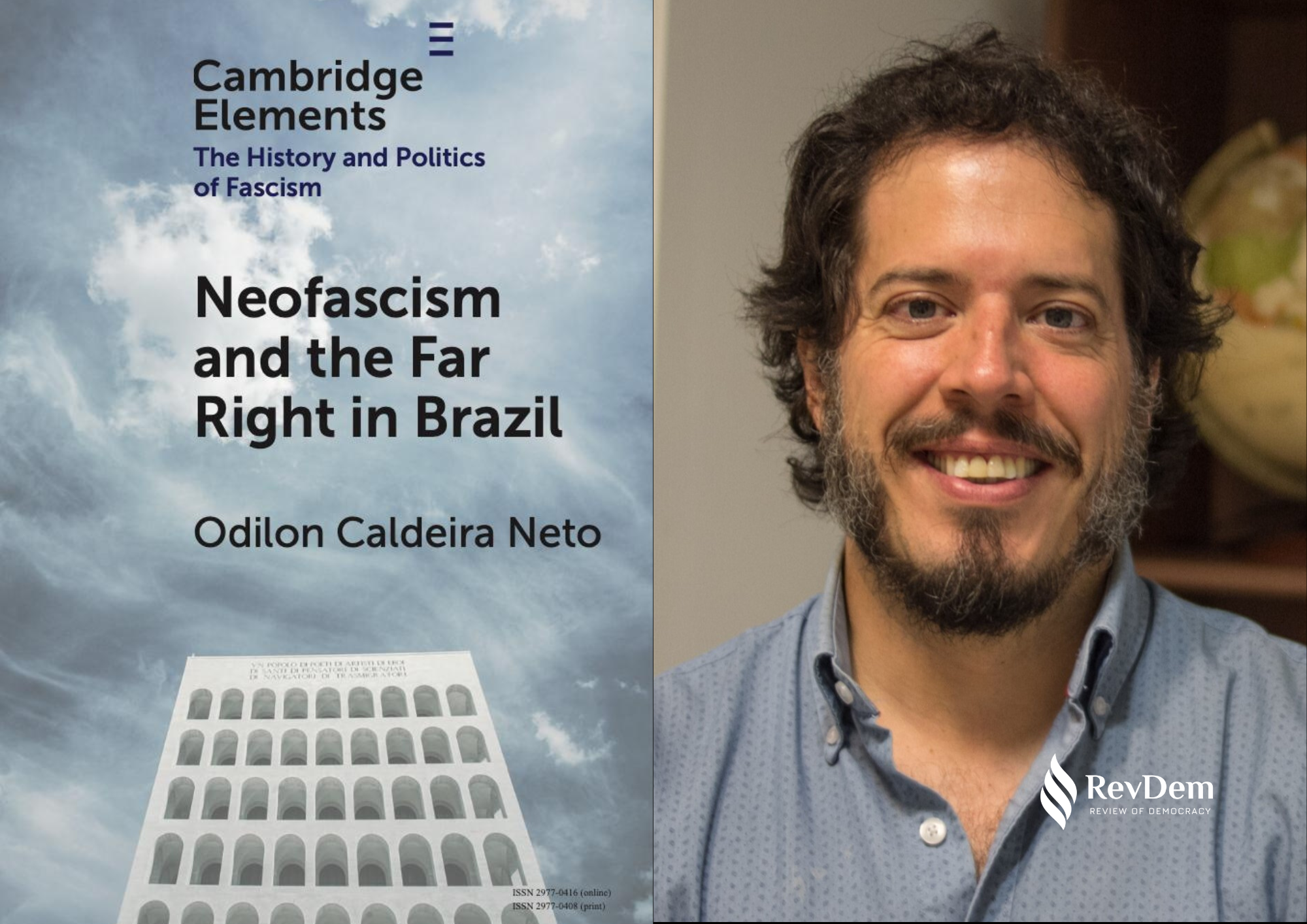
The resurgence of far-right ideologies across the globe has forced democracies to reckon with the continued appeal of authoritarian political cultures. In this context, Brazil has emerged as a crucial case for understanding the entrenchment of radical right-wing ideologies beyond the global north. Odilon Caldeira Neto’s “Neofascism and the Far Right in Brazil” intervenes in this debate by historicizing and contextualizing the evolution of Brazilian neofascism, tracing its roots, ruptures, and resurgence. Odilon Caldeira Neto is a historian at the Federal University of Juiz de Fora (Brazil), where he is a leading scholar on understanding the Brazilian far right. His authority in fascist studies, especially in the Latin American context, makes his analysis valuable for those interested in understanding current political developments in the region in general and Brazil in particular
17.04.2025
Democracy and Culture
America’s Discontent with Democracy: What means patriotism in the 21st century?
There was a time when America's brightest minds worked hand in hand with the government to create world-changing technologies. DARPA and other agencies helped build the internet, GPS technology, search engines, and self-driving cars—the very foundation of Silicon Valley’s dominance. These innovations fueled economic prosperity and solidified the United States’ global standing.
11.04.2025

Democracy and Culture
Historical Archives of the European Union – a Space of Knowledge Production
Archives are vital for knowledge formation. Historians and social scientists rely on these spaces to shape new narratives and question the past. Yet, archives often seem to be unveiled in a sort of mystery, which might be partly due to the access restrictions for the specialists and broader public alike. However, not all the archives follow this restrictive approach. On the contrary, many institutions started to favour openness and transparency. Rather than limiting access for the researchers and the larger public, they encourage interactions on different levels.
9.04.2025
Democracy and Culture
Bob Dylan’s Hagiography
Nine years after Bob Dylan received the Nobel Prize in Literature, the volume of literature dedicated to better understanding his life and work has grown exponentially. A certain and undeniable fascination for the emblematic American musician and writer haunted literary critics, historians, movie directors and journalists alike. At the same time, this editorial increase is not only intellectually stimulating but also a marketable commodity that always attracts a large public segment. The most recent example in this regard is James Mangold’s movie A Complete Unknown. In this context, Jeffrey Edward Green’s book Bob Dylan- Prophet Without A God seems to be determined by these two vectors: fascination and appeal to the public. Thus, it raises a crucial question: to what extent does this work offer a new perspective into Bob Dylan’s persona, or does it merely repack interesting ideas for a broader audience?
4.04.2025

Democracy and Culture
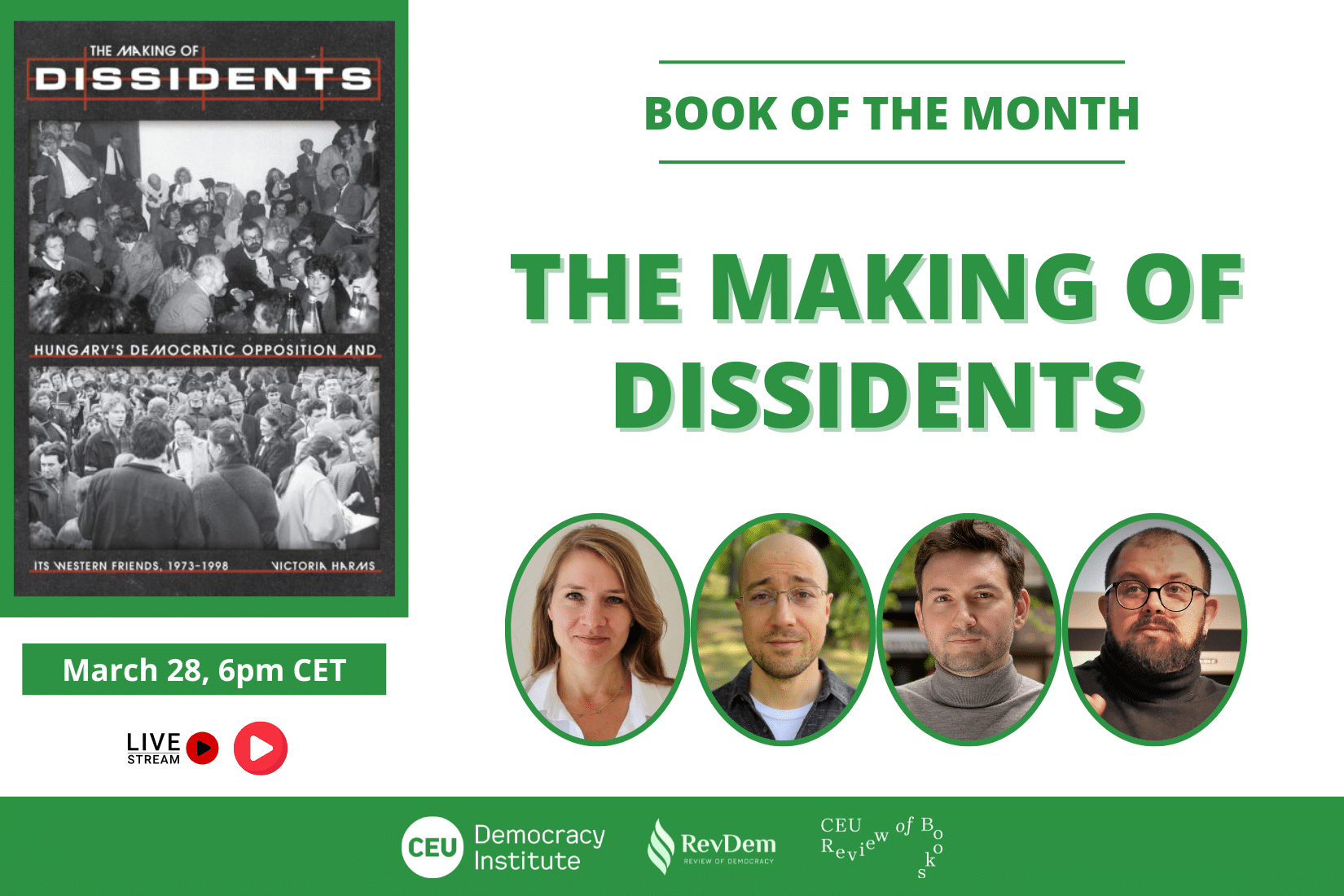
Book of the Month: The Making of Dissidents
The second session of the Book of the Month series, organized jointly by CEU Review of Books and Review of Democracy, presents ”The Making of Dissidents: Hungary’s Democratic Opposition and its Western Friends, 1973-1998″, written by Victoria Harms and published by University of Pittsburgh Press in September 2024. The panelists discussed the novelty of the approach, as The Making of Dissidents tracks the complex transnational networks that shaped the Hungarian and East-Central European dissidence. By using a fascinating set of primary sources, Victoria Harms offers a fresh perspective on the emergence of dissident networks, the ideological congruences and distinctions of the dissidents that in the 1990s shaped the political discourse. PARTICIPANTS: Author: Discussants: Moderator:
29.03.2025
Democracy and Culture
“Lawyerization” of Universities in the USA – Louis H. Guard and Joyce P. Jacobsen on the ‘New Era of Higher Education’
Higher education has never been free from controversies, nor from political pressures. 2024 saw a renewed surge in public interest in how universities operate, as students and staff openly took positions on the Gaza war. Thus, alongside heated discussions about geopolitics, stakeholders and the broader public debated the role of universities and how to respond when they are perceived to fall short. In this context, some questions arise: What are the limits of academic freedom? What does it mean for a university to guarantee a space safe from discrimination? Who is to decide or act (and how?) on these issues? While the book All the Campus Lawyers is not a direct reply to these questions, it explores how regulatory scrutiny of higher education plays out in a democracy, intersecting with broader social and political issues – and hence emerges as a timely contribution to the discussions on the nature and future of higher education.
28.02.2025

Democracy and Culture
Book of the Month: Essays on Democracy at War
The first session of the new Book of the Month series by the CEU Review of Books and the Review of Democracy presented the essay collection Invisible University for Ukraine: Essays on Democracy at War, edited by Ostap Sereda, Balázs Trencsényi, Tetiana Zemliakova, and Guillaume Lancereau, published by Cornell University Press in 2024. The session was co-hosted by Visible Ukraine. The Invisible University for Ukraine (IUFU) is an initiative of Central European University, and is implemented in cooperation with the CEU Democracy Institute and Ukrainian and EU-based university partners. It was launched in the spring of 2022 and by now, it involved nearly 1000 Ukrainian students who have taken online and on-site courses. The program aims to help sustain intellectual growth despite the ongoing war and provide a framework to push back against autocracy. It was recognized by the McCourtney Institute for Democracy at Penn State University with the 2024 Laurence and Lynne Brown Democracy [...]
20.02.2025

Democracy and Culture
Disinformation in Africa: A Distinct Landscape Compared to Global Trends?
Digital Disinformation in Africa is a book about how disinformation through digital tools is playing an increasing role on the African continent in distorting elections, inflaming internal conflicts and disrupting crucial policy debates across the continent on issues such as vaccination, gender and reproductive rights. This book is part of the Digital Africa series, which studies the effects of new technologies on the African continent. On one hand, these technologies have certainly facilitated the exercise of democratic rights and freedoms; on the other hand, they have been used by repressive regimes to restrict those rights.
14.02.2025

Democracy and Culture
Exporting Medical Expertise During the Cold War: Medical Humanitarianism, Ideological Expansion or Pragmatism? A Conversation With Bogdan Iacob
The medical aid programs established by socialist states nuance the Cold War dichotomy regarding the transfer of knowledge. The latest RevDem Democracy and Culture podcast with Bogdan Cristian Iacob explores the legacy of socialist regimes in the transnational circulation of expert knowledge during the Cold War, with a particular focus on medical aid.
10.02.2025

Democracy and Culture
An Uneven “History of Ideas”? – David Runciman on Equality, Justice, and Revolution
David Runciman’s History of Ideas is a ‘foxy’ book, in several senses. First, it is foxy in the Berlinian sense, as it covers a broad selection of intellectual currents. In a 1953 essay, Isaiah Berlin famously addressed the question of monism and pluralism of values by contrasting the fox and the hedgehog from a fable by Archilochus. ‘Foxes’, historical examples of which include Aristotle and Shakespeare, know many things, while ‘hedgehogs’, such as Plato or Dante, know one big thing. Secondly, The History of Ideas is ‘foxy’ in advancing Isaiah Berlin’s core argument about value pluralism. Like Berlin’s fox, it eschews monolithic truths in favor of moderation in exploring the messy realities of political and social life.
21.01.2025

Democracy and Culture
Five Books on Democracy and Culture in 2024
Here are five book recommendations on democracy and culture themes published in 2024 that I found important and outstanding.
10.01.2025

Democracy and Culture
Redefining International Law: The Socialist Influence on Global Justice
Raluca Grosescu and Ned Richardson-Little’s new edited volume Socialism and International Law, published by Oxford University Press this year, challenges two dominant historical narratives of the development of international law: what we might call the orthodox view, which holds that Western liberal countries led the evolution of international law, as well as the opposing one that emphasizes the challenges of Third World post-colonial countries to Western hegemony. The book does so by explaining the role, contributions, and initiatives of socialist countries and socialist intellectuals in developing international law. Socialist states made important contributions in several relevant areas, such as defining the crime of aggression, supporting national self-determination as part of a sustained campaign seeking to dismantle colonialism, and advocating for the criminalization of racial discrimination and apartheid.
12.12.2024

Democracy and Culture
Against Presentism: Post-National Constitutionalism as a Critical-Emancipatory Project
The book Postnational Constitutionalism: Europe and the Time of Law is a novelty for those who eagerly look for creative approaches to the quandary of constitutionalism beyond the State. According to Paul Linden-Retek, post-national constitutionalism is a critical-emancipatory project, consisting of a re-imagination of identity and self-authorship over time. For this to happen, constitutional open-endedness is necessary, particularly in the case of the European Union (EU).
29.11.2024

Democracy and Culture
Beyond the Statistics: Against the Concept of Bare Life in Cinema and Graphic Novels
The journeys of African migrants striving to reach Europe by crossing the Mediterranean Sea have dominated the headlines for more than a decade. On one hand, the nationalist and right-wing populists, such as Meloni’s government, have exploited this tragedy to create anxieties about immigration, while humanitarian groups have blamed economic failures and human rights abuses as key factors resulting in the deaths of thousands. In this heated debate between populists and human rights activists, cultural products aim to humanize the migrant experience. Matteo Garrone’s movie Io Capitano (2023) as well as Eoin Colfer, Andrew Donkin’s graphic novel Illegal (2017), illustrated by Giovanni Rigano, tackle the tragedy of young teenagers seeking a better future in Europe, particularly in Italy, by riskily crossing both the Sahara Desert and the Mediterranean Dea. One of the primary aims of both cultural products is to go beyond the mere statistics. When interviewed by E. Nina Rothe in [...]
21.11.2024

Democracy and Culture
War is Peace – Trajectories of Failed Utopias in Eastern European Public Spaces
The political and cultural revival of Cold War narratives, the resurgence of authoritarian tendencies and, more recently, Russia’s aggression against Ukraine and Donald Trump’s liaison with Hungarian far-right policymakers is drawing renewed scholarly and public attention to the Central and Eastern European region. A common characteristic of post-1989 far-right movements in Central and Eastern Europe is the strong anti-communist ideology, which remains prominent in their rhetoric. These movements not only oppose contemporary leftist formations and anti-fascist movements but also reject the legacy of socialism – while recycling elements of the latter’s organizational strategies.
15.11.2024

Democracy and Culture
Tyranny of the Minority – How Institutional Shortcomings Threaten American Democracy
Molly Shewan reviews Daniel Ziblatt and Steven Levitsky’s Tyranny of the Minority: How to Reverse an Authoritarian Turn and Forge a Democracy for All (New York: Crown Publishing Group, 2023), 316 pgs. This review was written in advance of the 2024 US presidential election; its analysis and conclusions reflect this context.
14.11.2024

Democracy and Culture
The Great Gender Divergence – In Conversation with Alice Evans
In this conversation at the Review of Democracy, Alice Evans discusses the great gender divergence and how we might explain that some countries are much more gender equal than others; considers whether the history of gender is essentially about female emancipation in modern times but also whether even the most gender equal countries in the world today remain rather patriarchal; and reflects on the special challenges of writing an interdisciplinary book that analyzes the history of gender on a truly global scale – and how such a project relates to the idea of a gender binary.
11.11.2024
Democracy and Culture
Screening Human Rights Documentaries in Hungary for More than 20 Years- Enikő Gyureskó on Verzió Festival’s Mission in Human Rights and Education
In this conversation at the Review of Democracy, Enikő Gyureskó- the Festival Director of Verzió International Human Rights Documentary Film Festival – discusses the program of the Verzió Film Festival, which will take place between 6-13 November; the rationale of choosing specific foci in this year's program; the importance of documentaries in raising awareness about contemporary human rights issues; the collaborations between Verzió with other European festivals to promote human rights; the relevance of educational initiatives and university partnerships to foster critical engagement in Hungary.
5.11.2024

Democracy and Culture
Downscaling by Upscaling – Timothy Shenk on the Center Left in Our Times
Left Adrift is a short, propulsively written book that tackles large arguments. The research that ultimately led to its publication began with a rather narrow question: How did Bill Clinton become president, anyway? Timothy Shenk grounds his learned and often entertaining response in intriguing characters who sought to explain the breakdown of the old Democratic majority forged via the New Deal – and to plan the next one. He contextualizes these efforts broadly, drawing on a host of "hard facts." The resulting book offers a series of original, insightful vignettes and engaging reflections on the battle over the future of the Democratic coalition in the U.S. and comparable parties across the globe.
25.10.2024

Democracy and Culture
A Fight within the Law – Benjamin Nathans on the Fight for the Rule of Law inside Soviet Dissident Circles
How did the dissident circles from the Soviet Union develop into a concrete movement that first aimed to set limits on the Soviet state and then to challenge it? This pungent question has stirred academic debates virtually from the moment dissident movements emerged, debates which increased exponentially after the fall of Soviet regimes. By now, the scholarly canon on Soviet-era dissent is vast and it stretches from analysing the role of dissident movements in shaping public discourse and public memory, as Barbara Martin’s 2021 book Dissident Histories in the Soviet Union does, to proposing new frameworks within the post-revisionist context to understand this phenomenon (such as Alexei Yurchak does in his 2006 work Everything Was Forever Until Was No More) or even more recent developments that focus on less visible cases, such as hippies, as with Juliane Fürst’s 2020 book Flowers through Concrete. Yet, some topics have remained unclarified up to this day.
18.10.2024

Democracy and Culture
J.M. Coetzee’s Jesus Trilogy as Meta-utopia or A Possibility for Democratic Thinking after Authoritarian Cultures
Meta-utopia could serve as a literary indicator of change in post-authoritarian cultures. Its presence exposes a space where every idea is subverted and where skeptical relativism is encouraged opposing any form of universalism following a great sense of betrayal and loss of faith in familiar socio-political forms.
17.10.2024

Democracy and Culture
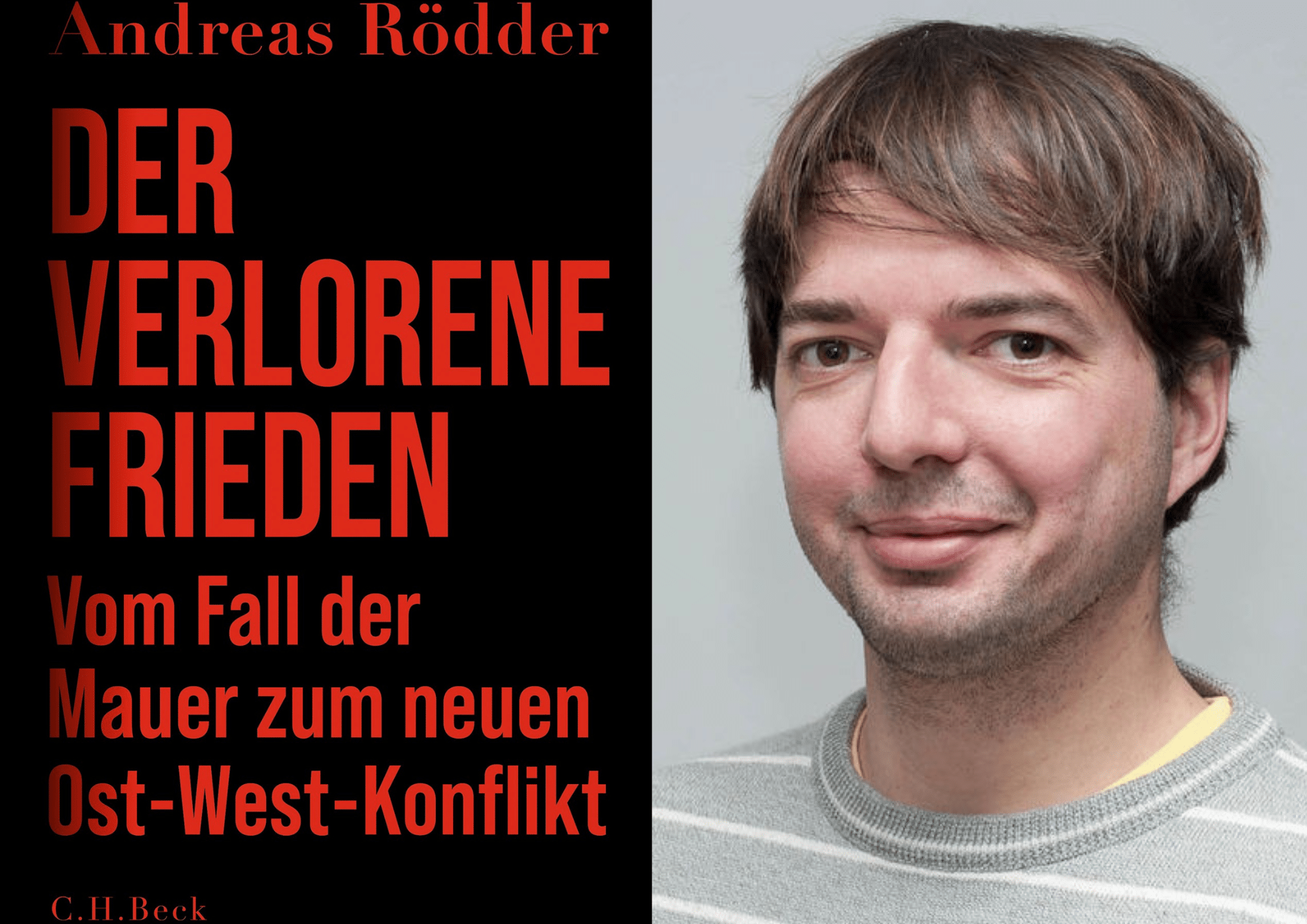
The Failure of the post-Cold War Order – Andreas Rödder on Western Hubris, Russian Imperialism, and the Road Not Taken
Andreas Rödder’s new book, Der verlorene Frieden (The Lost Peace), addresses a vexing, much-debated question: why have the hopes raised at the end of the Cold War been so gravely disappointed? Why have those hopes been replaced by the threats of today’s “tendentially bipolar” (Eurasian autocrats versus the Western alliance) but also highly unpredictable and dangerous world? To offer a substantial response, Rödder approaches international relations from a historical perspective.
16.09.2024
Democracy and Culture
“True Romanianness” – Marius Turda on Racism and Eugenics in Romanian History
In this conversation at the Review of Democracy, Marius Turda – author of the new book În Căutarea Românului Perfect. Specific național, degenerare rasială și selecție socială în România modernă (In Search of the Perfect Romanian. National Specificity, Racial Degeneration, and Social Selection in Modern Romania) – discusses the intersection between eugenics and racism in Romanian nation-building; presents the main historical moments that influenced the evolution of eugenics and racism; and analyzes the influence of interwar debates around eugenics and racism on socialist and post-socialist Romania.
13.09.2024

Democracy and Culture
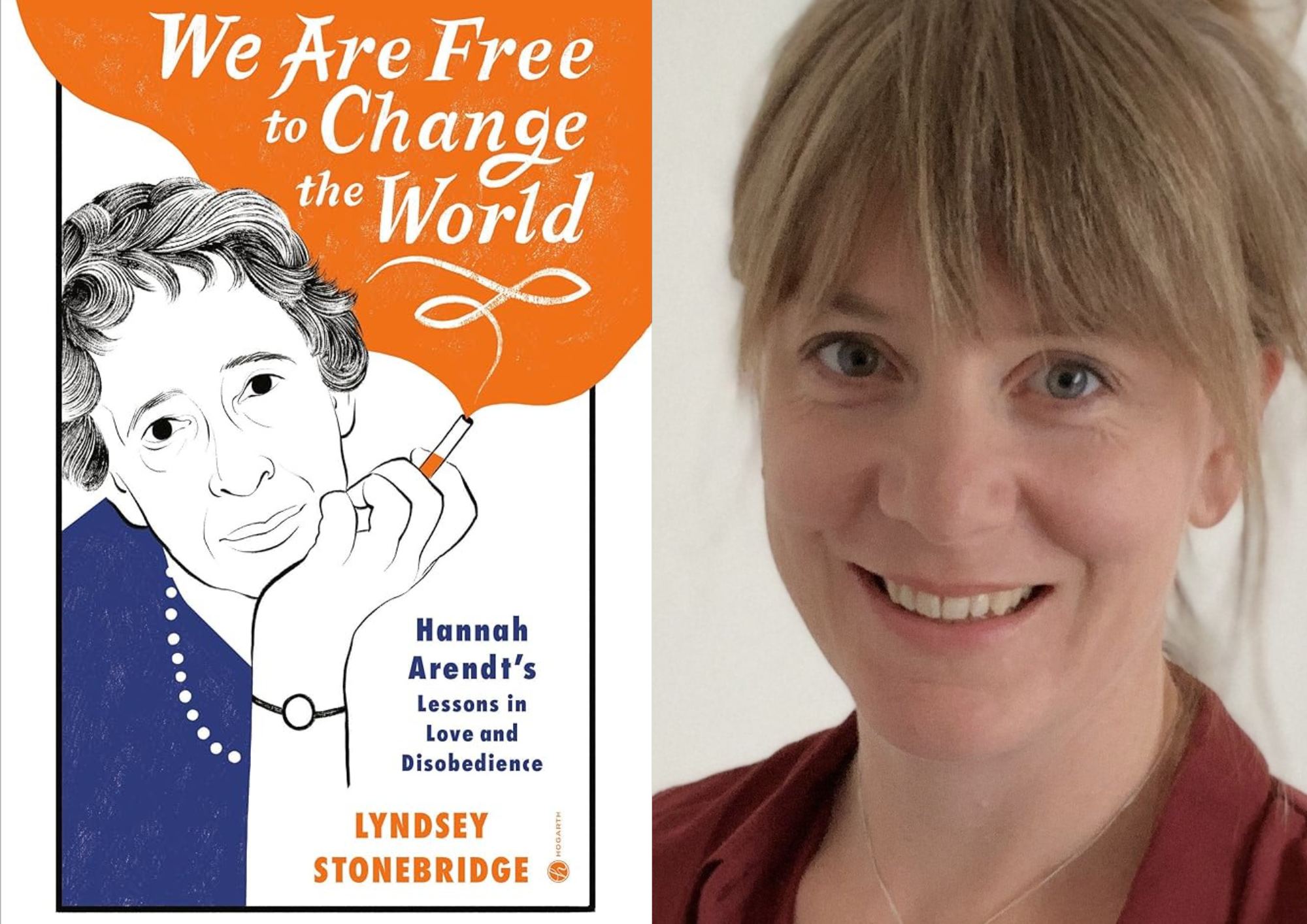
Are We Free to Change the World? – Amy Eaglestone reviews Lyndsey Stonebridge’s We are Free to Change the World: Hannah Arendt’s Lessons in Love and Disobedience
Can we look to the past to save modern day democracies from the perils of growing authoritarianism? Amy Eaglestone reviews Lyndsey Stonebridge’s We are Free to Change the World, a story of what we can learn from the life and works of Hannah Arendt about addressing authoritarian tendencies in contemporary politics.
6.09.2024
Democracy and Culture
After the End of Naivety: Anne Applebaum on Current Autocratic Threats and the Path Forward
Anne Applebaum – a liberal conservative historian and journalist with an impressive catalogue of publications and exceptionally wide reach – may have recently distanced herself from her former right-wing allies. However, her new Autocracy Inc. displays more than the occasional penchant for Manichean perspectives. Autocracies, she asserts at one point, “want to create a global system that benefits thieves, criminals, dictators, and the perpetrators of mass murder” .
4.09.2024

Democracy and Culture
Commodification of Ethnic Sexuality and Social Belonging – George Paul Meiu on Political Representation and the Role of Objects
In this conversation at the Review of Democracy, George Paul Meiu clarifies his concept of ethno-erotic economy and the commodification of ethnic sexuality; reflects on the role of objects in shaping political representations; discusses belonging and citizenship as well as mobility, memory, and materiality – and shares his insights concerning possible interpretations of the Greek God Dionysus episode at the Opening Ceremony of the Paris Olympic Games.
30.08.2024

Democracy and Culture
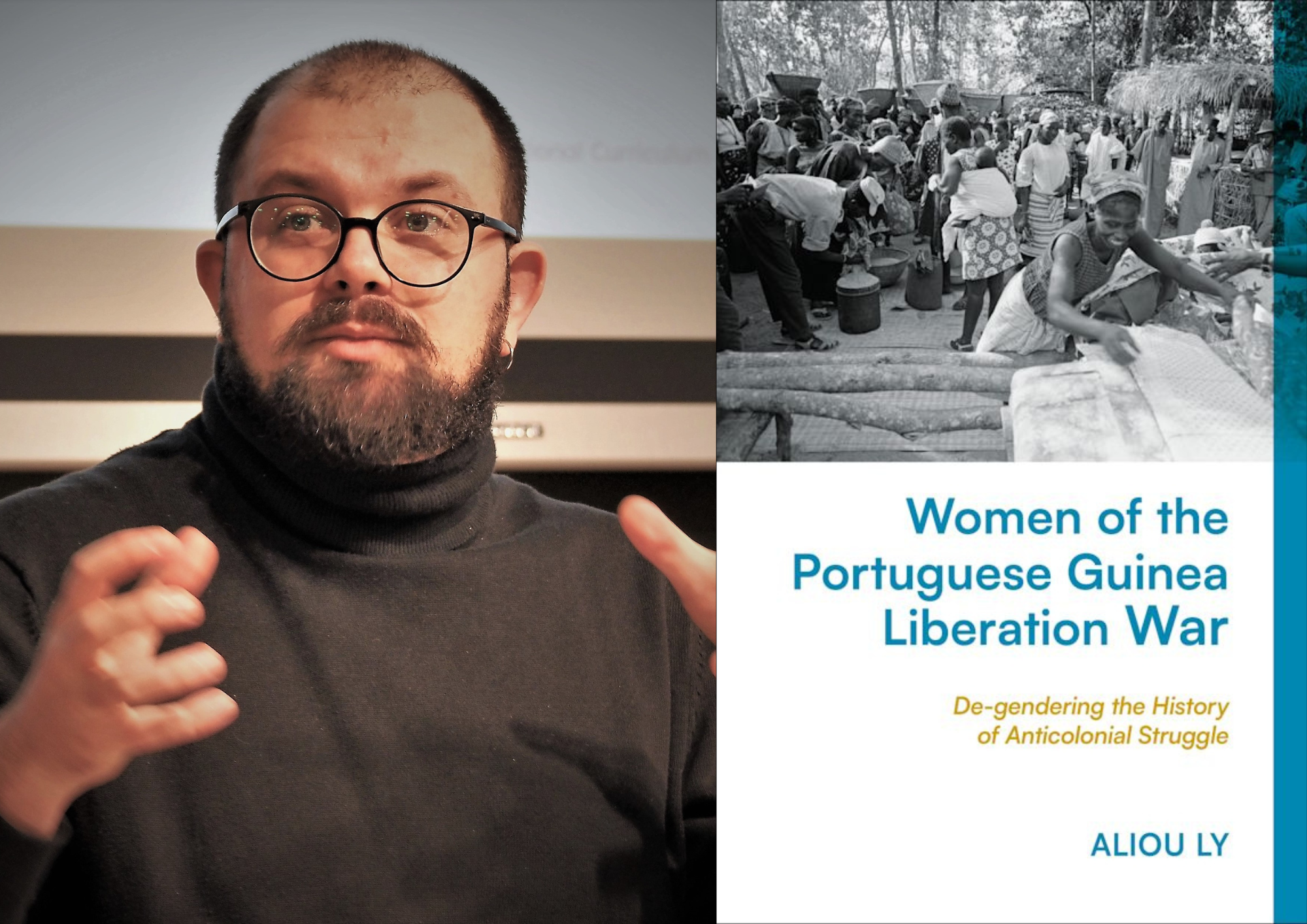
Women of Portuguese Guinea (Guinea-Bissau) in the Anticolonial Struggle
To what extent have the memories of anticolonial struggles in the 20th century silenced the voices of important participants? Aliou Ly's Women of the Portuguese Guinea Liberation War. De-Gendering the History of Anticolonial Struggle aims to bring a fresh understanding to this troubling question. It approaches an anticolonial struggle in Africa from a de-gendered perspective, writes Adrian Matus in this review.
16.08.2024
Democracy and Culture
The 2024 Paris Olympic Games: An Opportunity for a Long-Lasting, Intangible Legacy
‘Legacies’ are complex and hard to assess. In the case of the Olympic Games, the concept has become paramount for the International Olympic Committee (IOC) and all the entities involved in the bidding process, planning, development, and successful delivery of this mega-event. ‘Legacy’ can be viewed through different lenses; they may be tangible or intangible and may be assessed against a variety of criteria.
12.08.2024

Democracy and Culture
How Do Autocrats Campaign Online? – Caglar Ozturk reviews Marc Owen Jones’ Digital Authoritarianism in the Middle East: Deception, Disinformation, and Social Media
The book argues that authoritarian rulers in the Middle East fund nefarious activities online to silence their opponents abroad, to polish their own image (or their countries’ image) in Western countries and change the narrative about their persistent abuse of human rights. The author claims that these activities have broader implications beyond the region.
9.08.2024

Democracy and Culture
Finding the Pragmatist Middle Ground – Michael S. Roth on Being a Student and Student Activism Today
In this conversation at the Review of Democracy, Michael S. Roth sketches the main ways of being a student since ancient times; reflects on the process of learning “to be free”; explores the reasons behind the politicization of universities in the United States; considers what might be new about the adversarial relationship between students and university administrators these days; and sketches what “safe enough spaces” might look like in our turbulent times.
17.06.2024

Democracy and Culture
Social Justice in Twentieth-Century Europe: Martin Conway and Camilo Erlichman on the Malleability and Ideological Promiscuity of a Crucial Aspiration
In this conversation at the Review of Democracy, Martin Conway and Camilo Erlichman – editors of the new volume Social Justice in Twentieth-Century Europe – discuss how to approach the question of social justice historically; show how this aspiration may be placed at the confluence of key developments in the twentieth century; explain how focusing on this questions allows us to study the interactions between rulers and the ruled; sketch some of the main features of different eras of social justice; and consider whether social justice is still understood primarily by its absence as it so often was during the past century.
27.05.2024

Democracy and Culture
Resisting ‘State Capture’ as a Democratic Priority
The canon of writing on ways to save democracy from its current perils is vast. Political scientists, economists and historians have responded in their droves to the Trump presidency, Brexit and the global ‘democratic recession’. Steven Levitsky and Daniel Ziblatt’s ‘How Democracies Die’ typifies the response from political science: improve democratic processes and participation to encourage political inclusion. Dambisa Moyo’s ‘The Edge of Chaos’ shows the response from economics: deliver economic growth to tackle populism. David Stasavage’s ‘The Decline and Rise of Democracy’ takes the historical perspective, seeking lessons on democratic practices from the period between Ancient Greece and modern Europe. In this rush to find answers, something has fallen through the gap between politics, economics and history: power.
17.05.2024

Democracy and Culture
The impossible lives of Frantz Fanon: one man, many masks
In “The Rebel’s Clinic: The Revolutionary Lives of Frantz Fanon”, Adam Shatz takes on the daunting task of presenting a wide-ranging and in-depth examination of psychiatrist, philosopher and revolutionary Frantz Fanon. Shatz, the US editor of the London Review of Books, proves a skilled chronicler, navigating the complex layers of Fanon’s life and challenging the somewhat simplistic narratives that have often surrounded the Martinique-born revolutionary luminary’s life. While this biography may not offer a groundbreaking perspective on Frantz Fanon’s existence, a subject that has been thoroughly explored in numerous works, its success lies in providing significant value through a contextualised understanding of the Martinican psychiatrist. It may not be ideal reading for those seeking an in-depth exploration of specific aspects, but it will prove extremely useful to the general reader who is interested in gaining a comprehensive overview of Fanon by placing his work within the [...]
26.03.2024

Democracy and Culture
Some Like it Dark – In Conversation with Alessandro Nai
Who is a dark politician? How do dark politicians perform in the elections and in handling crises? What does being “dark” mean for female politicians? Why some people like it dark? In this conversation with Kasia Krzyżanowska, Alessandro Nai discusses his newest book “Dark Politics. The Personality of Politicians and the Future of Democracy,” co-authored with Jürgen Maier.
22.03.2024

Democracy and Culture
Who is afraid of the Doppelganger?
Until now, Naomi Klein has been chiefly known for her sharp arguments and passionate manifestos. Her new work Doppelganger: A Trip Into the Mirror World reveals her to be a consummate essayist who takes you on along her personal adventure that starts with her regularly being mistaken for another controversial writer. Eventually, this adventure, during times of COVID-19 and the digital attention economy, leads us straight into the shifting sands of politics.
20.03.2024

Democracy and Culture
5 best books in Democracy and Culture – Kasia Krzyżanowska, RevDem editor of the Review of Books section, recommends five books read in 2023.
Kasia Krzyżanowska, RevDem editor of the Review of Books section, recommends five books read in 2023.
20.12.2023

Democracy and Culture
We Need the Second European Rescue of the Nation-State
This is a rejoinder that ends the RevDem book symposium. You can read three book reviews by Peter J. Verovšek, Gábor Halmai and Petr Agha.
6.12.2023

Democracy and Culture
The Authentic Polish Experience
Kasia Krzyżanowska, RevDem book editor, reviews the novella “The Pole” by J.M. Coetzee.
22.11.2023

Democracy and Culture
Clement Akpang on European museums: “To bring changes, first we have to decolonize the European mindset”
In this RevDem podcast episode for the Democracy and Culture section, RevDem assistant editor Karen Culver speaks with Clement Akpang about his research into European museums and how their displays can mitigate or exacerbate perceptions of social inequalities in post-colonial settings.
10.10.2023

Democracy and Culture
Regaining Sovereignty in Europe: Back, Beyond or Below the Nation-State?
Peter J. Verovšek reviews "European Disunion. Democracy, Sovereignty and the Politics of Emergency" by Stefan Auer.
15.09.2023

Democracy and Culture
Oppenheimer: The Man Who Split the Atom and His Soul
Adérito Vicente reviews one of the two blockbusters of this summer: "Oppenheimer" by Christopher Nolan.
30.08.2023

Democracy and Culture
From democracy to authoritarian capitalism
In this op-ed, Gábor Scheiring explores the latest Freedom House Nations in Transit Report, its implications for Hungary, and how the report only reveals the tip of the iceberg of the democratic backsliding in Hungary.
16.06.2023

Democracy and Culture
The Art of Generous Critique: Adam Shatz on the Radical Imagination – and an Overdue Humbling
In this conversation with RevDem editor Ferenc Laczó, Adam Shatz – author of the new collection Writers and Missionaries: Essays on the Radical Imagination – discusses his approach to painting portraits of engaged intellectuals, clarifies his concept of “radical imagination,” reflects on how the history of Algeria has served as his prism, and explains why the predicament of Arab intellectuals may be much more similar to those in the West than is often assumed.
12.06.2023

Democracy and Culture
A Paranational World — Naturalization, Fiction and Edges of Nationality
In conversation with RevDem editor Kasia Krzyżanowska, Dr. Stephanie DeGooyer discusses her recent publication Before Borders: A Legal and Literary History of Naturalization (Johns Hopkins University Press, 2022).
15.05.2023

Democracy and Culture
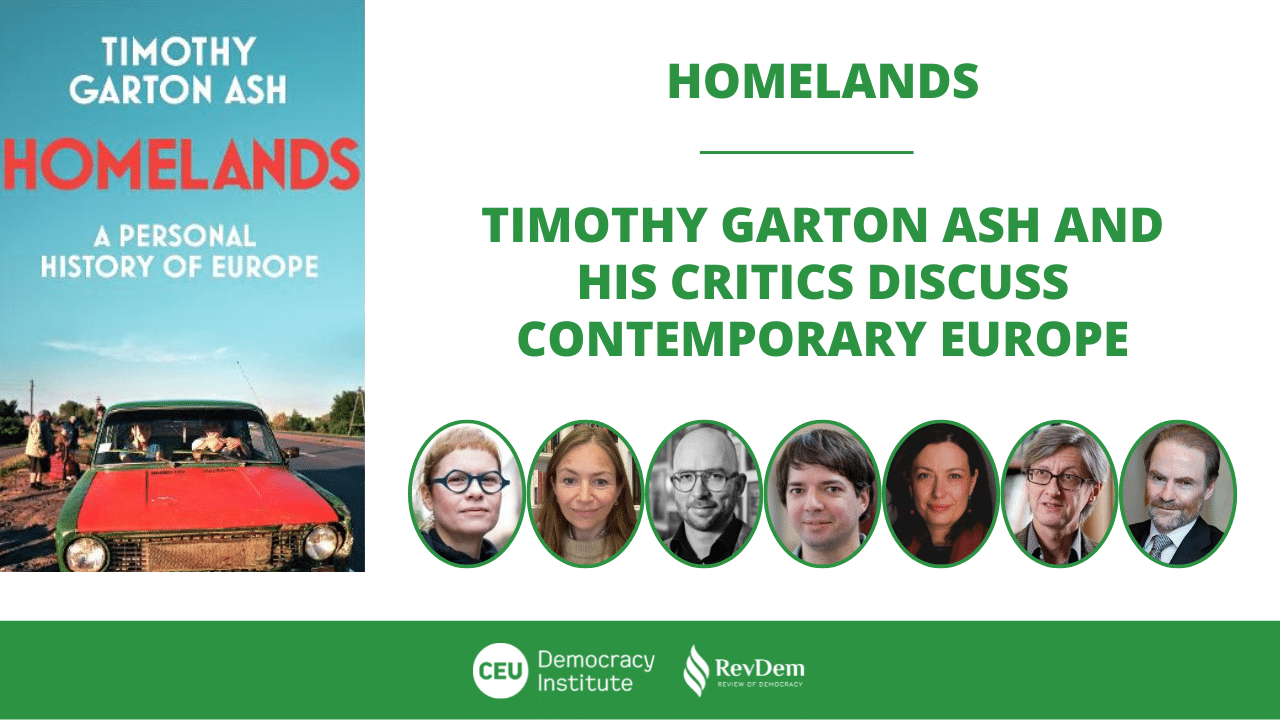
Homelands: Timothy Garton Ash and His Critics Discuss Contemporary Europe
How has Europe been transformed in the overlapping timeframes of post-war and post-Wall? What insights does Homelands, a “history illustrated by memoir” written by a distinguished European, offer its readers? In this special online panel, five scholars of contemporary Europe discuss Timothy Garton Ash’s Homelands. A Personal History of Europe with the author. Commentators: Felix Ackermann (FernUniversität in Hagen) Celia Donert (University of Cambridge) Ferenc Laczó (University of Maastricht/Review of Democracy) Renáta Uitz (Central European University/CEU Democracy Institute) Joanna Wawrzyniak (University of Warsaw) Moderator: László Kontler (Central European University/CEU Democracy Institute)
27.03.2023
Democracy and Culture
Weak prospects for Russia’s democratization
Wolfgang Merkel offers a typological classification of Putin's Russia after exploring how it compares with fascist regimes in Germany and Italy as well as Stalinism, and opines that several factors will contribute to Russia's "poor prospects" for democratization.
22.03.2023

Democracy and Culture
Review: “Gender and Illiberalism in Post-Communist Europe”, Matthijs Bogaards and Andrea Pető (eds.), Politics and Governance, Cogitatio 2022
Ivan Tranfi reviews the recent special issue on gender and illiberalism edited by Matthijs Bogaards and Andrea Pető, experts in de-democratization and gender studies from Central European University.
17.02.2023

Democracy and Culture
Digital Fragmentation. Habermas on the New Structural Transformation of the Public Sphere
Markus Patberg reviews Jürgen Habermas’s new book Ein neuer Strukturwandel der Öffentlichkeit und die deliberative Politik [A New Structural Transformation of the Public Sphere and Deliberative Politics].
2.02.2023

Democracy and Culture
Illiberalism and Gender in Post-communist Europe
The podcast is based on the conference and the special issue of Politics and Governance, No. 3 in 2022 edited by Matthijs Bogaards (CEU Department of Political Science, CEU Democracy Institute) and Andrea Pető (CEU Department of Gender Studies, CEU Democracy Institute).
24.01.2023
Democracy and Culture
In Conversation with Bruce Robbins — Criticism and Politics
In this conversation with RevDem editor Kasia Krzyżanowska, Bruce Robbins discusses his newest book Criticism and Politics. A Polemical Introduction.
17.01.2023

Democracy and Culture
Building Enduring Democracies: Filip Milačić on the Effects of Nation and State Building on Democratic Consolidation
In this conversation with RevDem assistant editor Lorena Drakula, Filip Milačić – author of the book "Stateness and Democratic Consolidation. Lessons from Former Yugoslavia" – discusses the effects unresolved issues of stateness can have on the trajectories of democratic consolidation; how political actors can instrumentalize polarization in society to justify authoritarian measures; and what can be learned for democracy promotion projects today.
16.01.2023

Democracy and Culture
Launch of CEU Democracy Institute Working Paper Series: Andreas Schedler – “Basic Democratic Trust”
The CEU DI Working Paper series has launched today. The first publication is “Basic Democratic Trust” by Andreas Schedler, Lead Researcher of the DI’s De- and Re-Democratization (DRD) Workgroup.
9.01.2023

Democracy and Culture
The EU Prize for Literature — In Conversation with Anne Bergman-Tahon
What is the EUPL? What is the story behind and what are its aims? Is there a European-wide readership? How to promote European literature? These and more questions are answered by Anne Bergman-Tahon in this conversation with editor Kasia Krzyżanowska.
15.12.2022

Democracy and Culture
The Stories We Tell Ourselves — In Conversation with Peter Brooks
In this conversation with RevDem editor Kasia Krzyżanowska, Peter Brooks — author of the new book Seduced by Story. The Use and Abuse of Narrative — discusses the "storyfication" of reality; explains why we need stories; ponders the impact fiction has on our lives; and depicts the dangers oversimplified narratives pose to our democratic societies.
30.11.2022

Democracy and Culture
How 2000 people made an impact at a time when society was silent: András Bozóki on the rolling transition of Hungary
In this discussion, RevDem Managing Editor Michał Matlak discusses with András Bozóki about his last book, "Rolling Transition and the Role of Intellectuals: Case of Hungary", published this year by Central European University Press, which tells a compelling story of the role of intellectuals in political and social change that took place in Hungary between 1977-1994.
29.11.2022

Democracy and Culture
Why Do Autocracies Last? Lucan Way on the Longevity of Revolutionary Regimes
In this conversation with RevDem editor Ferenc Laczó, Lucan Way – co-author, with Steven Levitsky, of the new book "Revolution and Dictatorship: The Violent Origins of Durable Authoritarianism" – introduces what revolutionary autocracies are; explains why they tend to prove much more durable than other kinds of authoritarian regimes; discusses how the revolutionary sequences so crucial for the emergence of such regimes have played out in the various cases across the globe; and reflects on the contemporary relevance of the book’s findings concerning autocratic longevity.
3.11.2022

Democracy and Culture
Magic Mountain on Goodreads — On Experiencing Mann’s novel
In this conversation with RevDem editor Kasia Krzyżanowska, Karolina Watroba discusses her first book “Mann’s Magic Mountain: World Literature and Closer Reading,” published with Oxford University Press.
19.10.2022

Democracy and Culture
A Path to Democracy Without Destabilization: Joseph Wong Explains the Types of Development and the Patterns of Uneven Democratization in Modern Asia
In this conversation with RevDem editor Ferenc Laczó, Joseph Wong – co-author with Dan Slater of the new monograph "From Development to Democracy. The Transformations of Modern Asia" – discusses when and why regimes have chosen to democratize in modern Asia; how come types rather than levels of development have shaped countries' democratic prospects; why Singapore and China remain significantly less democratic than one might expect; and how studying the patterns of modern Asia can help us rethink democracy promotion today.
4.10.2022

Democracy and Culture
What Does Right-Wing Anti-Gender Mobilization Have to Do with Progressive Gender Trends? Eszter Kováts Investigates the Politics of Fidesz and AfD
In this conversation with RevDem editor Ferenc Laczó, Eszter Kováts discusses the conclusions she has drawn from her comparison of the discourse coalitions around AfD in Germany and Fidesz in Hungary.
17.09.2022

Democracy and Culture
Danica Fink-Hafner: Voters turn towards symbolic personalities when they are disappointed with political parties [Party Co-Op Series]
Zsolt Enyedi discusses party cooperation in Slovenia with Danica Fink-Hafner, professor and Head of the Political Science Research Programme at University of Ljubljana, and expert on party politics, European integration, nation-building, interest-representation and democratization.
28.06.2022

Democracy and Culture
Imperialism in Russian Literature
In this conversation with our editor Kasia Krzyżanowska, professor Ewa Thompson discusses the imperialistic features of the Russian Federations; elaborates on how Russian writers advanced the imperial message of Russia, and shows the persistence of the imperialistic motifs in the Russian literature.
7.06.2022

Democracy and Culture
Reflections of a European Man
In conversation with RevDem editor Kasia Krzyżanowska, Stefan Auer discusses his new book European Disunion. Democracy, Sovereignty, and the Politics of Emergency (Hurst&Company 2022). In a conversation, he points out to the EU hubris, discusses crises that hit the EU recently, puts into a broader context Russian invasion of Ukraine, and shares his scepticism on the future of Europe.
20.05.2022

Democracy and Culture
Chamstwo. A Story of the Polish Serfdom: in conversation with Kacper Pobłocki
In a conversation with our editor Kasia Krzyżanowska, Kacper Pobłocki discusses his recent book Chamstwo and reflects on how Polish society was historically based on violence; elaborates on the historical sources of the name “Cham”; compares Polish predicament with other European states and discusses current state of the academia.
19.05.2022

Democracy and Culture
In conversation with Robert Zaretsky: Irresistible Simone Weil
Simone Weil’s figure poses a challenge to each reader of hers. In this conversation, our editor Kasia Krzyżanowska speaks to prof. Robert Zarestky (professor at the University of Houston), about the heroine of his recently published biography: Simone Weil.
18.03.2022

Democracy and Culture
Signe Larsen: The Federal Telos of the European Union
In this conversation with our editor, Kasia Krzyżanowska, Dr. Signe Larsen talks about the (largely unacknowledged) nature of the EU as a federation, varieties of constitutionalism within EU Member States, and the impact of colonial legacies on the EU.
17.03.2022

Democracy and Culture
A Stigma of a Latecomer. In Conversation With Dr. Molly Krasnodębska
newest book “Politics of Stigmatization. Poland as a Latecomer in the European Union” (Palgrave Macmillan 2021). The interview touches on the political equality of Member States within the EU, the stigma of a latecomer applied to Poland (and other Eastern European countries), and the discursive hierarchy inside the EU.
5.03.2022

Democracy and Culture
5 Books on Ukraine
nce the Russian invasion started on 24th February, two thousands of civilians have already died because of Russian missiles shot indiscriminately at Ukrainian cities and towns. However, the armed conflict begun much earlier, when Russia annexed Crimea and started its occupation of the Eastern part of Ukraine in 2014. Our editor Kasia Krzyżanowska has selected 5 books to encourage a better understanding of the Ukrainian state and Ukrainian modern history and culture. This list is by no means comprehensive and serves as an invitation to explore Ukraine’s recent history further
4.03.2022

Democracy and Culture
The Rise of the EU Marked the End of the Universal Welfare State. Varela on People’s Histories
In this interview, Agnė Rimkutė discusses with Raquel Varela the importance of seeing the working classes as actors in the historical process and the implications of people’s history for our understanding of democracy.
6.01.2022

Democracy and Culture
The Problems of Genocide: Dirk Moses on the Language of Transgression and the Genocide Convention in Context
Dirk Moses in conversation with Ferenc Laczo on his last book "The Problems of Genocide. Permanent Security and the Language of Transgression".
20.12.2021

Democracy and Culture
The New Czech Government and the Perspectives for Central Europe [ONLINE EVENT]
What were the outcomes of Czech elections? Can they serve as inspiration for other Central European liberal democracies? While these are the key topics of the webinar, the participants will also discuss their perspectives on the new Czech government and the nature of the Andrij Babis government.
7.12.2021

Democracy and Culture
Thinking like Hannah Arendt
Our editor Kasia Krzyżanowska (EUI, CEU) talks with Samantha Rose Hill, professor at the Brooklyn Institute for Social Research, about her recently published biography of Hannah Arendt.
21.10.2021

Democracy and Culture
Annie Ernaux and History
“More often than not, we get the sense that events are unfolding in the background, often detached from individuals, and that yet they will somehow influence individual lives” says Dr Elise Hugueny-Léger, Senior Lecturer in French at the University of St Andrews, in this interview with Kasia Krzyżanowska.
20.10.2021

Democracy and Culture
An Authoritarian Liberal Europe? In Conversation with Michael Wilkinson
Oliver Garner interviews the author on his book ‘Authoritarian Liberalism and the Transformation of Modern Europe’
1.10.2021

Democracy and Culture
Talisse: To Be a Democratic Citizen
Katarzyna Krzyżanowska talks with Robert Talisse, W. Alton Jones Professor of Philosophy at the Vanderbilt University in Nashville, on epistemology of democracy.
14.09.2021

Democracy and Culture
Is Neoliberalism Finally Dead?
Few concepts have been declared dead and buried more often than neoliberalism. However, it continues to survive. Neoliberal Resilience, Aldo Madariaga’s award-winning book, shows how. Review by Gabor Scheiring.
20.07.2021

Democracy and Culture
Democracy Rules: A Book Discussion with Jan-Werner Müller and His Critics
How do we re-invigorate institutions essential for the success of democracy such as political parties and free media? Can we re-empower citizens while also preserving a place for experts? How can we ensure the future dynamism and creativity of democracies? These are some of the urgent questions addressed in Jan-Werner Müller’s much anticipated new book Democracy Rules. CEU Democracy Institute’s Review of Democracy, in collaboration with The New School’s Democracy Seminar, hosted a discussion of the book with the author, and with prominent voices in the field. Speakers:Jan-Werner Müller, Professor of Politics at Princeton University Gráinne de Búrca, Director, Jean Monnet Center for International and Regional Economic Law & Justice, New York University Jeffrey C. Isaac, James H. Rudy Professor of Political Science, Indiana University Jan Kubik, Professor, Rutgers University; Professor of Slavonic and East European Studies, University College London Karolina Wigura, [...]
13.07.2021

Democracy and Culture
Democracy Rules: A Book Discussion with Jan-Werner Müller and His Critics
Review of Democracy will host a discussion of the book with the author to be moderated by Zsolt Enyedi (Central European University) and with three prominent voices in the field: Gráinne de Búrca (New York University), Jan Kubik (Rutgers University and University College London), Jeffrey C. Isaac (Indiana University) and Karolina Wigura (University of Warsaw)
8.07.2021

Democracy and Culture
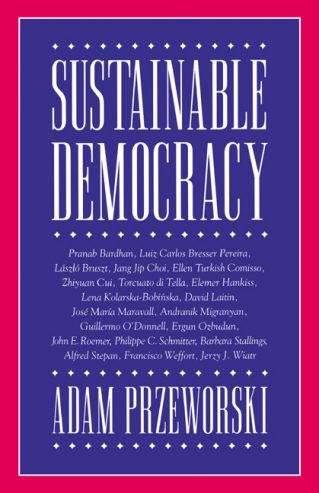
Sustainable Democracy after 25 years. Conversation with Adam Przeworski
Our editor-in-chief Laszlo Bruszt asks Adam Przeworski about the contemporary relevance of "Sustainable democracy", a seminal book published 25 years ago.
21.04.2021
Democracy and Culture
A Certain Anachronistic Appeal. On Conversations with Francis Fukuyama
On the 3rd of May, the Georgetown University Press will publish "After the End of History. Conversation with Francis Fukuyama". Our editor Ferenc Laczo from Maastricht University reviews the volume.
13.04.2021

