Histories and Futures of Liberalism
Histories and Futures of Liberalism
From the People vs. the Elite to Everyone as the Enemy: The Strange Afterlife of Donald Trump’s Populism
Donald Trump’s second presidential term exposes how the structural logic of populism breaks down under its own expansion. As adversaries proliferate and the claim to embody a unified “people” weakens, antagonism survives but representation frays. What once relied on a clear, if contestable, moral divide now operates through thinning legitimacy and the staging of permanent confrontation.
27.02.2026

Histories and Futures of Liberalism
Why Democratic Strategy Must Rethink Authoritarianism Today
While observations of developments on the global scale always conceal a great amount of nuances, trends can nevertheless be discerned. One such significant trend in contemporary global society is the retreat of democracy: the world in general is more authoritarian than it was a decade or two ago.
3.02.2026

Histories and Futures of Liberalism
Chile in Three “Halves”: Anti-Pinochet, Anti-Communist, Anti-Establishment
Chile is no longer structured by a single political divide rooted in the legacy of dictatorship. Instead, its electoral landscape is increasingly shaped by three forms of rejection: anti-Pinochet, anti-Communist, and anti-establishment identities. This trilemma helps explain why Chilean voters have repeatedly rejected both progressive and conservative constitutional projects—and why traditional binary frameworks no longer capture the country’s political dynamics.
26.01.2026

Histories and Futures of Liberalism
Manufacturing Moral Panics? NIKI, Anti-Genderism, and the Politics of LGBTQ+ Exclusion in Greece
With just 4 percent of the vote, Greece’s far-right party NIKI succeeded in reshaping the national debate on LGBTQ+ rights. By mobilizing Orthodox Christianity, the party reframed same-sex marriage and adoption as existential threats to the nation, family, and faith. Through moral panic, religious symbolism, and strategic populist framing, a marginal political actor launched a powerful cultural counteroffensive, revealing how influence in populist politics often far exceeds electoral weight in moments of social change.
13.01.2026

Histories and Futures of Liberalism
How to Resist Illiberalism: Pedro Abramovay on Reimagining Democracy in Latin America
In this podcast, Pedro Abramovay offers a wide-ranging analysis of the rise of illiberal forces in Latin America and the democratic vulnerabilities they exploit.
4.12.2025

Histories and Futures of Liberalism
The Weakness of the Authoritarian Playbook
Across the world, strongmen follow the same playbook to dismantle democracy. But their favorite tool could also become their greatest weakness if democracy’s defenders learn to flip the script.
18.11.2025
Histories and Futures of Liberalism
Delivering Democracies: Maya Tudor on “What Democracy Does…And Does Not Do?”
In this conversation, Maya Tudor discusses her recent article published in the Journal of Democracy and argues that today’s decline in trust in democracy stems from misconceptions about its achievements, such as expanding education, extending life expectancy, promoting relative peace, and fostering economic progress.
14.11.2025

Histories and Futures of Liberalism
From the Certainty of the Past to the Uncertainty of the Future: Argentina’s Midterms Elections
Argentina’s midterm elections tested not only the government’s ability to sustain its reform agenda but also citizens’ growing preference for results over ideology—a transformation increasingly visible across middle-income democracies.
5.11.2025

Histories and Futures of Liberalism
Flexible Illiberalism: How Democracy Survives Illiberally in Southeast Asia
Southeast Asia shows how democracy’s openness can be weaponized. Flexible illiberalism—the art of using democratic institutions to pursue illiberal ends—reveals how democracy endures not by collapsing, but by changing hands.
4.11.2025
Histories and Futures of Liberalism
When Democracies Start to Self-Destruct: Rachel Myrick on how Polarization Becomes a Geopolitical Threat
In our podcast, Rachel Myrick, the Douglas & Ellen Lowey Associate Professor of Political Science at Duke University, discusses with us how extreme partisan polarization threatens not only domestic governance but also global stability. Drawing on her new book, Polarization and International Politics: How Extreme Partisanship Threatens Global Stability (Princeton University Press, 2025), Myrick argues that polarization in democracies affects foreign policymaking.
27.10.2025

Histories and Futures of Liberalism
The Authoritarian Resurgence in World Politics – In Conversation with Alexander Dukalskis and Alexander Cooley
The end of the last century brought about what scholars have called a “unipolar moment.” With the fall of the Soviet Union, liberalism lost its enemy on the global stage, which led the United States to try to establish an international liberal order by promoting liberalism transnationally. This latter approach has not only been harshly criticized for often being executed hypocritically and sometimes causing disastrous wars, but also ultimately seems to have failed.
22.10.2025

Histories and Futures of Liberalism
The Co-optation of Antonio Gramsci’s Ideas by the Contemporary (Far-)Right
This episode, part of the series When the Far Right and the Far Left Converge, features Francesco Trupia and Marina Simakova discussing the ideological co-optation of Antonio Gramsci’s ideas by the contemporary (far-)right. They examine when and how right-wing actors adopted his political language, and how political conjunctures in and beyond Europe have shaped this process.
29.09.2025

Histories and Futures of Liberalism
The Illiberal Trap: Stanley Bill and Ben Stanley on Trilemmas and Warnings from Poland
In this new episode of our special series produced in partnership with the Journal of Democracy, Stanley Bill and Ben Stanley draw on their new article “Democracy After Illiberalism: A Warning from Poland” (July 2025, Vol. 26, No. 3) to discuss the challenges, dilemmas, and paradoxes of liberalism after illiberalism in Poland. They reflect on the concepts of liberalism and illiberalism to dissect the approach Donald Tusk’s current government has taken and its major consquences. They also consider the wider lessons that may be drawn from recent and ongoing Polish experiences.
1.09.2025

Histories and Futures of Liberalism
Ruling the Spanish Void: What Spain’s Social Democratic Party Can Teach European Liberal Democracies about Party Politics
The Spanish Socialist Workers’ Party’s recent alleged corruption scandal involving a backhander scheme and two former number-twos in the party may prove to be the silver lining Spain’s political system needs to reform and modernize its political parties. The decision now rests in the hands of party leaders.
15.08.2025

Histories and Futures of Liberalism
From Competitive Authoritarian to Hegemonic: Berk Esen on the Decline of Turkish Democracy and the Prospects for Its Revival (Part 1)
In Part 1 of our latest edition in the special series in partnership with the Journal of Democracy, Berk Esen unpacks how Turkey’s competitive authoritarian regime is veering toward full autocracy.
13.08.2025

Histories and Futures of Liberalism
Chile’s Left at a Crossroads: What Sunday’s Primary Reveals About the Country’s Democratic Drift
As Chile’s left prepares to choose its presidential candidate in a low-profile primary this Sunday, the stakes are higher than they seem. The vote offers a revealing snapshot of an opposition grappling with internal fragmentation, an emboldened right, and a disoriented electorate. Can the left reinvent itself before the 2025 elections?
27.06.2025

Histories and Futures of Liberalism
The Moral Populist Legacy of Laudato Si’
Pope Francis’s Laudato Si’ redefined sustainability through a populist moral logic, casting it as a conflict between the people and indifferent elites. In doing so, he opened the public debate for populist leaders to reinterpret and challenge the concept using similar articulation.
19.06.2025

Histories and Futures of Liberalism
The Post-2024 Italy: Figaro Qui, Figaro Qua…
Italy, long a master of diplomatic balancing, is reclaiming its traditional role as a geopolitical hinge between Europe and the wider world. Under Prime Minister Giorgia Meloni, Rome blends nationalist rhetoric with pragmatic alliances by playing Brussels and Washington with equal calculation. As ever, Italy pursues influence through flexibility, not fixed loyalties. By Julia Khrebtan-Hörhager Meloni’s diplomatic balancing act: Strategic chameleonism Italian Prime Minister Giorgia Meloni’s relatively recent visit to former U.S. President Donald Trump spotlights Italy’s tightrope walk between European solidarity and a revived transatlantic flirtation. Controversial and calculating, Meloni continues to toy with America’s favor. She was the only European leader to attend Trump’s inauguration in January and counts tech titan Elon Musk among her allies. In many ways, Meloni reflects Europe’s own identity crisis: regional power, global ambition. Italy, after all, was a founding [...]
18.06.2025

Histories and Futures of Liberalism
Can Courts Save Democracy? In Conversation with Samuel Moyn
Samuel Moyn discusses the risks of focusing too heavily on legality in the fight against rising authoritarianism. Since the beginning of the year, the Trump administration has been trampling on different sectors of the U.S. state. Numerous commentators, both from the U.S. and abroad, have argued that the issue of a potential “constitutional crisis”—one that could pave the way for authoritarianism—essentially hinges on whether the government complies with court orders. In contrast, Professors Ryan Doerfler and Samuel Moyn have argued that this focus is, at the very least, misplaced. So far, rather than protecting democracy, the courts have helped pave the way for the current situation. This raises important questions about the right pro-democratic strategy—not only in the U.S., but also in European countries such as Germany, where the far-right is on the rise and the judiciary is widely seen as the bulwark against authoritarianism. In this conversation, Samuel Moyn explains the [...]
16.06.2025

Histories and Futures of Liberalism
In Uncertain Waters: The Restoration of the Rule of Law in Poland
The outcome of Poland’s presidential election has the potential to significantly harm the process of rule of law restoration in the country. In her op-ed Anna Wójcik examines the current situation and explores what the future strategy of the pro-democratic governing coalition must entail.
11.06.2025

Histories and Futures of Liberalism
A Doomed Bid to Erase Dissent: İmamoğlu and the Future of Turkish Opposition
As the crackdown on Istanbul’s mayor Ekrem İmamoğlu intensifies, the stakes for the democratic opposition in Turkey grow higher. This analysis explores how legal repression, symbolic erasure, and authoritarian overreach may backfire — entrenching resistance, destabilizing governance, and echoing global patterns of democratic decline, without yet sealing Turkey’s fate as another Venezuela.
10.06.2025

Histories and Futures of Liberalism
Can Democracy Deliver? Francis Fukuyama and Beatriz Magaloni on Performance, Legitimacy, and Public Trust
In the latest episode of our monthly special in cooperation with the Journal of Democracy, Francis Fukuyama and Beatriz Magaloni discuss why democratic legitimacy increasingly hinges on governments’ ability to deliver tangible results.
5.06.2025

Histories and Futures of Liberalism
Brazil’s Democratic Resilience: How Institutions Withstood Bolsonaro’s Assault
Populist leaders are often framed as menaces to democracy—and for good reason. Brazil under Jair Bolsonaro quickly rose to the top of everyone’s backsliding list, a veritable cautionary tale in the age of eroding norms. Yet Brazilian democracy endured. The story of how it survived offers valuable lessons for democracies everywhere.
23.05.2025

Histories and Futures of Liberalism
Constitutional Death Foretold? The Romanian Elections Saga in a Nutshell
Romania has been facing a political crisis marked by controversial court rulings, annulled elections, and the rise of far-right figures. Judicial overreach, social fragmentation, and foreign influence fueled public distrust, culminating in ultranationalist George Simion’s victory in the 2025 restaged presidential elections.
13.05.2025

Histories and Futures of Liberalism
The Chipping Away of Argentine Democracy
It has been almost a year and a half since Javier Milei took office in Argentina. As he openly warned he would do during his campaign, his administration has been plagued by authoritarian practices, verbal and institutional violence, and policies that openly curtail citizens’ rights. Argentina currently possesses significant democratic capital, earned by decades of struggles and political commitment. We must now ask how long this capital will last in resisting the libertarian wave.
6.05.2025

Histories and Futures of Liberalism
Authoritarian Waves Crashing: Dan Slater Reinterprets the Third Wave of Democratization
In the new episode of our monthly special in cooperation with the Journal of Democracy, Dan Slater discusses the authoritarian origins of the third wave of democratization.
5.05.2025
Histories and Futures of Liberalism
What’s Radish Got to Do with Turkish Democracy?
When a Turkish proverb resurfaces at the heart of a political storm, it’s worth paying attention. Through the recent arrests of Istanbul Mayor Ekrem İmamoğlu and his colleagues, Ece Özbey traces the chilling implications of the deepening erosion of democratic norms and judicial independence in Turkey—and the defiant stirrings of civic resistance under Erdoğan’s tightening grip on the country.
28.03.2025

Histories and Futures of Liberalism
Political Capacity: Gianna Englert on the Liberal Struggle for Democracy
Is democracy sustainable without informed, virtuous, and engaged citizens? Can political institutions shape the kind of citizenry democracy needs? These questions lie at the heart of Democracy Tamed: French Liberalism and the Politics of Suffrage, the compelling new book by political theorist Gianna Englert, who joins us in this episode of RevDem. As contemporary anxieties grow over the future of liberal democracy and the rise of populism, Englert turns our attention to 19th-century France, where liberal thinkers grappled with similar dilemmas in the wake of the French Revolution.
24.03.2025

Histories and Futures of Liberalism
Liberal Democratic Standards Are Not Just an Opinion – Karolina Wigura on Polish Politics, Liberal Emotions, and Her Major Concerns
In the latest episode of our Democracy After 2024 series, Karolina Wigura discusses Poland’s current role in Europe and the changing polarization between liberal and illiberal forces; analyzes the role of emotions in contemporary liberal politics; reflects on how we distinguish between agendas of accountability, on the one hand, and of retribution and revenge, on the other; and explains what she will watch particularly closely in the coming months.
12.03.2025

Histories and Futures of Liberalism
Beyond Narratives, Personas and Spectacles: A Conversation on Illiberal and Authoritarian Practices
In this episode of the Democracy After 2024 series, Dorjana Bojanovska Popovska hosts Marlies Glasius for a discussion that goes beyond traditional regime-type classifications and the public/private divide, by looking at examples of illiberal and authoritarian practices that emerged or peaked in 2024 as well as their diffusion across different contexts.
6.03.2025

Histories and Futures of Liberalism
Why Is the World Down on Democracy? – Richard Wike Discusses Current Global Attitudes and the Rising Dissatisfaction with the Way Democracies Work
In this conversation, Richard Wike – director of global attitudes research at Pew Research Center – presents the key facts of the growing dissatisfaction with the way democracy works; discusses which parts of society support which kinds of change in the direction of more representativity; explores how people view the impact of social media on democracy; and reflects on how democracies of the future might look different from past versions and how they could empower citizens more.
3.03.2025

Histories and Futures of Liberalism
What Can Illiberal Disruptions Tell Us About a More Democratic Future?
With the shocking beginnings of Donald Trump’s second term, many suspect we may be nearing a tipping point in the global history of democracy. Numerous democracies have indeed been eroding, and the process appears to be accelerating these days. However, despite continuous setbacks over the past two decades, only a few formerly democratic regimes have openly embraced autocratic rule until now.
27.02.2025

Histories and Futures of Liberalism
How To Counter the Mainstreaming of Extremist Ideas? – Julia Ebner on Radicalization Processes and Our Fraught Moment
In the latest episode of our Democracy After 2024 series, Julia Ebner discusses major developments regarding the mainstreaming of extremist ideas; explains how social media platforms have contributed to radicalization processes and considers whether we might be experiencing a new turning point right now; and sketches effective counterstrategies – and reflects on what might be missing from our current toolbox.
13.02.2025

Histories and Futures of Liberalism
Changing Perspectives on the Problems of Democracy, 1970 to 2020: An Organizational Approach
In his essay, our Editor-in-Chief and Director of the CEU Democracy Institute, László Bruszt argues that the organizational perspective on democracy might offer a solid framework for exploring the links among different perspectives on the problems of democracy. The organizational approach views democracy as an institutional mechanism for forming broad alliances that drive social, economic, and political change. It shapes power relations and fosters cooperation but also enables exclusion, which can fuel polarization, populism, and illiberalism, ultimately destabilizing democratic institutions.
6.02.2025

Histories and Futures of Liberalism
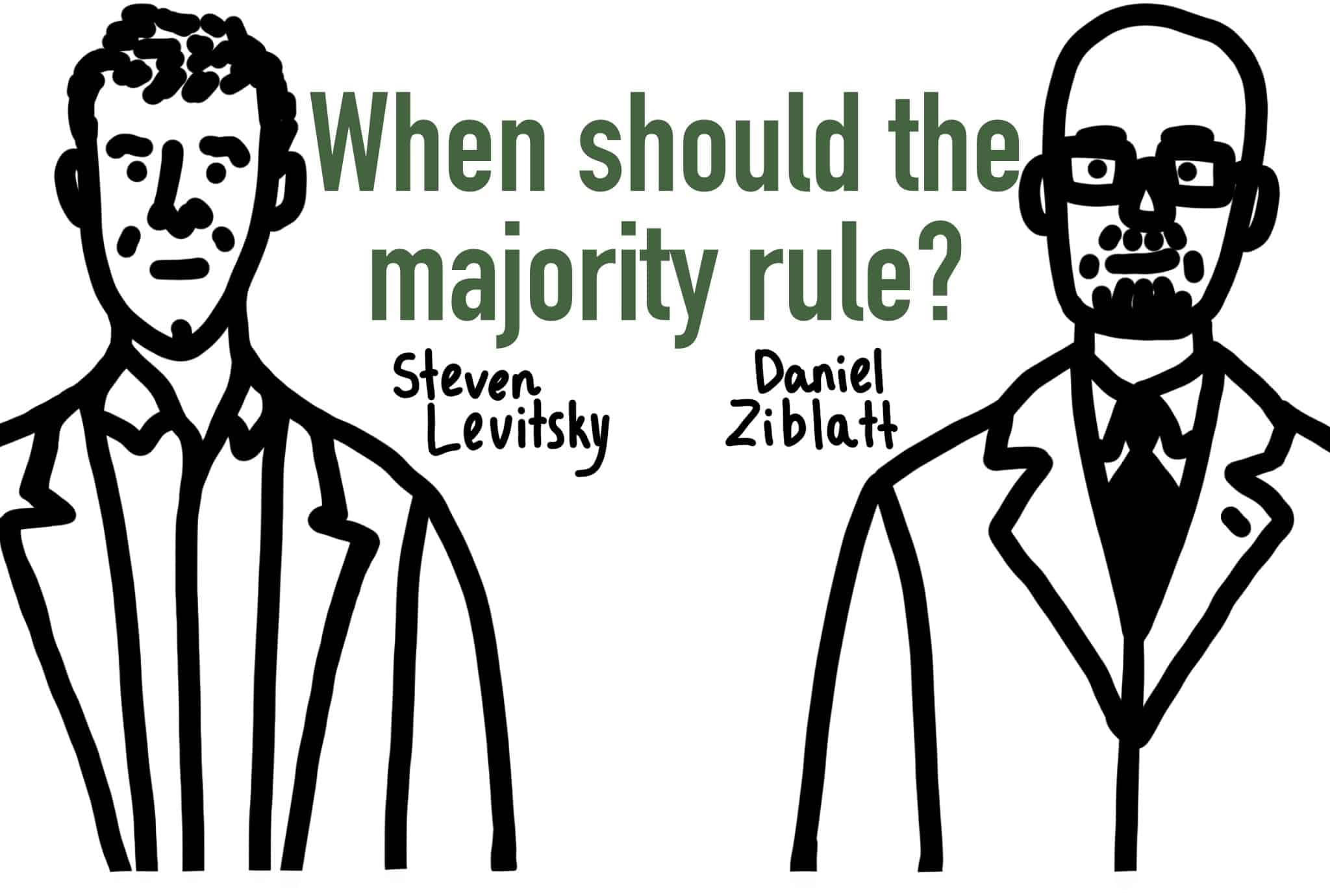
When Should the Majority Rule? – Steven Levitsky and Daniel Ziblatt on Countermajoritarian Institutions and the Question of Democratic Resilience
In this conversation, Harvard professors Steven Levitsky and Daniel Ziblatt examine the various types of countermajoritarian institutions and reflect on which are democracy-enhancing and which can potentially subvert democracy. Levitsky and Ziblatt show the connections between the strong countermajoritarian features of the U.S. political system and its ongoing democratic backsliding. They also consider how the trade-offs between countermajoritarianism and democratic stability have played out across the globe.
17.01.2025
Histories and Futures of Liberalism
Five Books on Populism in 2024
Here are five book recommendations on populism published in 2024, which I believe merit widespread attention and discussion.
9.01.2025

Histories and Futures of Liberalism
How Did Right-Wing Populists Win the Immigration Debate and What Can Mainstream Parties Do About It? – Sheri Berman on the Representation Gap Between Voters and Mainstream Parties Over Immigration in Western Europe
In this conversation with Sheri Berman, Professor of Political Science at Barnard College, we engage with her key argument that growing support for right-wing populism is primarily a consequence of mainstream parties’ failure to address popular concerns about immigration. We dissect the ‘representation gap’ argument, discuss alternative explanations (namely, the issue of racism and xenophobia), explore salient differences between center-left and center-right parties, and highlight strategies that mainstream parties have used and could use to respond to citizens’ concerns and demands on immigration.
6.01.2025

Histories and Futures of Liberalism
Red Flags and Writings on the Wall? Rising Threats to Democracy on Both Sides of the Atlantic
Donald Trump has been re-elected in the United States, and Germany is preparing for snap elections in February 2025. Both countries are likely to face political changes as they are witnessing the rise of anti-establishment movements. How resilient is democracy in Germany and the United States? Should we worry?
3.12.2024

Histories and Futures of Liberalism
The Return of Dictatorship – Grzegorz Ekiert and Noah Dasanaike on Dictatorial Drift, Autocracy Promotion and Strategies to Oppose Them
In this conversation, Grzegorz Ekiert and Noah Dasanaike explain their concept of dictatorial drift and how various countries have moved toward full autocracy in recent years; discuss new features of dictatorships in the early 21st century and how such regimes relate to each other; consider whether it makes sense to compare the growing trend of autocracy promotion with democracy promotion; and reflect on how full autocracies might be opposed more effectively in the future.
2.12.2024

Histories and Futures of Liberalism
Revising European Integration History in an Age of Uncertainty – Karin van Leeuwen, Aleksandra Komornicka, and Koen van Zon on Their Interdisciplinary Handbook with a Historical Focus
In this conversation at the Review of Democracy, Karin van Leeuwen, Aleksandra Komornicka, and Koen van Zon – contributors to The Unfinished History of European Integration that has now appeared in a revised edition – elucidate the main questions that organize their overview of European integration history; reflect on the applicability and usefulness of various influential theories when trying to narrate the history of European integration today; show what special contributions historians can make to the interdisciplinary study of the European Union; and discuss recent advances in the historiography of European integration, specifying questions that would deserve more attention in the future.
27.11.2024

Histories and Futures of Liberalism
Tyranny of the Minority – How Institutional Shortcomings Threaten American Democracy
Molly Shewan reviews Daniel Ziblatt and Steven Levitsky’s Tyranny of the Minority: How to Reverse an Authoritarian Turn and Forge a Democracy for All (New York: Crown Publishing Group, 2023), 316 pgs. This review was written in advance of the 2024 US presidential election; its analysis and conclusions reflect this context.
14.11.2024

Histories and Futures of Liberalism
The Recipe Trump Will Hopefully Not Read Attentively – Measuring the US’ Political Prospects by the ‘Gold Standard’ of De-Democratization
Given all the grave concerns regarding the future of democratic norms and institutions in the US, Hungary’s transformation under Viktor Orbán’s rule offers the kind of warning that observers would ignore at their own peril. Considering the key ingredients on Orbán’s recipe of de-democratization can also help us develop a sense of proportions and nuance about what is likely to unfold under Donald Trump’s upcoming second term.
13.11.2024

Histories and Futures of Liberalism
Downscaling by Upscaling – Timothy Shenk on the Center Left in Our Times
Left Adrift is a short, propulsively written book that tackles large arguments. The research that ultimately led to its publication began with a rather narrow question: How did Bill Clinton become president, anyway? Timothy Shenk grounds his learned and often entertaining response in intriguing characters who sought to explain the breakdown of the old Democratic majority forged via the New Deal – and to plan the next one. He contextualizes these efforts broadly, drawing on a host of "hard facts." The resulting book offers a series of original, insightful vignettes and engaging reflections on the battle over the future of the Democratic coalition in the U.S. and comparable parties across the globe.
25.10.2024

Histories and Futures of Liberalism
Spirals of Radicalization – Reflections on a Terrifying Anniversary
Following the shocking crimes committed on October 7 last year, the leadership of the State of Israel has unwittingly walked into the terrifying trap set by Hamas. Its counterattack, which has resulted in mass casualties among Palestinians and the destruction of Gaza, has raised the Palestinian question to a whole new level while bringing the State of Israel’s international reputation to a nadir. Underlying the current cataclysm is Israel's growing inability to reconcile the fundamental contradiction between its Jewish identity and its democratic claims. Meanwhile, right-wing illiberal and radical leftist responses in the West bear clear marks of the spiral of radicalization in the Middle East, hampering the urgently needed process of reconciliation and the emergence of a viable long-term settlement.
7.10.2024

Histories and Futures of Liberalism
We Need Better Cohesion in Europe Because We Need Reforms and New Resources – Mikuláš Dzurinda on Slovakia’s Path, the European People’s Party, and the Future of Ukraine
In our latest podcast, Mikuláš Dzurinda – President of the Wilfried Martens Centre and former Prime Minister of Slovakia – discusses the changes that EU membership has brought to Slovakia; reflects on the recent rightward shift in Europe and how this might influence the EPP's priorities; analyzes potential changes in Slovak foreign policy and the relationship with Hungary; and argues for Ukraine’s NATO accession.
30.09.2024

Histories and Futures of Liberalism
How to Overturn the Tech Coup? – Marietje Schaake on the Erosion of Democracy, the Need for Global Regulation, and the Democratic Internet Policy of the Future
In this conversation, Marietje Schaake – author of the new book The Tech Coup. How to Save Democracy from Silicon Valley – discusses how tech companies have been eroding democracy and what makes their growing power into a systemic problem; compares the policies of democratic and authoritarian regimes; identifies issues where regulation would be urgently needed on the global level; and spells out crucial aspects of a specifically democracy-focused internet policy.
17.09.2024

Histories and Futures of Liberalism
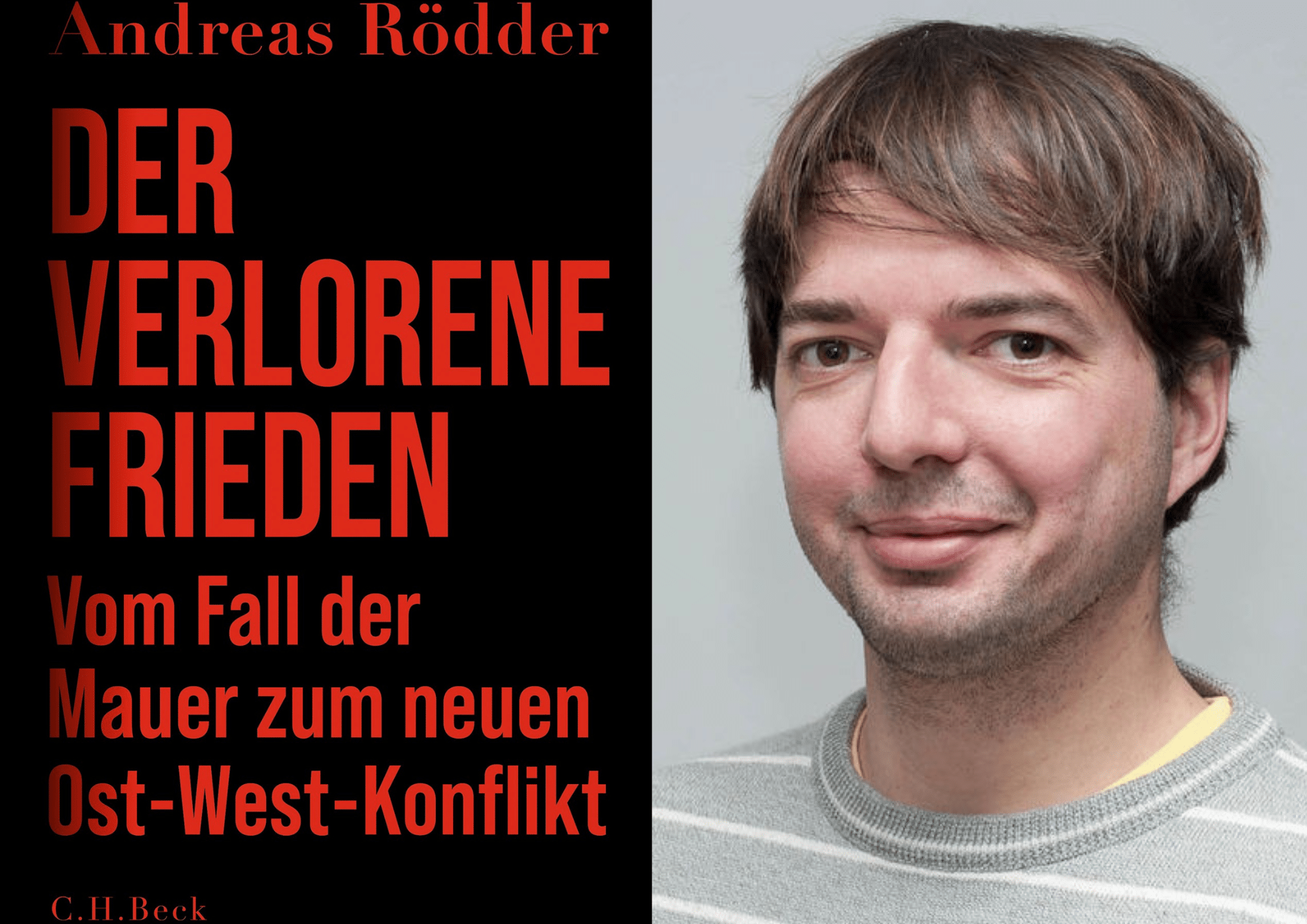
The Failure of the post-Cold War Order – Andreas Rödder on Western Hubris, Russian Imperialism, and the Road Not Taken
Andreas Rödder’s new book, Der verlorene Frieden (The Lost Peace), addresses a vexing, much-debated question: why have the hopes raised at the end of the Cold War been so gravely disappointed? Why have those hopes been replaced by the threats of today’s “tendentially bipolar” (Eurasian autocrats versus the Western alliance) but also highly unpredictable and dangerous world? To offer a substantial response, Rödder approaches international relations from a historical perspective.
16.09.2024
Histories and Futures of Liberalism
After the End of Naivety: Anne Applebaum on Current Autocratic Threats and the Path Forward
Anne Applebaum – a liberal conservative historian and journalist with an impressive catalogue of publications and exceptionally wide reach – may have recently distanced herself from her former right-wing allies. However, her new Autocracy Inc. displays more than the occasional penchant for Manichean perspectives. Autocracies, she asserts at one point, “want to create a global system that benefits thieves, criminals, dictators, and the perpetrators of mass murder” .
4.09.2024

Histories and Futures of Liberalism
The Trojan Horse Has Arrived – András Bozóki on Autocratization, External Constraints, and the Role of His Own Generation
In this conversation at the Review of Democracy, András Bozóki – author of the new collection Töréspontok. Tanulmányok az autokrácia kialakulásáról (Breaking Points. Studies on the Formation of Autocracy) – reflects on what has made the anti-democratic turn in Hungary so effective and discusses what has surprised him the most about the evolution of the Orbán regime; comments on the regime’s attempted remaking of Hungarian elite groups and its uses of ideology to legitimate its rule; evaluates his thesis on the Orbán regime being an “externally constrained hybrid regime” in light of more recent developments; and assesses the role of his own generation, the 1989ers, in the longer arc of history.
21.08.2024

Histories and Futures of Liberalism
How Illiberal Memory Regimes Paved the Way for the Erosion of Academic Autonomy – Lessons from Hungary
Operating at the intersection between politics and academia, National Memory Institutes across Central and Eastern Europe have developed appealing and resonant narratives and produced a “thick” ideology. Their rise has helped normalize the erosion of autonomous, scholarly expertise in the name of an idealized national community.
7.08.2024

Histories and Futures of Liberalism
Finding the Pragmatist Middle Ground – Michael S. Roth on Being a Student and Student Activism Today
In this conversation at the Review of Democracy, Michael S. Roth sketches the main ways of being a student since ancient times; reflects on the process of learning “to be free”; explores the reasons behind the politicization of universities in the United States; considers what might be new about the adversarial relationship between students and university administrators these days; and sketches what “safe enough spaces” might look like in our turbulent times.
17.06.2024

Histories and Futures of Liberalism
Towards a Position of Responsibility. Joshua Leifer on the Autumn of American Jewish Life, the Most Serious Test of the Jewish Left, and Much More
In this conversation at the Review of Democracy, Joshua Leifer – author of the new book Tablets Shattered. The End of an American Jewish Century and the Future of Jewish Life – analyzes the unravelling of the postwar American Jewish consensus and the reemergence of oppositional Jewish politics; discusses what he sees as the four main political-religious tendencies in our times and how his own relationship to them has evolved over the years; explores the radical potential of traditional Judaism; and reflects on how the diasporic double bind may be navigated today.
10.06.2024

Histories and Futures of Liberalism
How Prehistories Reflect the Modern World
In this conversation at the Review of Democracy, Stefanos Geroulanos – author of The Invention of Prehistory. Empire, Violence, and Our Obsession with Human Origins – sketches the major ways the story of humanity’s emergence has been conceived over the past two and a half centuries; shows how such conceptions can shed light on the history of the modern world; discusses what has made this generative intellectual tradition also one of the most ruinous; and reflects on what our fashionable prehistories may reveal about the kind of world we currently live in.
12.04.2024

Histories and Futures of Liberalism
Five Ideas Books in 2023 (Plus Another Five) – by Ferenc Laczó
Ideas editors and podcasters have been invited to a continuous feast in 2023: the year has offered an unusual number of original publications of the highest caliber. Natasha Wheatley’s The Life and Death of States: Central Europe and the Transformation of Modern Sovereignty, the Vienna-based discussion of which we were proud to co-organize; Sam Moyn’s Liberalism Against Itself. Cold War Intellectuals and the Making of Our Times that substantially critiques the dominant form Western liberalism has taken; Danielle Allen’s exciting proposal of a power-sharing liberalism; George Steinmetz’s major monograph on the colonial origins of modern social thought in France; or Adam Shatz’s collection of essays on the radical imagination have all been evident highlights. Here comes an all too selective list of five recommendations from RevDem Ideas of books that deserve to be more widely read and discussed. Darrin M. McMahon’s new book offers a wide-ranging and beautifully crafted intellectual [...]
21.12.2023

Histories and Futures of Liberalism
Who Will Define the International Order of the 21st Century? – John M. Owen IV on Liberal Democracies in Our Fragile World
In this conversation with RevDem editor Ferenc Laczó, John M. Owen IV – author of the new book The Ecology of Nations. American Democracy in a Fragile World Order – explains what he means by co-evolution and the regime-power dilemma; shows how authoritarian rivals, such as China and Russia, have attempted to engineer their ecosystems; discusses the three historical ages of liberalism and what might replace the currently dominant form of open liberalism; and reflects on what the emergence of two rather separate but partly overlapping international ecosystems might imply for the future.
11.12.2023

Histories and Futures of Liberalism
Democracy cannot really function if it is not liberal. Interview with Cas Mudde
Among the challengers to liberal democracy in Europe, we can count populists, autocrats, and the increasingly often mentioned illiberals. But who are they and what is illiberalism? How does it relate to populism? Can illiberals be democrats at all? What are the policy implications of having illiberal politicians, especially of the radical right, in power in the EU? This interview explores these questions with Professor Cas Mudde. It covers various issues at the intersection of academic and policy research on populism, illiberalism, democracy, and the radical right. It discusses whether the growing body of literature on illiberalism addresses something that is fundamentally new on the global political agenda, how this literature relates to academic research on populism, and if illiberalism and democracy are reconcilable against the backdrop of a global trend of autocratization, which many scholars of democracy have noted, and which is often attributed to illiberal and populist [...]
8.12.2023

Histories and Futures of Liberalism
Discussing the History of the Present with Andreas Rödder – A Special Panel at the Review of Democracy
Andreas Rödder’s recent 21.1. Eine kurze Geschichte der Gegenwart [21.1. A Brief History of the Present] (C.H. Beck, 2023) offers a fascinating historical analysis of our time. The book paints an impressive picture of how our greatly accelerated, globalized, and digitalized world has been made. The Review of Democracy hosted the session Discussing the History of the Present with Andreas Rödder on November 8 to examine key arguments in this new publication and reflect on issues of central significance in contemporary history. In this special panel, Prof. Rödder – who holds the chair for Modern and Contemporary History at the Johannes Gutenberg University Mainz – has been in conversation with four other leading contemporary historians, Camilo Erlichman (Assistant Professor at the Department of History, Maastricht University), Sonja Levsen (Professor for Modern and Contemporary History at the University of Tübingen), Michal Kopeček (Head of the Department for History of Ideas and [...]
29.11.2023

Histories and Futures of Liberalism
Illiberal Liberalism: COVID and the Moral Crisis of the Left
by Muriel Blaive In the recent pandemic, the moderate left has failed the lower half, what we used to call the working class, which is now rather the working poor. What do I mean by the left? Its definition varies from country to country and almost from person to person. I leave aside the extreme left and focus in this article on the liberal left, which I use as a synonym for the moderate left or liberals, a current of thought largely represented amongst intellectuals and journalists, for instance those of the New York Times, the Guardian or the Washington Post that I will cite many times here. While this moderate left has historically claimed to represent the interests of the disadvantaged, I argue that with COVID they have focused instead on surviving at all costs at the expense of the poor, including – and this is my second point – by endorsing authoritarian means: censorship, repression, and public shaming. They rationalized their heavy-handed response with a narrative built [...]
17.11.2023

Histories and Futures of Liberalism
What Makes the Identity Synthesis a Trap? Yascha Mounk on the Emergence, Appeal, and Consequences of a Defining Ideology of Our Time
In this conversation with Ferenc Laczó, Yascha Mounk discusses his last book "The Identity Trap. A Story of Ideas and Power in Our Time".
26.09.2023
Histories and Futures of Liberalism
A Betrayal of Liberalism: Samuel Moyn on the Mistaken Path of Cold War Liberals
In this conversation with RevDem editor Ferenc Laczó, Samuel Moyn – author of the new book Liberalism Against Itself. Cold War Intellectuals and the Making of Our Times – discusses what motivated him to explore the Cold War liberal betrayal of previous liberal traditions; what their redefinition of the liberal canon and silences about crucial developments in their own lifetime may reveal about Cold War liberals; why the liberal establishment has failed to reexamine Cold War liberalism since 1989–91; and what would be minimally needed to make contemporary liberalism “credible enough for salvation.”
29.08.2023
Histories and Futures of Liberalism
The War in Ukraine and Transition: In Conversation with Maria Popova
Despite, or perhaps due to, the war in Ukraine there have been positive developments in combating corruption and other issues in anticipation of EU membership. In this RevDem Rule of Law podcast Teodora Miljojkovic discusses these issues around transition with Professor Maria Popova.
20.06.2023

Histories and Futures of Liberalism
From democracy to authoritarian capitalism
In this op-ed, Gábor Scheiring explores the latest Freedom House Nations in Transit Report, its implications for Hungary, and how the report only reveals the tip of the iceberg of the democratic backsliding in Hungary.
16.06.2023

Histories and Futures of Liberalism
A life for power? Viktor Orbán’s long affair with Hungary
Do the familiar tropes of anti-tyrannical literature explain anything about what happened and is still happening in contemporary Hungary, a country that has changed so profoundly not only as compared to its post-1989 realities but from its 2010 self too?
30.05.2023

Histories and Futures of Liberalism
Danielle Allen on Power-Sharing Liberalism
In this conversation with RevDem editor Ferenc Laczó, Danielle Allen – author of the new book "Justice by Means of Democracy" – discusses her proposal of a power-sharing liberalism and explains why she calls herself a “eudaemonist democratic pragmatist”; shows why it is essential to foster a connected society and measure that society by the principle of “difference without domination”; reflects on what a paradigm change in political economy could look like and which model of citizenship would be most suitable for our times.
24.05.2023

Histories and Futures of Liberalism
A Paranational World — Naturalization, Fiction and Edges of Nationality
In conversation with RevDem editor Kasia Krzyżanowska, Dr. Stephanie DeGooyer discusses her recent publication Before Borders: A Legal and Literary History of Naturalization (Johns Hopkins University Press, 2022).
15.05.2023

Histories and Futures of Liberalism
Be Realistic, Demand Significant Change! Daniel Chandler on What a Progressive Liberal Society of the Future Could Look Like
In this conversation with RevDem editor Ferenc Laczó, Daniel Chandler – author of the new book "Free and Equal: What Would a Fair Society Look Like?" – discusses key principles that a better and fairer society could be based on; shows what makes John Rawls’ ideas so exceptionally relevant today and how they could help improve the democratic process; explains how placing questions of power, control, dignity, and self-respect at the center of liberal economic thinking would foster new economic arrangements; and discusses where egalitarian liberalism has already been practiced and with what consequences.
22.04.2023

Histories and Futures of Liberalism
Conscious European, Critic of Hubris: Timothy Garton Ash’s Personal History of Contemporary Europe
Ferenc Laczó reviews "Homelands", Timothy Garton Ash’s personal account and interpretation of contemporary Europe, a history book illustrated by memoir. A “post-68er” who is equally accomplished as a historian and as a journalist, and a highly reputed member of the British and European liberal establishments, Garton Ash proceeds chronologically on the book’s pages to cover “the overlapping timeframes of post-war and post-Wall.”
1.03.2023

Histories and Futures of Liberalism
Review: “Gender and Illiberalism in Post-Communist Europe”, Matthijs Bogaards and Andrea Pető (eds.), Politics and Governance, Cogitatio 2022
Ivan Tranfi reviews the recent special issue on gender and illiberalism edited by Matthijs Bogaards and Andrea Pető, experts in de-democratization and gender studies from Central European University.
17.02.2023

Histories and Futures of Liberalism
Illiberalism and Gender in Post-communist Europe
The podcast is based on the conference and the special issue of Politics and Governance, No. 3 in 2022 edited by Matthijs Bogaards (CEU Department of Political Science, CEU Democracy Institute) and Andrea Pető (CEU Department of Gender Studies, CEU Democracy Institute).
24.01.2023
Histories and Futures of Liberalism
Liberalism Hasn’t Provided Adequate Answers to Today’s Major Crises: Luke Savage on Contemporary Liberalism and Its Democratic Socialist Critique
In this conversation with RevDem editor Ferenc Laczó, Luke Savage – author of "The Dead Center. Reflections on Liberalism and Democracy After the End of History" – discusses key aspects of his critique of contemporary liberalism; reflects on the role of generational experiences in shaping the search for a political alternative; offers a detailed assessment of Joe Biden’s ongoing presidency; and ponders whether democratic socialists have managed to challenge the hegemony of liberal ways of thinking and transform the political conversation.
23.11.2022

Histories and Futures of Liberalism
Democracies Proved More Successful at Breaking Promises. Fritz Bartel on the End of the Cold War and the Rise of Neoliberalism
RevDem section heads Vera Scepanovic and Ferenc Laczó talk with Fritz Bartel, author of "Triumph of Broken Promises. The End of the Cold War and the Rise of Neoliberalism".
8.09.2022

Histories and Futures of Liberalism
A Crafted Gem: Giuseppe Martinico reviews ‘Anti-Constitutional Populism’
A review by Giuseppe Martinico of a book Anti-Constitutional Populism edited by M, Krygier, A. Czarnota, W. Sadurski (Cambridge University Press 2022)
6.09.2022

Histories and Futures of Liberalism
Joshua L. Cherniss on Liberalism and Ethical Commitment in Dark Times [LONG READ]
In this conversation with RevDem assistant editor Vilius Kubekas, Joshua L. Cherniss discusses the central role ethical commitment played in twentieth-century liberalism.
28.03.2022

Histories and Futures of Liberalism
Michael Ignatieff: Liberalism has been weakened by its bloodless cosmopolitanism
Michał Matlak speaks with Michael Ignatieff about his recent book On Consolation: Finding Solace in Dark Times, the role of religion in the modern world, whether conservative liberalism is possible today, the cancel culture, the (im)possibility of European integration, and much more.
31.01.2022

Histories and Futures of Liberalism
The Rise of the EU Marked the End of the Universal Welfare State. Varela on People’s Histories
In this interview, Agnė Rimkutė discusses with Raquel Varela the importance of seeing the working classes as actors in the historical process and the implications of people’s history for our understanding of democracy.
6.01.2022

Histories and Futures of Liberalism
Deadlock of Western liberalism. Petr Agha Reviews a Book by Krastev and Holmes
The Light that Failed: A Reckoning fails to deliver a fresh interpretation which would venture beyond the traditional liberal mantra. It is a representation of the contemporary deadlock of Western liberalism.
28.09.2021

Histories and Futures of Liberalism
Is Neoliberalism Finally Dead?
Few concepts have been declared dead and buried more often than neoliberalism. However, it continues to survive. Neoliberal Resilience, Aldo Madariaga’s award-winning book, shows how. Review by Gabor Scheiring.
20.07.2021

