Interviews
Interviews
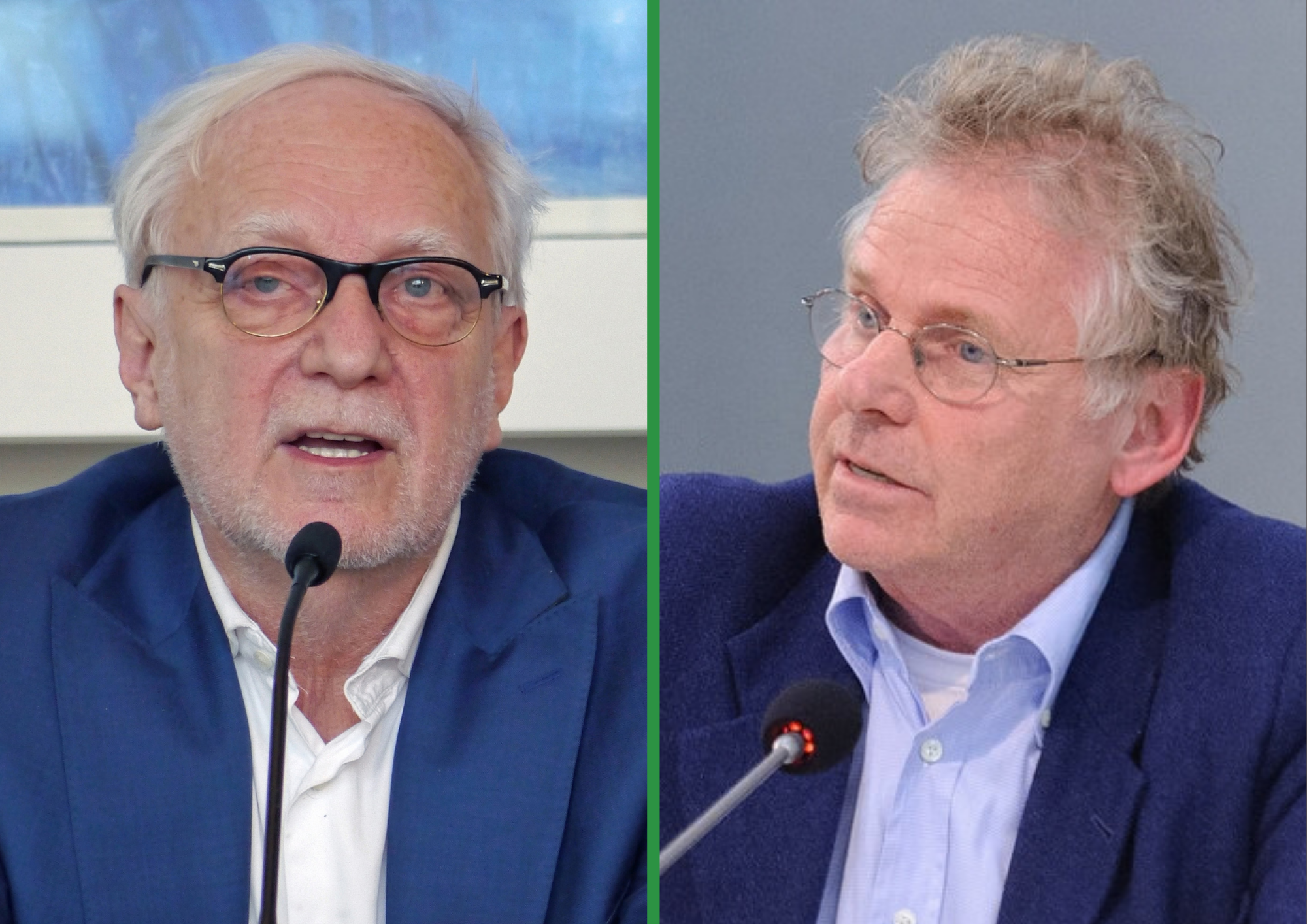
For a Utopian Realism: A Conversation with Daniel Cohn-Bendit and Claus Leggewie
In this conversation with Ferenc Laczó, Claus Leggewie and Daniel Cohn-Bendit discuss their political friendship, their self-positioning on the left, and whether the hopes of emancipation they cherished in their youth have been fulfilled. They also explore the idea of cosmopolitan universalism, new roles the EU would need to assume, and how a more optimistic political vision could emerge.
28.09.2026
Interviews
How to Lean into Disruptive Change? – Mark Leonard on a New Artisanal Code for Europe
In our new podcast, Mark Leonard (co-founder and director of the European Council on Foreign Relations) discusses the conclusions he has drawn concerning “the four Cs:” capital, climate, chips, civilizations, and talks about what a new, more holistic approach to European security might prioritize.
20.07.2026

Interviews
Constitutional Enthusiasm in Hungary – In Conversation with Gábor Halmai
Sixteen years of rule by Viktor Orbán’s Fidesz party have come to an end in Hungary. During this time, the country received prominence in debates about the rule of law like practically no other. Since winning a two-thirds majority in 2010, Fidesz had significantly altered the Hungarian constitutional system to ensure the persistence of its own power. According to many analysts, this set a blueprint that other right-wing populists around the world have followed. The victory of Peter Magyar’s Tisza-party has brought hope that Hungary will democratize and rebuild the rule of law – something many analysts had almost given up on. Finding the path to achieve this is likely to become challenging. Research has shown that successful returns to democratic governance after an authoritarian period are rare, and pro-democratic politicians who take over after an authoritarian incumbent often turn to authoritarian governance themselves. Yet, euphoria is currently running high in Hungary. Perhaps [...]
11.06.2026

Interviews
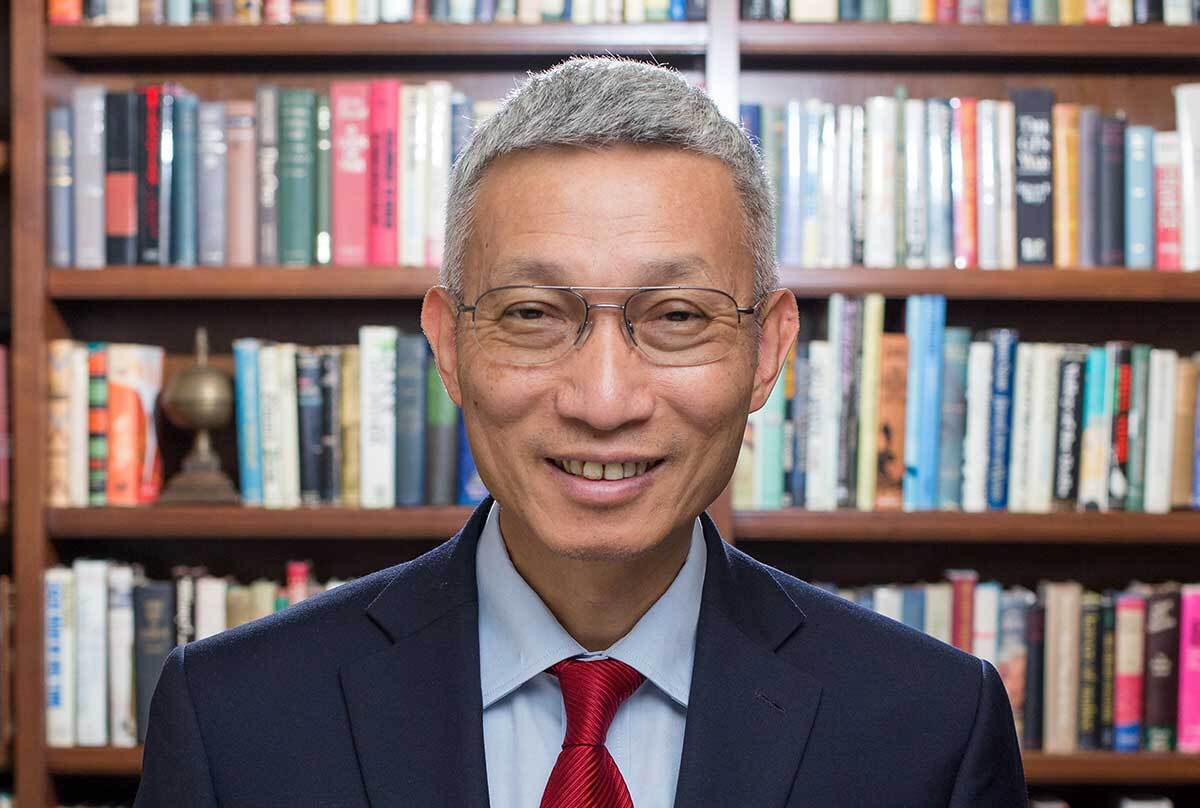
Anticipating Autocracies: A History of Contemporary China
In this latest conversation, we speak with Minxin Pei about his latest book, The Broken China Dream: How Reform Revived Totalitarianism (Princeton University Press, 2025), which challenges the enduring assumption that economic development naturally leads to democracy. Pei argues that China’s post-Mao reforms produced not political liberalization but a resilient, adaptive form of authoritarianism.
9.03.2026
Interviews
Why Gen-Z is Rising: Erica Chenoweth and Matthew Cebul on How We Might be Witnessing a Profound Generational Transformation
Erica Chenoweth and Matthew Cebul discuss the political profile of Gen-Z protesters, what ignited their recent protests across the globe, and how those protests unfolded in various places. They reflect on the promises and perils of those protests – and how the related question of violence and non-violence has played out.
2.03.2026

Interviews
The Difficult Target – Martti Koskenniemi on the Laws That Rule Us
The last two years have seen international law rise to the forefront of public debates. A permanent topic in parliaments, universities, demonstrations, and various other social contexts, international law now seems almost omnipresent. At the same time, some events have led many to proclaim the death of the system altogether. In our new interview, Martti Koskenniemi challenges claims about the “death” of international law and suggests alternative readings of the current situation.
25.02.2026

Interviews
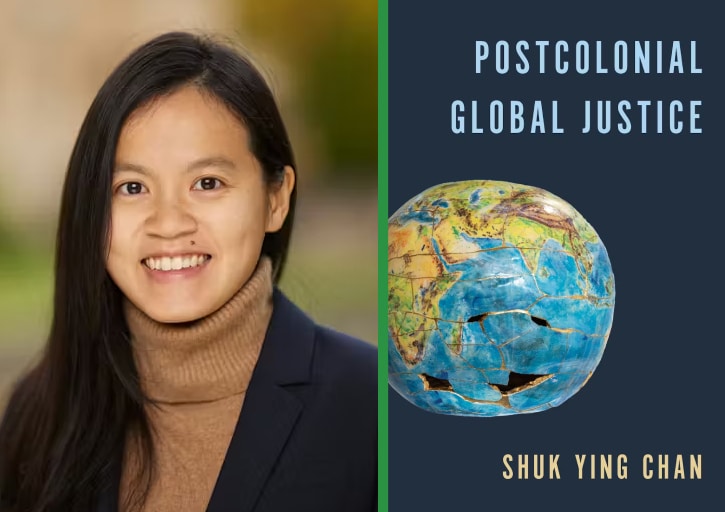
Shuk Ying Chan on Postcolonial Global Justice
In this episode of the Review of Democracy podcast, political theorist Shuk Ying Chan (UCL) discusses her new book Postcolonial Global Justice, which develops an account of postcolonial global justice as social equality by thinking with anticolonial leaders Aimé Césaire, Frantz Fanon, Kwame Nkrumah and Jawaharlal Nehru.
23.02.2026
Interviews
Digging Up the Dead: What Vampire Panics Reveal About Power
In our first podcast of this series, we discuss with Prof. John Blair, around his latest book Killing the Dead: Vampire Epidemics from Mesopotamia to the New World, published by Princeton University Press. John Blair reconstructs a world in which the dead were not metaphor but menace. His book follows the concept of restless bodies which stirred various social anxieties and created symbolic meanings.
16.02.2026

Interviews
A Midwife’s Confession: Democracy Hasn’t Democratized the Home in India
“How many babies have you killed, roughly?” This is a question that tolls through the 2024 BBC documentary, The Midwife’s Confession. Available for free streaming on YouTube, the documentary centres around Katihar in the Kosi region of Bihar, India. The documentary deals with the outlawed yet prevalent practice of female infanticide. A result of the National-award winning journalist and filmmaker Amitabh Parashar’s twenty-eight-year-long journalistic engagement with the topic in Bihar, the documentary investigates the fraught socio-political terrain informed by gender biases and caste realities that forces the midwives to kill the girl children they help bring to life.
10.02.2026

Interviews
Women’s Participation in Ukraine’s Euromaidan- A Conversation with Olena Nikolayenko
In the podcast, Olena Nikolayenko places women’s protest within a broader framework, which includes the Arab Spring and Belarus. Her claim is that age, class, region and political experience shape women’s forms of engagement. Based on these observation, Invisible Revolutionaries distinguishes between three models of participation: patriarchal, emancipatory, and hybrid.
9.02.2026

Interviews
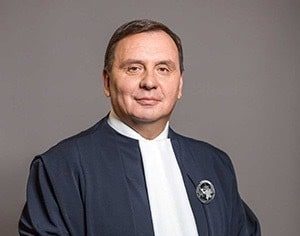
Adjudicating in Times of War – In Conversation with Stanislav Kravchenko
Even as parts of the country are ravaged by lawless attacks, the judiciary continues to function and ensure the operation of Ukraine’s legal system. A new challenge has emerged with the process of Ukraine’s accession to the European Union (EU). The country’s legal system must adapt to the EU’s requirements.
5.02.2026
Interviews
Crime, Crackdowns, and Democracy in Ecuador
Ecuador has experienced one of the most dramatic surges in criminal violence in Latin America, alongside growing pressure on democratic institutions. In this episode of the Review of Democracy podcast—produced in cooperation with the Journal of Democracy—Gabriel Pereira speaks with Galo Mayorga and Kai M. Thaler about how state weakness, militarized security policies, and public fear are reshaping Ecuador’s democracy.
2.02.2026

Interviews
Why Honduras Is Facing Election Chaos
In this episode of the Review of Democracy podcast, Gabriel Pereira speaks with Rachel A. Schwartz about her recent Journal of Democracy article, “Why Honduras Is Facing Election Chaos.” They examine how logistical failures, elite conflict, and long-term democratic erosion combined to produce uncertainty over the outcome, how US backing shaped post-election politics, and what the new government may mean for Honduras’s democratic future.
29.01.2026

Interviews
End of Year Podcast Part II: – Looking Ahead to 2026
As Review of Democracy turns its attention from 2025 to the uncertainties of 2026, our editors Adrian Matus (Democracy and Culture) and Anubha Anushree (Cross-Regional Dialogue) discuss the intellectual questions that might shape the year ahead.
27.01.2026

Interviews
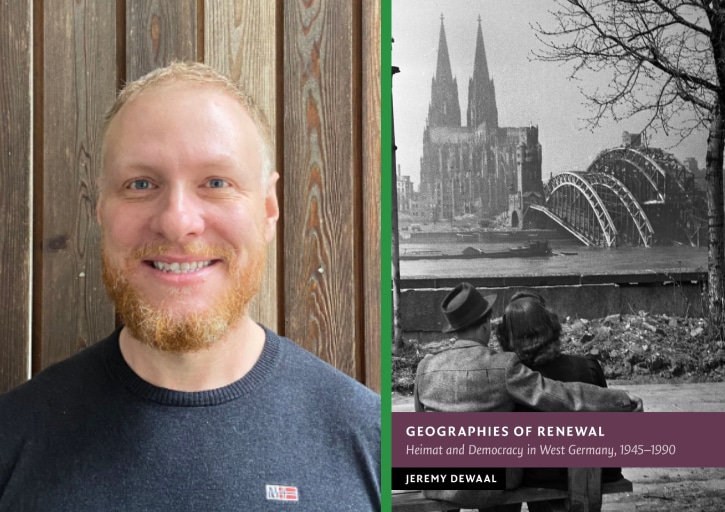
Heimat Revisited: Jeremy DeWaal on Place, Belonging and Post-war Politics in West Germany
What does it mean to feel “at home” in a place, and why does that matter for democracy? In this episode, historian Jeremy DeWaal talks about Heimat, a German word that is famously hard to translate. It is often rendered as “home” or “homeland”, but it also points to a deeper sense of belonging, memory and emotional attachment to specific places.
22.01.2026
Interviews
Stiliagi and Soviet Masculinities- A Conversation with Alla Myzelev Part II
In the Soviet Union, youth fashion meant more than just a way of expression. In our latest episode, we discuss with Alla Myzelev about the stiliagi, a flamboyant youth subculture that emerged in the late Stalinist and early post-Stalinist Soviet Union. Myzelev situates the stiliagi not simply as fashion-conscious rebels, but as a distinctly embodied and aesthetic form of dissent that challenged dominant socialist norms of respectability, discipline, and masculinity.
19.01.2026

Interviews
The Great War and the Transformation of Central Europe: A Conversation with Tara Zahra and Pieter Judson
The episode examines fears of democratisation and elite decision-making, the management of refugees and mass displacement, and the emergence of new welfare practices and administrative experiments, showing how these processes laid the foundations for the post-1918 order. By foregrounding shared experiences of scarcity, mobilisation, and repression across the Monarchy, the discussion examines what the Empire’s often improvised wartime policies reveal about processes of disintegration as well as unexpected capacities for adaptation.
12.01.2026

Interviews
Stiliagi and Soviet Masculinities- A Conversation with Alla Myzelev
In our latest episode, we discuss with Alla Myzelev about the stiliagi, a flamboyant youth subculture that emerged in the late Stalinist and early post-Stalinist Soviet Union. Myzelev situates the stiliagi not simply as fashion-conscious rebels, but as a distinctly embodied and aesthetic form of dissent that challenged dominant socialist norms of respectability, discipline, and masculinity. Through their brightly coloured clothing, enthusiasm for jazz, and stylised modes of self-presentation, stiliagi exposed the fragility of Soviet ideals of the “proper” socialist male citizen. Rather than overt political opposition, their subversion operated through taste, leisure, and the body, revealing how cultural practices could quietly unsettle authoritarian norms even in highly regulated societies.
8.01.2026
Interviews
Benjamin Gedan and Elias French on the Threat to Latin American Term Limits
The desire of leaders to remain in office indefinitely has haunted democracy since its inception. Politicians have found various ways to circumvent democratic accountability and sideline the people’s will for a change in leadership, from military coups to rigged elections or the installation of puppet leaders. One of the most widely used tools to constrain such practices is the establishment of presidential term limits. Many of today’s constitutions impose a limit on the number of times a person can run for office.
5.01.2026

Interviews
End of the Year Podcast 2025 – Part I: Reflections and Reckonings
As 2025 draws to a close, RevDem editors Alexandra Kardos (History of Ideas), Gabriel Pereira (Cross-Regional Dialogue), and Kristóf Szombati (Political Economy and Inequalities) take stock of a turbulent democratic year through three keywords: imagination, frustration, and realignment.
22.12.2025

Interviews
Carceral Politics: “Public Life” of Prisons in Modern Iran and Beyond
In this latest conversation with Golnar Nikpour, we discuss her book, The Incarcerated Modern: Prisons and Public Life in Iran (Stanford University Press, 2024). We discuss how modern Iranian prisons illuminate broader questions about political modernity, state formation, and democratic aspiration.
18.12.2025

Interviews
2025 in Perspective: Daron Acemoğlu on Democracy, Delivery, and the Crisis Within
In this exclusive end-of-year conversation with our Co-Managing Editor Ece Özbey, Nobel Prize–winning political economist Daron Acemoğlu reflects on what 2025 revealed, and failed to resolve, about the state of democracy.
15.12.2025
Interviews
Social Media, AI-Chatbots and the Death of the Evening News: How to Restore Trust in a Fragmented Media World – A Conversation with Raluca Radu
In a conversation for the Review of Democracy, Raluca Radu explains how social platforms like TikTok, WhatsApp groups, and AI-driven chatbots reconfigure the trust towards information. As Raluca Radu clearly emphasizes, COVID-19 marked a shift in media consumption. During the pandemic, the main source of information became the short-form video content on platforms such as TikTok. Some newsrooms recognized that their audiences migrated elsewhere and rushed to follow. They tried to adapt to this changing landscape by establishing social media presence. By now, social media is not only an additional channel of dissemination but, in some cases, the only way to reach citizens who do not read traditional websites or watch TV. Thus, social media and algorithms redefine the public sphere worldwide.
8.12.2025

Interviews
How to Resist Illiberalism: Pedro Abramovay on Reimagining Democracy in Latin America
In this podcast, Pedro Abramovay offers a wide-ranging analysis of the rise of illiberal forces in Latin America and the democratic vulnerabilities they exploit.
4.12.2025

Interviews
Exiles and Diasporas in the Crosshairs of Authoritarian States – Nate Schenkkan on the Rise of Transnational Repression and What Can Be Done to Counter It
In this discussion with Nate Schenkkan, an independent authority on human rights and global authoritarianism and former senior director of research at Freedom House, we examine the growing issue of transnational repression—a practice wherein states pursue individuals and groups beyond their own borders whom they regard as threats to those in power.
1.12.2025

Interviews
Between Disruption and Renewal: Rethinking the Climate Movement in a Time of Democratic Stress
In this double interview, legal scholar Liz Hicks and political scientist Áron Buzogány reflect on the shifting terrain of global climate activism since the peak of the Fridays for Future movement in 2019. They discuss the strategic crossroads the movement now faces. The exchange situates the climate struggle within a wider democratic crisis — one in which both state institutions and activist networks are being forced to reinvent themselves.
20.11.2025

Interviews
How’s the Rule of Law in Poland? – In Conversation with Jakub Jaraczewski
In this podcast, Jakub Jaraczewski examines the progress the Bodnar ministry made in undoing the consequences of eight years of Law and Justice rule. He also discusses the challenges that lie ahead for Minister Żurek, with Nawrocki being widely seen as more confrontational than his predecessor in the Presidential Palace, Andrzej Duda.
17.11.2025

Interviews
Delivering Democracies: Maya Tudor on “What Democracy Does…And Does Not Do?”
In this conversation, Maya Tudor discusses her recent article published in the Journal of Democracy and argues that today’s decline in trust in democracy stems from misconceptions about its achievements, such as expanding education, extending life expectancy, promoting relative peace, and fostering economic progress.
14.11.2025

Interviews
A Turning Point in American Politics? The Rise of Democratic Socialists of America and Zohran Mamdani
To what extent does Zohran Mamdani’s recent election represent a turn in American politics? In an interview for the Review of Democracy, Fabian Holt (Associate Professor at Roskilde University) discusses the political platform that made Zohran Mamdani’s victory possible. Throughout our conversation, Holt maps the evolution of the Democratic Socialists of America, as presented in his latest book “Organize or Burn: How New York Socialists Fight for Climate Survival”, published last month by NYU Press.
12.11.2025

Interviews
Will AI Crack the Foundations of Democracy? Dean Jackson and Samuel Woolley on Longer-term Threats and Ways to Counter Them
In this episode of our special series produced in partnership with the Journal of Democracy, we explore “AI’s Real Dangers for Democracy,” the new article penned by Dean Jackson and Samuel Woolley (Journal of Democracy, Vol. 36, No. 4, October 2025)
3.11.2025

Interviews
EU Research Spotlight: Zsolt Boda on Moral Emotions in Politics and Democracy
In the opening episode of Review of Democracy’s new podcast series on EU-funded research, Alexandra Kardos speaks with Professor Zsolt Boda, Director of the ELTE Centre for Social Sciences, about the MORES Moral Emotions in Politics project, a Horizon Europe Research and Innovation Action exploring how emotions shape democratic life.
30.10.2025

Interviews
When Democracies Start to Self-Destruct: Rachel Myrick on how Polarization Becomes a Geopolitical Threat
In our podcast, Rachel Myrick, the Douglas & Ellen Lowey Associate Professor of Political Science at Duke University, discusses with us how extreme partisan polarization threatens not only domestic governance but also global stability. Drawing on her new book, Polarization and International Politics: How Extreme Partisanship Threatens Global Stability (Princeton University Press, 2025), Myrick argues that polarization in democracies affects foreign policymaking.
27.10.2025

Interviews
The Authoritarian Resurgence in World Politics – In Conversation with Alexander Dukalskis and Alexander Cooley
The end of the last century brought about what scholars have called a “unipolar moment.” With the fall of the Soviet Union, liberalism lost its enemy on the global stage, which led the United States to try to establish an international liberal order by promoting liberalism transnationally. This latter approach has not only been harshly criticized for often being executed hypocritically and sometimes causing disastrous wars, but also ultimately seems to have failed.
22.10.2025

Interviews
Negotiating Sexuality in Socialist Poland: In Conversation with Anna Dobrowolska
Anna Dobrowolska’s new book Polish Sexual Revolutions. Negotiating Sexuality and Modernity behind the Iron Curtain, published at the Oxford University Press this year, reveals fresh perspectives in the scholarship about the socialist states. In our podcast, she explains how Poland and Eastern Europe developed their own distinct approaches to sexual modernity under state socialism. While Western observers assumed sexual liberation was incompatible with communist rule, Poland was quietly developing its own sophisticated approach to sexual modernity. In her book, Anna Dobrowolska aimed to map these differences and nuances. Throughout the conversation, we learn that the conventional narrative of state oppression versus societal resistance proves to be inadequate when examining Poland’s sexual revolution. Dobrowolska’s archival research reveals a complex ecosystem of actors: sexologists, journalists, cultural institutions, who negotiated sexual discourse largely independent of [...]
20.10.2025

Interviews
The Hungarian Border That Took Years to Draw
Borders are rarely born in conference halls. As the newly edited book The Disputed Austro-Hungarian Border: Agendas, Actors, and Practices in Western Hungary/Burgenland after World War I, published this year by Bergahn Books shows that the borders are created by wars and conflicts and then changed by clerks, soldiers, smugglers and villagers trying to make sense of a new world order. By focusing on one of the seemingly post-1918 quieter frontiers, the line separating Austria from Hungary, the book challenges the narrative that the Treaty of Trianon neatly decided everything with a stroke of the pen.
16.10.2025

Interviews
Contentious Politics and Democratic Resilience
In this episode, we sit down with Professor Mohammad Ali Kadivar to explore the urgent and timely question of popular protests amid global democratic backsliding. Drawing from his acclaimed monograph, Popular Politics and the Path to Durable Democracy, Kadivar poses the following questions: What role does dissent play in sustaining democracies? Do protests reinforce or undermine democratic institutions?
13.10.2025
Interviews
The Myth of Democratic Resilience – In Conversation with Jennifer Cyr and Nic Cheeseman
In our latest episode of the special series produced in partnership with the Journal of Democracy, we discuss the recent article co-authored by Jennifer Cyr, Nic Cheeseman and Matías Bianchi, entitled “The Myth of Democratic Resilience” (Journal of Democracy, Vol. 36, No.3, July 2025)
6.10.2025

Interviews
Transformations of the Latin American Right: From Pink Tide to Polarization – Part 2
In the second part of our special two-part episode of the Review of Democracy podcast, we continue our conversation with André Borges, Ryan Lloyd, and Gabriel Vommaro. Building on our first discussion of parties, movements, and leaders, this episode turns to the demand side of the region’s political transformation. We explore how voters’ attitudes, cultural conflicts, and deepening polarization are reshaping right-wing politics across Latin America.
25.09.2025

Interviews
Transformations of the Latin American Right: From Pink Tide to Polarization – Part1
The conversation explores how Latin America’s right has been reshaped since the early 2000s — from the rise of new political parties and movements to the growing role of voters and cultural conflicts. In part one, we focus on the supply side: parties, movements, and leaders redefining right-wing politics in the region. In part two, we turn to the demand side, examining voters, polarization, and the societal forces driving this transformation. Join us as we map out the new generations of conservative and radical right-wing actors that are changing the political landscape across Latin America — and consider what this means for the future of democracy.
22.09.2025
Interviews
The Politics of Migration Narratives – In Conversation with Andrew Geddes
Migration is one of the most salient issues in European politics today. While its importance for voting decisions is widely acknowledged, many of its key characteristics remain the subject of vivid debate. Opinions about migration often diverge sharply: Does migration pose a threat to European societies, or is it essential for economic survival? Are public attitudes becoming more hostile, or more welcoming? Should European countries restrict migration, or embrace it? Competing narratives seem to strongly shape migration policy and the laws through which it is implemented.
17.09.2025

Interviews
Colonial Roots and Continuities in Europe’s Migration System –In Conversation with Janine Silga
When the first treaties that laid the groundwork for today’s European Union and the European Convention on Human Rights were signed after the Second World War, many of today’s member states were still significant colonial powers—empires. It was only in the years that followed that these European empires eroded, and many countries in the Global South gained independence. However, while colonialism formally ended, many have argued that coloniality has persisted. Although this applies to different areas, one of the most important is migration governance. Here, European countries have been accused of replacing explicitly racialized mechanisms with a facially race-neutral apparatus that nonetheless constitutes a system of neocolonial racial borders that benefits some and disadvantages others.
15.09.2025
Interviews
Capitalism’s Democracy: Competition and Resilience in Twenty-First Century
In our latest episode of the special series produced in partnership with the Journal of Democracy, we discuss the recent article co-authored by Steven Levitsky, Semuhi Sinanoglu, and Lucan Way, entitled “Can Capitalism Save Democracy?”
11.09.2025

Interviews
Scripts of Revolutions: A Conversation with Dan Edelstein
In this episode of Democracy and Culture, we speak with Dan Edelstein, William H. Bonsall Professor of French at Stanford University, about his new book The Revolution to Come: A History of an Idea from Stasis to Lenin (Princeton University Press, 2025). His academic investigations range across literary studies, historiography, political thought and digital humanities. Throughout our conversation, we focus on providing a new understanding of the concept of revolution. In his latest book, by tracing the conceptual distinction between stasis and metabolē through Roman, medieval, and Renaissance thought, he recovers the overlooked role of Polybius in shaping the constitutional imagination of early modern Europe.
8.09.2025

Interviews
A New Constitutional Settlement for Poland? – In Conversation with Maciej Kisilowski (Part 2)
In this part, Professor Kisilowski lays out his proposals for a new constitutional settlement for Poland, aimed at addressing the roots and consequences of the severe polarization of the Polish society. He builds upon the arguments expounded in a volume edited by him and Professor Anna Wojciuk, Umówmy się na Polskę (ZNAK 2023), in which thinkers from all across the political spectrum shared their ideas for changing Poland’s political status quo.
4.09.2025

Interviews
The Illiberal Trap: Stanley Bill and Ben Stanley on Trilemmas and Warnings from Poland
In this new episode of our special series produced in partnership with the Journal of Democracy, Stanley Bill and Ben Stanley draw on their new article “Democracy After Illiberalism: A Warning from Poland” (July 2025, Vol. 26, No. 3) to discuss the challenges, dilemmas, and paradoxes of liberalism after illiberalism in Poland. They reflect on the concepts of liberalism and illiberalism to dissect the approach Donald Tusk’s current government has taken and its major consquences. They also consider the wider lessons that may be drawn from recent and ongoing Polish experiences.
1.09.2025

Interviews
War, Oligarchs, and the Future of Ukraine’s Political Economy – Inna Melnykovska on Civic Transformation, Reconstruction and EU Influence in Wartime Ukraine
How is war transforming Ukraine’s economy—and its oligarchs? In this Review of Democracy podcast, political economist Inna Melnykovska (Central European University) discusses how the full-scale Russian invasion has led to surprising shifts in business-state relations, including a turn toward civic responsibility among Ukraine’s biggest companies.
20.08.2025

Interviews
The War Against Law – David Dyzenhaus on Common Good Constitutionalism
David Dyzenhaus explains how Carl Schmitt’s anti-liberal critiques underpin today’s “Common Good Constitutionalism,” linking Schmitt and Voegelin to modern far-right thinkers. He warns that such theories both legitimize and encourage authoritarianism by undermining liberal democracy’s rule-of-law foundations.
18.08.2025

Interviews
From Competitive Authoritarian to Hegemonic: Berk Esen on the Decline of Turkish Democracy and the Prospects for Its Revival (Part 1)
In Part 1 of our latest edition in the special series in partnership with the Journal of Democracy, Berk Esen unpacks how Turkey’s competitive authoritarian regime is veering toward full autocracy.
13.08.2025

Interviews
Holding Frontex Accountable – In Conversation with Joyce De Coninck
In current public discourse, human rights violations at the EU’s borders are inextricably linked to one specific actor: the European Border and Coast Guard Agency – or, in short, Frontex. Since its establishment in 2004, human rights activists have become increasingly aware of various rights violations committed by the agency, particularly in the Mediterranean. To name just one example, Frontex has been accused of providing the locations of migrants intercepted at sea to the Libyan coast guard, which then transported them to camps where they have been systematically raped, tortured, and enslaved. Remarkably, despite accusations of the most severe human rights violations, Frontex has largely managed to avoid legal consequences. Currently, Frontex stands before the Grand Chamber of the Court of Justice of the EU for the first time in its history.
11.08.2025

Interviews
The Aftermath of Poland’s Presidential Election – In Conversation with Maciej Kisilowski (Part 1)
In Part 1 of this podcast, Maciej Kisilowski examines the results of Poland’s presidential election as well as its implications for Poland’s political dynamics over the next few years. In particular, he addresses the issue of whether Polish liberals and progressives are capable of correctly identifying the prevailing sentiments in a deeply divided society.
6.08.2025

Interviews
The Paradox of Dynastic Democracy: Richard Javad Heydarian on Current Developments in the Philippines, Sharpening Global Competition, and the Prospects of a Liberal-Progressive Breakthrough
In this new episode of our monthly special created in partnership with the Journal of Democracy, Richard Javad Heydarian discusses the Philippines’ dynastic democracy and political prospects in a truly global framework.
4.08.2025
Interviews
The Rise of Legislative Authoritarianism –In Conversation with Paolo Sosa-Villagarcia and Moisés Arce
In the latest episode of our special series produced in collaboration with the Journal of Democracy, Paolo Sosa-Villagarcia and Moisés Arce discuss the rise of legislative authoritarianism, compare it with more traditional forms of authoritarian rule, and explore its implications both in theory and in practice.
7.07.2025

Interviews
Mapping Crisis Across Borders: Balázs Trencsényi on the Interwar Period, Intellectual History, and the Future of Democracy
In our new podcast, we speak with historian Balázs Trencsényi about his new book Intellectuals and the Crisis of Politics in the Interwar Period and Beyond: A Transnational History (OUP, 2025). Trencsényi offers a sweeping re-narration of modern European intellectual history through the lens of “crisis” — not only as an analytical category, but as a powerful tool of political mobilisation.
3.07.2025

Interviews
Envisioning Stability: Peace, Gender, and Climate in Nepal
In an insightful conversation with our Assistant Editor Vatsala Tyagi, Dr. Prakash Bhattarai, Executive Director of the Centre for Social Change (CSC), Kathmandu and a leading researcher in peace and conflict studies, shared his perspectives on sustaining peace, addressing migration, and tackling climate change in Nepal and South Asia.
1.07.2025

Interviews
Curating Europe’s Memory: A Conversation with Simina Bădică about the House of European History
In this episode of Open Space(s) series, the Review of Democracy brings to your attention one of Europe’s most ambitious cultural institutions: the House of European History. Founded by the European Parliament in 2017 in Brussels, this unique institution explores Europe’s past from a transnational perspective and provides a platform for debating shared memory. The House of European History curates exhibitions, fosters debates, and research the shared European histories.
30.06.2025

Interviews
Reimagining Political Theory: A Global and Comparative Conversation
In this episode of the Review of Democracy podcast, Alexandra Medzibrodszky talks to Leigh Jenco and Paulina Ochoa Espejo—two of the three co-authors of the new textbook Political Theory: A Global and Comparative Introduction, published by SAGE. Co-authored with Murad Idris, this groundbreaking volume reimagines how political theory is taught and understood by moving beyond a Eurocentric focus and embracing a truly global and comparative framework. Rather than organizing content around geographical regions or national traditions, the book takes a thematic approach—exploring war, political action, development, ritual, and other enduring political questions through a rich array of sources from across cultures and time periods. In the conversation, we discuss what it means to think politically beyond the Western canon, how to work with texts that are often marginalized or excluded from mainstream syllabi, and what challenges arise when dealing with disciplinary boundaries.
26.06.2025

Interviews
Startup Democracy: Meritocracy and Gender in Bangalore, A Conversation with Hemangini Gupta
Startups have become one of the defining features of the 21st-century economy, celebrated as engines of innovation, meritocracy, and social mobility. Entrepreneurs—from Silicon Valley to Bangalore—are increasingly influential in shaping not just markets but also political discourse. Governments around the world are investing heavily in building startup ecosystems, often presenting them as neutral, technocratic spaces of economic growth and opportunity.
24.06.2025
Interviews
Can Courts Save Democracy? In Conversation with Samuel Moyn
Samuel Moyn discusses the risks of focusing too heavily on legality in the fight against rising authoritarianism. Since the beginning of the year, the Trump administration has been trampling on different sectors of the U.S. state. Numerous commentators, both from the U.S. and abroad, have argued that the issue of a potential “constitutional crisis”—one that could pave the way for authoritarianism—essentially hinges on whether the government complies with court orders. In contrast, Professors Ryan Doerfler and Samuel Moyn have argued that this focus is, at the very least, misplaced. So far, rather than protecting democracy, the courts have helped pave the way for the current situation. This raises important questions about the right pro-democratic strategy—not only in the U.S., but also in European countries such as Germany, where the far-right is on the rise and the judiciary is widely seen as the bulwark against authoritarianism. In this conversation, Samuel Moyn explains the [...]
16.06.2025

Interviews
Survival, Resistance and Readiness in Dark Times – Vincent Liegey on the Trajectory and Future of the Degrowth Movement
In this interview Review of Democracy political economy editor Kristóf Szombati speaks with Vincent Liegey — degrowth activist, essayist, lecturer and editorial advisor of the new Routledge Handbook of Degrowth — about the roots, trajectory, and challenges of the degrowth movement.
12.06.2025
Interviews
Instrumentalization of Migration? – In Conversation with Nora Markard
In recent years, the EU’s increasingly right-leaning discourse on migration has given rise to a new narrative: the instrumentalization of migration. EU member states strive for lower human rights standards, arguing that Belarus, under the authoritarian rule of Alexander Lukashenko, deliberately sends individuals who have fled countries such as Afghanistan and Iraq to the EU’s borders in order to overwhelm them, at times even accusing these individuals of collaborating with Belarusian authorities. Currently, three cases related to this situation are pending before the European Court of Human Rights.
9.06.2025

Interviews
Can Democracy Deliver? Francis Fukuyama and Beatriz Magaloni on Performance, Legitimacy, and Public Trust
In the latest episode of our monthly special in cooperation with the Journal of Democracy, Francis Fukuyama and Beatriz Magaloni discuss why democratic legitimacy increasingly hinges on governments’ ability to deliver tangible results.
5.06.2025

Interviews
David vs. Goliath: Defeating Russian Autocracy
In the new episode of our monthly special in cooperation with the Journal of Democracy, Serhii Plokhii discusses the key aspects of Russia’s war in Ukraine, the clash between democracy and autocracy.
2.06.2025
Interviews
Erased: Women, Power, and the Hidden History of International Relations
In this episode of the Review of Democracy podcast, Alexandra Medzibrodszky speaks with Patricia Owens, renowned professor of international relations at Oxford, about her bold and revelatory new book, Erased: A History of International Thought Without Man (Princeton University Press, 2025). Owens exposes the hidden foundations of international relations in Britain, not as a field founded solely by elite white men, but one deeply shaped by the intellectual work of women—figures such as Margery Perham, Merze Tate, Eileen Power, and Susan Strange—whose ideas and influence have long been buried under layers of academic erasure.
26.05.2025

Interviews
The Unequal Republic and the Egalitarian State: Democracy, Authoritarianism, and the Politics of Redistribution in India and China
In this conversation with Professor Vamsi Vakulabharanam, we explore the relationship between democracy and economic inequality by examining the divergent trajectories of China and India, as detailed in his recently published book, Class and Inequality in China and India, 1950-2010 (Oxford University Press, 2024). Through a comparative lens, Vamsi probes how political regimes—one authoritarian, the other democratic—shaped the economic responses to inequality in each country. While both nations began their postcolonial histories with ambitious visions of development, their political systems produced markedly different outcomes. In India, democratic governance allowed for broad participation but was also shaped by elite consensus. Post-independence reforms, though grounded in democratic ideals, often took a top-down form that prioritized the interests of rural capitalists and dominant castes. This constrained the potential for deep structural transformation, despite the formal [...]
19.05.2025

Interviews
Authoritarian Waves Crashing: Dan Slater Reinterprets the Third Wave of Democratization
In the new episode of our monthly special in cooperation with the Journal of Democracy, Dan Slater discusses the authoritarian origins of the third wave of democratization.
5.05.2025
Interviews
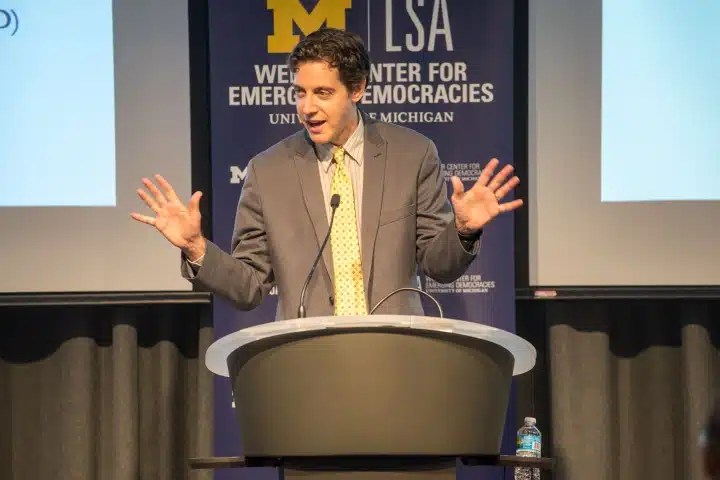
Hydro-hegemony: Water Modernization in Nepal and Beyond
In this wide-ranging conversation on hydrology and climate change, Dr. Dipak Gyawali, former Minister of Water Resources for Nepal, offers a series of crucial insights into the often indifferent, selectively inadequate, and politically compromised responses to the climate crisis. Arguing for a more sophisticated, multipronged approach, Dr. Gyawali critiques dominant Western scientific paradigms for failing to recognize the climate crisis primarily as a crisis of water. He highlights how these frameworks not only marginalize water-related concerns but also frequently dismiss indigenous hydrological knowledge systems as unscientific or primitive, thereby reinforcing global hierarchies of knowledge and power.
28.04.2025
Interviews
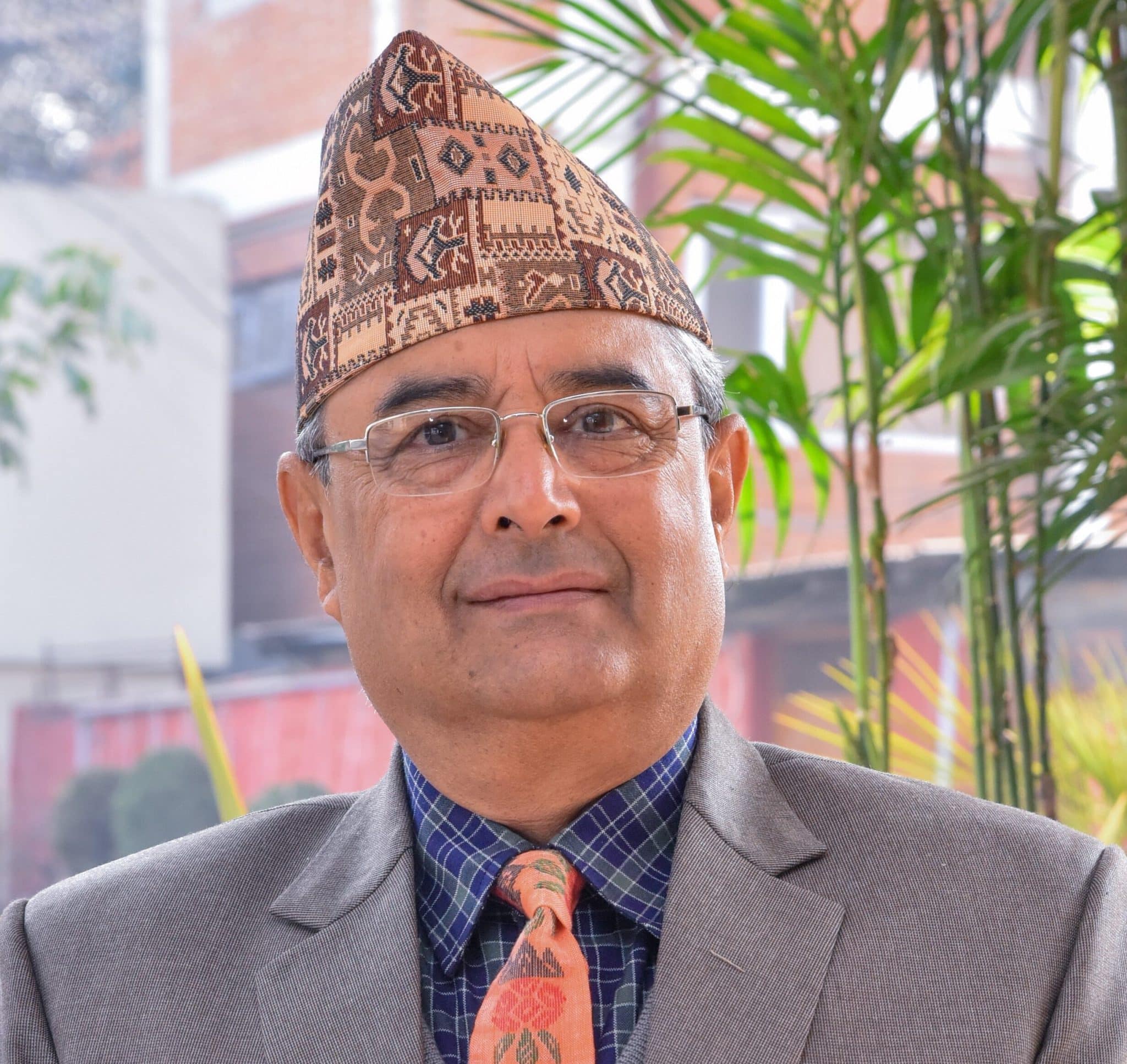
Valeurs de l’Union – In Conversation with Luke Dimitrios Spieker
Since the seminal 2018 Portuguese Judges case, it has been established that violations of values enshrined in Article 2 of the Treaty on European Union (TEU) can be litigated before the Court of Justice of the European Union (CJEU). Currently, proceedings are ongoing in the European Commission’s infringement action against Hungary, the argument being that its anti-LGBTQI+ laws breach provisions of the internal market, several Charter rights, and, importantly, the common values enshrined in Article 2 TEU. The case, known as Valeurs de l’Union, has been hailed as the “largest human rights battle in EU history.” In this RevDem Rule of Law podcast episode, our co-managing editor, Dr. Oliver Garner, discusses the enforcement of the Union’s values at the Member State level as well as at the Union’s institutional level with Dr. Luke Dimitrios Spieker. Dr. Spieker is Senior Research Fellow at the Max Planck Institute for Comparative Public Law and International Law and Postdoctoral [...]
22.04.2025

Interviews
Illiberal Transatlantic Ties and the Reshaping of Democracy: Lessons From the US and Hungary
In this episode of the Democracy After 2024 series, Zsuzsanna Végh and Daniel Hegedűs examine transatlantic cooperation between state and non-state actors in the United States and Hungary. They analyze commonalities in narratives and shared practices, assessing their impact on democracy in Central and Eastern Europe and beyond. Disclaimer: The views and opinions expressed in this episode are solely those of the speakers and do not necessarily reflect the positions of the German Marshall Fund of the United States or any institutions or organizations with which they are affiliated. Zsuzsanna Végh is a program officer at the German Marshall Fund of the United States and an associate researcher at the European Council on Foreign Relations. Her analytical focus is on the populist radical right in Central and Eastern Europe, its impact on foreign policy and democratic quality, and the foreign and EU policies of the Visegrád countries. Daniel Hegedüs is a German Marshall Fund of the [...]
16.04.2025

Interviews
Ex-Ministers as Constitutional Judges – In Conversation with Mathias Möschel
Debates about the politicization of constitutional courts are as old as the institution itself. The concept’s originator, Hans Kelsen, emphasized the importance of preventing members of the government and parliament from sitting on constitutional courts, “because their acts are the acts to be controlled by the court.” While this idea is deeply entrenched—at least to the extent that simultaneous membership in the executive or legislative and judicial branches is widely prohibited—the same does not hold true across other temporal dimensions. In his new book Ex-Ministers as Constitutional Judges, published by Oxford University Press, Prof. Mathias Möschel examines the effects—both negative and positive—of this practice, focusing on the constitutional courts of France, Italy, Austria, and Germany.
14.04.2025

Interviews
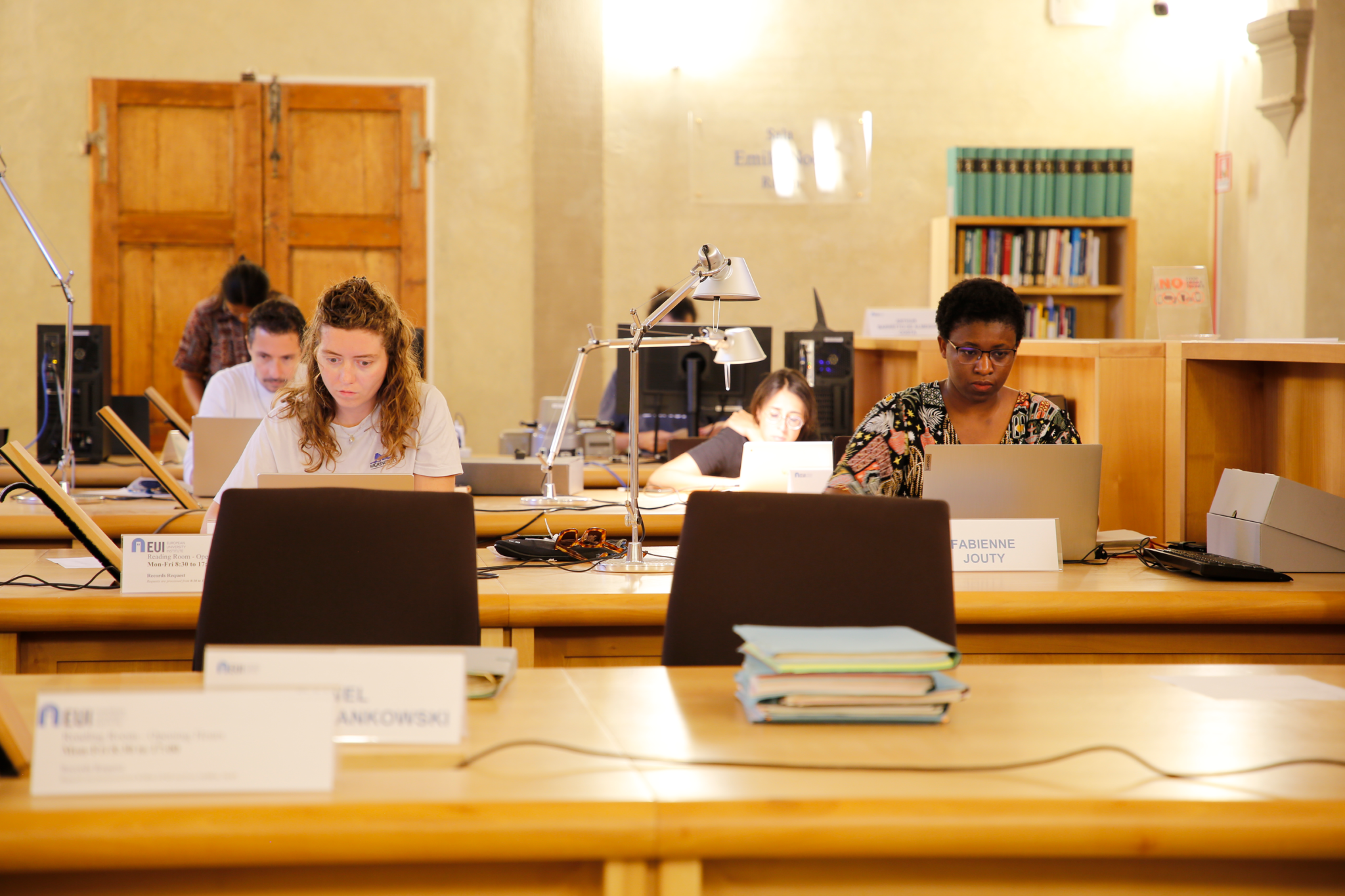
Historical Archives of the European Union – a Space of Knowledge Production
Archives are vital for knowledge formation. Historians and social scientists rely on these spaces to shape new narratives and question the past. Yet, archives often seem to be unveiled in a sort of mystery, which might be partly due to the access restrictions for the specialists and broader public alike. However, not all the archives follow this restrictive approach. On the contrary, many institutions started to favour openness and transparency. Rather than limiting access for the researchers and the larger public, they encourage interactions on different levels.
9.04.2025
Interviews
Why Eco-authoritarianism Is Not the Solution – Nomi Claire Lazar and Jeremy Wallace on Why, Despite Its Many Flaws, We Should Stick to Democracy in Our Quest to Solve the Climate Crisis
In this conversation with Nomi Lazar, Professor of Public and International Affairs at the University of Ottawa, and Jeremy Wallace, Professor of China Studies at the Johns Hopkins School of Advanced International Studies, we engage with their spirited defense of democracy in the face of calls for the deployment of emergency powers to come up with solutions to the worsening climate crisis. Nomi and Jeremy highlight the pitfalls of emergency legislation and spell out the key resources that in their view democracies and only democracies bring to the table in the combat to prevent climate breakdown. The conversation also touches on China’s impressive climate record, the shortcomings of liberal democratic government, the need for more egalitarian forms of democracy, and some of the ways in which well-designed emergency legislation could still prove useful.
7.04.2025

Interviews
How the European Council Leads – In Conversation with Martina Vass
The European Council brings together all of the heads and states of government of the European Union in order to drive policy. In the last decade the EU has faced crises of the economy, membership, values, and migration. This conversation between our co-managing editor Oliver Garner and Dr Martina Vass considers these issues through the lens of the latter's monograph.
31.03.2025

Interviews
A Fragile Constitution? – In Conversation with Dieter Grimm
On March 25, 2025, the “new” German Bundestag began its work. While the government will likely consist of the familiar coalition of Social and Christian Democrats, it may face unprecedented challenges. In the new composition of the German parliament, the center parties no longer hold the two-thirds majority required to amend the German constitution—the Grundgesetz. After, in the “old” Bundestag, a parliamentary motion was adopted for the first time since the fall of the Nazi regime, only due to the support of the far right; some commentators have gone so far as to declare the end of the German political center. Shortly thereafter, the far right achieved record polling numbers in the federal elections. These circumstances raise the question of whether the German legal system is resilient enough to withstand periods of political instability. While the German Constitution is widely regarded as a success, some argue that it has primarily functioned as a “Schönwetter-Verfassung”—a [...]
27.03.2025

Interviews
Political Capacity: Gianna Englert on the Liberal Struggle for Democracy
Is democracy sustainable without informed, virtuous, and engaged citizens? Can political institutions shape the kind of citizenry democracy needs? These questions lie at the heart of Democracy Tamed: French Liberalism and the Politics of Suffrage, the compelling new book by political theorist Gianna Englert, who joins us in this episode of RevDem. As contemporary anxieties grow over the future of liberal democracy and the rise of populism, Englert turns our attention to 19th-century France, where liberal thinkers grappled with similar dilemmas in the wake of the French Revolution.
24.03.2025

Interviews
Lost Souls: Soviet Displaced Persons and the Cold War Struggle
What happens when war leaves millions stranded, stateless, and unwanted? In this episode of the Review of Democracy podcast, host Imogen Bayley discusses with renowned historian Sheila Fitzpatrick her latest book, Lost Souls: Soviet Displaced Persons and the Birth of the Cold War. Drawing from newly uncovered archival research, Fitzpatrick explores the lives of Soviet displaced persons—those who found themselves outside the USSR at the end of World War II and refused to return, despite intense Soviet pressure.
20.03.2025

Interviews
Transnational Authoritarian Repression – In Conversation with Caroline von Gall
While the Putin regime’s war against Ukraine follows the tradition of Russian and Soviet imperialism, it’s methods have evolved. The “Iron Curtain” no longer exists, and in an increasingly globalized world where social media has transformed communication, authoritarian states no longer merely sever ties with the outside world. Instead, Putin’s Russia is actively engaging in transnational authoritarian repression.
19.03.2025

Interviews
Foreign Hands, Local Democracy: Toxic Legacies of Cold War in India
In this conversation with Paul McGarr, we discuss his latest book, Spying in South Asia (Cambridge, 2024). From the influence of espionage on international relations to the role of conspiracy and rumor in shaping domestic politics, McGarr highlights the complexities of intelligence dynamics between the West and India. He reveals how during the Cold War, democratic aspirations in the Global South were often dismissed by American and British intelligence and foreign policy establishments. Challenging the widely held belief that the Western powers championed democracy in the region, McGarr argues that Cold War geostrategic priorities frequently undermined democratic movements in South Asia. Yet, despite these external pressures, local actors and political institutions in India played a crucial role in shaping intelligence outcomes, resisting imposed narratives, and asserting their own democratic agency.
17.03.2025

Interviews
A Watchdog for European Democracies – In Conversation with Darian Pavli
Established in 1959 in the aftermath of World War II, the European Court of Human Rights (ECtHR) was designed from the outset as “a backstop against authoritarian regression.” For a long time, democracy was an emerging system, with more and more European countries ratifying the European Convention on Human Rights (ECHR) as they transitioned to democratic governance. However, since the global peak of democracy in the mid-2000s, democratic backsliding has become an ongoing trend across the European continent. Some states that ratified the ECHR have transitioned into fully-fledged authoritarian regimes or hybrid states, while others are showing early signs of heading down a similar path. By waging war against Ukraine, Russia pushed this to such an extent that it was ultimately excluded from the Council of Europe.
13.03.2025

Interviews
Liberal Democratic Standards Are Not Just an Opinion – Karolina Wigura on Polish Politics, Liberal Emotions, and Her Major Concerns
In the latest episode of our Democracy After 2024 series, Karolina Wigura discusses Poland’s current role in Europe and the changing polarization between liberal and illiberal forces; analyzes the role of emotions in contemporary liberal politics; reflects on how we distinguish between agendas of accountability, on the one hand, and of retribution and revenge, on the other; and explains what she will watch particularly closely in the coming months.
12.03.2025

Interviews
An Open Marketplace for Members of Parliament in European countries? In Conversation with Emiljana Krali
In the latest RevDem podcast our co-managing editor Dr Oliver Garner discusses processes for becoming an MP today in Europe with Dr Emiljana Krali.Dr Krali is a generalist Equity Research Analyst who has experience in telecommunications, fintech, software, and hardware among other fields. She holds degrees from the University of Bari in physics and from the University of Surrey in nanotechnology. Her Ph.D. was obtained from Imperial College London.She is currently undertaking the selection process to become a candidate for the governing Socialist Party in Albania.
10.03.2025

Interviews
Texts, Contexts, and Feminist Voices in East-Central Europe
In this episode, we explore the newly published book Texts and Contexts from the History of Feminism and Women’s Rights in East-Central Europe, Second Half of the Twentieth Century (CEU Press, 2024) edited by Zsófia Lóránd, Adela Hîncu, Jovana Mihajlović Trbovc, and Katarzyna Stańczak-Wiślicz. Our conversation with the editors delves into the book's aim of highlighting the often-overlooked contributions of East Central European women to global feminist thought and activism. We discuss the selection process of a diverse range of texts and artworks that challenge the dominant political and intellectual canons, focusing on the importance of including works that don't necessarily self-identify as feminist but engage with themes of systemic oppression. The discussion also touches on how socialism and the post-socialist transitions shaped feminist movements in the region, notable figures and texts from the volume, encountered controversies during the process of editing as well as the [...]
7.03.2025

Interviews
Beyond Narratives, Personas and Spectacles: A Conversation on Illiberal and Authoritarian Practices
In this episode of the Democracy After 2024 series, Dorjana Bojanovska Popovska hosts Marlies Glasius for a discussion that goes beyond traditional regime-type classifications and the public/private divide, by looking at examples of illiberal and authoritarian practices that emerged or peaked in 2024 as well as their diffusion across different contexts.
6.03.2025

Interviews
The Right against Rights in Latin America
In this conversation with the Review of Democracy, Professor Leigh Payne, Dr. Julia Zulver, and Dr. Simon Escoffier discuss the development of right-against-rights movements that have grown in numbers, strength, and influence in recent years in Latin America. The discussion draws on their latest book, “The Right against Rights in Latin America,” published by Oxford University Press, in which they show that new anti-rights groups are intent on blocking, rolling back, and reversing social movements' legislative advances by obstructing justice and accountability processes and influencing politicians across the region.
5.03.2025

Interviews
Why Is the World Down on Democracy? – Richard Wike Discusses Current Global Attitudes and the Rising Dissatisfaction with the Way Democracies Work
In this conversation, Richard Wike – director of global attitudes research at Pew Research Center – presents the key facts of the growing dissatisfaction with the way democracy works; discusses which parts of society support which kinds of change in the direction of more representativity; explores how people view the impact of social media on democracy; and reflects on how democracies of the future might look different from past versions and how they could empower citizens more.
3.03.2025

Interviews
The Continuous History of Disruptions in Lahore: A Conversation with Manan Ahmed Asif
In this discussion with Manan Ahmed, we consider the political history of South Asia from the perspective of one of its most vibrant and famed cities, Lahore. Drawing from his latest book, The Disrupted City: Walking the Pathways of Memory and History in Lahore (The New Press, 2024), we consider the various episodic and modular histories of cities in the Global South, their role in forming new kinds of tactile consciousness towards politics, and their presence in colonial and postcolonial political imagination. Enchanting yet tragic, monumental yet fragmented, Lahore—as depicted by Ahmed—embodies a dual legacy. It bears the scars of the 1947 partition of South Asia into India and Pakistan while also reflecting its own vibrant, if imperfect, history of religious and cultural cosmopolitanism—a legacy sacrificed to the nationalizing imperatives of what Ahmed calls “Prophetic Pakistan.”
26.02.2025

Interviews
Radical Democratic Thought in India: Rethinking Representation with Tejas Parasher
In this episode of the Review of Democracy Podcast, host Alexandra Medzibrodszky talks to Tejas Parasher, Assistant Professor of Political Theory at UCLA, to explore the rich and often overlooked landscape of radical democratic thought in modern India. Drawing from his award-winning book, Radical Democracy in Modern Indian Political Thought, Parasher discusses the ideas of thinkers and activists from the 1910s to the 1970s who challenged the colonial legacies of liberal, representative democracy. These figures envisioned participatory, federalist models of governance that resisted elitism and corruption, offering bold alternatives to the political status quo.
24.02.2025
Interviews
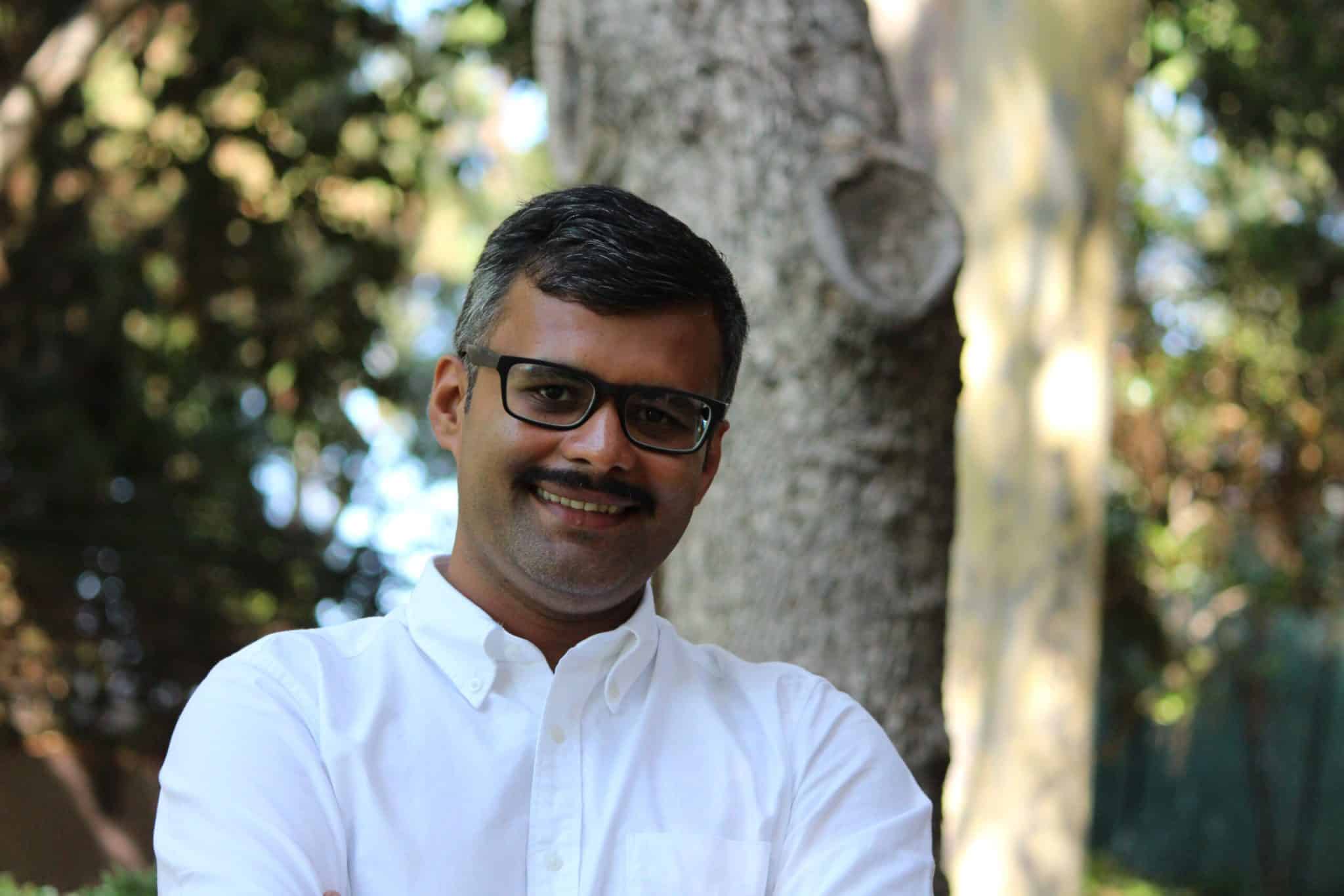
Public Attitudes and Dynamics of Opposition in Russia Since 2022
In this episode of the Democracy After 2024 series, Denys Tereshchenko hosts Margarita Zavadskaya to discuss the asymmetries of power between the state and civil society in Russia, public attitudes toward the full-scale invasion of Ukraine among Russians inside and outside Russia, and the reasons behind the failure of anti-war protests.
20.02.2025

Interviews
An Existential Threat? – In Conversation with Christoph Flügge
The role of international courts presents distinct and complex challenges compared to other judicial areas. Since the enforcement of judgments relies on the willingness of states to cooperate, international criminal law has primarily been applied against weaker states on the global stage. An international court seeking to act against representatives of strong – western – countries in the international sphere faces a difficult dilemma. On one hand, the law must apply equally to everyone. A court that fails to uphold this principle risks losing its legitimacy. On the other hand, a court that alienates powerful states risks rendering its judgments ineffective or even jeopardizing its own existence. This is illustrated by the events following the International Criminal Court’s (ICC) issuance of arrest warrants for Hamas and Israeli leaders. Numerous Western politicians harshly criticized the ICC’s efforts to hold representatives of their ally, Israel, accountable for [...]
18.02.2025

Interviews
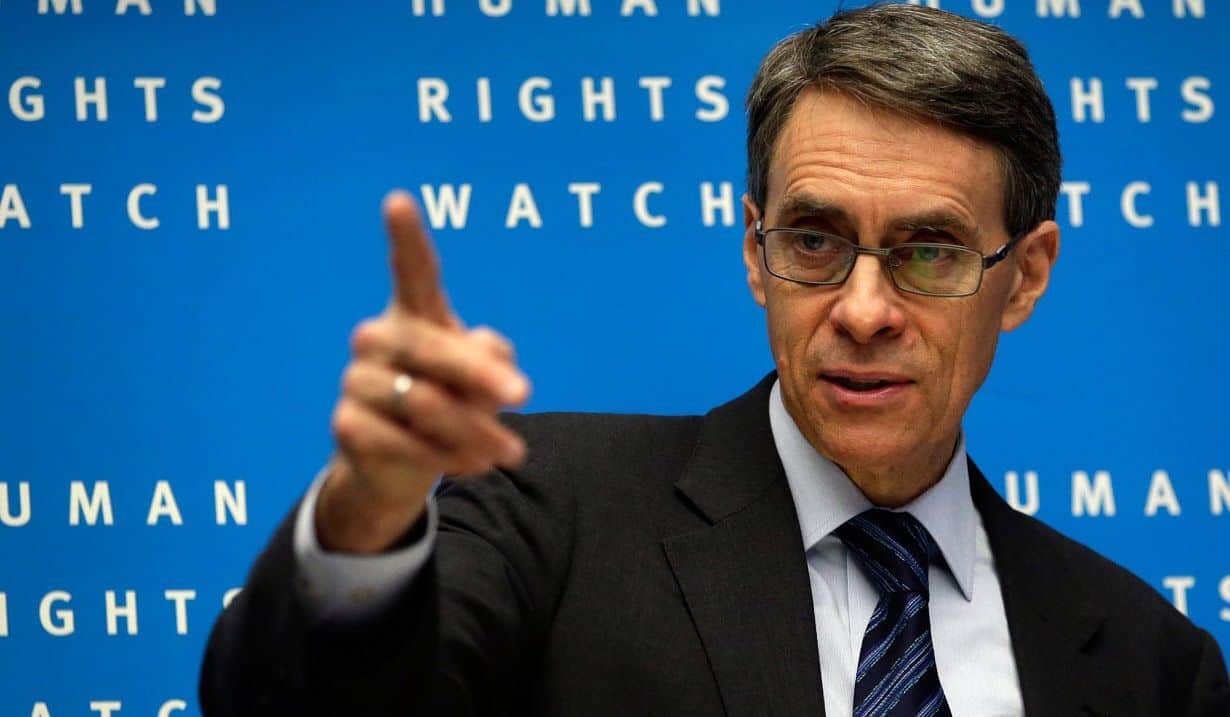
How to Battle Abusive Governments? – Kenneth Roth on the Strategies and Impact of Human Rights Watch
In this podcast, Kenneth Roth – who is about to publish Righting Wrongs. Three Decades on the Front Lines Battling Abusive Governments – explains what has made the strategies of Human Rights Watch distinct in the world of human rights-related advocacy and activism, and discusses cases where they managed to have a real impact; considers how the extension of the catalogue of human rights over time has shaped their interests and profile; reflects on HRW’s relationship with different types of governments; and explains how HRW has related to the question of humanitarian intervention and drawn on international humanitarian law across the decades.
17.02.2025
Interviews
How To Counter the Mainstreaming of Extremist Ideas? – Julia Ebner on Radicalization Processes and Our Fraught Moment
In the latest episode of our Democracy After 2024 series, Julia Ebner discusses major developments regarding the mainstreaming of extremist ideas; explains how social media platforms have contributed to radicalization processes and considers whether we might be experiencing a new turning point right now; and sketches effective counterstrategies – and reflects on what might be missing from our current toolbox.
13.02.2025

Interviews
Exporting Medical Expertise During the Cold War: Medical Humanitarianism, Ideological Expansion or Pragmatism? A Conversation With Bogdan Iacob
The medical aid programs established by socialist states nuance the Cold War dichotomy regarding the transfer of knowledge. The latest RevDem Democracy and Culture podcast with Bogdan Cristian Iacob explores the legacy of socialist regimes in the transnational circulation of expert knowledge during the Cold War, with a particular focus on medical aid.
10.02.2025

Interviews
Ukraine Under Martial Law – Transformations of Domestic Policies and Civil Society
In this episode, a part of the Democracy After 2024 series, Oleksandra Kokhan is joined by Taras Fedirko and Serhiy Kudelia to discuss the transformations of domestic policies in Ukraine following the 2022 invasion and under martial law, the (im)possibility of holding elections, and the role of civil society today.
5.02.2025

Interviews
Shouldn’t Ukraine Negotiate with Putin? – Robert Person on Obstacles to a Negotiated Ending of Russia’s Ongoing War of Aggression
In the newest episode of our monthly special in cooperation with the Journal of Democracy, Robert Person discusses key issues that pose nearly insurmountable obstacles to a negotiated ending of Russia’s war against Ukraine; dissects the Putin regime’s main aims regarding Ukraine over the past twenty years; and reflects on why arguments in favor of a ‘peace deal’ have gained in popularity – and what European supporters of Ukraine should be preparing for.
3.02.2025

Interviews
The Significance and Trajectory of Ukrainian Democracy Since 2022
In this episode of the Democracy After 2024 series, Ukrainian journalist and editor Arina Kravchenko hosts Ukrainian poet, prose writer, and essayist Mykola Riabchuk. They discuss the significance of democracy to Ukrainian national identity and the country’s social fabric. The conversation focuses especially on Ukrainian democracy’s trajectory since the beginning of Russia’s full-scale invasion in 2022 as viewed from within Ukrainian society and as a rediscovered object of interest from the outside. Mykola Riabchuk is the president of the Ukrainian PEN-center and a senior research fellow at the Institute of Political and Nationalities’ Studies, the Academy of Sciences of Ukraine. His most recent publications include At the Fence of Metternich’s Garden. Essays on Europe, Ukraine, and Europeanization (Stuttgart, 2021) and Nationalist’s Lexicon (in Ukrainian), a collection of essays published in 2022. Arina Kravchenko is a Ukrainian journalist, editor, and book reviewer. Artwork: [...]
31.01.2025

Interviews
This Land We Call Home: A History of “Criminal Tribes” in Modern India – An Interview With Nusrat F. Jafri
In this interview with Nusrat F. Jafri, we explore her much-acclaimed biographical fiction, This Land We Call Home. Drawing on her personal family history and extensive ethnographic research across northern and western India, Jafri raises a profound question for all democracies: How can democratic systems address historical prejudices and work toward creating a truly inclusive society?
29.01.2025

Interviews
European Values and Democratic Links – In Conversation with Miriam Schuler
In the last decade the Court of Justice of the EU has rapidly developed its case-law on the enforcement of EU values. Following multiple cases in which the Court enforced provisions that instrumentalize the Rule of Law in actions involving the ‘backsliding’ Member States of Poland and Hungary, the question now arises as to whether EU action may be justified to protect the co-foundational value of democracy during national elections in the EU’s Member States. The upcoming elections in the Federal Republic of Germany in February will bring these issues into sharp relief. In the latest RevDem Rule of Law podcast, Oliver Garner discusses these themes with Miriam Schuler (King’s College London), whose PhD research analyzes the protection of values within the European Union. The Current State of Play While Article 2 of the Treaty on European Union (TEU) outlines a broad set of foundational values, Schuler argues that, over the past decade, EU actions have [...]
28.01.2025

Interviews
Reimagining European Prosperity – A Conversation with Marija Bartl on the Role of Legal Imaginaries in Shaping European Political Economy
In this conversation at the Review of Democracy, Marija Bartl – author of Reimagining Prosperity: Toward a New Imaginary of Law and Political Economy in the EU – warns that the post-2008 crisis of neoliberalism created an ideological vacuum that would either be filled by a new vision of shared prosperity or by tribal imaginaries. She explains why the EU, despite its neoliberal origins, might be uniquely placed to articulate such a new vision of prosperity, and argues that European law is already being transformed to support it.
24.01.2025

Interviews
Who Is Going to Represent European Interests in the Future? – Zsuzsanna Szelényi on the Transformation of the EU and Our New Era of Uncertainty
In this conversation at the Review of Democracy, Zsuzsanna Szelényi discusses key questions in contemporary politics with a focus on European affairs. She explores the main priorities of Ursula von der Leyen’s second Commission and what might change as compared to her previous term. She also discusses the main challenges the EU faces when it comes to transatlantic relations and how Trump’s second term could impact the unfolding and outcome of Russia’s war of aggression against Ukraine – and whether the position and role of Hungary’s Orbán regime might change in international politics.
20.01.2025
Interviews
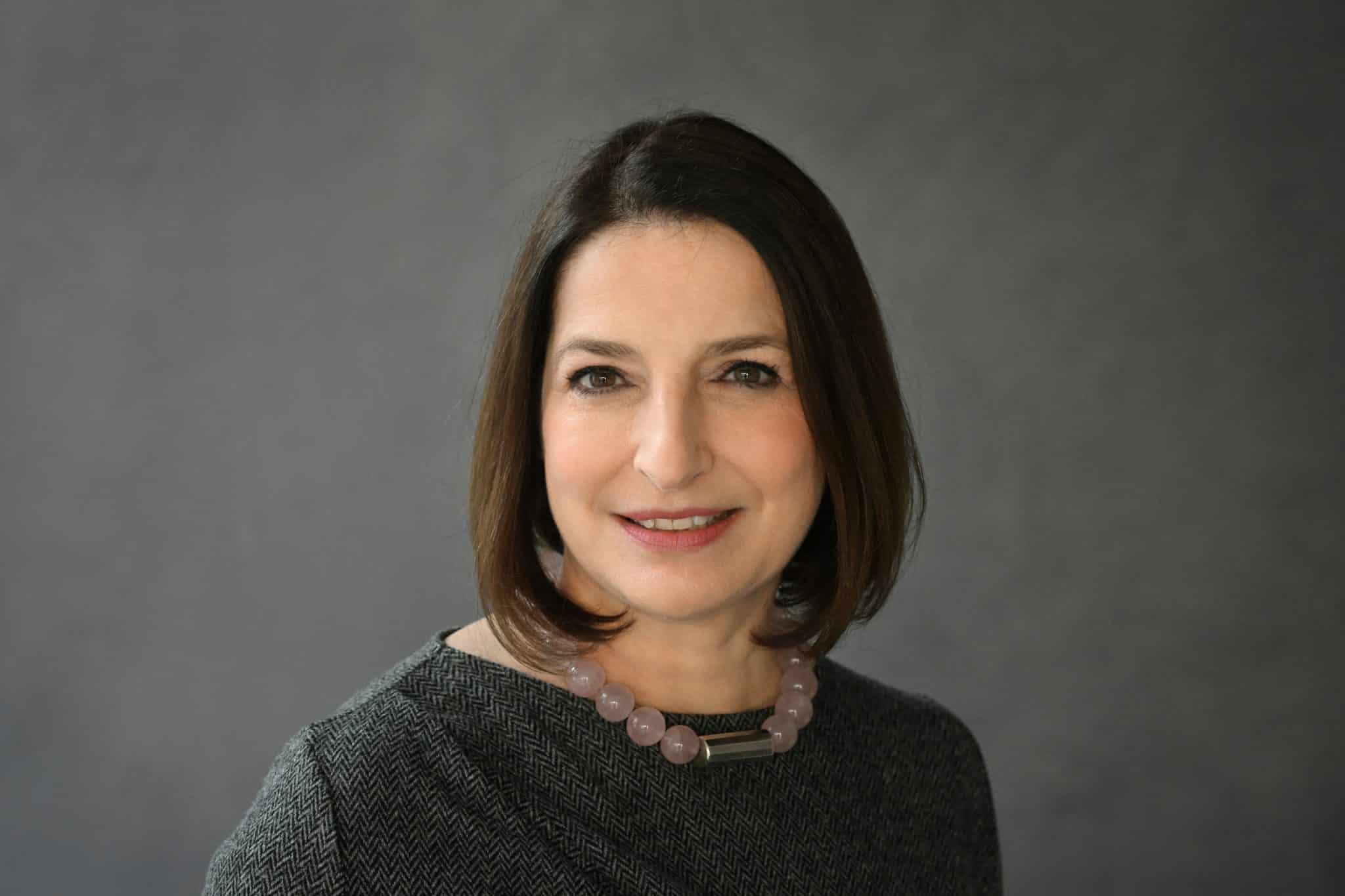
When Should the Majority Rule? – Steven Levitsky and Daniel Ziblatt on Countermajoritarian Institutions and the Question of Democratic Resilience
In this conversation, Harvard professors Steven Levitsky and Daniel Ziblatt examine the various types of countermajoritarian institutions and reflect on which are democracy-enhancing and which can potentially subvert democracy. Levitsky and Ziblatt show the connections between the strong countermajoritarian features of the U.S. political system and its ongoing democratic backsliding. They also consider how the trade-offs between countermajoritarianism and democratic stability have played out across the globe.
17.01.2025

Interviews
Overcoming Membership Fatalism – A Conversation with Tom Theuns on Democratic Theory and His Immanent Critique of the EU
In this conversation, Tom Theuns – author of Protecting Democracy in Europe: Pluralism, Autocracy and the Future of the EU – reflects on EU institutions’ rather narrow conception of democracy and their complicity in democratic backsliding in EU member states; considers how a more coherent and effective response to the latter processes could be designed; critiques the EU’s ‘membership fatalism’ and explains why he has proposed an expulsion mechanism; and positions his approach within political theory and discusses the reception of his ideas also beyond that field.
13.01.2025

Interviews
How Did Right-Wing Populists Win the Immigration Debate and What Can Mainstream Parties Do About It? – Sheri Berman on the Representation Gap Between Voters and Mainstream Parties Over Immigration in Western Europe
In this conversation with Sheri Berman, Professor of Political Science at Barnard College, we engage with her key argument that growing support for right-wing populism is primarily a consequence of mainstream parties’ failure to address popular concerns about immigration. We dissect the ‘representation gap’ argument, discuss alternative explanations (namely, the issue of racism and xenophobia), explore salient differences between center-left and center-right parties, and highlight strategies that mainstream parties have used and could use to respond to citizens’ concerns and demands on immigration.
6.01.2025

Interviews
Landing the Paris Climate Agreement – Todd Stern on a Groundbreaking Document and What It Took to Make It Happen
In this conversation at the Review of Democracy, Todd Stern – former United States Special Envoy for Climate Change – explains what made the Paris Climate Agreement such a groundbreaking document and what kind of bargaining and compromises it took to make it happen; discusses the place and role of the US within its broad coalition as well as his extensive engagement with his crucial Chinese partners; and considers major new possibilities to tackle climate change effectively and current obstacles to do so.
16.12.2024

Interviews
Authoritarian International Law? – In Conversation with Tom Ginsburg
International law is a live instrument in the current global geopolitical crisis. This latest RevDem Rule of Law podcast, conducted by Konstantin Kipp with Professor Tom Ginsburg, reflects upon the potentially authoritarian nature of international law in its function of enabling relations between states.
13.12.2024

Interviews
The Mystic Candidate – Călin Georgescu’s Blend of Orthodox Faith, Mysticism, and Power
In this conversation at the Review of Democracy, Ionuț Biliuță discusses the connections between Orthodoxy and nationalism in Romania and to what extent they have influenced this year’s presidential elections; the revival of narratives concerning ‘fascist martyrs’ by Călin Georgescu and other radicals; the impact the 2018 Constitutional referendum on same-sex marriage had on radicalization; the ideas in transnational circulation that have inspired Georgescu's statements, including Alexander Dugin’s and those of Donald Trump’s Evangelical supporters; and the steps that the Romanian Orthodox Church could take to dissociate itself from far right discourses.
9.12.2024
Interviews
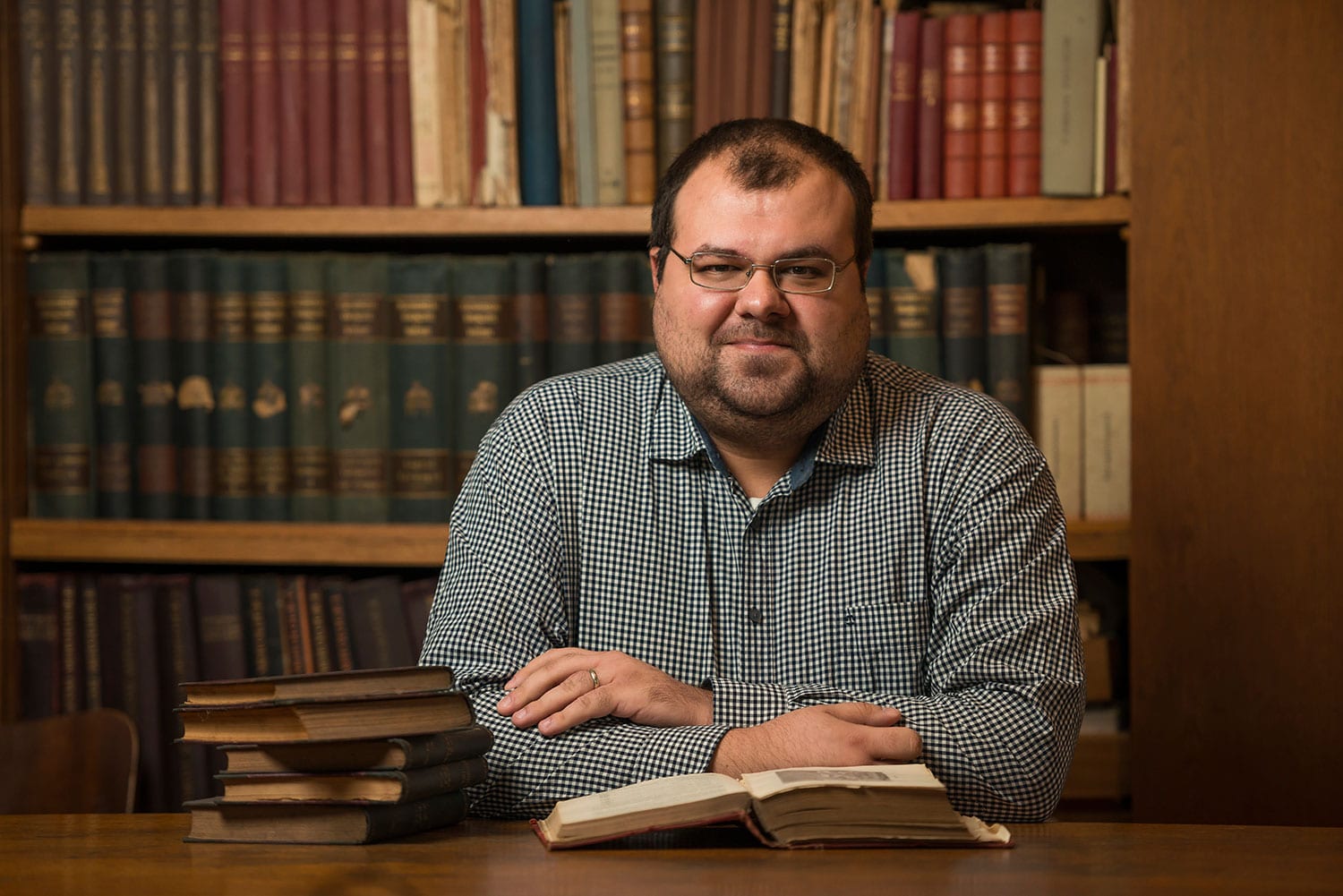
The Rise of Successful Political Outsiders in Latin America: Lessons Learned from Argentine President Javier Milei
The podcast focuses on and draws lessons from the experience of current Argentine president Javier Milei. It delves into pivotal questions: How do outsiders get elected in a political system designed to secure electoral competition among established political leaders? How do they navigate constraints posed by legislatures dominated by opposition? Does the rise of political outsiders from the global north influence the progress of these Latin American leaders? Does the radical right-wing ideology of outsiders make them more effective? What are the lessons for understanding current Latin American politics?
4.12.2024
Interviews
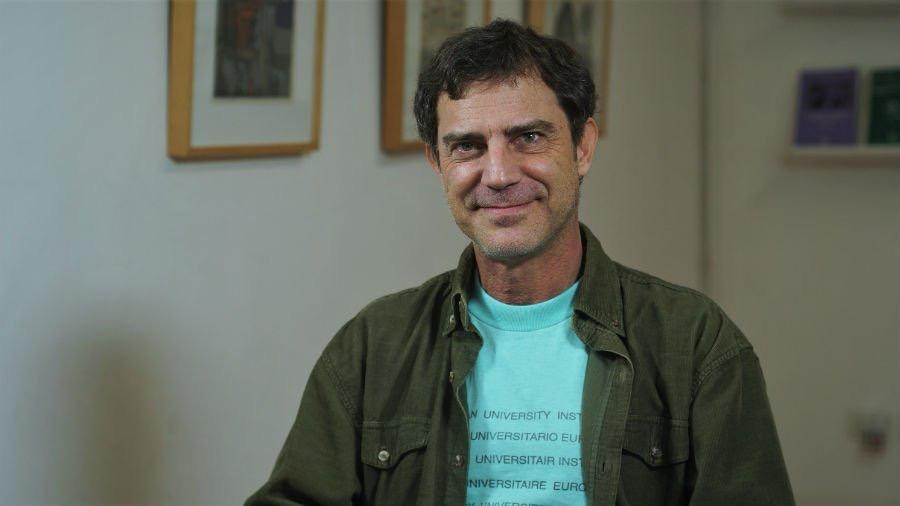
The Return of Dictatorship – Grzegorz Ekiert and Noah Dasanaike on Dictatorial Drift, Autocracy Promotion and Strategies to Oppose Them
In this conversation, Grzegorz Ekiert and Noah Dasanaike explain their concept of dictatorial drift and how various countries have moved toward full autocracy in recent years; discuss new features of dictatorships in the early 21st century and how such regimes relate to each other; consider whether it makes sense to compare the growing trend of autocracy promotion with democracy promotion; and reflect on how full autocracies might be opposed more effectively in the future.
2.12.2024
Interviews
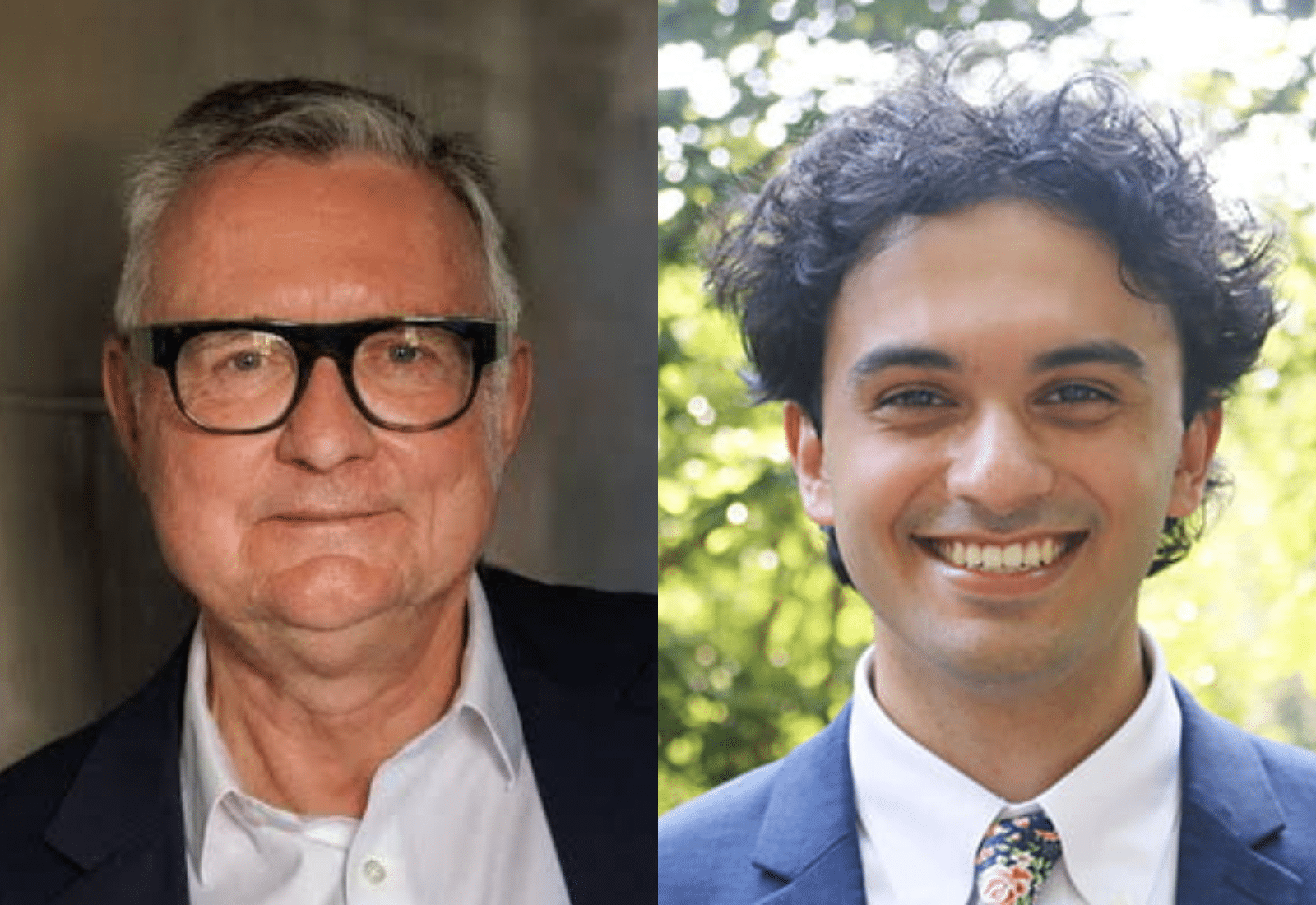
Revising European Integration History in an Age of Uncertainty – Karin van Leeuwen, Aleksandra Komornicka, and Koen van Zon on Their Interdisciplinary Handbook with a Historical Focus
In this conversation at the Review of Democracy, Karin van Leeuwen, Aleksandra Komornicka, and Koen van Zon – contributors to The Unfinished History of European Integration that has now appeared in a revised edition – elucidate the main questions that organize their overview of European integration history; reflect on the applicability and usefulness of various influential theories when trying to narrate the history of European integration today; show what special contributions historians can make to the interdisciplinary study of the European Union; and discuss recent advances in the historiography of European integration, specifying questions that would deserve more attention in the future.
27.11.2024

Interviews
On Muslim Democracy: Essays and Dialogues
Join Review of Democracy Ideas Editor Alexandra Medzibrodszky as she hosts Professor Andrew March, a leading scholar of political philosophy and Islamic thought, to discuss On Muslim Democracy: Essays and Dialogues. The book focuses on Rached Ghannouchi’s political thought and offers a unique perspective on the intersection of Islamic principles and modern democratic governance.
25.11.2024

Interviews
The Independence of the European Courts at Risk? – In Conversation with Marek Safjan
The attempt to transform a democracy into an authoritarian state often begins with the elimination of independent jurisdiction. Constitutional courts, in particular, are targeted - either to incapacitate them or even to turn them into enablers of governmental politics. This has been observed in Poland and Hungary. In Poland, after the PiS party was voted out of office, efforts are now underway to restore the independence of the constitutional court and to ensure better protection in the future. Meanwhile, in Germany, there are discussions about strengthening the resilience of the Federal Constitutional Court. This written interview considers the state of judicial independence in the EU today from a post-judicial career retrospective. Professor Marek Safjan was Poland’s appointee at the Court of Justice of the European Union from 2009 to 2024 and President of the Polish Constitutional Tribunal from 1998 to 2006.
20.11.2024

Interviews
Coalitional History of Democracy During Emergency (1975-77) in India – In Conversation with Kristin Plys
In this conversation with Kristin M. Plys, we delve deeply into the nature and quality of Indian democracy by examining the legacy and impact of its resistance movements. Plys’ recent book, Brewing Resistance (Cambridge University Press, 2020), studies the Indian Coffee House movement—a unique, worker-driven cooperative that flourished in the 1970s. This movement not only symbolized a shared space for political discourse but also became a hub for anti-authoritarian sentiment, especially during the turbulent years of the Emergency (1975-77), when democratic freedoms were severely curtailed by Prime Minister Indira Gandhi's government.
19.11.2024

Interviews
International Law and the ‘Second World’: In Conversation with Patryk I. Labuda
The Second World Approaches to International Law (SWAIL) project, which will be launched at Central European University in Vienna in February 2025, aims to establish a more accurate way of conceptualising East Central Europe’s position in, and relationship with, international law. Three themes arise continuously throughout the podcast: liminality, domination, and the emancipatory potential of international law.
18.11.2024

Interviews
Authoritarian Regimes Learn from Each Other – In Conversation with Mikal Hem
In our new podcast, Mikal Hem discusses what modern dictators and autocrats seem to have learned from their predecessors, reflects on what might drive voters toward leaders with autocratic tendencies, considers what democratic societies can learn from the survival strategies of dictators, and contemplates how the resilience of free media could be strengthened in autocracies.
12.11.2024

Interviews
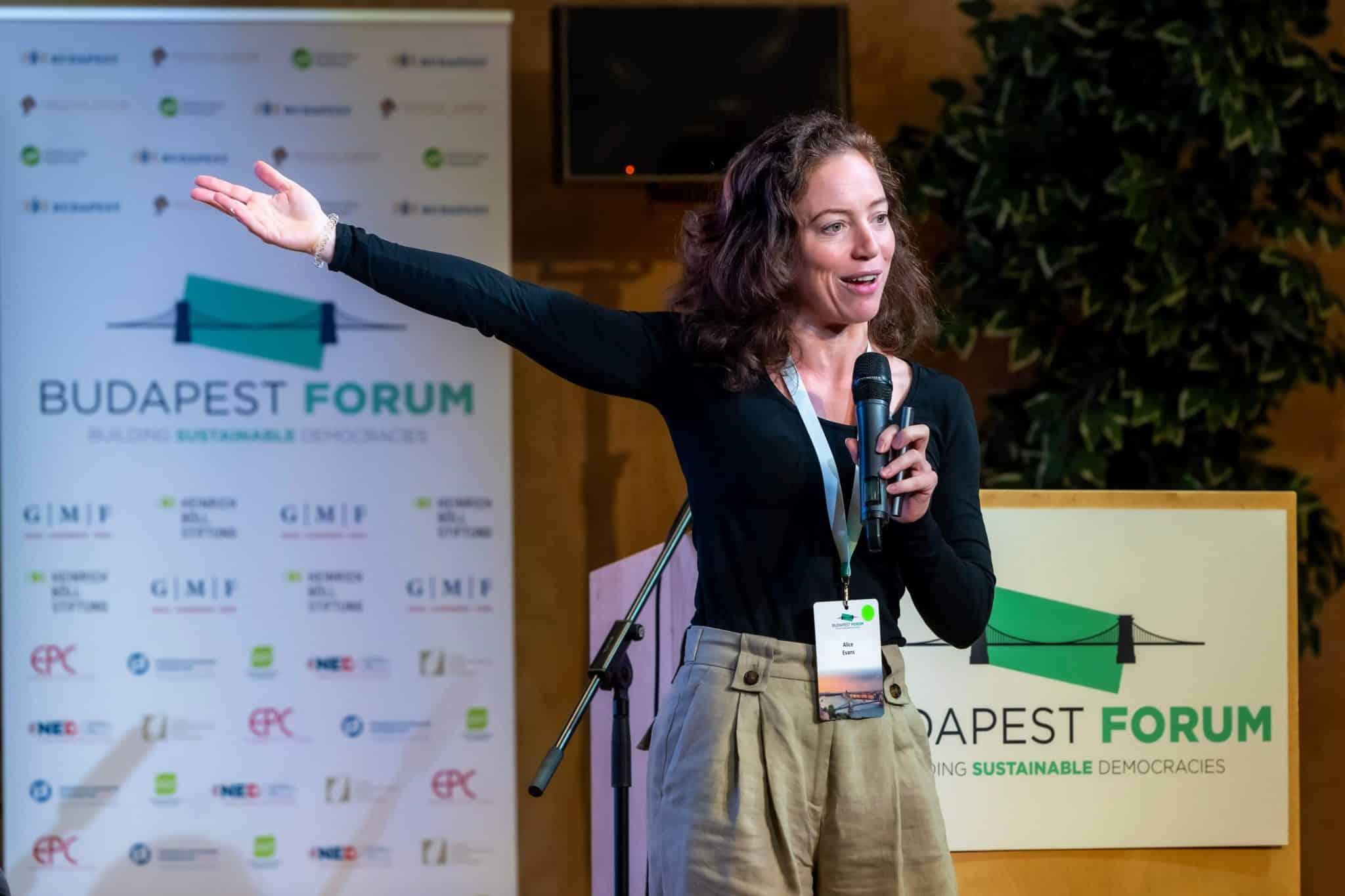
The Great Gender Divergence – In Conversation with Alice Evans
In this conversation at the Review of Democracy, Alice Evans discusses the great gender divergence and how we might explain that some countries are much more gender equal than others; considers whether the history of gender is essentially about female emancipation in modern times but also whether even the most gender equal countries in the world today remain rather patriarchal; and reflects on the special challenges of writing an interdisciplinary book that analyzes the history of gender on a truly global scale – and how such a project relates to the idea of a gender binary.
11.11.2024
Interviews
Screening Human Rights Documentaries in Hungary for More than 20 Years- Enikő Gyureskó on Verzió Festival’s Mission in Human Rights and Education
In this conversation at the Review of Democracy, Enikő Gyureskó- the Festival Director of Verzió International Human Rights Documentary Film Festival – discusses the program of the Verzió Film Festival, which will take place between 6-13 November; the rationale of choosing specific foci in this year's program; the importance of documentaries in raising awareness about contemporary human rights issues; the collaborations between Verzió with other European festivals to promote human rights; the relevance of educational initiatives and university partnerships to foster critical engagement in Hungary.
5.11.2024

Interviews
Majoritarianism without Majorities – In Conversation with Kanchan Chandra
We are thrilled to publish the first episode of our monthly special series, produced in cooperation with the Journal of Democracy. In the framework of this new partnership, authors shall discuss outstanding articles from the newest print issue of the Journal of Democracy each month. In this conversation, hosted by Ferenc Laczo and Anubha Anushree, Professor Kanchan Chandra offers an incisive exploration of the strengths and limitations of modern democracies.
4.11.2024

Interviews
The U.S. Elections with Levente Littvay
Join hosts Erin K. Jenne and Letitia Roman as they sit down with political scientist Levente Littvay to discuss the 2024 U.S. presidential election. Together, they explore why Donald Trump remains a prominent GOP candidate despite numerous legal challenges, how polarization and populism intertwine, and the role of conspiracy theories in today’s political climate. They also examine parallels between U.S. and European populism and the future of both major parties. Tune in for a deep dive into the complex dynamics shaping this year's election.
4.11.2024
Interviews
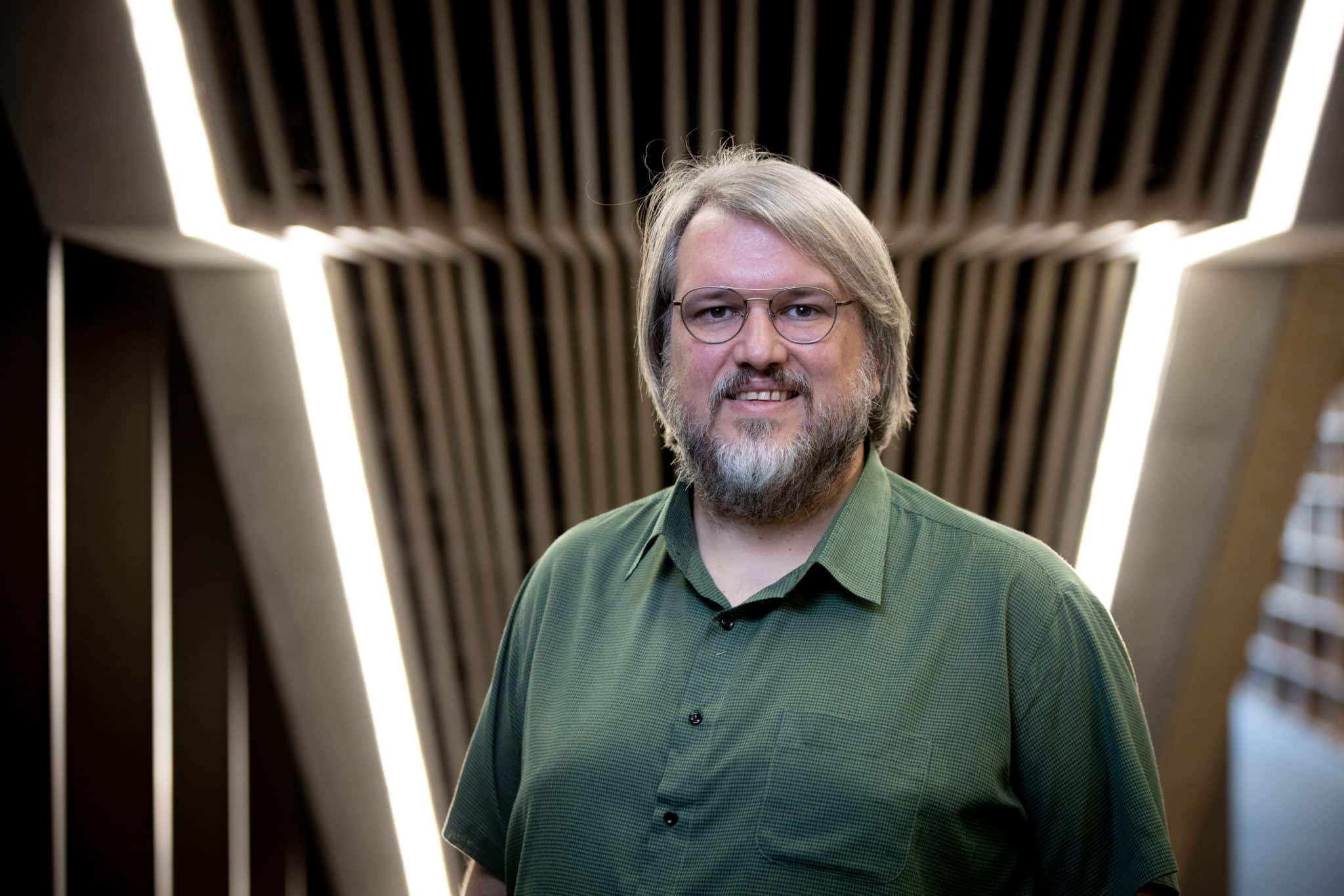
Competing Internationalisms: Samuel Hirst on Soviet-Turkish Interwar Relations, Statist Internationalism and Rejecting the Liberal Order
In this episode of the Review of Democracy podcast, Alexandra Medzibrodszky interviews Samuel Hirst on his new book, Against the Liberal Order, the Soviet Union, Turkey and Statist Internationalism from 1919 to 1939. The book examines the collaboration between early Republican Turkey and the Soviet Union during the interwar period, exploring the diplomatic, economic, cultural and international dimensions of their relationship.
31.10.2024

Interviews
The Authority of the EU Legislature: In Conversation with Martijn van den Brink
In June 2024, Martijn van den Brink’s monograph, Legislative Authority and Interpretation in the European Union was published by Oxford University Press. The book tackles deep conceptual issues about the EU legal order, and yet its insights are also relevant for some of the most pressing practical issues facing Europe today. Martijn van den Brink is an Assistant Professor of EU law at Maastricht University, and he has previously held positions at the Hertie School of Governance in Berlin, the University of Oxford. and the Max Planck Institute for the Study of Religious and Ethnic Diversity in Göttingen.
30.10.2024

Interviews
We Need Democratization, Not of Nuclear Energy Debate but Energy Debate in General. In Conversation with Professor M. V. Ramana
In this conversation with M. V. Ramana, we delve into one of the most pressing issues of our time: the climate crisis. In response to this crisis, various solutions have been proposed, with nuclear energy emerging as one of the most prominent. After more than a decade of caution following the 2011 Fukushima nuclear disaster, a global consensus has gradually formed around nuclear power as a viable and efficient solution to meet energy demands. Advocates argue that nuclear energy can not only complement fossil fuels but also fulfil the growing energy needs of the world.
22.10.2024
Interviews
Lia Tsuladze on How Georgian Dream Has Diverted Away from Europe and Its Implications for the Upcoming Elections
The Georgia Dream movement came to power over a decade ago. It initially claimed to want to uphold the European integration policies of its predecessor, but has slowly moved towards a more sovereign discourse. Over time, Georgia Dream has increasingly fueled affective political polarization, and now accuses its pro-European critics of wanting to drag Georgia into a war with Russia. It has furthermore vehemently defended adopting controversial anti-democratic legislation such as the so called ‘foreign agents’ law.
21.10.2024

Interviews
The Special Tribunal for Russian Crimes of Aggression in Ukraine: In Conversation with Kateryna Busol
Russia’s aggression against Ukraine has been ongoing for 10 years. It started with the occupation of Crimea and parts of the Donbas in 2014 and culminated in the full-scale invasion in 2022. Various domestic and international justice initiatives to ensure accountability for war crimes and other conflict related violations have been unfolding since 2014. However, 2022 marked the start of a new important debate. How can Russia be held accountable for the underlying crime of aggression? In this RevDem Rule of Law podcast Oliver Garner discusses the proposal for a special tribunal to address Russia's crime of aggression in Ukraine with Kateryna Busol.
11.10.2024
Interviews
Maps That Give Power to the People – Jo Guldi on Participatory Spreadsheets, Global Archives, and the Triumph of Activist Movements
In this conversation at the Review of Democracy, Jo Guldi explores the relationship between data sciences and the humanities; shows how the struggle for occupancy rights can help us reconsider global history; explains how her new project approaches climate change; and discusses the type of scholarship she finds most inspiring.
10.10.2024

Interviews
The Regime Change Has To Be Performed by Russians Themselves – Roland Freudenstein on Russia, the War in Ukraine, and Autocrats in Europe
In our new podcast, Roland Freudenstein, Director of the Free Russia Foundation Brussels, and Founder and Executive Officer of the Brussels Freedom Hub discusses Russia’s geopolitical ambitions, how the war in Ukraine may end, and the potentials for a regime change in Moscow; reflects on democratic backsliding in EU Member States; and shares his thoughts about autocrats and how societies can be more resilient against authoritarianism.
9.10.2024

Interviews
Reforming Ukraine’s Judiciary – EU Accession, Democracy, and the Rule of Law: In Conversation with Tetyana Antsupova and Sergii Koziakov
In September 2024 the project “The Dynamics of the Judiciary in Ukraine in the Context of the Rule of Law and the EU Accession Aspirations” commenced. The project is hosted by the British Institute of International and Comparative Law (BIICL) and is funded by the British Academy. This written interview, conducted by Rule of Law section editor Oliver Garner with researchers in the project, explicates its objectives, scope, and aspirations. Professor Tetyana Antsupova is a Senior Fellow at BIICL and an awardee of the British Academy Global Professorships scheme. She is a former judge in the Grand Chamber of the Supreme Court in Ukraine, and she is the lead researcher in the project. Dr Sergii Koziakov is a Research Leader at BIICL, a Visiting Fellow at the London School of Economics and Political Science in the Law School, and an Associate Professor at the Taras Shevchenko National University of Kyiv in the Institute of International Relations. From 2014 to 2019, he was Chairman of [...]
2.10.2024

Interviews
We Need Better Cohesion in Europe Because We Need Reforms and New Resources – Mikuláš Dzurinda on Slovakia’s Path, the European People’s Party, and the Future of Ukraine
In our latest podcast, Mikuláš Dzurinda – President of the Wilfried Martens Centre and former Prime Minister of Slovakia – discusses the changes that EU membership has brought to Slovakia; reflects on the recent rightward shift in Europe and how this might influence the EPP's priorities; analyzes potential changes in Slovak foreign policy and the relationship with Hungary; and argues for Ukraine’s NATO accession.
30.09.2024

Interviews
The Crowd Never Left the Scene… – Nusrat Sabina Chowdhury on Crowd Politics in Bangladesh
In this conversation at the Review of Democracy, Nusrat Sabina Chowdhury – author of the recent book Paradoxes of the Popular: Crowd Politics in Bangladesh (Stanford UP, 2019) – discusses the various layers of democracy in Bangladesh. Analysing the differences between the English word “crowd” and the Bengali term “jonata,” Professor Chowdhury deliberates upon the recent events in Bangladesh through the lens of the country’s long history of popular dissent and street mobilization. She describes how the Western category of “the people” fails to capture the tenuous, fleeting, and ephemeral materiality of the crowd in the context of Bangladesh and beyond.
9.09.2024

Interviews
How Charm Shapes Politics – Julia Sonnevend on Personal Magnetism and Its Growing Impact in Our Age of Social Media
In this conversation at the Review of Democracy, Julia Sonnevend – author of the new book Charm. How Magnetic Personalities Shape Global Politics – analyzes the main techniques politicians use to appear charming; compares the uses of such techniques by liberal and illiberal political leaders; discusses how gendered the perception of charm has remained; and considers whether politicians are likely to become even more like social media influencers in the coming years.
19.08.2024
Interviews
The Vehicle of Change is Always Politics – Sanjay Kumar on the 2024 Elections in India
In this conversation at the Review of Democracy, eminent psephologist and political analyst Sanjay Kumar discusses the recently concluded elections in India. Kumar weighs in on some of the unique features of the Indian elections in 2024, the emerging patterns of change, and what the election verdicts mean for democracy and politics in the Global South.
5.08.2024
Interviews
Ukraine Will Not Slide into Authoritarianism – A Conversation with Pat Cox
In this conversation, Pat Cox reflects on the new term of the European Parliament and the importance of the rise of the Right in the Union and its member states. He also discusses his work in Ukraine after 2012 – when he led a mission to free political prisoners imprisoned by President Viktor Yanukovych – as well as in more recent years when he has co-directed the Jean Monnet Dialogues which aim to build consensus between the main political parties represented in the Ukrainian Parliament.
29.07.2024

Interviews
Why Do We See the Rise of Anti-Democrats in Democracies? – Zack Beauchamp on the Reactionary Spirit Across the Globe
In this conversation at the Review of Democracy, Zack Beauchamp – author of the new book The Reactionary Spirit. How America’s Most Insidious Political Tradition Swept the World – discusses the specific kind of antidemocratic politics that emerges in countries with democratic institutions; shows how the United States might to said to have invented competitive authoritarianism; explains the conclusions he drew from comparing countries from different continents and how those conclusions may help us correct Western misperceptions; and reflects on the major intellectual inspirations behind his book.
10.07.2024

Interviews
Why Was Central-South-East Europe Labeled as “Corrupt”? – Silvia Márton on Transnational Histories of Corruption
In this podcast, Silvia Márton, principal investigator within the ERC Project “Transnational Histories of ‘Corruption’ in Central-South-East Europe,” discusses the multiple understandings of the concept “corruption” in the context of Central-South-East Europe.
8.07.2024

Interviews
What Stops China from Ruling the World? – Ho-fung Hung on the Problems Plaguing China’s Development Model and Its Limited Influence in the World
In this conversation with the Review of Democracy, Ho-fung Hung shares his eye-opening analysis of the internal contradictions and external limitations plaguing China’s export-led development model and offers novel insights into the difficulties its political leadership is encountering in challenging US hegemony and extending its global sphere of influence. While acknowledging China’s impressive achievements, Hung emphasizes China’s technological dependency and chronic industrial overcapacity, the impact of the rise of protectionism, the hegemony of the US dollar, and China’s lack of confidence in its military capabilities. At the same time, he forecasts the intensification of US-Chinese rivalry in connection with the gradual decoupling of the US and Chinese economies.
12.06.2024
Interviews
Catalonia Is Not Just for the Right – A Conversation with Benet Salellas
In this new conversation at the Review of Democracy, Catalan independence activist and lawyer Benet Salellas reflects on the concept of catalanisme and discusses progressive arguments in favor of amnesty for Catalan activists.
15.05.2024

Interviews
East Europeans, the Eternal Poor Children of the Union?
In this conversation with Petr Agha, Joseph H. H. Weiler discusses the EU’s persistent democratic deficit and how the Union’s equilibrium has been disrupted; explores the rise of populism and questions of national identity; contrasts Eastern and Western Europe; and reflects on the evolving geopolitical landscape. “Let's fix European democracy first, and then I would be in favour of majoritarianism because veto power is undemocratic.”
25.04.2024

Interviews
To push for as large a change as our democratic system will permit: Joseph Stiglitz on economics and the good society
In this conversation at the Review of Democracy, Joseph Stiglitz discusses key features of progressive, social democratic capitalism; explains what motivated him to want to reclaim the language of freedom from the Right; and reflects on what the toolkit of the economist can contribute to our understanding of the relationship between freedom and democracy.
24.04.2024

Interviews
Still a long way to go
In this conversation with our guest editor Eszter Horvath, Phillip Ayoub discusses recent developments in the LGBT movement, introduces the concept of locally rooted messaging, and his own trajectory from activism to academia. Phillip Ayoub is a Professor in the Department of Political Science and School of Public Policy at University College London. He also serves as Editor of the European Journal of Politics & Gender. Ayoub's research bridges international relations and comparative politics, engaging with literature on transnational politics, sexuality and gender, norm diffusion, and the study of social movements, with a strong interest in how the transnational mobilization of marginalized peoples and international channels of visibility influence socio-legal change across states. He is the author of When States Come Out: Europe’s Sexual Minorities and the Politics of Visibility (Cambridge University Press, 2016), and The Global Fight Against LGBTI Rights: How Transnational [...]
4.04.2024

Interviews
Adventures in Democracy
In this conversation at the Review of Democracy, Erica Benner – author of the new book Adventures in Democracy: The Turbulent World of People Power – shows what a more self-critical and down-to-earth understanding of democracy would entail; discusses what it means that there is a constant battle within democracies between principles of universal liberty, equality, and power-sharing, on the one hand, and the boys’ club logic, on the other; explains why self-restraint and acknowledging others’ fear of losing their share of power are crucially important; and reflects on the development of a truly global conversation about democracy.
2.04.2024

Interviews
Some Like it Dark – In Conversation with Alessandro Nai
Who is a dark politician? How do dark politicians perform in the elections and in handling crises? What does being “dark” mean for female politicians? Why some people like it dark? In this conversation with Kasia Krzyżanowska, Alessandro Nai discusses his newest book “Dark Politics. The Personality of Politicians and the Future of Democracy,” co-authored with Jürgen Maier.
22.03.2024

Interviews
Why Would You Call Donald Trump a Fascist?
Daniel Steinmetz-Jenkins on American Intellectuals, the Fascism Debate, and the Larger Political Stakes In this conversation at the Review of Democracy, Daniel Steinmetz-Jenkins – editor of the new collection Did It Happen Here? Perspectives on Fascism and America – discusses the intellectual stakes and political relevance of the fascism debate; reflects on how the fascism debate relates to discourses around democratic decline and the ongoing history wars; shows what a more global perspective on US American debates can reveal; and ponders whether the next round of the fascism debate might just be around the corner. Daniel Steinmetz-Jenkins is a historian of modern political and intellectual thought. He acts as Assistant Professor in the College of Social Studies at Wesleyan University. He runs a regular interview series at The Nation and is an editor at Modern Intellectual History. He also helps curate the History of Ideas section of the Review of Democracy. Did It Happen Here? [...]
18.03.2024

Interviews
Colonialism and European Integration – In Conversation with Hanna Eklund
In this conversation with Kasia Krzyżanowska, Hanna Eklund discusses her recent article, “Peoples, Inhabitants and Workers: Colonialism in the Treaty of Rome”, published in the European Journal of International Law. She talks about the “coded language” of colonialism in the Treaty of Rome, explains the approach of the Treaty drafters to the African independence movements, and reflects on the colonial legacies of contemporary EU law.
14.03.2024

Interviews
Militant Rule of Law and Not-So-Bad Law: in conversation with András Sajó
The question of how to reverse illiberal backsliding after regime change is becoming live within Europe and beyond. This Rule of Law section podcast between Oliver Garner and András Sajó (Professor at the Central European University and Senior Research Fellow at the CEU Democracy Institute) considers this dilemma through the recently published lens of the CEU DI working paper ‘Militant Rule of Law and Not-So-Bad Law’.
28.02.2024

Interviews
Autonomous but with no bridges built: Fernando Casal Bértoa on inter-party relations in Spain -Party Co-Op Series
For most of its existence the Spanish party system has been dominated by the Socialist Party, PSOE, and the People’s Party, PP. Accordingly, and somewhat unusually in Europe, the governments tended to be based on a single party. However, parties have been repeatedly forced to cooperate in parliament and since 2020 they must share office in government. This change is obviously related to the fact that recently new actors have appeared on the scene, challenging the center-right and the center-left.
26.02.2024

Interviews
Ukrainians Started as the Scots and Ended Up as the Irish – Yaroslav Hrytsak on the Global History of Ukraine
In this conversation with Visible Ukraine editor Marta Haiduchok and RevDem editor Ferenc Laczó, Yaroslav Hrytsak – author of the new book Ukraine: The Forging of a Nation – explains what makes Ukraine a geopolitically crucial borderland and why the Ukrainian question has become acute at the most critical turns in global history.
24.11.2023

Interviews
From Pink Tide to a Far-Right-Wave: Latin America’s Authoritarian Encore?
In this conversation with RevDem assistant editor Lorena Drakula, Cristóbal Rovira Kaltwasser sheds light on the historical context, ideological characteristics, and the consequential impact of the recent far-right success in Latin America, encompassing prominent figures from José Antonio Kast and Jair Bolsonaro to Nayib Bukele and Javier Milei.
14.11.2023

Interviews
The Rule of Law in Malta: In Conversation with Jenny Orlando-Salling
In the latest RevDem Rule of Law podcast, Oliver Garner discusses the current state of the Rule of Law, democracy, and corruption in Malta with Jenny Orlando-Salling. Jenny is a Ph.D. researcher at the University of Copenhagen, and she previously worked at the Permanent Representation of Malta to the EU and as Deputy Head of Mission and Consul to the Embassy of Malta in Egypt and Sudan.
2.11.2023

Interviews
Disabusing Constitutional Identity? In Conversation with Julian Scholtes
The monograph The Abuse of Constitutional Identity in the European Union (OUP, 2023) by Julian Scholtes (Lecturer in Public Law, University of Glasgow) was published in September. In this latest RevDem Rule of law podcast, Oliver discuss constitutional identity and its implications for the Rule of Law and democracy in Europe today. Oliver Garner: I found that your distinction between generative, substantive, and relational aspects of constitutional identity abuse is an impressive attempt to categorize such illegitimate practices systematically. How do these concepts advance our understanding of constitutional identity and its abuse? Do you believe they can be operationalized to allow the identification of abusive identity claims in practice? Julian Scholtes: I think we need to distinguish this idea of constitutional identity, that is quite commonly used in comparative constitutional law, as an analytical lens which allows us to look into the relationship between [...]
29.09.2023

Interviews
What Makes the Identity Synthesis a Trap? Yascha Mounk on the Emergence, Appeal, and Consequences of a Defining Ideology of Our Time
In this conversation with Ferenc Laczó, Yascha Mounk discusses his last book "The Identity Trap. A Story of Ideas and Power in Our Time".
26.09.2023
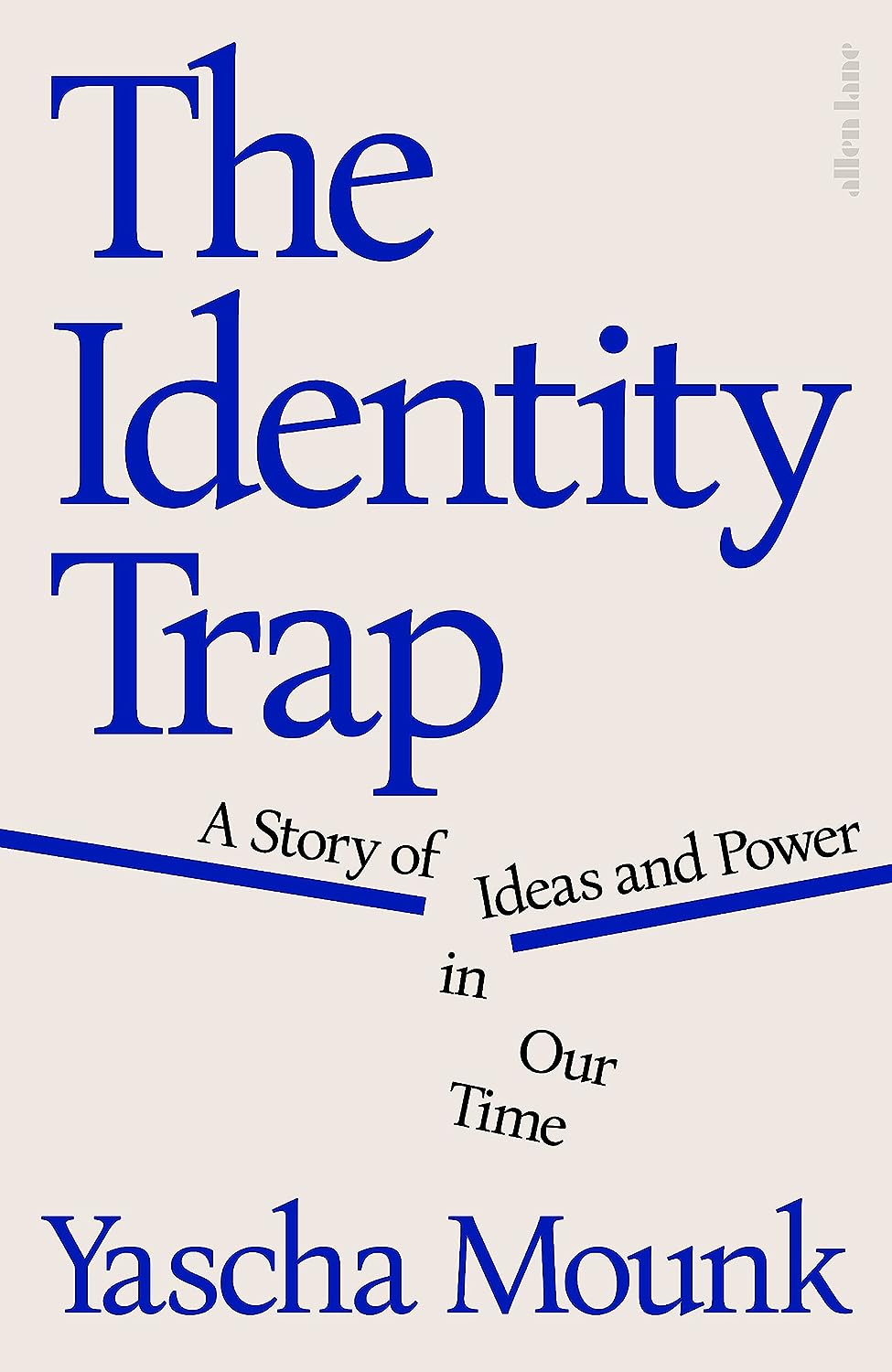
Interviews
From a Multiethnic Empire to a World of Nation States
The CEU Democracy Institute’s journal, Review of Democracy, the Research Center for the History of Transformations (RECET), the Institute of Culture Studies and Theatre History at the Austrian Academy of Sciences (ÖAW/IKT) and the Department of European, International and Comparative Law at the Faculty of Law at the University of Vienna cordially organised a book discussion on Central Europe's function as a laboratory of our current world order based on Natasha Wheatley's bold and fascinating new book The Life and Death of States: Central Europe and the Transformation of Modern Sovereignty (Princeton University Press 2023)
13.09.2023
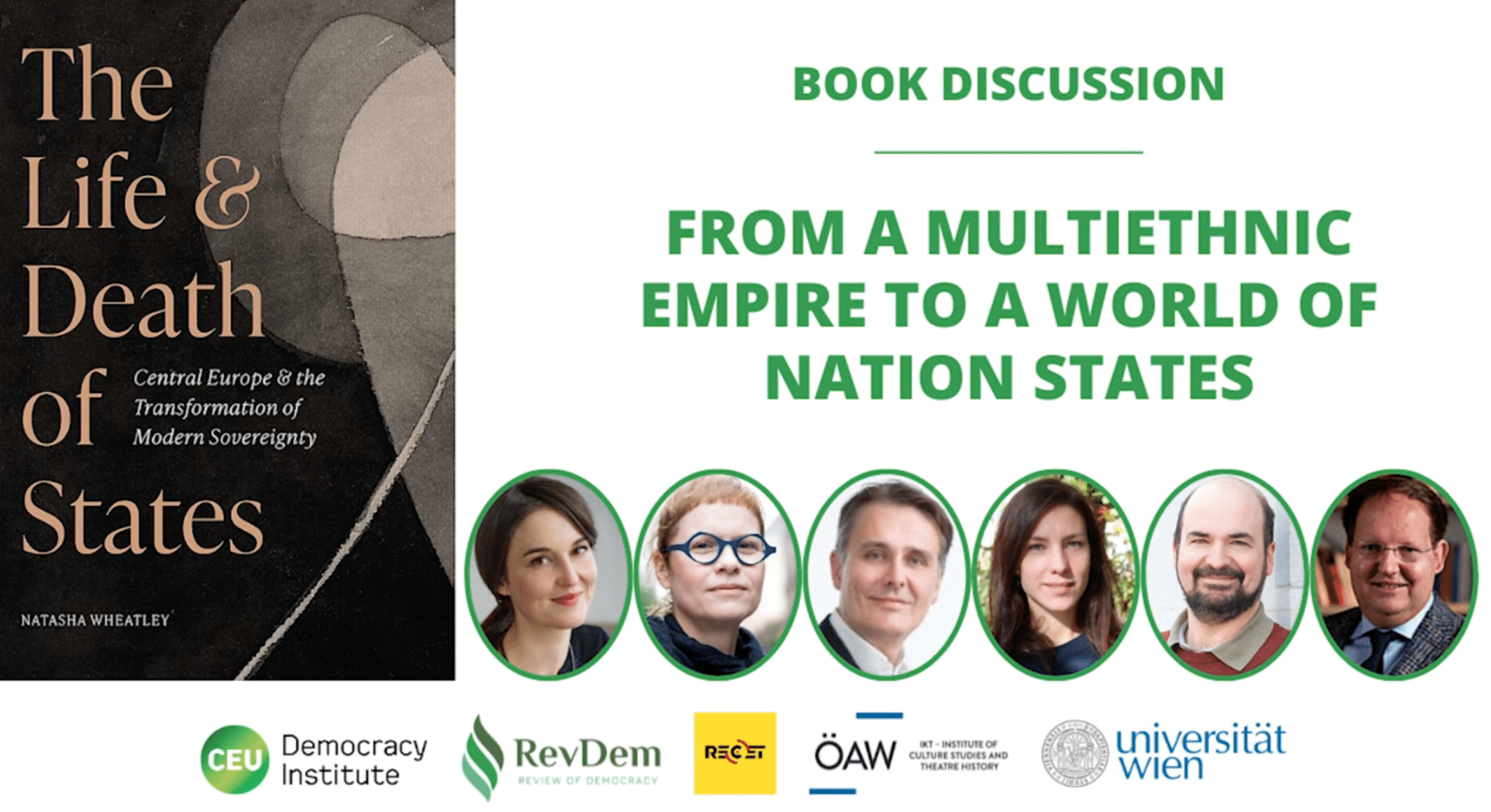
Interviews
Bloodless Murder: Stefano Bottoni on How the Orbán Regime Was Made and What Hungary Has Become
In this conversation with RevDem editor Ferenc Laczó, Stefano Bottoni – author of the new Hungarian-language book A hatalom megszállottja. Orbán Viktor Magyarországa (Obsessed with Power. Viktor Orbán’s Hungary) – discusses how the current political system has been built up in Hungary and which theories might help us analyse this process; reflects on the Orbán regime’s sources of legitimacy and internal contradictions; and explores the changing relationship of the country to the European Union and to Putin’s Russia.
6.09.2023

Interviews
The Freedom to Stay: Eva von Redecker on Positive Ecological Freedom and the Need for a New Temporal Literacy
In this conversation with RevDem editor Ferenc Laczó, Eva von Redecker – author of the new German-language book Bleibefreiheit (The Freedom to Stay) – shows what it means to think of freedom in terms of time rather than space; explains what implications it has that we are actually “born unfree but not alone”; reflects on the personal experiences and intellectual influences that inspired her; and sketches what the realization of positive ecological freedom might look like.
4.09.2023

Interviews
A Betrayal of Liberalism: Samuel Moyn on the Mistaken Path of Cold War Liberals
In this conversation with RevDem editor Ferenc Laczó, Samuel Moyn – author of the new book Liberalism Against Itself. Cold War Intellectuals and the Making of Our Times – discusses what motivated him to explore the Cold War liberal betrayal of previous liberal traditions; what their redefinition of the liberal canon and silences about crucial developments in their own lifetime may reveal about Cold War liberals; why the liberal establishment has failed to reexamine Cold War liberalism since 1989–91; and what would be minimally needed to make contemporary liberalism “credible enough for salvation.”
29.08.2023
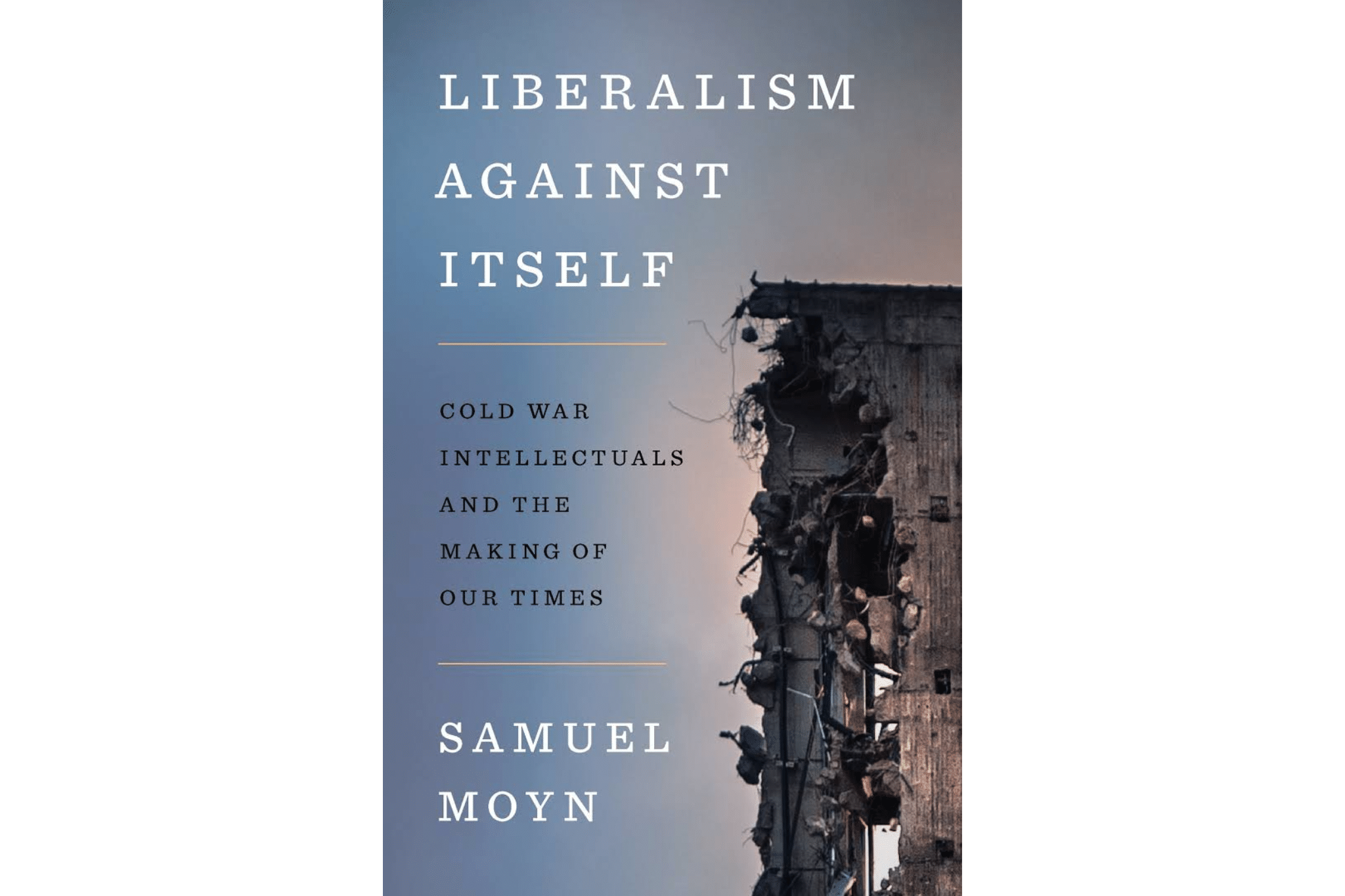
Interviews
Negotiating Amidst Turmoil: Analyzing the Interplay of Dialogue and Conflict in Kosovo-Serbia Relations
In this conversation with assistant editor Lorena Drakula, Bodo Weber, a Senior Fellow at the Democratization Policy Council in Berlin, discusses the current situation, as well as the complex dynamics of the Kosovo-Serbia dialogue, unpacking its democratic implications, challenges, and opportunities.
22.07.2023

Interviews
Models of Judicial Independence in Europe: In Conversation with Pablo Castillo Ortiz
In this latest RevDem Rule of Law podcast, assistant editor Teodora Miljojkovic discusses the different models of judicial independence in Spain and beyond with Pablo Castillo Ortiz.
19.07.2023

Interviews
“Neither Amnesia nor Nostalgia” Discussing the Non-Aligned Movement with Chiara Bonfiglioli, Agustín Cosovschi, and Paul Stubbs
In this conversation with RevDem contributor Una Blagojević, Paul Stubbs, Chiara Bonfiglioli, and Agustín Cosovschi discuss the different meanings of the Non-Aligned Movement and the need to rethink the “West–East–Non-Aligned” trajectories; approach Yugoslav foreign policy critically and explain why they attach such importance to imaginaries; show the importance of developing a “perspective from below” and analyze what a gendered perspective on the movement can yield; and reflect on possibilities of future research.
13.07.2023

Interviews
India’s Basic Structure Doctrine: Past, Present, and Future: In Conversation with Moiz Tundawala and Anuj Bhuwania
In this episode, assistant editor Rohit Sarma discusses the “basic structure” doctrine of the Indian Constitution on the occasion of its 50th anniversary with Moiz Tundawala and Anuj Bhuwania, Professors of Constitutional Law at the Jindal Global Law School in India.
12.07.2023

Interviews
A Savage War of Russian Decline: Serhii Plokhy Discusses the Russo-Ukrainian War
In this conversation co-hosted by Marta Haiduchok (Visible Ukraine) and Ferenc Laczó (the Review of Democracy), Serhii Plokhy – author of the new book "The Russo-Ukrainian War" – discusses why Ukraine was so crucial to the Soviet collapse and how Ukraine and Russia diverged subsequently; explains what made Ukraine a focal point of competition in the post-Cold War decades and which factors enabled the current devastating war; dissects the origins of Russian imperialism and Russia’s current war aims; reflects on the state of Ukrainian Studies and suggests new questions concerning Ukrainian nationalism and Russian imperialism; elaborates on the stages of the unfolding war and the reasons behind Ukraine’s ability to fight back; and ponders what major geopolitical shifts the Russo-Ukrainian war might signal or reinforce.
30.06.2023

