Podcasts
Podcasts
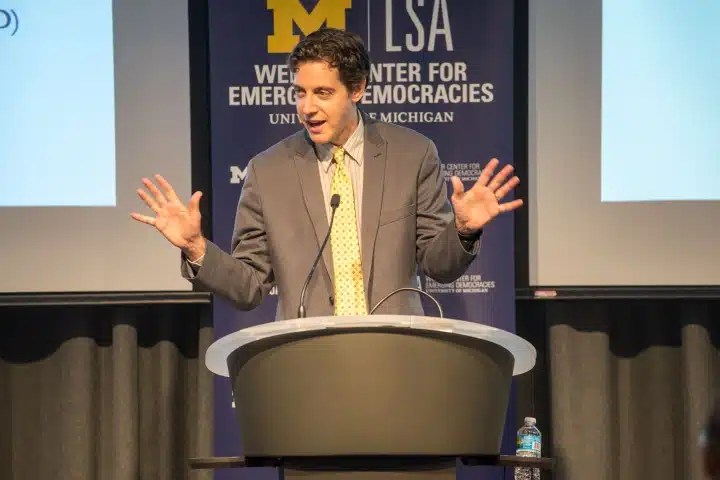
Ultimate Failure Via Major Accomplishments – Julian E. Zelizer on the Paradoxes of Joe Biden’s Presidency
Julian E. Zelizer – editor of the new volume The Presidency of Joseph R. Biden. A First Historical Assessment – discusses the key accomplishments of Joe Biden’s presidency as well as the sources of his ultimate failure to fulfil his promise. He explores the historical origins of the Biden presidency, reflects on its foreign policy record, and considers the questions future historians will be debating.
2.04.2026

Podcasts
Did Fear of Vampires Inspire Early Scientific Inquiry? A Discussion with Ádám Mézes
In our third podcast, we host Ádám Mézes, with whom we discuss the fascinating topic of vampire contagion in the Habsburg Empire and its broader impact on the history of science. As in the earlier conversation with Kateryna Dysa on witchcraft trials, the discussion begins with a deceptively simple question: what exactly is a vampire, and who has the authority to define it?
30.03.2026

Podcasts
Democracy on a Tightrope: Politics, Bureaucracy, and the Risks of Imbalance
In this episode of the Review of Democracy podcast, Gabriel Pereira speaks with Gabriela Lotta about Democracy on a Tightrope: Politics and Bureaucracy in Brazil, co-authored with Pedro Abramovay and recently published by Central European University Press.
23.03.2026

Podcasts
EU Research Spotlight: Nils-Christian Bormann on Violence, Elites, and Democratic Stability
The conversation explores the project’s core questions, including how violence interacts with democratic stability and what role political elites play in moments of crisis. We also discuss the project’s mixed-methods approach, combining large-scale data collection with in-depth historical case studies, as well as innovative open-source datasets and visualisations. The episode highlights key early findings, most notably the relationship between local violence and support for extremist parties and reflects on what these historical patterns might tell us about the vulnerabilities of contemporary democracies.
19.03.2026

Podcasts
How Courts Can Hold Authoritarian Leaders Accountable
In many democracies today, elected leaders challenge institutions, undermine electoral rules, and test the limits of constitutional order. Yet legal accountability for such actions remains rare. In this episode of the Review of Democracy podcast, produced in cooperation with the Journal of Democracy, Gabriel Pereira speaks with Luciano Da Ros and Manoel Gehrke about their article “How to Bring Authoritarians to Justice.”
16.03.2026
Podcasts
Anticipating Autocracies: A History of Contemporary China
In this latest conversation, we speak with Minxin Pei about his latest book, The Broken China Dream: How Reform Revived Totalitarianism (Princeton University Press, 2025), which challenges the enduring assumption that economic development naturally leads to democracy. Pei argues that China’s post-Mao reforms produced not political liberalization but a resilient, adaptive form of authoritarianism.
9.03.2026

Podcasts
The Distinct Logic of Ukrainian Witchcraft
In our second podcast of this series, we have as guest Kateryna Dysa, with whom we will discuss her extremely fascinating book Ukrainian Witchcraft Trials: Volhynia, Podolia, and Ruthenia, 17th and 18th Centuries, published by the CEU Press in 2023. In this research, she reconstructs the history of witchcraft in Ukraine, with a particular focus on the three so-called “Ruthenian” palatinates of the Polish-Lithuanian Commonwealth: Podolia, Ruthenia, and Volhynia.
5.03.2026

Podcasts
Why Gen-Z is Rising: Erica Chenoweth and Matthew Cebul on How We Might be Witnessing a Profound Generational Transformation
Erica Chenoweth and Matthew Cebul discuss the political profile of Gen-Z protesters, what ignited their recent protests across the globe, and how those protests unfolded in various places. They reflect on the promises and perils of those protests – and how the related question of violence and non-violence has played out.
2.03.2026

Podcasts
Shuk Ying Chan on Postcolonial Global Justice
In this episode of the Review of Democracy podcast, political theorist Shuk Ying Chan (UCL) discusses her new book Postcolonial Global Justice, which develops an account of postcolonial global justice as social equality by thinking with anticolonial leaders Aimé Césaire, Frantz Fanon, Kwame Nkrumah and Jawaharlal Nehru.
23.02.2026

Podcasts
Digging Up the Dead: What Vampire Panics Reveal About Power
In our first podcast of this series, we discuss with Prof. John Blair, around his latest book Killing the Dead: Vampire Epidemics from Mesopotamia to the New World, published by Princeton University Press. John Blair reconstructs a world in which the dead were not metaphor but menace. His book follows the concept of restless bodies which stirred various social anxieties and created symbolic meanings.
16.02.2026

Podcasts
Women’s Participation in Ukraine’s Euromaidan- A Conversation with Olena Nikolayenko
In the podcast, Olena Nikolayenko places women’s protest within a broader framework, which includes the Arab Spring and Belarus. Her claim is that age, class, region and political experience shape women’s forms of engagement. Based on these observation, Invisible Revolutionaries distinguishes between three models of participation: patriarchal, emancipatory, and hybrid.
9.02.2026

Podcasts
Crime, Crackdowns, and Democracy in Ecuador
Ecuador has experienced one of the most dramatic surges in criminal violence in Latin America, alongside growing pressure on democratic institutions. In this episode of the Review of Democracy podcast—produced in cooperation with the Journal of Democracy—Gabriel Pereira speaks with Galo Mayorga and Kai M. Thaler about how state weakness, militarized security policies, and public fear are reshaping Ecuador’s democracy.
2.02.2026

Podcasts
Why Honduras Is Facing Election Chaos
In this episode of the Review of Democracy podcast, Gabriel Pereira speaks with Rachel A. Schwartz about her recent Journal of Democracy article, “Why Honduras Is Facing Election Chaos.” They examine how logistical failures, elite conflict, and long-term democratic erosion combined to produce uncertainty over the outcome, how US backing shaped post-election politics, and what the new government may mean for Honduras’s democratic future.
29.01.2026

Podcasts
End of Year Podcast Part II: – Looking Ahead to 2026
As Review of Democracy turns its attention from 2025 to the uncertainties of 2026, our editors Adrian Matus (Democracy and Culture) and Anubha Anushree (Cross-Regional Dialogue) discuss the intellectual questions that might shape the year ahead.
27.01.2026

Podcasts
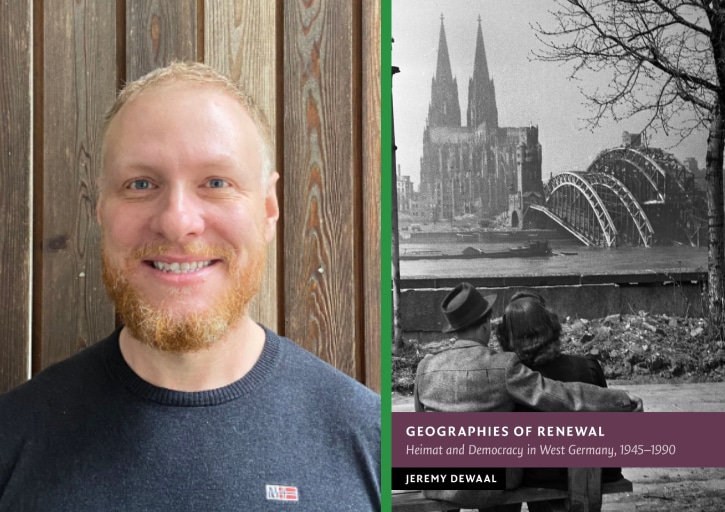
Heimat Revisited: Jeremy DeWaal on Place, Belonging and Post-war Politics in West Germany
What does it mean to feel “at home” in a place, and why does that matter for democracy? In this episode, historian Jeremy DeWaal talks about Heimat, a German word that is famously hard to translate. It is often rendered as “home” or “homeland”, but it also points to a deeper sense of belonging, memory and emotional attachment to specific places.
22.01.2026
Podcasts
Stiliagi and Soviet Masculinities- A Conversation with Alla Myzelev Part II
In the Soviet Union, youth fashion meant more than just a way of expression. In our latest episode, we discuss with Alla Myzelev about the stiliagi, a flamboyant youth subculture that emerged in the late Stalinist and early post-Stalinist Soviet Union. Myzelev situates the stiliagi not simply as fashion-conscious rebels, but as a distinctly embodied and aesthetic form of dissent that challenged dominant socialist norms of respectability, discipline, and masculinity.
19.01.2026

Podcasts
On Genocide: Omer Bartov in Conversation about Palestine, Israel, and Germany
Over the last two years, the world has witnessed atrocities beyond imagination. The killing of approximately 1,200 people by Hamas in Israel on October 7, 2023, was followed by a war in which the Israeli Defense Forces have, according to recent reports, killed over 67,000 Palestinians.
15.01.2026

Podcasts
The Great War and the Transformation of Central Europe: A Conversation with Tara Zahra and Pieter Judson
The episode examines fears of democratisation and elite decision-making, the management of refugees and mass displacement, and the emergence of new welfare practices and administrative experiments, showing how these processes laid the foundations for the post-1918 order. By foregrounding shared experiences of scarcity, mobilisation, and repression across the Monarchy, the discussion examines what the Empire’s often improvised wartime policies reveal about processes of disintegration as well as unexpected capacities for adaptation.
12.01.2026

Podcasts
Stiliagi and Soviet Masculinities- A Conversation with Alla Myzelev
In our latest episode, we discuss with Alla Myzelev about the stiliagi, a flamboyant youth subculture that emerged in the late Stalinist and early post-Stalinist Soviet Union. Myzelev situates the stiliagi not simply as fashion-conscious rebels, but as a distinctly embodied and aesthetic form of dissent that challenged dominant socialist norms of respectability, discipline, and masculinity. Through their brightly coloured clothing, enthusiasm for jazz, and stylised modes of self-presentation, stiliagi exposed the fragility of Soviet ideals of the “proper” socialist male citizen. Rather than overt political opposition, their subversion operated through taste, leisure, and the body, revealing how cultural practices could quietly unsettle authoritarian norms even in highly regulated societies.
8.01.2026
Podcasts
Benjamin Gedan and Elias French on the Threat to Latin American Term Limits
The desire of leaders to remain in office indefinitely has haunted democracy since its inception. Politicians have found various ways to circumvent democratic accountability and sideline the people’s will for a change in leadership, from military coups to rigged elections or the installation of puppet leaders. One of the most widely used tools to constrain such practices is the establishment of presidential term limits. Many of today’s constitutions impose a limit on the number of times a person can run for office.
5.01.2026

Podcasts
End of the Year Podcast 2025 – Part I: Reflections and Reckonings
As 2025 draws to a close, RevDem editors Alexandra Kardos (History of Ideas), Gabriel Pereira (Cross-Regional Dialogue), and Kristóf Szombati (Political Economy and Inequalities) take stock of a turbulent democratic year through three keywords: imagination, frustration, and realignment.
22.12.2025

Podcasts
Carceral Politics: “Public Life” of Prisons in Modern Iran and Beyond
In this latest conversation with Golnar Nikpour, we discuss her book, The Incarcerated Modern: Prisons and Public Life in Iran (Stanford University Press, 2024). We discuss how modern Iranian prisons illuminate broader questions about political modernity, state formation, and democratic aspiration.
18.12.2025

Podcasts
2025 in Perspective: Daron Acemoğlu on Democracy, Delivery, and the Crisis Within
In this exclusive end-of-year conversation with our Co-Managing Editor Ece Özbey, Nobel Prize–winning political economist Daron Acemoğlu reflects on what 2025 revealed, and failed to resolve, about the state of democracy.
15.12.2025
Podcasts
An Authoritarian Turn in Contemporary Germany? – In Conversation with Robin Celikates
The threat of the far-right dominates politics in Germany today. The ascendance of the AfD marks the first time since the end of World War II that such a force has attracted a considerable share of the German electorate. This regularly leads politicians from centrist parties to emphasize the importance of preventing German history from repeating itself. However, these same actors have simultaneously brought far-right policies into the mainstream and adopted practices that resemble the playbook of autocrats. Such practices have been particularly visible in the repression of pro-Palestinian voices over the last two years. In recent articles, Prof. Robin Celikates has argued that these developments indicate an authoritarian turn in contemporary Germany.
11.12.2025

Podcasts
Social Media, AI-Chatbots and the Death of the Evening News: How to Restore Trust in a Fragmented Media World – A Conversation with Raluca Radu
In a conversation for the Review of Democracy, Raluca Radu explains how social platforms like TikTok, WhatsApp groups, and AI-driven chatbots reconfigure the trust towards information. As Raluca Radu clearly emphasizes, COVID-19 marked a shift in media consumption. During the pandemic, the main source of information became the short-form video content on platforms such as TikTok. Some newsrooms recognized that their audiences migrated elsewhere and rushed to follow. They tried to adapt to this changing landscape by establishing social media presence. By now, social media is not only an additional channel of dissemination but, in some cases, the only way to reach citizens who do not read traditional websites or watch TV. Thus, social media and algorithms redefine the public sphere worldwide.
8.12.2025

Podcasts
How to Resist Illiberalism: Pedro Abramovay on Reimagining Democracy in Latin America
In this podcast, Pedro Abramovay offers a wide-ranging analysis of the rise of illiberal forces in Latin America and the democratic vulnerabilities they exploit.
4.12.2025

Podcasts
Exiles and Diasporas in the Crosshairs of Authoritarian States – Nate Schenkkan on the Rise of Transnational Repression and What Can Be Done to Counter It
In this discussion with Nate Schenkkan, an independent authority on human rights and global authoritarianism and former senior director of research at Freedom House, we examine the growing issue of transnational repression—a practice wherein states pursue individuals and groups beyond their own borders whom they regard as threats to those in power.
1.12.2025

Podcasts
An Authoritarian Turn in Contemporary Germany? – In Conversation with Robin Celikates
In Part 1 of this podcast, Prof. Celikates examines the German government’s repression of pro-Palestinian protests and voices, discusses Germany’s broader protest culture, and reflects on the notion of Staatsräson.
26.11.2025
Podcasts
How’s the Rule of Law in Poland? – In Conversation with Jakub Jaraczewski
In this podcast, Jakub Jaraczewski examines the progress the Bodnar ministry made in undoing the consequences of eight years of Law and Justice rule. He also discusses the challenges that lie ahead for Minister Żurek, with Nawrocki being widely seen as more confrontational than his predecessor in the Presidential Palace, Andrzej Duda.
17.11.2025

Podcasts
Delivering Democracies: Maya Tudor on “What Democracy Does…And Does Not Do?”
In this conversation, Maya Tudor discusses her recent article published in the Journal of Democracy and argues that today’s decline in trust in democracy stems from misconceptions about its achievements, such as expanding education, extending life expectancy, promoting relative peace, and fostering economic progress.
14.11.2025

Podcasts
A Turning Point in American Politics? The Rise of Democratic Socialists of America and Zohran Mamdani
To what extent does Zohran Mamdani’s recent election represent a turn in American politics? In an interview for the Review of Democracy, Fabian Holt (Associate Professor at Roskilde University) discusses the political platform that made Zohran Mamdani’s victory possible. Throughout our conversation, Holt maps the evolution of the Democratic Socialists of America, as presented in his latest book “Organize or Burn: How New York Socialists Fight for Climate Survival”, published last month by NYU Press.
12.11.2025

Podcasts
Radical Ecologies of the Right and Left: A Conversation with Ashton Kingdon and Balša Lubarda
In this new episode of the “When the Far Right and the Far Left Converge” series, which shares fresh research from a workshop organised by the CEU DI Democracy in History Work Group, we discuss with Dr Ashton Kingdon and Dr Balša Lubarda how both the far right and the far left mobilise ecological ideas, often drawing from the same language of resistance.
7.11.2025

Podcasts
Will AI Crack the Foundations of Democracy? Dean Jackson and Samuel Woolley on Longer-term Threats and Ways to Counter Them
In this episode of our special series produced in partnership with the Journal of Democracy, we explore “AI’s Real Dangers for Democracy,” the new article penned by Dean Jackson and Samuel Woolley (Journal of Democracy, Vol. 36, No. 4, October 2025)
3.11.2025

Podcasts
EU Research Spotlight: Zsolt Boda on Moral Emotions in Politics and Democracy
In the opening episode of Review of Democracy’s new podcast series on EU-funded research, Alexandra Kardos speaks with Professor Zsolt Boda, Director of the ELTE Centre for Social Sciences, about the MORES Moral Emotions in Politics project, a Horizon Europe Research and Innovation Action exploring how emotions shape democratic life.
30.10.2025

Podcasts
When Democracies Start to Self-Destruct: Rachel Myrick on how Polarization Becomes a Geopolitical Threat
In our podcast, Rachel Myrick, the Douglas & Ellen Lowey Associate Professor of Political Science at Duke University, discusses with us how extreme partisan polarization threatens not only domestic governance but also global stability. Drawing on her new book, Polarization and International Politics: How Extreme Partisanship Threatens Global Stability (Princeton University Press, 2025), Myrick argues that polarization in democracies affects foreign policymaking.
27.10.2025

Podcasts
The Authoritarian Resurgence in World Politics – In Conversation with Alexander Dukalskis and Alexander Cooley
The end of the last century brought about what scholars have called a “unipolar moment.” With the fall of the Soviet Union, liberalism lost its enemy on the global stage, which led the United States to try to establish an international liberal order by promoting liberalism transnationally. This latter approach has not only been harshly criticized for often being executed hypocritically and sometimes causing disastrous wars, but also ultimately seems to have failed.
22.10.2025

Podcasts
Negotiating Sexuality in Socialist Poland: In Conversation with Anna Dobrowolska
Anna Dobrowolska’s new book Polish Sexual Revolutions. Negotiating Sexuality and Modernity behind the Iron Curtain, published at the Oxford University Press this year, reveals fresh perspectives in the scholarship about the socialist states. In our podcast, she explains how Poland and Eastern Europe developed their own distinct approaches to sexual modernity under state socialism. While Western observers assumed sexual liberation was incompatible with communist rule, Poland was quietly developing its own sophisticated approach to sexual modernity. In her book, Anna Dobrowolska aimed to map these differences and nuances. Throughout the conversation, we learn that the conventional narrative of state oppression versus societal resistance proves to be inadequate when examining Poland’s sexual revolution. Dobrowolska’s archival research reveals a complex ecosystem of actors: sexologists, journalists, cultural institutions, who negotiated sexual discourse largely independent of [...]
20.10.2025

Podcasts
The Hungarian Border That Took Years to Draw
Borders are rarely born in conference halls. As the newly edited book The Disputed Austro-Hungarian Border: Agendas, Actors, and Practices in Western Hungary/Burgenland after World War I, published this year by Bergahn Books shows that the borders are created by wars and conflicts and then changed by clerks, soldiers, smugglers and villagers trying to make sense of a new world order. By focusing on one of the seemingly post-1918 quieter frontiers, the line separating Austria from Hungary, the book challenges the narrative that the Treaty of Trianon neatly decided everything with a stroke of the pen.
16.10.2025

Podcasts
Contentious Politics and Democratic Resilience
In this episode, we sit down with Professor Mohammad Ali Kadivar to explore the urgent and timely question of popular protests amid global democratic backsliding. Drawing from his acclaimed monograph, Popular Politics and the Path to Durable Democracy, Kadivar poses the following questions: What role does dissent play in sustaining democracies? Do protests reinforce or undermine democratic institutions?
13.10.2025
Podcasts
The Myth of Democratic Resilience – In Conversation with Jennifer Cyr and Nic Cheeseman
In our latest episode of the special series produced in partnership with the Journal of Democracy, we discuss the recent article co-authored by Jennifer Cyr, Nic Cheeseman and Matías Bianchi, entitled “The Myth of Democratic Resilience” (Journal of Democracy, Vol. 36, No.3, July 2025)
6.10.2025

Podcasts
The Co-optation of Antonio Gramsci’s Ideas by the Contemporary (Far-)Right
This episode, part of the series When the Far Right and the Far Left Converge, features Francesco Trupia and Marina Simakova discussing the ideological co-optation of Antonio Gramsci’s ideas by the contemporary (far-)right. They examine when and how right-wing actors adopted his political language, and how political conjunctures in and beyond Europe have shaped this process.
29.09.2025

Podcasts
Transformations of the Latin American Right: From Pink Tide to Polarization – Part 2
In the second part of our special two-part episode of the Review of Democracy podcast, we continue our conversation with André Borges, Ryan Lloyd, and Gabriel Vommaro. Building on our first discussion of parties, movements, and leaders, this episode turns to the demand side of the region’s political transformation. We explore how voters’ attitudes, cultural conflicts, and deepening polarization are reshaping right-wing politics across Latin America.
25.09.2025

Podcasts
Transformations of the Latin American Right: From Pink Tide to Polarization – Part1
The conversation explores how Latin America’s right has been reshaped since the early 2000s — from the rise of new political parties and movements to the growing role of voters and cultural conflicts. In part one, we focus on the supply side: parties, movements, and leaders redefining right-wing politics in the region. In part two, we turn to the demand side, examining voters, polarization, and the societal forces driving this transformation. Join us as we map out the new generations of conservative and radical right-wing actors that are changing the political landscape across Latin America — and consider what this means for the future of democracy.
22.09.2025
Podcasts
The Politics of Migration Narratives – In Conversation with Andrew Geddes
Migration is one of the most salient issues in European politics today. While its importance for voting decisions is widely acknowledged, many of its key characteristics remain the subject of vivid debate. Opinions about migration often diverge sharply: Does migration pose a threat to European societies, or is it essential for economic survival? Are public attitudes becoming more hostile, or more welcoming? Should European countries restrict migration, or embrace it? Competing narratives seem to strongly shape migration policy and the laws through which it is implemented.
17.09.2025

Podcasts
Colonial Roots and Continuities in Europe’s Migration System –In Conversation with Janine Silga
When the first treaties that laid the groundwork for today’s European Union and the European Convention on Human Rights were signed after the Second World War, many of today’s member states were still significant colonial powers—empires. It was only in the years that followed that these European empires eroded, and many countries in the Global South gained independence. However, while colonialism formally ended, many have argued that coloniality has persisted. Although this applies to different areas, one of the most important is migration governance. Here, European countries have been accused of replacing explicitly racialized mechanisms with a facially race-neutral apparatus that nonetheless constitutes a system of neocolonial racial borders that benefits some and disadvantages others.
15.09.2025

Podcasts
Capitalism’s Democracy: Competition and Resilience in Twenty-First Century
In our latest episode of the special series produced in partnership with the Journal of Democracy, we discuss the recent article co-authored by Steven Levitsky, Semuhi Sinanoglu, and Lucan Way, entitled “Can Capitalism Save Democracy?”
11.09.2025

Podcasts
Scripts of Revolutions: A Conversation with Dan Edelstein
In this episode of Democracy and Culture, we speak with Dan Edelstein, William H. Bonsall Professor of French at Stanford University, about his new book The Revolution to Come: A History of an Idea from Stasis to Lenin (Princeton University Press, 2025). His academic investigations range across literary studies, historiography, political thought and digital humanities. Throughout our conversation, we focus on providing a new understanding of the concept of revolution. In his latest book, by tracing the conceptual distinction between stasis and metabolē through Roman, medieval, and Renaissance thought, he recovers the overlooked role of Polybius in shaping the constitutional imagination of early modern Europe.
8.09.2025

Podcasts
A New Constitutional Settlement for Poland? – In Conversation with Maciej Kisilowski (Part 2)
In this part, Professor Kisilowski lays out his proposals for a new constitutional settlement for Poland, aimed at addressing the roots and consequences of the severe polarization of the Polish society. He builds upon the arguments expounded in a volume edited by him and Professor Anna Wojciuk, Umówmy się na Polskę (ZNAK 2023), in which thinkers from all across the political spectrum shared their ideas for changing Poland’s political status quo.
4.09.2025

Podcasts
The Illiberal Trap: Stanley Bill and Ben Stanley on Trilemmas and Warnings from Poland
In this new episode of our special series produced in partnership with the Journal of Democracy, Stanley Bill and Ben Stanley draw on their new article “Democracy After Illiberalism: A Warning from Poland” (July 2025, Vol. 26, No. 3) to discuss the challenges, dilemmas, and paradoxes of liberalism after illiberalism in Poland. They reflect on the concepts of liberalism and illiberalism to dissect the approach Donald Tusk’s current government has taken and its major consquences. They also consider the wider lessons that may be drawn from recent and ongoing Polish experiences.
1.09.2025

Podcasts
From Competitive Authoritarian to Hegemonic: Berk Esen on the Decline of Turkish Democracy and the Prospects for Its Revival (Part 2)
In Part 2 of our latest episode in the special series produced in partnership with the Journal of Democracy, Berk Esen turns to the other side of the equation: how Turkey’s opposition is pushing back against an increasingly hegemonic regime. This episode builds on Part 1, where we explored the regime’s authoritarian escalation through the courts, media, and economic coercion.
25.08.2025

Podcasts
War, Oligarchs, and the Future of Ukraine’s Political Economy – Inna Melnykovska on Civic Transformation, Reconstruction and EU Influence in Wartime Ukraine
How is war transforming Ukraine’s economy—and its oligarchs? In this Review of Democracy podcast, political economist Inna Melnykovska (Central European University) discusses how the full-scale Russian invasion has led to surprising shifts in business-state relations, including a turn toward civic responsibility among Ukraine’s biggest companies.
20.08.2025

Podcasts
From Competitive Authoritarian to Hegemonic: Berk Esen on the Decline of Turkish Democracy and the Prospects for Its Revival (Part 1)
In Part 1 of our latest edition in the special series in partnership with the Journal of Democracy, Berk Esen unpacks how Turkey’s competitive authoritarian regime is veering toward full autocracy.
13.08.2025

Podcasts
Holding Frontex Accountable – In Conversation with Joyce De Coninck
In current public discourse, human rights violations at the EU’s borders are inextricably linked to one specific actor: the European Border and Coast Guard Agency – or, in short, Frontex. Since its establishment in 2004, human rights activists have become increasingly aware of various rights violations committed by the agency, particularly in the Mediterranean. To name just one example, Frontex has been accused of providing the locations of migrants intercepted at sea to the Libyan coast guard, which then transported them to camps where they have been systematically raped, tortured, and enslaved. Remarkably, despite accusations of the most severe human rights violations, Frontex has largely managed to avoid legal consequences. Currently, Frontex stands before the Grand Chamber of the Court of Justice of the EU for the first time in its history.
11.08.2025

Podcasts
The Aftermath of Poland’s Presidential Election – In Conversation with Maciej Kisilowski (Part 1)
In Part 1 of this podcast, Maciej Kisilowski examines the results of Poland’s presidential election as well as its implications for Poland’s political dynamics over the next few years. In particular, he addresses the issue of whether Polish liberals and progressives are capable of correctly identifying the prevailing sentiments in a deeply divided society.
6.08.2025

Podcasts
The Paradox of Dynastic Democracy: Richard Javad Heydarian on Current Developments in the Philippines, Sharpening Global Competition, and the Prospects of a Liberal-Progressive Breakthrough
In this new episode of our monthly special created in partnership with the Journal of Democracy, Richard Javad Heydarian discusses the Philippines’ dynastic democracy and political prospects in a truly global framework.
4.08.2025

Podcasts
The Rise of Legislative Authoritarianism –In Conversation with Paolo Sosa-Villagarcia and Moisés Arce
In the latest episode of our special series produced in collaboration with the Journal of Democracy, Paolo Sosa-Villagarcia and Moisés Arce discuss the rise of legislative authoritarianism, compare it with more traditional forms of authoritarian rule, and explore its implications both in theory and in practice.
7.07.2025

Podcasts
Mapping Crisis Across Borders: Balázs Trencsényi on the Interwar Period, Intellectual History, and the Future of Democracy
In our new podcast, we speak with historian Balázs Trencsényi about his new book Intellectuals and the Crisis of Politics in the Interwar Period and Beyond: A Transnational History (OUP, 2025). Trencsényi offers a sweeping re-narration of modern European intellectual history through the lens of “crisis” — not only as an analytical category, but as a powerful tool of political mobilisation.
3.07.2025

Podcasts
Curating Europe’s Memory: A Conversation with Simina Bădică about the House of European History
In this episode of Open Space(s) series, the Review of Democracy brings to your attention one of Europe’s most ambitious cultural institutions: the House of European History. Founded by the European Parliament in 2017 in Brussels, this unique institution explores Europe’s past from a transnational perspective and provides a platform for debating shared memory. The House of European History curates exhibitions, fosters debates, and research the shared European histories.
30.06.2025

Podcasts
Reimagining Political Theory: A Global and Comparative Conversation
In this episode of the Review of Democracy podcast, Alexandra Medzibrodszky talks to Leigh Jenco and Paulina Ochoa Espejo—two of the three co-authors of the new textbook Political Theory: A Global and Comparative Introduction, published by SAGE. Co-authored with Murad Idris, this groundbreaking volume reimagines how political theory is taught and understood by moving beyond a Eurocentric focus and embracing a truly global and comparative framework. Rather than organizing content around geographical regions or national traditions, the book takes a thematic approach—exploring war, political action, development, ritual, and other enduring political questions through a rich array of sources from across cultures and time periods. In the conversation, we discuss what it means to think politically beyond the Western canon, how to work with texts that are often marginalized or excluded from mainstream syllabi, and what challenges arise when dealing with disciplinary boundaries.
26.06.2025

Podcasts
Startup Democracy: Meritocracy and Gender in Bangalore, A Conversation with Hemangini Gupta
Startups have become one of the defining features of the 21st-century economy, celebrated as engines of innovation, meritocracy, and social mobility. Entrepreneurs—from Silicon Valley to Bangalore—are increasingly influential in shaping not just markets but also political discourse. Governments around the world are investing heavily in building startup ecosystems, often presenting them as neutral, technocratic spaces of economic growth and opportunity.
24.06.2025

Podcasts
Shaping the Culture of a City: A Conversation with Bohdan Shumylovych
In this episode of Open Space(s), the Review of Democracy focuses on Lviv, where the Center for Urban History offers a unique institutional model at the intersection between memory, space, and digital innovation. Founded in 2004 and located at 6 Bohomoltsia Street, Lviv, the Center for Urban History has become a vital node in public history and digital humanities. It defines itself as a hybrid institution with a hybrid audience.
20.06.2025

Podcasts
Can Courts Save Democracy? In Conversation with Samuel Moyn
Samuel Moyn discusses the risks of focusing too heavily on legality in the fight against rising authoritarianism. Since the beginning of the year, the Trump administration has been trampling on different sectors of the U.S. state. Numerous commentators, both from the U.S. and abroad, have argued that the issue of a potential “constitutional crisis”—one that could pave the way for authoritarianism—essentially hinges on whether the government complies with court orders. In contrast, Professors Ryan Doerfler and Samuel Moyn have argued that this focus is, at the very least, misplaced. So far, rather than protecting democracy, the courts have helped pave the way for the current situation. This raises important questions about the right pro-democratic strategy—not only in the U.S., but also in European countries such as Germany, where the far-right is on the rise and the judiciary is widely seen as the bulwark against authoritarianism. In this conversation, Samuel Moyn explains the [...]
16.06.2025

Podcasts
Survival, Resistance and Readiness in Dark Times – Vincent Liegey on the Trajectory and Future of the Degrowth Movement
In this interview Review of Democracy political economy editor Kristóf Szombati speaks with Vincent Liegey — degrowth activist, essayist, lecturer and editorial advisor of the new Routledge Handbook of Degrowth — about the roots, trajectory, and challenges of the degrowth movement.
12.06.2025

Podcasts
Instrumentalization of Migration? – In Conversation with Nora Markard
In recent years, the EU’s increasingly right-leaning discourse on migration has given rise to a new narrative: the instrumentalization of migration. EU member states strive for lower human rights standards, arguing that Belarus, under the authoritarian rule of Alexander Lukashenko, deliberately sends individuals who have fled countries such as Afghanistan and Iraq to the EU’s borders in order to overwhelm them, at times even accusing these individuals of collaborating with Belarusian authorities. Currently, three cases related to this situation are pending before the European Court of Human Rights.
9.06.2025

Podcasts
Can Democracy Deliver? Francis Fukuyama and Beatriz Magaloni on Performance, Legitimacy, and Public Trust
In the latest episode of our monthly special in cooperation with the Journal of Democracy, Francis Fukuyama and Beatriz Magaloni discuss why democratic legitimacy increasingly hinges on governments’ ability to deliver tangible results.
5.06.2025

Podcasts
David vs. Goliath: Defeating Russian Autocracy
In the new episode of our monthly special in cooperation with the Journal of Democracy, Serhii Plokhii discusses the key aspects of Russia’s war in Ukraine, the clash between democracy and autocracy.
2.06.2025

Podcasts
Erased: Women, Power, and the Hidden History of International Relations
In this episode of the Review of Democracy podcast, Alexandra Medzibrodszky speaks with Patricia Owens, renowned professor of international relations at Oxford, about her bold and revelatory new book, Erased: A History of International Thought Without Man (Princeton University Press, 2025). Owens exposes the hidden foundations of international relations in Britain, not as a field founded solely by elite white men, but one deeply shaped by the intellectual work of women—figures such as Margery Perham, Merze Tate, Eileen Power, and Susan Strange—whose ideas and influence have long been buried under layers of academic erasure.
26.05.2025

Podcasts
The Unequal Republic and the Egalitarian State: Democracy, Authoritarianism, and the Politics of Redistribution in India and China
In this conversation with Professor Vamsi Vakulabharanam, we explore the relationship between democracy and economic inequality by examining the divergent trajectories of China and India, as detailed in his recently published book, Class and Inequality in China and India, 1950-2010 (Oxford University Press, 2024). Through a comparative lens, Vamsi probes how political regimes—one authoritarian, the other democratic—shaped the economic responses to inequality in each country. While both nations began their postcolonial histories with ambitious visions of development, their political systems produced markedly different outcomes. In India, democratic governance allowed for broad participation but was also shaped by elite consensus. Post-independence reforms, though grounded in democratic ideals, often took a top-down form that prioritized the interests of rural capitalists and dominant castes. This constrained the potential for deep structural transformation, despite the formal [...]
19.05.2025

Podcasts
The Untold Story of Schengen: A Conversation with Isaac Stanley-Becker
In this episode of the RevDem podcast, investigative journalist and historian Isaac Stanley-Becker discusses his revealing new book, Europe Without Borders: A History (Princeton University Press). Drawing on newly accessible archives and in-depth interviews, Stanley-Becker sheds light on the little-known origins of the Schengen Agreement—long celebrated as a cornerstone of European integration and free movement. Yet, as this conversation uncovers, the story behind Schengen is far more complex.
12.05.2025

Podcasts
Authoritarian Waves Crashing: Dan Slater Reinterprets the Third Wave of Democratization
In the new episode of our monthly special in cooperation with the Journal of Democracy, Dan Slater discusses the authoritarian origins of the third wave of democratization.
5.05.2025
Podcasts
Hydro-hegemony: Water Modernization in Nepal and Beyond
In this wide-ranging conversation on hydrology and climate change, Dr. Dipak Gyawali, former Minister of Water Resources for Nepal, offers a series of crucial insights into the often indifferent, selectively inadequate, and politically compromised responses to the climate crisis. Arguing for a more sophisticated, multipronged approach, Dr. Gyawali critiques dominant Western scientific paradigms for failing to recognize the climate crisis primarily as a crisis of water. He highlights how these frameworks not only marginalize water-related concerns but also frequently dismiss indigenous hydrological knowledge systems as unscientific or primitive, thereby reinforcing global hierarchies of knowledge and power.
28.04.2025

Podcasts
Valeurs de l’Union – In Conversation with Luke Dimitrios Spieker
Since the seminal 2018 Portuguese Judges case, it has been established that violations of values enshrined in Article 2 of the Treaty on European Union (TEU) can be litigated before the Court of Justice of the European Union (CJEU). Currently, proceedings are ongoing in the European Commission’s infringement action against Hungary, the argument being that its anti-LGBTQI+ laws breach provisions of the internal market, several Charter rights, and, importantly, the common values enshrined in Article 2 TEU. The case, known as Valeurs de l’Union, has been hailed as the “largest human rights battle in EU history.” In this RevDem Rule of Law podcast episode, our co-managing editor, Dr. Oliver Garner, discusses the enforcement of the Union’s values at the Member State level as well as at the Union’s institutional level with Dr. Luke Dimitrios Spieker. Dr. Spieker is Senior Research Fellow at the Max Planck Institute for Comparative Public Law and International Law and Postdoctoral [...]
22.04.2025

Podcasts
Illiberal Transatlantic Ties and the Reshaping of Democracy: Lessons From the US and Hungary
In this episode of the Democracy After 2024 series, Zsuzsanna Végh and Daniel Hegedűs examine transatlantic cooperation between state and non-state actors in the United States and Hungary. They analyze commonalities in narratives and shared practices, assessing their impact on democracy in Central and Eastern Europe and beyond. Disclaimer: The views and opinions expressed in this episode are solely those of the speakers and do not necessarily reflect the positions of the German Marshall Fund of the United States or any institutions or organizations with which they are affiliated. Zsuzsanna Végh is a program officer at the German Marshall Fund of the United States and an associate researcher at the European Council on Foreign Relations. Her analytical focus is on the populist radical right in Central and Eastern Europe, its impact on foreign policy and democratic quality, and the foreign and EU policies of the Visegrád countries. Daniel Hegedüs is a German Marshall Fund of the [...]
16.04.2025

Podcasts
Ex-Ministers as Constitutional Judges – In Conversation with Mathias Möschel
Debates about the politicization of constitutional courts are as old as the institution itself. The concept’s originator, Hans Kelsen, emphasized the importance of preventing members of the government and parliament from sitting on constitutional courts, “because their acts are the acts to be controlled by the court.” While this idea is deeply entrenched—at least to the extent that simultaneous membership in the executive or legislative and judicial branches is widely prohibited—the same does not hold true across other temporal dimensions. In his new book Ex-Ministers as Constitutional Judges, published by Oxford University Press, Prof. Mathias Möschel examines the effects—both negative and positive—of this practice, focusing on the constitutional courts of France, Italy, Austria, and Germany.
14.04.2025

Podcasts
Trapped in the Cycle? – Giorgos Venizelos on the Year of Elections and Politics of (Anti-) Populism
Populism is often framed as a challenge to democracy. But what about anti-populism? Does opposing populism protect democratic institutions, or does it risk pushing politics toward elitism and exclusion, eroding social cohesion and deepening polarization? With the latest global developments, including Donald Trump’s resurgence in the United States and the growing influence of Alternative für Deutschland in Germany, these questions have never felt more urgent.
10.04.2025

Podcasts
Historical Archives of the European Union – a Space of Knowledge Production
Archives are vital for knowledge formation. Historians and social scientists rely on these spaces to shape new narratives and question the past. Yet, archives often seem to be unveiled in a sort of mystery, which might be partly due to the access restrictions for the specialists and broader public alike. However, not all the archives follow this restrictive approach. On the contrary, many institutions started to favour openness and transparency. Rather than limiting access for the researchers and the larger public, they encourage interactions on different levels.
9.04.2025

Podcasts
Why Eco-authoritarianism Is Not the Solution – Nomi Claire Lazar and Jeremy Wallace on Why, Despite Its Many Flaws, We Should Stick to Democracy in Our Quest to Solve the Climate Crisis
In this conversation with Nomi Lazar, Professor of Public and International Affairs at the University of Ottawa, and Jeremy Wallace, Professor of China Studies at the Johns Hopkins School of Advanced International Studies, we engage with their spirited defense of democracy in the face of calls for the deployment of emergency powers to come up with solutions to the worsening climate crisis. Nomi and Jeremy highlight the pitfalls of emergency legislation and spell out the key resources that in their view democracies and only democracies bring to the table in the combat to prevent climate breakdown. The conversation also touches on China’s impressive climate record, the shortcomings of liberal democratic government, the need for more egalitarian forms of democracy, and some of the ways in which well-designed emergency legislation could still prove useful.
7.04.2025

Podcasts
How the European Council Leads – In Conversation with Martina Vass
The European Council brings together all of the heads and states of government of the European Union in order to drive policy. In the last decade the EU has faced crises of the economy, membership, values, and migration. This conversation between our co-managing editor Oliver Garner and Dr Martina Vass considers these issues through the lens of the latter's monograph.
31.03.2025

Podcasts
Political Capacity: Gianna Englert on the Liberal Struggle for Democracy
Is democracy sustainable without informed, virtuous, and engaged citizens? Can political institutions shape the kind of citizenry democracy needs? These questions lie at the heart of Democracy Tamed: French Liberalism and the Politics of Suffrage, the compelling new book by political theorist Gianna Englert, who joins us in this episode of RevDem. As contemporary anxieties grow over the future of liberal democracy and the rise of populism, Englert turns our attention to 19th-century France, where liberal thinkers grappled with similar dilemmas in the wake of the French Revolution.
24.03.2025

Podcasts
Lost Souls: Soviet Displaced Persons and the Cold War Struggle
What happens when war leaves millions stranded, stateless, and unwanted? In this episode of the Review of Democracy podcast, host Imogen Bayley discusses with renowned historian Sheila Fitzpatrick her latest book, Lost Souls: Soviet Displaced Persons and the Birth of the Cold War. Drawing from newly uncovered archival research, Fitzpatrick explores the lives of Soviet displaced persons—those who found themselves outside the USSR at the end of World War II and refused to return, despite intense Soviet pressure.
20.03.2025

Podcasts
Foreign Hands, Local Democracy: Toxic Legacies of Cold War in India
In this conversation with Paul McGarr, we discuss his latest book, Spying in South Asia (Cambridge, 2024). From the influence of espionage on international relations to the role of conspiracy and rumor in shaping domestic politics, McGarr highlights the complexities of intelligence dynamics between the West and India. He reveals how during the Cold War, democratic aspirations in the Global South were often dismissed by American and British intelligence and foreign policy establishments. Challenging the widely held belief that the Western powers championed democracy in the region, McGarr argues that Cold War geostrategic priorities frequently undermined democratic movements in South Asia. Yet, despite these external pressures, local actors and political institutions in India played a crucial role in shaping intelligence outcomes, resisting imposed narratives, and asserting their own democratic agency.
17.03.2025

Podcasts
Liberal Democratic Standards Are Not Just an Opinion – Karolina Wigura on Polish Politics, Liberal Emotions, and Her Major Concerns
In the latest episode of our Democracy After 2024 series, Karolina Wigura discusses Poland’s current role in Europe and the changing polarization between liberal and illiberal forces; analyzes the role of emotions in contemporary liberal politics; reflects on how we distinguish between agendas of accountability, on the one hand, and of retribution and revenge, on the other; and explains what she will watch particularly closely in the coming months.
12.03.2025

Podcasts
An Open Marketplace for Members of Parliament in European countries? In Conversation with Emiljana Krali
In the latest RevDem podcast our co-managing editor Dr Oliver Garner discusses processes for becoming an MP today in Europe with Dr Emiljana Krali.Dr Krali is a generalist Equity Research Analyst who has experience in telecommunications, fintech, software, and hardware among other fields. She holds degrees from the University of Bari in physics and from the University of Surrey in nanotechnology. Her Ph.D. was obtained from Imperial College London.She is currently undertaking the selection process to become a candidate for the governing Socialist Party in Albania.
10.03.2025

Podcasts
Texts, Contexts, and Feminist Voices in East-Central Europe
In this episode, we explore the newly published book Texts and Contexts from the History of Feminism and Women’s Rights in East-Central Europe, Second Half of the Twentieth Century (CEU Press, 2024) edited by Zsófia Lóránd, Adela Hîncu, Jovana Mihajlović Trbovc, and Katarzyna Stańczak-Wiślicz. Our conversation with the editors delves into the book's aim of highlighting the often-overlooked contributions of East Central European women to global feminist thought and activism. We discuss the selection process of a diverse range of texts and artworks that challenge the dominant political and intellectual canons, focusing on the importance of including works that don't necessarily self-identify as feminist but engage with themes of systemic oppression. The discussion also touches on how socialism and the post-socialist transitions shaped feminist movements in the region, notable figures and texts from the volume, encountered controversies during the process of editing as well as the [...]
7.03.2025

Podcasts
Beyond Narratives, Personas and Spectacles: A Conversation on Illiberal and Authoritarian Practices
In this episode of the Democracy After 2024 series, Dorjana Bojanovska Popovska hosts Marlies Glasius for a discussion that goes beyond traditional regime-type classifications and the public/private divide, by looking at examples of illiberal and authoritarian practices that emerged or peaked in 2024 as well as their diffusion across different contexts.
6.03.2025

Podcasts
The Right against Rights in Latin America
In this conversation with the Review of Democracy, Professor Leigh Payne, Dr. Julia Zulver, and Dr. Simon Escoffier discuss the development of right-against-rights movements that have grown in numbers, strength, and influence in recent years in Latin America. The discussion draws on their latest book, “The Right against Rights in Latin America,” published by Oxford University Press, in which they show that new anti-rights groups are intent on blocking, rolling back, and reversing social movements' legislative advances by obstructing justice and accountability processes and influencing politicians across the region.
5.03.2025

Podcasts
Why Is the World Down on Democracy? – Richard Wike Discusses Current Global Attitudes and the Rising Dissatisfaction with the Way Democracies Work
In this conversation, Richard Wike – director of global attitudes research at Pew Research Center – presents the key facts of the growing dissatisfaction with the way democracy works; discusses which parts of society support which kinds of change in the direction of more representativity; explores how people view the impact of social media on democracy; and reflects on how democracies of the future might look different from past versions and how they could empower citizens more.
3.03.2025

Podcasts
The Continuous History of Disruptions in Lahore: A Conversation with Manan Ahmed Asif
In this discussion with Manan Ahmed, we consider the political history of South Asia from the perspective of one of its most vibrant and famed cities, Lahore. Drawing from his latest book, The Disrupted City: Walking the Pathways of Memory and History in Lahore (The New Press, 2024), we consider the various episodic and modular histories of cities in the Global South, their role in forming new kinds of tactile consciousness towards politics, and their presence in colonial and postcolonial political imagination. Enchanting yet tragic, monumental yet fragmented, Lahore—as depicted by Ahmed—embodies a dual legacy. It bears the scars of the 1947 partition of South Asia into India and Pakistan while also reflecting its own vibrant, if imperfect, history of religious and cultural cosmopolitanism—a legacy sacrificed to the nationalizing imperatives of what Ahmed calls “Prophetic Pakistan.”
26.02.2025

Podcasts
Radical Democratic Thought in India: Rethinking Representation with Tejas Parasher
In this episode of the Review of Democracy Podcast, host Alexandra Medzibrodszky talks to Tejas Parasher, Assistant Professor of Political Theory at UCLA, to explore the rich and often overlooked landscape of radical democratic thought in modern India. Drawing from his award-winning book, Radical Democracy in Modern Indian Political Thought, Parasher discusses the ideas of thinkers and activists from the 1910s to the 1970s who challenged the colonial legacies of liberal, representative democracy. These figures envisioned participatory, federalist models of governance that resisted elitism and corruption, offering bold alternatives to the political status quo.
24.02.2025

Podcasts
Public Attitudes and Dynamics of Opposition in Russia Since 2022
In this episode of the Democracy After 2024 series, Denys Tereshchenko hosts Margarita Zavadskaya to discuss the asymmetries of power between the state and civil society in Russia, public attitudes toward the full-scale invasion of Ukraine among Russians inside and outside Russia, and the reasons behind the failure of anti-war protests.
20.02.2025

Podcasts
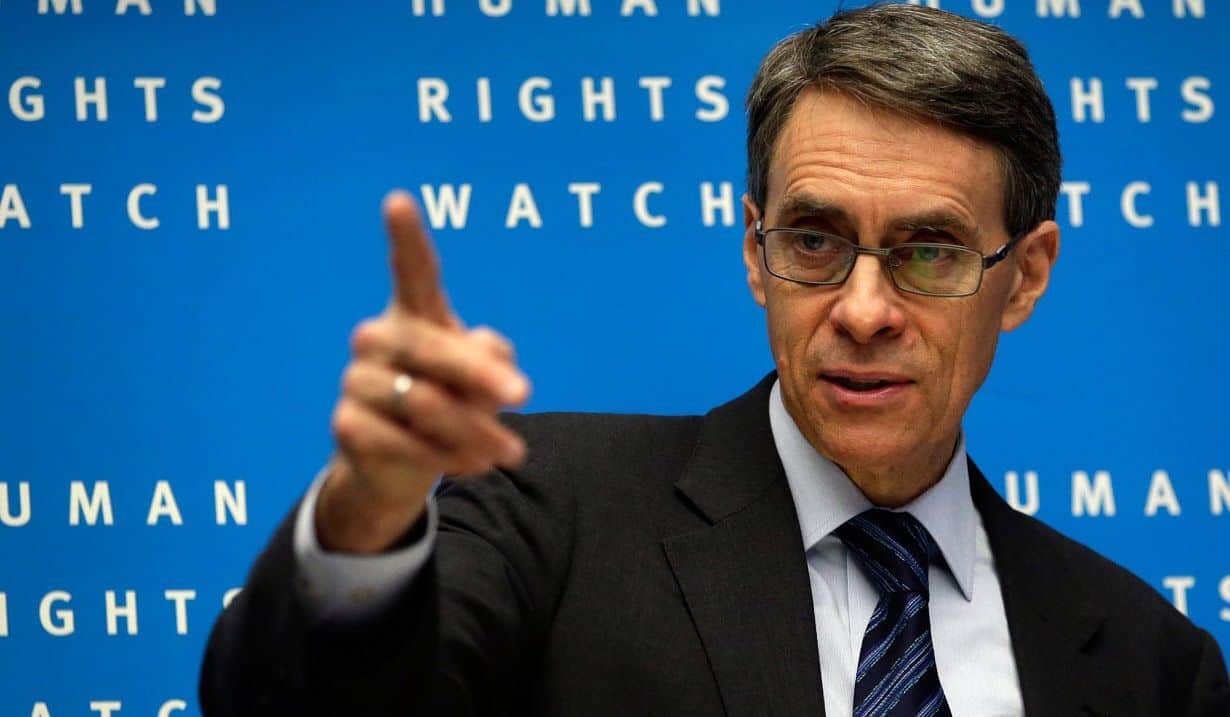
How to Battle Abusive Governments? – Kenneth Roth on the Strategies and Impact of Human Rights Watch
In this podcast, Kenneth Roth – who is about to publish Righting Wrongs. Three Decades on the Front Lines Battling Abusive Governments – explains what has made the strategies of Human Rights Watch distinct in the world of human rights-related advocacy and activism, and discusses cases where they managed to have a real impact; considers how the extension of the catalogue of human rights over time has shaped their interests and profile; reflects on HRW’s relationship with different types of governments; and explains how HRW has related to the question of humanitarian intervention and drawn on international humanitarian law across the decades.
17.02.2025
Podcasts
How To Counter the Mainstreaming of Extremist Ideas? – Julia Ebner on Radicalization Processes and Our Fraught Moment
In the latest episode of our Democracy After 2024 series, Julia Ebner discusses major developments regarding the mainstreaming of extremist ideas; explains how social media platforms have contributed to radicalization processes and considers whether we might be experiencing a new turning point right now; and sketches effective counterstrategies – and reflects on what might be missing from our current toolbox.
13.02.2025

Podcasts
Exporting Medical Expertise During the Cold War: Medical Humanitarianism, Ideological Expansion or Pragmatism? A Conversation With Bogdan Iacob
The medical aid programs established by socialist states nuance the Cold War dichotomy regarding the transfer of knowledge. The latest RevDem Democracy and Culture podcast with Bogdan Cristian Iacob explores the legacy of socialist regimes in the transnational circulation of expert knowledge during the Cold War, with a particular focus on medical aid.
10.02.2025

Podcasts
Ukraine Under Martial Law – Transformations of Domestic Policies and Civil Society
In this episode, a part of the Democracy After 2024 series, Oleksandra Kokhan is joined by Taras Fedirko and Serhiy Kudelia to discuss the transformations of domestic policies in Ukraine following the 2022 invasion and under martial law, the (im)possibility of holding elections, and the role of civil society today.
5.02.2025

Podcasts
Shouldn’t Ukraine Negotiate with Putin? – Robert Person on Obstacles to a Negotiated Ending of Russia’s Ongoing War of Aggression
In the newest episode of our monthly special in cooperation with the Journal of Democracy, Robert Person discusses key issues that pose nearly insurmountable obstacles to a negotiated ending of Russia’s war against Ukraine; dissects the Putin regime’s main aims regarding Ukraine over the past twenty years; and reflects on why arguments in favor of a ‘peace deal’ have gained in popularity – and what European supporters of Ukraine should be preparing for.
3.02.2025

Podcasts
The Significance and Trajectory of Ukrainian Democracy Since 2022
In this episode of the Democracy After 2024 series, Ukrainian journalist and editor Arina Kravchenko hosts Ukrainian poet, prose writer, and essayist Mykola Riabchuk. They discuss the significance of democracy to Ukrainian national identity and the country’s social fabric. The conversation focuses especially on Ukrainian democracy’s trajectory since the beginning of Russia’s full-scale invasion in 2022 as viewed from within Ukrainian society and as a rediscovered object of interest from the outside. Mykola Riabchuk is the president of the Ukrainian PEN-center and a senior research fellow at the Institute of Political and Nationalities’ Studies, the Academy of Sciences of Ukraine. His most recent publications include At the Fence of Metternich’s Garden. Essays on Europe, Ukraine, and Europeanization (Stuttgart, 2021) and Nationalist’s Lexicon (in Ukrainian), a collection of essays published in 2022. Arina Kravchenko is a Ukrainian journalist, editor, and book reviewer. Artwork: [...]
31.01.2025

Podcasts
This Land We Call Home: A History of “Criminal Tribes” in Modern India – An Interview With Nusrat F. Jafri
In this interview with Nusrat F. Jafri, we explore her much-acclaimed biographical fiction, This Land We Call Home. Drawing on her personal family history and extensive ethnographic research across northern and western India, Jafri raises a profound question for all democracies: How can democratic systems address historical prejudices and work toward creating a truly inclusive society?
29.01.2025

Podcasts
European Values and Democratic Links – In Conversation with Miriam Schuler
In the last decade the Court of Justice of the EU has rapidly developed its case-law on the enforcement of EU values. Following multiple cases in which the Court enforced provisions that instrumentalize the Rule of Law in actions involving the ‘backsliding’ Member States of Poland and Hungary, the question now arises as to whether EU action may be justified to protect the co-foundational value of democracy during national elections in the EU’s Member States. The upcoming elections in the Federal Republic of Germany in February will bring these issues into sharp relief. In the latest RevDem Rule of Law podcast, Oliver Garner discusses these themes with Miriam Schuler (King’s College London), whose PhD research analyzes the protection of values within the European Union. The Current State of Play While Article 2 of the Treaty on European Union (TEU) outlines a broad set of foundational values, Schuler argues that, over the past decade, EU actions have [...]
28.01.2025

Podcasts
Reimagining European Prosperity – A Conversation with Marija Bartl on the Role of Legal Imaginaries in Shaping European Political Economy
In this conversation at the Review of Democracy, Marija Bartl – author of Reimagining Prosperity: Toward a New Imaginary of Law and Political Economy in the EU – warns that the post-2008 crisis of neoliberalism created an ideological vacuum that would either be filled by a new vision of shared prosperity or by tribal imaginaries. She explains why the EU, despite its neoliberal origins, might be uniquely placed to articulate such a new vision of prosperity, and argues that European law is already being transformed to support it.
24.01.2025

Podcasts
Who Is Going to Represent European Interests in the Future? – Zsuzsanna Szelényi on the Transformation of the EU and Our New Era of Uncertainty
In this conversation at the Review of Democracy, Zsuzsanna Szelényi discusses key questions in contemporary politics with a focus on European affairs. She explores the main priorities of Ursula von der Leyen’s second Commission and what might change as compared to her previous term. She also discusses the main challenges the EU faces when it comes to transatlantic relations and how Trump’s second term could impact the unfolding and outcome of Russia’s war of aggression against Ukraine – and whether the position and role of Hungary’s Orbán regime might change in international politics.
20.01.2025

Podcasts
When Should the Majority Rule? – Steven Levitsky and Daniel Ziblatt on Countermajoritarian Institutions and the Question of Democratic Resilience
In this conversation, Harvard professors Steven Levitsky and Daniel Ziblatt examine the various types of countermajoritarian institutions and reflect on which are democracy-enhancing and which can potentially subvert democracy. Levitsky and Ziblatt show the connections between the strong countermajoritarian features of the U.S. political system and its ongoing democratic backsliding. They also consider how the trade-offs between countermajoritarianism and democratic stability have played out across the globe.
17.01.2025

Podcasts
Overcoming Membership Fatalism – A Conversation with Tom Theuns on Democratic Theory and His Immanent Critique of the EU
In this conversation, Tom Theuns – author of Protecting Democracy in Europe: Pluralism, Autocracy and the Future of the EU – reflects on EU institutions’ rather narrow conception of democracy and their complicity in democratic backsliding in EU member states; considers how a more coherent and effective response to the latter processes could be designed; critiques the EU’s ‘membership fatalism’ and explains why he has proposed an expulsion mechanism; and positions his approach within political theory and discusses the reception of his ideas also beyond that field.
13.01.2025

Podcasts
How Did Right-Wing Populists Win the Immigration Debate and What Can Mainstream Parties Do About It? – Sheri Berman on the Representation Gap Between Voters and Mainstream Parties Over Immigration in Western Europe
In this conversation with Sheri Berman, Professor of Political Science at Barnard College, we engage with her key argument that growing support for right-wing populism is primarily a consequence of mainstream parties’ failure to address popular concerns about immigration. We dissect the ‘representation gap’ argument, discuss alternative explanations (namely, the issue of racism and xenophobia), explore salient differences between center-left and center-right parties, and highlight strategies that mainstream parties have used and could use to respond to citizens’ concerns and demands on immigration.
6.01.2025

Podcasts
End of the Year Podcast 2024
What were the defining events of 2024? Which new publications impressed us the most? What do we expect from the upcoming year in global politics and in terms of new intellectual trends? Today, we, editors of the Review of Democracy bring you our traditional end of the year podcast.
18.12.2024

Podcasts
Landing the Paris Climate Agreement – Todd Stern on a Groundbreaking Document and What It Took to Make It Happen
In this conversation at the Review of Democracy, Todd Stern – former United States Special Envoy for Climate Change – explains what made the Paris Climate Agreement such a groundbreaking document and what kind of bargaining and compromises it took to make it happen; discusses the place and role of the US within its broad coalition as well as his extensive engagement with his crucial Chinese partners; and considers major new possibilities to tackle climate change effectively and current obstacles to do so.
16.12.2024

Podcasts
Authoritarian International Law? – In Conversation with Tom Ginsburg
International law is a live instrument in the current global geopolitical crisis. This latest RevDem Rule of Law podcast, conducted by Konstantin Kipp with Professor Tom Ginsburg, reflects upon the potentially authoritarian nature of international law in its function of enabling relations between states.
13.12.2024

Podcasts
The Mystic Candidate – Călin Georgescu’s Blend of Orthodox Faith, Mysticism, and Power
In this conversation at the Review of Democracy, Ionuț Biliuță discusses the connections between Orthodoxy and nationalism in Romania and to what extent they have influenced this year’s presidential elections; the revival of narratives concerning ‘fascist martyrs’ by Călin Georgescu and other radicals; the impact the 2018 Constitutional referendum on same-sex marriage had on radicalization; the ideas in transnational circulation that have inspired Georgescu's statements, including Alexander Dugin’s and those of Donald Trump’s Evangelical supporters; and the steps that the Romanian Orthodox Church could take to dissociate itself from far right discourses.
9.12.2024
Podcasts
The Rise of Successful Political Outsiders in Latin America: Lessons Learned from Argentine President Javier Milei
The podcast focuses on and draws lessons from the experience of current Argentine president Javier Milei. It delves into pivotal questions: How do outsiders get elected in a political system designed to secure electoral competition among established political leaders? How do they navigate constraints posed by legislatures dominated by opposition? Does the rise of political outsiders from the global north influence the progress of these Latin American leaders? Does the radical right-wing ideology of outsiders make them more effective? What are the lessons for understanding current Latin American politics?
4.12.2024
Podcasts
The Return of Dictatorship – Grzegorz Ekiert and Noah Dasanaike on Dictatorial Drift, Autocracy Promotion and Strategies to Oppose Them
In this conversation, Grzegorz Ekiert and Noah Dasanaike explain their concept of dictatorial drift and how various countries have moved toward full autocracy in recent years; discuss new features of dictatorships in the early 21st century and how such regimes relate to each other; consider whether it makes sense to compare the growing trend of autocracy promotion with democracy promotion; and reflect on how full autocracies might be opposed more effectively in the future.
2.12.2024

Podcasts
Revising European Integration History in an Age of Uncertainty – Karin van Leeuwen, Aleksandra Komornicka, and Koen van Zon on Their Interdisciplinary Handbook with a Historical Focus
In this conversation at the Review of Democracy, Karin van Leeuwen, Aleksandra Komornicka, and Koen van Zon – contributors to The Unfinished History of European Integration that has now appeared in a revised edition – elucidate the main questions that organize their overview of European integration history; reflect on the applicability and usefulness of various influential theories when trying to narrate the history of European integration today; show what special contributions historians can make to the interdisciplinary study of the European Union; and discuss recent advances in the historiography of European integration, specifying questions that would deserve more attention in the future.
27.11.2024

Podcasts
On Muslim Democracy: Essays and Dialogues
Join Review of Democracy Ideas Editor Alexandra Medzibrodszky as she hosts Professor Andrew March, a leading scholar of political philosophy and Islamic thought, to discuss On Muslim Democracy: Essays and Dialogues. The book focuses on Rached Ghannouchi’s political thought and offers a unique perspective on the intersection of Islamic principles and modern democratic governance.
25.11.2024

Podcasts
Coalitional History of Democracy During Emergency (1975-77) in India – In Conversation with Kristin Plys
In this conversation with Kristin M. Plys, we delve deeply into the nature and quality of Indian democracy by examining the legacy and impact of its resistance movements. Plys’ recent book, Brewing Resistance (Cambridge University Press, 2020), studies the Indian Coffee House movement—a unique, worker-driven cooperative that flourished in the 1970s. This movement not only symbolized a shared space for political discourse but also became a hub for anti-authoritarian sentiment, especially during the turbulent years of the Emergency (1975-77), when democratic freedoms were severely curtailed by Prime Minister Indira Gandhi's government.
19.11.2024

Podcasts
International Law and the ‘Second World’: In Conversation with Patryk I. Labuda
The Second World Approaches to International Law (SWAIL) project, which will be launched at Central European University in Vienna in February 2025, aims to establish a more accurate way of conceptualising East Central Europe’s position in, and relationship with, international law. Three themes arise continuously throughout the podcast: liminality, domination, and the emancipatory potential of international law.
18.11.2024

Podcasts
Authoritarian Regimes Learn from Each Other – In Conversation with Mikal Hem
In our new podcast, Mikal Hem discusses what modern dictators and autocrats seem to have learned from their predecessors, reflects on what might drive voters toward leaders with autocratic tendencies, considers what democratic societies can learn from the survival strategies of dictators, and contemplates how the resilience of free media could be strengthened in autocracies.
12.11.2024

Podcasts
The Great Gender Divergence – In Conversation with Alice Evans
In this conversation at the Review of Democracy, Alice Evans discusses the great gender divergence and how we might explain that some countries are much more gender equal than others; considers whether the history of gender is essentially about female emancipation in modern times but also whether even the most gender equal countries in the world today remain rather patriarchal; and reflects on the special challenges of writing an interdisciplinary book that analyzes the history of gender on a truly global scale – and how such a project relates to the idea of a gender binary.
11.11.2024
Podcasts
Screening Human Rights Documentaries in Hungary for More than 20 Years- Enikő Gyureskó on Verzió Festival’s Mission in Human Rights and Education
In this conversation at the Review of Democracy, Enikő Gyureskó- the Festival Director of Verzió International Human Rights Documentary Film Festival – discusses the program of the Verzió Film Festival, which will take place between 6-13 November; the rationale of choosing specific foci in this year's program; the importance of documentaries in raising awareness about contemporary human rights issues; the collaborations between Verzió with other European festivals to promote human rights; the relevance of educational initiatives and university partnerships to foster critical engagement in Hungary.
5.11.2024

Podcasts
Majoritarianism without Majorities – In Conversation with Kanchan Chandra
We are thrilled to publish the first episode of our monthly special series, produced in cooperation with the Journal of Democracy. In the framework of this new partnership, authors shall discuss outstanding articles from the newest print issue of the Journal of Democracy each month. In this conversation, hosted by Ferenc Laczo and Anubha Anushree, Professor Kanchan Chandra offers an incisive exploration of the strengths and limitations of modern democracies.
4.11.2024

Podcasts
The U.S. Elections with Levente Littvay
Join hosts Erin K. Jenne and Letitia Roman as they sit down with political scientist Levente Littvay to discuss the 2024 U.S. presidential election. Together, they explore why Donald Trump remains a prominent GOP candidate despite numerous legal challenges, how polarization and populism intertwine, and the role of conspiracy theories in today’s political climate. They also examine parallels between U.S. and European populism and the future of both major parties. Tune in for a deep dive into the complex dynamics shaping this year's election.
4.11.2024

Podcasts
Competing Internationalisms: Samuel Hirst on Soviet-Turkish Interwar Relations, Statist Internationalism and Rejecting the Liberal Order
In this episode of the Review of Democracy podcast, Alexandra Medzibrodszky interviews Samuel Hirst on his new book, Against the Liberal Order, the Soviet Union, Turkey and Statist Internationalism from 1919 to 1939. The book examines the collaboration between early Republican Turkey and the Soviet Union during the interwar period, exploring the diplomatic, economic, cultural and international dimensions of their relationship.
31.10.2024

Podcasts
The Authority of the EU Legislature: In Conversation with Martijn van den Brink
In June 2024, Martijn van den Brink’s monograph, Legislative Authority and Interpretation in the European Union was published by Oxford University Press. The book tackles deep conceptual issues about the EU legal order, and yet its insights are also relevant for some of the most pressing practical issues facing Europe today. Martijn van den Brink is an Assistant Professor of EU law at Maastricht University, and he has previously held positions at the Hertie School of Governance in Berlin, the University of Oxford. and the Max Planck Institute for the Study of Religious and Ethnic Diversity in Göttingen.
30.10.2024

Podcasts
Shadowing the European Commission on Rule of Law? In Conversation with Laurent Pech and Petra Bárd
The European Commission published its fifth annual Rule of Law Report in July 2024. In this RevDem Rule of Law podcast Oliver Garner discusses the effectiveness of this mechanism for upholding the EU's values with Professor Petra Bárd and Professor Laurent Pech. They have collaborated with the CEU Democracy Institute's rule of law clinic to produce a shadow report that will turn the lens back on the EU itself.
27.10.2024

Podcasts
We Need Democratization, Not of Nuclear Energy Debate but Energy Debate in General. In Conversation with Professor M. V. Ramana
In this conversation with M. V. Ramana, we delve into one of the most pressing issues of our time: the climate crisis. In response to this crisis, various solutions have been proposed, with nuclear energy emerging as one of the most prominent. After more than a decade of caution following the 2011 Fukushima nuclear disaster, a global consensus has gradually formed around nuclear power as a viable and efficient solution to meet energy demands. Advocates argue that nuclear energy can not only complement fossil fuels but also fulfil the growing energy needs of the world.
22.10.2024
Podcasts
Lia Tsuladze on How Georgian Dream Has Diverted Away from Europe and Its Implications for the Upcoming Elections
The Georgia Dream movement came to power over a decade ago. It initially claimed to want to uphold the European integration policies of its predecessor, but has slowly moved towards a more sovereign discourse. Over time, Georgia Dream has increasingly fueled affective political polarization, and now accuses its pro-European critics of wanting to drag Georgia into a war with Russia. It has furthermore vehemently defended adopting controversial anti-democratic legislation such as the so called ‘foreign agents’ law.
21.10.2024

Podcasts
What Drives Ordinary People to Espouse Authoritarian Figures? Kristóf Szombati on the Spatial Origins of Right-Wing Authoritarianism
The countryside has often been seen as a space where politics flows to, but does not grow out of. When it comes to the authoritarian right, this could not be further from the truth. So what draws people in rural areas to seek an ordered world? In this first episode of their new podcast This Authoritarian Life RevDem Editor Kristóf Szombati and his co-host Erdem Evren embark on an exploration of the origins of contemporary authoritarianism by inspecting the case of rural Hungary, where Kristóf had worked both as an anthropologist and a community worker. What dislocations fueled the rise of the far-right Jobbik party and what did Viktor Orbán’s Fidesz party offer to temper popular discontents?
15.10.2024

Podcasts
The Special Tribunal for Russian Crimes of Aggression in Ukraine: In Conversation with Kateryna Busol
Russia’s aggression against Ukraine has been ongoing for 10 years. It started with the occupation of Crimea and parts of the Donbas in 2014 and culminated in the full-scale invasion in 2022. Various domestic and international justice initiatives to ensure accountability for war crimes and other conflict related violations have been unfolding since 2014. However, 2022 marked the start of a new important debate. How can Russia be held accountable for the underlying crime of aggression? In this RevDem Rule of Law podcast Oliver Garner discusses the proposal for a special tribunal to address Russia's crime of aggression in Ukraine with Kateryna Busol.
11.10.2024

Podcasts
Maps That Give Power to the People – Jo Guldi on Participatory Spreadsheets, Global Archives, and the Triumph of Activist Movements
In this conversation at the Review of Democracy, Jo Guldi explores the relationship between data sciences and the humanities; shows how the struggle for occupancy rights can help us reconsider global history; explains how her new project approaches climate change; and discusses the type of scholarship she finds most inspiring.
10.10.2024

Podcasts
The Regime Change Has To Be Performed by Russians Themselves – Roland Freudenstein on Russia, the War in Ukraine, and Autocrats in Europe
In our new podcast, Roland Freudenstein, Director of the Free Russia Foundation Brussels, and Founder and Executive Officer of the Brussels Freedom Hub discusses Russia’s geopolitical ambitions, how the war in Ukraine may end, and the potentials for a regime change in Moscow; reflects on democratic backsliding in EU Member States; and shares his thoughts about autocrats and how societies can be more resilient against authoritarianism.
9.10.2024

Podcasts
Ask What You Can Do for Your City – Benedek Jávor on European Politics, Representing Budapest, and the Green Transition
In this conversation at the Review of Democracy, Benedek Jávor – Head of the Representation of Budapest to the European Union – discusses his current role and the evolving relationship between the European Union, the city of Budapest, and the Hungarian government; reflects on the green transition and critiques Hungary’s current energy policies; and pleads for talking responsibility locally.
4.10.2024
Podcasts
If There Was Not That Principled Element of Protecting the Liberal in Us, There Would Be No Need for the Harder Edge – Nathalie Tocci on the EU’s Global Strategy, Current Transformation, and Its New Sense of Mortality
In this conversation at the Review of Democracy, Nathalie Tocci – Director of the Istituto Affari Internazionali and part-time professor at the School of Transnational Governance, European University Institute – discusses the direction the EU has taken in recent years in the light of its global strategy and how far it has managed to become strategically autonomous; reflects on what principled pragmatism implies in the context of the rise of illiberalism; and considers what could change during the second European Commission headed by Ursula von der Leyen – and whether the EU’s centre of gravity might be shifting.
3.10.2024

Podcasts
We Need Better Cohesion in Europe Because We Need Reforms and New Resources – Mikuláš Dzurinda on Slovakia’s Path, the European People’s Party, and the Future of Ukraine
In our latest podcast, Mikuláš Dzurinda – President of the Wilfried Martens Centre and former Prime Minister of Slovakia – discusses the changes that EU membership has brought to Slovakia; reflects on the recent rightward shift in Europe and how this might influence the EPP's priorities; analyzes potential changes in Slovak foreign policy and the relationship with Hungary; and argues for Ukraine’s NATO accession.
30.09.2024

Podcasts
A Revelation for the History of Social Movements in Hungary: Bernadett Sebály on “The Story of Our Struggles” Database
In this conversation, Bernadett Sebály discusses the inception and development of the online database of protest events in Hungary, 1989–2010, entitled Küzdelmeink története, or “The Story of Our Struggles”; its use in pedagogical settings for students, activists, teachers, and everyday citizens; and the importance of its place between activism and scholarly research in the Hungarian illiberal context.
26.09.2024

Podcasts
What Leads Idealists into Morally Disastrous Territory? – Adam Kirsch on the Ideology of Settler Colonialism and Preferable Traditions of the Oppressed
In this new conversation at the Review of Democracy, Adam Kirsch – author of the new book On Settler Colonialism. Ideology, Violence, and Justice – discusses the ideology of settler colonialism and how it leads idealists into morally disastrous territory; reflects on whether the application of this ideology to the State of Israel should be viewed as continuing the long, highly problematic tradition of antisemitism; considers whether there are valuable elements in this ideology that would be worth salvaging; and suggests preferable ways to think about the traditions of the oppressed.
23.09.2024

Podcasts
How to Overturn the Tech Coup? – Marietje Schaake on the Erosion of Democracy, the Need for Global Regulation, and the Democratic Internet Policy of the Future
In this conversation, Marietje Schaake – author of the new book The Tech Coup. How to Save Democracy from Silicon Valley – discusses how tech companies have been eroding democracy and what makes their growing power into a systemic problem; compares the policies of democratic and authoritarian regimes; identifies issues where regulation would be urgently needed on the global level; and spells out crucial aspects of a specifically democracy-focused internet policy.
17.09.2024

Podcasts
“True Romanianness” – Marius Turda on Racism and Eugenics in Romanian History
In this conversation at the Review of Democracy, Marius Turda – author of the new book În Căutarea Românului Perfect. Specific național, degenerare rasială și selecție socială în România modernă (In Search of the Perfect Romanian. National Specificity, Racial Degeneration, and Social Selection in Modern Romania) – discusses the intersection between eugenics and racism in Romanian nation-building; presents the main historical moments that influenced the evolution of eugenics and racism; and analyzes the influence of interwar debates around eugenics and racism on socialist and post-socialist Romania.
13.09.2024

Podcasts
The Crowd Never Left the Scene… – Nusrat Sabina Chowdhury on Crowd Politics in Bangladesh
In this conversation at the Review of Democracy, Nusrat Sabina Chowdhury – author of the recent book Paradoxes of the Popular: Crowd Politics in Bangladesh (Stanford UP, 2019) – discusses the various layers of democracy in Bangladesh. Analysing the differences between the English word “crowd” and the Bengali term “jonata,” Professor Chowdhury deliberates upon the recent events in Bangladesh through the lens of the country’s long history of popular dissent and street mobilization. She describes how the Western category of “the people” fails to capture the tenuous, fleeting, and ephemeral materiality of the crowd in the context of Bangladesh and beyond.
9.09.2024

Podcasts
Populism in Power – A Conversation with Giorgos Venizelos
There's indeed a lot of confusion about populism, even though there's so much literature about it. Without going too deep in this heated debate, I should say that scholars agree that populism is organised around two notions: people- centrism and anti-elitism. Of course, there are very different approaches to these two operational criteria related to the people and the elite. For me, populist communication is not just about rhetoric, but also bodily gestures, accents and aesthetics that resemble, represent and enact ‘the people.’ When we talk about populism, we also talk about a certain logic, a certain style or performance. And it can also be said that populism operates with a political cleavage that is distinct from the typical left-right political cleavage – it's a cleavage between ‘the populists’ or ‘the people’ at the bottom and ‘the elite’ or ‘the anti-populists’ at the top. There is non-populist politics as well, of course, politics or discourses that do not have these [...]
14.08.2024

Podcasts
The Vehicle of Change is Always Politics – Sanjay Kumar on the 2024 Elections in India
In this conversation at the Review of Democracy, eminent psephologist and political analyst Sanjay Kumar discusses the recently concluded elections in India. Kumar weighs in on some of the unique features of the Indian elections in 2024, the emerging patterns of change, and what the election verdicts mean for democracy and politics in the Global South.
5.08.2024
Podcasts
Ukraine Will Not Slide into Authoritarianism – A Conversation with Pat Cox
In this conversation, Pat Cox reflects on the new term of the European Parliament and the importance of the rise of the Right in the Union and its member states. He also discusses his work in Ukraine after 2012 – when he led a mission to free political prisoners imprisoned by President Viktor Yanukovych – as well as in more recent years when he has co-directed the Jean Monnet Dialogues which aim to build consensus between the main political parties represented in the Ukrainian Parliament.
29.07.2024

Podcasts
Why Do We See the Rise of Anti-Democrats in Democracies? – Zack Beauchamp on the Reactionary Spirit Across the Globe
In this conversation at the Review of Democracy, Zack Beauchamp – author of the new book The Reactionary Spirit. How America’s Most Insidious Political Tradition Swept the World – discusses the specific kind of antidemocratic politics that emerges in countries with democratic institutions; shows how the United States might to said to have invented competitive authoritarianism; explains the conclusions he drew from comparing countries from different continents and how those conclusions may help us correct Western misperceptions; and reflects on the major intellectual inspirations behind his book.
10.07.2024

Podcasts
Why Was Central-South-East Europe Labeled as “Corrupt”? – Silvia Márton on Transnational Histories of Corruption
In this podcast, Silvia Márton, principal investigator within the ERC Project “Transnational Histories of ‘Corruption’ in Central-South-East Europe,” discusses the multiple understandings of the concept “corruption” in the context of Central-South-East Europe.
8.07.2024

Podcasts
The Intellectual Sources of the EU’s Response to the Rule of Law Crisis: In Conversation with Maciej Krogel
This latest RevDem Rule of Law podcast discusses the doctoral research of Dr Maciej Krogel following the defence of his thesis “The intellectual sources of the European Union’s response to the rule of law crisis in the Member States”. Maciej is a lecturer at the University of Amsterdam and he completed a re:constitution fellowship in 2022/23.
4.07.2024

Podcasts
A Paradoxical Relationship? – Gergő Medve-Bálint on the First Two Decades of Hungary’s EU Membership
In this conversation, Gergő Medve-Bálint – co-editor, with András Bíró-Nagy of the new volume Húsz év az Európai Unióban. Magyarország uniós tagságának közpolitikai mérlege (Twenty Years in the European Union. A Balance Sheet of Hungary’s Membership and Public Policies) – discusses the achievements and shortcomings of Hungary’s EU membership; what continuities and ruptures there have been across these two decades; in what ways Hungary has been a reliable member of the club and where it has deviated from common agendas and policies; and what the case of Hungary may reveal about how the semi-peripheries have fared within the EU since 2004.
24.06.2024

Podcasts
What Stops China from Ruling the World? – Ho-fung Hung on the Problems Plaguing China’s Development Model and Its Limited Influence in the World
In this conversation with the Review of Democracy, Ho-fung Hung shares his eye-opening analysis of the internal contradictions and external limitations plaguing China’s export-led development model and offers novel insights into the difficulties its political leadership is encountering in challenging US hegemony and extending its global sphere of influence. While acknowledging China’s impressive achievements, Hung emphasizes China’s technological dependency and chronic industrial overcapacity, the impact of the rise of protectionism, the hegemony of the US dollar, and China’s lack of confidence in its military capabilities. At the same time, he forecasts the intensification of US-Chinese rivalry in connection with the gradual decoupling of the US and Chinese economies.
12.06.2024

Podcasts
Towards a Position of Responsibility. Joshua Leifer on the Autumn of American Jewish Life, the Most Serious Test of the Jewish Left, and Much More
In this conversation at the Review of Democracy, Joshua Leifer – author of the new book Tablets Shattered. The End of an American Jewish Century and the Future of Jewish Life – analyzes the unravelling of the postwar American Jewish consensus and the reemergence of oppositional Jewish politics; discusses what he sees as the four main political-religious tendencies in our times and how his own relationship to them has evolved over the years; explores the radical potential of traditional Judaism; and reflects on how the diasporic double bind may be navigated today.
10.06.2024

Podcasts
Incremental Rule of Law Restoration? Polish Minister of Justice Adam Bodnar in Budapest
What are the most important legal and political challenges in rebuilding the Rule of Law in Poland? Polish Minister of Justice Adam Bodnar highlighted them in his lecture at the CEU Democracy Institute in Budapest. On May 27 the CEU Democracy Institute Rule of Law clinic was launched with an inaugural lecture from the Minister for Justice of Poland Adam Bodnar. The event provided a unique opportunity to hear a sitting member of an anti-illiberal government explain how the Rule of Law will be restored after nearly a decade of backsliding under the previous government. The key theme of the lecture was the endorsement of incrementalism over revolution as a means to rebuild a ‘sustainable’ Rule of Law.
7.06.2024

Podcasts
Racism Against East Europeans – Jannis Panagiotidis and Hans-Christian Petersen on the Applicability of a Key Concept and Today’s Ambiguous Terrain
In this conversation, Jannis Panagiotidis and Hans-Christian Petersen – authors of the new book Antiosteuropäischer Rassismus in Deutschland. Geschichte und Gegenwart (Racism Against East Europeans in Germany. History and the Present Day) – show why racism is an appropriate category when discussing stereotypes and prejudices against East Europeans; explain why there is a need for “an Eastern enlargement of the racism debate”; discuss how the most extreme, National Socialist forms of racism relate to what came before and after; consider how racism against East Europeans might be embedded in the larger, more global system of prejudices and domination; and reflect on the current stakes of their scholarly intervention.
4.06.2024

Podcasts
Democracy, Populism, and the Myth of Rational Politics – In Conversation with Yannis Stavrakakis
In this conversation with Lorena Drakula, Yannis Stavrakakis – author of the new Research Handbook on Populism and the book Populist Discourse. Recasting Populism Research – discusses the past and future of populism research; analyzes the outdated stereotypes that shape the political role of the ‘populist’ label; and argues for returning passions to the very core of democratic representation. Yannis Stavrakakis is a Professor of Political Science at the Aristotle University of Thessaloniki and director of the Laboratory for the Study of Democracy. He was one of the founding co-conveners of the Populism Specialist Group of the Political Studies Association (UK) and also directed the POPULISMUS Observatory.
31.05.2024

Podcasts
Why Have Color Revolutions Become Much Less Likely? – Mike Smeltzer Reflects on De-Democratization, Promising Developments, and Urgent Tasks
In this conversation at the Review of Democracy, Mike Smeltzer – Senior Research Analyst at Freedom House who has just co-led the research on the Nations in Transit 2024 report – clarifies how the research they conduct into the broad and diverse post-communist region conceives of democracy; explains how the newest developments in these twenty-nine countries can be related to long-term trends and how these countries may fit broader patterns; discusses what autocratizing hybrid regimes – such as Georgia, Hungary, or Serbia – have in common and how autocracies help each other these days; and reflects on the most positive developments and urgent tasks for democrats.
30.05.2024

Podcasts
Securitization of EU Refugee Law: In Conversation with Aleksandra Ancite-Jepifánova
Since the 2015 refugee crisis there has been an increasing ‘securitization’ of EU refugee law that has only been exacerbated by the Russia-Ukraine conflict. In this latest RevDem Rule of Law podcast Oliver Garner discusses this phenomenon with Aleksandra Ancite- Jepifánova. She is a Research Affiliate with the Refugee Law Initiative at the University of London and Visiting Fellow at the Centre of Law and Society at Cardiff University.
28.05.2024

Podcasts
Social Justice in Twentieth-Century Europe: Martin Conway and Camilo Erlichman on the Malleability and Ideological Promiscuity of a Crucial Aspiration
In this conversation at the Review of Democracy, Martin Conway and Camilo Erlichman – editors of the new volume Social Justice in Twentieth-Century Europe – discuss how to approach the question of social justice historically; show how this aspiration may be placed at the confluence of key developments in the twentieth century; explain how focusing on this questions allows us to study the interactions between rulers and the ruled; sketch some of the main features of different eras of social justice; and consider whether social justice is still understood primarily by its absence as it so often was during the past century.
27.05.2024

Podcasts
The State of Democracy and Constitutionalism in India: with Tarunabh Khaitan
In this interview with Tarunabh Khaitan, we discuss the ongoing crisis of democracy and constitutionalism in India. At the time of conducting the interview, elections are underway in India, with approximately a month left for results to be declared. In this context, we discuss the differences between the first and the second term of the Modi government, India’s place in the ongoing wave of global populism, suggestions for recovering constitutional democracy, and the dangers of “Scholactivism”.
23.05.2024

Podcasts
Judith Butler on the Anti-Gender Ideology Movement, Current Theories of Gender, and Their Ideas of Radical Democracy
In this conversation at the Review of Democracy, Judith Butler – author of the new book Who’s Afraid of Gender – discuss their interpretation of the anti-gender ideology movement and what makes it ‘inadvertently confessional’; explain why we should think about the material and the social as intertwined also when we reflect on issues of gender; show what a broader, more global discussion of such issues could yield; and illuminate how they think about radical democracy.
13.05.2024

Podcasts
Tensions in EU internal market law: In Conversation with Vilija Velyvyte
In the latest RevDem Rule of Law podcast Oliver Garner discusses the substantive and constitutional tensions caused by the Court of Justice of the EU’s internal market case-law with Dr Vilija Velyvyte. She is a Lecturer in Law at the University of Reading and was previously a Lecturer in EU Law and Constitutional Law at the University of Oxford. She is the author of Judicial Authority in EU Internal Market Law: Implications for the Balance of Competences and Powers (Hart Publishing, 2022).
9.05.2024

Podcasts
The Spaces and Networks of Critical Theory – Philipp Lenhard Discusses the Frankfurt School on the Centenary of The Institute for Social Research
In this conversation at the Review of Democracy, Philipp Lenhard – author of the new book Café Marx. Das Institut für Sozialforschung von den Anfängen bis zur Frankfurter Schule (Café Marx. The Institute for Social Research from the Beginnings to the Frankfurt School) – discusses the history of the Institute For Social Research and the Frankfurt School and his approach to this subject; shows what his exploration of less famous actors in this history and his focus on spaces and networks have yielded; and reflects on what the impact of the Institute for Social Research and the Frankfurt School has been like – and what might be most relevant about critical theory today. Philipp Lenhard is a DAAD Professor at the Department of History, the University of California, Berkeley. He completed his PhD and Habilitation at the University of Munich. His research interests include Modern Jewish History; Modern German History; Intellectual History; Critical Theory and the Frankfurt School; and [...]
8.05.2024

Podcasts
To push for as large a change as our democratic system will permit: Joseph Stiglitz on economics and the good society
In this conversation at the Review of Democracy, Joseph Stiglitz discusses key features of progressive, social democratic capitalism; explains what motivated him to want to reclaim the language of freedom from the Right; and reflects on what the toolkit of the economist can contribute to our understanding of the relationship between freedom and democracy.
24.04.2024

Podcasts
The presidential subversion of the Mexican judiciary: In conversation with Azul A. Aguiar Aguilar
I wanted to explore how the dynamics of attacks from the President on the judiciary are evolving and what are the causes, conditions, and the timing of these rhetorical attacks. I wanted to explore this because the judiciary is an important institution in presidential and constitutional democracies as it guarantees the separation of powers and checks and balances. I wanted to study this and put it into a research program because, since the arrival of our current President Andrés Manuel Lopez Obrador in 2018, we have seen variations in how the president refers to the judges and constitutional judges in the judiciary. I started my discussion in the working paper from the 1994 judicial reform. This reform is very important for us because it radically transformed the performance of the judiciary. The 1994 reform introduced judicial independence for the courts and a professional system of judges. But the most important change in this reform was that it empowered the courts through a [...]
22.04.2024

Podcasts
How Prehistories Reflect the Modern World
In this conversation at the Review of Democracy, Stefanos Geroulanos – author of The Invention of Prehistory. Empire, Violence, and Our Obsession with Human Origins – sketches the major ways the story of humanity’s emergence has been conceived over the past two and a half centuries; shows how such conceptions can shed light on the history of the modern world; discusses what has made this generative intellectual tradition also one of the most ruinous; and reflects on what our fashionable prehistories may reveal about the kind of world we currently live in.
12.04.2024

Podcasts
Weaken Constitutional Review, Strengthen European Democracy – In Conversation with Nik de Boer
Are constitutional judges well equipped to deal with fundamental constitutional questions about the EU? Should national constitutional courts aim to address the EU democratic deficit? Several scholars see national constitutional courts as a constructive force in the EU legal order. Nik de Boer argues differently, and reasons why is it better to leave certain issues to parliaments rather than constitutional courts? In this conversation with Kasia Krzyżanowska, Nik de Boer discusses his recent book “Judging European Democracy. The Role and Legitimacy of National Constitutional Courts in the EU” (Oxford University Press 2023). The transcript was amended to improve readability and clarity.
9.04.2024

Podcasts
Still a long way to go
In this conversation with our guest editor Eszter Horvath, Phillip Ayoub discusses recent developments in the LGBT movement, introduces the concept of locally rooted messaging, and his own trajectory from activism to academia. Phillip Ayoub is a Professor in the Department of Political Science and School of Public Policy at University College London. He also serves as Editor of the European Journal of Politics & Gender. Ayoub's research bridges international relations and comparative politics, engaging with literature on transnational politics, sexuality and gender, norm diffusion, and the study of social movements, with a strong interest in how the transnational mobilization of marginalized peoples and international channels of visibility influence socio-legal change across states. He is the author of When States Come Out: Europe’s Sexual Minorities and the Politics of Visibility (Cambridge University Press, 2016), and The Global Fight Against LGBTI Rights: How Transnational [...]
4.04.2024

Podcasts
Adventures in Democracy
In this conversation at the Review of Democracy, Erica Benner – author of the new book Adventures in Democracy: The Turbulent World of People Power – shows what a more self-critical and down-to-earth understanding of democracy would entail; discusses what it means that there is a constant battle within democracies between principles of universal liberty, equality, and power-sharing, on the one hand, and the boys’ club logic, on the other; explains why self-restraint and acknowledging others’ fear of losing their share of power are crucially important; and reflects on the development of a truly global conversation about democracy.
2.04.2024

Podcasts
Some Like it Dark – In Conversation with Alessandro Nai
Who is a dark politician? How do dark politicians perform in the elections and in handling crises? What does being “dark” mean for female politicians? Why some people like it dark? In this conversation with Kasia Krzyżanowska, Alessandro Nai discusses his newest book “Dark Politics. The Personality of Politicians and the Future of Democracy,” co-authored with Jürgen Maier.
22.03.2024

Podcasts
Why Would You Call Donald Trump a Fascist?
Daniel Steinmetz-Jenkins on American Intellectuals, the Fascism Debate, and the Larger Political Stakes In this conversation at the Review of Democracy, Daniel Steinmetz-Jenkins – editor of the new collection Did It Happen Here? Perspectives on Fascism and America – discusses the intellectual stakes and political relevance of the fascism debate; reflects on how the fascism debate relates to discourses around democratic decline and the ongoing history wars; shows what a more global perspective on US American debates can reveal; and ponders whether the next round of the fascism debate might just be around the corner. Daniel Steinmetz-Jenkins is a historian of modern political and intellectual thought. He acts as Assistant Professor in the College of Social Studies at Wesleyan University. He runs a regular interview series at The Nation and is an editor at Modern Intellectual History. He also helps curate the History of Ideas section of the Review of Democracy. Did It Happen Here? [...]
18.03.2024

Podcasts
Colonialism and European Integration – In Conversation with Hanna Eklund
In this conversation with Kasia Krzyżanowska, Hanna Eklund discusses her recent article, “Peoples, Inhabitants and Workers: Colonialism in the Treaty of Rome”, published in the European Journal of International Law. She talks about the “coded language” of colonialism in the Treaty of Rome, explains the approach of the Treaty drafters to the African independence movements, and reflects on the colonial legacies of contemporary EU law.
14.03.2024

Podcasts
Militant Rule of Law and Not-So-Bad Law: in conversation with András Sajó
The question of how to reverse illiberal backsliding after regime change is becoming live within Europe and beyond. This Rule of Law section podcast between Oliver Garner and András Sajó (Professor at the Central European University and Senior Research Fellow at the CEU Democracy Institute) considers this dilemma through the recently published lens of the CEU DI working paper ‘Militant Rule of Law and Not-So-Bad Law’.
28.02.2024

Podcasts
Autonomous but with no bridges built: Fernando Casal Bértoa on inter-party relations in Spain -Party Co-Op Series
For most of its existence the Spanish party system has been dominated by the Socialist Party, PSOE, and the People’s Party, PP. Accordingly, and somewhat unusually in Europe, the governments tended to be based on a single party. However, parties have been repeatedly forced to cooperate in parliament and since 2020 they must share office in government. This change is obviously related to the fact that recently new actors have appeared on the scene, challenging the center-right and the center-left.
26.02.2024

Podcasts
Grand Strategies of the Left – Van Jackson on US Foreign Policy and the Possibilities of Progressive Worldmaking
In this conversation with RevDem editor Ferenc Laczó, Van Jackson – author of the new book Grand Strategies of the Left. The Foreign Policy of Progressive Worldmaking – explains what distinguishes progressives from liberal internationalists; clarifies why he thinks that the tradition of grand strategy might be worth rescuing by and for progressives; discusses the three main progressive grand strategies that are recurrently articulated in the US these days, what they priorities are, and what risks they respectively contain; distils the main consensual points of progressive worldmaking; and reflects on what a global starting point for agendas comparable to his own might lead to.
9.02.2024

Podcasts
A Regulatory Conception of the Rule of Law? – In Conversation with Jeff King
The guest for the latest RevDem Rule of Law podcast is Professor Jeff King. He is a Professor of Law at University College London and he is the Director of Research at the Bingham Centre for the Rule of Law. He has previously acted as a legal adviser to the House of Lords Select Committee on the Constitution. The conversation with Oliver Garner discusses Jeff’s ‘regulatory’ conception of the Rule of Law and its application to contemporary challenges.
7.02.2024

Podcasts
How Do You Tear Down a Border? – Matthew Longo on the Pan-European Picnic and the Meaning of Freedom
In this conversation with RevDem editor Ferenc Laczó, Matthew Longo – author of the new book The Picnic. A Dream of Freedom and the Collapse of the Iron Curtain – discusses what motivated him to research the Pan-European Picnic of 1989; why he places such an emphasis on the uncertainty of the situation in those crucial days; and what conclusions he has drawn regarding the meaning of freedom in 1989 – and how that meaning has changed since.
5.02.2024

Podcasts
Towards a Creative, Empathetic, and Solidaristic Culture of Remembrance – Mirjam Zadoff on Her Explorations of Global Memory in the 21st Century
In this conversation with RevDem editor Ferenc Laczó, Mirjam Zadoff – director of the Munich Documentation Centre for the History of National Socialism and author of Gewalt und Gedächtnis: Globale Erinnerung im 21. Jahrhundert – discusses what motivated her to publish a collection on global memory and which key themes she wanted to address.
19.01.2024

Podcasts
Ukraine – An Exceptional or a Paradigmatic Case? Volodymyr Ishchenko on Deficient Revolutions and Authoritarian Tendencies
In this conversation with Lorena Drakula and Ferenc Laczó, Volodymyr Ishchenko – author of the new collection, Towards the Abyss: Ukraine from Maidan to War – explains how the study of contemporary Ukraine could contribute to our understanding of globally relevant processes. He reflects on the main political cleavage in the country and how the relationship between the various camps has evolved; and shows what led to the “deficient revolutions” in early 21st-century Ukraine and what have been their main outcomes. Finally, he discusses what he sees as the driving force behind the authoritarian tendencies in the country. Volodymyr Ishchenko is a research associate at the Institute of East European Studies, Freie Universität Berlin. Towards the Abyss: Ukraine from Maidan to War is published by Verso.
17.01.2024

Podcasts
Novelists Should Write for the Public Sphere — In Conversation with Bécquer Seguin
In a conversation with Kasia Krzyżanowska, Bécquer Seguin discusses his book “The Op-Ed Novel. A Literary History of Post-Franco Spain” (Harvard University Press, 2023). He elaborates on the concept of the op-ed novel, explains the idea of literary populism, advocates for the engagement of novelists in the public debates of historical and national meaning, and discusses some most noteworthy examples of Spanish op-ed novelists.
16.01.2024
Podcasts
An Intimate Portrait of Eastern Europe – Jacob Mikanowski Discusses Abandoned Shrines, Ramshackle Utopias, and Much More
In this conversation with RevDem editor Ferenc Laczó, Jacob Mikanowski – author of Goodbye, Eastern Europe: An Intimate History of a Divided Land – discusses his major inspirations as a writer and how his travels have shaped his perspective; explicates his specific approach to the history of Eastern Europe and what he views as the distinguishing features of this diverse region; and reflects on whether Eastern Europe might still be a place where nonconformists and their heterodox ideas can flourish.
12.01.2024

Podcasts
Posttraumatic Sovereignty – Jarosław Kuisz and Karolina Wigura on Shared Experiences in East Central Europe and How They Shape Contemporary Behaviour
In this conversation with RevDem editor Ferenc Laczó, Jarosław Kuisz and Karolina Wigura – authors of Posttraumatische Souveränität. Ein Essay – explain why they have centred the concept of posttraumatic sovereignty in their new book and how it might help us account for current trends in East Central Europe; reflect on the prevalence of trauma discourses and the tensions and risks inherent to such discourses; and discuss how East-West relations in Europe may have been transformed by Russia’s violent escalation and ongoing war against Ukraine and the varied responses to it.
10.01.2024
Podcasts
How Ukraine Has Won Its War of Independence Without Restoring Its Territorial Integrity – Yaroslav Trofimov on Russia’s Invasion and Ukraine’s Survival
In this conversation with RevDem editor Ferenc Laczó, Yaroslav Trofimov – author of the new book Our Enemies Will Vanish. The Russian Invasion and Ukraine’s War of Independence – shows how Ukraine has turned out to be much stronger than hoped whereas Russia has proven significantly weaker than feared; discusses the major crimes Russia has committed in Ukraine and the destruction its war of aggression has wrought; reflects on the experience of reporting on a major conflict in his country of origin; describes the evolving relationship between the Ukrainian leadership and its Western supporters; and shares his assessment of the prospects for Ukraine.
8.01.2024

Podcasts
End of the year podcast from the editors of the Review of Democracy
29.12.2023

Podcasts
Five Ideas Books in 2023 (Plus Another Five) – by Ferenc Laczó
Ideas editors and podcasters have been invited to a continuous feast in 2023: the year has offered an unusual number of original publications of the highest caliber. Natasha Wheatley’s The Life and Death of States: Central Europe and the Transformation of Modern Sovereignty, the Vienna-based discussion of which we were proud to co-organize; Sam Moyn’s Liberalism Against Itself. Cold War Intellectuals and the Making of Our Times that substantially critiques the dominant form Western liberalism has taken; Danielle Allen’s exciting proposal of a power-sharing liberalism; George Steinmetz’s major monograph on the colonial origins of modern social thought in France; or Adam Shatz’s collection of essays on the radical imagination have all been evident highlights. Here comes an all too selective list of five recommendations from RevDem Ideas of books that deserve to be more widely read and discussed. Darrin M. McMahon’s new book offers a wide-ranging and beautifully crafted intellectual [...]
21.12.2023

Podcasts
For Money Laundering To Occur, All That Authorities Have To Do Is Nothing
In this conversation with RevDem editor Robert Nemeth, Dean Starkman and Neil Weinberg (International Consortium of Investigative Journalists) talk about Cyprus Confidential, the investigation exposing how Cyprus-based financial services firms have enabled the Russian elite — including Vladimir Putin’s inner circle — to shelter their wealth and shield billions of dollars in assets from the threat of impending sanctions. They explain how this system worked and what enabled it, but also share insights into how journalists work on cross-border collaborative projects on such scale.
15.12.2023

Podcasts
Who Will Define the International Order of the 21st Century? – John M. Owen IV on Liberal Democracies in Our Fragile World
In this conversation with RevDem editor Ferenc Laczó, John M. Owen IV – author of the new book The Ecology of Nations. American Democracy in a Fragile World Order – explains what he means by co-evolution and the regime-power dilemma; shows how authoritarian rivals, such as China and Russia, have attempted to engineer their ecosystems; discusses the three historical ages of liberalism and what might replace the currently dominant form of open liberalism; and reflects on what the emergence of two rather separate but partly overlapping international ecosystems might imply for the future.
11.12.2023

Podcasts
Central and Eastern Europe after the Polish Elections: In Conversation with Daniel Hegedüs
Despite the Polish opposition election victory in the 15 October elections on 27 November President Duda swore in the Law and Justice Party ahead of a confidence vote that the incumbents seem set inevitably to lose. In this latest Rule of Law podcast, Oliver Garner and Daniel Hegedüs discuss the implications of the election for Central and Eastern Europe. Daniel is a German Marshall Fund fellow with expertise in populism and democratic backsliding and the foreign affairs of the Visegrad countries.
4.12.2023

Podcasts
Slovakia’s Path, the Visegrad Group Today, and the Implications for Europe – Miroslav Wlachovský on Current Changes
In this conversation with RevDem editor Ferenc Laczó, Miroslav Wlachovský – Minister of Foreign and European Affairs of Slovakia in the recent caretaker cabinet headed by Ľudovít Ódor – discusses Slovakia’s role in the EU and his priorities while in office; analyses the recent Slovak elections and the potential consequences its outcome will have in terms of the country’s foreign policy; and reflects on the relationship between Slovakia and Hungary as well as the future of the Visegrad Four. Miroslav Wlachovský is a Slovak diplomat who acted as Minister of Foreign and European Affairs of Slovakia between May and October 2023. Prior to his ministerial appointment, Wlachovský served as Slovak ambassador to the United Kingdom (2011 to 2015) and to Denmark (2018 to 2022). In collaboration with Lucie Hunter
20.11.2023

Podcasts
The Future in the European Union — In Conversation with Massimo Fichera
In this conversation with RevDem editor Kasia Krzyżanowska, Massimo Fichera talks about the need to include the future when designing EU constitutional architecture, criticises the economic components’ dominance over the European integration process, and explains his idea of communal constitutionalism as a remedy to presentism of constitutional theories.
15.11.2023

Podcasts
From Pink Tide to a Far-Right-Wave: Latin America’s Authoritarian Encore?
In this conversation with RevDem assistant editor Lorena Drakula, Cristóbal Rovira Kaltwasser sheds light on the historical context, ideological characteristics, and the consequential impact of the recent far-right success in Latin America, encompassing prominent figures from José Antonio Kast and Jair Bolsonaro to Nayib Bukele and Javier Milei.
14.11.2023

Podcasts
Peter Beinart on Resistance and De-Escalation
In this conversation with RevDem editor Ferenc Laczó, Peter Beinart discusses various aspects of the Palestinian-Israeli question.
10.11.2023

Podcasts
Equality. Darrin M. McMahon on an Elusive and Resilient Idea
In this conversation with RevDem editor Ferenc Laczó, Darrin M. McMahon – author of the new book Equality: The History of an Elusive Idea – discusses his approach to the intellectual history of equality on the longue durée and explains why we shouldn’t think of this history as a triumphant march of progress; highlights the tensions between difference and sameness and explores the changing relationship between liberty and equality; and reflects on the globalization of our concern with equality – and our human ambivalence towards this resilient idea.
7.11.2023

Podcasts
Peoples of Europe — National Leaders and Public Opinion in The Post-Maastricht Era: In Conversation With Dermot Hodson
Why was the ratification of the Maastricht Treaty a significant moment for the EU? Who are the right-wing populists in the EU and how has their modus operandi changed throughout the decades? Why did the national leaders engage in the EU politics? In this conversation with RevDem editor Kasia Krzyżanowska, Dermot Hodson talks about his most recent book Circle of Stars. A History of the EU and the People Who Made It published by Yale University Press. Dermot Hodson — Professor of Political Economy and Digital Technologies at Loughborough University London and Visiting Professor at the College of Europe. He has published widely on EU governance and integration and previously worked as an economist at the European Commission’s Directorate General for Economic and Financial Affairs. Circle of Stars: A History of the EU and the People Who Made It was published by Yale University Press on 10 October 2023. Kasia Krzyżanowska: As Perry Anderson has famously put it, most of the [...]
16.10.2023

Podcasts
Maximilian Hess on the Economic War between Russia and the West
How Has Russia’s Attempt to Destroy the International Economic Order Backfired? In this conversation with RevDem editor Ferenc Laczó, Maximilian Hess – author of the new book Economic War: Ukraine and the Global Conflict between Russia and the West – shows how an economic war between Russia and the West has broken out in the 2010s; discusses why Russia’s large-scale invasion and brutal attempt to wreck Ukraine in 2022 has caused such disruption on the global scale; reflects on key features of the relationship between Russia and China today; and considers the future place of Russia in the international economic order. Maximilian Hess is the founder of the political risk consultancy Enmetena Advisory, a fellow at the Foreign Policy Research Institute, and associate fellow at the International Institute for Strategic Studies and at the Oxus Society for Central Asian Affairs. His research focuses on the relationship between trade, debt, international relations, and foreign policy as [...]
9.10.2023

Podcasts
Disabusing Constitutional Identity? In Conversation with Julian Scholtes
The monograph The Abuse of Constitutional Identity in the European Union (OUP, 2023) by Julian Scholtes (Lecturer in Public Law, University of Glasgow) was published in September. In this latest RevDem Rule of law podcast, Oliver discuss constitutional identity and its implications for the Rule of Law and democracy in Europe today. Oliver Garner: I found that your distinction between generative, substantive, and relational aspects of constitutional identity abuse is an impressive attempt to categorize such illegitimate practices systematically. How do these concepts advance our understanding of constitutional identity and its abuse? Do you believe they can be operationalized to allow the identification of abusive identity claims in practice? Julian Scholtes: I think we need to distinguish this idea of constitutional identity, that is quite commonly used in comparative constitutional law, as an analytical lens which allows us to look into the relationship between [...]
29.09.2023

Podcasts
Bloodless Murder: Stefano Bottoni on How the Orbán Regime Was Made and What Hungary Has Become
In this conversation with RevDem editor Ferenc Laczó, Stefano Bottoni – author of the new Hungarian-language book A hatalom megszállottja. Orbán Viktor Magyarországa (Obsessed with Power. Viktor Orbán’s Hungary) – discusses how the current political system has been built up in Hungary and which theories might help us analyse this process; reflects on the Orbán regime’s sources of legitimacy and internal contradictions; and explores the changing relationship of the country to the European Union and to Putin’s Russia.
6.09.2023

Podcasts
The Freedom to Stay: Eva von Redecker on Positive Ecological Freedom and the Need for a New Temporal Literacy
In this conversation with RevDem editor Ferenc Laczó, Eva von Redecker – author of the new German-language book Bleibefreiheit (The Freedom to Stay) – shows what it means to think of freedom in terms of time rather than space; explains what implications it has that we are actually “born unfree but not alone”; reflects on the personal experiences and intellectual influences that inspired her; and sketches what the realization of positive ecological freedom might look like.
4.09.2023

Podcasts
A Betrayal of Liberalism: Samuel Moyn on the Mistaken Path of Cold War Liberals
In this conversation with RevDem editor Ferenc Laczó, Samuel Moyn – author of the new book Liberalism Against Itself. Cold War Intellectuals and the Making of Our Times – discusses what motivated him to explore the Cold War liberal betrayal of previous liberal traditions; what their redefinition of the liberal canon and silences about crucial developments in their own lifetime may reveal about Cold War liberals; why the liberal establishment has failed to reexamine Cold War liberalism since 1989–91; and what would be minimally needed to make contemporary liberalism “credible enough for salvation.”
29.08.2023
Podcasts
Negotiating Amidst Turmoil: Analyzing the Interplay of Dialogue and Conflict in Kosovo-Serbia Relations
In this conversation with assistant editor Lorena Drakula, Bodo Weber, a Senior Fellow at the Democratization Policy Council in Berlin, discusses the current situation, as well as the complex dynamics of the Kosovo-Serbia dialogue, unpacking its democratic implications, challenges, and opportunities.
22.07.2023

Podcasts
Models of Judicial Independence in Europe: In Conversation with Pablo Castillo Ortiz
In this latest RevDem Rule of Law podcast, assistant editor Teodora Miljojkovic discusses the different models of judicial independence in Spain and beyond with Pablo Castillo Ortiz.
19.07.2023

Podcasts
“Neither Amnesia nor Nostalgia” Discussing the Non-Aligned Movement with Chiara Bonfiglioli, Agustín Cosovschi, and Paul Stubbs
In this conversation with RevDem contributor Una Blagojević, Paul Stubbs, Chiara Bonfiglioli, and Agustín Cosovschi discuss the different meanings of the Non-Aligned Movement and the need to rethink the “West–East–Non-Aligned” trajectories; approach Yugoslav foreign policy critically and explain why they attach such importance to imaginaries; show the importance of developing a “perspective from below” and analyze what a gendered perspective on the movement can yield; and reflect on possibilities of future research.
13.07.2023

Podcasts
India’s Basic Structure Doctrine: Past, Present, and Future: In Conversation with Moiz Tundawala and Anuj Bhuwania
In this episode, assistant editor Rohit Sarma discusses the “basic structure” doctrine of the Indian Constitution on the occasion of its 50th anniversary with Moiz Tundawala and Anuj Bhuwania, Professors of Constitutional Law at the Jindal Global Law School in India.
12.07.2023

Podcasts
A Savage War of Russian Decline: Serhii Plokhy Discusses the Russo-Ukrainian War
In this conversation co-hosted by Marta Haiduchok (Visible Ukraine) and Ferenc Laczó (the Review of Democracy), Serhii Plokhy – author of the new book "The Russo-Ukrainian War" – discusses why Ukraine was so crucial to the Soviet collapse and how Ukraine and Russia diverged subsequently; explains what made Ukraine a focal point of competition in the post-Cold War decades and which factors enabled the current devastating war; dissects the origins of Russian imperialism and Russia’s current war aims; reflects on the state of Ukrainian Studies and suggests new questions concerning Ukrainian nationalism and Russian imperialism; elaborates on the stages of the unfolding war and the reasons behind Ukraine’s ability to fight back; and ponders what major geopolitical shifts the Russo-Ukrainian war might signal or reinforce.
30.06.2023

