Rule of Law
Section editor: Konstantin Kipp
The rule of law is at the heart of the processes of de-democratization. Apart from the current academic discourse on the rule of law, we must recast the Europeanization theories that largely failed to address the issue of democratic backsliding.
Former section editor: Oliver Garner (2021-25)
Rule of Law
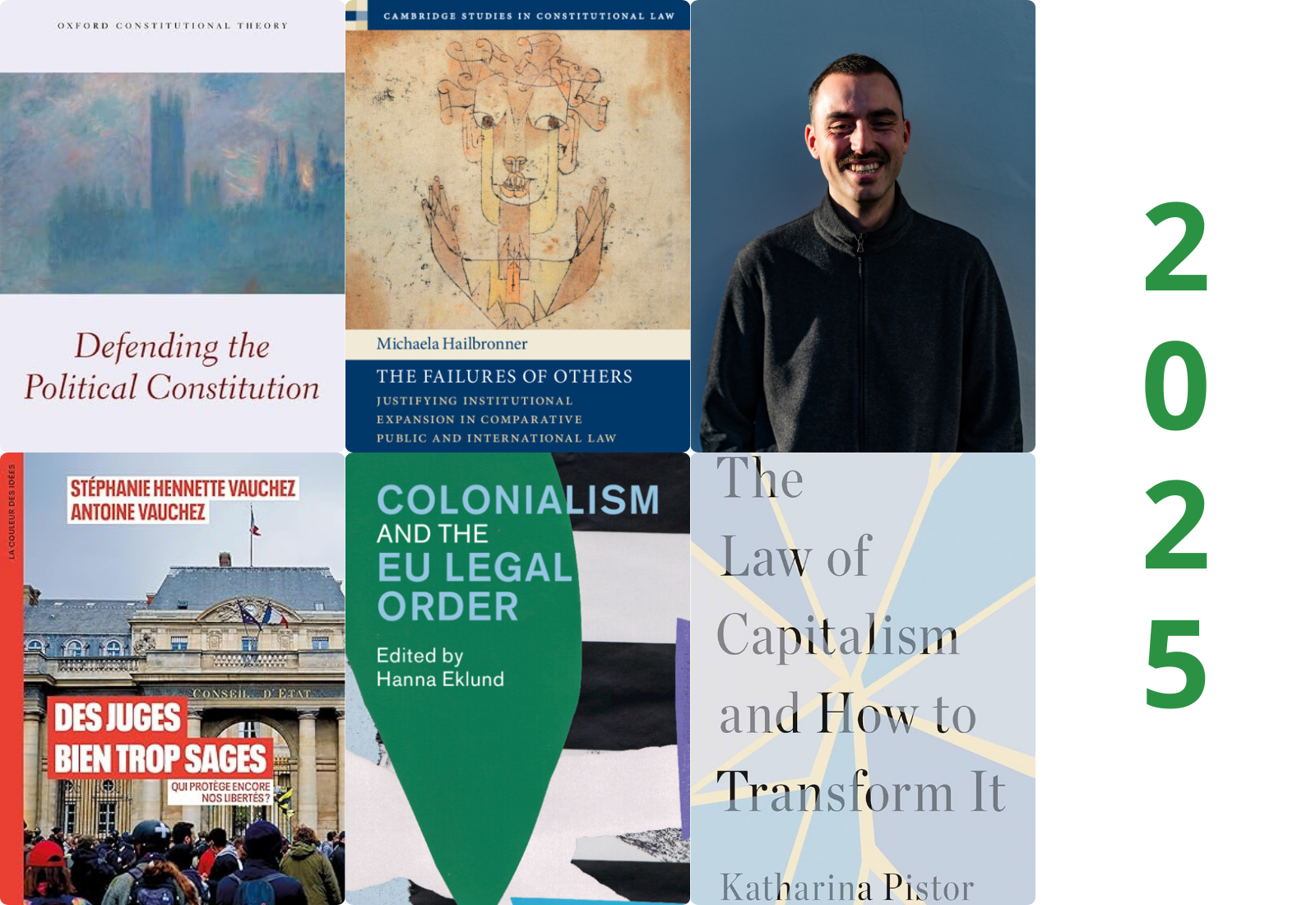
Five Books on the Rule of Law from 2025 & 2026
This selection of books attempts to present recent arguments about the role that law and courts can play, both in posing challenges to democracy and in entrenching inequality, but also in their transformative potential to address democratic problems, protect people's rights, and enable a more equal world.
17.03.2026
Rule of Law
How Courts Can Hold Authoritarian Leaders Accountable
In many democracies today, elected leaders challenge institutions, undermine electoral rules, and test the limits of constitutional order. Yet legal accountability for such actions remains rare. In this episode of the Review of Democracy podcast, produced in cooperation with the Journal of Democracy, Gabriel Pereira speaks with Luciano Da Ros and Manoel Gehrke about their article “How to Bring Authoritarians to Justice.”
16.03.2026

Rule of Law
The Difficult Target – Martti Koskenniemi on the Laws That Rule Us
The last two years have seen international law rise to the forefront of public debates. A permanent topic in parliaments, universities, demonstrations, and various other social contexts, international law now seems almost omnipresent. At the same time, some events have led many to proclaim the death of the system altogether. In our new interview, Martti Koskenniemi challenges claims about the “death” of international law and suggests alternative readings of the current situation.
25.02.2026

Rule of Law
The State of the Labour Constitution
The Mandelson affair, Britain’s former U.S. ambassador being deeply enmeshed in Jeffrey Epstein’s network of powerful contacts, has led to the resignation of the Prime Minister’s chief of staff, Morgan McSweeney. As a result, Keir Starmer’s already shaken government finds itself in yet another crisis. However, McSweeney’s departure may also present an opportunity to repeal failing policies and rhetoric. Nicolas Reed Langen analyzes the roots of the Labour Party’s current malaise and explores prospects for change to prevent a further ascent of the far right.
19.02.2026

Rule of Law
Adjudicating in Times of War – In Conversation with Stanislav Kravchenko
Even as parts of the country are ravaged by lawless attacks, the judiciary continues to function and ensure the operation of Ukraine’s legal system. A new challenge has emerged with the process of Ukraine’s accession to the European Union (EU). The country’s legal system must adapt to the EU’s requirements.
5.02.2026

Rule of Law
On Genocide: Omer Bartov in Conversation about Palestine, Israel, and Germany
Over the last two years, the world has witnessed atrocities beyond imagination. The killing of approximately 1,200 people by Hamas in Israel on October 7, 2023, was followed by a war in which the Israeli Defense Forces have, according to recent reports, killed over 67,000 Palestinians.
15.01.2026

Rule of Law
Benjamin Gedan and Elias French on the Threat to Latin American Term Limits
The desire of leaders to remain in office indefinitely has haunted democracy since its inception. Politicians have found various ways to circumvent democratic accountability and sideline the people’s will for a change in leadership, from military coups to rigged elections or the installation of puppet leaders. One of the most widely used tools to constrain such practices is the establishment of presidential term limits. Many of today’s constitutions impose a limit on the number of times a person can run for office.
5.01.2026

Rule of Law
An Authoritarian Turn in Contemporary Germany? – In Conversation with Robin Celikates
The threat of the far-right dominates politics in Germany today. The ascendance of the AfD marks the first time since the end of World War II that such a force has attracted a considerable share of the German electorate. This regularly leads politicians from centrist parties to emphasize the importance of preventing German history from repeating itself. However, these same actors have simultaneously brought far-right policies into the mainstream and adopted practices that resemble the playbook of autocrats. Such practices have been particularly visible in the repression of pro-Palestinian voices over the last two years. In recent articles, Prof. Robin Celikates has argued that these developments indicate an authoritarian turn in contemporary Germany.
11.12.2025

Rule of Law
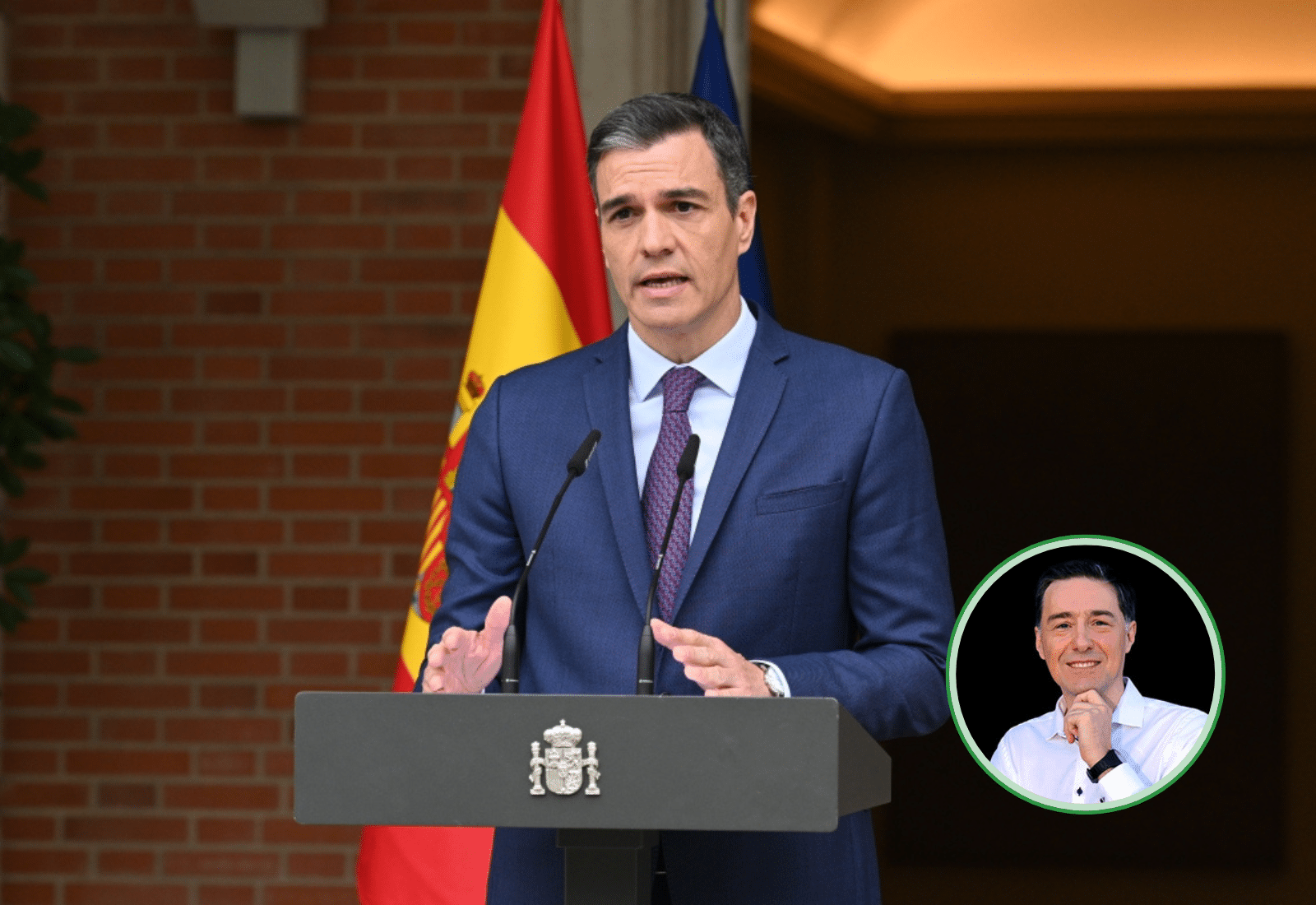
Playing Constitutional Hardball in Spain
Spain’s political struggles reveal how democratic erosion increasingly unfolds through boundary-pushing legal tactics rather than overt authoritarian ruptures. These dynamics illuminate a broader pattern in which the letter of the law is upheld while its spirit is strategically hollowed out.
3.12.2025
Rule of Law
Beyond Borders: The European Court of Human Rights’ Role in Safeguarding Judicial Independence and Democratic Values
On November 7, 2025, Dr. Artūrs Kučs, Judge of the European Court of Human Rights (ECtHR) and former substitute member of the Venice Commission, delivered a lecture within at the conference “Rule of Law: Judicial Independence, Democracy and Social Justice in Europe,” organized by the CEU Democracy Institute’s Rule of Law Clinic, exploring how supranational and national courts shape the understanding and protection of the rule of law in Europe.
19.11.2025

Rule of Law
How’s the Rule of Law in Poland? – In Conversation with Jakub Jaraczewski
In this podcast, Jakub Jaraczewski examines the progress the Bodnar ministry made in undoing the consequences of eight years of Law and Justice rule. He also discusses the challenges that lie ahead for Minister Żurek, with Nawrocki being widely seen as more confrontational than his predecessor in the Presidential Palace, Andrzej Duda.
17.11.2025

Rule of Law
Dutch Elections: Rule of Law Alert 2.0?
Dutch voters are heading to the polls today, and while the party landscape remains deeply fragmented, the far-right PVV led by Geert Wilders is likely to come out on top once again. In his op-ed, Niels Graaf argues that the previous government attempted to undermine the rule of law in the Netherlands and examines the risks that may lie ahead.
29.10.2025

Rule of Law
Cameroon’s 2025 Presidential Election: Confronting an Electoral System Designed to Defeat Democracy
Cameroon’s Constitutional Council has announced that it will declare the winner of the recent presidential election on October 27. As Cameroonians await the official results, some hope that President Paul Biya’s rule may come to an end. In her op-ed, Laura-Stella Enonchong explains why Cameroonian voters face an electoral system designed to undermine the democratic will of the people.
24.10.2025

Rule of Law
The Authoritarian Resurgence in World Politics – In Conversation with Alexander Dukalskis and Alexander Cooley
The end of the last century brought about what scholars have called a “unipolar moment.” With the fall of the Soviet Union, liberalism lost its enemy on the global stage, which led the United States to try to establish an international liberal order by promoting liberalism transnationally. This latter approach has not only been harshly criticized for often being executed hypocritically and sometimes causing disastrous wars, but also ultimately seems to have failed.
22.10.2025

Rule of Law
The Myth of Democratic Resilience – In Conversation with Jennifer Cyr and Nic Cheeseman
In our latest episode of the special series produced in partnership with the Journal of Democracy, we discuss the recent article co-authored by Jennifer Cyr, Nic Cheeseman and Matías Bianchi, entitled “The Myth of Democratic Resilience” (Journal of Democracy, Vol. 36, No.3, July 2025)
6.10.2025

Rule of Law
Never Waste a Good (Constitutional) Crisis
The saying goes that you should ‘never waste a good crisis’. The greatest crisis is certainly a constitutional one, and therefore the greatest opportunity. The eighteenth and nineteenth centuries were pivotal in the United States of America, as the country expanded in geography and population, leading to multiple state-level and national constitutional crises. Marcus Alexander Gadson’s latest publication Sedition unpacks these frequent crises, their underlying dynamics and the elite groups seizing opportunities for personal gain, with repercussions for modern-day politics.
2.10.2025

Rule of Law
Defending the Democratic Identity of the EU
Determined to create an ever closer union, the EU has evolved over the decades into a European democracy. While it may be identified with a new term as a democratic union of democratic states, its constitutional identity is under pressure from external and internal threats. This article calls on the EU to defend its constitutional foundations and to embrace and promote its functioning as a European democracy.
23.09.2025

Rule of Law
Margins of Deference
Since taking office in the summer of last year, Keir Starmer’s Labour government has suffered a drastic loss of approval. His term so far has been marked by erratic decision-making and an adoption of the right’s agenda on migration and economics. At the same time, the UK Supreme Court largely refuses to interfere with the government’s actions. In his op-ed, Nicholas Reed Langen unpacks double standards in the government’s reasoning and explains why a liberal democratic conception of the separation of powers requires the judiciary to scrutinize the government’s acts more rigorously.
18.09.2025

Rule of Law
The Politics of Migration Narratives – In Conversation with Andrew Geddes
Migration is one of the most salient issues in European politics today. While its importance for voting decisions is widely acknowledged, many of its key characteristics remain the subject of vivid debate. Opinions about migration often diverge sharply: Does migration pose a threat to European societies, or is it essential for economic survival? Are public attitudes becoming more hostile, or more welcoming? Should European countries restrict migration, or embrace it? Competing narratives seem to strongly shape migration policy and the laws through which it is implemented.
17.09.2025

Rule of Law
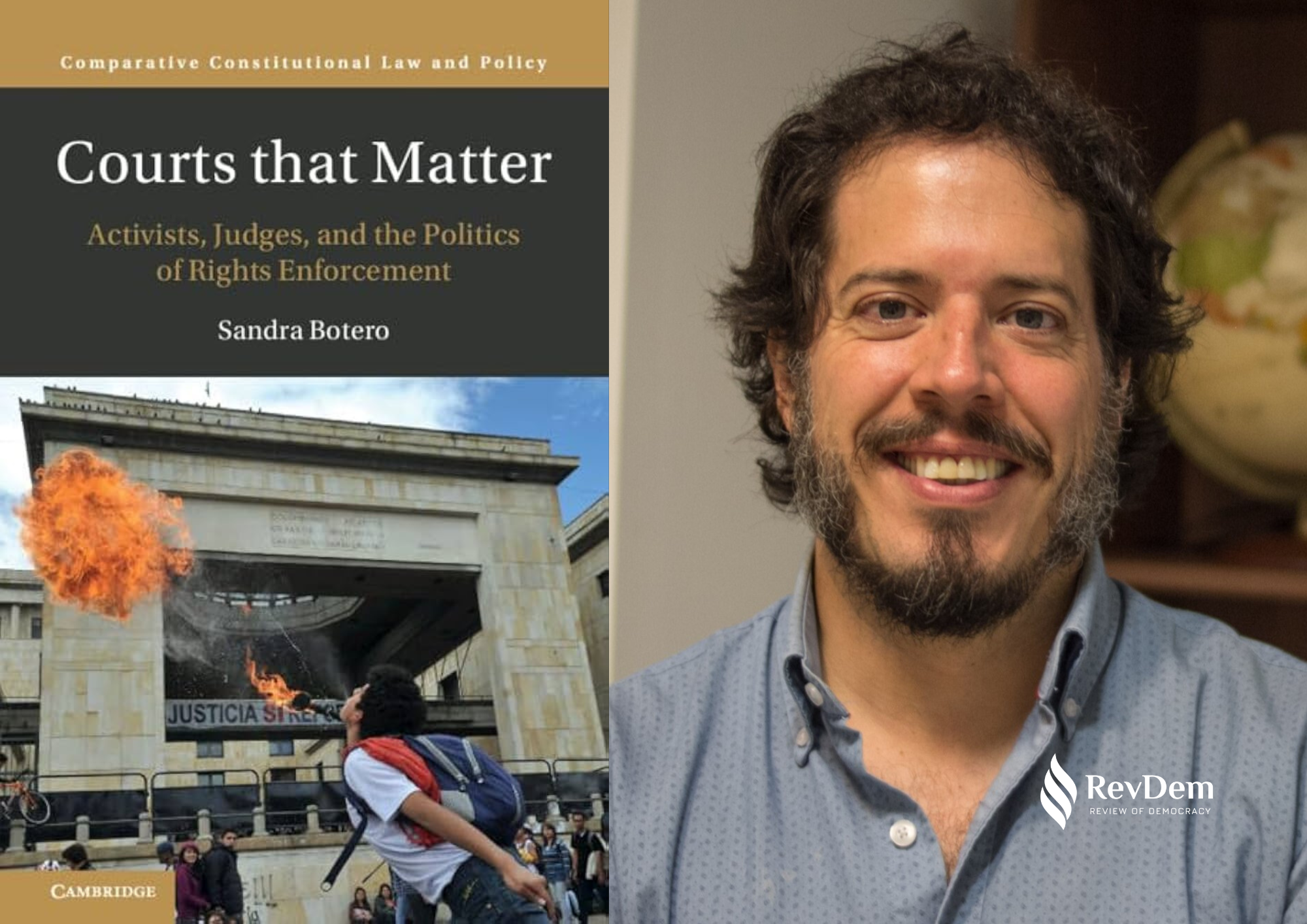
When Do Courts Matter? The Rights Enforcement between Aspirations and Inequalities
The fields of comparative constitutionalism and socio-legal politics will greatly benefit from political scientist Sandra Botero’s Courts That Matter. At its core lies a question that has long haunted scholars, practitioners, and activists: can courts really advance socioeconomic rights, or are they condemned to issue aspirational decisions that fail to alter entrenched inequalities? Botero tackles this debate directly, weaving together rich empirical evidence from Argentina and Colombia with comparative insights from India.
16.09.2025
Rule of Law
Colonial Roots and Continuities in Europe’s Migration System –In Conversation with Janine Silga
When the first treaties that laid the groundwork for today’s European Union and the European Convention on Human Rights were signed after the Second World War, many of today’s member states were still significant colonial powers—empires. It was only in the years that followed that these European empires eroded, and many countries in the Global South gained independence. However, while colonialism formally ended, many have argued that coloniality has persisted. Although this applies to different areas, one of the most important is migration governance. Here, European countries have been accused of replacing explicitly racialized mechanisms with a facially race-neutral apparatus that nonetheless constitutes a system of neocolonial racial borders that benefits some and disadvantages others.
15.09.2025

Rule of Law
Of Grand Designs and Ever Closer Unions: The Unfinished History of European Integration
„Le nationalisme, c’est la guerre”. These words, famously uttered by François Mitterrand in his address to the European Parliament from 1995, are invoked by Frans Timmermans, the former Vice-President of the European Commission, in the foreword to The Unfinished History of European Integration (7). At a time of “the end of history,” when calls for strengthening Europe’s unity and strategic autonomy as the only means of survival in an increasingly unstable world are met with nationalist backlash, studying the history of European integration – and drawing lessons from it – seems pertinent as ever.
9.09.2025

Rule of Law
A New Constitutional Settlement for Poland? – In Conversation with Maciej Kisilowski (Part 2)
In this part, Professor Kisilowski lays out his proposals for a new constitutional settlement for Poland, aimed at addressing the roots and consequences of the severe polarization of the Polish society. He builds upon the arguments expounded in a volume edited by him and Professor Anna Wojciuk, Umówmy się na Polskę (ZNAK 2023), in which thinkers from all across the political spectrum shared their ideas for changing Poland’s political status quo.
4.09.2025

Rule of Law
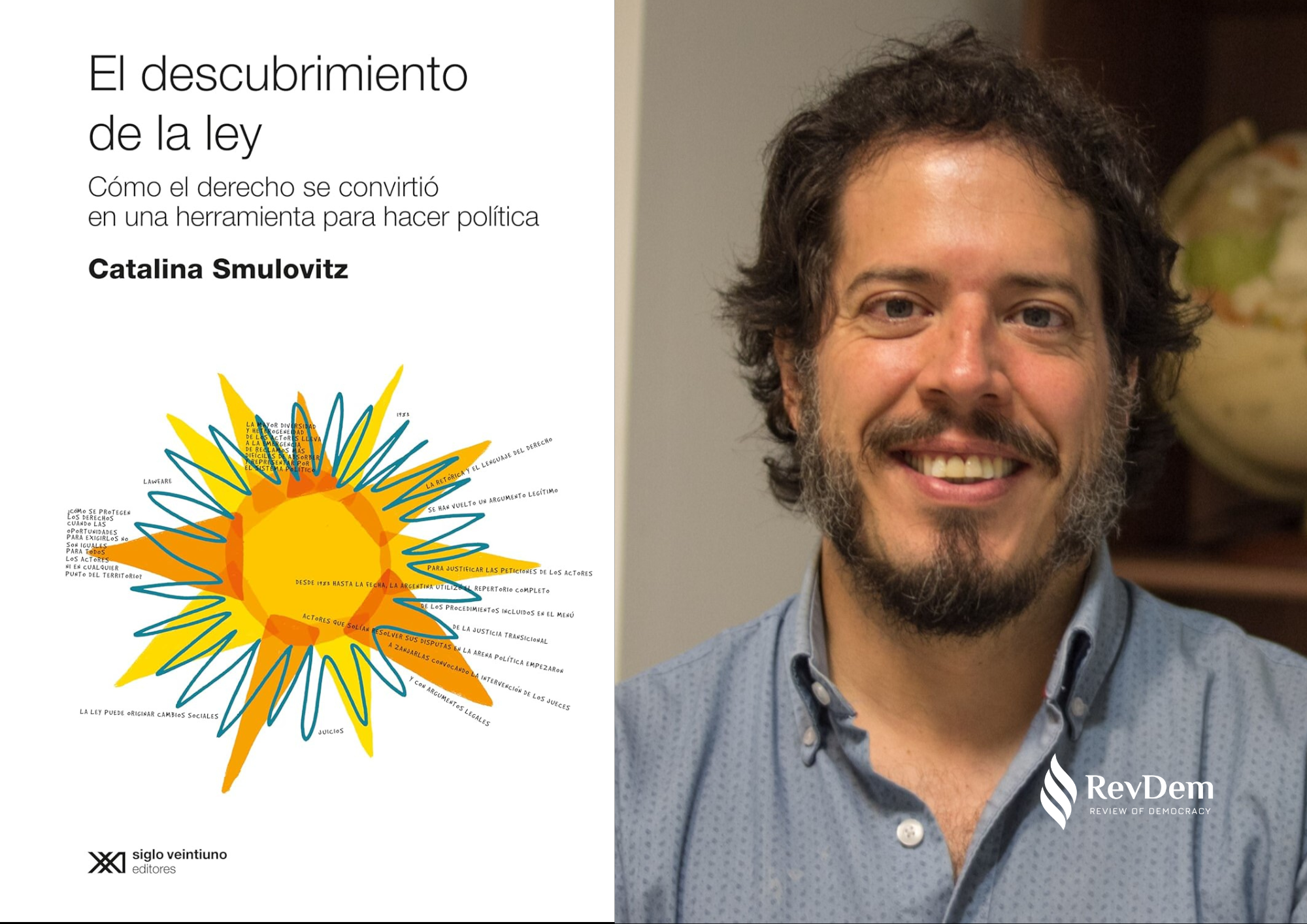
Politics of Legal Discovery in Argentina
In El Descubrimiento De La Ley, the political scientist Catalina Smulovitz offers a sophisticated and timely account of how law has become a central instrument of political struggle in Argentina, with implications that extend across Latin America. As the author is one of the region’s most respected scholars of politics and law, which draws on decades of empirical observation and theoretical reflection, the result is a work that challenges readers to reconsider the place of law in democratic practice and illuminates how legal institutions can be mobilized for both accountability and power.
3.09.2025
Rule of Law
From Competitive Authoritarian to Hegemonic: Berk Esen on the Decline of Turkish Democracy and the Prospects for Its Revival (Part 2)
In Part 2 of our latest episode in the special series produced in partnership with the Journal of Democracy, Berk Esen turns to the other side of the equation: how Turkey’s opposition is pushing back against an increasingly hegemonic regime. This episode builds on Part 1, where we explored the regime’s authoritarian escalation through the courts, media, and economic coercion.
25.08.2025

Rule of Law
The War Against Law – David Dyzenhaus on Common Good Constitutionalism
David Dyzenhaus explains how Carl Schmitt’s anti-liberal critiques underpin today’s “Common Good Constitutionalism,” linking Schmitt and Voegelin to modern far-right thinkers. He warns that such theories both legitimize and encourage authoritarianism by undermining liberal democracy’s rule-of-law foundations.
18.08.2025

Rule of Law
Ruling the Spanish Void: What Spain’s Social Democratic Party Can Teach European Liberal Democracies about Party Politics
The Spanish Socialist Workers’ Party’s recent alleged corruption scandal involving a backhander scheme and two former number-twos in the party may prove to be the silver lining Spain’s political system needs to reform and modernize its political parties. The decision now rests in the hands of party leaders.
15.08.2025

Rule of Law
Holding Frontex Accountable – In Conversation with Joyce De Coninck
In current public discourse, human rights violations at the EU’s borders are inextricably linked to one specific actor: the European Border and Coast Guard Agency – or, in short, Frontex. Since its establishment in 2004, human rights activists have become increasingly aware of various rights violations committed by the agency, particularly in the Mediterranean. To name just one example, Frontex has been accused of providing the locations of migrants intercepted at sea to the Libyan coast guard, which then transported them to camps where they have been systematically raped, tortured, and enslaved. Remarkably, despite accusations of the most severe human rights violations, Frontex has largely managed to avoid legal consequences. Currently, Frontex stands before the Grand Chamber of the Court of Justice of the EU for the first time in its history.
11.08.2025

Rule of Law
The Aftermath of Poland’s Presidential Election – In Conversation with Maciej Kisilowski (Part 1)
In Part 1 of this podcast, Maciej Kisilowski examines the results of Poland’s presidential election as well as its implications for Poland’s political dynamics over the next few years. In particular, he addresses the issue of whether Polish liberals and progressives are capable of correctly identifying the prevailing sentiments in a deeply divided society.
6.08.2025

Rule of Law
The Rise of Legislative Authoritarianism –In Conversation with Paolo Sosa-Villagarcia and Moisés Arce
In the latest episode of our special series produced in collaboration with the Journal of Democracy, Paolo Sosa-Villagarcia and Moisés Arce discuss the rise of legislative authoritarianism, compare it with more traditional forms of authoritarian rule, and explore its implications both in theory and in practice.
7.07.2025

Rule of Law
Can Courts Save Democracy? In Conversation with Samuel Moyn
Samuel Moyn discusses the risks of focusing too heavily on legality in the fight against rising authoritarianism. Since the beginning of the year, the Trump administration has been trampling on different sectors of the U.S. state. Numerous commentators, both from the U.S. and abroad, have argued that the issue of a potential “constitutional crisis”—one that could pave the way for authoritarianism—essentially hinges on whether the government complies with court orders. In contrast, Professors Ryan Doerfler and Samuel Moyn have argued that this focus is, at the very least, misplaced. So far, rather than protecting democracy, the courts have helped pave the way for the current situation. This raises important questions about the right pro-democratic strategy—not only in the U.S., but also in European countries such as Germany, where the far-right is on the rise and the judiciary is widely seen as the bulwark against authoritarianism. In this conversation, Samuel Moyn explains the [...]
16.06.2025

Rule of Law
In Uncertain Waters: The Restoration of the Rule of Law in Poland
The outcome of Poland’s presidential election has the potential to significantly harm the process of rule of law restoration in the country. In her op-ed Anna Wójcik examines the current situation and explores what the future strategy of the pro-democratic governing coalition must entail.
11.06.2025

Rule of Law
Instrumentalization of Migration? – In Conversation with Nora Markard
In recent years, the EU’s increasingly right-leaning discourse on migration has given rise to a new narrative: the instrumentalization of migration. EU member states strive for lower human rights standards, arguing that Belarus, under the authoritarian rule of Alexander Lukashenko, deliberately sends individuals who have fled countries such as Afghanistan and Iraq to the EU’s borders in order to overwhelm them, at times even accusing these individuals of collaborating with Belarusian authorities. Currently, three cases related to this situation are pending before the European Court of Human Rights.
9.06.2025

Rule of Law
Mexico’s Judicial Reform: Democracy by Ballot or Power by Design?
Mexico is preparing for an unprecedented judicial election. But far from empowering citizens or improving justice, this reform may erode the very foundations of democratic rule. Ana Micaela Alterio explores how a process framed as democratization could entrench power, undermine judicial independence, and usher in a new phase of autocratic legalism.
30.05.2025

Rule of Law
What is Union Citizenship For?
With its judgment in Case C-181/23, the Court of Justice of the European Union (CJEU) has put an end to a long-standing debate: Malta’s citizenship-by-investment scheme is incompatible with EU law because it violates the “bond of solidarity and good faith” between the individual and the member state that Union citizenship requires. In her op-ed, Anja Bossow examines the potential implications of this new criterion—both its perils and its potential promise.
21.05.2025

Rule of Law
Tactical Dilemmas of Democratic Front-Sliding: Early Lessons from Poland
Today, one-and-a-half years after the right-wing populist government with authoritarian ambitions left office, Poland is a real-time lab for democratic front-sliding. Different tactics deliver mixed results. The presidential election will certainly be consequential for this process. However, some early conclusions from more and less radical approaches to restoring democracy and the rule of law in the country have already emerged and provide useful hands-on evidence for the future.
16.05.2025

Rule of Law
Constitutional Death Foretold? The Romanian Elections Saga in a Nutshell
Romania has been facing a political crisis marked by controversial court rulings, annulled elections, and the rise of far-right figures. Judicial overreach, social fragmentation, and foreign influence fueled public distrust, culminating in ultranationalist George Simion’s victory in the 2025 restaged presidential elections.
13.05.2025

Rule of Law
Judicial Reforms in Italy: A Risk for the Rule of Law?
With the ongoing judicial reforms, the Italian Government’s conflict with the judiciary has reached a new phase. In her op-ed, Benedetta Lobina examines the proposed changes and assesses their impact on the rule of law in Italy.
30.04.2025

Rule of Law
Valeurs de l’Union – In Conversation with Luke Dimitrios Spieker
Since the seminal 2018 Portuguese Judges case, it has been established that violations of values enshrined in Article 2 of the Treaty on European Union (TEU) can be litigated before the Court of Justice of the European Union (CJEU). Currently, proceedings are ongoing in the European Commission’s infringement action against Hungary, the argument being that its anti-LGBTQI+ laws breach provisions of the internal market, several Charter rights, and, importantly, the common values enshrined in Article 2 TEU. The case, known as Valeurs de l’Union, has been hailed as the “largest human rights battle in EU history.” In this RevDem Rule of Law podcast episode, our co-managing editor, Dr. Oliver Garner, discusses the enforcement of the Union’s values at the Member State level as well as at the Union’s institutional level with Dr. Luke Dimitrios Spieker. Dr. Spieker is Senior Research Fellow at the Max Planck Institute for Comparative Public Law and International Law and Postdoctoral [...]
22.04.2025

Rule of Law
Ex-Ministers as Constitutional Judges – In Conversation with Mathias Möschel
Debates about the politicization of constitutional courts are as old as the institution itself. The concept’s originator, Hans Kelsen, emphasized the importance of preventing members of the government and parliament from sitting on constitutional courts, “because their acts are the acts to be controlled by the court.” While this idea is deeply entrenched—at least to the extent that simultaneous membership in the executive or legislative and judicial branches is widely prohibited—the same does not hold true across other temporal dimensions. In his new book Ex-Ministers as Constitutional Judges, published by Oxford University Press, Prof. Mathias Möschel examines the effects—both negative and positive—of this practice, focusing on the constitutional courts of France, Italy, Austria, and Germany.
14.04.2025

Rule of Law
How the European Council Leads – In Conversation with Martina Vass
The European Council brings together all of the heads and states of government of the European Union in order to drive policy. In the last decade the EU has faced crises of the economy, membership, values, and migration. This conversation between our co-managing editor Oliver Garner and Dr Martina Vass considers these issues through the lens of the latter's monograph.
31.03.2025

Rule of Law
What’s Radish Got to Do with Turkish Democracy?
When a Turkish proverb resurfaces at the heart of a political storm, it’s worth paying attention. Through the recent arrests of Istanbul Mayor Ekrem İmamoğlu and his colleagues, Ece Özbey traces the chilling implications of the deepening erosion of democratic norms and judicial independence in Turkey—and the defiant stirrings of civic resistance under Erdoğan’s tightening grip on the country.
28.03.2025

Rule of Law
A Fragile Constitution? – In Conversation with Dieter Grimm
On March 25, 2025, the “new” German Bundestag began its work. While the government will likely consist of the familiar coalition of Social and Christian Democrats, it may face unprecedented challenges. In the new composition of the German parliament, the center parties no longer hold the two-thirds majority required to amend the German constitution—the Grundgesetz. After, in the “old” Bundestag, a parliamentary motion was adopted for the first time since the fall of the Nazi regime, only due to the support of the far right; some commentators have gone so far as to declare the end of the German political center. Shortly thereafter, the far right achieved record polling numbers in the federal elections. These circumstances raise the question of whether the German legal system is resilient enough to withstand periods of political instability. While the German Constitution is widely regarded as a success, some argue that it has primarily functioned as a “Schönwetter-Verfassung”—a [...]
27.03.2025

Rule of Law
Transnational Authoritarian Repression – In Conversation with Caroline von Gall
While the Putin regime’s war against Ukraine follows the tradition of Russian and Soviet imperialism, it’s methods have evolved. The “Iron Curtain” no longer exists, and in an increasingly globalized world where social media has transformed communication, authoritarian states no longer merely sever ties with the outside world. Instead, Putin’s Russia is actively engaging in transnational authoritarian repression.
19.03.2025

Rule of Law
A Watchdog for European Democracies – In Conversation with Darian Pavli
Established in 1959 in the aftermath of World War II, the European Court of Human Rights (ECtHR) was designed from the outset as “a backstop against authoritarian regression.” For a long time, democracy was an emerging system, with more and more European countries ratifying the European Convention on Human Rights (ECHR) as they transitioned to democratic governance. However, since the global peak of democracy in the mid-2000s, democratic backsliding has become an ongoing trend across the European continent. Some states that ratified the ECHR have transitioned into fully-fledged authoritarian regimes or hybrid states, while others are showing early signs of heading down a similar path. By waging war against Ukraine, Russia pushed this to such an extent that it was ultimately excluded from the Council of Europe.
13.03.2025

Rule of Law
An Open Marketplace for Members of Parliament in European countries? In Conversation with Emiljana Krali
In the latest RevDem podcast our co-managing editor Dr Oliver Garner discusses processes for becoming an MP today in Europe with Dr Emiljana Krali.Dr Krali is a generalist Equity Research Analyst who has experience in telecommunications, fintech, software, and hardware among other fields. She holds degrees from the University of Bari in physics and from the University of Surrey in nanotechnology. Her Ph.D. was obtained from Imperial College London.She is currently undertaking the selection process to become a candidate for the governing Socialist Party in Albania.
10.03.2025

Rule of Law
An Existential Threat? – In Conversation with Christoph Flügge
The role of international courts presents distinct and complex challenges compared to other judicial areas. Since the enforcement of judgments relies on the willingness of states to cooperate, international criminal law has primarily been applied against weaker states on the global stage. An international court seeking to act against representatives of strong – western – countries in the international sphere faces a difficult dilemma. On one hand, the law must apply equally to everyone. A court that fails to uphold this principle risks losing its legitimacy. On the other hand, a court that alienates powerful states risks rendering its judgments ineffective or even jeopardizing its own existence. This is illustrated by the events following the International Criminal Court’s (ICC) issuance of arrest warrants for Hamas and Israeli leaders. Numerous Western politicians harshly criticized the ICC’s efforts to hold representatives of their ally, Israel, accountable for [...]
18.02.2025

Rule of Law
How to Battle Abusive Governments? – Kenneth Roth on the Strategies and Impact of Human Rights Watch
In this podcast, Kenneth Roth – who is about to publish Righting Wrongs. Three Decades on the Front Lines Battling Abusive Governments – explains what has made the strategies of Human Rights Watch distinct in the world of human rights-related advocacy and activism, and discusses cases where they managed to have a real impact; considers how the extension of the catalogue of human rights over time has shaped their interests and profile; reflects on HRW’s relationship with different types of governments; and explains how HRW has related to the question of humanitarian intervention and drawn on international humanitarian law across the decades.
17.02.2025
Rule of Law
Rule of Law at a Crossroads: The Walesa Case as a Catalyst for Rebuilding Judicial Independence?
The CEU Democracy Institute Rule of Law Clinic, the Review of Democracy (RevDem), and the Bingham Centre for the Rule of Law (BIICL) held a webinar on November 27, 2024, on the state of rebuilding judicial independence in Poland, using the landmark Walesa v. Poland case as a starting point. In this ruling, the European Court of Human Rights (ECtHR) applied its pilot judgment procedure, giving the Polish government a one-year deadline (November 24, 2024) to meet essential rule of law standards. Just days after this deadline, the event assessed Poland’s progress and explored practical solutions for restoring trust in its judiciary. The remaining challenges include reforming the judicial appointment process, determining the status of ‘neo-judges’, and addressing issues with the independence of the Constitutional Tribunal. The discussion also took a broader European perspective, highlighting the role of the European Union, the Venice Commission’s recent Opinions on Poland, and [...]
11.02.2025

Rule of Law
Ukraine Under Martial Law – Transformations of Domestic Policies and Civil Society
In this episode, a part of the Democracy After 2024 series, Oleksandra Kokhan is joined by Taras Fedirko and Serhiy Kudelia to discuss the transformations of domestic policies in Ukraine following the 2022 invasion and under martial law, the (im)possibility of holding elections, and the role of civil society today.
5.02.2025

Rule of Law
European Values and Democratic Links – In Conversation with Miriam Schuler
In the last decade the Court of Justice of the EU has rapidly developed its case-law on the enforcement of EU values. Following multiple cases in which the Court enforced provisions that instrumentalize the Rule of Law in actions involving the ‘backsliding’ Member States of Poland and Hungary, the question now arises as to whether EU action may be justified to protect the co-foundational value of democracy during national elections in the EU’s Member States. The upcoming elections in the Federal Republic of Germany in February will bring these issues into sharp relief. In the latest RevDem Rule of Law podcast, Oliver Garner discusses these themes with Miriam Schuler (King’s College London), whose PhD research analyzes the protection of values within the European Union. The Current State of Play While Article 2 of the Treaty on European Union (TEU) outlines a broad set of foundational values, Schuler argues that, over the past decade, EU actions have [...]
28.01.2025

Rule of Law
Practicing What They Preach(ed)? The New UK Labour Government and the Rule of Law – Reflections on the Bingham Lecture
This op-ed reflects on the 2024 annual Bingham lecture, delivered by Attorney General Lord Hermer KC. It explores Lord Hermer’s substantive conception of the rule of law, the current challenges Lord Hermer identifies as threatening the rule of law, and the three-pronged approach he proposes for addressing these challenges. It is forwarded that Lord Hemer’s analysis aligns with an overall upturn in the UK Government’s rule of law narrative. However, as of yet, this has not been matched to the full extent by practical action or policy proposals. Without a considered policy programme to bolster the rule of law, democratic backsliding will continue.
23.01.2025

Rule of Law
Five Books on the Rule of Law and Democracy from 2024 for 2025
The 21st century has already provided a quarter-century of tumult for democracy. The last year of these first 25 years has been no exception. Both the world’s largest and its most prominent democracy returned ‘strongmen’ leaders. By contrast in Central-Eastern Europe an anti-populist coalition toppled a traditionalist government. As War rages in Western Eurasia and the Northern Middle-East, signifying the collapse of deliberative ordering of human affairs, natural disasters push societies to their breaking point, regardless of the level of their development. The Rule of Law seeks to impose order upon such tumult, as democracy seeks to provide humans with the means to decide upon their own destiny. Here are five books on this phenomenon that have been covered by and informed the RevDem Rule of Law section in 2024.
16.01.2025

Rule of Law
Authoritarian International Law? – In Conversation with Tom Ginsburg
International law is a live instrument in the current global geopolitical crisis. This latest RevDem Rule of Law podcast, conducted by Konstantin Kipp with Professor Tom Ginsburg, reflects upon the potentially authoritarian nature of international law in its function of enabling relations between states.
13.12.2024

Rule of Law
Against Presentism: Post-National Constitutionalism as a Critical-Emancipatory Project
The book Postnational Constitutionalism: Europe and the Time of Law is a novelty for those who eagerly look for creative approaches to the quandary of constitutionalism beyond the State. According to Paul Linden-Retek, post-national constitutionalism is a critical-emancipatory project, consisting of a re-imagination of identity and self-authorship over time. For this to happen, constitutional open-endedness is necessary, particularly in the case of the European Union (EU).
29.11.2024

Rule of Law
The Independence of the European Courts at Risk? – In Conversation with Marek Safjan
The attempt to transform a democracy into an authoritarian state often begins with the elimination of independent jurisdiction. Constitutional courts, in particular, are targeted - either to incapacitate them or even to turn them into enablers of governmental politics. This has been observed in Poland and Hungary. In Poland, after the PiS party was voted out of office, efforts are now underway to restore the independence of the constitutional court and to ensure better protection in the future. Meanwhile, in Germany, there are discussions about strengthening the resilience of the Federal Constitutional Court. This written interview considers the state of judicial independence in the EU today from a post-judicial career retrospective. Professor Marek Safjan was Poland’s appointee at the Court of Justice of the European Union from 2009 to 2024 and President of the Polish Constitutional Tribunal from 1998 to 2006.
20.11.2024

Rule of Law
International Law and the ‘Second World’: In Conversation with Patryk I. Labuda
The Second World Approaches to International Law (SWAIL) project, which will be launched at Central European University in Vienna in February 2025, aims to establish a more accurate way of conceptualising East Central Europe’s position in, and relationship with, international law. Three themes arise continuously throughout the podcast: liminality, domination, and the emancipatory potential of international law.
18.11.2024

Rule of Law
The Recipe Trump Will Hopefully Not Read Attentively – Measuring the US’ Political Prospects by the ‘Gold Standard’ of De-Democratization
Given all the grave concerns regarding the future of democratic norms and institutions in the US, Hungary’s transformation under Viktor Orbán’s rule offers the kind of warning that observers would ignore at their own peril. Considering the key ingredients on Orbán’s recipe of de-democratization can also help us develop a sense of proportions and nuance about what is likely to unfold under Donald Trump’s upcoming second term.
13.11.2024

Rule of Law
The Authority of the EU Legislature: In Conversation with Martijn van den Brink
In June 2024, Martijn van den Brink’s monograph, Legislative Authority and Interpretation in the European Union was published by Oxford University Press. The book tackles deep conceptual issues about the EU legal order, and yet its insights are also relevant for some of the most pressing practical issues facing Europe today. Martijn van den Brink is an Assistant Professor of EU law at Maastricht University, and he has previously held positions at the Hertie School of Governance in Berlin, the University of Oxford. and the Max Planck Institute for the Study of Religious and Ethnic Diversity in Göttingen.
30.10.2024

Rule of Law
The Radical Right Has Won the Election in Austria, But A Centrist Coalition Will Govern
The far-right FPÖ has won the 2024 general election in Austria but is highly likely to remain locked out of government. With all other parties having ruled out working with the current FPÖ leader, the most likely outcome of the government formation talks is a three-party government – the first to be formed since 1945 – led by the incumbent chancellor Karl Nehammer.
29.10.2024

Rule of Law
Shadowing the European Commission on Rule of Law? In Conversation with Laurent Pech and Petra Bárd
The European Commission published its fifth annual Rule of Law Report in July 2024. In this RevDem Rule of Law podcast Oliver Garner discusses the effectiveness of this mechanism for upholding the EU's values with Professor Petra Bárd and Professor Laurent Pech. They have collaborated with the CEU Democracy Institute's rule of law clinic to produce a shadow report that will turn the lens back on the EU itself.
27.10.2024

Rule of Law
Reine Populismuslehre in Vienna? The Victory of the ‘Freedom Party’ in the 2024 Austrian National Election
Austria’s far-right FPÖ has won the national elections. Will Vienna follow Budapest since 2010, Warsaw from 2015- 2023, and Rome since 2022 in a path towards backsliding on EU values? Oliver Garner and Matthew Haji-Michael reflect.
24.10.2024

Rule of Law
Diana Dumitru on the Russian Invasion of Ukraine and the Question of Genocide
In this conversation at the Review of Democracy, Diana Dumitru – co-editor, with Dirk Moses, of the new collection The Russian Invasion of Ukraine. Victims, Perpetrators, Justice, and the Question of Genocide – discusses the motives of various Russian perpetrators in Ukraine and how those motives might have evolved over time; shows how useful the concept of genocide proves when studying the multifaceted violence unleashed during Russia’s war of aggression; reflects on whether the current debates around genocide in Ukraine might reshape or expanding our understanding of genocide and mass violence; and addresses the challenges in pursuing accountability for Russian crimes.
14.10.2024

Rule of Law
The Special Tribunal for Russian Crimes of Aggression in Ukraine: In Conversation with Kateryna Busol
Russia’s aggression against Ukraine has been ongoing for 10 years. It started with the occupation of Crimea and parts of the Donbas in 2014 and culminated in the full-scale invasion in 2022. Various domestic and international justice initiatives to ensure accountability for war crimes and other conflict related violations have been unfolding since 2014. However, 2022 marked the start of a new important debate. How can Russia be held accountable for the underlying crime of aggression? In this RevDem Rule of Law podcast Oliver Garner discusses the proposal for a special tribunal to address Russia's crime of aggression in Ukraine with Kateryna Busol.
11.10.2024

Rule of Law
Pro-Kremlin Disinformation Is Distorting Democracy in Central and Eastern Europe
In Central and Eastern Europe, democracy has been deliberately eroded by disinformation. There has been a troubling surge of pro-Kremlin messaging since 2021, with Hungary serving as a regional epicenter of state-sponsored mistruths.
8.10.2024

Rule of Law
Reforming Ukraine’s Judiciary – EU Accession, Democracy, and the Rule of Law: In Conversation with Tetyana Antsupova and Sergii Koziakov
In September 2024 the project “The Dynamics of the Judiciary in Ukraine in the Context of the Rule of Law and the EU Accession Aspirations” commenced. The project is hosted by the British Institute of International and Comparative Law (BIICL) and is funded by the British Academy. This written interview, conducted by Rule of Law section editor Oliver Garner with researchers in the project, explicates its objectives, scope, and aspirations. Professor Tetyana Antsupova is a Senior Fellow at BIICL and an awardee of the British Academy Global Professorships scheme. She is a former judge in the Grand Chamber of the Supreme Court in Ukraine, and she is the lead researcher in the project. Dr Sergii Koziakov is a Research Leader at BIICL, a Visiting Fellow at the London School of Economics and Political Science in the Law School, and an Associate Professor at the Taras Shevchenko National University of Kyiv in the Institute of International Relations. From 2014 to 2019, he was Chairman of [...]
2.10.2024

Rule of Law
The Intellectual Sources of the EU’s Response to the Rule of Law Crisis: In Conversation with Maciej Krogel
This latest RevDem Rule of Law podcast discusses the doctoral research of Dr Maciej Krogel following the defence of his thesis “The intellectual sources of the European Union’s response to the rule of law crisis in the Member States”. Maciej is a lecturer at the University of Amsterdam and he completed a re:constitution fellowship in 2022/23.
4.07.2024

Rule of Law
The European Union’s Hungary Problem
On July 1, 2024, Hungary will take over the rotating presidency of the Council of the European Union. The fact that a country with serious rule of law deficits will preside over one of the EU’s most important institutions for six months raises concerns. In a resolution in June 2023, the European Parliament questioned the extent to which Hungary could “credibly perform this task” and called on the European Council to “find an appropriate solution”—presumably by revoking Hungary’s presidency. (The European Council is the body of the 27 EU leaders; the Council of the European Union, informally also known as “the council,” is composed of the national ministers of all the member states; only the latter negotiates legislature, mostly with the European Parliament, and adopts it.)
1.07.2024
Rule of Law
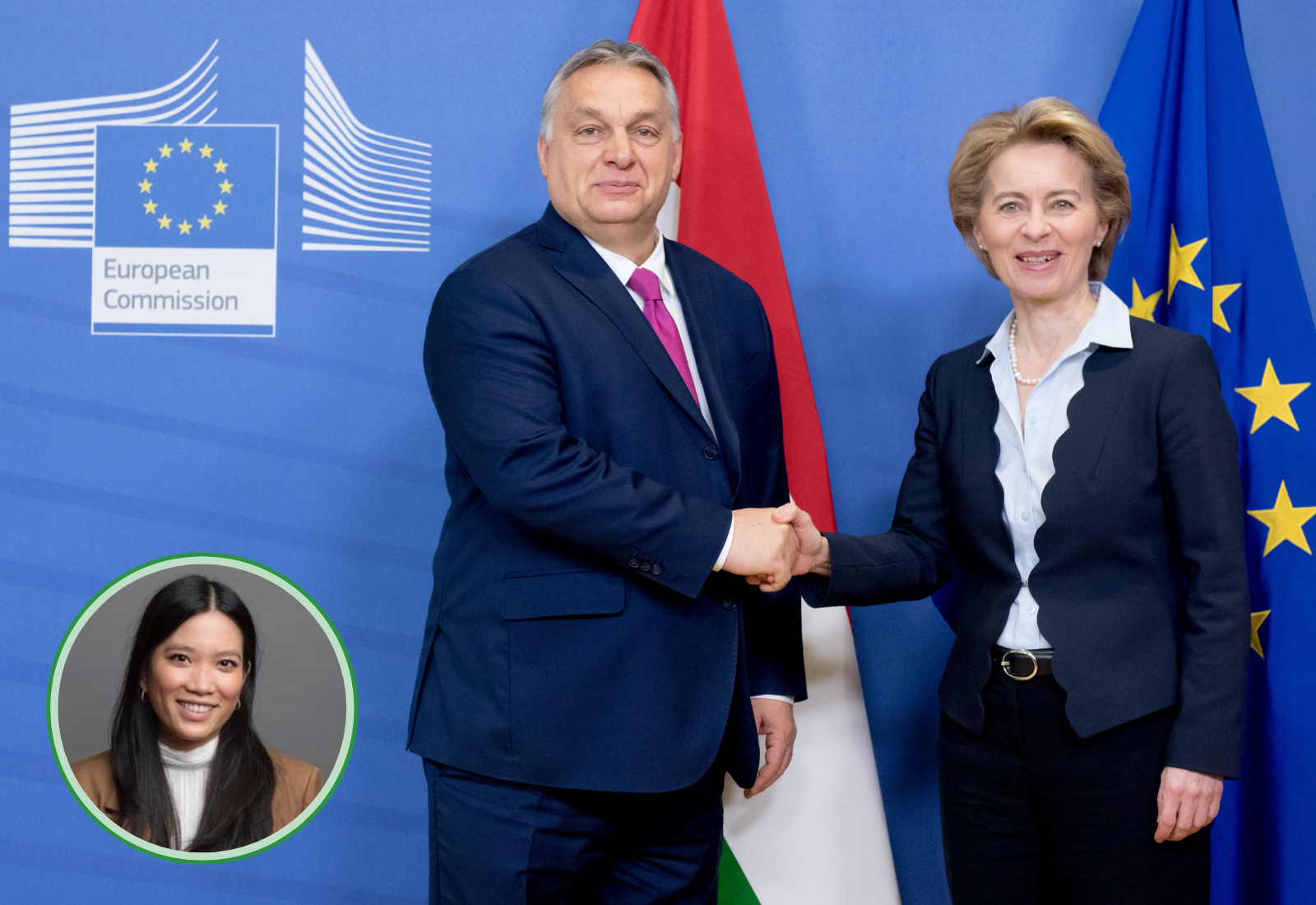
European Citizenship, Passport Apartheid and Enlargement: What Is the Future of the EU? – Professor Kochenov’s Approach
I stand with Raymond Aron: since citizenship is about exclusion, ‘global citizenship’ is an oxymoron – a dramatic misrepresentation of what citizenship is about. What I study is global citizenship apartheid. From this perspective citizenship is an arbitrary blood-based ascription of liabilities, which is totalitarian in nature and imposed on the majority of the population of the world. James Tully is right: citizenship is part of the colonizer package, because, historically, racialised inhabitants of the colonies could not enjoy the same rights as the ‘civilized’ white colonizers. What my scholarship suggests is that the current function of citizenship is to replay this kind of hierarchy of the ‘standards of civilization’ of pre-UN international law by denying dignity and rights to billions of individuals.
21.06.2024

Rule of Law
A Decade of Rule of Law Backsliding: Lessons Learnt for the Next EU Legislative Period
For more than a decade, the European Union (EU) has witnessed a decay of the rule of law in some of its Member States, especially Hungary and Poland. The deliberate and systematic deconstruction of the rule of law and other pillars of democracy was particularly severe in Hungary and Poland. This backsliding quickly became a European matter as the EU is not only an economic alliance with free movement of goods, services and people, but also a legal union of values. Therefore, for safeguarding the rule of law, the behavioral aspects are as important as the systemic ones. Research suggests that press freedom, robust civic space, public support for democracy, and the compliance with the law of elected officials and decision-makers are as significant as pillars of rule of law resilience as a comprehensive constitutional design, independent judiciary, and a public administration that is free from political influence and corruption.
11.06.2024

Rule of Law
Incremental Rule of Law Restoration? Polish Minister of Justice Adam Bodnar in Budapest
What are the most important legal and political challenges in rebuilding the Rule of Law in Poland? Polish Minister of Justice Adam Bodnar highlighted them in his lecture at the CEU Democracy Institute in Budapest. On May 27 the CEU Democracy Institute Rule of Law clinic was launched with an inaugural lecture from the Minister for Justice of Poland Adam Bodnar. The event provided a unique opportunity to hear a sitting member of an anti-illiberal government explain how the Rule of Law will be restored after nearly a decade of backsliding under the previous government. The key theme of the lecture was the endorsement of incrementalism over revolution as a means to rebuild a ‘sustainable’ Rule of Law.
7.06.2024

Rule of Law
Securitization of EU Refugee Law: In Conversation with Aleksandra Ancite-Jepifánova
Since the 2015 refugee crisis there has been an increasing ‘securitization’ of EU refugee law that has only been exacerbated by the Russia-Ukraine conflict. In this latest RevDem Rule of Law podcast Oliver Garner discusses this phenomenon with Aleksandra Ancite- Jepifánova. She is a Research Affiliate with the Refugee Law Initiative at the University of London and Visiting Fellow at the Centre of Law and Society at Cardiff University.
28.05.2024

Rule of Law
The State of Democracy and Constitutionalism in India: with Tarunabh Khaitan
In this interview with Tarunabh Khaitan, we discuss the ongoing crisis of democracy and constitutionalism in India. At the time of conducting the interview, elections are underway in India, with approximately a month left for results to be declared. In this context, we discuss the differences between the first and the second term of the Modi government, India’s place in the ongoing wave of global populism, suggestions for recovering constitutional democracy, and the dangers of “Scholactivism”.
23.05.2024

Rule of Law
Tensions in EU internal market law: In Conversation with Vilija Velyvyte
In the latest RevDem Rule of Law podcast Oliver Garner discusses the substantive and constitutional tensions caused by the Court of Justice of the EU’s internal market case-law with Dr Vilija Velyvyte. She is a Lecturer in Law at the University of Reading and was previously a Lecturer in EU Law and Constitutional Law at the University of Oxford. She is the author of Judicial Authority in EU Internal Market Law: Implications for the Balance of Competences and Powers (Hart Publishing, 2022).
9.05.2024

Rule of Law
The presidential subversion of the Mexican judiciary: In conversation with Azul A. Aguiar Aguilar
I wanted to explore how the dynamics of attacks from the President on the judiciary are evolving and what are the causes, conditions, and the timing of these rhetorical attacks. I wanted to explore this because the judiciary is an important institution in presidential and constitutional democracies as it guarantees the separation of powers and checks and balances. I wanted to study this and put it into a research program because, since the arrival of our current President Andrés Manuel Lopez Obrador in 2018, we have seen variations in how the president refers to the judges and constitutional judges in the judiciary. I started my discussion in the working paper from the 1994 judicial reform. This reform is very important for us because it radically transformed the performance of the judiciary. The 1994 reform introduced judicial independence for the courts and a professional system of judges. But the most important change in this reform was that it empowered the courts through a [...]
22.04.2024

Rule of Law
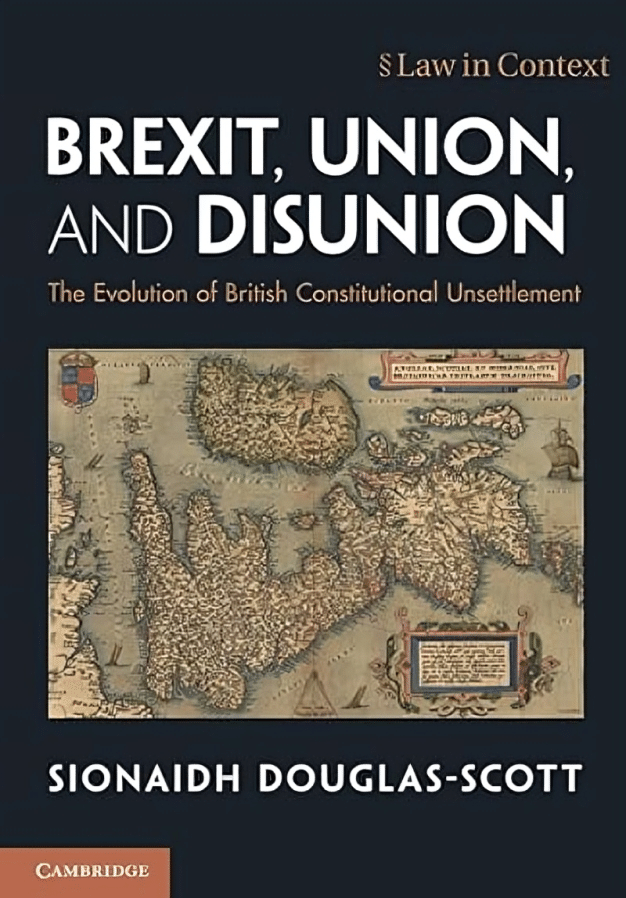
The Brexit Sovereignty Problem
Sionadh Douglas-Scott’s monograph depicts Brexit as the latest example of union and disunion in the United Kingdom’s constitutional (un)settlement. The predicative claim running throughout these chapters is that the “imposition of resolute and unlimited parliament sovereignty” has presaged disunion. The book is informative on the United Kingdom’s constitutional history, and admirable in its efforts to place Brexit within its wider historical context. The conclusion’s appeal for a new path in determining the autonomy of the United Kingdom’s devolved regions is powerful. However, the thrust of the main argument risks being diluted by the repetition arising from the author’s structural choices. If the argument against parliamentary sovereignty had been foregrounded as the lens through which the case studies of disunion were analysed then this could have provided a sharp focus for Douglas-Scott’s critique of UK constitutional orthodoxy.
17.04.2024
Rule of Law
Weaken Constitutional Review, Strengthen European Democracy – In Conversation with Nik de Boer
Are constitutional judges well equipped to deal with fundamental constitutional questions about the EU? Should national constitutional courts aim to address the EU democratic deficit? Several scholars see national constitutional courts as a constructive force in the EU legal order. Nik de Boer argues differently, and reasons why is it better to leave certain issues to parliaments rather than constitutional courts? In this conversation with Kasia Krzyżanowska, Nik de Boer discusses his recent book “Judging European Democracy. The Role and Legitimacy of National Constitutional Courts in the EU” (Oxford University Press 2023). The transcript was amended to improve readability and clarity.
9.04.2024

Rule of Law
Pellegrini won in Slovakia. So did Fico, Orbán, and the Kremlin
Peter Pellegrini won the presidential election in Slovakia last weekend with 53 percent of the vote. Pellegrini, who ran against former diplomat Ivan Korčok as the candidate of the ruling coalition led by Robert Fico, entered the race as the absolute favorite – for months before the campaign even started, Fico’s political ally of many years was already polling as the most likely potential candidate for the top constitutional post. The first round of the election two weeks ago changed that dynamic since Korčok emerged first then. As we understand now, it may have helped mobilize the part of the electorate that did not vote for Pellegrini at first but was absolutely opposed to Korčok. The part of the electorate in question is mainly composed of people who have for years been mobilized by far-right and anti-system politicians via emotions of fear and hate.
9.04.2024

Rule of Law
The Rule of Law Restoration in Poland – Legal and Political Challenges
In this conversation with RevDem editor and a re:constitution fellow Kasia Krzyżanowska, Krzysztof Izdebski (Batory Foundation) and Bartosz Pilitowski (Court Watch Poland) discuss all the current challenges the Polish government is facing with the legal legacy left by the Law and Justice party. How to restore trust in the judicial institutions? How to deal with the irregularly established Constitutional Tribunal and the National Council of the Judiciary? What should be the role of the judges in designing the judicial system?
6.03.2024

Rule of Law
Militant Rule of Law and Not-So-Bad Law: in conversation with András Sajó
The question of how to reverse illiberal backsliding after regime change is becoming live within Europe and beyond. This Rule of Law section podcast between Oliver Garner and András Sajó (Professor at the Central European University and Senior Research Fellow at the CEU Democracy Institute) considers this dilemma through the recently published lens of the CEU DI working paper ‘Militant Rule of Law and Not-So-Bad Law’.
28.02.2024

Rule of Law
The Provisional Measures Order in South Africa v. Israel: A Closer Look at the ICJ Bench
On Friday, 26 January, the International Court of Justice (ICJ) indicated six provisional measures in the case South Africa brought against Israel under the Genocide Convention. The highly-anticipated Provisional Measures Order has already been helpfully analyzed in various places (see, for example, here and here). Rather than attempting to add to substantive analyses of the Order, in this post, I will analyze the Order by giving it context from a different perspective: that from the bench. While the voting pattern suggests a very high level of agreement, the individual expressions of judges highlight why the Court prioritized this high level of agreement. The individual opinions shed light on the reasons why judges voted in favour of (or against) the provisional measures, but the opinions also reveal that South Africa will face a high threshold should the case reach the merits stage.
15.02.2024

Rule of Law
A Regulatory Conception of the Rule of Law? – In Conversation with Jeff King
The guest for the latest RevDem Rule of Law podcast is Professor Jeff King. He is a Professor of Law at University College London and he is the Director of Research at the Bingham Centre for the Rule of Law. He has previously acted as a legal adviser to the House of Lords Select Committee on the Constitution. The conversation with Oliver Garner discusses Jeff’s ‘regulatory’ conception of the Rule of Law and its application to contemporary challenges.
7.02.2024

Rule of Law
RevDem Top 5 Rule of Law Books of 2023 -Recommended by Oliver Garner, editor RevDem Rule of Law section
By the end of each year our editors recommend outstanding readings in their field. This is the list of the top five books recommended in the rule of law section.
19.12.2023

Rule of Law
Central and Eastern Europe after the Polish Elections: In Conversation with Daniel Hegedüs
Despite the Polish opposition election victory in the 15 October elections on 27 November President Duda swore in the Law and Justice Party ahead of a confidence vote that the incumbents seem set inevitably to lose. In this latest Rule of Law podcast, Oliver Garner and Daniel Hegedüs discuss the implications of the election for Central and Eastern Europe. Daniel is a German Marshall Fund fellow with expertise in populism and democratic backsliding and the foreign affairs of the Visegrad countries.
4.12.2023

Rule of Law
The Role of (EU) Competition Law in Defending the Rule of Law
Kati Cseres is an Associate Professor of Law at the Amsterdam Centre for European Law and Governance (ACELG) and Program Director of the EU Law Masters at the University of Amsterdam. This series of RevDem op-eds collects reflections on the contemporaneous challenges for the Rule of Law, which stemmed from the conference organized at Radboud University (Nijmegen) on 21-22 September in honour of Prof. Petra Bàrd. This is the latest entry following previous contributions by Benedetta Lobina on the Russo-Ukrainian war, and Pauline Thinus on EU spending conditionality.
27.11.2023

Rule of Law
The EU’s turn towards a transactional approach to Rule of Law enforcement? Spending conditionality in the 2020s
This series of RevDem op-eds collects reflections on the contemporaneous challenges for the Rule of Law, which stemmed from the conference organised at Radboud University (Nijmegen) on 21-22 September in honour of Prof. Petra Bàrd. Following Benedetta Lobina’s op-ed on the impacts of the Russo-Ukrainian war, Pauline Thinus addresses the consequences of the use of Rule of Law spending conditionality within the European Union (EU).
13.11.2023

Rule of Law
The Rule of Law in Malta: In Conversation with Jenny Orlando-Salling
In the latest RevDem Rule of Law podcast, Oliver Garner discusses the current state of the Rule of Law, democracy, and corruption in Malta with Jenny Orlando-Salling. Jenny is a Ph.D. researcher at the University of Copenhagen, and she previously worked at the Permanent Representation of Malta to the EU and as Deputy Head of Mission and Consul to the Embassy of Malta in Egypt and Sudan.
2.11.2023

Rule of Law
Taking Stock: The Polish Opposition Victory and the Rule of Law
By stark contrast to the worsening situation in Hungary, Poland may be facing a new dawn and a restoration of liberal democracy. But caution may be required to ensure that this dawn does not darken again into political acrimony and fragmentation.
26.10.2023

Rule of Law
The pro bono fight for the rule of law in the EU
Frenchman Laurent Pech is concerned about the rule of law in the European Union. With the pro bono network of academics known as “The Good Lobby Profs”, he goes into battle against constitutional breaches in Brussels. In fact, he sees our democracy in danger.
25.10.2023

Rule of Law
Why the Polish Elections Cannot Be Repeated in Orbán’s Hungary
Poland is returning to the path of democracy and could become one of the most influential member states of the European Union. By comparison, Hungary’s prospects look bleak.
23.10.2023

Rule of Law
Can the invasion of Ukraine be a breaking point for the appeasement of autocrats in Europe?
Benedetta Lobina (PhD candidate, University College Dublin) considers the Rule of Law impacts of the Russo-Ukrainian war
13.10.2023

Rule of Law
Disabusing Constitutional Identity? In Conversation with Julian Scholtes
The monograph The Abuse of Constitutional Identity in the European Union (OUP, 2023) by Julian Scholtes (Lecturer in Public Law, University of Glasgow) was published in September. In this latest RevDem Rule of law podcast, Oliver discuss constitutional identity and its implications for the Rule of Law and democracy in Europe today. Oliver Garner: I found that your distinction between generative, substantive, and relational aspects of constitutional identity abuse is an impressive attempt to categorize such illegitimate practices systematically. How do these concepts advance our understanding of constitutional identity and its abuse? Do you believe they can be operationalized to allow the identification of abusive identity claims in practice? Julian Scholtes: I think we need to distinguish this idea of constitutional identity, that is quite commonly used in comparative constitutional law, as an analytical lens which allows us to look into the relationship between [...]
29.09.2023

Rule of Law
Models of Judicial Independence in Europe: In Conversation with Pablo Castillo Ortiz
In this latest RevDem Rule of Law podcast, assistant editor Teodora Miljojkovic discusses the different models of judicial independence in Spain and beyond with Pablo Castillo Ortiz.
19.07.2023

Rule of Law
India’s Basic Structure Doctrine: Past, Present, and Future: In Conversation with Moiz Tundawala and Anuj Bhuwania
In this episode, assistant editor Rohit Sarma discusses the “basic structure” doctrine of the Indian Constitution on the occasion of its 50th anniversary with Moiz Tundawala and Anuj Bhuwania, Professors of Constitutional Law at the Jindal Global Law School in India.
12.07.2023

Rule of Law
The War in Ukraine and Transition: In Conversation with Maria Popova
Despite, or perhaps due to, the war in Ukraine there have been positive developments in combating corruption and other issues in anticipation of EU membership. In this RevDem Rule of Law podcast Teodora Miljojkovic discusses these issues around transition with Professor Maria Popova.
20.06.2023

Rule of Law
Suspending Hungary’s Presidency of the Council of the EU? In Conversation with John Morijn and Alberto Alemanno
In recent weeks proposals by the Meijers Committee to suspend Hungary’s Presidency of the Council of the EU in 2024 have received support in a resolution of the European Parliament. In this RevDem Rule of Law podcast, Oliver Garner discusses these proposals in the wider context of the Rule of Law crisis with John Morijn and Alberto Alemanno.
9.06.2023

Rule of Law
Constitutional Conflicts are Inevitable: In Conversation with Orlando Scarcello
In this conversation with RevDem editor Kasia Krzyżanowska, Orlando Scarcello discusses his newest book Radical Constitutional Pluralism in Europe (Routledge 2022). He elaborates on the descriptive nature of the theory of constitutional pluralism, stresses the inevitability of constitutional conflicts in the EU, and ponders on the political side of these conflicts. Orlando Scarcello —a postdoctoral fellow at Institute for European Law, KU Leuven. His research fields are EU law and comparative constitutional law. Kasia Krzyżanowska: What is the concept of radical constitutional pluralism? What are the alternative versions of conceptualizing the relationship between the EU legal order and domestic legal orders? Finally, why do you think that radical pluralism is the best framework for understanding the experience of living under two constitutions? Orlando Scarcello: Here we have a bit of a conundrum. The member states of the European Union clearly have their own constitutions, and [...]
31.05.2023

Rule of Law
Accession Through War? Ukraine and the EU: In Conversation with Roman Petrov
In this podcast, Oliver Garner speaks to Professor Roman Petrov on this subject of “accession through war”. Professor Petrov is the Jean Monney Chair in EU Law and Head of the Centre of Excellence in EU Studies at the National University of Kyiv-Mohyla Academy. He is currently a British Academy Research Fellow at the British Institute of International and Comparative Law.
23.05.2023

Rule of Law
Informal Power in Hungary and Poland: In Conversation with Edit Zgut-Przybylska
Formal Rule of Law backsliding in Hungary and Poland has been well-publicized. Yet this is just the tip of the iceberg of a system of informal power connections that are undermining the Rule of Law and democracy. In this RevDem Rule of Law podcast Oliver Garner discusses this informal power with Edit Zgut-Przybylska.
12.05.2023

Rule of Law
Helsinki in Budapest: In Conversation with András Kádár and Márta Pardavi
In the latest RevDem Rule of Law podcast Oliver Garner discusses the work of the Hungarian Helsinki Committee. András Kádár is an attorney at law and co-chair of the Committee. Amongst other engagements and positions he is the Hungarian member of the European Network of Legal Experts in the Non-Discrimination field. Márta Pardavi is the other co-chair of the Committee and she also co-leads the Recharging Advocacy for Rights in Europe (RARE) program. Previously, she has been a policy leader fellow at the EUI School of Transnational Governance in Florence.
3.05.2023

Rule of Law
Illiberalism in Israel? The Protests against Judicial Reform: In Conversation with Adam Shinar
In this podcast, Assistant Editor of the Rule of Law section Teodora Miljojkovic discusses the reforms with Professor Adam Shinar, Associate Professor at Harry Radzyner Law School, Reichman University. Professor Shinar is a member of the Board of Directors of the Association for Civil Rights in Israel, and he is an academic advisory board member of the Israel Supreme Court Project at Cardozo Law School, Yeshiva University.
28.04.2023

Rule of Law
Rule of law and the structural inequalities of the European project: Europe and its dissenting peripheries
In this op-ed by Peter Agha, PhD, he argues for a different analysis of the current trouble with Europe, one which starts from the recognition of the irregularity of the rule of law policies and highlights how the clashes between the populist movements and the rule of law doctrine reflect the structural inequalities of the European project. This important aspect is often neglected because of the way we currently frame the discussions – as “the rule of law crisis”. As a result of this, our debates focus on juridical arrangements, whereas the distributional consequences of the EU and the role the legal structure plays in its maintenance remain (almost) invisible.
31.03.2023

Rule of Law
Constitutionalism — An Opium for the Lawyers
In this conversation with Kasia Krzyżanowska, Martin Loughlin discusses his newest book Against Constitutionalism (Harvard University Press 2022).
15.03.2023

Rule of Law
In conversation with Jakub Jaraczewski: The European Commission’s latest action against Poland and Hungary
In this latest RevDem Rule of Law podcast, Oliver Garner speaks to Jakub Jaraczewski about the European Commission’s latest actions to defend the EU’s values against backsliding Member States. Jakub is a Research Coordinator at Democracy Reporting International, a Berlin based NGO, and one of the coordinators of the “re:constitution” programme.
3.03.2023

Rule of Law
In Conversation with Anna Wójcik: 2023 – The 8th Season of the Poland Rule of Law Telenovela
In autumn 2023, Polish parliamentary elections will take place 8 years after the Law and Justice Party came to power and the “Rule of Law crisis” with the EU commenced. In this first RevDem Rule of Law podcast of the year our editor Oliver Garner discusses the “8th season of the Polish telenovela” with Dr. Anna Wójcik.
26.01.2023

Rule of Law
Informal Powers as a Barrier to EU Accession. Nino Tsereteli on Georgia’s EU Candidacy
In this podcast episode, Teodora Miljojkovic discusses with Nino Tsereteli the roadblocks to Georgia's accession to the European Union. Their discussion covers how the response from Georgian citizen’s differs from the response of the Georgian government; what reforms are needed in order for Georgia to get closer to the compliance with the Copenhagen criteria; how informal powers negatively impact Georgian governance and how they can be overcome; and if Nino Tsereteli believes the will in both Georgia and the EU remain for progress towards EU accession.
12.12.2022

Rule of Law
The (Re)making of Constitutional Democracy? In conversation with Paolo Sandro
In this latest RevDem Rule of Law section podcast, Oliver Garner speaks to Paolo Sandro, Lecturer in Law at the University of Leeds. Sandro’s recently published monograph The Making of Constitutional Democracy: From Creation to Application of Law (Hart Publishing, 2022) confronts the topic from a legal theoretical perspective. Their conversation considers the practical application of his work and the theme of (re)making constitutional democracy following recent significant events in Europe.
15.10.2022

Rule of Law
Ramona Coman on the emergence of the EU’s rule of law policy shaped by growing dissensus
In this discussion with Ramona Coman by RevDem managing editor Michał Matlak, they discuss the questions addressed in her recent book "The Politics of the Rule of Law in the EU Polity: Actors, Tools and Challenges" (Palgrave 2022), including the difference between liberal and anti-liberal ideas, and how "dissensus shapes the EU’s rule of law policy and tools."
14.10.2022

Rule of Law
“Vacanze Romane” for the EU’s Values Crisis?
In his latest op-ed, RevDem editor Oliver Garner analyzes the Italian election results and their implications not only for Italy, but also for the European Union.
30.09.2022

Rule of Law
In Conversation with John Shattuck: “Rights, if you can keep them”
Teodora Miljojkovic interviews Professor John Shattuck, international legal scholar, diplomat, human rights leader and previous CEU rector. Teodora and Professor Shattuck discussed the book “Holding Together - the Hijacking of Rights in America and How to Reclaim Them for Everyone” by Professor Shattuck, Sushma Rahman and Matthias Riss from the Carr Centre for Human Rights Policy at Harvard University.
9.07.2022

Rule of Law
Ghostwriting the European Union — In Conversation with Tommaso Pavone
In a conversation with our editor Kasia Krzyżanowska, professor Tommaso Pavone discusses his newly published book The Ghostwriters. Lawyers and the Politics behind the Judicial Construction of Europe [CUP 2022].
14.06.2022

Rule of Law
The State of the Rule of Law in the USA and the EU: In Conversation with Niels Kirst
In this interview for the Rule of Law section, RevDem Editor Oliver Garner converses with Niels Kirst about the state of the Rule of Law in the USA and the EU.
3.06.2022

Rule of Law
Re-establishing the Epistemological Foundations of EU Law: In Conversation with Renáta Uitz
Oliver Garner interviews Renáta Uitz, Co-Director of the CEU Democracy Institute and Co-Editor-in-Chief of RevDem, on the distinct but interconnected roles of the European Parliament and the Court of Justice in combatting the Rule of Law crisis.
26.05.2022

Rule of Law
Digital Constitutionalism and Democratic Participation: In Conversation with Moritz Schramm
With the EU moving forward with the new Digital Services Act, in today’s episode of the RevDem Rule of Law podcast, our assistant editor Alexander Lazović sits down with Moritz Schramm to talk about the connections between digital constitutionalism, the Rule of Law, the role of court-like settlement bodies, and democratic participation in the digital sphere.
10.05.2022

Rule of Law
Norms & Narratives in the Constitution of the United Kingdom: In conversation with Nick Barber
In the newest episode of the RevDem Rule of Law podcast, assistant editor Gaurav Mukherjee talks to Nick Barber to discuss democratic backsliding in the UK, the role of courts in protecting democratic procedures, and the state of Parliamentary Sovereignty in the face of Brexit and COVID-19.
25.04.2022

Rule of Law
Immediate EU membership for Ukraine? In conversation with Dimitry Kochenov
This interview, conducted by Rule of Law section editor Oliver Garner, considers the feasibility of immediate EU accession for Ukraine with Prof. Dimitry Kochenov, Professor in the CEU Legal Studies Department and Lead Researcher in the Democracy Institute Rule of Law work group.
20.04.2022

Rule of Law
Criminalizing backsliding judges? In Conversation with Armin von Bogdandy
In March, before the Hungarian elections, our editor Oliver Garner sat down with Professor Armin von Bogdandy. They discussed Professor von Bogdandy’s recent article, published with Luke Dimitrios Spieker, on restoring the rule of law through criminal responsibility.
6.04.2022

Rule of Law
In Conversation with Tarunabh Khaitan: Checking the Ascendant Executive in India
India, like many countries, faces democratic backsliding. Our editor Gaurav Mukherjee talks to Tarunabh Khaitan about his recent work on the phenomenon of democratic backsliding in India, the rise of an unchecked executive, and the role that courts and opposition parties play in protecting democracy.
29.03.2022

Rule of Law
Ukraine: not a war about democracy
In this op-ed by Irina Domurath and Stefano Palestini, they discuss the war in Ukraine and why the West should leave behind the narrative that this is a "war of values."
25.03.2022

Rule of Law
Signe Larsen: The Federal Telos of the European Union
In this conversation with our editor, Kasia Krzyżanowska, Dr. Signe Larsen talks about the (largely unacknowledged) nature of the EU as a federation, varieties of constitutionalism within EU Member States, and the impact of colonial legacies on the EU.
17.03.2022

Rule of Law
In Conversation with Antonia Baraggia: Using Money to Protect the Rule of Law?
In this podcast, Oliver Garner and Antonia Baraggia discuss the judgment on the budget conditionality regulation and conditionality as a constitutional tool.
14.03.2022

Rule of Law
In Conversation with Ana Bobic: Disentangling Primacy and the Rule of Law Crisis
In this podcast, RevDem assistant editor Teodora Miljojkovic interview Dr Ana Bobić on whether primacy and the Rule of Law crisis can be separated. They also discuss the benefits of a theory of constitutional pluralism that adheres to a normative core for judicial dialogue and democratic legitimacy in the EU.
7.03.2022

Rule of Law
Martin Krygier: Three Ways Not to Think About the Rule of Law
In this lecture, Martin Krygier discusses three conventional ways of approaching the rule of law, each of which seems to me misconceived and misleading. The first starts in the wrong place. The second goes on in the wrong way. The third misconstrues the point and destination of the quest.
1.03.2022

Rule of Law
In Conversation with Joelle Grogan: Two Years On – COVID-19 and the Rule of Law
Oliver Garner interviews Dr Joelle Grogan about the legacy of the pandemic for the Rule of Law, democracy, and other constitutional values around the world.
17.02.2022

Rule of Law
In conversation with Tom Theuns: An EU 2.0? Mass Withdrawal of Pro-Democratic Member States
Oliver Garner interviews Tom Theuns about the possibility and justification of a mass-exodus of democratically minded Member States via Article 50 of the Treaty on European Union and the founding of an EU 2.0 in response to Member States becoming autocratic.
28.01.2022

Rule of Law
Adam Bodnar: What new rights do we need to better protect ourselves from abuses of power
Adam Bodnar on new rights that should be included in the Charter of Fundamental Rights
20.01.2022

Rule of Law
Oliver Garner: Bridging Brexit and Polexit? Reforming EU withdrawal
This op-ed considers whether the reforms to the EU withdrawal that use the lessons of Brexit to address the possibility of "Polexit" can be helpful in resolving the ongoing values crisis in the EU.
7.01.2022

Rule of Law
6 Key 2021 Books: Rule of Law and the Future of Europe
Oliver Garner and Michał Matlak, the Review of Democracy editors, select 5 most important books in two areas: Rule of Law and the Future of Europe.
23.12.2021

Rule of Law
Dimitry Kochenov: Why we shall abolish citizenship
Professor Dimitry Kochenov in conversation with Michał Matlak explains why he believes citizenship is a “perpetuation of the ideas of aristocracy,” sexism, and racism; what can be done to fix this issue; and what motivated him to write “Citizenship” (MIT Press, 2019).
4.12.2021

Rule of Law
In conversation with Barbara Grabowska-Moroz: The escalation of Poland’s Rule of Law crisis
Barbara Grabowska-Moroz discusses the current state of the rule of law crisis in Poland, the arduous relationship between the EU and Polish courts, and how this impacts EU Member States.
2.12.2021

Rule of Law
Informal power – undermining democracy under the EU’s radar in Hungary and Poland
In this article, Edit Zgut discusses how the governments in Hungary and Poland have been able to undermine democracy using informal power, namely political clientism and media capture, while "flying beneath the radar" of EU's mechanisms which are meant to prevent such deteriorations.
12.11.2021

Rule of Law
The instability of the Northern Ireland Protocol: A present threat to the Rule of Law?
RevDem editor Oliver Garner reflects here on the present threat to the Rule of Law arising from the fraught context of renegotiation of the Protocol on Ireland/Northern Ireland.
10.11.2021

Rule of Law
How populists change parliaments
In their op-ed, Aleksandra Maatsch and Eric Miklin argue populist parties are both willing and able to weaken or even disempower representative institutions.
9.11.2021

Rule of Law
Zsolt Enyedi: Is it still possible to win an election in Hungary, if you’re not Viktor Orbán?
Michal Matlak interviews Zsolt Enyedi about the development of Church-State relations in Hungary, Viktor Orban’s vision of Christian Democracy, why the Democracy Institute plays an important symbolic role in Budapest, and about his recently published book, “Party System Closure: Party Alliances, Government Alternatives, and Democracy in Europe”
29.10.2021

Rule of Law
Ruling by Cheating? In Conversation with András Sajó
Our assistant editor Teodora Miljojković (CEU) talks with András Sajó, Professor in the Law Department of Central European University and former judge of the European Court of Human Rights about his new book, the tactics of illiberal regimes, their relationship to the rule of law, and shortfalls in the EU’s reaction.
19.10.2021

Rule of Law
An Authoritarian Liberal Europe? In Conversation with Michael Wilkinson
Oliver Garner interviews the author on his book ‘Authoritarian Liberalism and the Transformation of Modern Europe’
1.10.2021

Rule of Law
Democracy Rules. A Book Discussion with Jan-Werner Müller and His Critics
Gráinne de Búrca, Jan Kubik, Jeffrey Isaac, and Karolina Wigura comment on the new book by Jan Werner Müller. Afterwards the author responds to the commentators.
29.09.2021

Rule of Law
Krygier: Institutionalizing and Deinstitutionalizing the Rule of Law
Martin Krygier on how to understand the rule of law crisis from a teleological perspective.
22.09.2021

Rule of Law
Will the EU survive the rise of democratorships within? Karolewski and Leggewie on the new quality of politics in the Visegrád states
Ireneusz Paweł Karolewski on the new quality of politics in the Visegrád states.
21.09.2021

Rule of Law
The Rule of Law – A Courtroom Drama: A conversation with Laurent Pech
Our editor Oliver Garner discusses with Laurent Pech the ongoing tensions between Poland and the Court of Justice of the EU.
15.09.2021

Rule of Law
Corrective power of the populists
Do populists pose a threat to constitutional democracy? Are populists always the villains in our tales about democracy? Bojan Bugarič answers these questions in a conversation with Kasia Krzyżanowska. He also talks about his recent book on the relationship between constitutionalism and populism, co-authored with Mark Tushnet.
7.07.2021

Rule of Law
Legal impossibilism versus the rule of law
Our editor, Katarzyna Krzyżanowska, writes about the relation between the rule of law in Poland and the idea of legal impossibilism, providing some worrying empirical data on the administration of justice in Poland.
29.06.2021

Rule of Law
Populism and Antipopulism: Beyond the Post-1989 Paradigm
Petr Agha, a postdoctoral research fellow at the University of Copenhagen in the iCourts Centre of Excellence for International Courts of the University of Copenhagen, discusses the clash between populism and antipopulism, and the implications for Europe, in conversation with Oliver Garner.
8.06.2021

Rule of Law
Rule of Law is not like IKEA furniture
What is the societal dimension of the rule of law? How can we improve democracy on the European Union level? Is there a place for citizens engagement in design of the Conference on the Future of Europe? Paul Blokker, an associate professor at the University of Bologna, in a conversation with Kasia Krzyżanowska, unpacked all these issues.
2.06.2021

Rule of Law
It’s not only about the rule of law: Poland and Hungary in the EU [Podcast and Interview]
The EU rule of law framework is not the best way to check compliance with the EU’s basic values, says Gábor Halmai in a conversation with RevDem’s assistant editor Teodora Miljojković.
10.05.2021

Rule of Law
There is still hope. Interview with Adam Bodnar, Polish Ombudsman
On April 21, Review of Democracy and CEU Democracy Institute hosted Adam Bodnar, Polish Ombudsman.
30.04.2021

Rule of Law
Academic Freedom and the Rule of Law
In the latest RevDem Rule of Law podcast, Oliver Garner interviews Professor Nandini Ramanujam, Full Professor (Professional) at the Faculty of Law of McGill University and the Co-Director of the Center for Human Rights and Legal Pluralism, where she supervises the academic freedom monitoring clinic.
19.03.2021

Rule of Law
The Politics of Antipopulism
The mainstream media and academia as well as political elites identify populist movements as the most important threat to the current liberal democratic regime. Populist actors have indeed unsettled and begun reshaping the European political landscape.
19.03.2021

Rule of Law
To Protect Academic Freedom, Stop Rule of Law Backsliding
Rule of Law and academic freedom are cherished political ideals of the liberal tradition. Insights from our work at McGill University’s academic freedom monitoring clinic, conducted in partnership with Scholars at Risk Network, has underscored the mutually reinforcing relationship between these two notions.
19.03.2021

Rule of Law
Adding Bite to the Member States’ Rule of Law Bark?
Oliver Garner interviews Professor Dimitry Kochenov on the prospects for Member State to Member State infringement actions to enforce the Rule of Law in the EU.
25.02.2021

Rule of Law
What Price the Rule of Law?
On 25 January the CEU Democracy Institute hosted Commissioner Didier Reynders and MEP Katalin Cseh for a debate on the new EU Regulation on Rule of Law conditionality. Oliver Garner and Teodora Miljojkovic reflect on the implications for constitutional democracy of the impression that the Rule of Law comes at a price.
19.02.2021

Rule of Law
Rule of Law Conditionality: The Sharpest New Tool in the Box?
In an interview with Oliver Garner, Professor Petra Bard argues that the new Regulation on budget conditionality could strengthen the EU’s enforcement prong in response to Rule of Law violations.
19.02.2021

Rule of Law
Debate on the Rule of Law in Europe
Attacks against the rule of law have always been an integral of processes of de-democratization. The instrumentalization of law happens in an international context in which both authoritarian incumbents and their opponents try to use elements of the international legal and political framework for or against de-democratization. In this debate by the CEU Democracy Institute on the rule of law conditionality mechanism recently adopted by the Council of the European Union and the European Parliament, the speakers, EU Commissioner Didier Reynders and Member of the European Parliament, Katalin Cseh, discussed the rationale for such a solution, the doubts of some European governments, as well as a more philosophical view on the EU’s competences in this matter. The debate was moderated by Professor Laurent Pech. Speakers:Katalin CsehMember of the European Parliament, Vice President of Renew Europe Didier ReyndersEuropean Commissioner for Justice Moderator:Laurent PechProfessor of European [...]
26.01.2021

