#China
Podcasts
Anticipating Autocracies: A History of Contemporary China
In this latest conversation, we speak with Minxin Pei about his latest book, The Broken China Dream: How Reform Revived Totalitarianism (Princeton University Press, 2025), which challenges the enduring assumption that economic development naturally leads to democracy. Pei argues that China’s post-Mao reforms produced not political liberalization but a resilient, adaptive form of authoritarianism.
9.03.2026

News
China’s Hybrid Ideological Convergence within BRICS
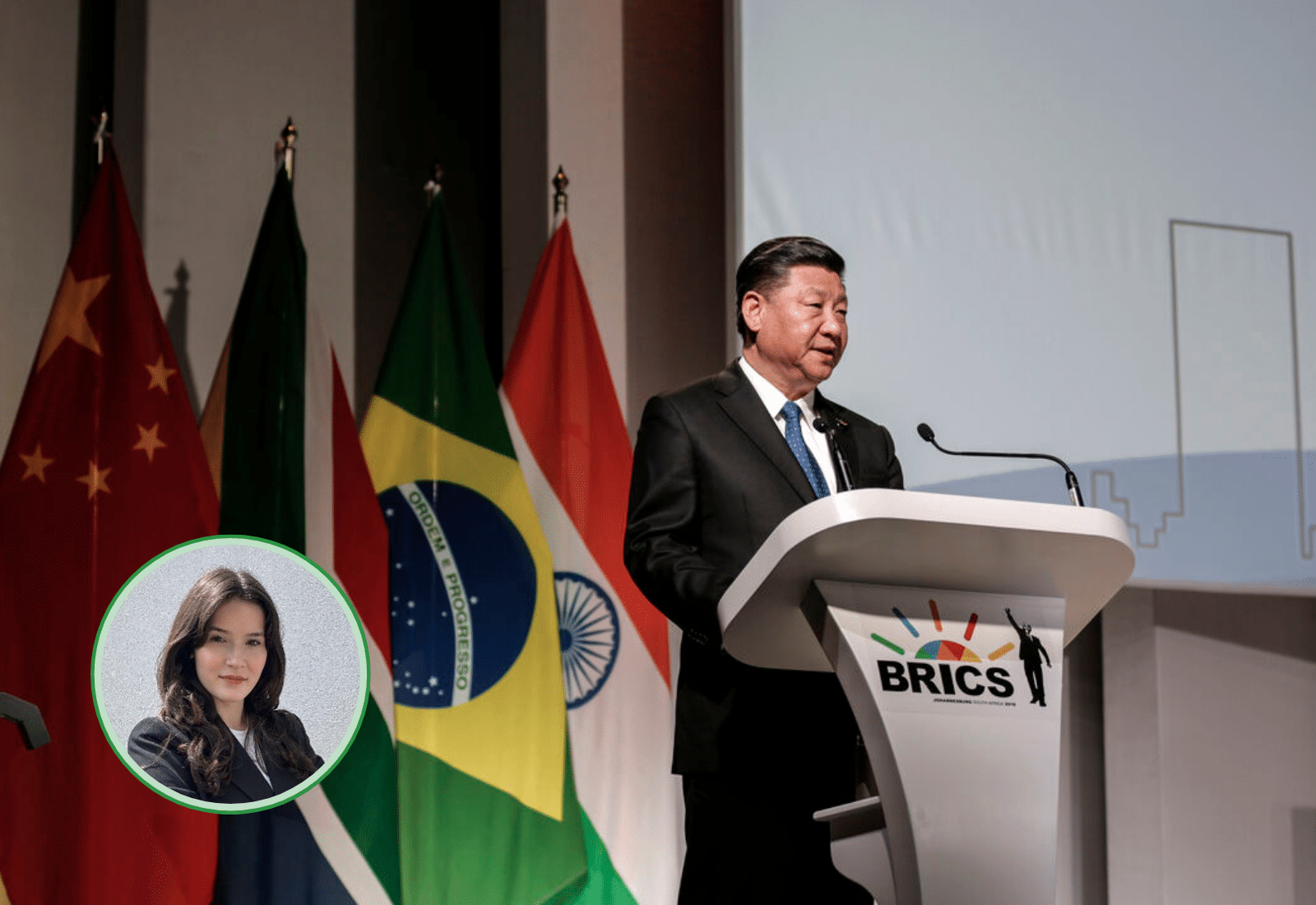
The power transition from the liberal Global North to the increasingly assertive Global South signals a shift from a unipolar to a multipolar international system, where emerging economies have the opportunity to contribute more significantly to shaping the global order. In this context, China plays a pivotal role. Being considered the architect of the BRICS group, Beijing successfully blends both far-left and far-right elements to design a hybrid ideological identity, aligned with its worldview.
3.10.2025
Podcasts
The Unequal Republic and the Egalitarian State: Democracy, Authoritarianism, and the Politics of Redistribution in India and China
In this conversation with Professor Vamsi Vakulabharanam, we explore the relationship between democracy and economic inequality by examining the divergent trajectories of China and India, as detailed in his recently published book, Class and Inequality in China and India, 1950-2010 (Oxford University Press, 2024). Through a comparative lens, Vamsi probes how political regimes—one authoritarian, the other democratic—shaped the economic responses to inequality in each country. While both nations began their postcolonial histories with ambitious visions of development, their political systems produced markedly different outcomes. In India, democratic governance allowed for broad participation but was also shaped by elite consensus. Post-independence reforms, though grounded in democratic ideals, often took a top-down form that prioritized the interests of rural capitalists and dominant castes. This constrained the potential for deep structural transformation, despite the formal [...]
19.05.2025

News
Landing the Paris Climate Agreement – Todd Stern on a Groundbreaking Document and What It Took to Make It Happen
In this conversation at the Review of Democracy, Todd Stern – former United States Special Envoy for Climate Change – explains what made the Paris Climate Agreement such a groundbreaking document and what kind of bargaining and compromises it took to make it happen; discusses the place and role of the US within its broad coalition as well as his extensive engagement with his crucial Chinese partners; and considers major new possibilities to tackle climate change effectively and current obstacles to do so.
16.12.2024

Podcasts
What Stops China from Ruling the World? – Ho-fung Hung on the Problems Plaguing China’s Development Model and Its Limited Influence in the World
In this conversation with the Review of Democracy, Ho-fung Hung shares his eye-opening analysis of the internal contradictions and external limitations plaguing China’s export-led development model and offers novel insights into the difficulties its political leadership is encountering in challenging US hegemony and extending its global sphere of influence. While acknowledging China’s impressive achievements, Hung emphasizes China’s technological dependency and chronic industrial overcapacity, the impact of the rise of protectionism, the hegemony of the US dollar, and China’s lack of confidence in its military capabilities. At the same time, he forecasts the intensification of US-Chinese rivalry in connection with the gradual decoupling of the US and Chinese economies.
12.06.2024

Book Reviews
Liberal Democratic Values. Anu Bradford: Digital Empires.
Anu Bradford’s latest insightful, thought-provoking, and nuanced critical analysis of the leading digital world-wide powers. Going beyond the often-referred battle between China and the US, Bradford includes the EU as a digital empire. Similar to her previous book, ‘The Brussels Effect’, the author argues for the EU’s global influence in regulating markets through significant empirical evidence – a distinguishing trait of this book, making it not only informative but also an absorbing read. Bradford uses the term ‘digital empires’ as a metaphor to encompass the current “leading technology, economic, and regulatory powers, each with the ambition and capability to shape the global digital order toward their interests and values.”
23.01.2024

