history
News
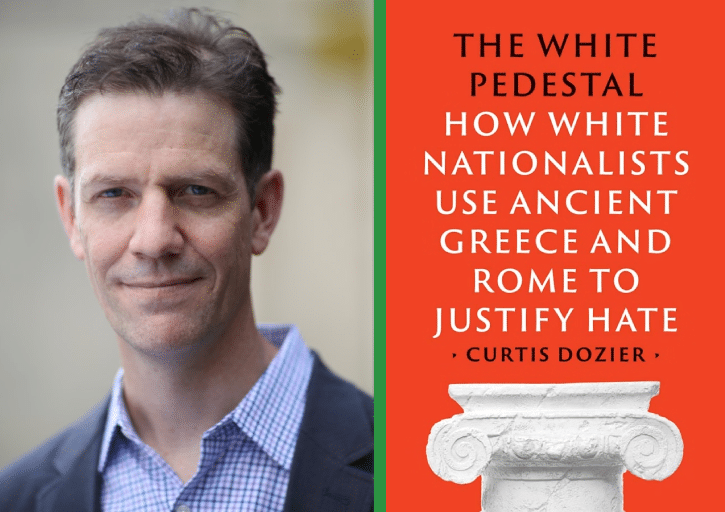
The Ancient World Mobilized for Hate: A Conversation with Curtis Dozier
Ancient Greece and Rome are often celebrated as the foundations of Western civilization, democracy, and political thought. But what happens when these revered historical traditions are mobilized to legitimize exclusionary and authoritarian politics? In this episode of the Review of Democracy podcast, we speak with Curtis Dozier, author of The White Pedestal – How White Nationalists Use Ancient Greece and Rome to Justify Hate (Yale University Press, 2026), about the enduring political power of classical antiquity. Drawing on years of research into extremist appropriations of the ancient world, Dozier explains why white nationalists are so drawn to Greece and Rome, how concepts such as race, hierarchy, decline, and Western civilization are anchored in selective readings of the classical past, and why these interpretations resonate far beyond the political fringes. The conversation explores the surprising continuities between extremist and mainstream narratives about antiquity, the [...]
18.06.2026
Podcasts
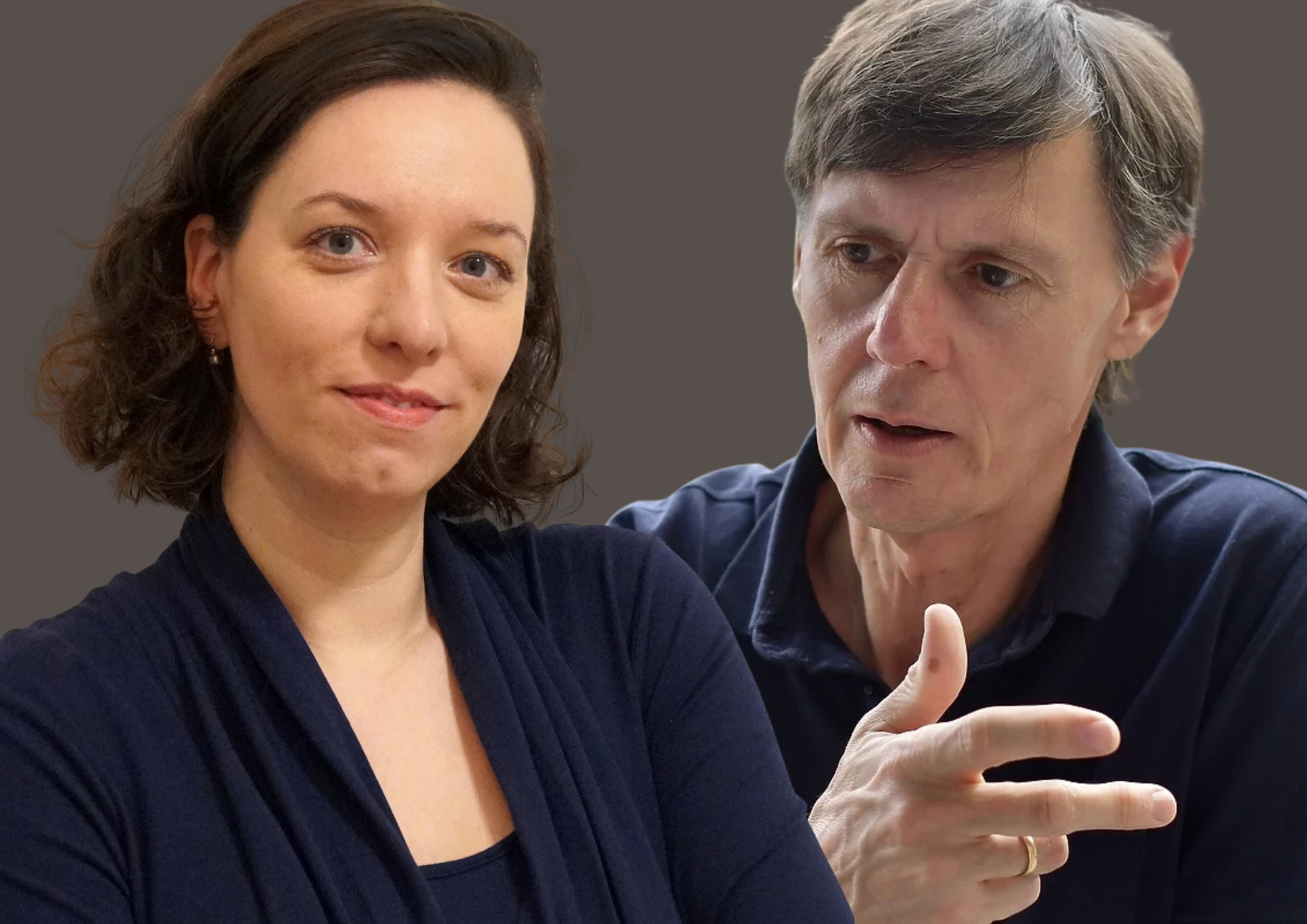
Mixed Families in Post-Conflict Societies- A Discussion with Karolina Lendák-Kabók and Lucija Balikić (Part 1)
Are interethnic marriages bridges or fault lines in post-conflict societies? What happens when the politics of national identity enter the intimacy of home? Who were the main agents to oppose or promote mixed marriages in East-Central Europe? Was it the Church? Was it the legal framework? Were it depending on local culture? Was it determined by class?
18.05.2026

Podcasts
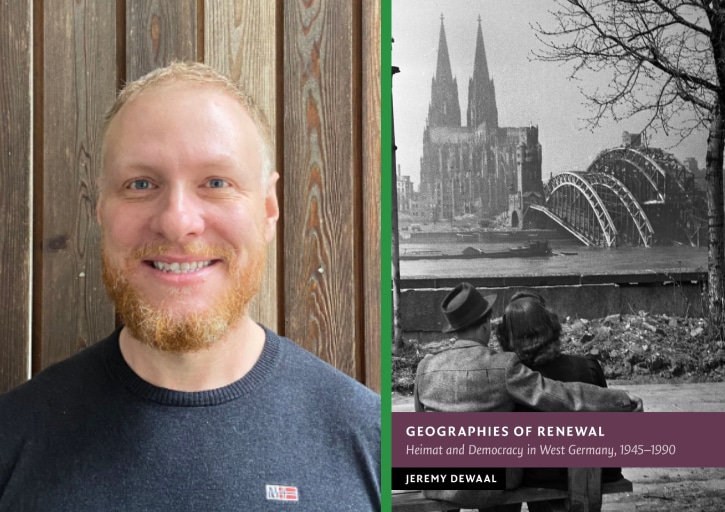
Heimat Revisited: Jeremy DeWaal on Place, Belonging and Post-war Politics in West Germany
What does it mean to feel “at home” in a place, and why does that matter for democracy? In this episode, historian Jeremy DeWaal talks about Heimat, a German word that is famously hard to translate. It is often rendered as “home” or “homeland”, but it also points to a deeper sense of belonging, memory and emotional attachment to specific places.
22.01.2026
Podcasts
The Great War and the Transformation of Central Europe: A Conversation with Tara Zahra and Pieter Judson
The episode examines fears of democratisation and elite decision-making, the management of refugees and mass displacement, and the emergence of new welfare practices and administrative experiments, showing how these processes laid the foundations for the post-1918 order. By foregrounding shared experiences of scarcity, mobilisation, and repression across the Monarchy, the discussion examines what the Empire’s often improvised wartime policies reveal about processes of disintegration as well as unexpected capacities for adaptation.
12.01.2026

Podcasts
The Hungarian Border That Took Years to Draw
Borders are rarely born in conference halls. As the newly edited book The Disputed Austro-Hungarian Border: Agendas, Actors, and Practices in Western Hungary/Burgenland after World War I, published this year by Bergahn Books shows that the borders are created by wars and conflicts and then changed by clerks, soldiers, smugglers and villagers trying to make sense of a new world order. By focusing on one of the seemingly post-1918 quieter frontiers, the line separating Austria from Hungary, the book challenges the narrative that the Treaty of Trianon neatly decided everything with a stroke of the pen.
16.10.2025
Podcasts
Mapping Crisis Across Borders: Balázs Trencsényi on the Interwar Period, Intellectual History, and the Future of Democracy
In our new podcast, we speak with historian Balázs Trencsényi about his new book Intellectuals and the Crisis of Politics in the Interwar Period and Beyond: A Transnational History (OUP, 2025). Trencsényi offers a sweeping re-narration of modern European intellectual history through the lens of “crisis” — not only as an analytical category, but as a powerful tool of political mobilisation.
3.07.2025

Podcasts
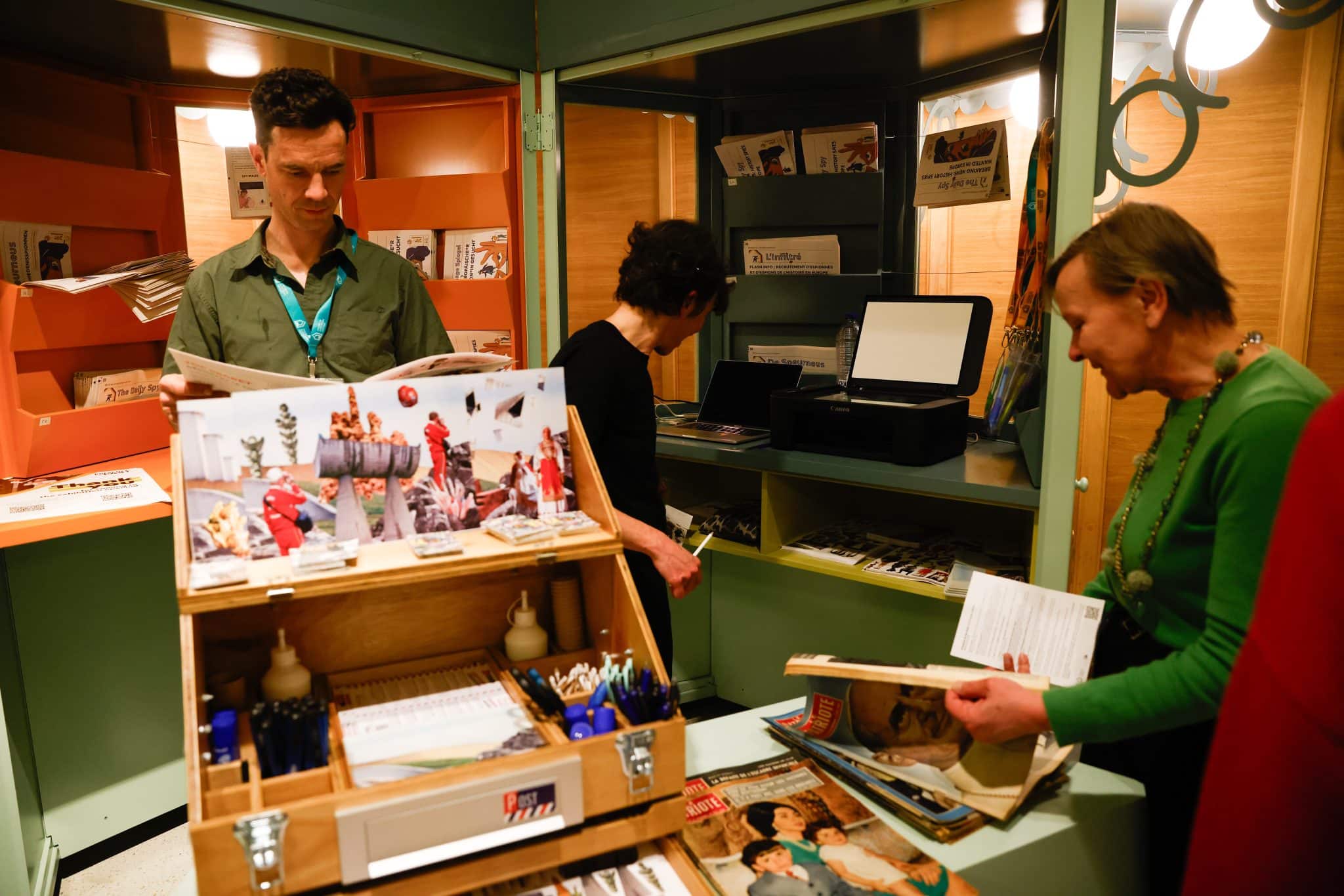
Curating Europe’s Memory: A Conversation with Simina Bădică about the House of European History
In this episode of Open Space(s) series, the Review of Democracy brings to your attention one of Europe’s most ambitious cultural institutions: the House of European History. Founded by the European Parliament in 2017 in Brussels, this unique institution explores Europe’s past from a transnational perspective and provides a platform for debating shared memory. The House of European History curates exhibitions, fosters debates, and research the shared European histories.
30.06.2025
News
Shifting Memories of the Second World War in Times of Global Disorder
Eighty years on, the Second World War is losing its moral primacy as global memory shifts, challenged by postcolonial critiques, geopolitical upheaval, and ideological appropriation, reshape how Europe and the world confront the legacies of totalitarianism and liberal democracy.
15.05.2025

News
The Significance of War Crimes Trials after 1945: A View from East Asia
The Second World War had a transformative effect on the development of international law. It continues to shape its practice and evolution. While the Nuremberg trials are often acknowledged as a watershed moment, however, scholars sometimes neglected the extent to which the post-war trials in East Asia shaped the development of international law and the process of decolonization. By breaking away from a ‘Eurocentric’ focus on the largest conflict of the twentieth century, we can see more clearly the enduring global legacies of the war.
14.05.2025

Podcasts
The Untold Story of Schengen: A Conversation with Isaac Stanley-Becker
In this episode of the RevDem podcast, investigative journalist and historian Isaac Stanley-Becker discusses his revealing new book, Europe Without Borders: A History (Princeton University Press). Drawing on newly accessible archives and in-depth interviews, Stanley-Becker sheds light on the little-known origins of the Schengen Agreement—long celebrated as a cornerstone of European integration and free movement. Yet, as this conversation uncovers, the story behind Schengen is far more complex.
12.05.2025

News
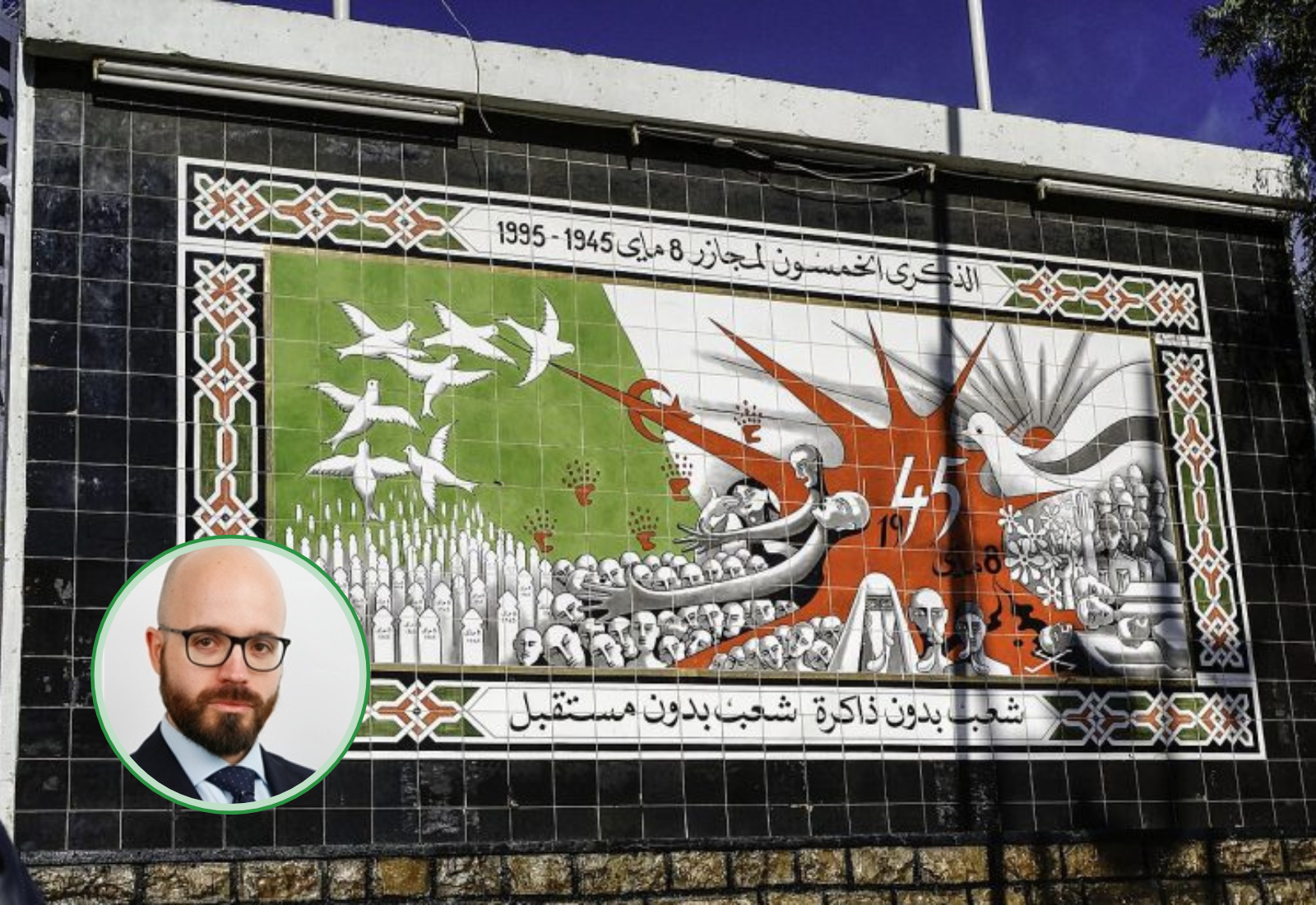
The Many Ends of the Second World War
The end of the Second World War was not a single moment defined by victory and defeat. Rather, it was a pluriform and drawn-out process perpetuated by colonial power politics in the Global South. By Thomas W. Bottelier This article is the third in our series commemorating the 80th anniversary of the end of World War II. It is sometimes said that the Second World War began in the Horn of Africa, in 1935, with Italy’s war of aggression on Ethiopia. It is almost never said that it ended there. And yet, it was the first place in the world where the fighting came to an end. Hostilities in Eritrea, then an Italian colony, ceased when the country was occupied by troops from the British Empire in the spring of 1941. Italian Somaliland, which covered the eastern seaboard of modern Somalia, was taken at the same time. Ethiopia, which the Italians had themselves occupied since 1936, was fully liberated that November, when the remnants of the Forze armate dell’Africa Orientale [...]
9.05.2025
News
The Depoliticization of 1945
For much of the second half of the twentieth century, the Second World War and its aftermath were interlaced with western Europe’s present. The war was understood to have birthed the world that emerged in its wake. This is no longer so. Our present has been uncoupled from its twentieth-century past. The Second World War has consequently lost its explanatory function for making sense of contemporary socio-political realities.
8.05.2025

News
A Clash of Revisionisms
The remembrance of the Second World War has shifted significantly in recent decades – and even more dramatic reinterpretations appear to be underway in our current moment of drastic uncertainty.
7.05.2025
Podcasts
Coalitional History of Democracy During Emergency (1975-77) in India – In Conversation with Kristin Plys
In this conversation with Kristin M. Plys, we delve deeply into the nature and quality of Indian democracy by examining the legacy and impact of its resistance movements. Plys’ recent book, Brewing Resistance (Cambridge University Press, 2020), studies the Indian Coffee House movement—a unique, worker-driven cooperative that flourished in the 1970s. This movement not only symbolized a shared space for political discourse but also became a hub for anti-authoritarian sentiment, especially during the turbulent years of the Emergency (1975-77), when democratic freedoms were severely curtailed by Prime Minister Indira Gandhi's government.
19.11.2024
News
Gregory Claeys on Utopianism and Democracy
In this public lecture, Gregory Claeys – Professor Emeritus of History – reviews the development of the anxious relationship between utopianism and democracy, touching on the fundamentally anti-political aspects of the utopian tradition, and the charge that the eternal search for near unanimity of opinion is fundamentally anti-democratic. The lecture examines the (mis)interpretation of utopia as "perfection", and the optimal role played by consent in utopian relationships. Finally, it asks whether we can achieve an environmental consensus in time to avert the catastrophic destruction of the planet, and what we can do in the absence of such a consensus.
21.07.2023

Nested Stories of Persecution: Ari Joskowicz Discusses the Asymmetrical Entanglements of Jews and Roma in History and Memory
In this conversation with RevDem editor Ferenc Laczó, Ari Joskowicz – author of the new book Rain of Ash: Roma, Jews, and the Holocaust – discusses the ways Jewish and Romani histories have been entangled and what motivated him to write a relational history of the two groups; illuminates why he considers it essential to explore the conditions of knowledge production and how to try to avoid reproducing injustices; shows what it has implied in concrete setting that the stories of persecution of one group of people have been nested within those of another; and reflects on what has truly changed in memory culture and what new dialogues could be pursued in the future.
5.06.2023

The Curse of Russian Imperialism: Martin Schulze Wessel on Imperial Optics, False Dichotomies, and the Need to Reconsider East European History
In this conversation with RevDem editor Ferenc Laczó, Martin Schulze Wessel – author of the new book Der Fluch des Imperiums. Die Ukraine, Polen und der Irrweg in der Russischen Geschichte (Imperial Curse. Ukraine, Poland, and the False Paths in Russian History) – traces the ideas that have shaped Russian imperialism and reflects on their devastating contemporary force; explores key moments in the parallel and entangled histories of Poland and Ukraine and how those histories have been shaped by Russian imperialism across the centuries; dissects what he calls Germany’s “imperialism of a second order” and emphasizes the urgent need to revise Russia-centric interpretations of East European history.
20.05.2023

Caroline Mezger: Youth and the Politicization of Germanness in Interwar Yugoslavia
A conversation with Caroline Mezger about her book, "Forging Germans: Youth, Nation and the National Socialist Mobilization of Ethnic Germans in Yugoslavia (1918-1944)."
18.03.2022

Crisis as a trigger for new ways of thinking about politics
A conversation with Cesare Cuttica, László Kontler, and Clara Maier concerning their recently released volume, "Crisis and Renewal in the History of European Political Thought."
16.03.2022

Marius Turda: The idea of race across centuries and our current moment of reckoning
Marius Turda in conversation with Ferenc Laczo about A Cultural History of Race.
16.12.2021

