India
News
From Guidelines to Law: What India’s AI Act Should Look Like
India’s government now says the country may need a dedicated law on artificial intelligence. Like much of the Global South, India is anxious to get ahead in AI, and that anxiety is no longer only about acquiring the technology. It is about building the legal and regulatory infrastructure to govern it. In this op-ed, Jeet Pattanaik argues that what goes into that law matters more than whether it passes. India should build on its own strengths of public digital infrastructure, borrow from the EU AI Act’s risk-based design, learn from Europe’s stumbles, and write a law that holds the state to the same standard as business.
30.09.2026
News
Democracy’s Selective Stage: The Limited Audiences of Political Theater in India
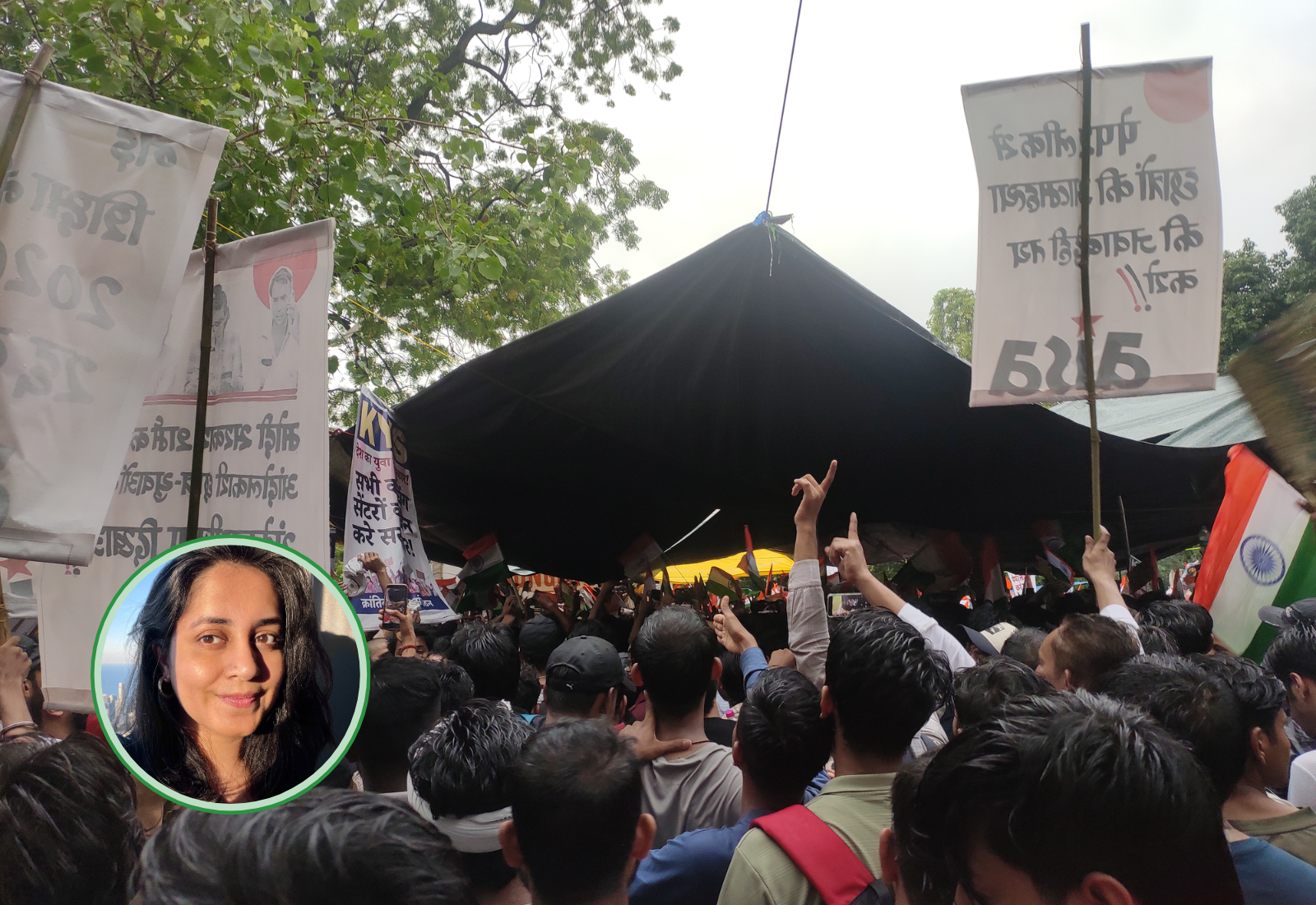
What happens when social movements resonate across radically different contexts? Reading the Cockroach Janta Party Movement (July 2026) alongside two other social movements, this article asks who gets to recognize these resonances and how the socio-material contexts that shape performance determine what counts as meaningful.
9.09.2026
News
The Battle for the Past: Populism and Memory Politics in Contemporary India
Since 2014, the BJP has used its institutional influence to reinterpret history through a Hindutva lens, portraying India as an exclusive Hindu civilization. This effort goes beyond scholarship, reshaping how history is taught, remembered, and practiced, with narratives of Hindu pride framed as native resistance against foreign Muslim oppression and the BJP as custodian of this indigenous legacy. Supporters see these revisions as correcting omissions by earlier historians who, they argue, downplayed Hindu victories or overlooked figures like Maharana Pratap. For them, heroic retellings reclaim dignity and offer empowerment in a time of economic insecurity and social fragmentation.
26.09.2025

Podcasts
Startup Democracy: Meritocracy and Gender in Bangalore, A Conversation with Hemangini Gupta
Startups have become one of the defining features of the 21st-century economy, celebrated as engines of innovation, meritocracy, and social mobility. Entrepreneurs—from Silicon Valley to Bangalore—are increasingly influential in shaping not just markets but also political discourse. Governments around the world are investing heavily in building startup ecosystems, often presenting them as neutral, technocratic spaces of economic growth and opportunity.
24.06.2025
Podcasts
Foreign Hands, Local Democracy: Toxic Legacies of Cold War in India
In this conversation with Paul McGarr, we discuss his latest book, Spying in South Asia (Cambridge, 2024). From the influence of espionage on international relations to the role of conspiracy and rumor in shaping domestic politics, McGarr highlights the complexities of intelligence dynamics between the West and India. He reveals how during the Cold War, democratic aspirations in the Global South were often dismissed by American and British intelligence and foreign policy establishments. Challenging the widely held belief that the Western powers championed democracy in the region, McGarr argues that Cold War geostrategic priorities frequently undermined democratic movements in South Asia. Yet, despite these external pressures, local actors and political institutions in India played a crucial role in shaping intelligence outcomes, resisting imposed narratives, and asserting their own democratic agency.
17.03.2025

Podcasts
Radical Democratic Thought in India: Rethinking Representation with Tejas Parasher
In this episode of the Review of Democracy Podcast, host Alexandra Medzibrodszky talks to Tejas Parasher, Assistant Professor of Political Theory at UCLA, to explore the rich and often overlooked landscape of radical democratic thought in modern India. Drawing from his award-winning book, Radical Democracy in Modern Indian Political Thought, Parasher discusses the ideas of thinkers and activists from the 1910s to the 1970s who challenged the colonial legacies of liberal, representative democracy. These figures envisioned participatory, federalist models of governance that resisted elitism and corruption, offering bold alternatives to the political status quo.
24.02.2025
Podcasts
This Land We Call Home: A History of “Criminal Tribes” in Modern India – An Interview With Nusrat F. Jafri
In this interview with Nusrat F. Jafri, we explore her much-acclaimed biographical fiction, This Land We Call Home. Drawing on her personal family history and extensive ethnographic research across northern and western India, Jafri raises a profound question for all democracies: How can democratic systems address historical prejudices and work toward creating a truly inclusive society?
29.01.2025

Podcasts
Coalitional History of Democracy During Emergency (1975-77) in India – In Conversation with Kristin Plys
In this conversation with Kristin M. Plys, we delve deeply into the nature and quality of Indian democracy by examining the legacy and impact of its resistance movements. Plys’ recent book, Brewing Resistance (Cambridge University Press, 2020), studies the Indian Coffee House movement—a unique, worker-driven cooperative that flourished in the 1970s. This movement not only symbolized a shared space for political discourse but also became a hub for anti-authoritarian sentiment, especially during the turbulent years of the Emergency (1975-77), when democratic freedoms were severely curtailed by Prime Minister Indira Gandhi's government.
19.11.2024

Podcasts
India’s Basic Structure Doctrine: Past, Present, and Future: In Conversation with Moiz Tundawala and Anuj Bhuwania
In this episode, assistant editor Rohit Sarma discusses the “basic structure” doctrine of the Indian Constitution on the occasion of its 50th anniversary with Moiz Tundawala and Anuj Bhuwania, Professors of Constitutional Law at the Jindal Global Law School in India.
12.07.2023

In Conversation with Tarunabh Khaitan: Checking the Ascendant Executive in India
India, like many countries, faces democratic backsliding. Our editor Gaurav Mukherjee talks to Tarunabh Khaitan about his recent work on the phenomenon of democratic backsliding in India, the rise of an unchecked executive, and the role that courts and opposition parties play in protecting democracy.
29.03.2022

