#populism
Podcasts
When Populism Can be Good: A Conversation with Pepper Culpepper
In this episode of our podcast series produced in collaboration with the Journal of Democracy, we discuss with Pepper Culpepper the article When Populism Can be Good, jointly written by Pepper Culpepper and Taeku Lee. This discussion reframes populism as a differentiated and politically consequential phenomenon rather than a uniformly anti-democratic force.
27.04.2026

News
Populism vs. the Planet: How COP30 Fell Apart
As delegates gathered in Belém, Brazil, from November 10 to 21 for the 30th Conference of the Parties (COP30), expectations ran high. Marking a decade since the Paris Agreement, the summit raised hopes for breakthroughs in climate-adaptation finance, green energy transitions, and stronger emissions pledges. Instead, it exposed how populism has reshaped global climate governance, replacing cooperation with confrontation, facts with opinions, and urgency with delay.
2.12.2025

News
The Battle for the Past: Populism and Memory Politics in Contemporary India
Since 2014, the BJP has used its institutional influence to reinterpret history through a Hindutva lens, portraying India as an exclusive Hindu civilization. This effort goes beyond scholarship, reshaping how history is taught, remembered, and practiced, with narratives of Hindu pride framed as native resistance against foreign Muslim oppression and the BJP as custodian of this indigenous legacy. Supporters see these revisions as correcting omissions by earlier historians who, they argue, downplayed Hindu victories or overlooked figures like Maharana Pratap. For them, heroic retellings reclaim dignity and offer empowerment in a time of economic insecurity and social fragmentation.
26.09.2025

News
Brazil’s Democratic Resilience: How Institutions Withstood Bolsonaro’s Assault
Populist leaders are often framed as menaces to democracy—and for good reason. Brazil under Jair Bolsonaro quickly rose to the top of everyone’s backsliding list, a veritable cautionary tale in the age of eroding norms. Yet Brazilian democracy endured. The story of how it survived offers valuable lessons for democracies everywhere.
23.05.2025

News
How Bolsonaro’s Gendered Populist Performance Polarized Brazil
In Brazil, Jair Bolsonaro leveraged gender performance to craft and sustain an outsider persona, despite his long-standing tenure in parliament and his role as head of the executive. This performative act, however, had dire consequences. It intensified political polarization and turned intimate spheres shaped by gender relations into battlegrounds of ideological conflict, especially during the 2022 electoral campaign.
15.04.2025

Please Don’t Make Populism Great Again! – Reflections in the Wake of the U.S. Elections
Trump’s re-election threatens a return to oversaturated and simplistic discussions on populism. Emphasizing nuanced, innovative, and globally informed research over reactionary trends is essential to fully grasp the evolved nature of this intricate concept amid contemporary societal and political complexities, thereby meaningfully strengthening democratic practices in the long term.
7.11.2024

Podcasts
Populism in Power – A Conversation with Giorgos Venizelos
There's indeed a lot of confusion about populism, even though there's so much literature about it. Without going too deep in this heated debate, I should say that scholars agree that populism is organised around two notions: people- centrism and anti-elitism. Of course, there are very different approaches to these two operational criteria related to the people and the elite. For me, populist communication is not just about rhetoric, but also bodily gestures, accents and aesthetics that resemble, represent and enact ‘the people.’ When we talk about populism, we also talk about a certain logic, a certain style or performance. And it can also be said that populism operates with a political cleavage that is distinct from the typical left-right political cleavage – it's a cleavage between ‘the populists’ or ‘the people’ at the bottom and ‘the elite’ or ‘the anti-populists’ at the top. There is non-populist politics as well, of course, politics or discourses that do not have these [...]
14.08.2024

Emergency in Slovakia
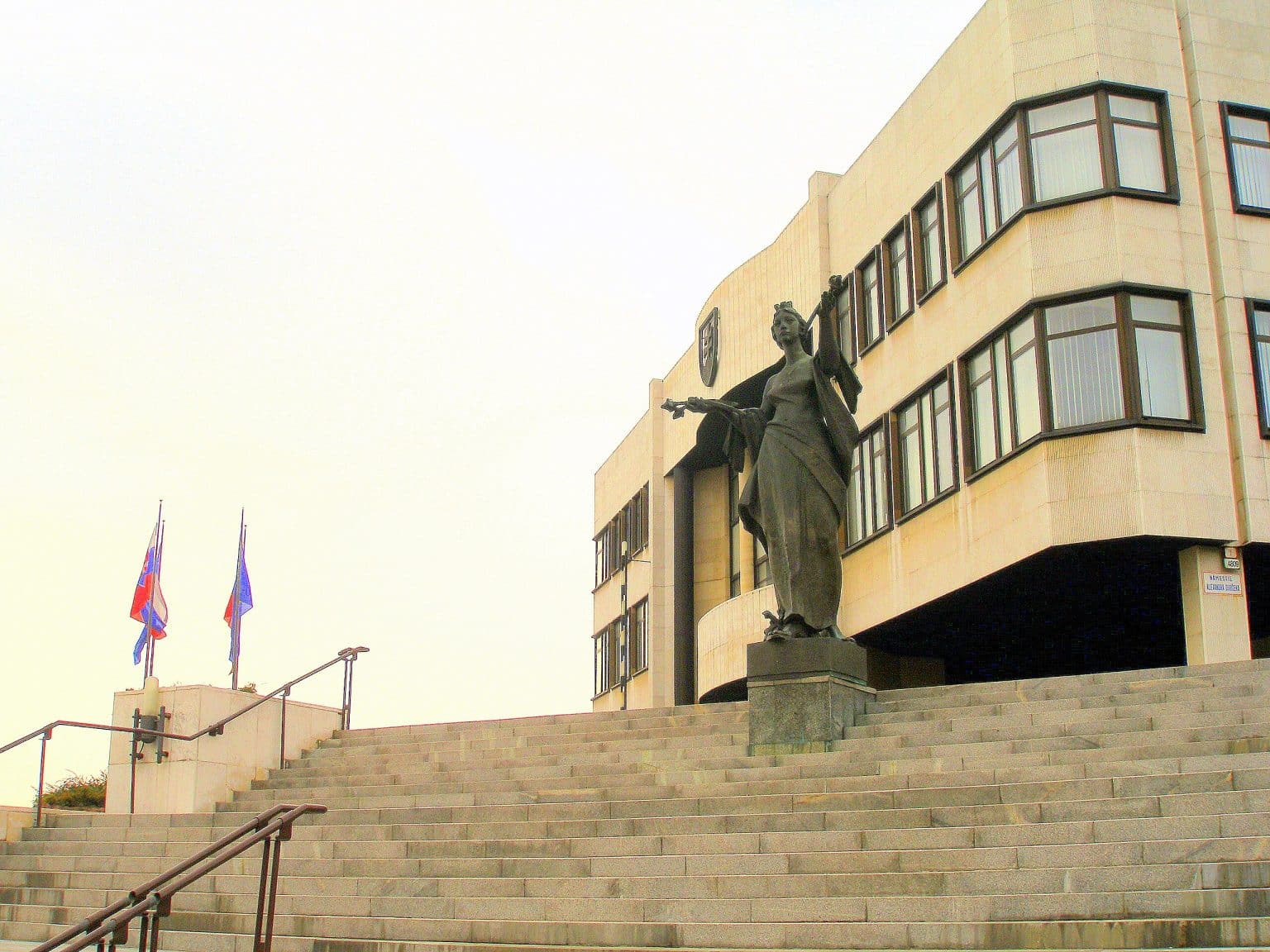
The climate of hostility in which the assassination attempt on Robert Fico took place has been a feature of Slovak politics for the past two decades. And Fico has played a decisive role in creating it. How the situation in Slovakia came about – and whether it will continue to deteriorate.
20.06.2024
Debunking Myths About Populism in Power
'Populism' and 'power' have an uneasy relationship. Key texts reveal three assumptions about populism's 'fate' in power: first, it becomes mainstream; second, it turns authoritarian; third, it fails / succeeds to implement policies. Giorgos Venizelos argues we must look beyond populism's content or outcomes and turn instead to populism's function of constructing collective identities through discursive / affective performativity.
3.06.2024

Podcasts
Democracy, Populism, and the Myth of Rational Politics – In Conversation with Yannis Stavrakakis
In this conversation with Lorena Drakula, Yannis Stavrakakis – author of the new Research Handbook on Populism and the book Populist Discourse. Recasting Populism Research – discusses the past and future of populism research; analyzes the outdated stereotypes that shape the political role of the ‘populist’ label; and argues for returning passions to the very core of democratic representation. Yannis Stavrakakis is a Professor of Political Science at the Aristotle University of Thessaloniki and director of the Laboratory for the Study of Democracy. He was one of the founding co-conveners of the Populism Specialist Group of the Political Studies Association (UK) and also directed the POPULISMUS Observatory.
31.05.2024

Interviews
Democracy cannot really function if it is not liberal. Interview with Cas Mudde
Among the challengers to liberal democracy in Europe, we can count populists, autocrats, and the increasingly often mentioned illiberals. But who are they and what is illiberalism? How does it relate to populism? Can illiberals be democrats at all? What are the policy implications of having illiberal politicians, especially of the radical right, in power in the EU? This interview explores these questions with Professor Cas Mudde. It covers various issues at the intersection of academic and policy research on populism, illiberalism, democracy, and the radical right. It discusses whether the growing body of literature on illiberalism addresses something that is fundamentally new on the global political agenda, how this literature relates to academic research on populism, and if illiberalism and democracy are reconcilable against the backdrop of a global trend of autocratization, which many scholars of democracy have noted, and which is often attributed to illiberal and populist [...]
8.12.2023

Book Reviews
The Swarm That Didn’t Sting the Bourgeoisie–Arthur Borriello and Anton Jäger Interpret the Populist Left
In The Populist Moment, Arthur Borriello and Anton Jäger analyze a political cycle, “the long 2010s,” when left populists – perhaps most notably Syriza in Greece, Podemos in Spain, Jean-Luc Mélenchon and his various formations in France, Corbynism in the UK, and Sanders’ movement in the US – made notable attempts to rethink and revive the left by adopting a populist identity. The core agendas of this concise, dense, and engaging book are to investigate the specific origins and broader causes of this “populist moment”; to describe and explain the ebb and flow of its major representatives; to assess the major strengths and weaknesses of left populists in more general terms; and to conjecture about where such attempts to revive the left might be headed next. Borriello and Jäger manage to deliver on this ambitious agenda by offering numerous insights and developing a coherent overall interpretation – even though this comes at the price of somewhat narrow empirical foci and concerns.
30.11.2023

