populism
Book Reviews
Beyond Populism: Two ways of Rethinking the Contemporary Right
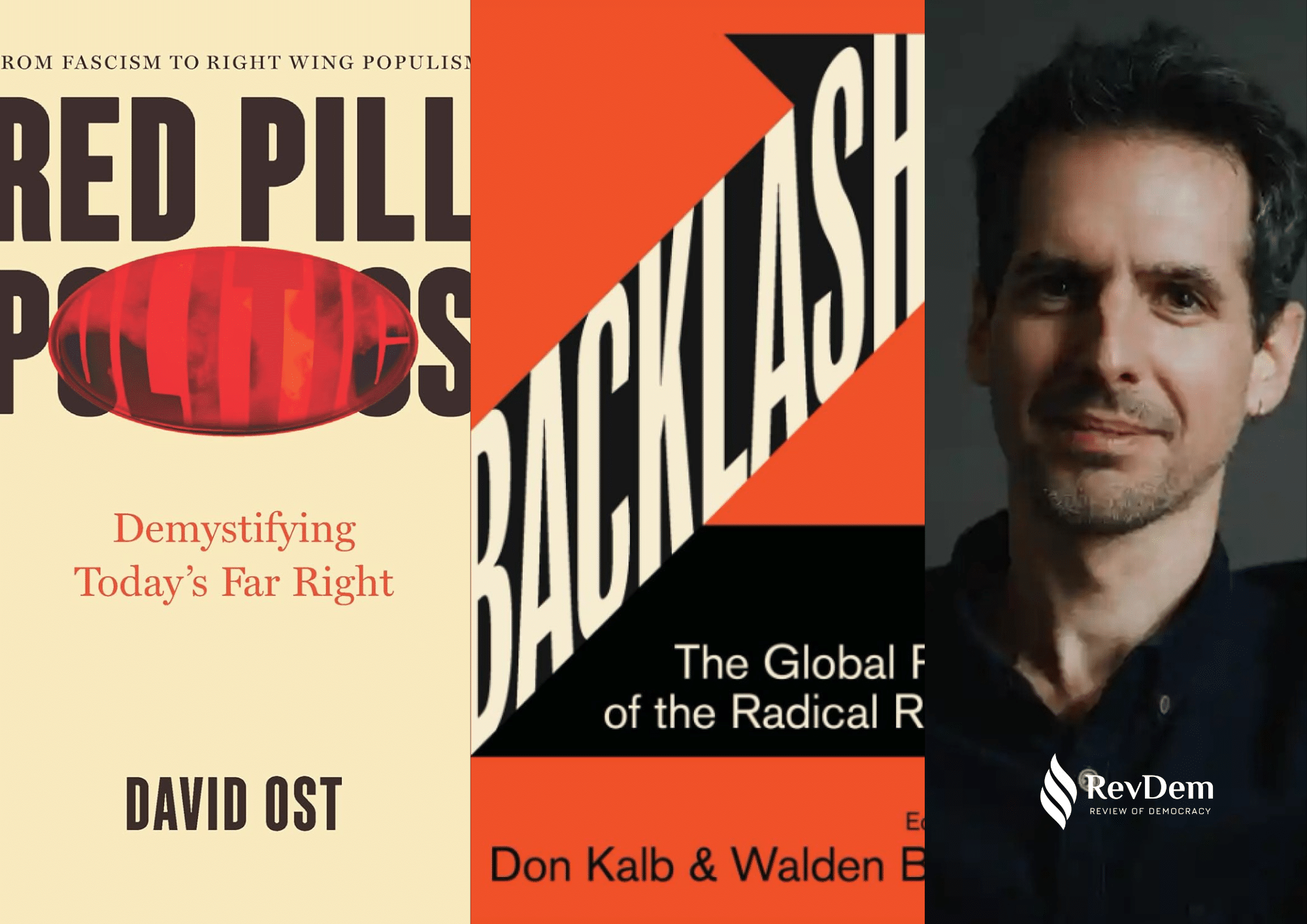
Recent scholarship on the contemporary right has generated an abundant vocabulary: populism, authoritarianism, illiberalism, democratic backsliding. These terms capture real features, but often only one dimension at a time. “Populism” can flatten ideology into style or anti-elite performance; “authoritarianism” and “backsliding” can describe institutional effects without saying much about the wider social energies and historical processes that sustain them. What often drops out is the question of the right’s deeper political form, its social bases, and its conditions of possibility.
12.05.2026
Podcasts
Why Would Elected Leaders Hollow Out Their States?
In this episode of our podcast series produced in collaboration with the Journal of Democracy, Ferenc Laczó speaks with Andrés Mejía Acosta and Javier Pérez Sandoval about their new article, “Why Populists Hollow Out Their States.” They discuss how, why, and when elected leaders seek to undermine the state; what libertarians and leftists share when it comes to practices of state erosion and where they might differ.
6.04.2026

News
The Populist Paradox: Economic Pain, Enduring Power
Populism is no longer a fringe phenomenon. Across Western democracies, from Donald Trump in the US to Viktor Orbán in Hungary and now even in Austria, populist leaders are gaining traction and wielding considerable power. What are the economic and social consequences of this political shift?
24.03.2026

News
From the People vs. the Elite to Everyone as the Enemy: The Strange Afterlife of Donald Trump’s Populism
Donald Trump’s second presidential term exposes how the structural logic of populism breaks down under its own expansion. As adversaries proliferate and the claim to embody a unified “people” weakens, antagonism survives but representation frays. What once relied on a clear, if contestable, moral divide now operates through thinning legitimacy and the staging of permanent confrontation.
27.02.2026

News
Manufacturing Moral Panics? NIKI, Anti-Genderism, and the Politics of LGBTQ+ Exclusion in Greece
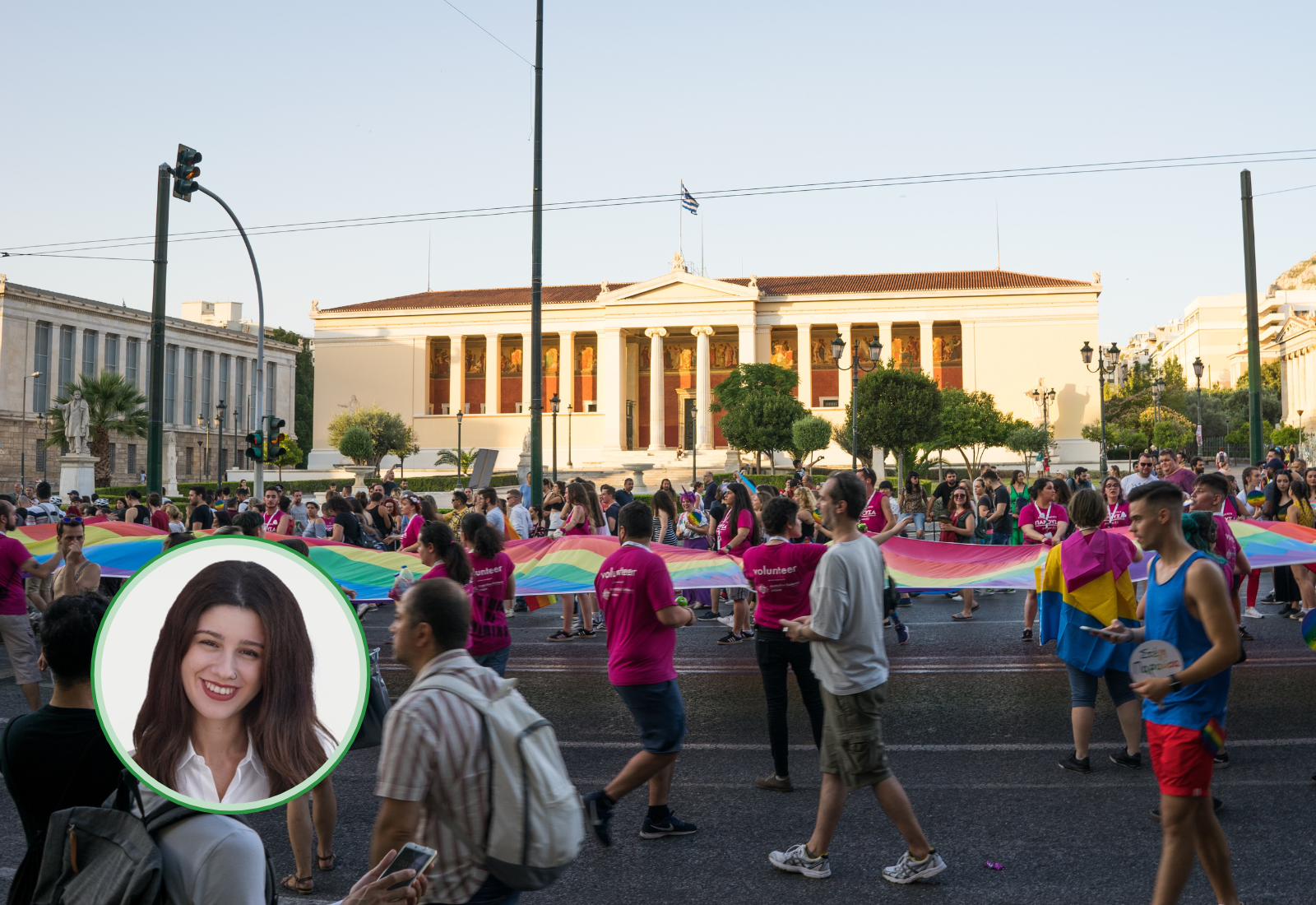
With just 4 percent of the vote, Greece’s far-right party NIKI succeeded in reshaping the national debate on LGBTQ+ rights. By mobilizing Orthodox Christianity, the party reframed same-sex marriage and adoption as existential threats to the nation, family, and faith. Through moral panic, religious symbolism, and strategic populist framing, a marginal political actor launched a powerful cultural counteroffensive, revealing how influence in populist politics often far exceeds electoral weight in moments of social change.
13.01.2026
Podcasts
Mapping Crisis Across Borders: Balázs Trencsényi on the Interwar Period, Intellectual History, and the Future of Democracy
In our new podcast, we speak with historian Balázs Trencsényi about his new book Intellectuals and the Crisis of Politics in the Interwar Period and Beyond: A Transnational History (OUP, 2025). Trencsényi offers a sweeping re-narration of modern European intellectual history through the lens of “crisis” — not only as an analytical category, but as a powerful tool of political mobilisation.
3.07.2025

News
The Moral Populist Legacy of Laudato Si’
Pope Francis’s Laudato Si’ redefined sustainability through a populist moral logic, casting it as a conflict between the people and indifferent elites. In doing so, he opened the public debate for populist leaders to reinterpret and challenge the concept using similar articulation.
19.06.2025

Book Reviews
Theoretical Pluralism Meets Western Myopia: The Age of “Global” Populism
The re-election of Donald Trump in 2024 provides a clear answer to the question raised in Still the Age of Populism? Not only does the age of populism persist, but its influence on global politics appears stronger than ever. From Washington to Warsaw and Brasília to Budapest, populist leaders continue to reshape political landscapes. This edited volume takes up the challenge of understanding populism’s enduring appeal, bringing together an impressive array of scholars to advance our understanding of this complex phenomenon.
25.04.2025

News
Five Books on Populism in 2024
Here are five book recommendations on populism published in 2024, which I believe merit widespread attention and discussion.
9.01.2025

Two Paths to Power – What Unites Giorgia Meloni and Viktor Orbán? What Separates Them?
Meloni and Orbán are often treated as closely comparable political actors. However, their trajectories are widely divergent, and this is reflected in their respective understanding of both domestic political action and international alliances.
2.08.2024

News
Some Like it Dark – In Conversation with Alessandro Nai
Who is a dark politician? How do dark politicians perform in the elections and in handling crises? What does being “dark” mean for female politicians? Why some people like it dark? In this conversation with Kasia Krzyżanowska, Alessandro Nai discusses his newest book “Dark Politics. The Personality of Politicians and the Future of Democracy,” co-authored with Jürgen Maier.
22.03.2024

News
Again, What Is Populism?
Am I kidding? We still do not know what populism is? We do not know what we are talking about when we talk about populism? We are ignorant about the topic of an entire subdiscipline of political science? After tons of publications, various handbooks? With entire research centers, networks and an academic journal dedicated to populism studies? Well, not quite.
1.02.2024

News
Black Knight and Pied Piper. Silvio Berlusconi: Populist Pioneer or Symptom of Italy’s Crisis?
In this op-ed, Stefano Bottoni discusses Silvio Berlusconi's political legacy in Italy.
27.06.2023

Clara Mattei: Why is austerity so persistent in spite of its incapacity to achieve economic growth and balanced budgets?
In this interview with RevDem assistant editor Giancarlo Grignaschi, Clara Mattei – Assistant Professor in the Economics Department of The New School for Social Research – talks about her new book "The Capital Order: How Economists Invented Austerity and Paved the Way to Fascism" (University of Chicago Press, 2022). The manuscript explores the historical origins of austerity and its intellectual underpinnings in interwar Britain and Italy. During this interview, the author presents the main arguments of the book, the comparison between the two countries, the role of politics and the decline in electoral participation, the relationship between austerity and populism, and the recent problem of rising inflation.
27.04.2023

News
“A Pandemic of Populists”: RevDem online book discussion
On 28 March the Review of Democracy hosted an online debate on "A Pandemic of Populists" (CUP, 2022) by Wojciech Sadurski (University of Sydney). Hosted by CEU Democracy Institute Workgroup Lead Researcher Dimitry Kochenov, the debate brought together perspectives from Barbara Grabowska-Moroz (CEU), Zuzana Vikarská (Masaryk University), and Thiago Amparo (FGV Sao Paulo Law School).
14.04.2023

The Greatest Hits — Populist Edition. In conversation with Johannes Voelz
In this conversation with Kasia Krzyżanowska, Johannes Voelz discusses his theory of the aesthetics of populism, explains how Pierre Bourdieu and Norbert Elias can help us understand contemporary populism, elaborates on the concept of a (Trump) rally, talks about the culture of a dichotomized world, and shares his insights on the role of culture in helping to ease the deep political conflicts.
20.03.2023

Book Reviews
A Crafted Gem: Giuseppe Martinico reviews ‘Anti-Constitutional Populism’
A review by Giuseppe Martinico of a book Anti-Constitutional Populism edited by M, Krygier, A. Czarnota, W. Sadurski (Cambridge University Press 2022)
6.09.2022

Book review: Giuseppe Martinico, Filtering Populist Claims to Fight Populism: The Italian Case in Comparative Perspective (CUP 2021)
Julian Scholtes, a lecturer in EU and Public Law at Newcastle University, reviews "Filtering Populist Claims to Fight Populism: The Italian Case in Comparative Perspective" by Giuseppe Martinico, "a wonderfully written in-depth analysis of the constitutional dimensions of populism in Italy."
12.04.2022

Historians and Populism: Regional Perspectives and Entanglements
In light of the recent solidifying of what could be named as ‘populist international’, we are opening a conversation on one of the first areas and people that were targeted: history and historians. Populist regimes and their supporters feed themselves on historical myths, distortions and subversion of the public debate on historical themes.
5.04.2022

‘In the Name of the Family’: Conference Report on the Budapest Demographic Summit
The authors summarize and contextualize the content of the summit to argue that the conference not only provided an opportunity for its participants to address the ‘demographic crisis’ in Europe and the ‘family politics of conservative’ governments,’ but also amounted to an attempt to develop a transnational narrative for such self-declared conservatives that could unite political and ideological actors on various continents.
24.11.2021

How populists change parliaments
In their op-ed, Aleksandra Maatsch and Eric Miklin argue populist parties are both willing and able to weaken or even disempower representative institutions.
9.11.2021

Krygier: Institutionalizing and Deinstitutionalizing the Rule of Law
Martin Krygier on how to understand the rule of law crisis from a teleological perspective.
22.09.2021

Populism and Antipopulism: Beyond the Post-1989 Paradigm
Petr Agha, a postdoctoral research fellow at the University of Copenhagen in the iCourts Centre of Excellence for International Courts of the University of Copenhagen, discusses the clash between populism and antipopulism, and the implications for Europe, in conversation with Oliver Garner.
8.06.2021

