South Asia
News
From Guidelines to Law: What India’s AI Act Should Look Like
India’s government now says the country may need a dedicated law on artificial intelligence. Like much of the Global South, India is anxious to get ahead in AI, and that anxiety is no longer only about acquiring the technology. It is about building the legal and regulatory infrastructure to govern it. In this op-ed, Jeet Pattanaik argues that what goes into that law matters more than whether it passes. India should build on its own strengths of public digital infrastructure, borrow from the EU AI Act’s risk-based design, learn from Europe’s stumbles, and write a law that holds the state to the same standard as business.
30.09.2026

News
Beyond Ballots: Political Representation and the Rise of Street Politics in South Asia
South Asia has witnessed numerous large-scale protests in recent years. From Sri Lanka and Bangladesh to Nepal and India, younger generations, in particular, have taken to the streets to voice frustration with their respective governments. In his op-ed, Suhail Farooq Khan identifies common patterns in both the triggers and the course of these protests. Young South Asians are demonstrating for substantial representation in political systems offering them prospects for the future.
26.08.2026

Interviews
Envisioning Stability: Peace, Gender, and Climate in Nepal
In an insightful conversation with our Assistant Editor Vatsala Tyagi, Dr. Prakash Bhattarai, Executive Director of the Centre for Social Change (CSC), Kathmandu and a leading researcher in peace and conflict studies, shared his perspectives on sustaining peace, addressing migration, and tackling climate change in Nepal and South Asia.
1.07.2025

News
The Continuous History of Disruptions in Lahore: A Conversation with Manan Ahmed Asif
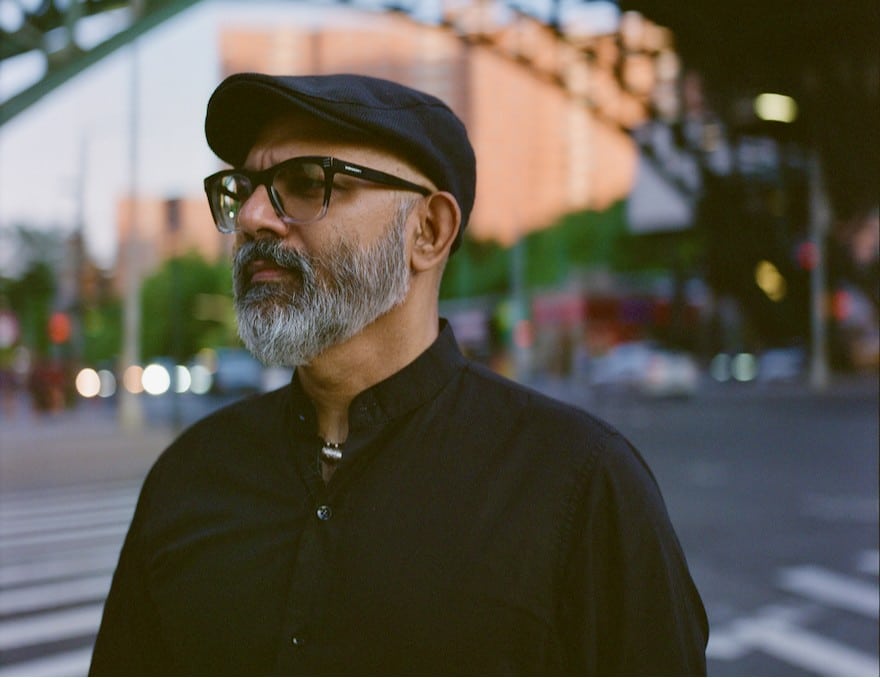
In this discussion with Manan Ahmed, we consider the political history of South Asia from the perspective of one of its most vibrant and famed cities, Lahore. Drawing from his latest book, The Disrupted City: Walking the Pathways of Memory and History in Lahore (The New Press, 2024), we consider the various episodic and modular histories of cities in the Global South, their role in forming new kinds of tactile consciousness towards politics, and their presence in colonial and postcolonial political imagination. Enchanting yet tragic, monumental yet fragmented, Lahore—as depicted by Ahmed—embodies a dual legacy. It bears the scars of the 1947 partition of South Asia into India and Pakistan while also reflecting its own vibrant, if imperfect, history of religious and cultural cosmopolitanism—a legacy sacrificed to the nationalizing imperatives of what Ahmed calls “Prophetic Pakistan.”
26.02.2025