Special Dossiers
Special Dossiers
Quo Vadis, Deutschland? – Political Realignment
For decades, post-war German politics has rested on a shared commitment to keeping extremist parties at the margins. The principle of the cordon sanitaire — a firewall between democratic and anti-democratic forces — was more than a procedural rule; it became a moral and institutional cornerstone of liberal democracy in Germany. But what happens when this line begins to blur? We asked our contributors: How likely is the cordon sanitaire to collapse in the next parliament? And what unconventional forms of cooperation or tactical maneuvering might emerge across the political spectrum in the upcoming legislative cycle?
21.03.2025

Special Dossiers
Quo Vadis, Deutschland? – The Future of the Green Agenda
This mini-series brings together leading scholars working in and on Germany to offer their insights into the key questions arising from this pivotal moment of transition. Through a multi-angled, interdisciplinary discussion, it examines the political, economic, and social forces driving change and shaping the country’s and the broader region’s future. In this third edition, our contributors examine the pressures weighing on Germany’s ecological transformation.
18.03.2025

Special Dossiers
Quo Vadis, Deutschland? – The Future of Multiculturalism
This mini-series brings together leading scholars working in and on Germany to offer their insights into the key questions arising from this pivotal moment of transition. Through a multi-angled, interdisciplinary discussion, it examines the political, economic, and social forces driving change and shaping the country’s and the broader region’s future. In this second edition, our contributors examine the shifting dynamics of integration and diversity in Germany.
14.03.2025

Special Dossiers
Quo Vadis, Deutschland? – The Future of the Socio-Economic Model
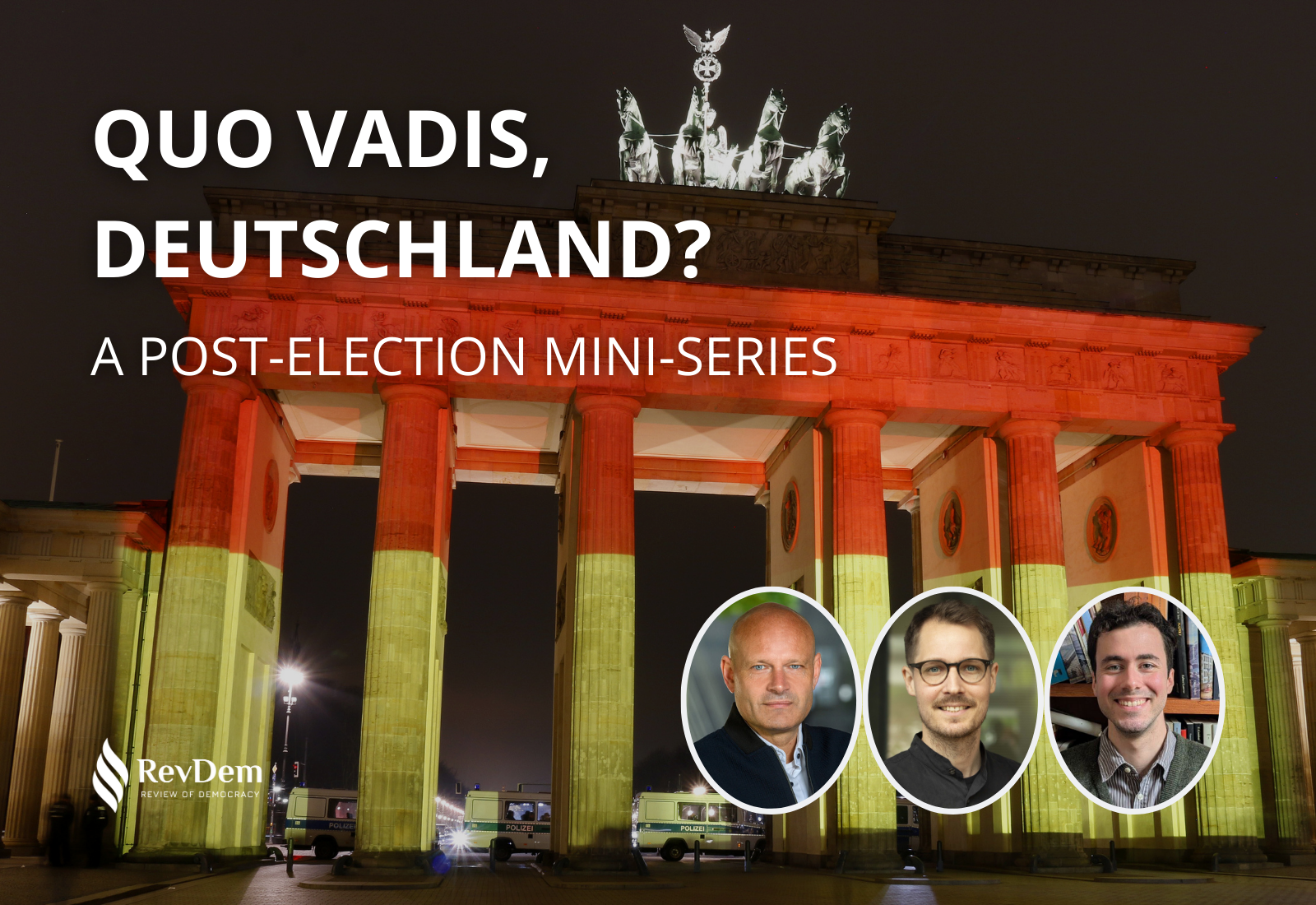
Germany’s latest parliamentary elections mark more than just a change in government — they signal a potential turning point for the country’s economy, multicultural identity, and political landscape. As the European Union’s largest and most influential member grapples with mounting domestic and global pressures, the decisions made in the coming years will not only define Germany’s trajectory but also reverberate across Europe and beyond.
11.03.2025
Special Dossiers
Germans and Genocide after the Holocaust. Andrew Port Discusses How Germans Have Responded to the Global History of Mass Atrocities
In this conversation with RevDem editor Ferenc Laczó, Andrew Port – author of the new book Never Again. Germans and Genocide after the Holocaust – describes and compares the German responses to mass atrocities in Cambodia, Bosnia, and Rwanda; explains which were the consensual and the most contested issues in German debates; discusses the “softer,” societal responses connected to German memory work and how these mass atrocities across the globe may have impacted the interpretations of Germany’s own past; and reflects on what might be most striking about the rather conflicted German response to Russia’s ongoing war of aggression against Ukraine.
21.06.2023

