Videos
Videos
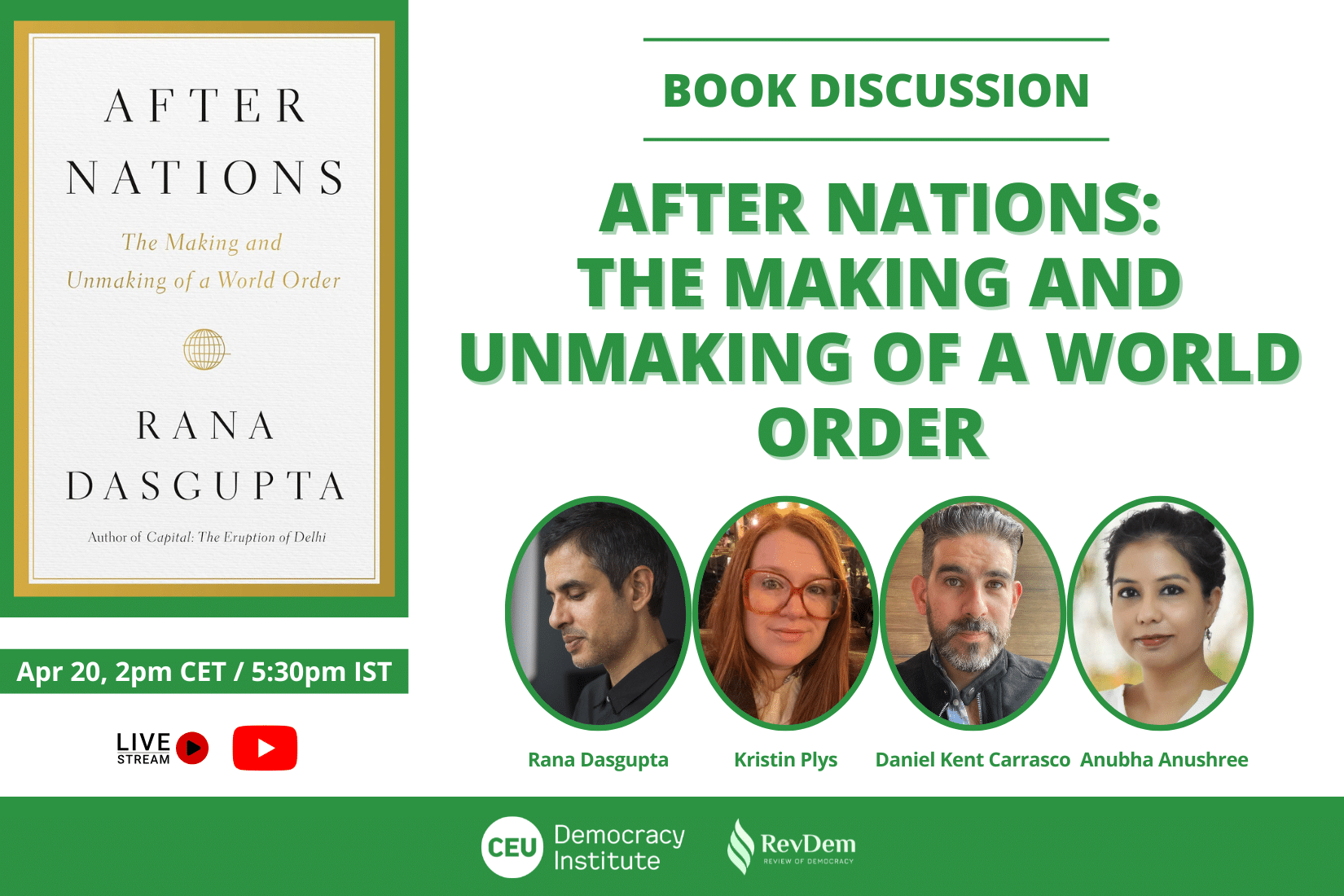
After Nations: The Making and Unmaking of a World Order
After Nations by Rana Dasgupta traces the rise and unraveling of the global nation-state system, exploring why American hegemony is declining, liberal institutions are losing credibility, and autocracies are on the rise. Dasgupta moves from the fall of ancient empires through the spread of European law and money to the emergence of tech giants and the restoration of Chinese power. Ultimately, he argues for a new conception of citizenship, law, and economy suited to our globalized and ecologically fragile world. Speakers: Rana Dasgupta is a British writer born in Canterbury who has lived in the US, India, and France. He is the author of Tokyo Cancelled (2005), the Commonwealth Prize-winning novel Solo (2009), and the acclaimed nonfiction work, Capital: The Eruption of Delhi (2014). His latest book, After Nations: The Making and Unmaking of a World Order (2025) won the Windham-Campbell Prize for Nonfiction in 2025. This book examines the [...]
20.04.2026
Videos
Nepal Elections 2026: Protests and Politics
Nepal is at a pivotal political moment. As the country prepares for its upcoming elections, questions around democratic consolidation, coalition politics, civic participation, and representation have become increasingly urgent. This panel discussion brought together scholars, analysts, and public intellectuals to reflect on the evolving political landscape in Nepal , examining electoral dynamics, the state of institutions, and what the elections mean for the country’s political future. Speakers: Pranaya Rana is a scholar-practitioner with two decades of experience spanning the military, education, social services, and public health sectors. A Ph.D. in International Conflict Management from Kennesaw State University and a lifetime Senior Bosserman-UNESCO Fellow, he is currently an active politician in Nepal, having contested in the 2020 House of Representatives elections and served as Senior Advisor to the Ministry of Youth and Sports in 2024. Nabin Giri is a youth [...]
3.03.2026

Videos
Medical Women in the Japanese Empire: Sources and Critique
About the book After opening the door to foreign countries in the middle of the 19th century, Japan engaged itself into the process of nation building. Modernization was a key component and medicine became a significant factor in controlling the population (1). By using the term medical women, the authors propose a fresh framework to encompass the wider range of women working in a variety of medical professions, which includes doctors, nurses, midwives and nutritionists.(2) These voices, collected from books, magazines, diaries and oral histories, speak about the everyday challenges faced in their medical studies and workplace. Throughout our conversation, we will tackle important historical questions such as: How did women enter the domain of medical professions and try to establish their positions? How did the professionalization of medicine and healthcare affect the careers of women? How did these medical women embrace the ideology of “good wife, wise [...]
6.02.2026

Videos
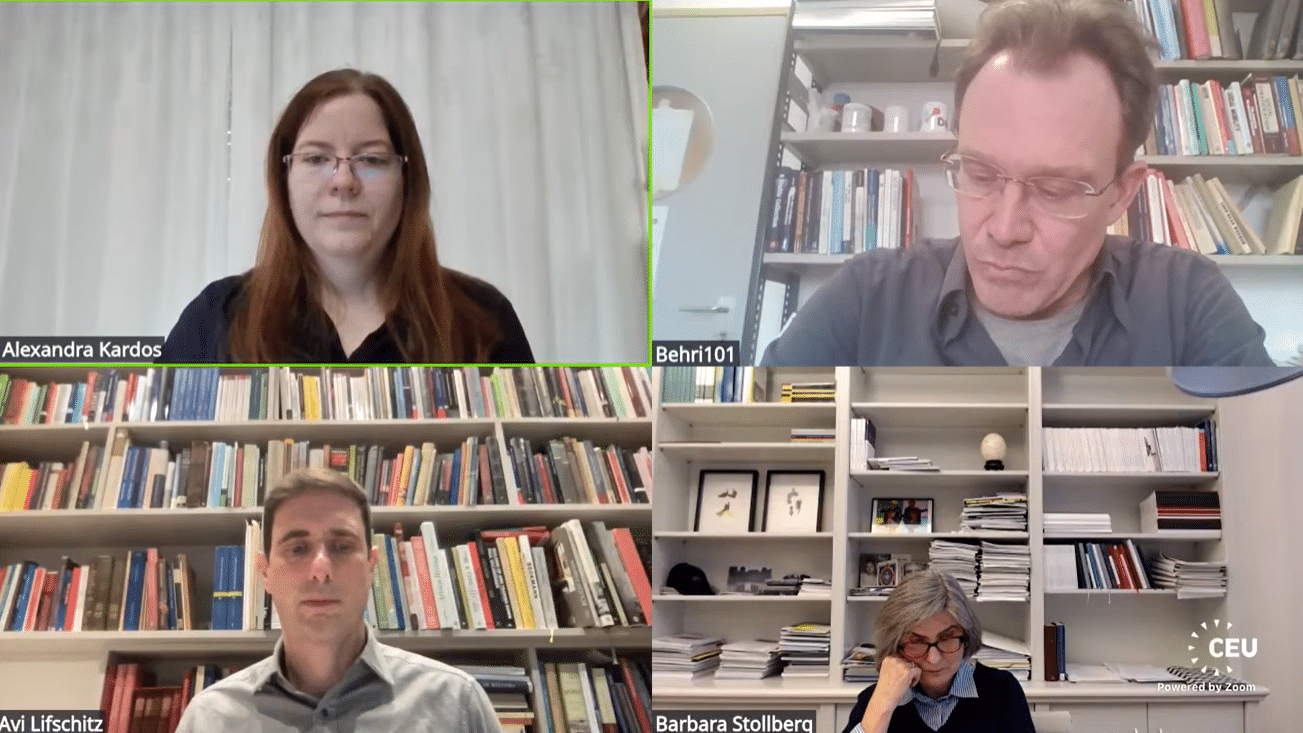
Democracy’s Double Helix: A Book Discussion with Lars Behrisch
About the book Democracy’s Double Helix (CUP, 2025) invites us to rethink a question that feels newly urgent: where did modern democracy really come from, and why does it so often feel unstable? Rather than treating democracy as history’s inevitable destination, the book traces its origins to a fusion of two distinct traditions: medieval political participation and the early modern rise of individual equality. These strands first intertwined during the American and French revolutions, producing a system that was never fully planned, never guaranteed, and remains perpetually under strain. By exploring the political habits and assumptions that existed before democracy’s emergence, the book reveals why its “double helix” has always carried tension at its core and why that tension helps explain democracy’s current crisis. Lars Behrisch is an Associate Professor of Political History in the Department of History and Art History at Utrecht University. His research focuses on [...]
5.02.2026
Videos
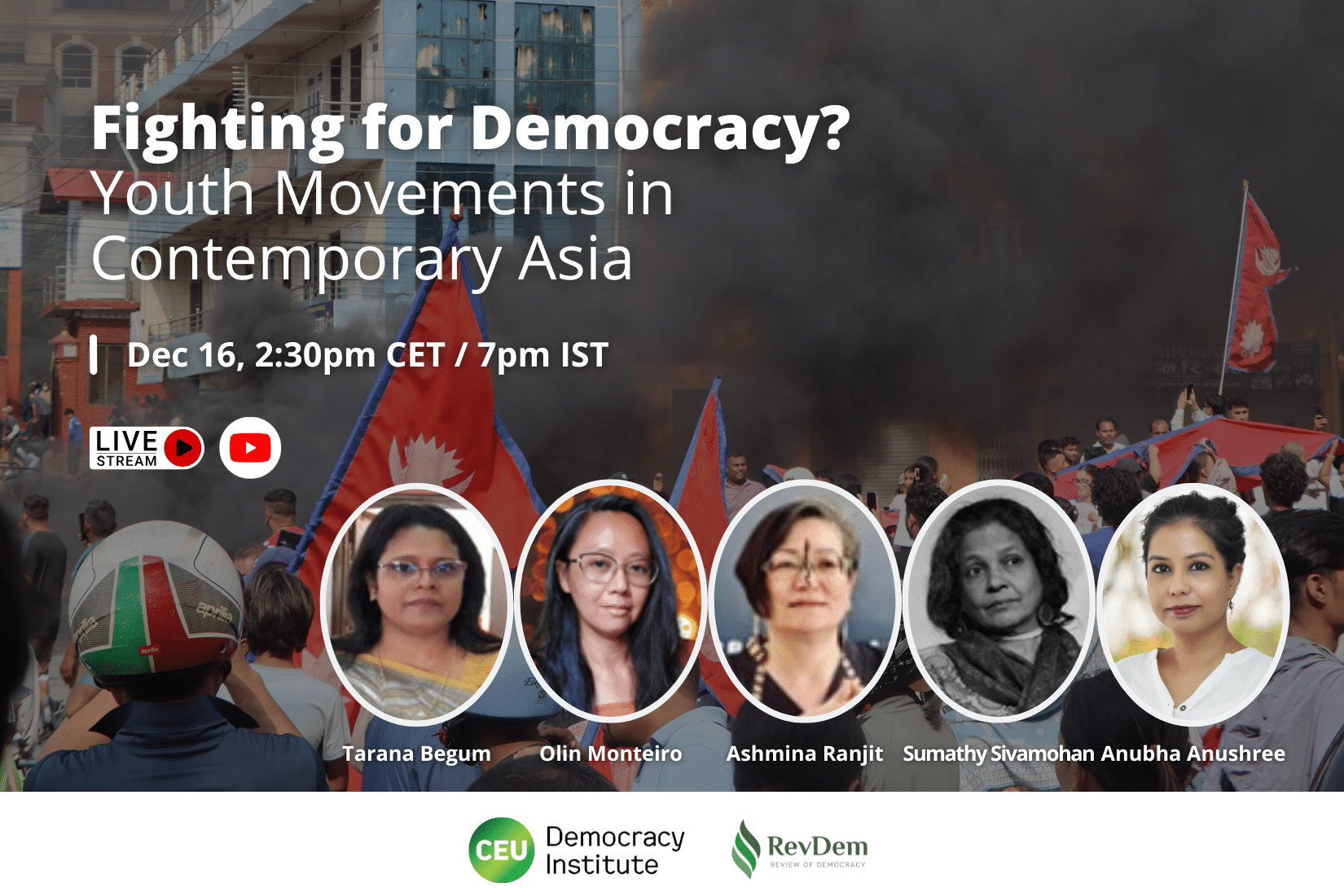
Fighting for Democracy? Youth Movements in Contemporary Asia
Over the last four years, Asia has witnessed at least five major protest movements that have reshaped regional politics in profound ways. These uprisings have not only toppled governments but have also demanded sweeping social and cultural reconfigurations. From the 2022 Aragalaya movement in Sri Lanka to the recent Gen-Z–led mobilizations in Nepal, the region has experienced a dramatic churn that compels us to rethink how we understand dissent, citizenship, and democratic participation. This panel seeks to examine the conceptual foundations of the protests in Sri Lanka (2022), Indonesia (2023–24), Bangladesh (2024), and Nepal (2025). Our discussion will address why these movements emerged, how they unfolded, and what future trajectories they might suggest. What political, social, and economic conditions sparked mass uprisings in such divergent contexts? How did cultural assumptions and social norms shape the character of these movements? In what ways did different [...]
16.12.2025
Videos
Book Presentation: Negotiating In/Visibility: Women, Science, Engineering and Medicine in the Twentieth Century
The Review of Democracy organized a book presentation of ‘Negotiating in/visibility: Women, science, engineering and medicine in the twentieth century’, edited by Amelia Bonea and Irina Nastasă-Matei, published by Manchester University Press this year. This edited volume combines individual and collective portraits of women scientists in engineering and medicine, set in the broader context of institutional structures, STEMM, education, activism, and science policy. As the foreword emphasizes, statistics are revealing: only ten female Nobel Prize laureates in science in the twentieth century, representing only 2.3% of the total awardees (xxvii). Laboratories were among the most exclusionary sites of professional science for women in the twentieth century, as several chapters discuss (14). In turn, mobility, as well as personal and professional networks, played a strong role in facilitating women’s access to scientific careers and recognition (18-19). The [...]
4.12.2025

Videos
Beyond Borders: The European Court of Human Rights’ Role in Safeguarding Judicial Independence and Democratic Values
On November 7, 2025, Dr. Artūrs Kučs, Judge of the European Court of Human Rights (ECtHR) and former substitute member of the Venice Commission, delivered a lecture within at the conference “Rule of Law: Judicial Independence, Democracy and Social Justice in Europe,” organized by the CEU Democracy Institute’s Rule of Law Clinic, exploring how supranational and national courts shape the understanding and protection of the rule of law in Europe.
19.11.2025

Videos
Book Presentation: Flowing Progress: Transforming the Danube through Infrastructure
The Review of Democracy and CEU Review of Books organized this roundtable to present the book “Flowing Progress, Transforming the Danube through Infrastructure,” edited by Ștefan Dorondel and Luminița Gatejel, published at Purdue University Press this year.
24.10.2025

Videos
Crisis and Renewal: Rethinking Democracy in the 21st Century
Marking its fifth anniversary, the CEU Democracy Institute (DI) hosted the international roundtable “Crisis and Renewal: Rethinking Democracy in the 21st Century”, organized in partnership with the Review of Democracy.
21.10.2025

Videos
Citizen Marx: A Book Discussion with Bruno Leipold
This book discussion featured Citizen Marx, a groundbreaking book by Bruno Leipold that reinterprets Karl Marx’s political thought through the lens of republicanism. About the Book: Citizen Marx In Citizen Marx, Bruno Leipold challenges conventional interpretations of Karl Marx, presenting a compelling case that Marx’s thought was deeply shaped by republican ideals. Far from being anti-political, Marx envisioned democratic institutions as essential to overcoming the domination inherent in capitalist societies. Tracing Marx’s evolving relationship with republicanism—from early democratic activism, through critical rethinking during his communist transition, to his embrace of popular control after the Paris Commune—Leipold positions Marx as a theorist who placed democratic politics at the core of socialism. About the Author: Bruno Leipold is a political theorist and historian of political thought specialising in Karl Marx, the republican tradition, and theories of [...]
19.05.2025

Videos
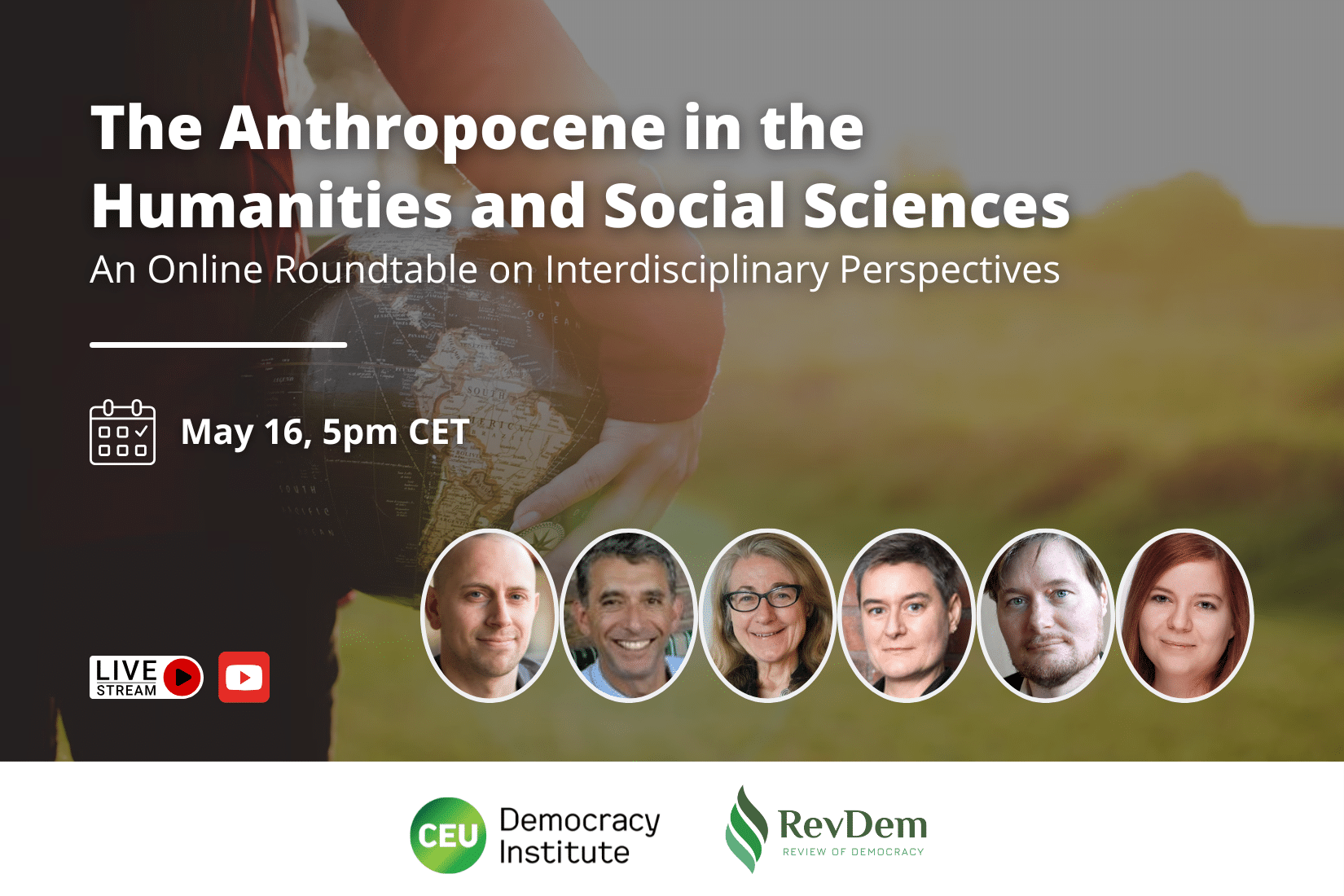
The Anthropocene in the Humanities and Social Sciences
This online roundtable brought together leading scholars from political science, anthropology, history, and environmental humanities to reflect on how the concept of the Anthropocene is shaping debates and methodologies across the humanities and social sciences. The Anthropocene, as both a scientific diagnosis and cultural concept, challenges traditional understandings of history, politics, and human agency. This event provided space for critical reflection on how the term is used across disciplines, its implications for global inequalities and democracy, and the new research questions and directions it might open up. Participants discussed how the Anthropocene intersects with ideas of justice, planetary governance, and human-nature relationships. The conversation also considered the value—and limitations—of the Anthropocene as a framework for understanding the socio-political dimensions of climate change and ecological crisis. Participants: Julia Adeney Thomas is Professor [...]
16.05.2025
Videos
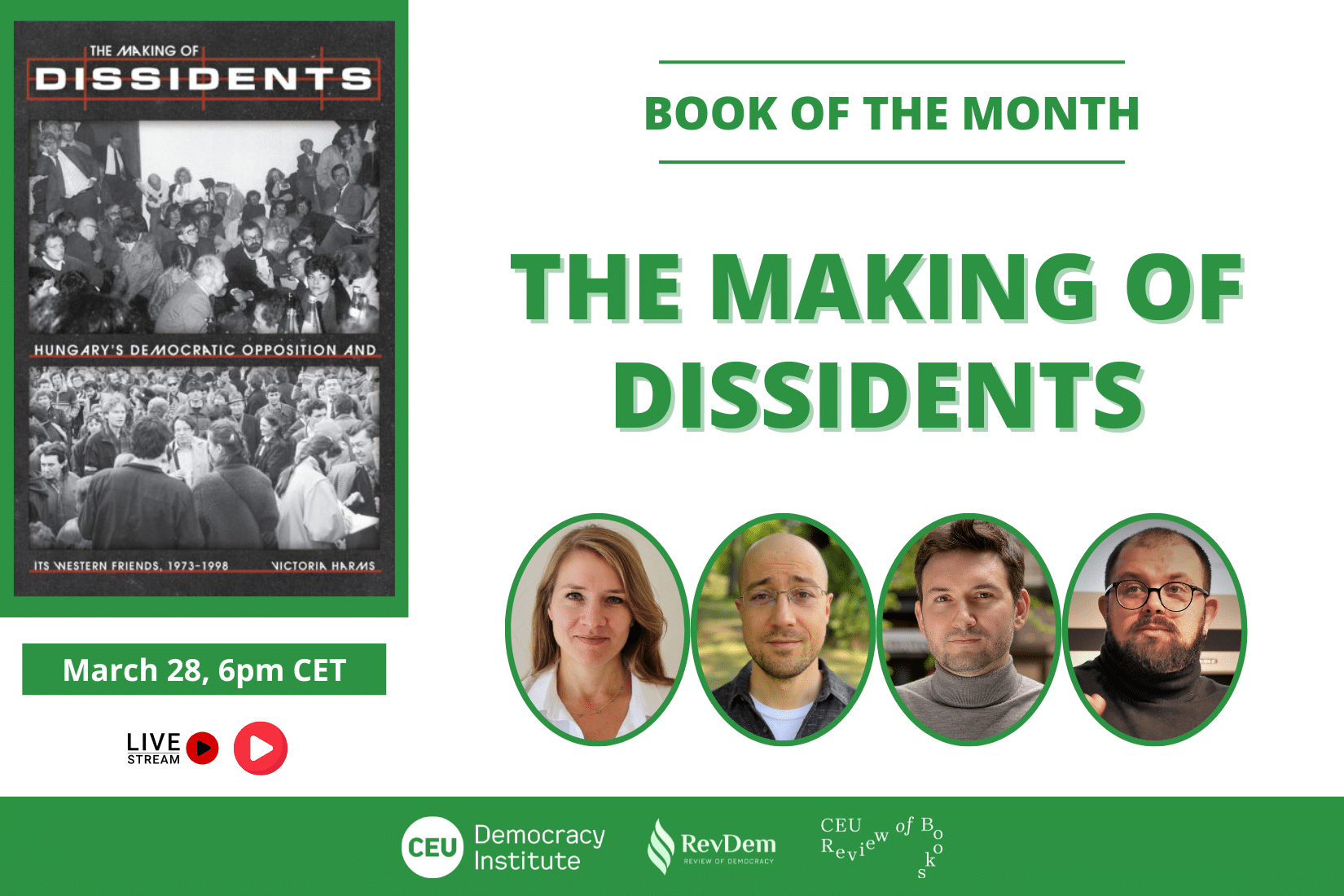
Book of the Month: The Making of Dissidents
The second session of the Book of the Month series, organized jointly by CEU Review of Books and Review of Democracy, presents ”The Making of Dissidents: Hungary’s Democratic Opposition and its Western Friends, 1973-1998″, written by Victoria Harms and published by University of Pittsburgh Press in September 2024. The panelists discussed the novelty of the approach, as The Making of Dissidents tracks the complex transnational networks that shaped the Hungarian and East-Central European dissidence. By using a fascinating set of primary sources, Victoria Harms offers a fresh perspective on the emergence of dissident networks, the ideological congruences and distinctions of the dissidents that in the 1990s shaped the political discourse. PARTICIPANTS: Author: Discussants: Moderator:
29.03.2025
Videos
Book of the Month: Essays on Democracy at War
The first session of the new Book of the Month series by the CEU Review of Books and the Review of Democracy presented the essay collection Invisible University for Ukraine: Essays on Democracy at War, edited by Ostap Sereda, Balázs Trencsényi, Tetiana Zemliakova, and Guillaume Lancereau, published by Cornell University Press in 2024. The session was co-hosted by Visible Ukraine. The Invisible University for Ukraine (IUFU) is an initiative of Central European University, and is implemented in cooperation with the CEU Democracy Institute and Ukrainian and EU-based university partners. It was launched in the spring of 2022 and by now, it involved nearly 1000 Ukrainian students who have taken online and on-site courses. The program aims to help sustain intellectual growth despite the ongoing war and provide a framework to push back against autocracy. It was recognized by the McCourtney Institute for Democracy at Penn State University with the 2024 Laurence and Lynne Brown Democracy [...]
20.02.2025

Videos
Rule of Law at a Crossroads: The Walesa Case as a Catalyst for Rebuilding Judicial Independence?
The CEU Democracy Institute Rule of Law Clinic, the Review of Democracy (RevDem), and the Bingham Centre for the Rule of Law (BIICL) held a webinar on November 27, 2024, on the state of rebuilding judicial independence in Poland, using the landmark Walesa v. Poland case as a starting point. In this ruling, the European Court of Human Rights (ECtHR) applied its pilot judgment procedure, giving the Polish government a one-year deadline (November 24, 2024) to meet essential rule of law standards. Just days after this deadline, the event assessed Poland’s progress and explored practical solutions for restoring trust in its judiciary. The remaining challenges include reforming the judicial appointment process, determining the status of ‘neo-judges’, and addressing issues with the independence of the Constitutional Tribunal. The discussion also took a broader European perspective, highlighting the role of the European Union, the Venice Commission’s recent Opinions on Poland, and [...]
11.02.2025

Videos
What Difference Can Rotating Presidents Make?
The Hungarian Presidency of the Council of the European Union ended recently while the Polish one has just begun. In a moment of grave concern over the outcome of the Russo-Ukrainian war, Donald Trump’s return to the White House, and sharpening conflict between liberal and illiberal forces within the EU, rarely have so many expectations and worries been attached to rotating presidencies as to these two. In this special panel, we take the Hungarian and Polish presidencies as lenses to reflect on the contemporary EU and its major challenges. How unusual was the Hungarian Presidency and how has the EU dealt with the Hungarian government’s agenda? What are the major ambitions of the current Polish Presidency and how would you assess their chances of success? What strategies can the EU follow now that Donald Trump is about to start his second term, and how prepared is the Union for the challenges that lie ahead? How much stronger have illiberal forces become within the EU and how [...]
21.01.2025

Videos
Democracy in Global Political Thought and Theory
The roundtable brought together scholars from varied backgrounds to share insights and challenge assumptions about democracy, helping to shape a broader, more inclusive understanding of its history, role and forms worldwide. It explored the diverse historical and contemporary contexts of democracy across the globe, emphasizing perspectives from regions such as Latin America, China, India, and the Muslim world. The conversation challenges traditional assumptions and fostered a broader understanding of democracy’s many forms and roles in global intellectual history. Participants Michaelle Browers (Wake Forest University): Expert in Arab and Islamic political thought, feminist theory, and democratic theory, with a focus on transcultural possibilities. Dongxian Jiang (Fordham University): Political theorist and intellectual historian specializing in Chinese and Asian political thought, comparative political theory, and intercultural dialogue. Nora Lafi (Leibniz-Zentrum Moderner [...]
6.12.2024

Videos
Understanding Elections in Sri Lanka
How has the political landscape in Sri Lanka changed in recent years? What is the significance of the 2024 elections for Sri Lanka? What are some of the interpretations of the elections for democracy in the wider region of South Asia and the Global South? This panel of eminent scholars analyzed the different facets of the 2024 Elections, including possible opportunities and challenges for democracy in the region. It was hosted by the Review of Democracy (RevDem), the online journal of the CEU Democracy Institute (CEU DI), in collaboration with the Social Scientists’ Association in Sri Lanka. Panelists: Moderator:
25.11.2024

Videos
What’s at Stake? Debating the Impact of the European Elections
This special expert panel, co-organized by the CEU Democracy Institute, Political Capital Institute and Review of Democracy, discussed the likely impact of this year’s European Parliament elections with focusing on the following questions: What was most surprising and what might prove most consequential about the results? Are there new regional divisions and, if so, how might we account for their emergence? What is currently at stake and what is likely to unfold in the near future? Speakers: László Bruszt – Director, CEU Democracy Institute Péter Krekó – Director, Political Capital Institute/Research Affiliate, CEU DI Thu Nguyen – Deputy Director, Jacques Delors Center Claudio Radaelli – Professor, European University Institute Moderator: Flóra Garamvölgyi – Investigative reporter
1.07.2024

Videos
Open Questions Roundtable: “Again, What Is Populism?”
The De- and Re-Democratization (DRD) Workgroup of the CEU Democracy Institute and the Review of Democracy journal launched a new virtual roundtable series: Open Questions in the Comparative Study of Democracy and Authoritarianism. This series of short analytic essays raises specific politically relevant questions on democracy and authoritarianism which have not been adequately addressed (or answered) by comparative political science. Convenors: Matthijs Bogaards (CEU Department of Political Science) and Andreas Schedler (CEU Democracy Institute)
20.03.2024
Videos
Discussing the History of the Present with Andreas Rödder – A Special Panel at the Review of Democracy
Andreas Rödder’s recent 21.1. Eine kurze Geschichte der Gegenwart [21.1. A Brief History of the Present] (C.H. Beck, 2023) offers a fascinating historical analysis of our time. The book paints an impressive picture of how our greatly accelerated, globalized, and digitalized world has been made. The Review of Democracy hosted the session Discussing the History of the Present with Andreas Rödder on November 8 to examine key arguments in this new publication and reflect on issues of central significance in contemporary history. In this special panel, Prof. Rödder – who holds the chair for Modern and Contemporary History at the Johannes Gutenberg University Mainz – has been in conversation with four other leading contemporary historians, Camilo Erlichman (Assistant Professor at the Department of History, Maastricht University), Sonja Levsen (Professor for Modern and Contemporary History at the University of Tübingen), Michal Kopeček (Head of the Department for History of Ideas and [...]
29.11.2023

Videos
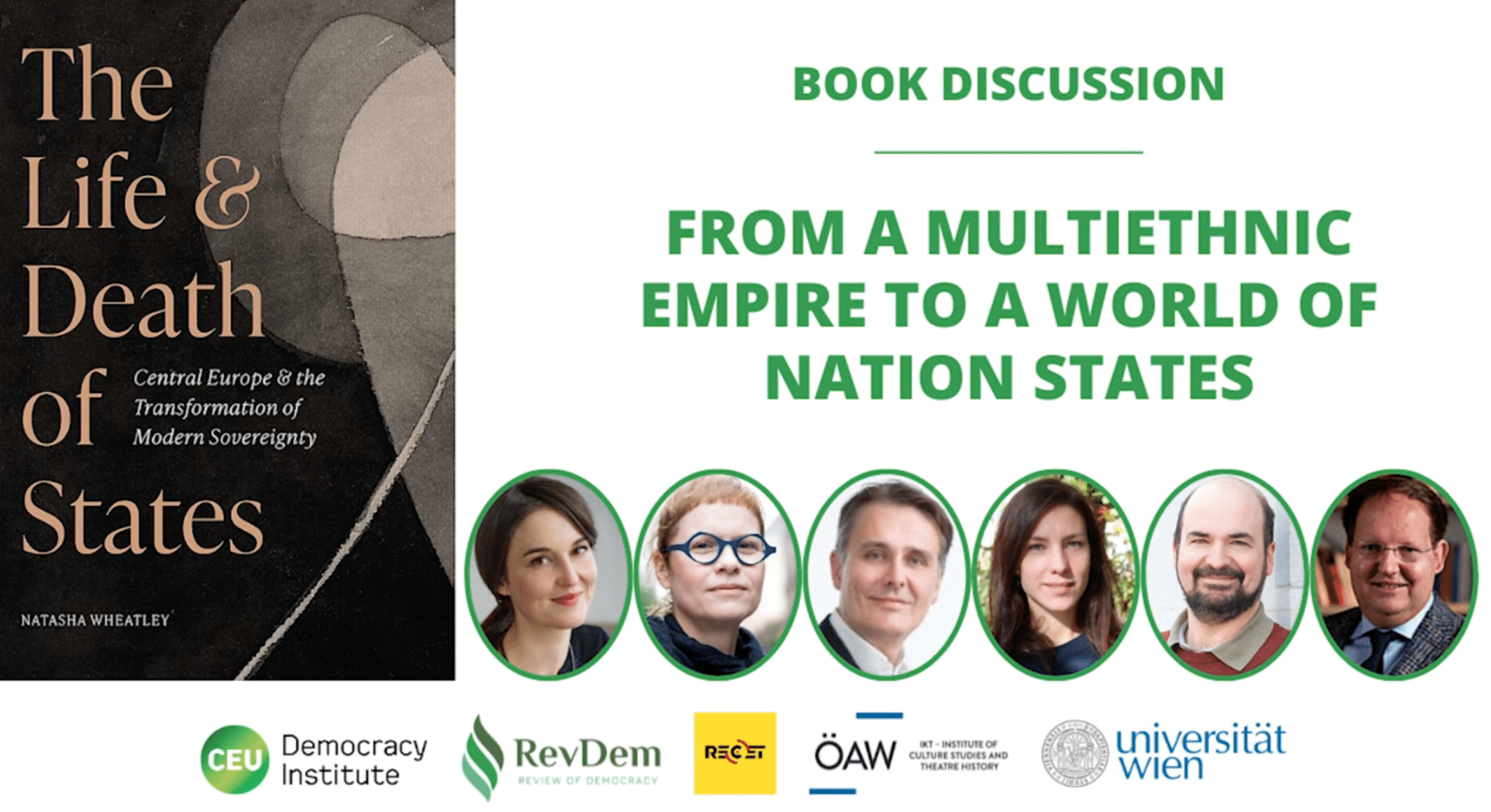
From a Multiethnic Empire to a World of Nation States
The CEU Democracy Institute’s journal, Review of Democracy, the Research Center for the History of Transformations (RECET), the Institute of Culture Studies and Theatre History at the Austrian Academy of Sciences (ÖAW/IKT) and the Department of European, International and Comparative Law at the Faculty of Law at the University of Vienna cordially organised a book discussion on Central Europe's function as a laboratory of our current world order based on Natasha Wheatley's bold and fascinating new book The Life and Death of States: Central Europe and the Transformation of Modern Sovereignty (Princeton University Press 2023)
13.09.2023
Videos
Gregory Claeys on Utopianism and Democracy
In this public lecture, Gregory Claeys – Professor Emeritus of History – reviews the development of the anxious relationship between utopianism and democracy, touching on the fundamentally anti-political aspects of the utopian tradition, and the charge that the eternal search for near unanimity of opinion is fundamentally anti-democratic. The lecture examines the (mis)interpretation of utopia as "perfection", and the optimal role played by consent in utopian relationships. Finally, it asks whether we can achieve an environmental consensus in time to avert the catastrophic destruction of the planet, and what we can do in the absence of such a consensus.
21.07.2023

Videos
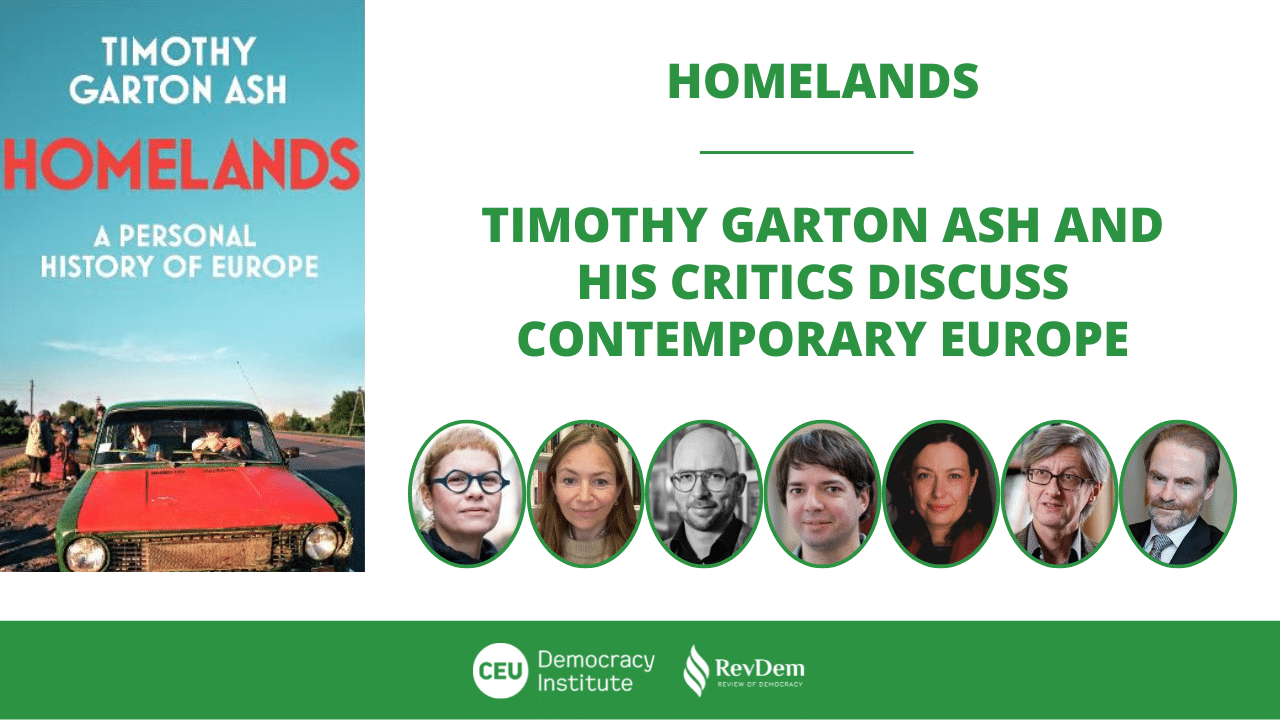
Homelands: Timothy Garton Ash and His Critics Discuss Contemporary Europe
How has Europe been transformed in the overlapping timeframes of post-war and post-Wall? What insights does Homelands, a “history illustrated by memoir” written by a distinguished European, offer its readers? In this special online panel, five scholars of contemporary Europe discuss Timothy Garton Ash’s Homelands. A Personal History of Europe with the author. Commentators: Felix Ackermann (FernUniversität in Hagen) Celia Donert (University of Cambridge) Ferenc Laczó (University of Maastricht/Review of Democracy) Renáta Uitz (Central European University/CEU Democracy Institute) Joanna Wawrzyniak (University of Warsaw) Moderator: László Kontler (Central European University/CEU Democracy Institute)
27.03.2023
Videos
Italy after the Elections – Implications for National and European Politics
On September 25, 2022, Italians elected a right-wing coalition led by Giorgia Meloni to form a new government. The victory of her post-fascist party has aroused great interest throughout Europe, as it could potentially affect the fate of liberal democracies on the continent. The panel discussed the possible policies of the new government, especially in the areas of human rights and the rule of law, the consequences of the populists’ success, and the implications of these elections for European politics. Welcome remarks: Laszlo Bruszt, Co-director, CEU Democracy Institute Panelists: Sergio Fabbrini, Dean of Political Science Department, LUISS Guido Carli Nausica Palazzo, Assistant Professor in Constitutional Law, NOVA School of Law Nadia Urbinati, Kyriakos Tsakopoulos Professor of Political Theory, Columbia University Moderator: Michal Matlak, Managing Editor, Review of Democracy
8.11.2022

Videos
Where Is Brazil Headed? – The Future of Democracy in Brazil After the Presidential Elections
On October 2, Brazilian voters headed to the polls to choose the successor of incumbent President Jair Bolsonaro in the first round of nationwide elections. Bolsonaro’s term was defined by the rise of illiberal democracy, hostile identity politics, and a string of controversial economic, social and environmental policy measures. The campaign has been marred by violence, rhetorical attacks on the judiciary and journalists, and threats of a pro-Bolsonaro coup in case of a victory of the opposition led by former President Lula da Silva who promised to break with this authoritarian legacy and has built alliances that suggest a government of compromise. Our panelists provided reflections on the results and offered insights on the prospects for the future of democracy in Brazil. Speakers: Claudio Goncalves Couto, Adjunct Professor, Department of Public Management, FGV EAESP Juliana Cesario Alvim Gomes, Visiting Professor, CEU Department of Legal Studies; Human Rights Professor, [...]
27.10.2022

Videos
Ukraine’s Integration and Reconstruction: How To Prepare the EU?
The EU membership of Ukraine will be one of the key issues of the post-war settlement. What are the challenges of the reconstruction and the European integration of Ukraine? What does it require from the EU? What lessons could be taken from the strengths and weaknesses of the Eastern Enlargement of the EU, or from the previous attempts at integration in the Western Balkans and in the pre-war EU policies of integrating Ukraine? Speakers: Laszlo Bruszt, Co-Director, CEU Democracy Institute; Professor, CEU Department of Political Science Andrius Kubilius, Member of the European Parliament; former Prime Minister of Lithuania Tymofiy Mylovanov, President, Kyiv School of Economics Milada Vachudova, Professor of Political Science, University of North Carolina at Chapel Hill Moderator: Iskra Kirova, Senior Policy Analyst, Open Society European Policy Institute
24.05.2022

Videos
Illiberal Democrats Go Global: Bolsonaro Visits Orban Before 2022 Election
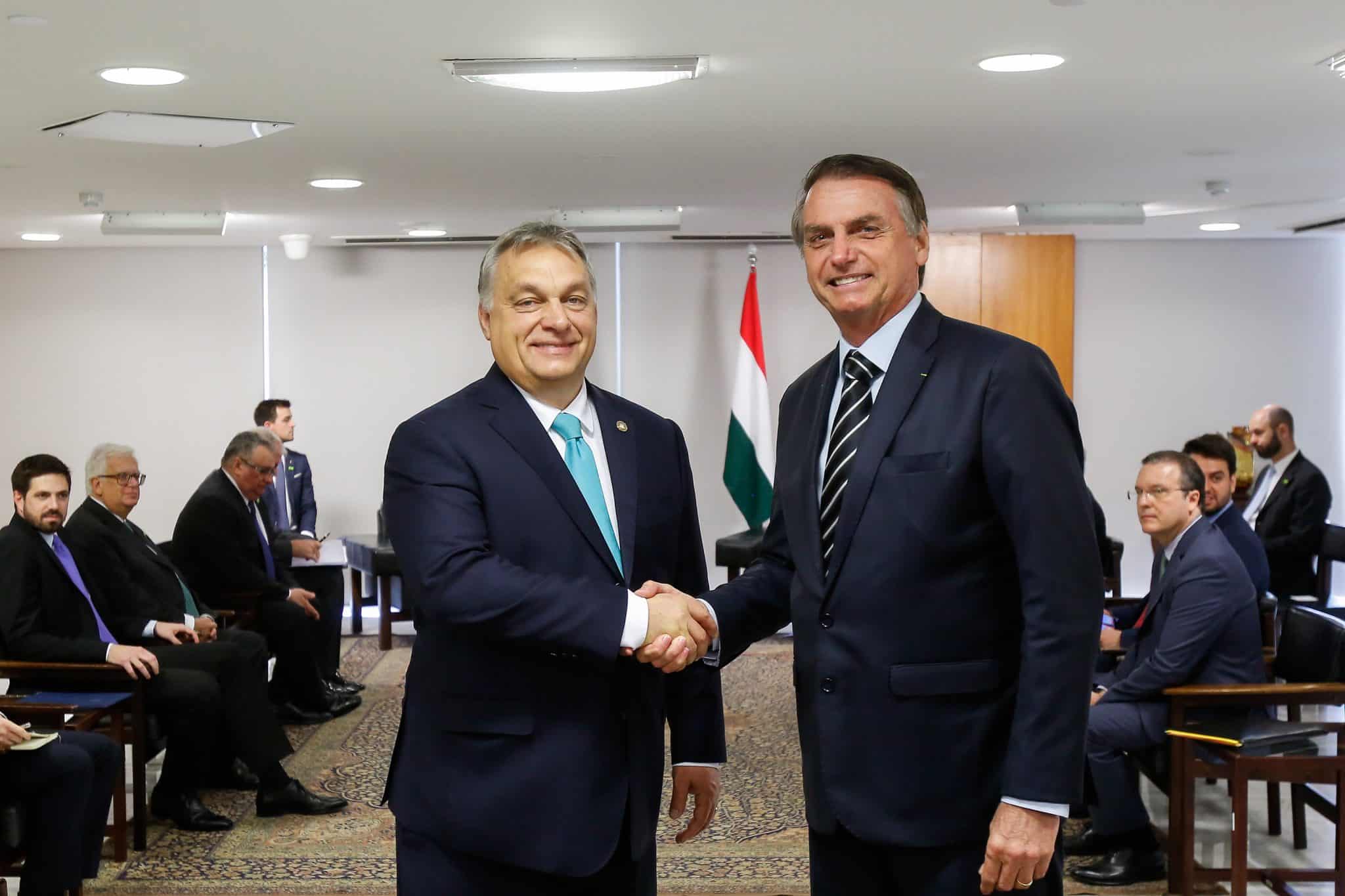
Just a few weeks before April national elections in Hungary, Jair Bolsonaro comes to Budapest to meet Viktor Orbán on February 17. After this illiberal tour, which includes a visit to Vladimir Putin, Bolsonaro himself is to face Brazilian voters in October 2022. In preparation, the CEU Democracy Institute and its Review of Democracy convened a panel discussion with multiple disciplinary perspectives on Bolsonarism. In light of the challenges faced by democracy in Brazil, experts addressed issues like the impact of authoritarian international law on the globalization of illiberal democracy, the illiberal war on human rights and gender equality, modes of constitutional erosion, and the support for charismatic leadership among low-income voters in illiberal and authoritarian settings. Panelists:Emilio Peluso Neder Meyer, Associate Professor of Constitutional Law, Federal University of Minas Gerais, Brazil Thiago de Souza Amparo, Professor, Getulio Vargas Foundation Law School and [...]
14.02.2022
Videos
The Future of Rule of Law Constitutionalism in Hungary
In the light of complex multi-level criticism of the state of the Rule of Law in Hungary and the role it plays in the European Union, the future of Rule of Law constitutionalism has been in the spotlight and subject to intense public debate among politicians, academics and the broader public. This event aimed to make a significant contribution to the on-going conversation by offering a platform to several leading personalities at the heart of the rule of law engagements to exchange views on the future of constitutionalism in Hungary. Introduction:Renáta Uitz, Co-Director, CEU Democracy Institute; Professor, CEU Department of Legal Studies Speakers:Michal Šimečka, Vice President, European ParliamentPéter Márki-Zay, Candidate for Prime Minister, Mayor of Hódmezővásárhely, HungaryKim Lane Scheppele, Laurance S. Rockefeller Professor of Sociology and International Affairs, Princeton UniversityAndrás Sajó, Senior Research Fellow, CEU Democracy Institute; Professor, CEU Department of [...]
3.02.2022

Videos
Democracy Rules: A Book Discussion with Jan-Werner Müller and His Critics
How do we re-invigorate institutions essential for the success of democracy such as political parties and free media? Can we re-empower citizens while also preserving a place for experts? How can we ensure the future dynamism and creativity of democracies? These are some of the urgent questions addressed in Jan-Werner Müller’s much anticipated new book Democracy Rules. CEU Democracy Institute’s Review of Democracy, in collaboration with The New School’s Democracy Seminar, hosted a discussion of the book with the author, and with prominent voices in the field. Speakers:Jan-Werner Müller, Professor of Politics at Princeton University Gráinne de Búrca, Director, Jean Monnet Center for International and Regional Economic Law & Justice, New York University Jeffrey C. Isaac, James H. Rudy Professor of Political Science, Indiana University Jan Kubik, Professor, Rutgers University; Professor of Slavonic and East European Studies, University College London Karolina Wigura, [...]
13.07.2021

Videos
Perspectives on Democracy: A Conversation Between Eleni Kounalakis and Michael Ignatieff
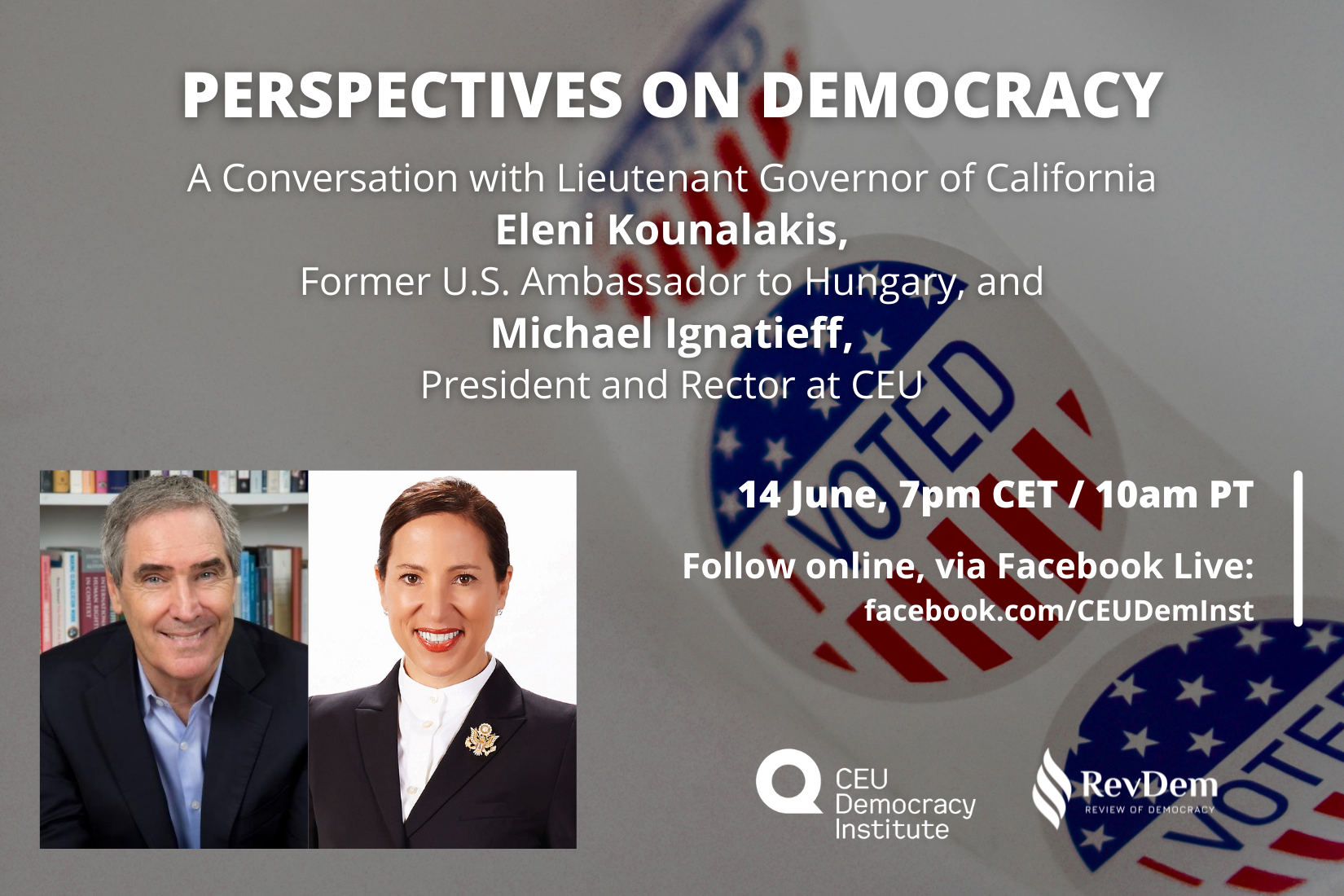
Co-organized by the CEU Democracy Institute and its journal, the Review of Democracy, the event offered a conversation on democracy, populism and polarization with Lieutenant Governor of California Eleni Kounalakis, Former U.S. Ambassador to Hungary, and Michael Ignatieff, President and Rector of Central European University. Welcome message: László Bruszt, Co-Director, DI.
24.06.2021
Videos
Conference on the Future of Europe: Democratic Innovation or Business as Usual?
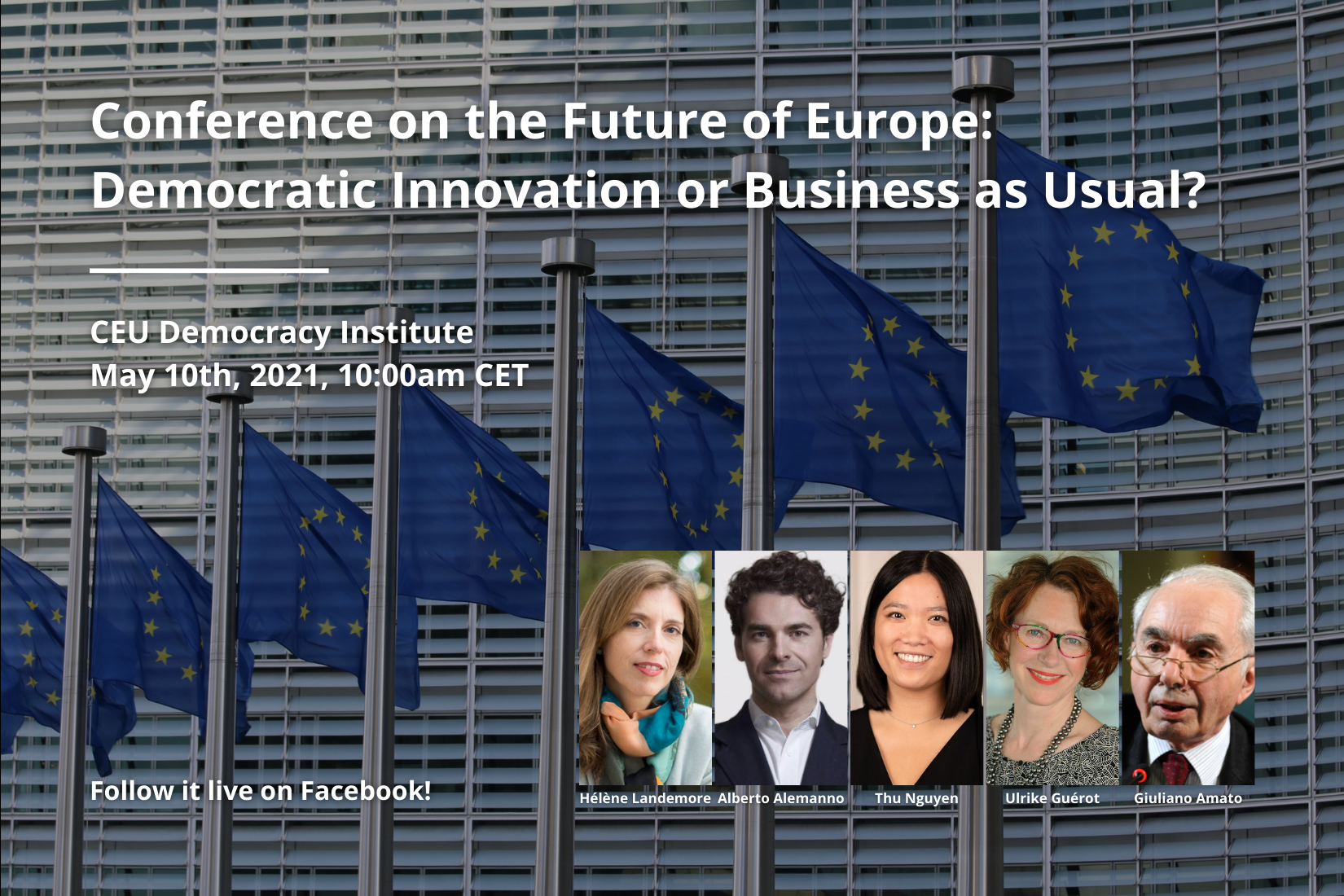
May 9th marked the opening of the Conference on the Future of Europe in Strasbourg. In the online debate of the CEU Democracy Institute and its new journal, the Review of Democracy, the panelists discussed its objectives, how to achieve them and whether it can give a new impetus to European integration. They also discussed the lessons of the previous Convention on the Future of Europe, which proposed a constitutional treaty that was ultimately defeated in referendums in France and the Netherlands. PANELISTS:Giuliano Amato, former Prime Minister of Italy, Professor Emeritus at European University Institute and University La Sapienza, Vice-President of Italian Constitutional Court Ulrike Guérot, Founder and Director of European Democracy Lab, Head of the Department for European Policy and the Study of Democracy at Danube University Krems Hélène Landemore, Associate Professor of Political Science, with Tenure at Yale University Thu Nguyen, Policy Fellow for EU Institutions and [...]
12.05.2021
Videos
There is still hope. Interview with Adam Bodnar, Polish Ombudsman
On April 21, Review of Democracy and CEU Democracy Institute hosted Adam Bodnar, Polish Ombudsman.
30.04.2021

Videos
The Future of Democracy in EU Member States
Debates on the state of democracy in EU Member States have been intensifying. Attacks against the rule of law have regularly been registered. Both authoritarian incumbents and their opponents try to use elements of the international legal and political framework for or against de-democratization. Speakers:Věra Jourová, Vice-President, European CommissionClément Beaune, Secretary of State for European affairs, Ministry of Foreign Affairs, FranceMichal Šimečka, Member of the European Parliament, Vice-Chair, Renew Europe Group Moderator:R. Daniel Kelemen, Professor of Political Science and Law and Jean Monnet Chair in European Union Politics, Rutgers University Opening remarks:Dimitry Kochenov, Senior Research Fellow, CEU Democracy Institute Welcoming Remarks:Michael Ignatieff, CEU President and Rector The event was supported [in part] by a grant from the Open Society Foundations.
1.03.2021

Videos
Debate on the Rule of Law in Europe
Attacks against the rule of law have always been an integral of processes of de-democratization. The instrumentalization of law happens in an international context in which both authoritarian incumbents and their opponents try to use elements of the international legal and political framework for or against de-democratization. In this debate by the CEU Democracy Institute on the rule of law conditionality mechanism recently adopted by the Council of the European Union and the European Parliament, the speakers, EU Commissioner Didier Reynders and Member of the European Parliament, Katalin Cseh, discussed the rationale for such a solution, the doubts of some European governments, as well as a more philosophical view on the EU’s competences in this matter. The debate was moderated by Professor Laurent Pech. Speakers:Katalin CsehMember of the European Parliament, Vice President of Renew Europe Didier ReyndersEuropean Commissioner for Justice Moderator:Laurent PechProfessor of European [...]
26.01.2021

