Ukraine
Podcasts
Women’s Participation in Ukraine’s Euromaidan- A Conversation with Olena Nikolayenko
In the podcast, Olena Nikolayenko places women’s protest within a broader framework, which includes the Arab Spring and Belarus. Her claim is that age, class, region and political experience shape women’s forms of engagement. Based on these observation, Invisible Revolutionaries distinguishes between three models of participation: patriarchal, emancipatory, and hybrid.
9.02.2026

Interviews
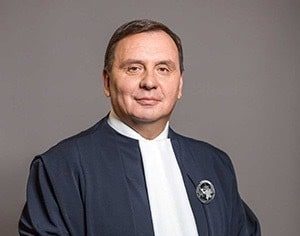
Adjudicating in Times of War – In Conversation with Stanislav Kravchenko
Even as parts of the country are ravaged by lawless attacks, the judiciary continues to function and ensure the operation of Ukraine’s legal system. A new challenge has emerged with the process of Ukraine’s accession to the European Union (EU). The country’s legal system must adapt to the EU’s requirements.
5.02.2026
News
From Victims to Workers: The Politics of Deservingness in Europe’s Support for Displaced Ukrainians
Europe’s ‘extraordinary solidarity’ with displaced Ukrainians in 2022 – rooted in images of vulnerability and cultural proximity – is increasingly being replaced by a politics of conditionality. Across Czechia, Germany, and Poland, benefits are shrinking, and public debates frame refugees less as victims of war than as workers expected to prove their worth through employment. This shift reveals how European governments, spurred on by far-right politicians who question displaced people’s right to stay, are reshaping solidarity around labour market deservingness, with troubling implications for the future of refugee protection in Europe.
10.09.2025

Podcasts
War, Oligarchs, and the Future of Ukraine’s Political Economy – Inna Melnykovska on Civic Transformation, Reconstruction and EU Influence in Wartime Ukraine
How is war transforming Ukraine’s economy—and its oligarchs? In this Review of Democracy podcast, political economist Inna Melnykovska (Central European University) discusses how the full-scale Russian invasion has led to surprising shifts in business-state relations, including a turn toward civic responsibility among Ukraine’s biggest companies.
20.08.2025

Podcasts
Shaping the Culture of a City: A Conversation with Bohdan Shumylovych
In this episode of Open Space(s), the Review of Democracy focuses on Lviv, where the Center for Urban History offers a unique institutional model at the intersection between memory, space, and digital innovation. Founded in 2004 and located at 6 Bohomoltsia Street, Lviv, the Center for Urban History has become a vital node in public history and digital humanities. It defines itself as a hybrid institution with a hybrid audience.
20.06.2025

Podcasts
David vs. Goliath: Defeating Russian Autocracy
In the new episode of our monthly special in cooperation with the Journal of Democracy, Serhii Plokhii discusses the key aspects of Russia’s war in Ukraine, the clash between democracy and autocracy.
2.06.2025
Videos
Book of the Month: Essays on Democracy at War
The first session of the new Book of the Month series by the CEU Review of Books and the Review of Democracy presented the essay collection Invisible University for Ukraine: Essays on Democracy at War, edited by Ostap Sereda, Balázs Trencsényi, Tetiana Zemliakova, and Guillaume Lancereau, published by Cornell University Press in 2024. The session was co-hosted by Visible Ukraine. The Invisible University for Ukraine (IUFU) is an initiative of Central European University, and is implemented in cooperation with the CEU Democracy Institute and Ukrainian and EU-based university partners. It was launched in the spring of 2022 and by now, it involved nearly 1000 Ukrainian students who have taken online and on-site courses. The program aims to help sustain intellectual growth despite the ongoing war and provide a framework to push back against autocracy. It was recognized by the McCourtney Institute for Democracy at Penn State University with the 2024 Laurence and Lynne Brown Democracy [...]
20.02.2025

Podcasts
Ukraine Under Martial Law – Transformations of Domestic Policies and Civil Society
In this episode, a part of the Democracy After 2024 series, Oleksandra Kokhan is joined by Taras Fedirko and Serhiy Kudelia to discuss the transformations of domestic policies in Ukraine following the 2022 invasion and under martial law, the (im)possibility of holding elections, and the role of civil society today.
5.02.2025

Podcasts
Shouldn’t Ukraine Negotiate with Putin? – Robert Person on Obstacles to a Negotiated Ending of Russia’s Ongoing War of Aggression
In the newest episode of our monthly special in cooperation with the Journal of Democracy, Robert Person discusses key issues that pose nearly insurmountable obstacles to a negotiated ending of Russia’s war against Ukraine; dissects the Putin regime’s main aims regarding Ukraine over the past twenty years; and reflects on why arguments in favor of a ‘peace deal’ have gained in popularity – and what European supporters of Ukraine should be preparing for.
3.02.2025

Podcasts
The Significance and Trajectory of Ukrainian Democracy Since 2022
In this episode of the Democracy After 2024 series, Ukrainian journalist and editor Arina Kravchenko hosts Ukrainian poet, prose writer, and essayist Mykola Riabchuk. They discuss the significance of democracy to Ukrainian national identity and the country’s social fabric. The conversation focuses especially on Ukrainian democracy’s trajectory since the beginning of Russia’s full-scale invasion in 2022 as viewed from within Ukrainian society and as a rediscovered object of interest from the outside. Mykola Riabchuk is the president of the Ukrainian PEN-center and a senior research fellow at the Institute of Political and Nationalities’ Studies, the Academy of Sciences of Ukraine. His most recent publications include At the Fence of Metternich’s Garden. Essays on Europe, Ukraine, and Europeanization (Stuttgart, 2021) and Nationalist’s Lexicon (in Ukrainian), a collection of essays published in 2022. Arina Kravchenko is a Ukrainian journalist, editor, and book reviewer. Artwork: [...]
31.01.2025

Podcasts
Diana Dumitru on the Russian Invasion of Ukraine and the Question of Genocide
In this conversation at the Review of Democracy, Diana Dumitru – co-editor, with Dirk Moses, of the new collection The Russian Invasion of Ukraine. Victims, Perpetrators, Justice, and the Question of Genocide – discusses the motives of various Russian perpetrators in Ukraine and how those motives might have evolved over time; shows how useful the concept of genocide proves when studying the multifaceted violence unleashed during Russia’s war of aggression; reflects on whether the current debates around genocide in Ukraine might reshape or expanding our understanding of genocide and mass violence; and addresses the challenges in pursuing accountability for Russian crimes.
14.10.2024

Podcasts
The Special Tribunal for Russian Crimes of Aggression in Ukraine: In Conversation with Kateryna Busol
Russia’s aggression against Ukraine has been ongoing for 10 years. It started with the occupation of Crimea and parts of the Donbas in 2014 and culminated in the full-scale invasion in 2022. Various domestic and international justice initiatives to ensure accountability for war crimes and other conflict related violations have been unfolding since 2014. However, 2022 marked the start of a new important debate. How can Russia be held accountable for the underlying crime of aggression? In this RevDem Rule of Law podcast Oliver Garner discusses the proposal for a special tribunal to address Russia's crime of aggression in Ukraine with Kateryna Busol.
11.10.2024
Interviews
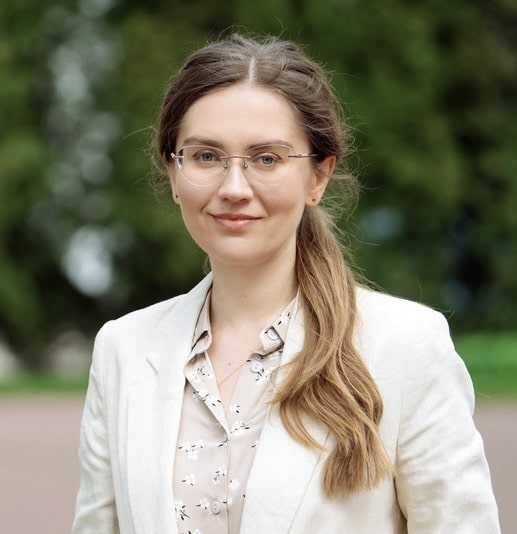
Reforming Ukraine’s Judiciary – EU Accession, Democracy, and the Rule of Law: In Conversation with Tetyana Antsupova and Sergii Koziakov
In September 2024 the project “The Dynamics of the Judiciary in Ukraine in the Context of the Rule of Law and the EU Accession Aspirations” commenced. The project is hosted by the British Institute of International and Comparative Law (BIICL) and is funded by the British Academy. This written interview, conducted by Rule of Law section editor Oliver Garner with researchers in the project, explicates its objectives, scope, and aspirations. Professor Tetyana Antsupova is a Senior Fellow at BIICL and an awardee of the British Academy Global Professorships scheme. She is a former judge in the Grand Chamber of the Supreme Court in Ukraine, and she is the lead researcher in the project. Dr Sergii Koziakov is a Research Leader at BIICL, a Visiting Fellow at the London School of Economics and Political Science in the Law School, and an Associate Professor at the Taras Shevchenko National University of Kyiv in the Institute of International Relations. From 2014 to 2019, he was Chairman of [...]
2.10.2024

Podcasts
We Need Better Cohesion in Europe Because We Need Reforms and New Resources – Mikuláš Dzurinda on Slovakia’s Path, the European People’s Party, and the Future of Ukraine
In our latest podcast, Mikuláš Dzurinda – President of the Wilfried Martens Centre and former Prime Minister of Slovakia – discusses the changes that EU membership has brought to Slovakia; reflects on the recent rightward shift in Europe and how this might influence the EPP's priorities; analyzes potential changes in Slovak foreign policy and the relationship with Hungary; and argues for Ukraine’s NATO accession.
30.09.2024

Podcasts
Ukraine Will Not Slide into Authoritarianism – A Conversation with Pat Cox
In this conversation, Pat Cox reflects on the new term of the European Parliament and the importance of the rise of the Right in the Union and its member states. He also discusses his work in Ukraine after 2012 – when he led a mission to free political prisoners imprisoned by President Viktor Yanukovych – as well as in more recent years when he has co-directed the Jean Monnet Dialogues which aim to build consensus between the main political parties represented in the Ukrainian Parliament.
29.07.2024

Europe Turns East – Armenia, Azerbaijan, Belarus, Georgia, Moldova, Ukraine
Russia’s war of aggression in Ukraine has put eastern Europe firmly at the centre of the EU’s foreign policy agenda, transformed attitudes to defence and given fresh impetus to reforms by candidates for EU membership. But with rightwing movements and authoritarianism gaining ground, support for Ukraine and EU enlargement is under threat.
16.05.2024

Learning to Belong-On Ukraine’s Path to the European Union
I was born in the Soviet Union right before its collapse. As I was only 1 year old when Ukraine became independent, I do not remember that ‘super state,’ though my birth certificate will always remind me of it. At the time of my birth, my parents could not even imagine that their daughter would get the opportunity to live abroad and do so in five different countries, four of them outside the boundaries of the then still existing Warsaw Pact, in what was then referred to as the ‘rotten, bourgeois, capitalist West.’ As a teenager, I became more interested and aware of the political situation in Europe and its implications for Ukraine. The year 2004, when I was 14, was full of important events and developments in the European Union as well as Ukraine. It was the year of the biggest EU enlargement, which included many countries that used to be in the ‘sphere of influence’ of the former USSR. The EU expanded and Ukraine became a country bordering the EU.
6.05.2024

News
What can Ukraine learn from Turkey’s failed EU candidacy?
The European Union (EU) has reinvigorated its most successful foreign policy tool after Russia started its war of aggression against Ukraine in February 2022. Enlargement policy had successfully persuaded candidate countries to reform their domestic institutions and policies within a specific timeline under the credible promise of membership but it had lost steam in recent years. The EU was occupied by both internal and external challenges in the region and its commitment to enlargement gradually declined. Candidate countries, on the other hand, were not enthusiastic for more reforms in the last decade. Among these, Turkey stands out as the least successful and may even be seen as a failure. Will Ukraine be able to join the EU before 2030, or will it share the fate of Turkey? What lessons can be drawn from Turkey’s experience with the EU? I will try to disentangle these questions in this short op-ed. I argue that, in order to avoid Turkey’s fate, Ukraine should benefit from the [...]
25.03.2024

Podcasts
The Geopolitics of Shaming – In Conversation with Rochelle Terman
In this interview with RevDem editor Kasia Krzyżanowska, Rochelle Terman discusses her most recent book The Geopolitics of Shaming: When Human Rights Pressure Works—and When It Backfires published with Princeton University Press (2023). Rochelle Terman -- an assistant professor of the Department of Political Science at the University of Chicago. Her first book, The Geopolitics of Shaming: When Human Rights Pressure Works—and When It Backfires, was published in 2023 with Princeton University Press.
19.02.2024

Podcasts
Ukraine – An Exceptional or a Paradigmatic Case? Volodymyr Ishchenko on Deficient Revolutions and Authoritarian Tendencies
In this conversation with Lorena Drakula and Ferenc Laczó, Volodymyr Ishchenko – author of the new collection, Towards the Abyss: Ukraine from Maidan to War – explains how the study of contemporary Ukraine could contribute to our understanding of globally relevant processes. He reflects on the main political cleavage in the country and how the relationship between the various camps has evolved; and shows what led to the “deficient revolutions” in early 21st-century Ukraine and what have been their main outcomes. Finally, he discusses what he sees as the driving force behind the authoritarian tendencies in the country. Volodymyr Ishchenko is a research associate at the Institute of East European Studies, Freie Universität Berlin. Towards the Abyss: Ukraine from Maidan to War is published by Verso.
17.01.2024

Podcasts
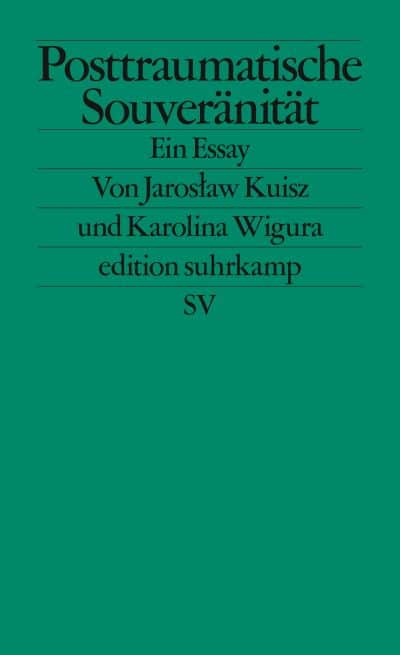
Posttraumatic Sovereignty – Jarosław Kuisz and Karolina Wigura on Shared Experiences in East Central Europe and How They Shape Contemporary Behaviour
In this conversation with RevDem editor Ferenc Laczó, Jarosław Kuisz and Karolina Wigura – authors of Posttraumatische Souveränität. Ein Essay – explain why they have centred the concept of posttraumatic sovereignty in their new book and how it might help us account for current trends in East Central Europe; reflect on the prevalence of trauma discourses and the tensions and risks inherent to such discourses; and discuss how East-West relations in Europe may have been transformed by Russia’s violent escalation and ongoing war against Ukraine and the varied responses to it.
10.01.2024
Podcasts
How Ukraine Has Won Its War of Independence Without Restoring Its Territorial Integrity – Yaroslav Trofimov on Russia’s Invasion and Ukraine’s Survival
In this conversation with RevDem editor Ferenc Laczó, Yaroslav Trofimov – author of the new book Our Enemies Will Vanish. The Russian Invasion and Ukraine’s War of Independence – shows how Ukraine has turned out to be much stronger than hoped whereas Russia has proven significantly weaker than feared; discusses the major crimes Russia has committed in Ukraine and the destruction its war of aggression has wrought; reflects on the experience of reporting on a major conflict in his country of origin; describes the evolving relationship between the Ukrainian leadership and its Western supporters; and shares his assessment of the prospects for Ukraine.
8.01.2024

Interviews
Ukrainians Started as the Scots and Ended Up as the Irish – Yaroslav Hrytsak on the Global History of Ukraine
In this conversation with Visible Ukraine editor Marta Haiduchok and RevDem editor Ferenc Laczó, Yaroslav Hrytsak – author of the new book Ukraine: The Forging of a Nation – explains what makes Ukraine a geopolitically crucial borderland and why the Ukrainian question has become acute at the most critical turns in global history.
24.11.2023

News
Europe’s Two Hearts
The war in Ukraine has shown up the limits of European pacifism and revived a long-forgotten precept: republican opposition to empire. Today’s imperial threat no longer comes disguised as democracy but is openly anti-democratic. Part of the series ‘Lessons of war: The rebirth of Europe revisited’. RevDem publishes today two articles on the consequences of the war in Ukraine for Europe, which are part of a series of Eurozine, a network of magazines to which Revdem belongs. In the coming days we will publish our responses to this debate.
20.09.2023

News
l’Europe qui confond — in Conversation with Hans Kundnani
What is “Eurowhiteness”? How do EU member states deal with their colonial pasts? How does the far right function in the EU? What is the structure of power within the EU? How was Brexit racially structured? Hans Kundnani speaks about his recent publication – Eurowhiteness: Culture Empire and Race in the European Project – with RevDem editor Kasia Krzyżanowska.
14.09.2023

Podcasts
A Savage War of Russian Decline: Serhii Plokhy Discusses the Russo-Ukrainian War
In this conversation co-hosted by Marta Haiduchok (Visible Ukraine) and Ferenc Laczó (the Review of Democracy), Serhii Plokhy – author of the new book "The Russo-Ukrainian War" – discusses why Ukraine was so crucial to the Soviet collapse and how Ukraine and Russia diverged subsequently; explains what made Ukraine a focal point of competition in the post-Cold War decades and which factors enabled the current devastating war; dissects the origins of Russian imperialism and Russia’s current war aims; reflects on the state of Ukrainian Studies and suggests new questions concerning Ukrainian nationalism and Russian imperialism; elaborates on the stages of the unfolding war and the reasons behind Ukraine’s ability to fight back; and ponders what major geopolitical shifts the Russo-Ukrainian war might signal or reinforce.
30.06.2023

News
The War in Ukraine and Transition: In Conversation with Maria Popova
Despite, or perhaps due to, the war in Ukraine there have been positive developments in combating corruption and other issues in anticipation of EU membership. In this RevDem Rule of Law podcast Teodora Miljojkovic discusses these issues around transition with Professor Maria Popova.
20.06.2023

Interviews
Accession Through War? Ukraine and the EU: In Conversation with Roman Petrov
In this podcast, Oliver Garner speaks to Professor Roman Petrov on this subject of “accession through war”. Professor Petrov is the Jean Monney Chair in EU Law and Head of the Centre of Excellence in EU Studies at the National University of Kyiv-Mohyla Academy. He is currently a British Academy Research Fellow at the British Institute of International and Comparative Law.
23.05.2023

The Curse of Russian Imperialism: Martin Schulze Wessel on Imperial Optics, False Dichotomies, and the Need to Reconsider East European History
In this conversation with RevDem editor Ferenc Laczó, Martin Schulze Wessel – author of the new book Der Fluch des Imperiums. Die Ukraine, Polen und der Irrweg in der Russischen Geschichte (Imperial Curse. Ukraine, Poland, and the False Paths in Russian History) – traces the ideas that have shaped Russian imperialism and reflects on their devastating contemporary force; explores key moments in the parallel and entangled histories of Poland and Ukraine and how those histories have been shaped by Russian imperialism across the centuries; dissects what he calls Germany’s “imperialism of a second order” and emphasizes the urgent need to revise Russia-centric interpretations of East European history.
20.05.2023

Heritage in War: A Key to Define the Future of Ukraine
Dóra Mérai, a lecturer of Cultural Heritage Studies at CEU, explores how heritage - often used to promote divisions - has also been reframed in Ukraine following Russia's invasion "to develop empathy, express solidarity, and help people cope with the difficulties".
28.03.2023

In Conversation with Danuta Hübner — Ukraine’s Road to EU Accession
In this conversation with Kasia Krzyżanowska, Danuta Hübner explains the specificities of the EU accession path for Ukraine, elaborates on the difficulties other countries had to overcome (most notably Poland), showcases the problems with Turkey’s and Western Balkans’ EU accession, discusses the criteria of joining the EU, and shares her visions of the future EU.
6.03.2023

News
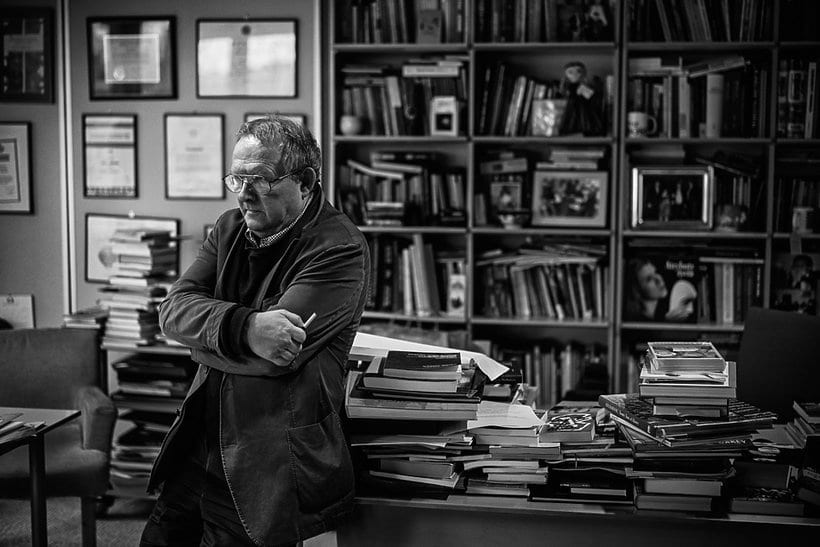
Adam Michnik: The war in Ukraine is not a war between the Russian people and the Ukrainian people
This war, of which we are commemorating the anniversary today, is undoubtedly the most important war of our time, because it is a war in which the imperial-chauvinist-totalitarian project is struggling with the democratic, European, pluralist project on the one hand.
28.02.2023
Ukraine in the Union, or the end-of-history thesis reinvigorated
In this op-ed, RevDem managing editor Michal Matlak looks at the relevance of the war in Ukraine to Fukuyama's often-mocked thesis of the end of history and addresses the implications of the accession process for Ukraine, as well as for the EU.
21.02.2023

News
The Hungarian Government Became Hostage of Its Own Propaganda
In this conversation with RevDem Editor Robert Nemeth, Hungarian journalist Szabolcs Panyi talks about the Hungarian government’s response to the war in Ukraine, why it is not willing to counter Russian infiltration in Hungary, the reasons behind the anti-US sentiment of Prime Minister Viktor Orban and his inner circle, and anti-Western propaganda in Hungary. He also discusses how being targeted by the Pegasus spyware impacted him.
16.12.2022

News
War in Ukraine: 10 essential readings and interviews
On the occasion of Ukraine's Independence Day, we present key texts and interviews on the Russian invasion and its aftermath
24.08.2022

How to Avoid Further Escalation? A Conversation with Wolfgang Merkel on the Scholz Government and German Foreign Policy Today
In this conversation with RevDem editor Ferenc Laczó, Wolfgang Merkel talks about German foreign policy, describes key decisions and non-decisions of the new German government and reflects on the reasons that led him to sign the Open Letter to Chancellor Scholz.
8.06.2022

Change of framing and the need for peace in Ukraine: A reply to Szulecki and Wig
Responding to critiques of their op-ed on why the war in Ukraine should not be discussed using the "democracy vs. autocracy" framework, authors Irina Domurath and Stefano Palestini further develop why orienting the discussion around Russia's abuse of international law could draw more international support and avoid escalation into a Third World War.
25.05.2022

Immediate EU membership for Ukraine? In conversation with Dimitry Kochenov
This interview, conducted by Rule of Law section editor Oliver Garner, considers the feasibility of immediate EU accession for Ukraine with Prof. Dimitry Kochenov, Professor in the CEU Legal Studies Department and Lead Researcher in the Democracy Institute Rule of Law work group.
20.04.2022

The war in Ukraine is all about democracy vs dictatorship
A dictatorship has just brutally attacked its democratic neighbor. It’s not the first time in history that happens, but there are good reasons to see the war in Ukraine as the first one defining the conflict lines of this century.
9.04.2022

The Discourse of Privilege: Western Europe and the Russian War against Ukraine
In this op-ed by Elżbieta Kwiecińska and Pavel Skigin, they detail why "being a radical pacifist is a great privilege that only Westerners can afford nowadays."
7.04.2022

Ukraine: not a war about democracy
In this op-ed by Irina Domurath and Stefano Palestini, they discuss the war in Ukraine and why the West should leave behind the narrative that this is a "war of values."
25.03.2022
News
The War in Ukraine and the Refugee Crisis
Dr. Marta Jaroszewicz elaborates on the current refugee crisis as the result of the war in Ukraine, the situation in the neighbouring countries, and the EU refugee protection.
24.03.2022

