Future of Europe
Innovation in democracy and the future of Europe are intertwined as policymakers and academics strive to find solutions to a swath of issues. Ongoing debates include the concept of treaty changes, the institutional setup of the European Union, the politicization of Europe, and the fate of European federalism.
Future of Europe
The State of the Labour Constitution
The Mandelson affair, Britain’s former U.S. ambassador being deeply enmeshed in Jeffrey Epstein’s network of powerful contacts, has led to the resignation of the Prime Minister’s chief of staff, Morgan McSweeney. As a result, Keir Starmer’s already shaken government finds itself in yet another crisis. However, McSweeney’s departure may also present an opportunity to repeal failing policies and rhetoric. Nicolas Reed Langen analyzes the roots of the Labour Party’s current malaise and explores prospects for change to prevent a further ascent of the far right.
19.02.2026

Future of Europe
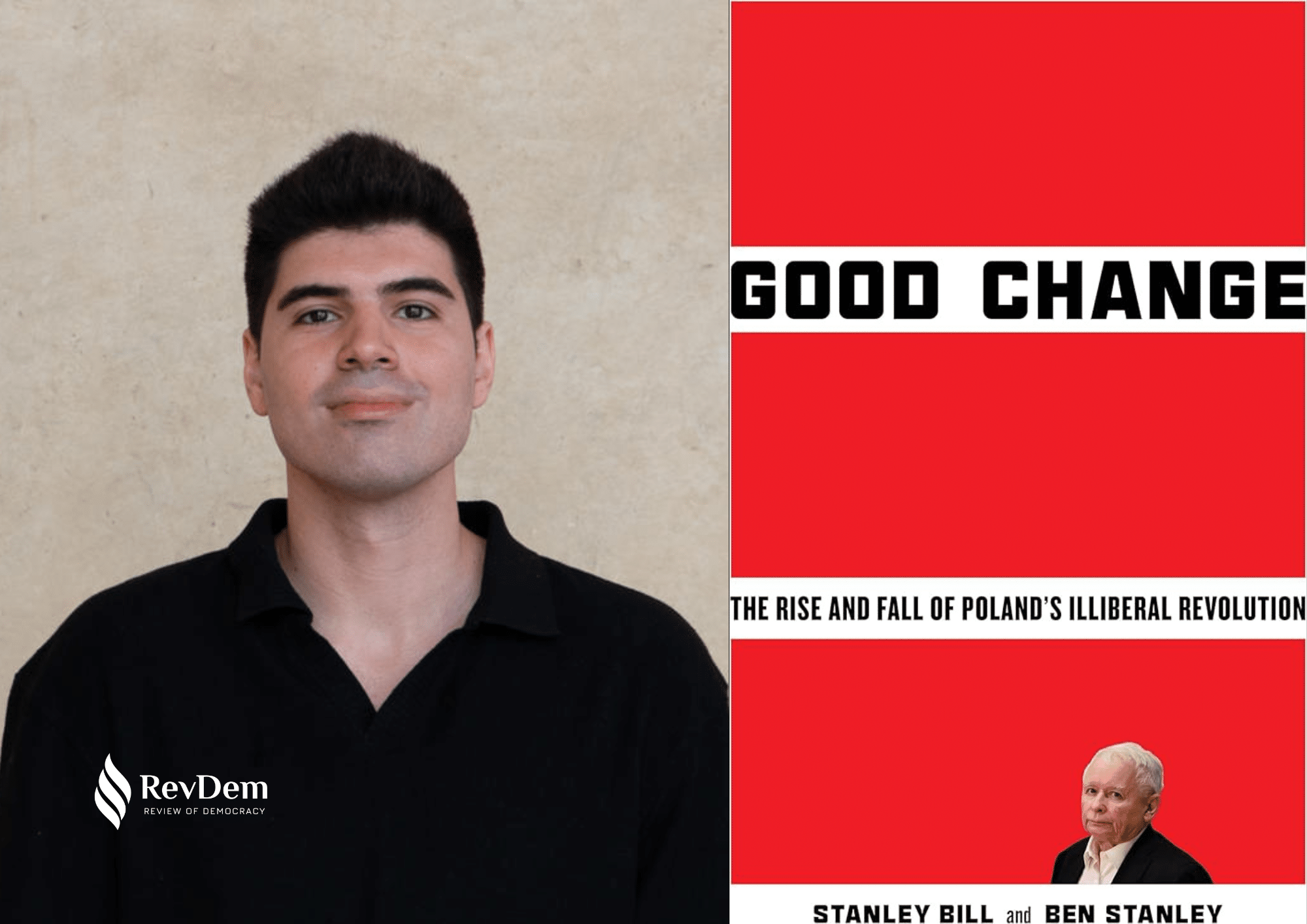
The Polish Economic Miracle? A Review of Good Change and Poland’s Illiberal Turn
Poland's post-socialist economic transformation has long been celebrated as a free-market success story. In Good Change: The Rise and Fall of Poland's Illiberal Revolution, Stanley Bill and Ben Stanley complicate this narrative by tracing how the uneven distribution of Poland's prosperity created the opening for Law and Justice (PiS) to build a credible redistributive program: one that proved both electorally decisive and socially transformative. Kutup Aytekin's review highlights how the book places economic policymaking at the center of PiS's trajectory: its welfare agenda helped the party consolidate power, yet ultimately the liberal opposition's adoption of that same redistributive consensus contributed to PiS's downfall.
12.02.2026
Future of Europe
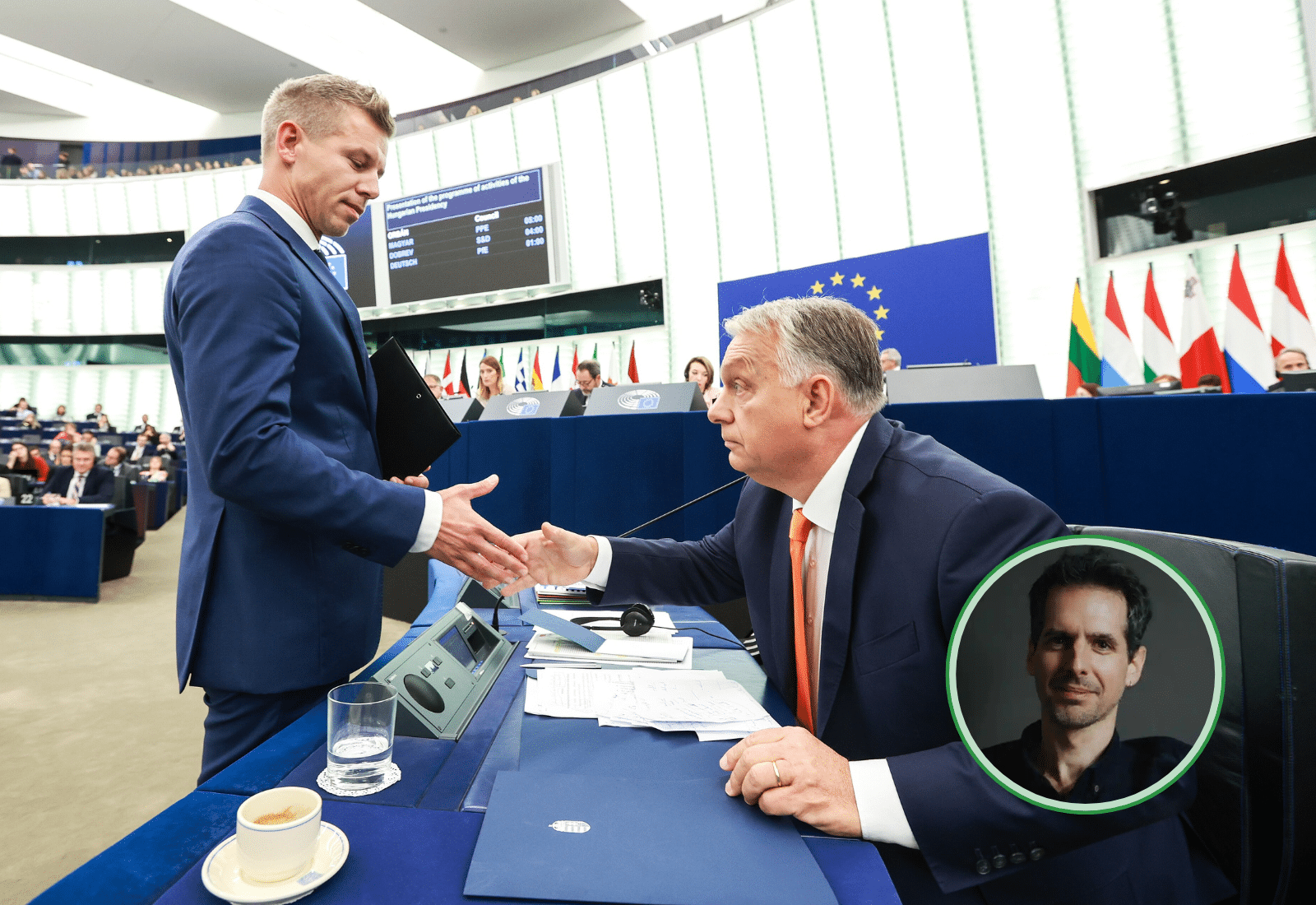
Fidesz on the Defensive: Sixteen Years of Dominance Under Threat
Hungary's April 2026 parliamentary election presents the first serious challenge to Viktor Orbán's sixteen-year rule. Péter Magyar's Tisza party, built on technocratic populism and a clean break from the discredited old opposition, leads Fidesz by roughly ten points among committed voters. This analysis examines the roots of Fidesz's vulnerability, the dynamics of a campaign dominated by economic grievances and a series of scandals, and the scenarios that could yet determine the outcome.
4.02.2026
Future of Europe
Manufacturing Moral Panics? NIKI, Anti-Genderism, and the Politics of LGBTQ+ Exclusion in Greece
With just 4 percent of the vote, Greece’s far-right party NIKI succeeded in reshaping the national debate on LGBTQ+ rights. By mobilizing Orthodox Christianity, the party reframed same-sex marriage and adoption as existential threats to the nation, family, and faith. Through moral panic, religious symbolism, and strategic populist framing, a marginal political actor launched a powerful cultural counteroffensive, revealing how influence in populist politics often far exceeds electoral weight in moments of social change.
13.01.2026

Future of Europe
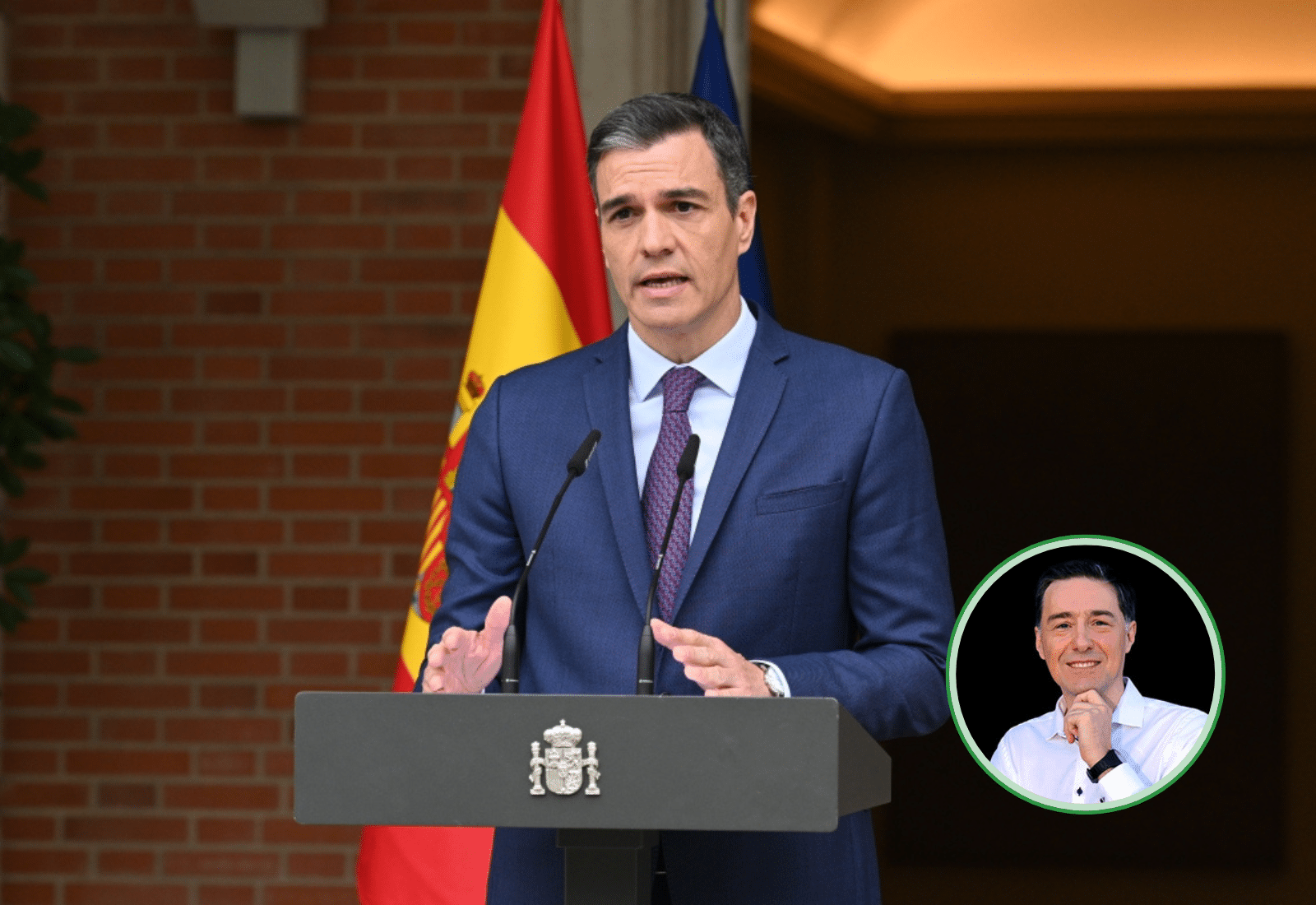
Playing Constitutional Hardball in Spain
Spain’s political struggles reveal how democratic erosion increasingly unfolds through boundary-pushing legal tactics rather than overt authoritarian ruptures. These dynamics illuminate a broader pattern in which the letter of the law is upheld while its spirit is strategically hollowed out.
3.12.2025
Future of Europe
Reimagining Hungary’s Foreign Policy: Challenges and Opportunities for a Future Democratic Government
The April 2026 elections can mark the end of Hungary’s 16-year experiment with illiberalism and open a new chapter in its relations with Europe and the wider world. After more than a decade of multivectoral diplomacy—balancing uneasily between Brussels, Washington, Moscow, and Beijing—a new government might need to redefine the country’s place within the Euro-Atlantic community while confronting the legacies of dependency and mistrust left behind. The following analysis outlines the strategic framework for such a reorientation, mapping the challenges, trade-offs, and opportunities facing a future democratic Hungary.
25.11.2025

Future of Europe
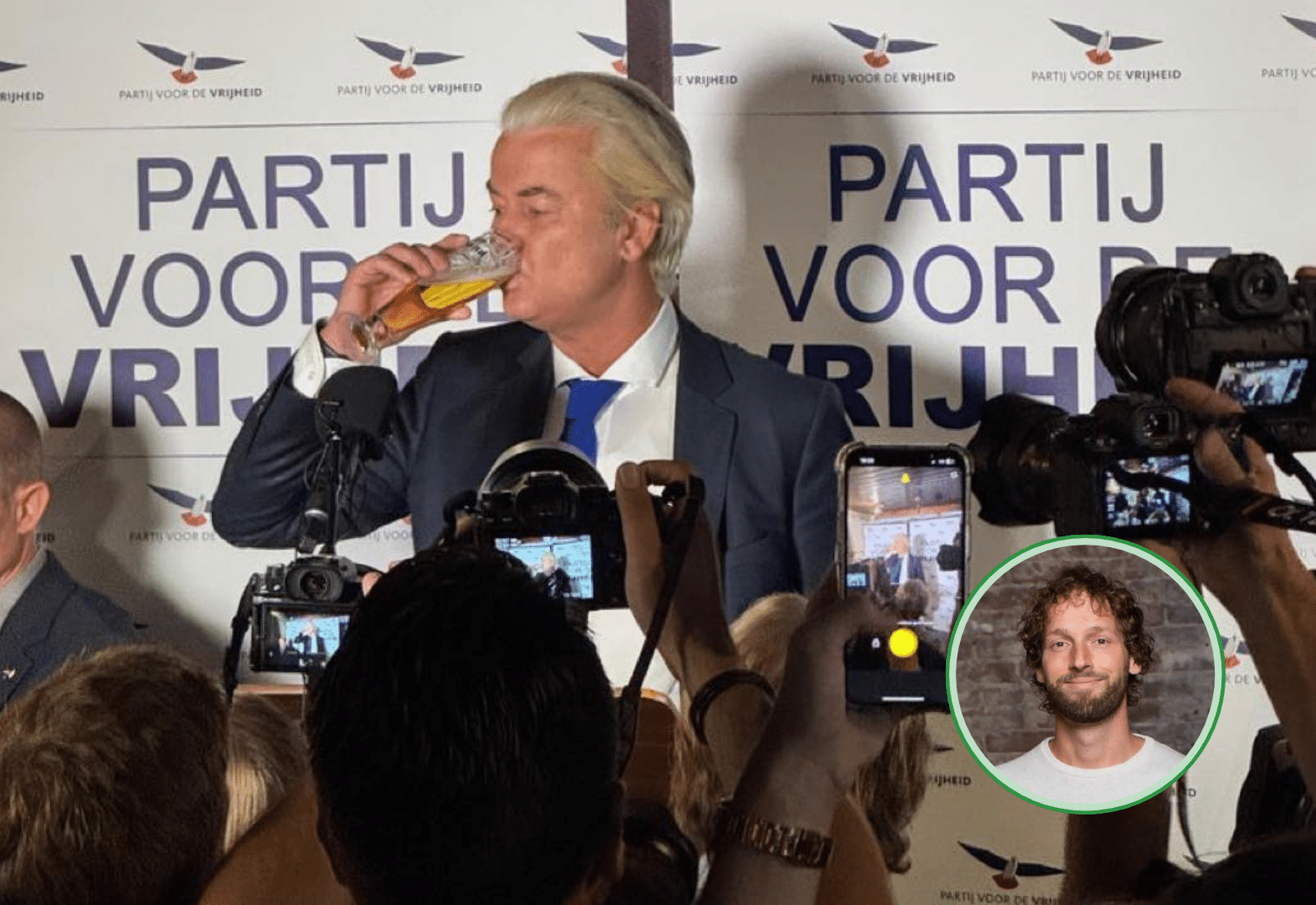
Dutch Elections: Rule of Law Alert 2.0?
Dutch voters are heading to the polls today, and while the party landscape remains deeply fragmented, the far-right PVV led by Geert Wilders is likely to come out on top once again. In his op-ed, Niels Graaf argues that the previous government attempted to undermine the rule of law in the Netherlands and examines the risks that may lie ahead.
29.10.2025
Future of Europe
Czech Elections: The Spectacular Failure of the “Pro-Democracy” Block
Andrej Babiš’s ANO triumphed as liberal rivals preached democracy but ignored inequality. Marie Heřmanová and Kateřina Smejkalová argue that this moralizing stance helped fuel the far right’s rise—and deepened Czechia’s democratic malaise.
8.10.2025

Future of Europe
What Does Moldova’s 2025 Election Say about its Democracy?
Roughly a week ago, on September 28, Moldovan citizens at home and across the globe went to voting polls to decide which political parties would represent their interests in the next four-year parliamentary cycle. The turnout exceeded the threshold for validity, making the vote to be declared valid and the election results being officially accepted at home and internationally. After the votes were counted, the results got warm international praise, especially from representatives of the European political establishment, for Moldovans choosing the path of European integration and transparency. In reality, however, joining the European family of states might be a more thorny path than the electoral promises highlighted.
7.10.2025

Future of Europe
The Co-optation of Antonio Gramsci’s Ideas by the Contemporary (Far-)Right
This episode, part of the series When the Far Right and the Far Left Converge, features Francesco Trupia and Marina Simakova discussing the ideological co-optation of Antonio Gramsci’s ideas by the contemporary (far-)right. They examine when and how right-wing actors adopted his political language, and how political conjunctures in and beyond Europe have shaped this process.
29.09.2025

Future of Europe
Defending the Democratic Identity of the EU
Determined to create an ever closer union, the EU has evolved over the decades into a European democracy. While it may be identified with a new term as a democratic union of democratic states, its constitutional identity is under pressure from external and internal threats. This article calls on the EU to defend its constitutional foundations and to embrace and promote its functioning as a European democracy.
23.09.2025

Future of Europe
Colonial Roots and Continuities in Europe’s Migration System –In Conversation with Janine Silga
When the first treaties that laid the groundwork for today’s European Union and the European Convention on Human Rights were signed after the Second World War, many of today’s member states were still significant colonial powers—empires. It was only in the years that followed that these European empires eroded, and many countries in the Global South gained independence. However, while colonialism formally ended, many have argued that coloniality has persisted. Although this applies to different areas, one of the most important is migration governance. Here, European countries have been accused of replacing explicitly racialized mechanisms with a facially race-neutral apparatus that nonetheless constitutes a system of neocolonial racial borders that benefits some and disadvantages others.
15.09.2025

Future of Europe
From Victims to Workers: The Politics of Deservingness in Europe’s Support for Displaced Ukrainians
Europe’s ‘extraordinary solidarity’ with displaced Ukrainians in 2022 – rooted in images of vulnerability and cultural proximity – is increasingly being replaced by a politics of conditionality. Across Czechia, Germany, and Poland, benefits are shrinking, and public debates frame refugees less as victims of war than as workers expected to prove their worth through employment. This shift reveals how European governments, spurred on by far-right politicians who question displaced people’s right to stay, are reshaping solidarity around labour market deservingness, with troubling implications for the future of refugee protection in Europe.
10.09.2025

Future of Europe
Of Grand Designs and Ever Closer Unions: The Unfinished History of European Integration
„Le nationalisme, c’est la guerre”. These words, famously uttered by François Mitterrand in his address to the European Parliament from 1995, are invoked by Frans Timmermans, the former Vice-President of the European Commission, in the foreword to The Unfinished History of European Integration (7). At a time of “the end of history,” when calls for strengthening Europe’s unity and strategic autonomy as the only means of survival in an increasingly unstable world are met with nationalist backlash, studying the history of European integration – and drawing lessons from it – seems pertinent as ever.
9.09.2025

Future of Europe
A New Constitutional Settlement for Poland? – In Conversation with Maciej Kisilowski (Part 2)
In this part, Professor Kisilowski lays out his proposals for a new constitutional settlement for Poland, aimed at addressing the roots and consequences of the severe polarization of the Polish society. He builds upon the arguments expounded in a volume edited by him and Professor Anna Wojciuk, Umówmy się na Polskę (ZNAK 2023), in which thinkers from all across the political spectrum shared their ideas for changing Poland’s political status quo.
4.09.2025

Future of Europe
The Illiberal Trap: Stanley Bill and Ben Stanley on Trilemmas and Warnings from Poland
In this new episode of our special series produced in partnership with the Journal of Democracy, Stanley Bill and Ben Stanley draw on their new article “Democracy After Illiberalism: A Warning from Poland” (July 2025, Vol. 26, No. 3) to discuss the challenges, dilemmas, and paradoxes of liberalism after illiberalism in Poland. They reflect on the concepts of liberalism and illiberalism to dissect the approach Donald Tusk’s current government has taken and its major consquences. They also consider the wider lessons that may be drawn from recent and ongoing Polish experiences.
1.09.2025

Future of Europe
Rebels with a Welfare Cause: Turkey’s Youth Rising against Authoritarianism
After Istanbul Mayor Ekrem İmamoğlu’s imprisonment in March 2025, youth-led protests swept Turkey. Fueled by digital activism and pop culture, this new resistance converges with social policy innovations in opposition-run cities, marking a generational shift in how dissent and governance challenge authoritarianism.
22.08.2025

Future of Europe
War, Oligarchs, and the Future of Ukraine’s Political Economy – Inna Melnykovska on Civic Transformation, Reconstruction and EU Influence in Wartime Ukraine
How is war transforming Ukraine’s economy—and its oligarchs? In this Review of Democracy podcast, political economist Inna Melnykovska (Central European University) discusses how the full-scale Russian invasion has led to surprising shifts in business-state relations, including a turn toward civic responsibility among Ukraine’s biggest companies.
20.08.2025

Future of Europe
Ruling the Spanish Void: What Spain’s Social Democratic Party Can Teach European Liberal Democracies about Party Politics
The Spanish Socialist Workers’ Party’s recent alleged corruption scandal involving a backhander scheme and two former number-twos in the party may prove to be the silver lining Spain’s political system needs to reform and modernize its political parties. The decision now rests in the hands of party leaders.
15.08.2025

Future of Europe
Holding Frontex Accountable – In Conversation with Joyce De Coninck
In current public discourse, human rights violations at the EU’s borders are inextricably linked to one specific actor: the European Border and Coast Guard Agency – or, in short, Frontex. Since its establishment in 2004, human rights activists have become increasingly aware of various rights violations committed by the agency, particularly in the Mediterranean. To name just one example, Frontex has been accused of providing the locations of migrants intercepted at sea to the Libyan coast guard, which then transported them to camps where they have been systematically raped, tortured, and enslaved. Remarkably, despite accusations of the most severe human rights violations, Frontex has largely managed to avoid legal consequences. Currently, Frontex stands before the Grand Chamber of the Court of Justice of the EU for the first time in its history.
11.08.2025

Future of Europe
The Aftermath of Poland’s Presidential Election – In Conversation with Maciej Kisilowski (Part 1)
In Part 1 of this podcast, Maciej Kisilowski examines the results of Poland’s presidential election as well as its implications for Poland’s political dynamics over the next few years. In particular, he addresses the issue of whether Polish liberals and progressives are capable of correctly identifying the prevailing sentiments in a deeply divided society.
6.08.2025

Future of Europe
The Post-2024 Italy: Figaro Qui, Figaro Qua…
Italy, long a master of diplomatic balancing, is reclaiming its traditional role as a geopolitical hinge between Europe and the wider world. Under Prime Minister Giorgia Meloni, Rome blends nationalist rhetoric with pragmatic alliances by playing Brussels and Washington with equal calculation. As ever, Italy pursues influence through flexibility, not fixed loyalties. By Julia Khrebtan-Hörhager Meloni’s diplomatic balancing act: Strategic chameleonism Italian Prime Minister Giorgia Meloni’s relatively recent visit to former U.S. President Donald Trump spotlights Italy’s tightrope walk between European solidarity and a revived transatlantic flirtation. Controversial and calculating, Meloni continues to toy with America’s favor. She was the only European leader to attend Trump’s inauguration in January and counts tech titan Elon Musk among her allies. In many ways, Meloni reflects Europe’s own identity crisis: regional power, global ambition. Italy, after all, was a founding [...]
18.06.2025

Future of Europe
In Uncertain Waters: The Restoration of the Rule of Law in Poland
The outcome of Poland’s presidential election has the potential to significantly harm the process of rule of law restoration in the country. In her op-ed Anna Wójcik examines the current situation and explores what the future strategy of the pro-democratic governing coalition must entail.
11.06.2025

Future of Europe
A Doomed Bid to Erase Dissent: İmamoğlu and the Future of Turkish Opposition
As the crackdown on Istanbul’s mayor Ekrem İmamoğlu intensifies, the stakes for the democratic opposition in Turkey grow higher. This analysis explores how legal repression, symbolic erasure, and authoritarian overreach may backfire — entrenching resistance, destabilizing governance, and echoing global patterns of democratic decline, without yet sealing Turkey’s fate as another Venezuela.
10.06.2025

Future of Europe
Pride Hungary: Orbán’s Culture War Escalates Ahead of 2026 Election
June is designated as Pride Month in many countries, but Orbán’s Hungary has essentially banned Pride events, masking democratic backsliding behind culture wars. Damien Le-Hoste unpacks the political theatre fueling authoritarian tactics ahead of a crucial 2026 election.
3.06.2025

Future of Europe
The Implications of the Termination of US Government Assistance for Civil Society in Central Europe – Part II
The second part of this article analyzes the impact of the termination of US Government Assistance on the implementer landscape and the indirect political implications in the CEE region.
29.05.2025

Future of Europe
The Implications of the Termination of US Government Assistance for Civil Society in Central Europe – Part I
The first part of this article recounts the background of the termination of US Government Assistance and its immediate financial consequences for the CSO sector in Central and Eastern Europe.
28.05.2025

Future of Europe
What is Union Citizenship For?
With its judgment in Case C-181/23, the Court of Justice of the European Union (CJEU) has put an end to a long-standing debate: Malta’s citizenship-by-investment scheme is incompatible with EU law because it violates the “bond of solidarity and good faith” between the individual and the member state that Union citizenship requires. In her op-ed, Anja Bossow examines the potential implications of this new criterion—both its perils and its potential promise.
21.05.2025

Future of Europe
Tactical Dilemmas of Democratic Front-Sliding: Early Lessons from Poland
Today, one-and-a-half years after the right-wing populist government with authoritarian ambitions left office, Poland is a real-time lab for democratic front-sliding. Different tactics deliver mixed results. The presidential election will certainly be consequential for this process. However, some early conclusions from more and less radical approaches to restoring democracy and the rule of law in the country have already emerged and provide useful hands-on evidence for the future.
16.05.2025

Future of Europe
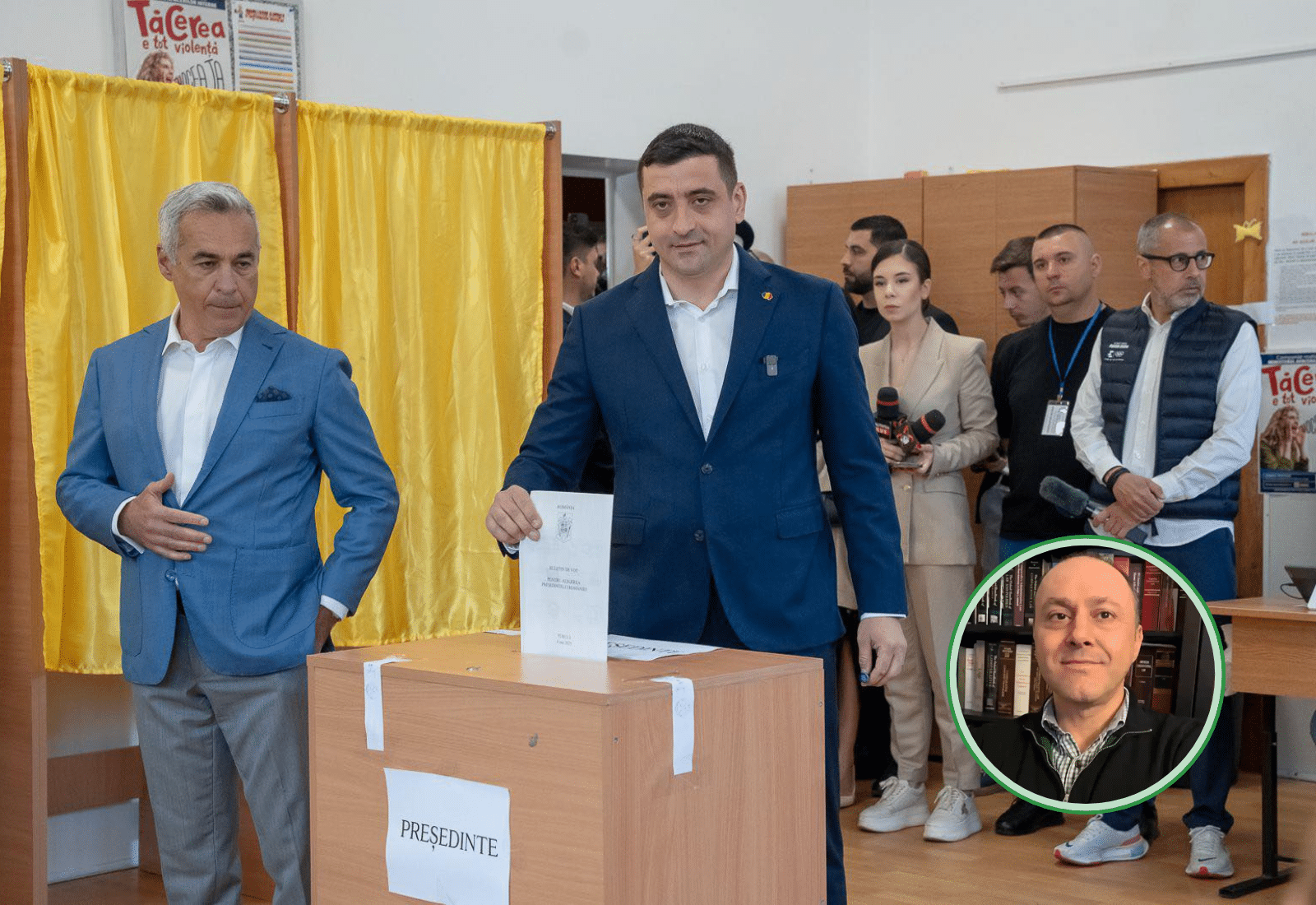
Constitutional Death Foretold? The Romanian Elections Saga in a Nutshell
Romania has been facing a political crisis marked by controversial court rulings, annulled elections, and the rise of far-right figures. Judicial overreach, social fragmentation, and foreign influence fueled public distrust, culminating in ultranationalist George Simion’s victory in the 2025 restaged presidential elections.
13.05.2025
Future of Europe
The Untold Story of Schengen: A Conversation with Isaac Stanley-Becker
In this episode of the RevDem podcast, investigative journalist and historian Isaac Stanley-Becker discusses his revealing new book, Europe Without Borders: A History (Princeton University Press). Drawing on newly accessible archives and in-depth interviews, Stanley-Becker sheds light on the little-known origins of the Schengen Agreement—long celebrated as a cornerstone of European integration and free movement. Yet, as this conversation uncovers, the story behind Schengen is far more complex.
12.05.2025

Future of Europe
Illiberal Transatlantic Ties and the Reshaping of Democracy: Lessons From the US and Hungary
In this episode of the Democracy After 2024 series, Zsuzsanna Végh and Daniel Hegedűs examine transatlantic cooperation between state and non-state actors in the United States and Hungary. They analyze commonalities in narratives and shared practices, assessing their impact on democracy in Central and Eastern Europe and beyond. Disclaimer: The views and opinions expressed in this episode are solely those of the speakers and do not necessarily reflect the positions of the German Marshall Fund of the United States or any institutions or organizations with which they are affiliated. Zsuzsanna Végh is a program officer at the German Marshall Fund of the United States and an associate researcher at the European Council on Foreign Relations. Her analytical focus is on the populist radical right in Central and Eastern Europe, its impact on foreign policy and democratic quality, and the foreign and EU policies of the Visegrád countries. Daniel Hegedüs is a German Marshall Fund of the [...]
16.04.2025

Future of Europe
How the European Council Leads – In Conversation with Martina Vass
The European Council brings together all of the heads and states of government of the European Union in order to drive policy. In the last decade the EU has faced crises of the economy, membership, values, and migration. This conversation between our co-managing editor Oliver Garner and Dr Martina Vass considers these issues through the lens of the latter's monograph.
31.03.2025

Future of Europe
A Fragile Constitution? – In Conversation with Dieter Grimm
On March 25, 2025, the “new” German Bundestag began its work. While the government will likely consist of the familiar coalition of Social and Christian Democrats, it may face unprecedented challenges. In the new composition of the German parliament, the center parties no longer hold the two-thirds majority required to amend the German constitution—the Grundgesetz. After, in the “old” Bundestag, a parliamentary motion was adopted for the first time since the fall of the Nazi regime, only due to the support of the far right; some commentators have gone so far as to declare the end of the German political center. Shortly thereafter, the far right achieved record polling numbers in the federal elections. These circumstances raise the question of whether the German legal system is resilient enough to withstand periods of political instability. While the German Constitution is widely regarded as a success, some argue that it has primarily functioned as a “Schönwetter-Verfassung”—a [...]
27.03.2025

Future of Europe
The European Media Freedom Act: The Solution to Capture or Just Fine Print?
As the EU pushes new media freedom standards, the threat of media capture is persistent across Europe. In this op-ed, Oliver Money-Kyrle analyzes the threat, examining how governments manipulate media through control of public service media and regulatory bodies, ownership structures, and state advertising, and what measures are needed to safeguard editorial independence.
26.03.2025

Future of Europe
Transnational Authoritarian Repression – In Conversation with Caroline von Gall
While the Putin regime’s war against Ukraine follows the tradition of Russian and Soviet imperialism, it’s methods have evolved. The “Iron Curtain” no longer exists, and in an increasingly globalized world where social media has transformed communication, authoritarian states no longer merely sever ties with the outside world. Instead, Putin’s Russia is actively engaging in transnational authoritarian repression.
19.03.2025
Future of Europe
Quo Vadis, Deutschland? – The Future of the Green Agenda
This mini-series brings together leading scholars working in and on Germany to offer their insights into the key questions arising from this pivotal moment of transition. Through a multi-angled, interdisciplinary discussion, it examines the political, economic, and social forces driving change and shaping the country’s and the broader region’s future. In this third edition, our contributors examine the pressures weighing on Germany’s ecological transformation.
18.03.2025

Future of Europe
A Watchdog for European Democracies – In Conversation with Darian Pavli
Established in 1959 in the aftermath of World War II, the European Court of Human Rights (ECtHR) was designed from the outset as “a backstop against authoritarian regression.” For a long time, democracy was an emerging system, with more and more European countries ratifying the European Convention on Human Rights (ECHR) as they transitioned to democratic governance. However, since the global peak of democracy in the mid-2000s, democratic backsliding has become an ongoing trend across the European continent. Some states that ratified the ECHR have transitioned into fully-fledged authoritarian regimes or hybrid states, while others are showing early signs of heading down a similar path. By waging war against Ukraine, Russia pushed this to such an extent that it was ultimately excluded from the Council of Europe.
13.03.2025

Future of Europe
Liberal Democratic Standards Are Not Just an Opinion – Karolina Wigura on Polish Politics, Liberal Emotions, and Her Major Concerns
In the latest episode of our Democracy After 2024 series, Karolina Wigura discusses Poland’s current role in Europe and the changing polarization between liberal and illiberal forces; analyzes the role of emotions in contemporary liberal politics; reflects on how we distinguish between agendas of accountability, on the one hand, and of retribution and revenge, on the other; and explains what she will watch particularly closely in the coming months.
12.03.2025

Future of Europe
German Election Brings Some Relief but Huge Challenges Lie Ahead
After the dust settled on election day and the sun rose over the Hauptstadt one thing became abundantly clear: the outcome could have been far worse. The terror attacks in Solingen, Mannheim, Magdeburg, Aschaffenburg and Munich made asylum and immigration the top electoral issue, forcing the two governing left-wing parties (the SPD and Greens) to play defense, and compelling conservative leader Friedrich Merz to launch a law-and-order offensive focused on the securitization of borders. While the maneuver prevented the far-right Alternative for Germany (AfD) – which had been calling for similar measures since 2015 – from taking ownership of the issue, it also led Merz’s Christian Democrats (CDU) to pass a non-binding parliamentary resolution together with the far-right.
25.02.2025

Future of Europe
An Existential Threat? – In Conversation with Christoph Flügge
The role of international courts presents distinct and complex challenges compared to other judicial areas. Since the enforcement of judgments relies on the willingness of states to cooperate, international criminal law has primarily been applied against weaker states on the global stage. An international court seeking to act against representatives of strong – western – countries in the international sphere faces a difficult dilemma. On one hand, the law must apply equally to everyone. A court that fails to uphold this principle risks losing its legitimacy. On the other hand, a court that alienates powerful states risks rendering its judgments ineffective or even jeopardizing its own existence. This is illustrated by the events following the International Criminal Court’s (ICC) issuance of arrest warrants for Hamas and Israeli leaders. Numerous Western politicians harshly criticized the ICC’s efforts to hold representatives of their ally, Israel, accountable for [...]
18.02.2025

Future of Europe
Access Denied: Abortion Data Failures and Erosion of Accountability in Italy
Delayed data on abortion care in Italy impacts citizens’ ability to effectively advocate and hold their government accountable for the management of public healthcare. The Italian Ministry of Health is required to report data on abortion yearly, but this year’s report was significantly delayed. Scholars, advocates, and doctors themselves have raised concerns about transparency and data quality, and how delays affect trust in democratic institutions.
7.02.2025

Future of Europe
The Significance and Trajectory of Ukrainian Democracy Since 2022
In this episode of the Democracy After 2024 series, Ukrainian journalist and editor Arina Kravchenko hosts Ukrainian poet, prose writer, and essayist Mykola Riabchuk. They discuss the significance of democracy to Ukrainian national identity and the country’s social fabric. The conversation focuses especially on Ukrainian democracy’s trajectory since the beginning of Russia’s full-scale invasion in 2022 as viewed from within Ukrainian society and as a rediscovered object of interest from the outside. Mykola Riabchuk is the president of the Ukrainian PEN-center and a senior research fellow at the Institute of Political and Nationalities’ Studies, the Academy of Sciences of Ukraine. His most recent publications include At the Fence of Metternich’s Garden. Essays on Europe, Ukraine, and Europeanization (Stuttgart, 2021) and Nationalist’s Lexicon (in Ukrainian), a collection of essays published in 2022. Arina Kravchenko is a Ukrainian journalist, editor, and book reviewer. Artwork: [...]
31.01.2025

Future of Europe
European Values and Democratic Links – In Conversation with Miriam Schuler
In the last decade the Court of Justice of the EU has rapidly developed its case-law on the enforcement of EU values. Following multiple cases in which the Court enforced provisions that instrumentalize the Rule of Law in actions involving the ‘backsliding’ Member States of Poland and Hungary, the question now arises as to whether EU action may be justified to protect the co-foundational value of democracy during national elections in the EU’s Member States. The upcoming elections in the Federal Republic of Germany in February will bring these issues into sharp relief. In the latest RevDem Rule of Law podcast, Oliver Garner discusses these themes with Miriam Schuler (King’s College London), whose PhD research analyzes the protection of values within the European Union. The Current State of Play While Article 2 of the Treaty on European Union (TEU) outlines a broad set of foundational values, Schuler argues that, over the past decade, EU actions have [...]
28.01.2025

Future of Europe
The Tusk Doctrine: How Does Poland Want to Lead Europe?
Poland is taking on the rotating presidency of the Council of the European Union at a time when it is emerging as a crucial player in European politics. With a focus on defense, Ukraine, and balancing green policies with economic competitiveness, Poland’s leadership marks a pivotal moment for Europe’s future.
27.01.2025

Future of Europe
What Difference Can Rotating Presidents Make?
The Hungarian Presidency of the Council of the European Union ended recently while the Polish one has just begun. In a moment of grave concern over the outcome of the Russo-Ukrainian war, Donald Trump’s return to the White House, and sharpening conflict between liberal and illiberal forces within the EU, rarely have so many expectations and worries been attached to rotating presidencies as to these two. In this special panel, we take the Hungarian and Polish presidencies as lenses to reflect on the contemporary EU and its major challenges. How unusual was the Hungarian Presidency and how has the EU dealt with the Hungarian government’s agenda? What are the major ambitions of the current Polish Presidency and how would you assess their chances of success? What strategies can the EU follow now that Donald Trump is about to start his second term, and how prepared is the Union for the challenges that lie ahead? How much stronger have illiberal forces become within the EU and how [...]
21.01.2025

Future of Europe
Who Is Going to Represent European Interests in the Future? – Zsuzsanna Szelényi on the Transformation of the EU and Our New Era of Uncertainty
In this conversation at the Review of Democracy, Zsuzsanna Szelényi discusses key questions in contemporary politics with a focus on European affairs. She explores the main priorities of Ursula von der Leyen’s second Commission and what might change as compared to her previous term. She also discusses the main challenges the EU faces when it comes to transatlantic relations and how Trump’s second term could impact the unfolding and outcome of Russia’s war of aggression against Ukraine – and whether the position and role of Hungary’s Orbán regime might change in international politics.
20.01.2025

Future of Europe
Overcoming Membership Fatalism – A Conversation with Tom Theuns on Democratic Theory and His Immanent Critique of the EU
In this conversation, Tom Theuns – author of Protecting Democracy in Europe: Pluralism, Autocracy and the Future of the EU – reflects on EU institutions’ rather narrow conception of democracy and their complicity in democratic backsliding in EU member states; considers how a more coherent and effective response to the latter processes could be designed; critiques the EU’s ‘membership fatalism’ and explains why he has proposed an expulsion mechanism; and positions his approach within political theory and discusses the reception of his ideas also beyond that field.
13.01.2025

Future of Europe
Five Books on European Themes in 2024
Here come our five book recommendations on European themes from 2024 that dissect conceptions of democracy, consider original ways to protect it, analyze European integration and disintegration – and show the dark prehistory of the former.
7.01.2025

Future of Europe
How Germany’s Fiscal Orthodoxy Toppled Its Government and Imperils Its Future
On November 6, 2024, Chancellor Olaf Scholz dismissed Finance Minister Christian Lindner, ending Germany’s “traffic light” coalition in dramatic fashion. This wasn’t just a matter of personal differences—it was the inevitable result of a fiscal orthodoxy that has shackled Germany’s economy for over a decade. Dogged adherence to balanced budgets has systematically thwarted critical investments in infrastructure, climate action, and digitalization, while external demand masked the model’s flaws. With export markets shrinking in the United States and China, the enablers of this approach have fallen, exposing deep cracks in the foundations of Germany’s economic model. Yet the political obstacles to dismantling this self-harming paradigm remain formidable.
11.12.2024

Future of Europe
The Mystic Candidate – Călin Georgescu’s Blend of Orthodox Faith, Mysticism, and Power
In this conversation at the Review of Democracy, Ionuț Biliuță discusses the connections between Orthodoxy and nationalism in Romania and to what extent they have influenced this year’s presidential elections; the revival of narratives concerning ‘fascist martyrs’ by Călin Georgescu and other radicals; the impact the 2018 Constitutional referendum on same-sex marriage had on radicalization; the ideas in transnational circulation that have inspired Georgescu's statements, including Alexander Dugin’s and those of Donald Trump’s Evangelical supporters; and the steps that the Romanian Orthodox Church could take to dissociate itself from far right discourses.
9.12.2024
Future of Europe
The Rise of Călin Georgescu, Romania’s Neo-Legionary Presidential Candidate
Romania’s 2024 presidential race reveals again the troubling global rise of far-right populism. On December 8, Călin Georgescu, a pro-Kremlin independent candidate will compete with Elena Lasconi (USR- Save Romania Union). Yet, Georgescu’s rise did not come out of nowhere. As Adina Marincea demonstrates in this article, Călin Georgescu’s alarming advance reflects years of mobilizations by neo-legionary groups, Orthodox clergy, and Kremlin-aligned factions.
5.12.2024

Future of Europe
Red Flags and Writings on the Wall? Rising Threats to Democracy on Both Sides of the Atlantic
Donald Trump has been re-elected in the United States, and Germany is preparing for snap elections in February 2025. Both countries are likely to face political changes as they are witnessing the rise of anti-establishment movements. How resilient is democracy in Germany and the United States? Should we worry?
3.12.2024

Future of Europe
Against Presentism: Post-National Constitutionalism as a Critical-Emancipatory Project
The book Postnational Constitutionalism: Europe and the Time of Law is a novelty for those who eagerly look for creative approaches to the quandary of constitutionalism beyond the State. According to Paul Linden-Retek, post-national constitutionalism is a critical-emancipatory project, consisting of a re-imagination of identity and self-authorship over time. For this to happen, constitutional open-endedness is necessary, particularly in the case of the European Union (EU).
29.11.2024

Future of Europe
Revising European Integration History in an Age of Uncertainty – Karin van Leeuwen, Aleksandra Komornicka, and Koen van Zon on Their Interdisciplinary Handbook with a Historical Focus
In this conversation at the Review of Democracy, Karin van Leeuwen, Aleksandra Komornicka, and Koen van Zon – contributors to The Unfinished History of European Integration that has now appeared in a revised edition – elucidate the main questions that organize their overview of European integration history; reflect on the applicability and usefulness of various influential theories when trying to narrate the history of European integration today; show what special contributions historians can make to the interdisciplinary study of the European Union; and discuss recent advances in the historiography of European integration, specifying questions that would deserve more attention in the future.
27.11.2024

Future of Europe
The Independence of the European Courts at Risk? – In Conversation with Marek Safjan
The attempt to transform a democracy into an authoritarian state often begins with the elimination of independent jurisdiction. Constitutional courts, in particular, are targeted - either to incapacitate them or even to turn them into enablers of governmental politics. This has been observed in Poland and Hungary. In Poland, after the PiS party was voted out of office, efforts are now underway to restore the independence of the constitutional court and to ensure better protection in the future. Meanwhile, in Germany, there are discussions about strengthening the resilience of the Federal Constitutional Court. This written interview considers the state of judicial independence in the EU today from a post-judicial career retrospective. Professor Marek Safjan was Poland’s appointee at the Court of Justice of the European Union from 2009 to 2024 and President of the Polish Constitutional Tribunal from 1998 to 2006.
20.11.2024

Future of Europe
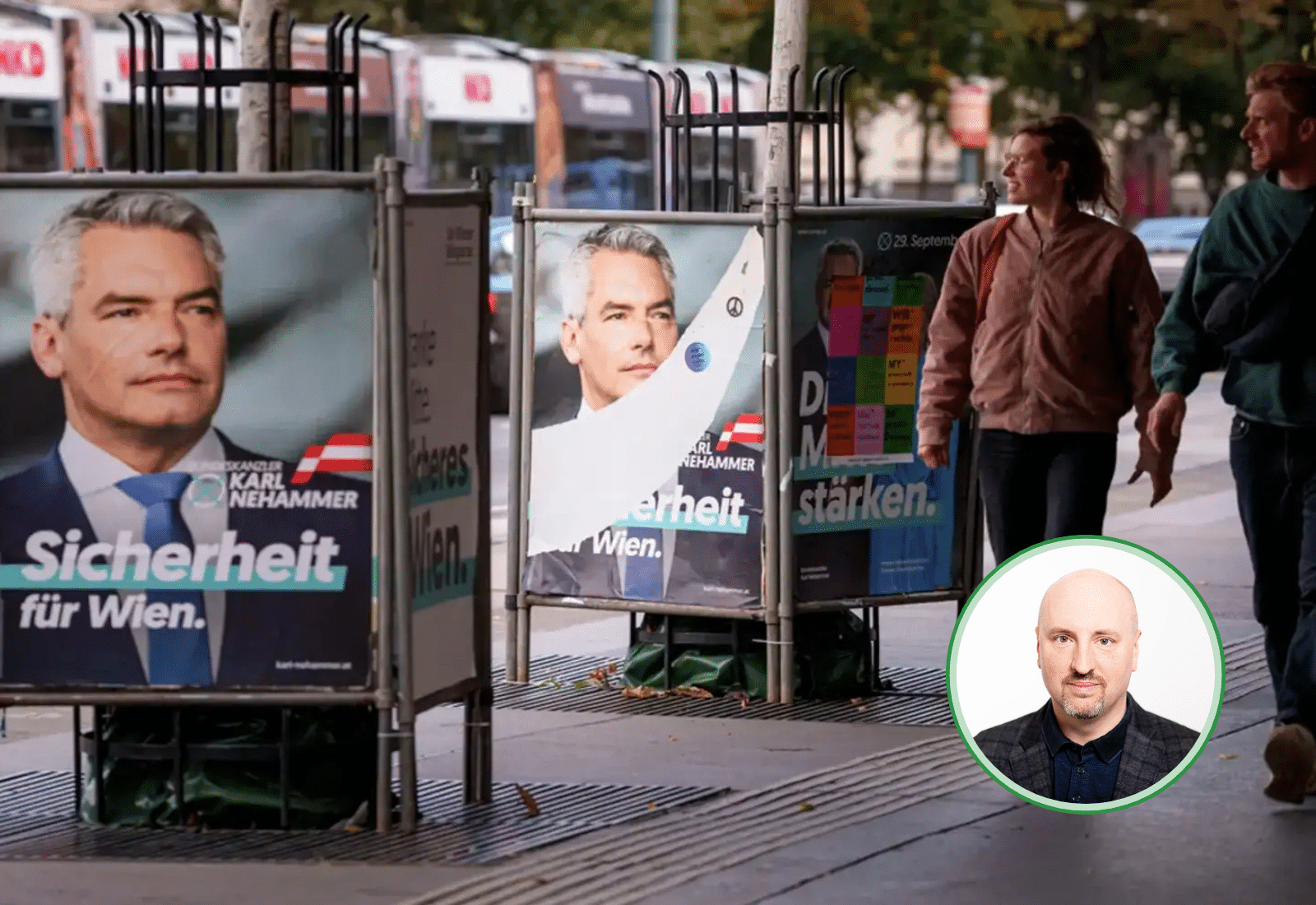
The Radical Right Has Won the Election in Austria, But A Centrist Coalition Will Govern
The far-right FPÖ has won the 2024 general election in Austria but is highly likely to remain locked out of government. With all other parties having ruled out working with the current FPÖ leader, the most likely outcome of the government formation talks is a three-party government – the first to be formed since 1945 – led by the incumbent chancellor Karl Nehammer.
29.10.2024
Future of Europe
Shadowing the European Commission on Rule of Law? In Conversation with Laurent Pech and Petra Bárd
The European Commission published its fifth annual Rule of Law Report in July 2024. In this RevDem Rule of Law podcast Oliver Garner discusses the effectiveness of this mechanism for upholding the EU's values with Professor Petra Bárd and Professor Laurent Pech. They have collaborated with the CEU Democracy Institute's rule of law clinic to produce a shadow report that will turn the lens back on the EU itself.
27.10.2024

Future of Europe
Reine Populismuslehre in Vienna? The Victory of the ‘Freedom Party’ in the 2024 Austrian National Election
Austria’s far-right FPÖ has won the national elections. Will Vienna follow Budapest since 2010, Warsaw from 2015- 2023, and Rome since 2022 in a path towards backsliding on EU values? Oliver Garner and Matthew Haji-Michael reflect.
24.10.2024

Future of Europe
Democracy at Stake: Future Scenarios after Georgia’s Landmark Elections
On October 26, Georgia's parliamentary elections will serve as a referendum on its future, out of which three main scenarios emerge. In the first, the ruling Georgian Dream (GD) party wins, consolidates authoritarian rule, and aligns with Russia. A second scenario sees the opposition winning, potentially restoring democracy and accelerating EU integration. However, the most likely scenario involves contested results, which could trigger public unrest, violent clashes, and even Russian intervention. This critical election will most likely determine whether Georgia embraces European-style democracy or solidifies authoritarianism, risking further isolation from Western allies.
23.10.2024

Future of Europe
Lia Tsuladze on How Georgian Dream Has Diverted Away from Europe and Its Implications for the Upcoming Elections
The Georgia Dream movement came to power over a decade ago. It initially claimed to want to uphold the European integration policies of its predecessor, but has slowly moved towards a more sovereign discourse. Over time, Georgia Dream has increasingly fueled affective political polarization, and now accuses its pro-European critics of wanting to drag Georgia into a war with Russia. It has furthermore vehemently defended adopting controversial anti-democratic legislation such as the so called ‘foreign agents’ law.
21.10.2024

Future of Europe
Diana Dumitru on the Russian Invasion of Ukraine and the Question of Genocide
In this conversation at the Review of Democracy, Diana Dumitru – co-editor, with Dirk Moses, of the new collection The Russian Invasion of Ukraine. Victims, Perpetrators, Justice, and the Question of Genocide – discusses the motives of various Russian perpetrators in Ukraine and how those motives might have evolved over time; shows how useful the concept of genocide proves when studying the multifaceted violence unleashed during Russia’s war of aggression; reflects on whether the current debates around genocide in Ukraine might reshape or expanding our understanding of genocide and mass violence; and addresses the challenges in pursuing accountability for Russian crimes.
14.10.2024

Future of Europe
The Special Tribunal for Russian Crimes of Aggression in Ukraine: In Conversation with Kateryna Busol
Russia’s aggression against Ukraine has been ongoing for 10 years. It started with the occupation of Crimea and parts of the Donbas in 2014 and culminated in the full-scale invasion in 2022. Various domestic and international justice initiatives to ensure accountability for war crimes and other conflict related violations have been unfolding since 2014. However, 2022 marked the start of a new important debate. How can Russia be held accountable for the underlying crime of aggression? In this RevDem Rule of Law podcast Oliver Garner discusses the proposal for a special tribunal to address Russia's crime of aggression in Ukraine with Kateryna Busol.
11.10.2024

Future of Europe
The Regime Change Has To Be Performed by Russians Themselves – Roland Freudenstein on Russia, the War in Ukraine, and Autocrats in Europe
In our new podcast, Roland Freudenstein, Director of the Free Russia Foundation Brussels, and Founder and Executive Officer of the Brussels Freedom Hub discusses Russia’s geopolitical ambitions, how the war in Ukraine may end, and the potentials for a regime change in Moscow; reflects on democratic backsliding in EU Member States; and shares his thoughts about autocrats and how societies can be more resilient against authoritarianism.
9.10.2024

Future of Europe
Pro-Kremlin Disinformation Is Distorting Democracy in Central and Eastern Europe
In Central and Eastern Europe, democracy has been deliberately eroded by disinformation. There has been a troubling surge of pro-Kremlin messaging since 2021, with Hungary serving as a regional epicenter of state-sponsored mistruths.
8.10.2024

Future of Europe
Ask What You Can Do for Your City – Benedek Jávor on European Politics, Representing Budapest, and the Green Transition
In this conversation at the Review of Democracy, Benedek Jávor – Head of the Representation of Budapest to the European Union – discusses his current role and the evolving relationship between the European Union, the city of Budapest, and the Hungarian government; reflects on the green transition and critiques Hungary’s current energy policies; and pleads for talking responsibility locally.
4.10.2024
Future of Europe
If There Was Not That Principled Element of Protecting the Liberal in Us, There Would Be No Need for the Harder Edge – Nathalie Tocci on the EU’s Global Strategy, Current Transformation, and Its New Sense of Mortality
In this conversation at the Review of Democracy, Nathalie Tocci – Director of the Istituto Affari Internazionali and part-time professor at the School of Transnational Governance, European University Institute – discusses the direction the EU has taken in recent years in the light of its global strategy and how far it has managed to become strategically autonomous; reflects on what principled pragmatism implies in the context of the rise of illiberalism; and considers what could change during the second European Commission headed by Ursula von der Leyen – and whether the EU’s centre of gravity might be shifting.
3.10.2024

Future of Europe
Reforming Ukraine’s Judiciary – EU Accession, Democracy, and the Rule of Law: In Conversation with Tetyana Antsupova and Sergii Koziakov
In September 2024 the project “The Dynamics of the Judiciary in Ukraine in the Context of the Rule of Law and the EU Accession Aspirations” commenced. The project is hosted by the British Institute of International and Comparative Law (BIICL) and is funded by the British Academy. This written interview, conducted by Rule of Law section editor Oliver Garner with researchers in the project, explicates its objectives, scope, and aspirations. Professor Tetyana Antsupova is a Senior Fellow at BIICL and an awardee of the British Academy Global Professorships scheme. She is a former judge in the Grand Chamber of the Supreme Court in Ukraine, and she is the lead researcher in the project. Dr Sergii Koziakov is a Research Leader at BIICL, a Visiting Fellow at the London School of Economics and Political Science in the Law School, and an Associate Professor at the Taras Shevchenko National University of Kyiv in the Institute of International Relations. From 2014 to 2019, he was Chairman of [...]
2.10.2024

Future of Europe
Russian Soft Power: Shaping Georgia’s Political Future?
As Georgia approaches a pivotal parliamentary election on October 26, the ruling party – Georgian Dream – remains surprisingly resilient in its popularity. Despite large-scale anti-government protests earlier this year sparked by the controversial “foreign agents” bill, and opposition efforts to frame the ruling party as a Kremlin puppet steering the country away from its Western integration path, Georgian Dream is continuing to lead in pre-election polls one month before the elections.
1.10.2024

Future of Europe
We Need Better Cohesion in Europe Because We Need Reforms and New Resources – Mikuláš Dzurinda on Slovakia’s Path, the European People’s Party, and the Future of Ukraine
In our latest podcast, Mikuláš Dzurinda – President of the Wilfried Martens Centre and former Prime Minister of Slovakia – discusses the changes that EU membership has brought to Slovakia; reflects on the recent rightward shift in Europe and how this might influence the EPP's priorities; analyzes potential changes in Slovak foreign policy and the relationship with Hungary; and argues for Ukraine’s NATO accession.
30.09.2024

Future of Europe
The Beginning of the End: Recent Regional Elections Signal the Demise of Not Only Scholz, but Left-Liberal-Green Hegemony in Germany
Germany is facing an endemic crisis of its economic model as a whole, with the ruling left-liberal-green coalition also facing a crisis of moral authority after the recent regional elections in East Germany, which amounted to a political earthquake. What awaits is a new governmental project under the aegis of the conservatives and under pressure from far-right forces.
27.09.2024
Future of Europe
A Revelation for the History of Social Movements in Hungary: Bernadett Sebály on “The Story of Our Struggles” Database
In this conversation, Bernadett Sebály discusses the inception and development of the online database of protest events in Hungary, 1989–2010, entitled Küzdelmeink története, or “The Story of Our Struggles”; its use in pedagogical settings for students, activists, teachers, and everyday citizens; and the importance of its place between activism and scholarly research in the Hungarian illiberal context.
26.09.2024

Future of Europe
A Green-Powered Autocracy: How Serbia’s Lithium Reshapes the EU’s Values
As the EU races to secure lithium for its green transition, Serbia emerges as its key partner, securing economic benefits at a significant environmental and social cost. As Belgrade aligns more closely with Brussels and Berlin, critiques of its democratic backsliding fade, giving rise to a "greener" stabilitocracy.
29.08.2024

Future of Europe
The Trojan Horse Has Arrived – András Bozóki on Autocratization, External Constraints, and the Role of His Own Generation
In this conversation at the Review of Democracy, András Bozóki – author of the new collection Töréspontok. Tanulmányok az autokrácia kialakulásáról (Breaking Points. Studies on the Formation of Autocracy) – reflects on what has made the anti-democratic turn in Hungary so effective and discusses what has surprised him the most about the evolution of the Orbán regime; comments on the regime’s attempted remaking of Hungarian elite groups and its uses of ideology to legitimate its rule; evaluates his thesis on the Orbán regime being an “externally constrained hybrid regime” in light of more recent developments; and assesses the role of his own generation, the 1989ers, in the longer arc of history.
21.08.2024

Future of Europe
Two Paths to Power – What Unites Giorgia Meloni and Viktor Orbán? What Separates Them?
Meloni and Orbán are often treated as closely comparable political actors. However, their trajectories are widely divergent, and this is reflected in their respective understanding of both domestic political action and international alliances.
2.08.2024
Future of Europe
Europe’s Largest Minority Left Without Political Representation in the EP – Reflections on the Outcome of the European Elections
Despite the fact that it is difficult to meaningfully address Roma inclusion without effective political representation, the representation of Roma – Europe’s largest minority – has been severely neglected across the European political space, with no Roma candidate getting elected to the European Parliament this year.
31.07.2024

Future of Europe
Ukraine Will Not Slide into Authoritarianism – A Conversation with Pat Cox
In this conversation, Pat Cox reflects on the new term of the European Parliament and the importance of the rise of the Right in the Union and its member states. He also discusses his work in Ukraine after 2012 – when he led a mission to free political prisoners imprisoned by President Viktor Yanukovych – as well as in more recent years when he has co-directed the Jean Monnet Dialogues which aim to build consensus between the main political parties represented in the Ukrainian Parliament.
29.07.2024

Future of Europe
Media Freedom Is in Peril Across the EU, and We Need More Than a New Law to Save It
By Jonathan Day The European Media Freedom Act aims to protect independent news organizations and journalists in EU member states, but it contains too many loopholes ripe for abuse. EU bodies must keep a constant eye on how key provisions will be enforced, but it is also the responsibility of civil society, self-regulatory bodies and journalists’ associations to play an active role in monitoring the implementation. Russia’s recent decision to ban 81 news outlets from European Union countries is a timely reminder that accurate, unbiased reporting is a source of dread for authoritarian governments – and an essential pillar of democracy. Yet despite its importance, media freedom is facing an existential crisis even within the EU. To survive, it needs more than just new legislation. That legislation, the European Media Freedom Act (EMFA), entered into force this May with the aim of better protecting independent journalists and media outlets in member states. Although legislative [...]
15.07.2024

Future of Europe
Navigating France’s New Political Era: Election Results and Their Implications
On Sunday 7 July 2024 at 20.00 pm, France – and a large part of EU Member States – welcomed the results of the second round of the legislative elections with immense relief: Marine Le Pen’s far-right party will not lead the second-largest economy in the EU for the coming years.
11.07.2024

Future of Europe
Try a Little Tenderness – EU–UK Relations after the Elections
Labour’s victory in Thursday’s UK elections will finally bring the era of Brexit to an end in European politics. Britain's exit has happened. Although most Brits today would vote in favour of their country's membership in the Union, in their minds and in those of EU citizens reunification does not appear to be an urgent matter for the coming years – Jean-Claude Juncker talks of a "century or two" as a possible time horizon for Britain's future EU membership. This does not mean that the relationship between the EU and Britain should not change fundamentally.
5.07.2024

Future of Europe
The Intellectual Sources of the EU’s Response to the Rule of Law Crisis: In Conversation with Maciej Krogel
This latest RevDem Rule of Law podcast discusses the doctoral research of Dr Maciej Krogel following the defence of his thesis “The intellectual sources of the European Union’s response to the rule of law crisis in the Member States”. Maciej is a lecturer at the University of Amsterdam and he completed a re:constitution fellowship in 2022/23.
4.07.2024

Future of Europe
The UK General Election: What Might the Future Hold for Ethical Standards and Checks on Executive Power?
Tomorrow, the UK public will go to the polls. But the general election takes place in a climate of public distrust of politics, and against a backdrop of ethics scandals and the weakening of constitutional norms. What should we expect from the next government?
3.07.2024

Future of Europe
What’s at Stake? Debating the Impact of the European Elections
This special expert panel, co-organized by the CEU Democracy Institute, Political Capital Institute and Review of Democracy, discussed the likely impact of this year’s European Parliament elections with focusing on the following questions: What was most surprising and what might prove most consequential about the results? Are there new regional divisions and, if so, how might we account for their emergence? What is currently at stake and what is likely to unfold in the near future? Speakers: László Bruszt – Director, CEU Democracy Institute Péter Krekó – Director, Political Capital Institute/Research Affiliate, CEU DI Thu Nguyen – Deputy Director, Jacques Delors Center Claudio Radaelli – Professor, European University Institute Moderator: Flóra Garamvölgyi – Investigative reporter
1.07.2024

Future of Europe
The European Union’s Hungary Problem
On July 1, 2024, Hungary will take over the rotating presidency of the Council of the European Union. The fact that a country with serious rule of law deficits will preside over one of the EU’s most important institutions for six months raises concerns. In a resolution in June 2023, the European Parliament questioned the extent to which Hungary could “credibly perform this task” and called on the European Council to “find an appropriate solution”—presumably by revoking Hungary’s presidency. (The European Council is the body of the 27 EU leaders; the Council of the European Union, informally also known as “the council,” is composed of the national ministers of all the member states; only the latter negotiates legislature, mostly with the European Parliament, and adopts it.)
1.07.2024
Future of Europe
European Citizenship, Passport Apartheid and Enlargement: What Is the Future of the EU? – Professor Kochenov’s Approach
I stand with Raymond Aron: since citizenship is about exclusion, ‘global citizenship’ is an oxymoron – a dramatic misrepresentation of what citizenship is about. What I study is global citizenship apartheid. From this perspective citizenship is an arbitrary blood-based ascription of liabilities, which is totalitarian in nature and imposed on the majority of the population of the world. James Tully is right: citizenship is part of the colonizer package, because, historically, racialised inhabitants of the colonies could not enjoy the same rights as the ‘civilized’ white colonizers. What my scholarship suggests is that the current function of citizenship is to replay this kind of hierarchy of the ‘standards of civilization’ of pre-UN international law by denying dignity and rights to billions of individuals.
21.06.2024

Future of Europe
Emergency in Slovakia
The climate of hostility in which the assassination attempt on Robert Fico took place has been a feature of Slovak politics for the past two decades. And Fico has played a decisive role in creating it. How the situation in Slovakia came about – and whether it will continue to deteriorate.
20.06.2024
Future of Europe
To Survive the EU Needs Its Own Political Space – Unpacking the Democratic Implications of the 2024 EU Elections
As the dust settles over the EU elections, it is worth taking a step back to fully grasp the democratic meaning of these elections – the 10th ever organized at the pan-EU level. Over the past week, approximately 50% of EU citizens took the time to vote in the EU elections, thus matching the record-high turn-out of the previous 2019 elections. These 180 million eligible voters voted on different dates between June 6 and 9, for national – not European – political parties and for national – not European – candidates who ran on national – not European – programs. So much for ‘European’ politics. After over 70 years of unprecedented socio-economic integration, the Union lacks an EU-wide electoral competition capable of fostering a genuine transnational space of debate and dialogue – both within institutions and outside them – where citizens can understand, influence and participate in decision-making affecting their common interests as Europeans.
13.06.2024

Future of Europe
A Decade of Rule of Law Backsliding: Lessons Learnt for the Next EU Legislative Period
For more than a decade, the European Union (EU) has witnessed a decay of the rule of law in some of its Member States, especially Hungary and Poland. The deliberate and systematic deconstruction of the rule of law and other pillars of democracy was particularly severe in Hungary and Poland. This backsliding quickly became a European matter as the EU is not only an economic alliance with free movement of goods, services and people, but also a legal union of values. Therefore, for safeguarding the rule of law, the behavioral aspects are as important as the systemic ones. Research suggests that press freedom, robust civic space, public support for democracy, and the compliance with the law of elected officials and decision-makers are as significant as pillars of rule of law resilience as a comprehensive constitutional design, independent judiciary, and a public administration that is free from political influence and corruption.
11.06.2024

Future of Europe
Fading Hopes for Change – Bulgaria and Romania
In Bulgaria and Romania, the EP elections coincide with national elections. Interminable political instability, corruption and socioeconomic tensions all contribute to voter fatigue. With the far right in the ascendant, 9 June could be a watershed.
6.06.2024

Future of Europe
The Péter Magyar Phenomenon
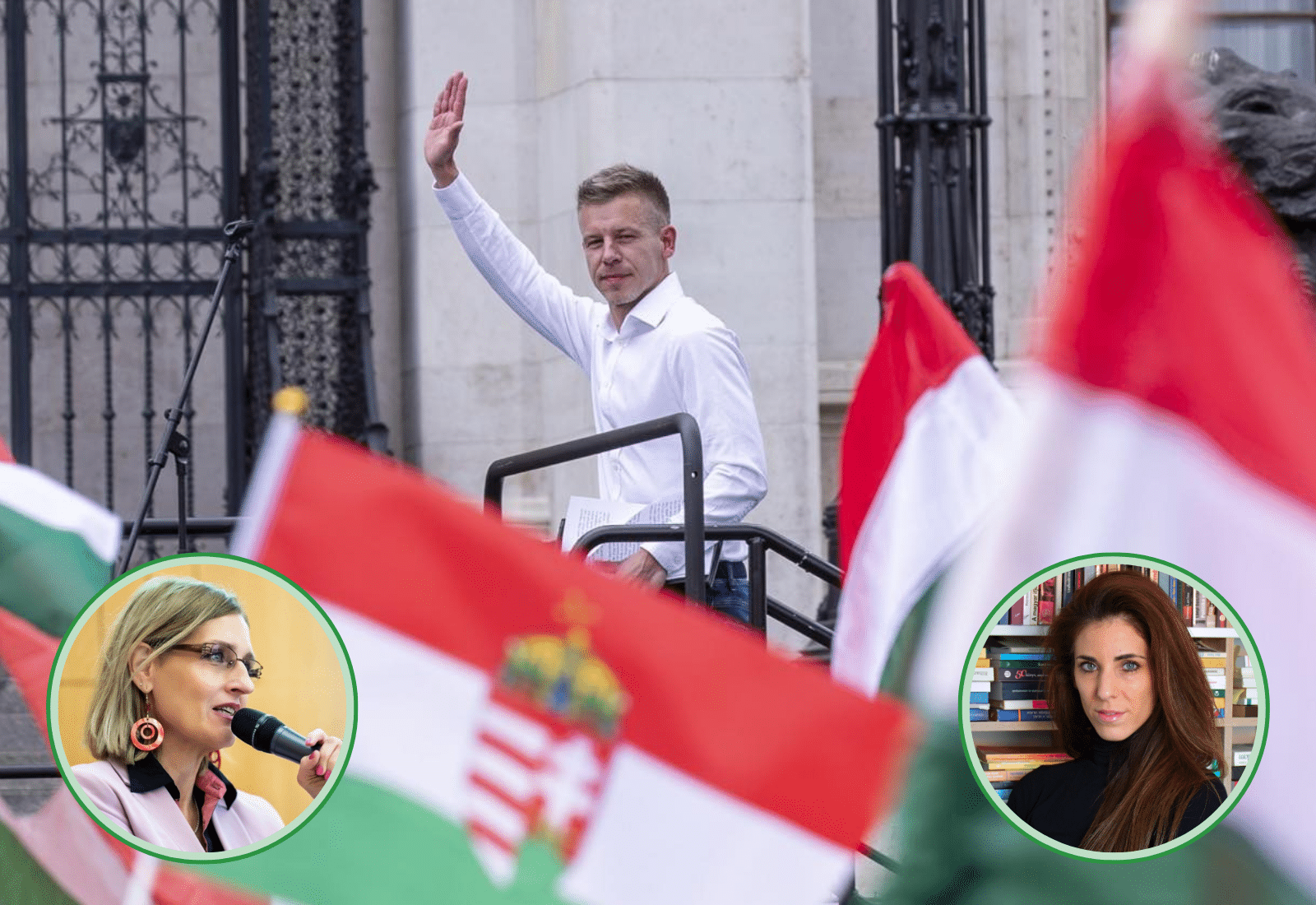
Veni, Vidi, Vici? We do not know yet. However, Hungarian public discourse in the past few months has revolved around the so-called “Péter Magyar Phenomenon.” Andrea Szabó and Annamária Sebestyén (HUN-REN Center for Social Sciences, Institute for Political Science) share their insights into the reasons behind Péter Magyar's success from a perspective that has so far been neglected: how a deepening political vacuum has fostered collective longings.
5.06.2024
Future of Europe
Racism Against East Europeans – Jannis Panagiotidis and Hans-Christian Petersen on the Applicability of a Key Concept and Today’s Ambiguous Terrain
In this conversation, Jannis Panagiotidis and Hans-Christian Petersen – authors of the new book Antiosteuropäischer Rassismus in Deutschland. Geschichte und Gegenwart (Racism Against East Europeans in Germany. History and the Present Day) – show why racism is an appropriate category when discussing stereotypes and prejudices against East Europeans; explain why there is a need for “an Eastern enlargement of the racism debate”; discuss how the most extreme, National Socialist forms of racism relate to what came before and after; consider how racism against East Europeans might be embedded in the larger, more global system of prejudices and domination; and reflect on the current stakes of their scholarly intervention.
4.06.2024

Future of Europe
Cooperation or neocolonialism? The EU and SWANA
From migration to trade and energy, the EU’s partnerships with Mediterranean non-EU countries are influenced by a neocolonial mindset. The bloc must shift from its current tactics of exclusion and resource extraction towards genuine cooperation that respects the sovereignty and aspirations of these crisis-struck nations.
29.05.2024

Future of Europe
Securitization of EU Refugee Law: In Conversation with Aleksandra Ancite-Jepifánova
Since the 2015 refugee crisis there has been an increasing ‘securitization’ of EU refugee law that has only been exacerbated by the Russia-Ukraine conflict. In this latest RevDem Rule of Law podcast Oliver Garner discusses this phenomenon with Aleksandra Ancite- Jepifánova. She is a Research Affiliate with the Refugee Law Initiative at the University of London and Visiting Fellow at the Centre of Law and Society at Cardiff University.
28.05.2024

Future of Europe
Europe Turns East – Armenia, Azerbaijan, Belarus, Georgia, Moldova, Ukraine
Russia’s war of aggression in Ukraine has put eastern Europe firmly at the centre of the EU’s foreign policy agenda, transformed attitudes to defence and given fresh impetus to reforms by candidates for EU membership. But with rightwing movements and authoritarianism gaining ground, support for Ukraine and EU enlargement is under threat.
16.05.2024

Future of Europe
Learning to Belong-On Ukraine’s Path to the European Union
I was born in the Soviet Union right before its collapse. As I was only 1 year old when Ukraine became independent, I do not remember that ‘super state,’ though my birth certificate will always remind me of it. At the time of my birth, my parents could not even imagine that their daughter would get the opportunity to live abroad and do so in five different countries, four of them outside the boundaries of the then still existing Warsaw Pact, in what was then referred to as the ‘rotten, bourgeois, capitalist West.’ As a teenager, I became more interested and aware of the political situation in Europe and its implications for Ukraine. The year 2004, when I was 14, was full of important events and developments in the European Union as well as Ukraine. It was the year of the biggest EU enlargement, which included many countries that used to be in the ‘sphere of influence’ of the former USSR. The EU expanded and Ukraine became a country bordering the EU.
6.05.2024

Future of Europe
Europeanization Against All Odds – A Professional-Personal View on Two Decades of Central and Eastern European Countries’ EU Membership
A couple of days after Czechia entered the European Union in May 2004, I went to Vienna for a few days together with my wife and friends. The destination was no coincidence because, for Czechs in general and Southern Moravians like me in particular, Vienna had a profound symbolic meaning during the period of communism and the subsequent transition to democracy. As EU citizens, we visited the Austrian capital, an object of many historical longings and resentments, given the complicated Czech history under the Habsburg Empire. However, at the time of our visit, I perceived Vienna differently. For me, 2004 meant the symbolic end of the Cold War, a merger of ‘old’ and ‘new’ Europe, and completion of the dream we saw already shortly after the Velvet Revolution: the return to Europe.
3.05.2024

Future of Europe
Romania: Spartans, Helots, and the Rule of Law in Europe
Romania has entered the Union in 2007, together with Bulgaria and as a Big Bang afterthought. Both countries joined with Cooperation and Verification Mechanism (CVM) strings attached. The CVM, a sui generis stopgap whose very name conjured up ambivalence, was initially meant to lapse after three years. It was formally lifted only in 2023, albeit actual monitoring was discontinued for Bulgaria in 2019 and for Romania in 2022. Due to their geographical and cultural vicinity, accession twinning, and the CVM, these two countries have repeatedly been analogised, most recently with respect to Schengen enlargement. They are dissimilar in that, although the CVM formally applied very similar conditions to both (anticorruption, judicial independence), only Romania created strong anticorruption institutions.
2.05.2024

Future of Europe
How Time Has Stopped Again – Hungary and Europe Twenty Years after the EU’s Big Bang Enlargement
I would like to approach the 2004 EU accession from the perspective of time. Time is perceived to fly fast in certain periods, then it appears to slow down before speeding up again. In Hungary, for example, time stood still during the sleepy decades of state socialism before, from the late 1970s onward, transformations of historic significance occurred in no more than a couple of years. Still, although there were some cathartic episodes here and there, the change of the political and economic system took place peacefully: law professors, historians, and other intellectuals sat down at a table in 1989 to lay down the fundamentals of a new social and political order. None of them was really an expert on capitalism; they approached the issue as social scientists. The intent to create a more dynamic system—one that respected the full range of human rights as well as individual endeavors—connected these people, notwithstanding their varied backgrounds.
29.04.2024

Future of Europe
On Exceeded Expectations and Lost Illusions – How Its Legacies Haunt Europe Today
Having been born ‘behind the Iron Curtain,’ and now teaching history with a focus on Central and Eastern Europe in European Studies and liberal arts programs in Maastricht, my personal trajectory cannot be properly comprehended and would not even be imaginable without the EU’s ‘big bang enlargement.’ I happen to have received my bachelor’s degree from University College Utrecht back in 2003 when the possibilities of studying at Western institutions remained rare for students from Central and Eastern Europe.
26.04.2024

Future of Europe
East Europeans, the Eternal Poor Children of the Union?
In this conversation with Petr Agha, Joseph H. H. Weiler discusses the EU’s persistent democratic deficit and how the Union’s equilibrium has been disrupted; explores the rise of populism and questions of national identity; contrasts Eastern and Western Europe; and reflects on the evolving geopolitical landscape. “Let's fix European democracy first, and then I would be in favour of majoritarianism because veto power is undemocratic.”
25.04.2024

Future of Europe
Weaken Constitutional Review, Strengthen European Democracy – In Conversation with Nik de Boer
Are constitutional judges well equipped to deal with fundamental constitutional questions about the EU? Should national constitutional courts aim to address the EU democratic deficit? Several scholars see national constitutional courts as a constructive force in the EU legal order. Nik de Boer argues differently, and reasons why is it better to leave certain issues to parliaments rather than constitutional courts? In this conversation with Kasia Krzyżanowska, Nik de Boer discusses his recent book “Judging European Democracy. The Role and Legitimacy of National Constitutional Courts in the EU” (Oxford University Press 2023). The transcript was amended to improve readability and clarity.
9.04.2024

Future of Europe
Pellegrini won in Slovakia. So did Fico, Orbán, and the Kremlin
Peter Pellegrini won the presidential election in Slovakia last weekend with 53 percent of the vote. Pellegrini, who ran against former diplomat Ivan Korčok as the candidate of the ruling coalition led by Robert Fico, entered the race as the absolute favorite – for months before the campaign even started, Fico’s political ally of many years was already polling as the most likely potential candidate for the top constitutional post. The first round of the election two weeks ago changed that dynamic since Korčok emerged first then. As we understand now, it may have helped mobilize the part of the electorate that did not vote for Pellegrini at first but was absolutely opposed to Korčok. The part of the electorate in question is mainly composed of people who have for years been mobilized by far-right and anti-system politicians via emotions of fear and hate.
9.04.2024

Future of Europe
Colonialism and European Integration – In Conversation with Hanna Eklund
In this conversation with Kasia Krzyżanowska, Hanna Eklund discusses her recent article, “Peoples, Inhabitants and Workers: Colonialism in the Treaty of Rome”, published in the European Journal of International Law. She talks about the “coded language” of colonialism in the Treaty of Rome, explains the approach of the Treaty drafters to the African independence movements, and reflects on the colonial legacies of contemporary EU law.
14.03.2024

Future of Europe
Politics of Uncertainty: Una Bergmane on Cold War superpowers, Soviet disintegration and a relentless Baltic push for independence
Una Bergmane’s main research interests are the history of the Soviet collapse, the Baltic states, diasporas, transnational networks, collective memory, and the post-Cold War transitions in the Baltic Sea region. She is currently an Academy of Finland research fellow at the Aleksanteri Institute in Helsinki. Before joining the Institute, she held various fellowships across the world; she was a postdoctoral fellow at Cornell University in the US, a teaching fellow at the London School of Economics, and a postdoctoral researcher at the Academy of Finland-funded BALTRANS project. She obtained her Ph.D. from Sciences Po in Paris. The focus of our podcast today is Una’s first book, which was published by Oxford University Press in 2023. As already mentioned, the title of the book is "Politics of Uncertainty: the United States, the Baltic Question, and the Collapse of the Soviet Union". In a nutshell, the book tells the story of how Cold War superpowers tried to deal with the Baltic [...]
4.03.2024

Future of Europe
In Changing Geopolitical Context, EU Democracy Support Loses Momentum
Despite the launch of some new programs, the EU’s security and peacebuilding missions increasingly focused on containment of conflict, even though democracy support is defined as a central pillar of the EU’s conflict-resolution strategy - writes Zselyke Csaky.
22.02.2024

Future of Europe
How Do You Tear Down a Border? – Matthew Longo on the Pan-European Picnic and the Meaning of Freedom
In this conversation with RevDem editor Ferenc Laczó, Matthew Longo – author of the new book The Picnic. A Dream of Freedom and the Collapse of the Iron Curtain – discusses what motivated him to research the Pan-European Picnic of 1989; why he places such an emphasis on the uncertainty of the situation in those crucial days; and what conclusions he has drawn regarding the meaning of freedom in 1989 – and how that meaning has changed since.
5.02.2024

Future of Europe
Towards a Creative, Empathetic, and Solidaristic Culture of Remembrance – Mirjam Zadoff on Her Explorations of Global Memory in the 21st Century
In this conversation with RevDem editor Ferenc Laczó, Mirjam Zadoff – director of the Munich Documentation Centre for the History of National Socialism and author of Gewalt und Gedächtnis: Globale Erinnerung im 21. Jahrhundert – discusses what motivated her to publish a collection on global memory and which key themes she wanted to address.
19.01.2024

Future of Europe
For Money Laundering To Occur, All That Authorities Have To Do Is Nothing
In this conversation with RevDem editor Robert Nemeth, Dean Starkman and Neil Weinberg (International Consortium of Investigative Journalists) talk about Cyprus Confidential, the investigation exposing how Cyprus-based financial services firms have enabled the Russian elite — including Vladimir Putin’s inner circle — to shelter their wealth and shield billions of dollars in assets from the threat of impending sanctions. They explain how this system worked and what enabled it, but also share insights into how journalists work on cross-border collaborative projects on such scale.
15.12.2023

Future of Europe
Democracy cannot really function if it is not liberal. Interview with Cas Mudde
Among the challengers to liberal democracy in Europe, we can count populists, autocrats, and the increasingly often mentioned illiberals. But who are they and what is illiberalism? How does it relate to populism? Can illiberals be democrats at all? What are the policy implications of having illiberal politicians, especially of the radical right, in power in the EU? This interview explores these questions with Professor Cas Mudde. It covers various issues at the intersection of academic and policy research on populism, illiberalism, democracy, and the radical right. It discusses whether the growing body of literature on illiberalism addresses something that is fundamentally new on the global political agenda, how this literature relates to academic research on populism, and if illiberalism and democracy are reconcilable against the backdrop of a global trend of autocratization, which many scholars of democracy have noted, and which is often attributed to illiberal and populist [...]
8.12.2023

Future of Europe
We Need the Second European Rescue of the Nation-State
This is a rejoinder that ends the RevDem book symposium. You can read three book reviews by Peter J. Verovšek, Gábor Halmai and Petr Agha.
6.12.2023

Future of Europe
Central and Eastern Europe after the Polish Elections: In Conversation with Daniel Hegedüs
Despite the Polish opposition election victory in the 15 October elections on 27 November President Duda swore in the Law and Justice Party ahead of a confidence vote that the incumbents seem set inevitably to lose. In this latest Rule of Law podcast, Oliver Garner and Daniel Hegedüs discuss the implications of the election for Central and Eastern Europe. Daniel is a German Marshall Fund fellow with expertise in populism and democratic backsliding and the foreign affairs of the Visegrad countries.
4.12.2023

Future of Europe
The Swarm That Didn’t Sting the Bourgeoisie–Arthur Borriello and Anton Jäger Interpret the Populist Left
In The Populist Moment, Arthur Borriello and Anton Jäger analyze a political cycle, “the long 2010s,” when left populists – perhaps most notably Syriza in Greece, Podemos in Spain, Jean-Luc Mélenchon and his various formations in France, Corbynism in the UK, and Sanders’ movement in the US – made notable attempts to rethink and revive the left by adopting a populist identity. The core agendas of this concise, dense, and engaging book are to investigate the specific origins and broader causes of this “populist moment”; to describe and explain the ebb and flow of its major representatives; to assess the major strengths and weaknesses of left populists in more general terms; and to conjecture about where such attempts to revive the left might be headed next. Borriello and Jäger manage to deliver on this ambitious agenda by offering numerous insights and developing a coherent overall interpretation – even though this comes at the price of somewhat narrow empirical foci and concerns.
30.11.2023

Future of Europe
Ukrainians Started as the Scots and Ended Up as the Irish – Yaroslav Hrytsak on the Global History of Ukraine
In this conversation with Visible Ukraine editor Marta Haiduchok and RevDem editor Ferenc Laczó, Yaroslav Hrytsak – author of the new book Ukraine: The Forging of a Nation – explains what makes Ukraine a geopolitically crucial borderland and why the Ukrainian question has become acute at the most critical turns in global history.
24.11.2023

Future of Europe
Slovakia’s Path, the Visegrad Group Today, and the Implications for Europe – Miroslav Wlachovský on Current Changes
In this conversation with RevDem editor Ferenc Laczó, Miroslav Wlachovský – Minister of Foreign and European Affairs of Slovakia in the recent caretaker cabinet headed by Ľudovít Ódor – discusses Slovakia’s role in the EU and his priorities while in office; analyses the recent Slovak elections and the potential consequences its outcome will have in terms of the country’s foreign policy; and reflects on the relationship between Slovakia and Hungary as well as the future of the Visegrad Four. Miroslav Wlachovský is a Slovak diplomat who acted as Minister of Foreign and European Affairs of Slovakia between May and October 2023. Prior to his ministerial appointment, Wlachovský served as Slovak ambassador to the United Kingdom (2011 to 2015) and to Denmark (2018 to 2022). In collaboration with Lucie Hunter
20.11.2023

Future of Europe
The Future in the European Union — In Conversation with Massimo Fichera
In this conversation with RevDem editor Kasia Krzyżanowska, Massimo Fichera talks about the need to include the future when designing EU constitutional architecture, criticises the economic components’ dominance over the European integration process, and explains his idea of communal constitutionalism as a remedy to presentism of constitutional theories.
15.11.2023

Future of Europe
Take Back Control — Over Brexit Narrative
The book Taking Control: Sovereignty and Democracy After Brexit by Philip Cunliffe, George Hoare, Lee Jones, and Peter Ramsay seeks to put Brexit into the perspective of the ongoing crisis of political representation in Britain and offers the reforms to overcome it.
30.10.2023

Future of Europe
Taking Stock: The Polish Opposition Victory and the Rule of Law
By stark contrast to the worsening situation in Hungary, Poland may be facing a new dawn and a restoration of liberal democracy. But caution may be required to ensure that this dawn does not darken again into political acrimony and fragmentation.
26.10.2023

Future of Europe
Why the Polish Elections Cannot Be Repeated in Orbán’s Hungary
Poland is returning to the path of democracy and could become one of the most influential member states of the European Union. By comparison, Hungary’s prospects look bleak.
23.10.2023

Future of Europe
Peoples of Europe — National Leaders and Public Opinion in The Post-Maastricht Era: In Conversation With Dermot Hodson
Why was the ratification of the Maastricht Treaty a significant moment for the EU? Who are the right-wing populists in the EU and how has their modus operandi changed throughout the decades? Why did the national leaders engage in the EU politics? In this conversation with RevDem editor Kasia Krzyżanowska, Dermot Hodson talks about his most recent book Circle of Stars. A History of the EU and the People Who Made It published by Yale University Press. Dermot Hodson — Professor of Political Economy and Digital Technologies at Loughborough University London and Visiting Professor at the College of Europe. He has published widely on EU governance and integration and previously worked as an economist at the European Commission’s Directorate General for Economic and Financial Affairs. Circle of Stars: A History of the EU and the People Who Made It was published by Yale University Press on 10 October 2023. Kasia Krzyżanowska: As Perry Anderson has famously put it, most of the [...]
16.10.2023

Future of Europe
Can the invasion of Ukraine be a breaking point for the appeasement of autocrats in Europe?
Benedetta Lobina (PhD candidate, University College Dublin) considers the Rule of Law impacts of the Russo-Ukrainian war
13.10.2023

Future of Europe
Reimagining Europe: Confronting the Challenges of Integration and Disunion
Petr Agha reviews Stefan Auer’s European Disunion. Democracy, Sovereignty and the Politics of Emergency. This is the third piece in a book symposium. The first piece by Peter J. Verovšek you can read here, the second one by Gábor Halmai here. A rejoinder by Stefan Auer will be published in the course of the coming weeks. Petr Agha’s research and teaching focuses on some foundational issues and challenges in contemporary law and politics. Petr holds a PhD in Law and Criminology from the University of Antwerp. He also obtained degrees in law, philosophy and political sciences from the Queens University Belfast, Glasgow University and Masaryk University Brno. He is the editor of Human Rights between Law and Politics (Hart Publishing), Law, Politics and the Gender Binary (Routledge) and Velvet Capitalism (Routledge). Introduction The existing theories of European integration often fall short in providing a comprehensive explanation for the fragmentation of the European project. [...]
12.10.2023

Future of Europe
Ruzha Smilova on Bulgaria gripped by political instability
In conversation with Flora Hevesi, Ruzha Smilova explores Bulgaria's complex and ongoing political crisis, which has left a profound mark on the country's political landscape.
3.10.2023

Future of Europe
The ‘Political and the ‘Legal’ Approach of the EU?
Gábor Halmai reviews Stefan Auer’s European Disunion. Democracy, Sovereignty and the Politics of Emergency.
22.09.2023

Future of Europe
l’Europe qui confond — in Conversation with Hans Kundnani
What is “Eurowhiteness”? How do EU member states deal with their colonial pasts? How does the far right function in the EU? What is the structure of power within the EU? How was Brexit racially structured? Hans Kundnani speaks about his recent publication – Eurowhiteness: Culture Empire and Race in the European Project – with RevDem editor Kasia Krzyżanowska.
14.09.2023

Future of Europe
Negotiating Amidst Turmoil: Analyzing the Interplay of Dialogue and Conflict in Kosovo-Serbia Relations
In this conversation with assistant editor Lorena Drakula, Bodo Weber, a Senior Fellow at the Democratization Policy Council in Berlin, discusses the current situation, as well as the complex dynamics of the Kosovo-Serbia dialogue, unpacking its democratic implications, challenges, and opportunities.
22.07.2023

Future of Europe
The War in Ukraine and Transition: In Conversation with Maria Popova
Despite, or perhaps due to, the war in Ukraine there have been positive developments in combating corruption and other issues in anticipation of EU membership. In this RevDem Rule of Law podcast Teodora Miljojkovic discusses these issues around transition with Professor Maria Popova.
20.06.2023

Future of Europe
How Europeans Live Now: Ben Judah on Capturing the Arc of Life in Our Time
In this conversation with RevDem editor Ferenc Laczó, Ben Judah – author of the new book This is Europe. How We Live Now – discusses what motivated him to tell stories on a continental scale, which authors and books have inspired him the most, and what has been his approach to narrating. He also reflects on key themes have emerged from his extensive travels and reportage and on what he sees as the most consequential new aspects of how Europeans live now.
14.06.2023

Future of Europe
Suspending Hungary’s Presidency of the Council of the EU? In Conversation with John Morijn and Alberto Alemanno
In recent weeks proposals by the Meijers Committee to suspend Hungary’s Presidency of the Council of the EU in 2024 have received support in a resolution of the European Parliament. In this RevDem Rule of Law podcast, Oliver Garner discusses these proposals in the wider context of the Rule of Law crisis with John Morijn and Alberto Alemanno.
9.06.2023

Future of Europe
Be Realistic, Demand Significant Change! Daniel Chandler on What a Progressive Liberal Society of the Future Could Look Like
In this conversation with RevDem editor Ferenc Laczó, Daniel Chandler – author of the new book "Free and Equal: What Would a Fair Society Look Like?" – discusses key principles that a better and fairer society could be based on; shows what makes John Rawls’ ideas so exceptionally relevant today and how they could help improve the democratic process; explains how placing questions of power, control, dignity, and self-respect at the center of liberal economic thinking would foster new economic arrangements; and discusses where egalitarian liberalism has already been practiced and with what consequences.
22.04.2023

Future of Europe
Weak prospects for Russia’s democratization
Wolfgang Merkel offers a typological classification of Putin's Russia after exploring how it compares with fascist regimes in Germany and Italy as well as Stalinism, and opines that several factors will contribute to Russia's "poor prospects" for democratization.
22.03.2023

Future of Europe
In Conversation with Danuta Hübner — Ukraine’s Road to EU Accession
In this conversation with Kasia Krzyżanowska, Danuta Hübner explains the specificities of the EU accession path for Ukraine, elaborates on the difficulties other countries had to overcome (most notably Poland), showcases the problems with Turkey’s and Western Balkans’ EU accession, discusses the criteria of joining the EU, and shares her visions of the future EU.
6.03.2023

Future of Europe
Adam Michnik: The war in Ukraine is not a war between the Russian people and the Ukrainian people
This war, of which we are commemorating the anniversary today, is undoubtedly the most important war of our time, because it is a war in which the imperial-chauvinist-totalitarian project is struggling with the democratic, European, pluralist project on the one hand.
28.02.2023
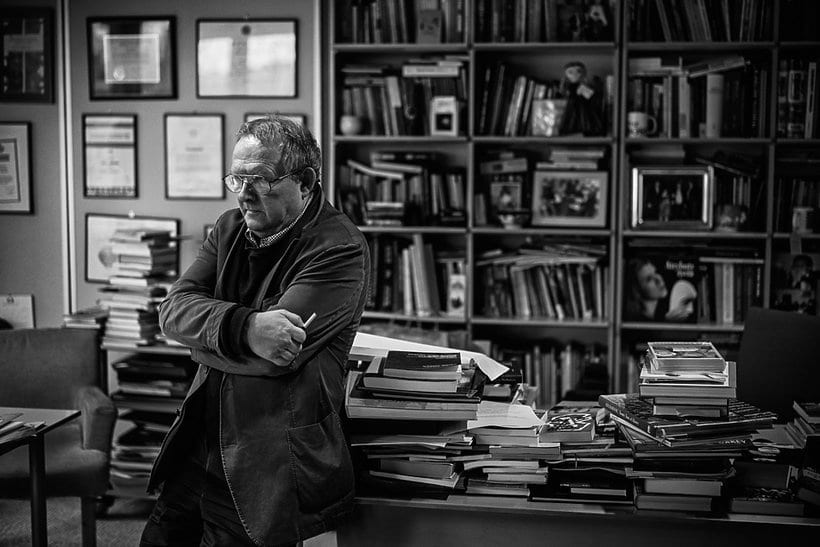
Future of Europe
Ukraine in the Union, or the end-of-history thesis reinvigorated
In this op-ed, RevDem managing editor Michal Matlak looks at the relevance of the war in Ukraine to Fukuyama's often-mocked thesis of the end of history and addresses the implications of the accession process for Ukraine, as well as for the EU.
21.02.2023

Future of Europe
Digital Fragmentation. Habermas on the New Structural Transformation of the Public Sphere
Markus Patberg reviews Jürgen Habermas’s new book Ein neuer Strukturwandel der Öffentlichkeit und die deliberative Politik [A New Structural Transformation of the Public Sphere and Deliberative Politics].
2.02.2023

Future of Europe
Wolfgang Merkel: “Democracy and capitalism are forcibly married”
In this interview with Bascha Mika, political scientist Wolfgang Merkel on the close connection between open societies and capitalist economic systems and the consequences of social inequality.
27.01.2023
Future of Europe
Building Enduring Democracies: Filip Milačić on the Effects of Nation and State Building on Democratic Consolidation
In this conversation with RevDem assistant editor Lorena Drakula, Filip Milačić – author of the book "Stateness and Democratic Consolidation. Lessons from Former Yugoslavia" – discusses the effects unresolved issues of stateness can have on the trajectories of democratic consolidation; how political actors can instrumentalize polarization in society to justify authoritarian measures; and what can be learned for democracy promotion projects today.
16.01.2023

Future of Europe
Asking the wrong questions, the wrong way: Why replicating “national consultations” is an inadequate response to their success
Although national referenda have become a rare species in post-2010 Hungary, the use of another instrument of plebiscitarian democracy—non-binding informal polls called national consultations—has not only been serving as a legitimization tool of government policies, but it has also been adopted by an opposition movement as a mobilization technique. This article argues that the strategic adoption of populist democratic repertoires, along with their main procedural flaws, is a threat to democratic representation. There is a need to shift discussions toward how these processes can be improved.
19.12.2022

Future of Europe
Italy after the Elections – Implications for National and European Politics
In this post, Maria Paula Angel Benavides summarizes the recent panel discussion "Italy after the Elections - Implications for National and European Politics," which was co-hosted by RevDem and the CEU Democracy Institute.
28.10.2022

Future of Europe
RevDem Debate: Rainbow families in the EU: obstacles to full equality
This debate is based on a report „Obstacles to the Free Movement of Rainbow Families in the EU” written for the European Parliament by Alina Tryfonidou. The debate will take place on Thursday, 27.10.2022 at 6 PM CET on RevDem's Facebook page
24.10.2022

Future of Europe
Ramona Coman on the emergence of the EU’s rule of law policy shaped by growing dissensus
In this discussion with Ramona Coman by RevDem managing editor Michał Matlak, they discuss the questions addressed in her recent book "The Politics of the Rule of Law in the EU Polity: Actors, Tools and Challenges" (Palgrave 2022), including the difference between liberal and anti-liberal ideas, and how "dissensus shapes the EU’s rule of law policy and tools."
14.10.2022

Future of Europe
“Vacanze Romane” for the EU’s Values Crisis?
In his latest op-ed, RevDem editor Oliver Garner analyzes the Italian election results and their implications not only for Italy, but also for the European Union.
30.09.2022

Future of Europe
The Way Europeans Stop Migration is Absolutely Horrific: A Conversation with Sally Hayden
In conversation with RevDem editor Ferenc Laczó, Sally Hayden – author of "My Fourth Time, We Drowned: Seeking Refuge on the World's Deadliest Migration Route" – discusses the various detention centers across Libya and sketches the profiles of the people detained in them; reflects on her ambition of centering the voices of the victims and her dilemmas concerning what to release and what not to release about their cruel treatment, and more.
26.09.2022
Future of Europe
In conversation with Francis Fukuyama: “Russia would not have invaded Ukraine if it had been a democracy”
In this interview with Francis Fukuyama, hosted by Laetitia Strauch-Bonart (Editor of the Ideas section in the French weekly L’Express) and Michał Matlak (RevDem Managing Editor), they discuss his latest book, the status of liberal and illiberal democracies in the world today, how this relates to Russia, China, and the US, the threats to American democracy today, and more.
19.09.2022

Future of Europe
A turning point of democracy?
To mark the International Day of Democracy, we present an op-ed by Wolfgang Merkel examining the state of democracy around the world.
15.09.2022
Future of Europe
It is a mistake to see the Eastern vision as undemocratic. Peter Verovšek on European memory
In this conversation with RevDem editor Kasia Krzyżanowska, Peter Verovšek — author of “Memory and the future of Europe. Rupture and integration in the wake of total war” — discusses the importance of foundational stories for communities; explains the influence of personal experience on the European integration; shows differences in remembering the past in West and East Europe and ponders on the consequences of Russian aggression on Ukraine for the European memory.
3.09.2022

Future of Europe
Free Speech, Equality, and Tolerance Are Mutually Reinforcing: A Conversation with Jacob Mchangama
In this conversation with RevDem editor Ferenc Laczó, Jacob Mchangama discusses central ideas of his new monograph "Free Speech: A Global History from Socrates to Social Media". The conversation reflects on how to write a global history of this subject; contrasts egalitarian and elitist conceptions of free speech; explores facets of the free speech recession experienced in the early 21st century; and explains why the counterintuitive principle of free speech should be seen as essential.
17.06.2022

Future of Europe
Christine Nissen: Danish Euroscepticism has been in decline since Brexit
On the 1st of June Denmark voted to remove its opt-out on EU’s common security and defense cooperation by an unprecedented large margin – 66,9 % yes against 33,1 % no. Kasper Ly Netterstrøm sat down with Christine Nissen researcher at Danish Institute for International Studies to understand the result and its importance.
10.06.2022

Future of Europe
Re-establishing the Epistemological Foundations of EU Law: In Conversation with Renáta Uitz
Oliver Garner interviews Renáta Uitz, Co-Director of the CEU Democracy Institute and Co-Editor-in-Chief of RevDem, on the distinct but interconnected roles of the European Parliament and the Court of Justice in combatting the Rule of Law crisis.
26.05.2022

Future of Europe
Change of framing and the need for peace in Ukraine: A reply to Szulecki and Wig
Responding to critiques of their op-ed on why the war in Ukraine should not be discussed using the "democracy vs. autocracy" framework, authors Irina Domurath and Stefano Palestini further develop why orienting the discussion around Russia's abuse of international law could draw more international support and avoid escalation into a Third World War.
25.05.2022

Future of Europe
Reflections of a European Man
In conversation with RevDem editor Kasia Krzyżanowska, Stefan Auer discusses his new book European Disunion. Democracy, Sovereignty, and the Politics of Emergency (Hurst&Company 2022). In a conversation, he points out to the EU hubris, discusses crises that hit the EU recently, puts into a broader context Russian invasion of Ukraine, and shares his scepticism on the future of Europe.
20.05.2022

Future of Europe
Laetitia Strauch-Bonart: Conservatism has little to do with populism
In this discussion with Laetitia Strauch-Bonart hosted by RevDem Editor Michał Matlak, they discuss French President Emmanuel Macron’s ideology; the differences between conservatives and populists; her thoughts on Brexit and Frexit, and more.
13.05.2022

Future of Europe
Citizens’ Assemblies and the International Response on Climate Displacement
In this op-ed, Magdalena Smieszek explains how citizens' assemblies on the national level promote inclusive discourse because of their bottom-up approach; the variety of transnational and global citizens' assemblies focused on climate change; and what impact these assemblies might have on climate change action.
4.05.2022

Future of Europe
Can they ever win? The past and future prospects for an opposition victory in Hungary’s competitive authoritarian regime
By analyzing the recent parliamentary elections, the authors attempt to answer a key question for Hungary and Europe: is Viktor Orban and his ruling party defeatable?
30.04.2022

Future of Europe
Immediate EU membership for Ukraine? In conversation with Dimitry Kochenov
This interview, conducted by Rule of Law section editor Oliver Garner, considers the feasibility of immediate EU accession for Ukraine with Prof. Dimitry Kochenov, Professor in the CEU Legal Studies Department and Lead Researcher in the Democracy Institute Rule of Law work group.
20.04.2022

Future of Europe
The war in Ukraine is all about democracy vs dictatorship
A dictatorship has just brutally attacked its democratic neighbor. It’s not the first time in history that happens, but there are good reasons to see the war in Ukraine as the first one defining the conflict lines of this century.
9.04.2022

Future of Europe
Wolfgang Streeck: Life is easier if you’re not telling others how to behave
In this conversation, sociologist Wolfgang Streeck discusses the EU and European integration, the future of the EU, and more with RevDem editors Laszlo Bruszt and Michal Matlak.
29.03.2022

Future of Europe
Big, but Distant Dreams. Political and Legal Implications of Moldova’s Quest for EU Membership
On 3 March 2022 Moldova applied for EU membership. After the Soviet Union’s dissolution, Moldova started to build its independent statehood based on democratic values. However, the question that arises is whether Moldova reached its political and legal maturity to join the EU.
25.03.2022

Future of Europe
The Conference on the Future of Europe as a technopopulist experiment
Carlo Invernizzi Accetti and Federico Ottavio Reho in their op-ed for RevDem claim that political parties and other intermediary bodies are central for the democratization of the European Union.
22.03.2022

Future of Europe
Signe Larsen: The Federal Telos of the European Union
In this conversation with our editor, Kasia Krzyżanowska, Dr. Signe Larsen talks about the (largely unacknowledged) nature of the EU as a federation, varieties of constitutionalism within EU Member States, and the impact of colonial legacies on the EU.
17.03.2022

Future of Europe
Kiran Klaus Patel: The European Union has unexpectedly become too important to ignore
Ferenc Laczó discusses with Kiran Klaus Patel his latest book "Europäische Integration. Geschichte und Gegenwart" (European Integration: History and the Present Day).
18.02.2022
Future of Europe
European support for democracy: stress-tests ahead in 2022
Ken Godfrey and Richard Youngs write about 5 issues on the horizon in 2022 that will test how far the EU really is committed to defending democratic values.
15.02.2022

Future of Europe
Hungary two months before the elections – can the opposition win? Zsolt Enyedi in conversation with Daniel Rona [Party Co-Op Series]
Zsolt Enyedi discusses with Daniel Rona, director of the 21 research center the key questions related to the cooperation between the opposition parties before the April elections.
11.02.2022

Future of Europe
RevDem Thread: Transnational lists and beyond. How to democratise Europe?
This is our first RevDem thread – a series of short pieces answering key questions about modern democracies from top experts and practitioners in the field. We invite all interested authors to send further comments to our email address.
8.02.2022

Future of Europe
In conversation with Tom Theuns: An EU 2.0? Mass Withdrawal of Pro-Democratic Member States
Oliver Garner interviews Tom Theuns about the possibility and justification of a mass-exodus of democratically minded Member States via Article 50 of the Treaty on European Union and the founding of an EU 2.0 in response to Member States becoming autocratic.
28.01.2022

Future of Europe
Three tales about France and Eric Zemmour
Michał Matlak writes about the most controversial candidate in the French presidential elections - Eric Zemmour.
13.01.2022

Future of Europe
Oliver Garner: Bridging Brexit and Polexit? Reforming EU withdrawal
This op-ed considers whether the reforms to the EU withdrawal that use the lessons of Brexit to address the possibility of "Polexit" can be helpful in resolving the ongoing values crisis in the EU.
7.01.2022

Future of Europe
6 Key 2021 Books: Rule of Law and the Future of Europe
Oliver Garner and Michał Matlak, the Review of Democracy editors, select 5 most important books in two areas: Rule of Law and the Future of Europe.
23.12.2021

Future of Europe
Future of Europe: It’s Not about Treaty Change, It’s about European Democracy
Michal Matlak interviews Alberto Alemanno in the aftermath of the publication of the first batch of recommendations coming from the Conference on the Future of Europe Citizens’ Panel. This initiative provides an opportunity for a highly diverse group of randomly selected ‘ordinary’ European citizens to voice their wishes with EU-level decisionmakers on how to change the European Union.
18.12.2021

Future of Europe
Richard Youngs on the Resilience of Democracy
Richard Youngs in conversation with Michal Matlak about citizens’ attitudes towards democracy, transformative power of protests movements, citizens’ assemblies as well as democratic innovations on the European level.
10.12.2021

Future of Europe
Laszlo Bruszt: The EU confederal regime weakens vulnerable member states
In this interview Laszlo Bruszt, Co-Director of the CEU Democracy Institute and Editor-in-Chief of RevDem, explains the inspiration behind the CEU Democracy Institute and RevDem, how East-West and North-South divisions define Europe, and why the EU confederal regime weakens vulnerable member states.
8.12.2021

Future of Europe
‘In the Name of the Family’: Conference Report on the Budapest Demographic Summit
The authors summarize and contextualize the content of the summit to argue that the conference not only provided an opportunity for its participants to address the ‘demographic crisis’ in Europe and the ‘family politics of conservative’ governments,’ but also amounted to an attempt to develop a transnational narrative for such self-declared conservatives that could unite political and ideological actors on various continents.
24.11.2021

Future of Europe
What After the Pandemic?
Kasia Krzyżanowska reviews for us “Pandemonium” by Luuk van Middelaar, a book that summarizes the crisis he deems as most important for the EU in decades: the coronavirus pandemic.
20.11.2021

Future of Europe
Julie Smith: Brexit negotiations have been damaging for both sides
Michal Matlak interviewed Professor Julie Smith, Baroness of Newnham, who is a Liberal Democrat parliamentarian in the British House of Lords. They discuss referendums, the causes and outcomes of Brexit, the negotiation strategies of both the EU and UK, the likelihood of the UK returning to the EU in the future, and how the COVID-19 pandemic has complicated post-Brexit evaluations.
19.11.2021

Future of Europe
Márki-Zay would be a Never Trump Republican in America
In this conversation with RevDem editor Ferenc Laczó, Gábor Tóka talks about the Fall 2021 Hungarian opposition primaries
30.10.2021

Future of Europe
Will the EU survive the rise of democratorships within? Karolewski and Leggewie on the new quality of politics in the Visegrád states
Ireneusz Paweł Karolewski on the new quality of politics in the Visegrád states.
21.09.2021

Future of Europe
Konrad Jarausch on Realistic Progress
RevDem editor Ferenc Laczo interviewed historian Konrad H. Jarausch, Lurcy Professor of European Civilization at the University of North Carolina at Chapel Hill, about his latest book Embattled Europe: A Progressive Alternative, a rich and finely balanced portrait of contemporary Europe.
10.09.2021
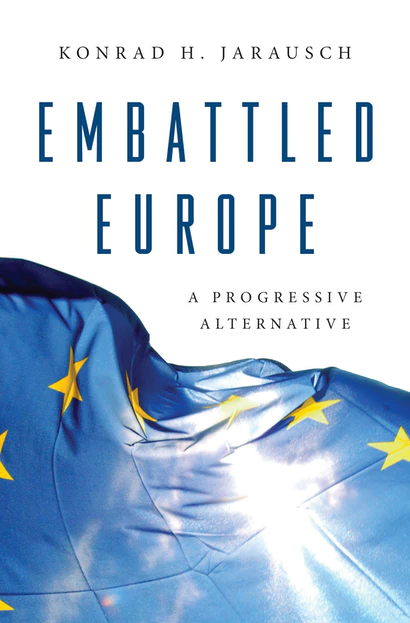
Future of Europe
Future of Europe: What is not forbidden is allowed. RevDem Interview with Guy Verhofstadt
Last week three RevDem editors interviewed Guy Verhofstadt, co-chair of the Conference on the Future of Europe. Today we are publishing the edited transcript of this conversation.
13.07.2021

Future of Europe
How East-West Dynamics Define Europe
In his article, Ferenc Laczo writes about the roots of the division of Europe into East and West and its consequences for European politics today.
3.07.2021

Future of Europe
Reading Barnier’s diary: Brexit and the nature of European integration
Our editor Michal Matlak reviews the secret diary of Michel Barnier, former EU chief Brexit negotiator and potential French presidential candidate.
11.06.2021

Future of Europe
Rule of Law is not like IKEA furniture
What is the societal dimension of the rule of law? How can we improve democracy on the European Union level? Is there a place for citizens engagement in design of the Conference on the Future of Europe? Paul Blokker, an associate professor at the University of Bologna, in a conversation with Kasia Krzyżanowska, unpacked all these issues.
2.06.2021

Future of Europe
[RevDem Launch Event] Conference on the Future of Europe: Democratic Innovation or Business as Usual?
May 9th marked the opening of the Conference on the Future of Europe. In the debate we organised one day later, the panellists discussed its objectives, how to achieve them and whether it can give a new impetus to European integration.
18.05.2021

Future of Europe
Conference on the Future of Europe: Democratic Innovation or Business as Usual?
May 9th marked the opening of the Conference on the Future of Europe in Strasbourg. In the online debate of the CEU Democracy Institute and its new journal, the Review of Democracy, the panelists discussed its objectives, how to achieve them and whether it can give a new impetus to European integration. They also discussed the lessons of the previous Convention on the Future of Europe, which proposed a constitutional treaty that was ultimately defeated in referendums in France and the Netherlands. PANELISTS:Giuliano Amato, former Prime Minister of Italy, Professor Emeritus at European University Institute and University La Sapienza, Vice-President of Italian Constitutional Court Ulrike Guérot, Founder and Director of European Democracy Lab, Head of the Department for European Policy and the Study of Democracy at Danube University Krems Hélène Landemore, Associate Professor of Political Science, with Tenure at Yale University Thu Nguyen, Policy Fellow for EU Institutions and [...]
12.05.2021
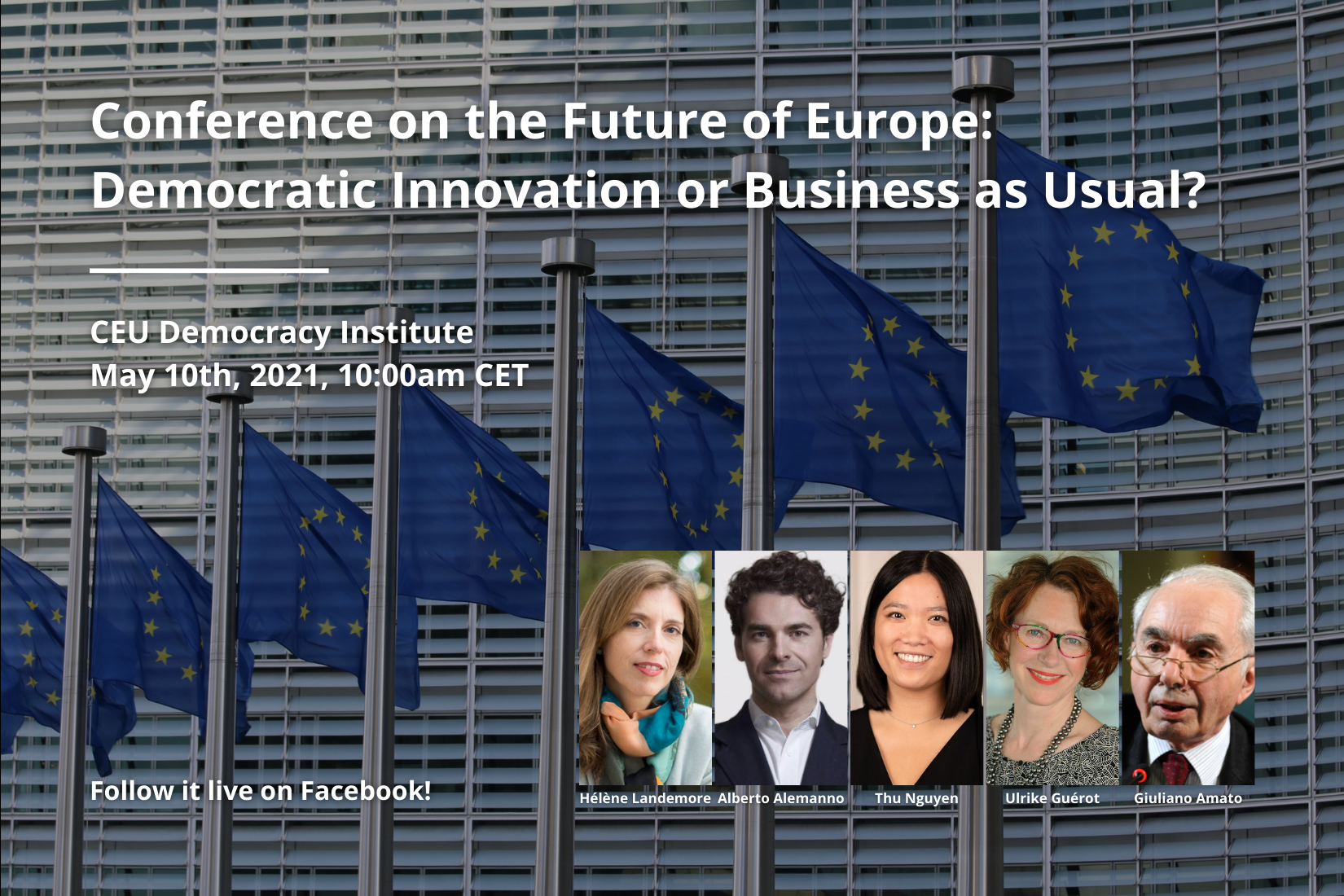
Future of Europe
Citizens as Masters of the EU Treaties [Interview and Podcast]
Who are really the masters of the EU treaties and where does constituent power in the European Union lie — Markus Patberg, interviewed by Kasia Krzyżanowska, offers his answers to these questions.
12.05.2021

Future of Europe
The Future of Democracy in EU Member States
Michał Matlak summarises the debate on the future of democracy in Member States.
19.03.2021

Future of Europe
The Future of Democracy in EU Member States
Debates on the state of democracy in EU Member States have been intensifying. Attacks against the rule of law have regularly been registered. Both authoritarian incumbents and their opponents try to use elements of the international legal and political framework for or against de-democratization. Speakers:Věra Jourová, Vice-President, European CommissionClément Beaune, Secretary of State for European affairs, Ministry of Foreign Affairs, FranceMichal Šimečka, Member of the European Parliament, Vice-Chair, Renew Europe Group Moderator:R. Daniel Kelemen, Professor of Political Science and Law and Jean Monnet Chair in European Union Politics, Rutgers University Opening remarks:Dimitry Kochenov, Senior Research Fellow, CEU Democracy Institute Welcoming Remarks:Michael Ignatieff, CEU President and Rector The event was supported [in part] by a grant from the Open Society Foundations.
1.03.2021

Future of Europe
Conference on the Future of Europe: Process more important than outcome
Conference on the Future of Europe: The process is more important than the outcome. Interview with Alberto Alemanno, Jean Monnet Professor in European Union Law & Policy at the HEC in Paris.
18.02.2021

Future of Europe
RevDem Podcast with Alberto Alemanno on the Future of Europe
The RevDem, an online journal of the CEU Democracy Institute, presents a podcast interview with Professor Alberto Alemanno (HEC, Paris) and the founder of Good Lobby about the upcoming Conference on the Future of Europe, interviewed by RevDem editor Michal Matlak.
1.02.2021
Future of Europe
Debate on the Rule of Law in Europe
Attacks against the rule of law have always been an integral of processes of de-democratization. The instrumentalization of law happens in an international context in which both authoritarian incumbents and their opponents try to use elements of the international legal and political framework for or against de-democratization. In this debate by the CEU Democracy Institute on the rule of law conditionality mechanism recently adopted by the Council of the European Union and the European Parliament, the speakers, EU Commissioner Didier Reynders and Member of the European Parliament, Katalin Cseh, discussed the rationale for such a solution, the doubts of some European governments, as well as a more philosophical view on the EU’s competences in this matter. The debate was moderated by Professor Laurent Pech. Speakers:Katalin CsehMember of the European Parliament, Vice President of Renew Europe Didier ReyndersEuropean Commissioner for Justice Moderator:Laurent PechProfessor of European [...]
26.01.2021

