Op-Eds and Essays
Op-Eds and Essays
When Is a Law Not Law? Habermas, Democracy, and Argentine Dictatorship’s Self-Amnesty
Jürgen Habermas’s greatest legacy lies in the ways he taught us to think about democracy, particularly through what he termed ‘deliberative democracy’. Through this notion, Habermas refers to a regulative ideal; that is, not a ‘description’ of democracy as it exists – which is what interested Robert Dahl, for example – but rather a normative horizon to be attained, a point that allows us to judge whether public decisions taken are justified or not.
31.03.2026

Op-Eds and Essays
In the Name of Freedom: The Dismantling of Decent Work in Argentina
Javier Milei’s recently approved labor reform promises to liberate the Argentine people from the obstacles that constrain their individual prosperity. Yet beneath its façade of freedom, the reform redefines the legal protections that have long safeguarded workers, their well-being, and their environments, as the Agenda 2030’s “Decent Work” Goal demands.
26.03.2026

Op-Eds and Essays
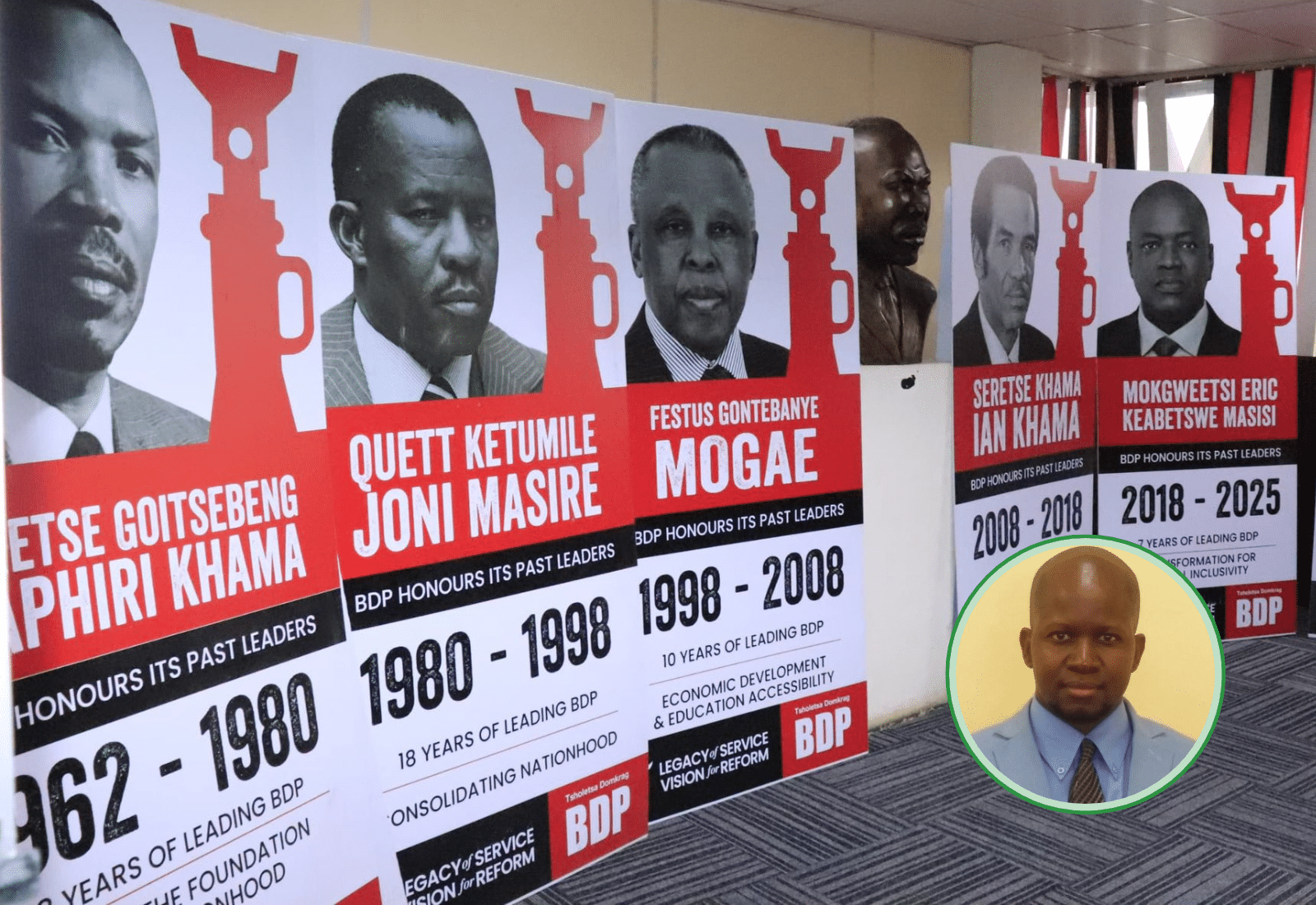
The Decline of the Botswana Democratic Party After Nearly Six Decades of Rule
For the first time since independence, Africa’s longest continuous multiparty democracy, Botswana, has changed government. For nearly six decades, one party, the Botswana Democratic Party (BDP), dominated elections. However, the outcome of the 2024 general elections saw the BDP lose its grip on power, to the country’s first coalition government, Umbrella for Democratic Change (UDC). So, how did the decline of the BDP come about? Also, will this be the end of an era of one-party dominance?
25.03.2026
Op-Eds and Essays
The Populist Paradox: Economic Pain, Enduring Power
Populism is no longer a fringe phenomenon. Across Western democracies, from Donald Trump in the US to Viktor Orbán in Hungary and now even in Austria, populist leaders are gaining traction and wielding considerable power. What are the economic and social consequences of this political shift?
24.03.2026

Op-Eds and Essays
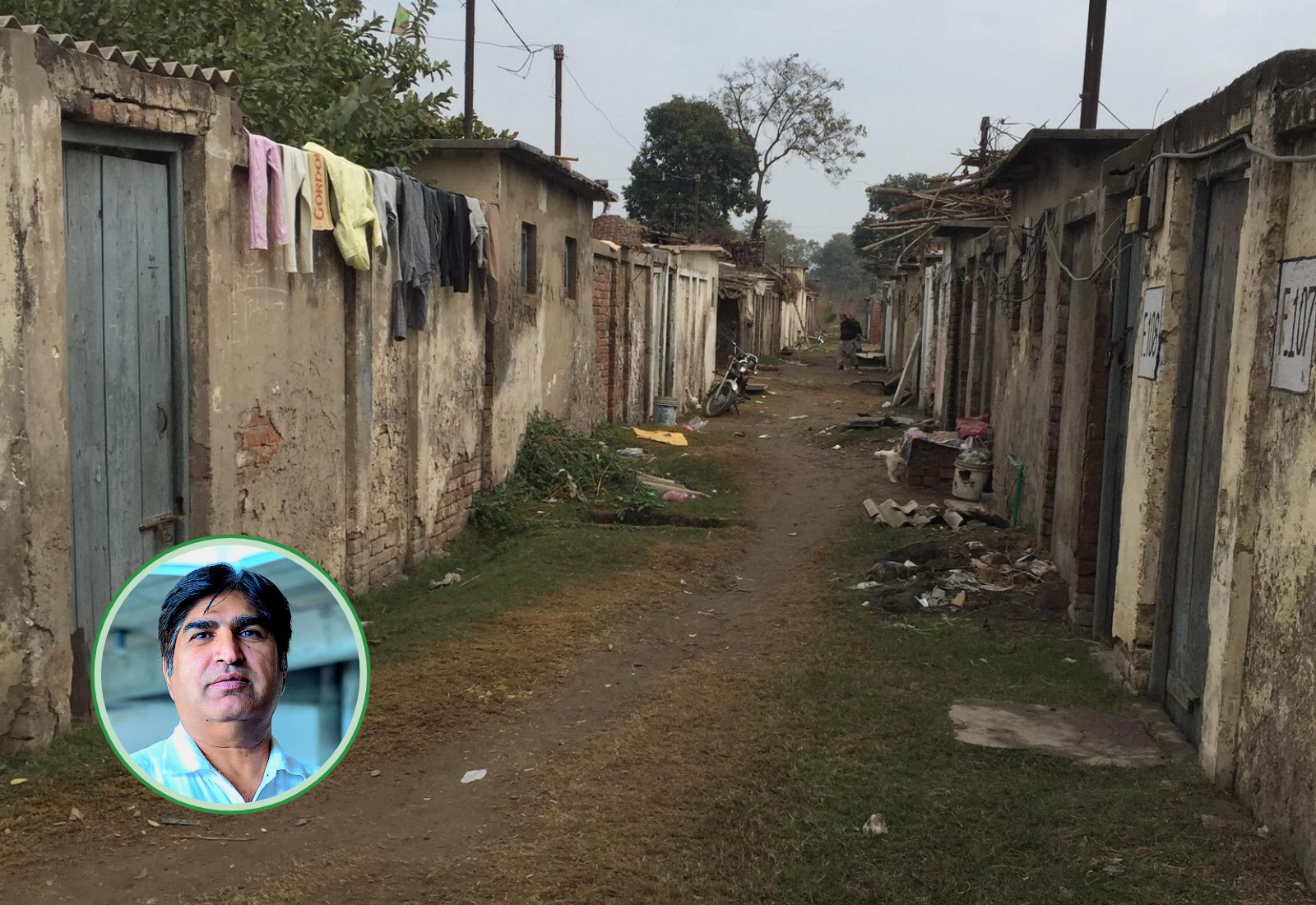
The Hostages of Statecraft: Bengali Internment in Pakistan and the 1971 Bangladesh War
Contemporary politics in South Asia involves historically complex questions of citizenship, loyalty, and state power. Debates about migration, internal security, and national belonging have revived concerns over how swiftly democratic norms can be compromised to serve state security needs. In Bangladesh, these tensions remain particularly sharp: the Awami League, which played a crucial role in the founding of the country and governed for over a decade, was ousted through mass protests and subsequently barred from contesting the February 2026 elections, raising serious questions about political representation, democratic legitimacy, and the future of electoral competition. Such developments highlight the fragility of democratic processes and demonstrate how political crises can reshape notions of citizenship, rights, and participation.
13.03.2026
Op-Eds and Essays
When Soldiers Became Jurists: The Legal Origins of Indonesia’s Authoritarianism
How did Indonesia’s military learn to rule through law? This essay argues that a “military-juridical nexus” between civilian jurists and army officers in the 1950s built the legal foundations of authoritarianism—transforming emergency powers into durable institutions that continue to shape Indonesia’s civil–military relations today.
11.03.2026

Op-Eds and Essays
New Order’s Authoritarian Legacies and Indonesia’s Democratic Decline: A Reassessment
By 2025, Indonesia has been a electorally democratic polity for over a quarter of a century since the collapse of the authoritarian New Order regime (1966-1998) in 1998. Yet, rather than consolidating democratic institutions, the country has entered a slow but discernible trajectory of democratic backsliding—what scholars of comparative politics term a process of “autocratization.” This democratic regression has been most visible during the latter years of President Joko Widodo’s administration and the state’s repressive handling of recent civil society protests in major Indonesian cities is one of its manifestation.
3.03.2026

Op-Eds and Essays
From the People vs. the Elite to Everyone as the Enemy: The Strange Afterlife of Donald Trump’s Populism
Donald Trump’s second presidential term exposes how the structural logic of populism breaks down under its own expansion. As adversaries proliferate and the claim to embody a unified “people” weakens, antagonism survives but representation frays. What once relied on a clear, if contestable, moral divide now operates through thinning legitimacy and the staging of permanent confrontation.
27.02.2026

Op-Eds and Essays
The State of the Labour Constitution
The Mandelson affair, Britain’s former U.S. ambassador being deeply enmeshed in Jeffrey Epstein’s network of powerful contacts, has led to the resignation of the Prime Minister’s chief of staff, Morgan McSweeney. As a result, Keir Starmer’s already shaken government finds itself in yet another crisis. However, McSweeney’s departure may also present an opportunity to repeal failing policies and rhetoric. Nicolas Reed Langen analyzes the roots of the Labour Party’s current malaise and explores prospects for change to prevent a further ascent of the far right.
19.02.2026

Op-Eds and Essays
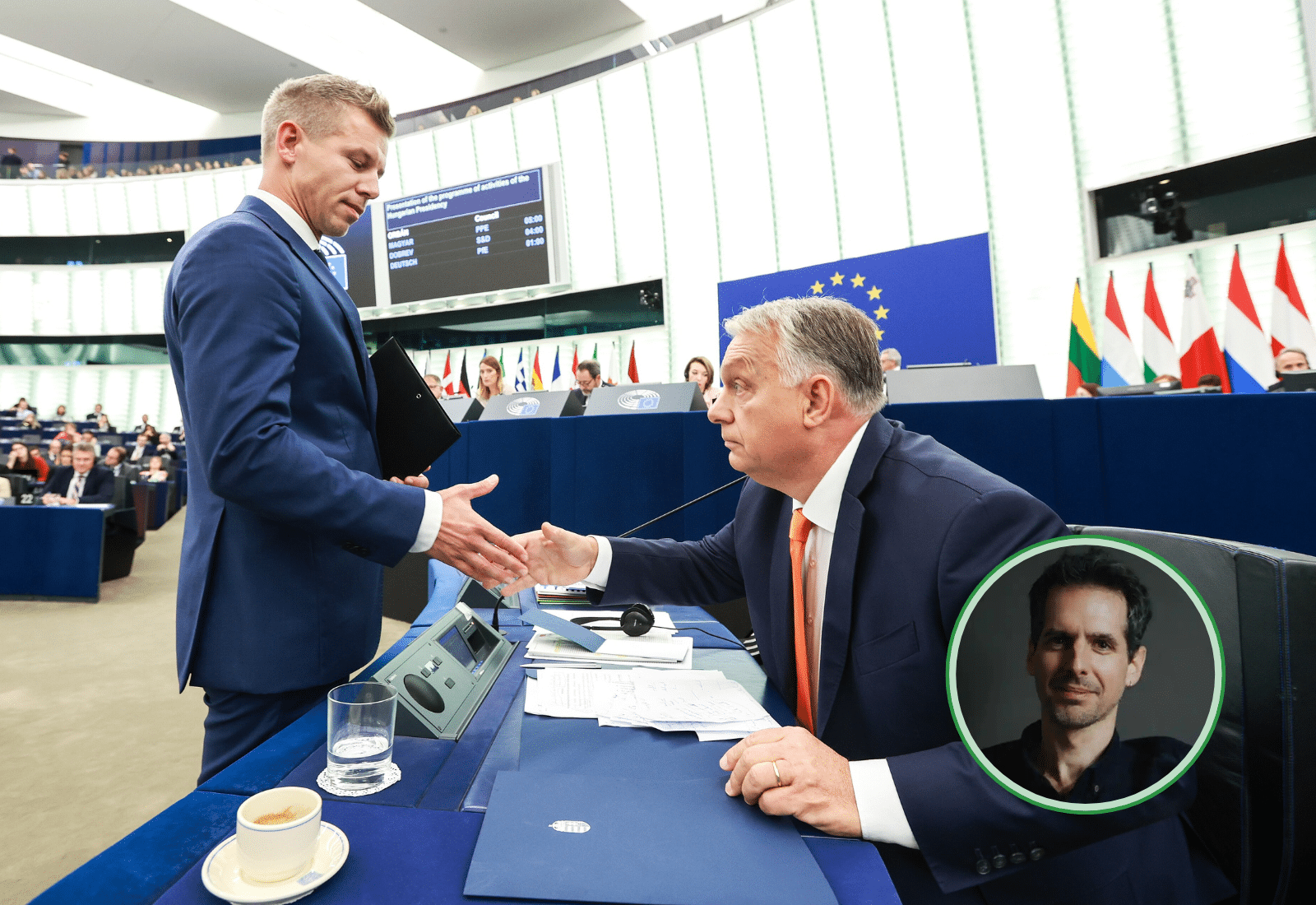
Fidesz on the Defensive: Sixteen Years of Dominance Under Threat
Hungary's April 2026 parliamentary election presents the first serious challenge to Viktor Orbán's sixteen-year rule. Péter Magyar's Tisza party, built on technocratic populism and a clean break from the discredited old opposition, leads Fidesz by roughly ten points among committed voters. This analysis examines the roots of Fidesz's vulnerability, the dynamics of a campaign dominated by economic grievances and a series of scandals, and the scenarios that could yet determine the outcome.
4.02.2026
Op-Eds and Essays
Why Democratic Strategy Must Rethink Authoritarianism Today
While observations of developments on the global scale always conceal a great amount of nuances, trends can nevertheless be discerned. One such significant trend in contemporary global society is the retreat of democracy: the world in general is more authoritarian than it was a decade or two ago.
3.02.2026

Op-Eds and Essays
The Unyielding Power of Authoritarianism: Hasina’s Failed Cards to Stop Bangladesh’s July 2024 Uprising
Bangladesh’s July 2024 uprising exposed the limits of authoritarian control. Despite deploying repression, censorship, legal manipulation, and disinformation, the Hasina regime failed to contain a decentralized, student-led movement that ultimately forced its collapse.
28.01.2026

Op-Eds and Essays
Chile in Three “Halves”: Anti-Pinochet, Anti-Communist, Anti-Establishment
Chile is no longer structured by a single political divide rooted in the legacy of dictatorship. Instead, its electoral landscape is increasingly shaped by three forms of rejection: anti-Pinochet, anti-Communist, and anti-establishment identities. This trilemma helps explain why Chilean voters have repeatedly rejected both progressive and conservative constitutional projects—and why traditional binary frameworks no longer capture the country’s political dynamics.
26.01.2026

Op-Eds and Essays
Venezuela and the Return of U.S. Hemispheric Power
The capture of Nicolás Maduro by U.S. forces signals a turning point in hemispheric power relations. This intervention not only reshapes Venezuela’s political future, but also exposes a regional order in which sovereignty is conditional, legitimacy is secondary, and U.S. power faces few effective constraints.
21.01.2026

Op-Eds and Essays
Manufacturing Moral Panics? NIKI, Anti-Genderism, and the Politics of LGBTQ+ Exclusion in Greece
With just 4 percent of the vote, Greece’s far-right party NIKI succeeded in reshaping the national debate on LGBTQ+ rights. By mobilizing Orthodox Christianity, the party reframed same-sex marriage and adoption as existential threats to the nation, family, and faith. Through moral panic, religious symbolism, and strategic populist framing, a marginal political actor launched a powerful cultural counteroffensive, revealing how influence in populist politics often far exceeds electoral weight in moments of social change.
13.01.2026

Op-Eds and Essays
Venezuela and the “Sustainability” Wars Ahead
At the heart of contemporary conflicts lies an often-overlooked reality: Environmental resources are unevenly distributed and governed. As climate change accelerates and ecological limits tighten, struggles over land, energy, water, and biodiversity increasingly shape global politics, revealing the sustainability–peace nexus as a strategic mechanism used to stabilize extraction.
9.01.2026

Op-Eds and Essays
The 50th anniversary of Operation Condor’s founding meeting in Chile
Fifty years after South America’s dictators formalized Operation Condor, new research and recent court rulings reveal both the scale of this transnational terror network and the extraordinary persistence required to expose it. Far from being an automatic product of democratization, today’s understanding of Condor’s crimes is the result of decades of mobilization by survivors, families, journalists, lawyers, and judges who challenged impunity across borders.
16.12.2025

Op-Eds and Essays
Gateway Berlin: Krasznahorkai Awarded the Nobel Prize in Literature 2025
On October 10, 2025, the Swedish Academy announced László Krasznahorkai as the recipient of this year’s Nobel Prize in Literature. A representative reached the audibly flustered laureate by phone in Frankfurt, Germany. Although he had been considered a candidate for a while, the honor humbled a writer whose childhood in 1950s Hungary hardly predicted his rise to global fame and this distinction at the age of seventy-one.
10.12.2025

Op-Eds and Essays
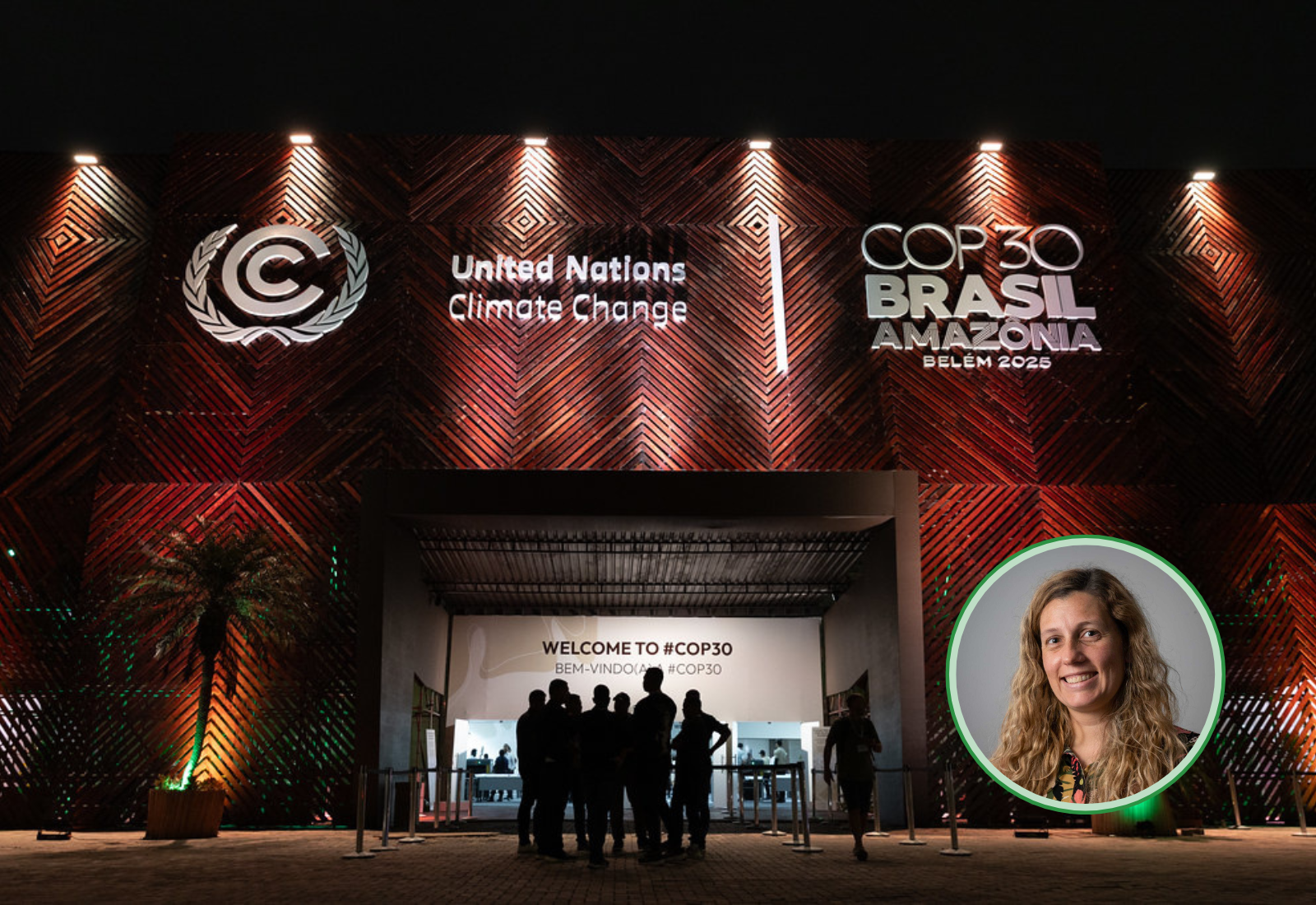
COP30 and the Geopolitical Trap of Energy Transition: A View from the South
If the energy transition requires territorial sacrifice and repression in the South, it is not a just transition. Mariana Paterlini explains how COP30 exposed the geopolitical trap of green extractivism—and why Latin America must reclaim sovereignty and rights to shape a truly democratic climate future.
9.12.2025
Op-Eds and Essays
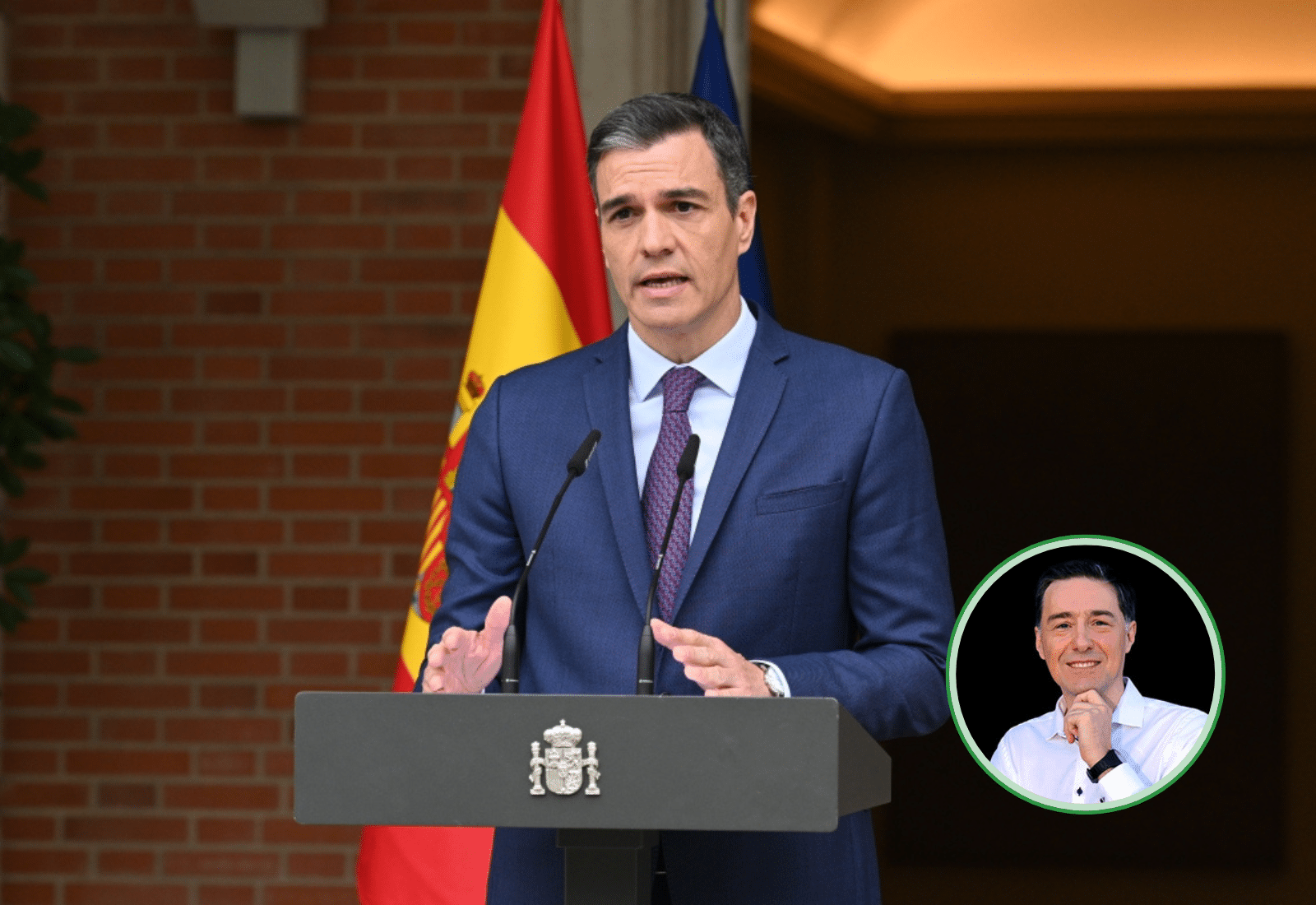
Playing Constitutional Hardball in Spain
Spain’s political struggles reveal how democratic erosion increasingly unfolds through boundary-pushing legal tactics rather than overt authoritarian ruptures. These dynamics illuminate a broader pattern in which the letter of the law is upheld while its spirit is strategically hollowed out.
3.12.2025
Op-Eds and Essays
Populism vs. the Planet: How COP30 Fell Apart
As delegates gathered in Belém, Brazil, from November 10 to 21 for the 30th Conference of the Parties (COP30), expectations ran high. Marking a decade since the Paris Agreement, the summit raised hopes for breakthroughs in climate-adaptation finance, green energy transitions, and stronger emissions pledges. Instead, it exposed how populism has reshaped global climate governance, replacing cooperation with confrontation, facts with opinions, and urgency with delay.
2.12.2025

Op-Eds and Essays
Reimagining Hungary’s Foreign Policy: Challenges and Opportunities for a Future Democratic Government
The April 2026 elections can mark the end of Hungary’s 16-year experiment with illiberalism and open a new chapter in its relations with Europe and the wider world. After more than a decade of multivectoral diplomacy—balancing uneasily between Brussels, Washington, Moscow, and Beijing—a new government might need to redefine the country’s place within the Euro-Atlantic community while confronting the legacies of dependency and mistrust left behind. The following analysis outlines the strategic framework for such a reorientation, mapping the challenges, trade-offs, and opportunities facing a future democratic Hungary.
25.11.2025

Op-Eds and Essays
Chile Chooses Between Extremes: Rightward Drift in a Reconfigured Party System
Chile’s presidential runoff pits a Communist former labour minister against a hard-right former congressman, signalling both a sharp rightward turn and the eclipse of the old political elites. The social outburst of 2019 and compulsory voting are opening up opportunities for outsider candidates while reshaping who is viable on left and right, pushing Chile’s party system towards more radical alternatives.
24.11.2025

Op-Eds and Essays
The Weakness of the Authoritarian Playbook
Across the world, strongmen follow the same playbook to dismantle democracy. But their favorite tool could also become their greatest weakness if democracy’s defenders learn to flip the script.
18.11.2025
Op-Eds and Essays
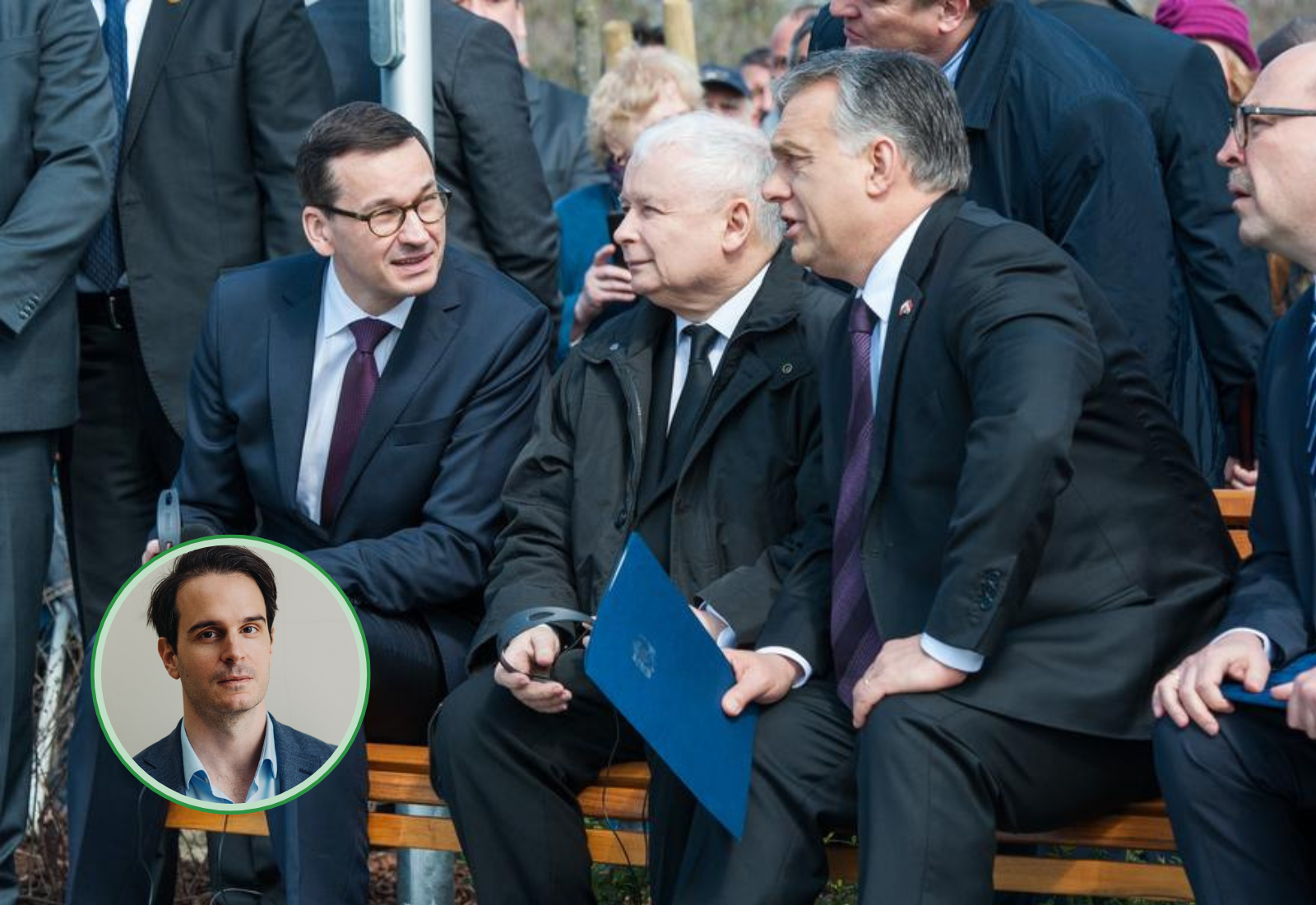
Democratic Entropy and Transactional Rule: The Political Output of Peruvian Informality
Peru’s democracy is eroding not through aspiring autocrats but through exhaustion. Beneath the turmoil lies a subtler form of decay: entrenched informality hollowing out authority and turning governance into a marketplace of deals rather than a system of rules.
13.11.2025

Op-Eds and Essays
Mayor Mamdani: An Inspirational Leader Facing Relentless Political Attacks
While the global rise of the far right often seems unstoppable, on November 4, 2025, a politician who describes himself as a democratic socialist won New York City’s mayoral election. In his op-ed, Prof. Neil H. Buchanan argues that Zohran Mamdani is a political phenomenon who will nevertheless face relentless efforts from across the political spectrum to bring him down.
6.11.2025

Op-Eds and Essays
From the Certainty of the Past to the Uncertainty of the Future: Argentina’s Midterms Elections
Argentina’s midterm elections tested not only the government’s ability to sustain its reform agenda but also citizens’ growing preference for results over ideology—a transformation increasingly visible across middle-income democracies.
5.11.2025

Op-Eds and Essays
Flexible Illiberalism: How Democracy Survives Illiberally in Southeast Asia
Southeast Asia shows how democracy’s openness can be weaponized. Flexible illiberalism—the art of using democratic institutions to pursue illiberal ends—reveals how democracy endures not by collapsing, but by changing hands.
4.11.2025
Op-Eds and Essays
Georgia’s Higher Education ‘Reform’: The Capstone of an Authoritarian Turn
Georgia’s government has announced a sweeping reform of higher education that pulls more decisions under central control, trims academic diversity, and limits international engagement. This is not an administrative adjustment—it’s a decisive move to bring one of the country’s last relatively plural arenas entirely under political authority. Sandro Tabatadze explains what is at stake.
31.10.2025

Op-Eds and Essays
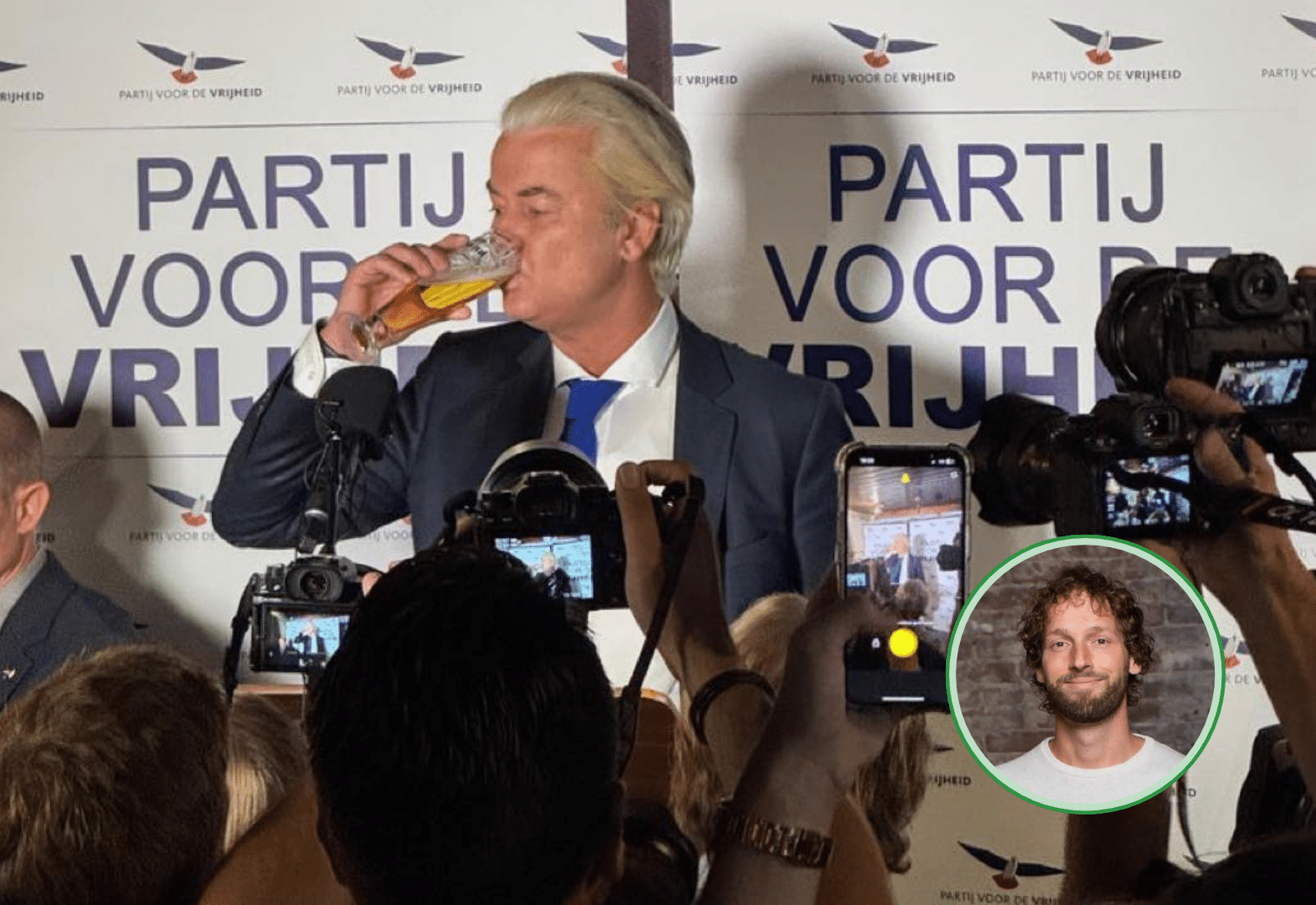
Dutch Elections: Rule of Law Alert 2.0?
Dutch voters are heading to the polls today, and while the party landscape remains deeply fragmented, the far-right PVV led by Geert Wilders is likely to come out on top once again. In his op-ed, Niels Graaf argues that the previous government attempted to undermine the rule of law in the Netherlands and examines the risks that may lie ahead.
29.10.2025
Op-Eds and Essays
Faces of Krasznahorkai
László Krasznahorkai’s complex world is rooted in Central Europe and its literatures, where absurdity and beauty coexist, yet circulate globally. Krasznahorkai’s vision resists mainstream simplification and confronts the “stupidity” of modern civilization. Through dialogues between literature, film, and visual arts, Imre József Balázs traces how an artist’s work transforms despair into a haunting affirmation of art’s enduring power.
28.10.2025

Op-Eds and Essays
Cameroon’s 2025 Presidential Election: Confronting an Electoral System Designed to Defeat Democracy
Cameroon’s Constitutional Council has announced that it will declare the winner of the recent presidential election on October 27. As Cameroonians await the official results, some hope that President Paul Biya’s rule may come to an end. In her op-ed, Laura-Stella Enonchong explains why Cameroonian voters face an electoral system designed to undermine the democratic will of the people.
24.10.2025

Op-Eds and Essays
Russia’s Multipolar Bargain: Flexibility Without Foundations
Moscow offers cheaper access to energy, finance, and payment rails, but not the investment and rules that make a real order.
21.10.2025

Op-Eds and Essays
Krasznahorkai and the Art of the Voice
The Nobel Prize committee is possibly the best-known summarizer of entire literary oeuvres in the world, as it purposefully creates one-liners to justify its selection for each year, something that is then picked up and repeated by news organizations all around the globe. This year, the award was given to the Hungarian writer László Krasznahorkai “for his compelling and visionary oeuvre that, in the midst of apocalyptic terror, reaffirms the power of art.” This both makes and misses the point spectacularly.
17.10.2025

Op-Eds and Essays
The Politics of Fiction: The Author of Satantango wins the Nobel Prize in Literature
Long considered as one of Europe’s most formidable writers, Krasznahorkai’s winning of the Nobel Prize reveals the long process that writers from East-Central Europe need for recognition. His visionary and unsettling work had an almost cult-like group of readers in Hungary already in the 1980s, but the international recognition arrived slowly. Yet through good translators and change of focus, his world of decay and irony gradually claimed its place in the global literature.
15.10.2025

Op-Eds and Essays
Why Do Sustainability Plans Keep Failing Us?
Why do sustainability plans so often fall short? The problem lies not in the strategic intentions but the very language of these agendas, which builds invisible walls that decide from the start who and what is excluded.
10.10.2025

Op-Eds and Essays
Bolivia’s First Runoff: How the MAS’s Collapse Made It Possible
Bolivia will face its first-ever presidential runoff in October. Drawing on Santiago Anria’s recent article in the Journal of Democracy, this piece argues that the collapse of the Movement Toward Socialism (MAS) is a crucial factor behind this unprecedented scenario, alongside the country’s economic crisis and the reorganization of the right.
9.10.2025

Op-Eds and Essays
Czech Elections: The Spectacular Failure of the “Pro-Democracy” Block
Andrej Babiš’s ANO triumphed as liberal rivals preached democracy but ignored inequality. Marie Heřmanová and Kateřina Smejkalová argue that this moralizing stance helped fuel the far right’s rise—and deepened Czechia’s democratic malaise.
8.10.2025

Op-Eds and Essays
What Does Moldova’s 2025 Election Say about its Democracy?
Roughly a week ago, on September 28, Moldovan citizens at home and across the globe went to voting polls to decide which political parties would represent their interests in the next four-year parliamentary cycle. The turnout exceeded the threshold for validity, making the vote to be declared valid and the election results being officially accepted at home and internationally. After the votes were counted, the results got warm international praise, especially from representatives of the European political establishment, for Moldovans choosing the path of European integration and transparency. In reality, however, joining the European family of states might be a more thorny path than the electoral promises highlighted.
7.10.2025

Op-Eds and Essays
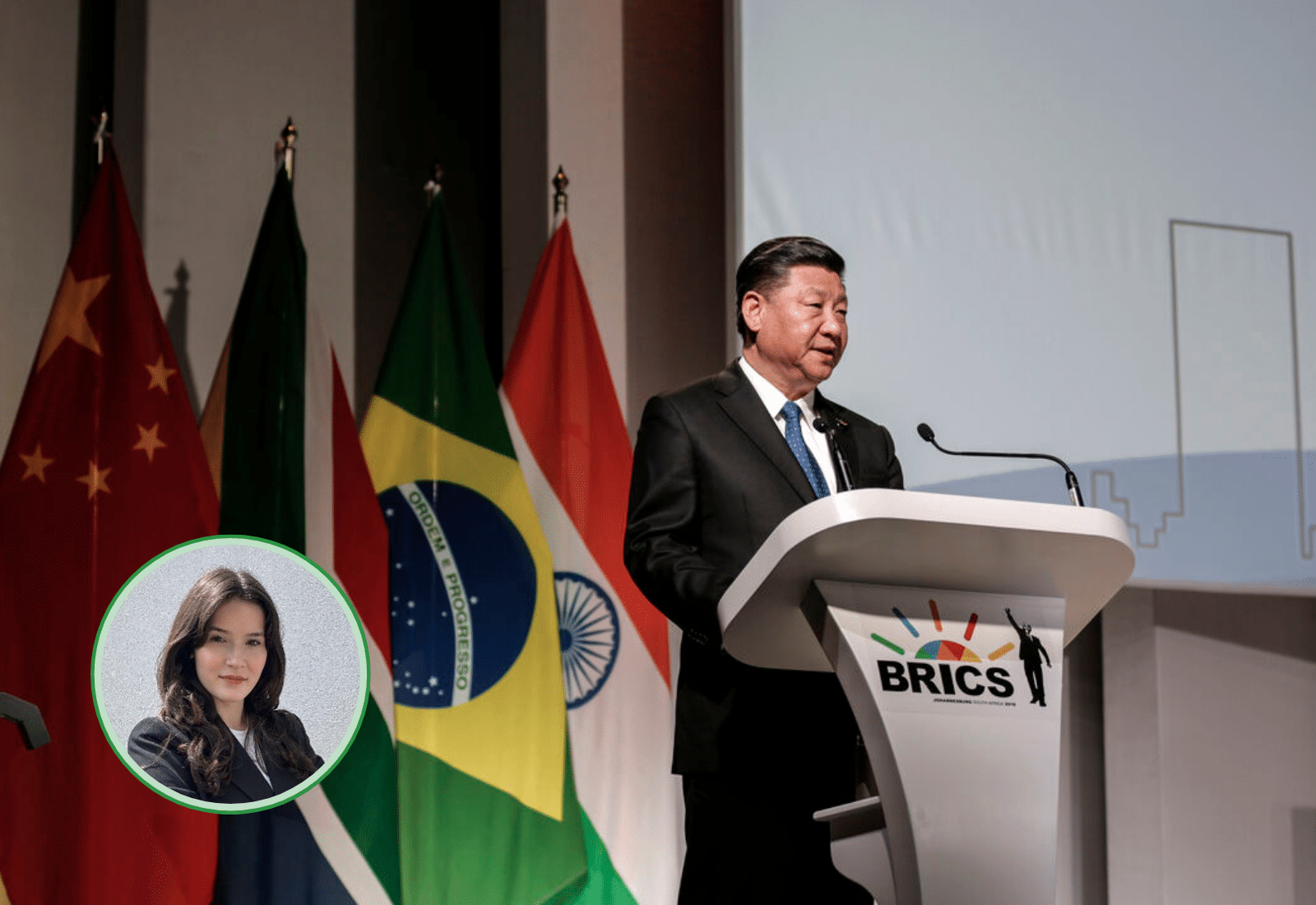
China’s Hybrid Ideological Convergence within BRICS
The power transition from the liberal Global North to the increasingly assertive Global South signals a shift from a unipolar to a multipolar international system, where emerging economies have the opportunity to contribute more significantly to shaping the global order. In this context, China plays a pivotal role. Being considered the architect of the BRICS group, Beijing successfully blends both far-left and far-right elements to design a hybrid ideological identity, aligned with its worldview.
3.10.2025
Op-Eds and Essays
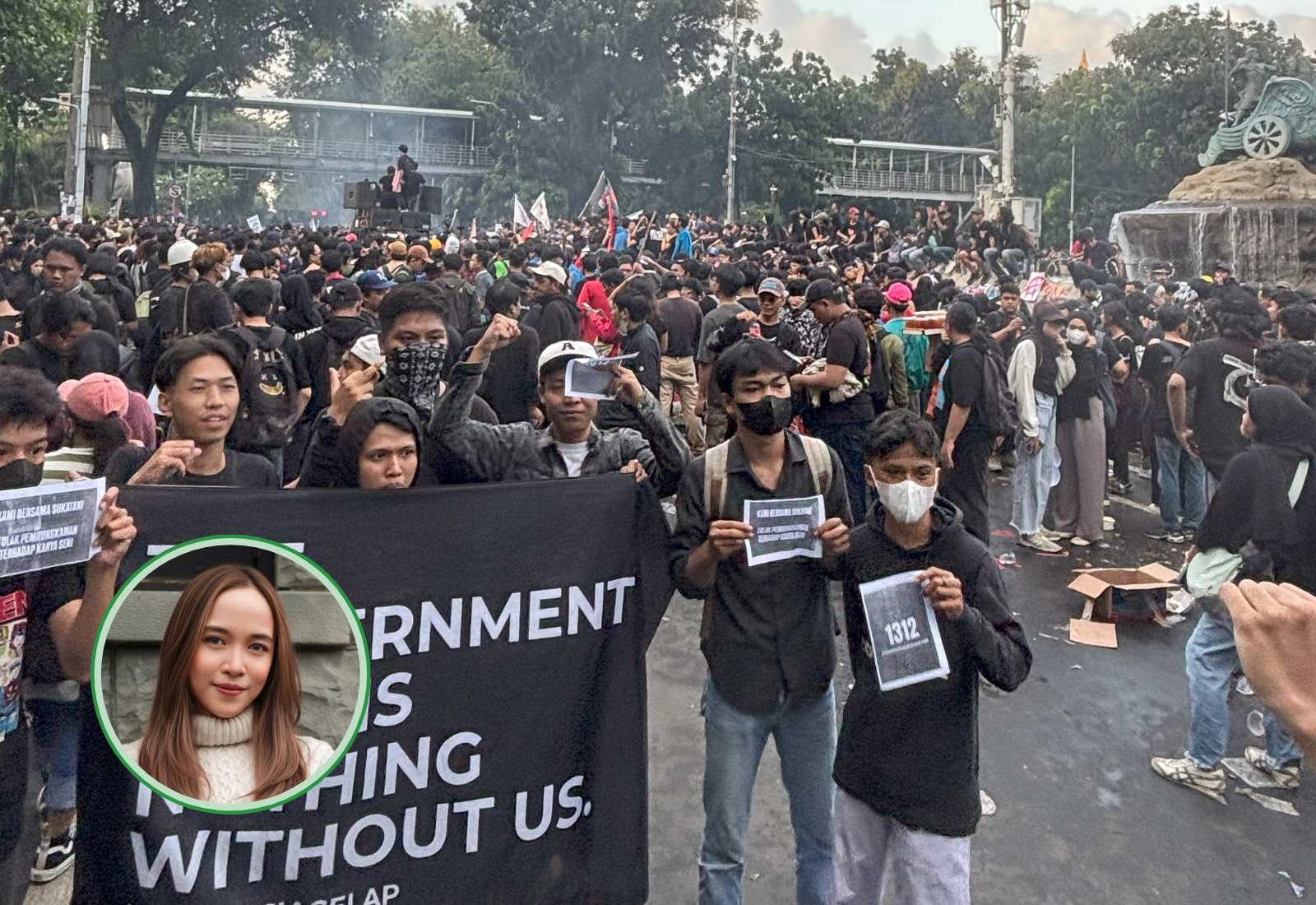
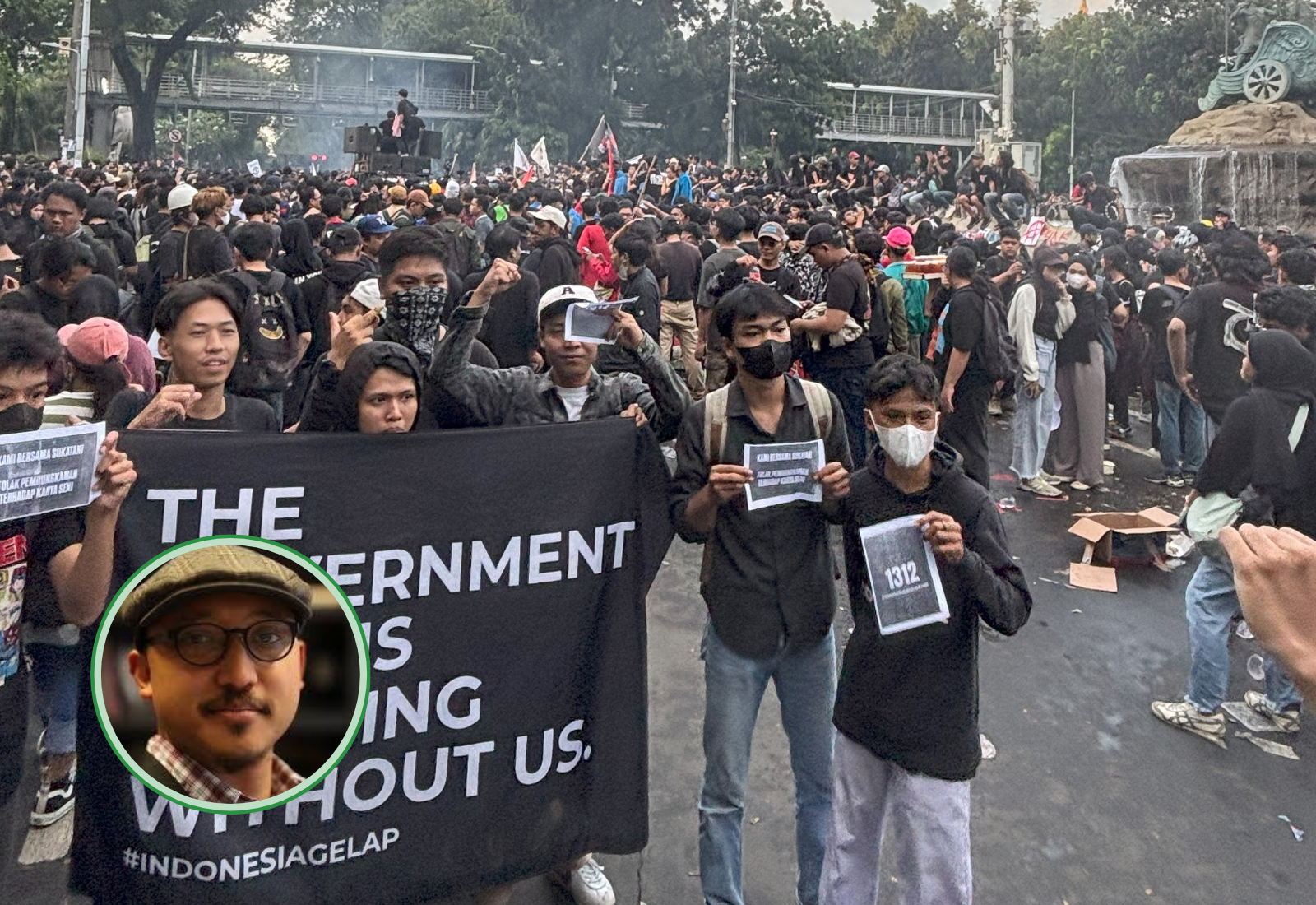
Citizens Protect Citizens: Indonesia’s Ethics of Democratic Care
While Indonesia’s government dismissed recent protests, this op-ed argues they are a powerful, decentralized movement with deep historical roots. Defined by a profound ethic of citizen care - “Warga Jaga Warga,” - a new generation is fighting back against a democracy they feel has been corrupted by ruling elites.
30.09.2025
Op-Eds and Essays
The Battle for the Past: Populism and Memory Politics in Contemporary India
Since 2014, the BJP has used its institutional influence to reinterpret history through a Hindutva lens, portraying India as an exclusive Hindu civilization. This effort goes beyond scholarship, reshaping how history is taught, remembered, and practiced, with narratives of Hindu pride framed as native resistance against foreign Muslim oppression and the BJP as custodian of this indigenous legacy. Supporters see these revisions as correcting omissions by earlier historians who, they argue, downplayed Hindu victories or overlooked figures like Maharana Pratap. For them, heroic retellings reclaim dignity and offer empowerment in a time of economic insecurity and social fragmentation.
26.09.2025

Op-Eds and Essays
Defending the Democratic Identity of the EU
Determined to create an ever closer union, the EU has evolved over the decades into a European democracy. While it may be identified with a new term as a democratic union of democratic states, its constitutional identity is under pressure from external and internal threats. This article calls on the EU to defend its constitutional foundations and to embrace and promote its functioning as a European democracy.
23.09.2025

Op-Eds and Essays
Through the Mirror World: South Africa and the Facts and Fictions of Genocide
Since South Africa accused Israel of carrying out a genocide in Gaza more than a year and a half ago, the situation has only grown more catastrophic. In a surreal twist, South Africa now finds itself accused of “white genocide” by far-right voices. Its moral stand is thus reflected back at it in grotesque parody. We can think about this absurd situation as a product of what Naomi Klein calls the “mirror world,” where powerful groups co-opt the rhetoric and aura of resistance to oppression while inflicting atrocities on others.
19.09.2025

Op-Eds and Essays
Margins of Deference
Since taking office in the summer of last year, Keir Starmer’s Labour government has suffered a drastic loss of approval. His term so far has been marked by erratic decision-making and an adoption of the right’s agenda on migration and economics. At the same time, the UK Supreme Court largely refuses to interfere with the government’s actions. In his op-ed, Nicholas Reed Langen unpacks double standards in the government’s reasoning and explains why a liberal democratic conception of the separation of powers requires the judiciary to scrutinize the government’s acts more rigorously.
18.09.2025

Op-Eds and Essays
From Victims to Workers: The Politics of Deservingness in Europe’s Support for Displaced Ukrainians
Europe’s ‘extraordinary solidarity’ with displaced Ukrainians in 2022 – rooted in images of vulnerability and cultural proximity – is increasingly being replaced by a politics of conditionality. Across Czechia, Germany, and Poland, benefits are shrinking, and public debates frame refugees less as victims of war than as workers expected to prove their worth through employment. This shift reveals how European governments, spurred on by far-right politicians who question displaced people’s right to stay, are reshaping solidarity around labour market deservingness, with troubling implications for the future of refugee protection in Europe.
10.09.2025

Op-Eds and Essays
Contestation and Consolidation of Democracies Will Never End
This letter seeks to draw attention to the growing tendency among voters to label political decisions and practices as democratic or undemocratic based on ad hoc judgments. This trend signals the emergence of what might be called “folk theories of democracy,” or intuitive, and at times contradictory, conceptualizations of democracy that often diverge from academic definitions. It risks fragmenting our shared understanding of democratic norms and complicating meaningful public discourse.
2.09.2025

Op-Eds and Essays
Rebels with a Welfare Cause: Turkey’s Youth Rising against Authoritarianism
After Istanbul Mayor Ekrem İmamoğlu’s imprisonment in March 2025, youth-led protests swept Turkey. Fueled by digital activism and pop culture, this new resistance converges with social policy innovations in opposition-run cities, marking a generational shift in how dissent and governance challenge authoritarianism.
22.08.2025

Op-Eds and Essays
Ruling the Spanish Void: What Spain’s Social Democratic Party Can Teach European Liberal Democracies about Party Politics
The Spanish Socialist Workers’ Party’s recent alleged corruption scandal involving a backhander scheme and two former number-twos in the party may prove to be the silver lining Spain’s political system needs to reform and modernize its political parties. The decision now rests in the hands of party leaders.
15.08.2025

Op-Eds and Essays
Maus to Mavic: From WWII’s Super-Tanks to Modern Drones — The Changing Face of Warfare
Throughout history, victory in war has rarely gone to the largest or most powerful. Instead, success favors those who adapt to terrain, technology, and changing conditions. I claim that this situation created a timeless dynamic, which could be called the struggle between dinosaurs and insects. The dinosaurs, often powerful but inflexible, fall before smaller, nimbler insects whose strength lies in adaptability.
8.08.2025

Op-Eds and Essays
Chile’s Left at a Crossroads: What Sunday’s Primary Reveals About the Country’s Democratic Drift
As Chile’s left prepares to choose its presidential candidate in a low-profile primary this Sunday, the stakes are higher than they seem. The vote offers a revealing snapshot of an opposition grappling with internal fragmentation, an emboldened right, and a disoriented electorate. Can the left reinvent itself before the 2025 elections?
27.06.2025

Op-Eds and Essays
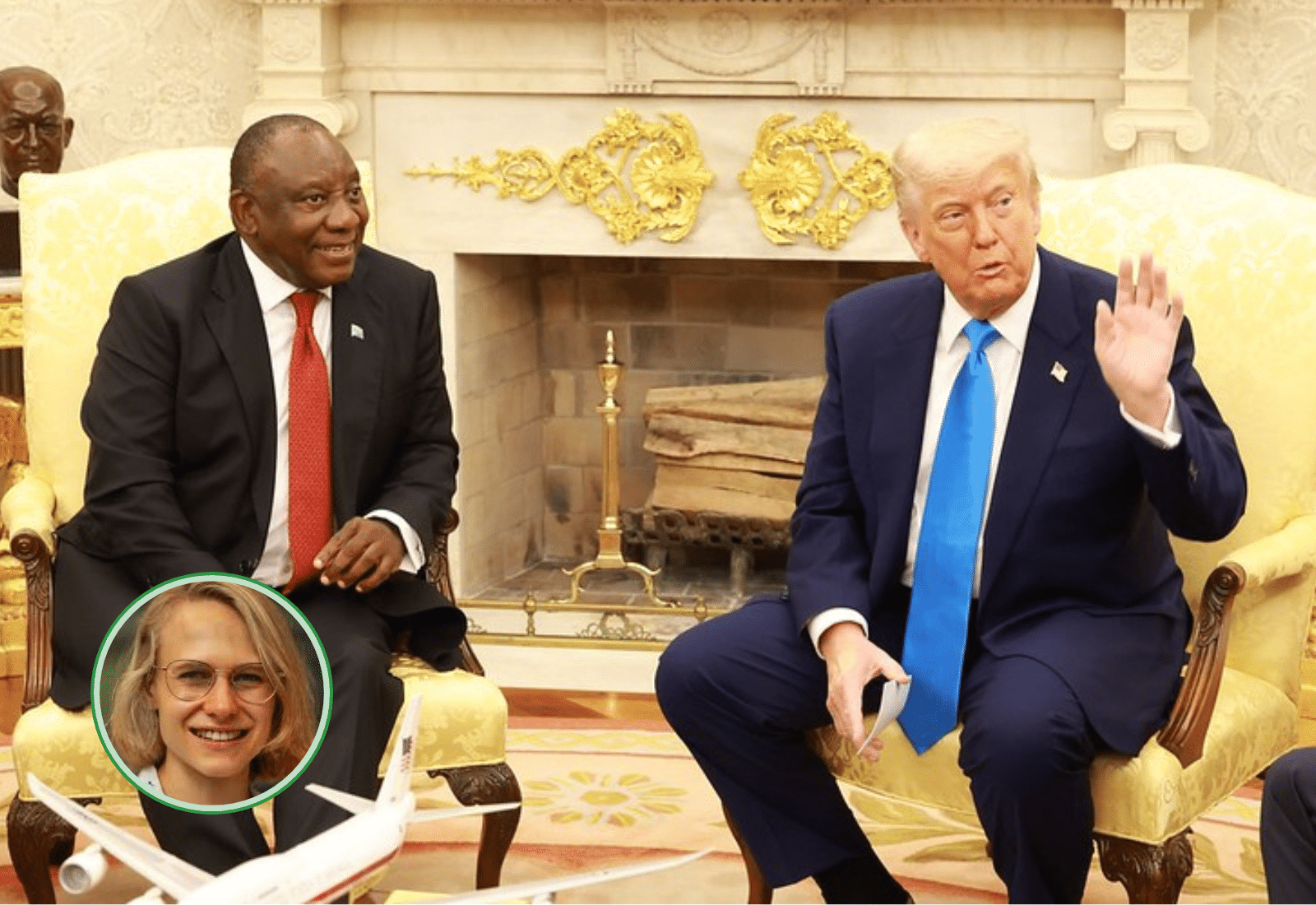
The Far-Right Fantasy of White Genocide: How South Africa Became a Symbol for the Global Right
When Donald Trump confronted South African President Cyril Ramaphosa with debunked claims of a “white genocide,” it was not simply an indication of his ignorance, but rather a broadcast of a longstanding far-right fantasy. It is thus necessary to unpack how conspiracy, race, and far-right networks coalesced to shape American policy and make white fear a global export.
25.06.2025
Op-Eds and Essays
The Moral Populist Legacy of Laudato Si’
Pope Francis’s Laudato Si’ redefined sustainability through a populist moral logic, casting it as a conflict between the people and indifferent elites. In doing so, he opened the public debate for populist leaders to reinterpret and challenge the concept using similar articulation.
19.06.2025

Op-Eds and Essays
The Post-2024 Italy: Figaro Qui, Figaro Qua…
Italy, long a master of diplomatic balancing, is reclaiming its traditional role as a geopolitical hinge between Europe and the wider world. Under Prime Minister Giorgia Meloni, Rome blends nationalist rhetoric with pragmatic alliances by playing Brussels and Washington with equal calculation. As ever, Italy pursues influence through flexibility, not fixed loyalties. By Julia Khrebtan-Hörhager Meloni’s diplomatic balancing act: Strategic chameleonism Italian Prime Minister Giorgia Meloni’s relatively recent visit to former U.S. President Donald Trump spotlights Italy’s tightrope walk between European solidarity and a revived transatlantic flirtation. Controversial and calculating, Meloni continues to toy with America’s favor. She was the only European leader to attend Trump’s inauguration in January and counts tech titan Elon Musk among her allies. In many ways, Meloni reflects Europe’s own identity crisis: regional power, global ambition. Italy, after all, was a founding [...]
18.06.2025

Op-Eds and Essays
China’s Carbon Gambit: A Green Quest or a Game of Politics?
In a historic shift, China’s CO₂ emissions are falling. This is not due to an economic slump, but rather an aggressive pivot toward clean energy. As the world’s largest emitter, China’s transformation is more than symbolic: It has the potential to redefine the pace and politics of global climate action. This turning point demands closer scrutiny. By Ceren Çevik In 2020, Beijing unveiled its “double-carbon” (双碳) policy, framing it as a pivot toward climate leadership and signaling that the world’s largest emitter was finally stepping up to its long-anticipated global responsibilities. Since then, China has massively expanded its clean energy capacity and launched a national emissions trading scheme. Yet coal still looms large, and the pace of actual emission reductions has been inconsistent. Now, with emissions finally beginning to decline, a crucial question resurfaces: Is the “double-carbon” agenda engendering genuine structural transformation, or is China simply mastering the [...]
17.06.2025

Op-Eds and Essays
In Uncertain Waters: The Restoration of the Rule of Law in Poland
The outcome of Poland’s presidential election has the potential to significantly harm the process of rule of law restoration in the country. In her op-ed Anna Wójcik examines the current situation and explores what the future strategy of the pro-democratic governing coalition must entail.
11.06.2025

Op-Eds and Essays
A Doomed Bid to Erase Dissent: İmamoğlu and the Future of Turkish Opposition
As the crackdown on Istanbul’s mayor Ekrem İmamoğlu intensifies, the stakes for the democratic opposition in Turkey grow higher. This analysis explores how legal repression, symbolic erasure, and authoritarian overreach may backfire — entrenching resistance, destabilizing governance, and echoing global patterns of democratic decline, without yet sealing Turkey’s fate as another Venezuela.
10.06.2025

Op-Eds and Essays
The Politicization of Anti-Feminism in Latin America
The growing visibility of anti-feminism in Latin America is not an isolated trend but a deliberate political strategy. In this op-ed, Cristóbal Rovira Kaltwasser examines how far-right actors harness anti-feminist rhetoric to mobilize voters, resist the expansion of rights, and contest the very meaning of democracy.
4.06.2025

Op-Eds and Essays
Pride Hungary: Orbán’s Culture War Escalates Ahead of 2026 Election
June is designated as Pride Month in many countries, but Orbán’s Hungary has essentially banned Pride events, masking democratic backsliding behind culture wars. Damien Le-Hoste unpacks the political theatre fueling authoritarian tactics ahead of a crucial 2026 election.
3.06.2025

Op-Eds and Essays
Mexico’s Judicial Reform: Democracy by Ballot or Power by Design?
Mexico is preparing for an unprecedented judicial election. But far from empowering citizens or improving justice, this reform may erode the very foundations of democratic rule. Ana Micaela Alterio explores how a process framed as democratization could entrench power, undermine judicial independence, and usher in a new phase of autocratic legalism.
30.05.2025

Op-Eds and Essays
The Implications of the Termination of US Government Assistance for Civil Society in Central Europe – Part II
The second part of this article analyzes the impact of the termination of US Government Assistance on the implementer landscape and the indirect political implications in the CEE region.
29.05.2025

Op-Eds and Essays
The Implications of the Termination of US Government Assistance for Civil Society in Central Europe – Part I
The first part of this article recounts the background of the termination of US Government Assistance and its immediate financial consequences for the CSO sector in Central and Eastern Europe.
28.05.2025

Op-Eds and Essays
The Aspasia Project: Protecting and Repairing the Infrastructure of the Public Debate
Public debate is deteriorating due to polarization and disinformation, despite unprecedented information access. The weakening, fragmentation, and discrediting of the "public knowledge infrastructure" (education, research, press) are to blame for this situation. The article proposes rebuilding this infrastructure by uniting professionals, involving citizens, and securing resources to protect democracy's foundation.
27.05.2025

Op-Eds and Essays
Brazil’s Democratic Resilience: How Institutions Withstood Bolsonaro’s Assault
Populist leaders are often framed as menaces to democracy—and for good reason. Brazil under Jair Bolsonaro quickly rose to the top of everyone’s backsliding list, a veritable cautionary tale in the age of eroding norms. Yet Brazilian democracy endured. The story of how it survived offers valuable lessons for democracies everywhere.
23.05.2025

Op-Eds and Essays
Eighty Years Ago – Eighty Years in the Future
Eighty years after WWII, the Netherlands can no longer rely on the war as a moral compass for today’s challenges. As global crises reshape our world, we must reflect on how our skills, networks, and past experiences prepare us to act or stay passive in shaping the future.
22.05.2025

Op-Eds and Essays
What is Union Citizenship For?
With its judgment in Case C-181/23, the Court of Justice of the European Union (CJEU) has put an end to a long-standing debate: Malta’s citizenship-by-investment scheme is incompatible with EU law because it violates the “bond of solidarity and good faith” between the individual and the member state that Union citizenship requires. In her op-ed, Anja Bossow examines the potential implications of this new criterion—both its perils and its potential promise.
21.05.2025

Op-Eds and Essays
Memory as a Battlefield: The Second World War in the Italian Public Debate
Eighty years after WWII’s end, Italy remains gripped by a battle over its wartime memory. As historians lose ground to politicized narratives, far-right forces reshape public discourse, recasting aggressors as victims and challenging the legacy of the Resistance in a deeply polarized cultural memory war.
20.05.2025

Op-Eds and Essays
Tactical Dilemmas of Democratic Front-Sliding: Early Lessons from Poland
Today, one-and-a-half years after the right-wing populist government with authoritarian ambitions left office, Poland is a real-time lab for democratic front-sliding. Different tactics deliver mixed results. The presidential election will certainly be consequential for this process. However, some early conclusions from more and less radical approaches to restoring democracy and the rule of law in the country have already emerged and provide useful hands-on evidence for the future.
16.05.2025

Op-Eds and Essays
Shifting Memories of the Second World War in Times of Global Disorder
Eighty years on, the Second World War is losing its moral primacy as global memory shifts, challenged by postcolonial critiques, geopolitical upheaval, and ideological appropriation, reshape how Europe and the world confront the legacies of totalitarianism and liberal democracy.
15.05.2025

Op-Eds and Essays
The Significance of War Crimes Trials after 1945: A View from East Asia
The Second World War had a transformative effect on the development of international law. It continues to shape its practice and evolution. While the Nuremberg trials are often acknowledged as a watershed moment, however, scholars sometimes neglected the extent to which the post-war trials in East Asia shaped the development of international law and the process of decolonization. By breaking away from a ‘Eurocentric’ focus on the largest conflict of the twentieth century, we can see more clearly the enduring global legacies of the war.
14.05.2025

Op-Eds and Essays
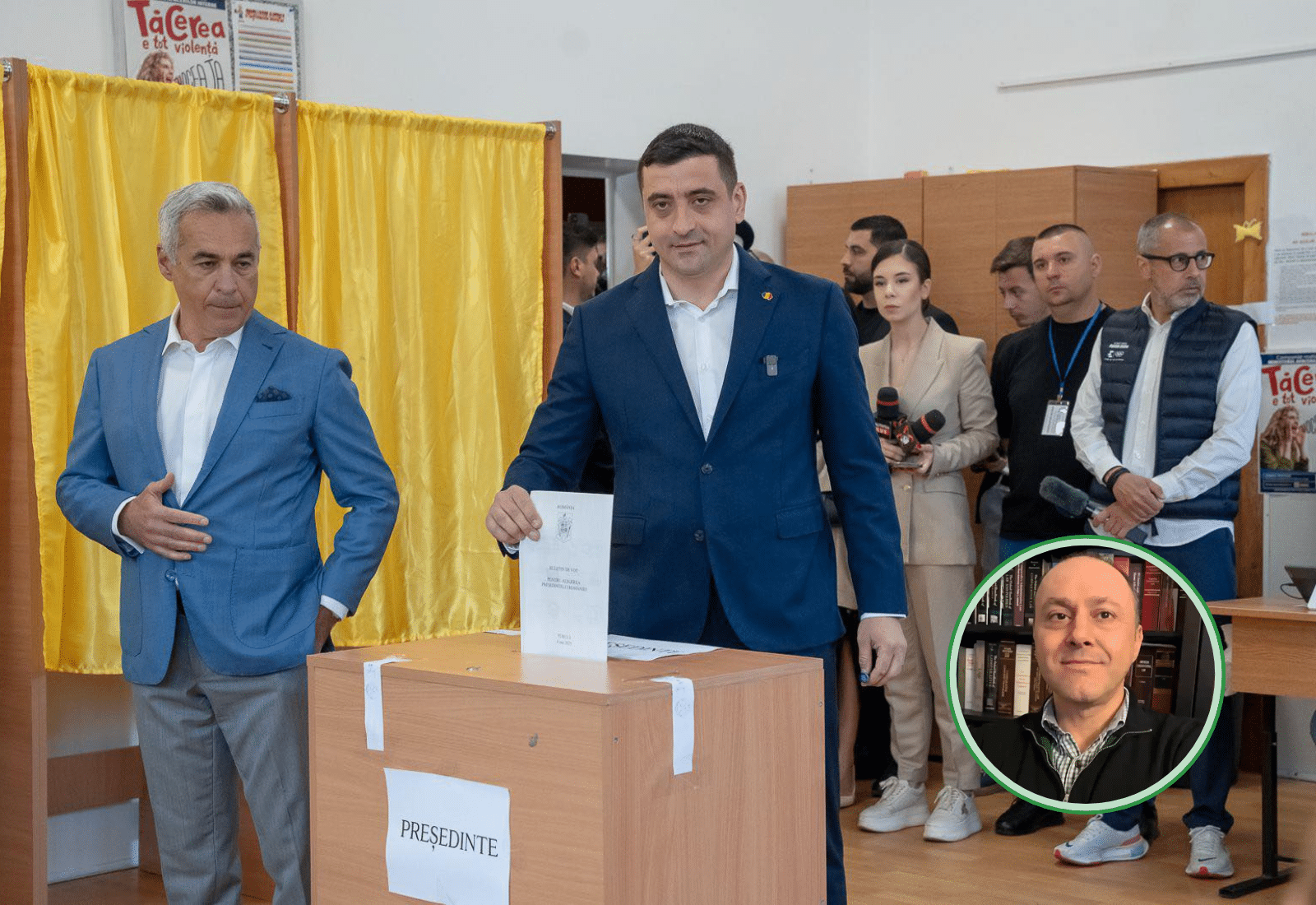
Constitutional Death Foretold? The Romanian Elections Saga in a Nutshell
Romania has been facing a political crisis marked by controversial court rulings, annulled elections, and the rise of far-right figures. Judicial overreach, social fragmentation, and foreign influence fueled public distrust, culminating in ultranationalist George Simion’s victory in the 2025 restaged presidential elections.
13.05.2025
Op-Eds and Essays
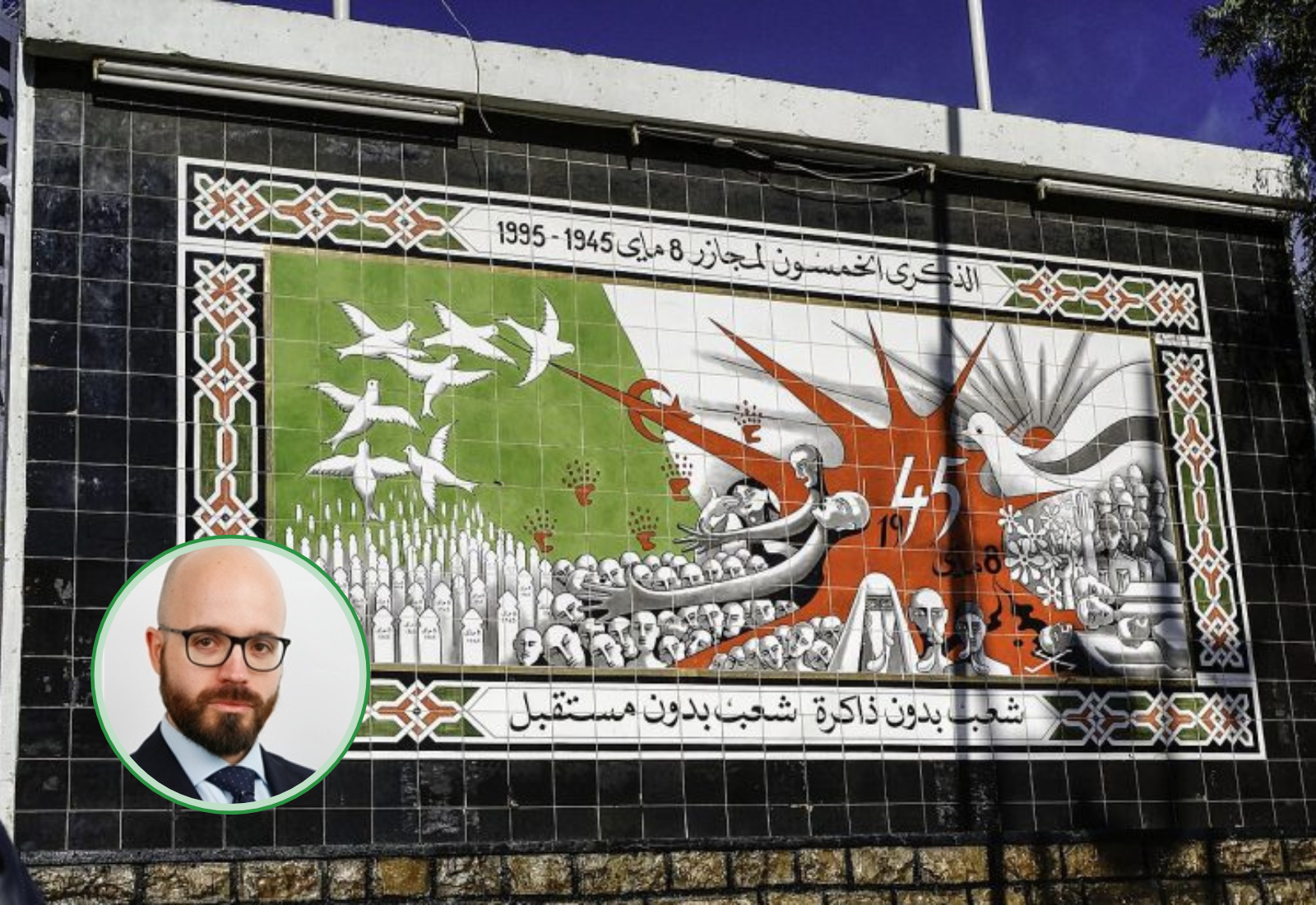
The Many Ends of the Second World War
The end of the Second World War was not a single moment defined by victory and defeat. Rather, it was a pluriform and drawn-out process perpetuated by colonial power politics in the Global South. By Thomas W. Bottelier This article is the third in our series commemorating the 80th anniversary of the end of World War II. It is sometimes said that the Second World War began in the Horn of Africa, in 1935, with Italy’s war of aggression on Ethiopia. It is almost never said that it ended there. And yet, it was the first place in the world where the fighting came to an end. Hostilities in Eritrea, then an Italian colony, ceased when the country was occupied by troops from the British Empire in the spring of 1941. Italian Somaliland, which covered the eastern seaboard of modern Somalia, was taken at the same time. Ethiopia, which the Italians had themselves occupied since 1936, was fully liberated that November, when the remnants of the Forze armate dell’Africa Orientale [...]
9.05.2025
Op-Eds and Essays
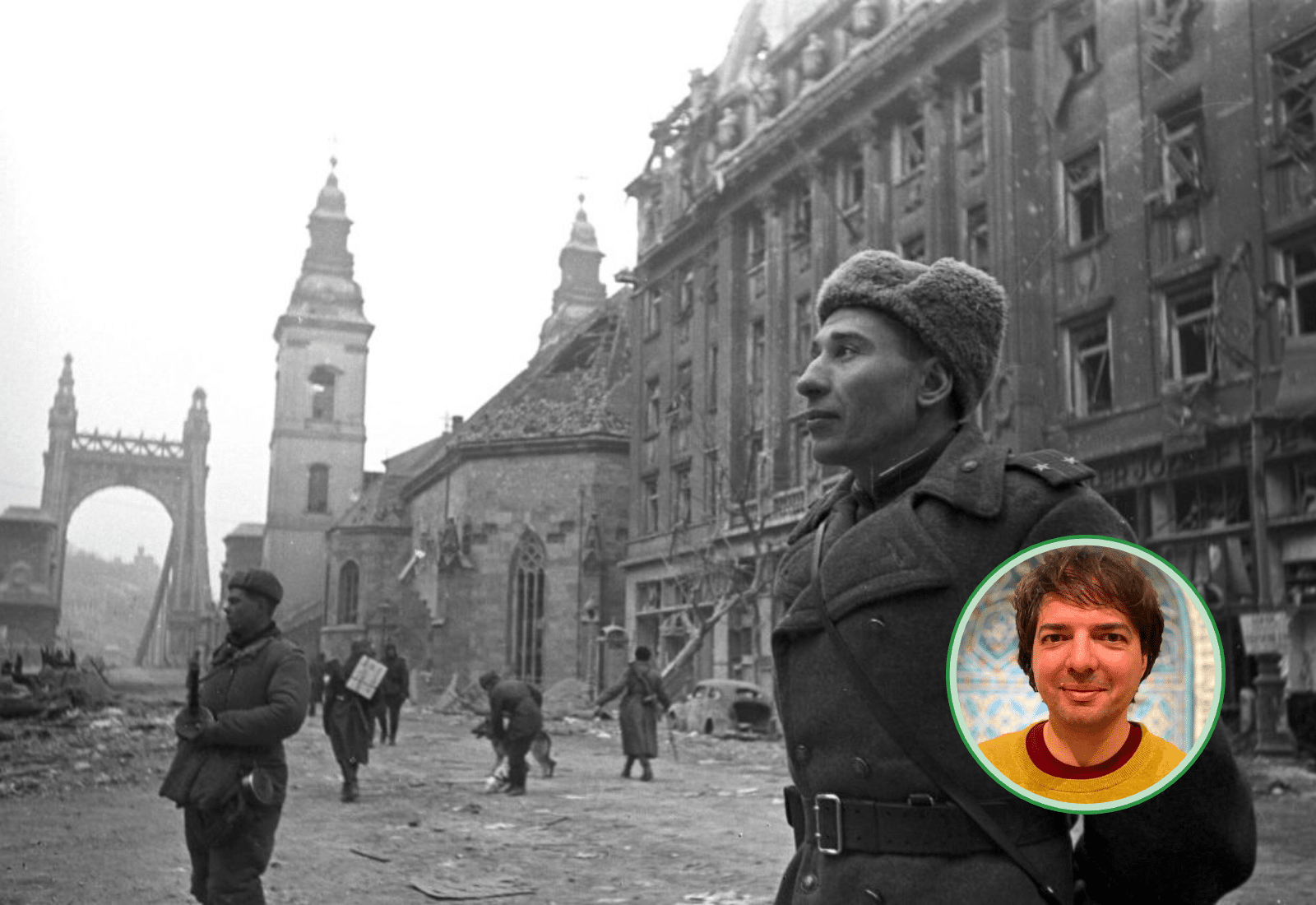
The Depoliticization of 1945
For much of the second half of the twentieth century, the Second World War and its aftermath were interlaced with western Europe’s present. The war was understood to have birthed the world that emerged in its wake. This is no longer so. Our present has been uncoupled from its twentieth-century past. The Second World War has consequently lost its explanatory function for making sense of contemporary socio-political realities.
8.05.2025

Op-Eds and Essays
A Clash of Revisionisms
The remembrance of the Second World War has shifted significantly in recent decades – and even more dramatic reinterpretations appear to be underway in our current moment of drastic uncertainty.
7.05.2025
Op-Eds and Essays
The Chipping Away of Argentine Democracy
It has been almost a year and a half since Javier Milei took office in Argentina. As he openly warned he would do during his campaign, his administration has been plagued by authoritarian practices, verbal and institutional violence, and policies that openly curtail citizens’ rights. Argentina currently possesses significant democratic capital, earned by decades of struggles and political commitment. We must now ask how long this capital will last in resisting the libertarian wave.
6.05.2025

Op-Eds and Essays
Voting for Togo’s Personalist Dictatorship
In February, Togo became the first of 10 African states to hold (indirect) executive elections in 2025. February 5 also marked the 20th anniversary of the coup that brought Faure Gnassingbé to power. This article assesses the legacy of the 2005 coup and the failure of Togo’s democratization.
1.05.2025

Op-Eds and Essays
Judicial Reforms in Italy: A Risk for the Rule of Law?
With the ongoing judicial reforms, the Italian Government’s conflict with the judiciary has reached a new phase. In her op-ed, Benedetta Lobina examines the proposed changes and assesses their impact on the rule of law in Italy.
30.04.2025

Op-Eds and Essays
‘Techno-Schmittianism’ in the North? The Canadian Federal Elections
On 28 April the Canadian Liberal party led by Mark Carney won the Canadian federal elections. The incumbent governing party has not won a majority of seats at the time of writing, with 155 ‘ridings’ (constituencies) secured compared to the Conservatives’ 133. The victory sealed a four-month turnaround in fortunes for the Liberals, following the resignation of former Prime Minister Justin Trudeau on 6 January.
29.04.2025

Op-Eds and Essays
All Together or None of Us – Part II: Turkey’s New Democracy Movement and Future
When Istanbul’s mayor, Ekrem İmamoğlu, was arrested, Turkey’s democratic future reached a breaking point. In this two-part series, Murat Somer examines how that moment united the long-divided social and political opposition, sparking an unprecedented wave of mobilization and strategic innovation that holds the potential to turn into an enduring and consequential democracy movement. Part I recounts the events that triggered mass resistance. Part II explores the movement’s evolving strategies, emerging alliances, and political stakes for Turkey’s future. ← Missed the backstory? Read Part I: The Arrest that Sparked Turkey’s Democratic Uprising
24.04.2025

Op-Eds and Essays
All Together or None of Us – Part I: The Arrest that Sparked Turkey’s Democratic Uprising
When Istanbul’s mayor, Ekrem İmamoğlu, was arrested, Turkey’s democratic future reached a breaking point. In this two-part series, Murat Somer examines how that moment united the long-divided social and political opposition, sparking an unprecedented wave of mobilization and strategic innovation that holds the potential to turn into an enduring and consequential democracy movement. Part I recounts the events that triggered mass resistance. Part II explores the movement’s evolving strategies, emerging alliances, and political stakes for Turkey’s future.
23.04.2025

Op-Eds and Essays
How Bolsonaro’s Gendered Populist Performance Polarized Brazil
In Brazil, Jair Bolsonaro leveraged gender performance to craft and sustain an outsider persona, despite his long-standing tenure in parliament and his role as head of the executive. This performative act, however, had dire consequences. It intensified political polarization and turned intimate spheres shaped by gender relations into battlegrounds of ideological conflict, especially during the 2022 electoral campaign.
15.04.2025

Op-Eds and Essays
The Attack on the Constitution
The President’s defiance of judicial authority has pushed the US into a constitutional crisis. In his op-ed, Nicholas Reed Langen unpacks how his deportation orders, legal battles, and Supreme Court victories have emboldened an authoritarian agenda, testing the limits of US democracy.
3.04.2025

Op-Eds and Essays
Understanding State Behavior and Regime Unpopularity through the “Tripartite Struggle” Framework
The interplay of global hegemony, majoritarian discourse, and ruling narratives shapes state behavior and regime popularity. Consolidated democracies manage ideological diversity better, enabling non-violent regime changes, while unconsolidated systems like India and Bangladesh risk authoritarianism or populism. Governments’ failure to balance competing interests often results in unpopularity, dissent, and potential regime instability.
1.04.2025

Op-Eds and Essays
What’s Radish Got to Do with Turkish Democracy?
When a Turkish proverb resurfaces at the heart of a political storm, it’s worth paying attention. Through the recent arrests of Istanbul Mayor Ekrem İmamoğlu and his colleagues, Ece Özbey traces the chilling implications of the deepening erosion of democratic norms and judicial independence in Turkey—and the defiant stirrings of civic resistance under Erdoğan’s tightening grip on the country.
28.03.2025

Op-Eds and Essays
The European Media Freedom Act: The Solution to Capture or Just Fine Print?
As the EU pushes new media freedom standards, the threat of media capture is persistent across Europe. In this op-ed, Oliver Money-Kyrle analyzes the threat, examining how governments manipulate media through control of public service media and regulatory bodies, ownership structures, and state advertising, and what measures are needed to safeguard editorial independence.
26.03.2025

Op-Eds and Essays
The Dismantling of US Statistical and Data Infrastructures by the Trump Administration
The Trump administration’s swift and systematic dismantling of statistical and data infrastructures has largely gone unnoticed. From erasing health and education data to cutting research funding, these actions threaten evidence-based policymaking, mirroring tactics used in autocratic regimes to obscure transparency and suppress inconvenient truths.
25.03.2025

Op-Eds and Essays
Quo Vadis, Deutschland? – Political Realignment
For decades, post-war German politics has rested on a shared commitment to keeping extremist parties at the margins. The principle of the cordon sanitaire — a firewall between democratic and anti-democratic forces — was more than a procedural rule; it became a moral and institutional cornerstone of liberal democracy in Germany. But what happens when this line begins to blur? We asked our contributors: How likely is the cordon sanitaire to collapse in the next parliament? And what unconventional forms of cooperation or tactical maneuvering might emerge across the political spectrum in the upcoming legislative cycle?
21.03.2025

Op-Eds and Essays
Quo Vadis, Deutschland? – The Future of the Green Agenda
This mini-series brings together leading scholars working in and on Germany to offer their insights into the key questions arising from this pivotal moment of transition. Through a multi-angled, interdisciplinary discussion, it examines the political, economic, and social forces driving change and shaping the country’s and the broader region’s future. In this third edition, our contributors examine the pressures weighing on Germany’s ecological transformation.
18.03.2025

Op-Eds and Essays
Quo Vadis, Deutschland? – The Future of the Socio-Economic Model
Germany’s latest parliamentary elections mark more than just a change in government — they signal a potential turning point for the country’s economy, multicultural identity, and political landscape. As the European Union’s largest and most influential member grapples with mounting domestic and global pressures, the decisions made in the coming years will not only define Germany’s trajectory but also reverberate across Europe and beyond.
11.03.2025
Op-Eds and Essays
Strengthening Democracy Amidst Political Polarization
This article aims to provide some insights into the current political geography in South Korea focusing on the development of right extremism and its impact.
4.03.2025

Op-Eds and Essays
What Can Illiberal Disruptions Tell Us About a More Democratic Future?
With the shocking beginnings of Donald Trump’s second term, many suspect we may be nearing a tipping point in the global history of democracy. Numerous democracies have indeed been eroding, and the process appears to be accelerating these days. However, despite continuous setbacks over the past two decades, only a few formerly democratic regimes have openly embraced autocratic rule until now.
27.02.2025

Op-Eds and Essays
German Election Brings Some Relief but Huge Challenges Lie Ahead
After the dust settled on election day and the sun rose over the Hauptstadt one thing became abundantly clear: the outcome could have been far worse. The terror attacks in Solingen, Mannheim, Magdeburg, Aschaffenburg and Munich made asylum and immigration the top electoral issue, forcing the two governing left-wing parties (the SPD and Greens) to play defense, and compelling conservative leader Friedrich Merz to launch a law-and-order offensive focused on the securitization of borders. While the maneuver prevented the far-right Alternative for Germany (AfD) – which had been calling for similar measures since 2015 – from taking ownership of the issue, it also led Merz’s Christian Democrats (CDU) to pass a non-binding parliamentary resolution together with the far-right.
25.02.2025

Op-Eds and Essays
New Dog, Old Tricks: Nepal’s Road to Federalism
Almost two decades have passed since the end of the civil war in Nepal but the country still struggles to address the legacy of the long conflict. The Nepali Civil War, which lasted a decade from 1996 to 2006 arose primarily due to uneven development and discrimination that plagued Nepal. The then elected government, formed under the constitutional monarch in 1991, and drawn from the previous system of total monarchy between 1960 to 1990, was highly centralised with political power concentrated in Kathmandu. This led to the ostracization of rural inhabitants who lived in destitute conditions and found little to no support from the state.
19.02.2025
Op-Eds and Essays
Why Misinformation Thrives in Autocracies: Spread from the Top, Delivered by TV, Believed by Partisans
Misinformation thrives in competitive autocracies, where governments manipulate information to control narratives and foster uncertainty around political events. Yet, its dynamics in these contexts remain underexplored. Our recent study on Turkey reveals that partisanship and selective exposure drive misinformation beliefs – but surprisingly, not via social media, rather through television.
11.02.2025

Op-Eds and Essays
Access Denied: Abortion Data Failures and Erosion of Accountability in Italy
Delayed data on abortion care in Italy impacts citizens’ ability to effectively advocate and hold their government accountable for the management of public healthcare. The Italian Ministry of Health is required to report data on abortion yearly, but this year’s report was significantly delayed. Scholars, advocates, and doctors themselves have raised concerns about transparency and data quality, and how delays affect trust in democratic institutions.
7.02.2025

Op-Eds and Essays
Changing Perspectives on the Problems of Democracy, 1970 to 2020: An Organizational Approach
In his essay, our Editor-in-Chief and Director of the CEU Democracy Institute, László Bruszt argues that the organizational perspective on democracy might offer a solid framework for exploring the links among different perspectives on the problems of democracy. The organizational approach views democracy as an institutional mechanism for forming broad alliances that drive social, economic, and political change. It shapes power relations and fosters cooperation but also enables exclusion, which can fuel polarization, populism, and illiberalism, ultimately destabilizing democratic institutions.
6.02.2025

Op-Eds and Essays
Exploring the Nexus of Democracy and Diplomacy
As trust in democracy wanes and national interest eclipses international law, the role of diplomacy is increasingly questioned. This erosion of democratic ideals is paralleled by the rise of coercive power, which undermines the established rules and practices of diplomacy in international relations. This analysis examines the intersection of democracy and diplomacy, questioning the feasibility of democratizing diplomacy in an era where democracy itself may be manipulated to serve super-imperialism.
4.02.2025

Op-Eds and Essays
The Tusk Doctrine: How Does Poland Want to Lead Europe?
Poland is taking on the rotating presidency of the Council of the European Union at a time when it is emerging as a crucial player in European politics. With a focus on defense, Ukraine, and balancing green policies with economic competitiveness, Poland’s leadership marks a pivotal moment for Europe’s future.
27.01.2025

Op-Eds and Essays
Practicing What They Preach(ed)? The New UK Labour Government and the Rule of Law – Reflections on the Bingham Lecture
This op-ed reflects on the 2024 annual Bingham lecture, delivered by Attorney General Lord Hermer KC. It explores Lord Hermer’s substantive conception of the rule of law, the current challenges Lord Hermer identifies as threatening the rule of law, and the three-pronged approach he proposes for addressing these challenges. It is forwarded that Lord Hemer’s analysis aligns with an overall upturn in the UK Government’s rule of law narrative. However, as of yet, this has not been matched to the full extent by practical action or policy proposals. Without a considered policy programme to bolster the rule of law, democratic backsliding will continue.
23.01.2025

Op-Eds and Essays
Five Books on Democracy and Culture in 2024
Here are five book recommendations on democracy and culture themes published in 2024 that I found important and outstanding.
10.01.2025

Op-Eds and Essays
Five Books on Populism in 2024
Here are five book recommendations on populism published in 2024, which I believe merit widespread attention and discussion.
9.01.2025

Op-Eds and Essays
Five Publications on Political Economy Themes in 2024
Here come our five recommendations on political economy themes from 2024 that address and grapple in novel and highly suggestive ways with the most urgent questions of our time: How to save democracy from the grip of oligarchy? How to accelerate the ecological transition without destroying sustainable ways of living, and how can we overcome neocolonial geopolitical relations?
8.01.2025

Op-Eds and Essays
Five Books on European Themes in 2024
Here come our five book recommendations on European themes from 2024 that dissect conceptions of democracy, consider original ways to protect it, analyze European integration and disintegration – and show the dark prehistory of the former.
7.01.2025

Op-Eds and Essays
How Germany’s Fiscal Orthodoxy Toppled Its Government and Imperils Its Future
On November 6, 2024, Chancellor Olaf Scholz dismissed Finance Minister Christian Lindner, ending Germany’s “traffic light” coalition in dramatic fashion. This wasn’t just a matter of personal differences—it was the inevitable result of a fiscal orthodoxy that has shackled Germany’s economy for over a decade. Dogged adherence to balanced budgets has systematically thwarted critical investments in infrastructure, climate action, and digitalization, while external demand masked the model’s flaws. With export markets shrinking in the United States and China, the enablers of this approach have fallen, exposing deep cracks in the foundations of Germany’s economic model. Yet the political obstacles to dismantling this self-harming paradigm remain formidable.
11.12.2024

Op-Eds and Essays
The Rise of Călin Georgescu, Romania’s Neo-Legionary Presidential Candidate
Romania’s 2024 presidential race reveals again the troubling global rise of far-right populism. On December 8, Călin Georgescu, a pro-Kremlin independent candidate will compete with Elena Lasconi (USR- Save Romania Union). Yet, Georgescu’s rise did not come out of nowhere. As Adina Marincea demonstrates in this article, Călin Georgescu’s alarming advance reflects years of mobilizations by neo-legionary groups, Orthodox clergy, and Kremlin-aligned factions.
5.12.2024

Op-Eds and Essays
Red Flags and Writings on the Wall? Rising Threats to Democracy on Both Sides of the Atlantic
Donald Trump has been re-elected in the United States, and Germany is preparing for snap elections in February 2025. Both countries are likely to face political changes as they are witnessing the rise of anti-establishment movements. How resilient is democracy in Germany and the United States? Should we worry?
3.12.2024

Op-Eds and Essays
Decentering Democracy: Developing Global Perspectives in Political Thought and Theory
This op-ed explores the study of democracy in global political thought and theory, arguing for a need to rethink entrenched frameworks and better understand diverse ways of political thinking. It examines high-level key challenges in terminology, methodology, translations, and collaboration, arguing for the need for interdisciplinary approaches and structural changes in academia to promote diverse perspectives on democracy.
28.11.2024

Op-Eds and Essays
How Does Planting Trees Strengthen the Roots of Democracy – Or Does It?
At first it may seem that planting trees serves the environment regardless of party or political affiliation, but this procedure has not been an innocent act of nature conservation for a long time. As a striking example, Boehi (2015, p.71) humorously cites Margaret Thatcher’s case who participated in a 10-minute tree-planting procedure between a 50-minute TV-interview and an 80-minute lunch in Canberra, Australia. In the case of trees planted by politicians, suddenly everything becomes symbolic: who plants with whom, when, where, what species, and how. It is not even a coincidence what happens to the tree years later. Virtual tree plantings that can never be fulfilled, which are increasingly common today, are usually just promises of an ongoing political campaign.
22.11.2024

Op-Eds and Essays
War is Peace – Trajectories of Failed Utopias in Eastern European Public Spaces
The political and cultural revival of Cold War narratives, the resurgence of authoritarian tendencies and, more recently, Russia’s aggression against Ukraine and Donald Trump’s liaison with Hungarian far-right policymakers is drawing renewed scholarly and public attention to the Central and Eastern European region. A common characteristic of post-1989 far-right movements in Central and Eastern Europe is the strong anti-communist ideology, which remains prominent in their rhetoric. These movements not only oppose contemporary leftist formations and anti-fascist movements but also reject the legacy of socialism – while recycling elements of the latter’s organizational strategies.
15.11.2024

Op-Eds and Essays
The Recipe Trump Will Hopefully Not Read Attentively – Measuring the US’ Political Prospects by the ‘Gold Standard’ of De-Democratization
Given all the grave concerns regarding the future of democratic norms and institutions in the US, Hungary’s transformation under Viktor Orbán’s rule offers the kind of warning that observers would ignore at their own peril. Considering the key ingredients on Orbán’s recipe of de-democratization can also help us develop a sense of proportions and nuance about what is likely to unfold under Donald Trump’s upcoming second term.
13.11.2024

Op-Eds and Essays
Insurgent Utopia: A Means for Transformation
As universities face increasing neoliberal pressures, they must choose between passive complicity or transformative action. By embracing Paulo Freire’s concept of inédito viável—untested viability—and the framework of insurgent utopia, inspired by movements like the MST, universities can reclaim their potential as catalysts for radical societal transformation.
8.11.2024

Op-Eds and Essays
Please Don’t Make Populism Great Again! – Reflections in the Wake of the U.S. Elections
Trump’s re-election threatens a return to oversaturated and simplistic discussions on populism. Emphasizing nuanced, innovative, and globally informed research over reactionary trends is essential to fully grasp the evolved nature of this intricate concept amid contemporary societal and political complexities, thereby meaningfully strengthening democratic practices in the long term.
7.11.2024

Op-Eds and Essays
Polarization and Political Conflict in Latin America in the Aftermath of the Left Turn: Challenges for Democracy in Latin America
Latin America's political landscape is marked by rising discontent and ideological divides, amplified by the post-pandemic climate. A recent research project highlights three main conflict patterns—ideological polarization, leader-driven division, and widespread dissatisfaction—across five countries. These dynamics reveal potential risks to democracies, as polarization and disenfranchisement reshape political engagement and fuel uncertainty in the region’s future.
6.11.2024

Op-Eds and Essays
The Radical Right Has Won the Election in Austria, But A Centrist Coalition Will Govern
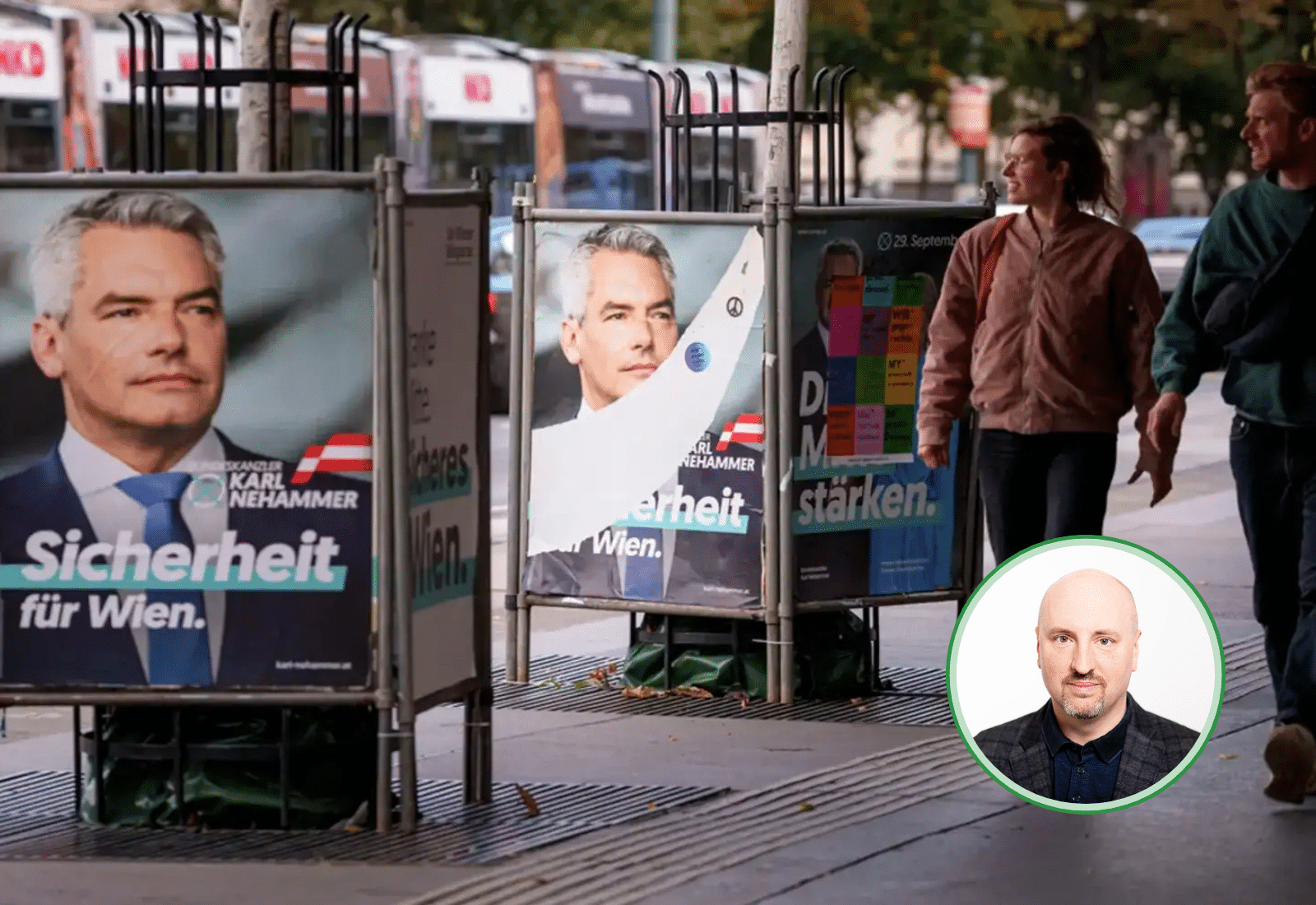
The far-right FPÖ has won the 2024 general election in Austria but is highly likely to remain locked out of government. With all other parties having ruled out working with the current FPÖ leader, the most likely outcome of the government formation talks is a three-party government – the first to be formed since 1945 – led by the incumbent chancellor Karl Nehammer.
29.10.2024
Op-Eds and Essays
Reine Populismuslehre in Vienna? The Victory of the ‘Freedom Party’ in the 2024 Austrian National Election
Austria’s far-right FPÖ has won the national elections. Will Vienna follow Budapest since 2010, Warsaw from 2015- 2023, and Rome since 2022 in a path towards backsliding on EU values? Oliver Garner and Matthew Haji-Michael reflect.
24.10.2024

Op-Eds and Essays
Democracy at Stake: Future Scenarios after Georgia’s Landmark Elections
On October 26, Georgia's parliamentary elections will serve as a referendum on its future, out of which three main scenarios emerge. In the first, the ruling Georgian Dream (GD) party wins, consolidates authoritarian rule, and aligns with Russia. A second scenario sees the opposition winning, potentially restoring democracy and accelerating EU integration. However, the most likely scenario involves contested results, which could trigger public unrest, violent clashes, and even Russian intervention. This critical election will most likely determine whether Georgia embraces European-style democracy or solidifies authoritarianism, risking further isolation from Western allies.
23.10.2024

Op-Eds and Essays
J.M. Coetzee’s Jesus Trilogy as Meta-utopia or A Possibility for Democratic Thinking after Authoritarian Cultures
Meta-utopia could serve as a literary indicator of change in post-authoritarian cultures. Its presence exposes a space where every idea is subverted and where skeptical relativism is encouraged opposing any form of universalism following a great sense of betrayal and loss of faith in familiar socio-political forms.
17.10.2024

Op-Eds and Essays
Venezuela Beyond Elections – Cracking Authoritarianism Through Human Rights
Venezuela is back in the news"—a phrase increasingly heard among journalists, political analysts, policymakers, and others across the globe in recent months. After years of protests, an enduring humanitarian and human rights crisis, and the forced exodus of nearly 25% of its population (7.7 million people, according to the United Nations), Venezuela has also become synonymous with corruption scandals, ongoing investigations in multiple countries, and a relentless political conflict led by an unpopular authoritarian president, Nicolás Maduro. Coupled with an economy hampered by various international sanctions, Venezuela, perhaps unsurprisingly, slowly faded into what can be described as "international fatigue." This so-called fatigue can in part be attributed to the perceived failure of various political strategies to effect change or restore democracy, compounded by a world preoccupied with multiple crises, where violent armed conflicts have taken center stage.
16.10.2024

Op-Eds and Essays
Pro-Kremlin Disinformation Is Distorting Democracy in Central and Eastern Europe
In Central and Eastern Europe, democracy has been deliberately eroded by disinformation. There has been a troubling surge of pro-Kremlin messaging since 2021, with Hungary serving as a regional epicenter of state-sponsored mistruths.
8.10.2024

Op-Eds and Essays
Spirals of Radicalization – Reflections on a Terrifying Anniversary
Following the shocking crimes committed on October 7 last year, the leadership of the State of Israel has unwittingly walked into the terrifying trap set by Hamas. Its counterattack, which has resulted in mass casualties among Palestinians and the destruction of Gaza, has raised the Palestinian question to a whole new level while bringing the State of Israel’s international reputation to a nadir. Underlying the current cataclysm is Israel's growing inability to reconcile the fundamental contradiction between its Jewish identity and its democratic claims. Meanwhile, right-wing illiberal and radical leftist responses in the West bear clear marks of the spiral of radicalization in the Middle East, hampering the urgently needed process of reconciliation and the emergence of a viable long-term settlement.
7.10.2024

Op-Eds and Essays
Russian Soft Power: Shaping Georgia’s Political Future?
As Georgia approaches a pivotal parliamentary election on October 26, the ruling party – Georgian Dream – remains surprisingly resilient in its popularity. Despite large-scale anti-government protests earlier this year sparked by the controversial “foreign agents” bill, and opposition efforts to frame the ruling party as a Kremlin puppet steering the country away from its Western integration path, Georgian Dream is continuing to lead in pre-election polls one month before the elections.
1.10.2024

Op-Eds and Essays
The Beginning of the End: Recent Regional Elections Signal the Demise of Not Only Scholz, but Left-Liberal-Green Hegemony in Germany
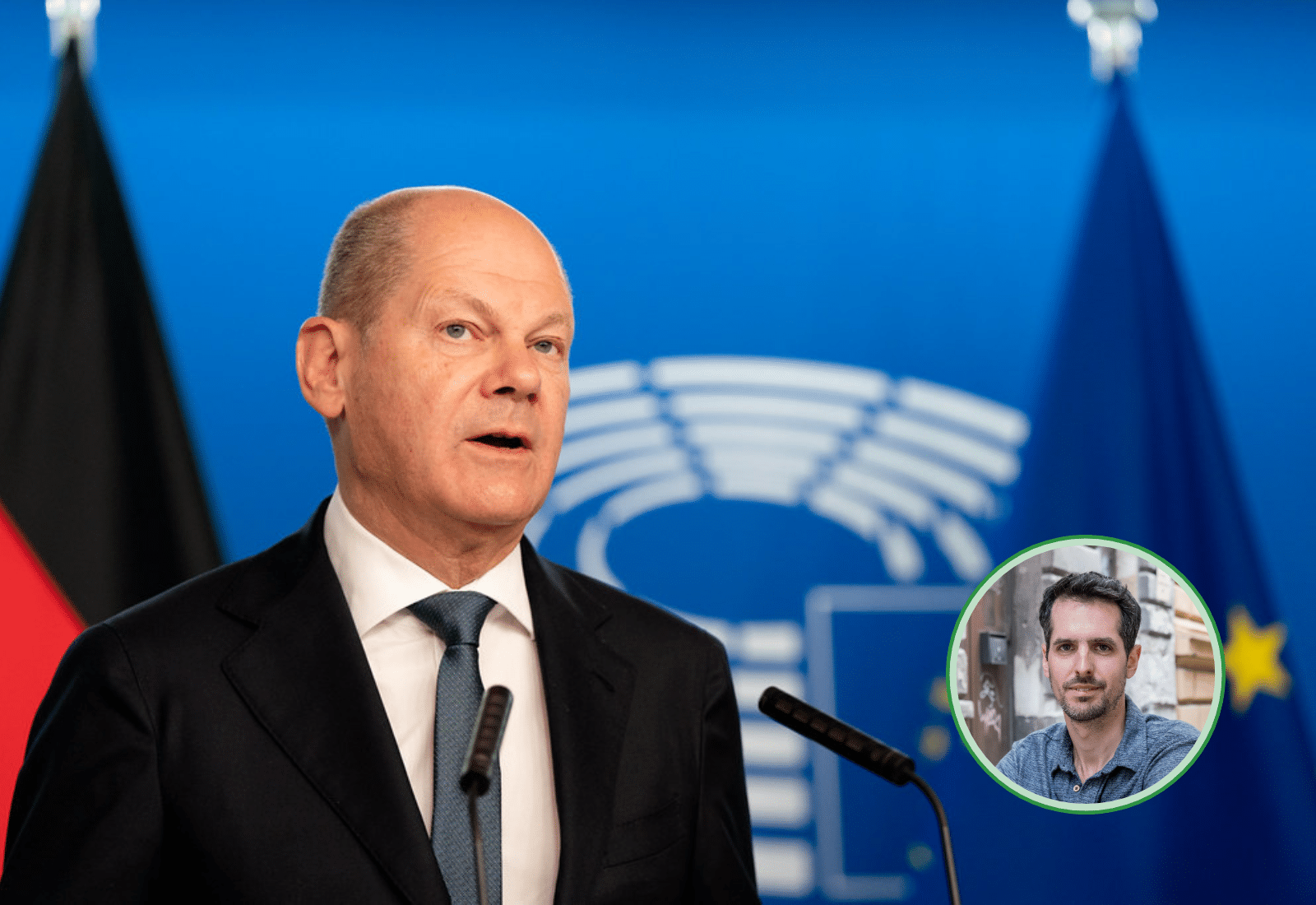
Germany is facing an endemic crisis of its economic model as a whole, with the ruling left-liberal-green coalition also facing a crisis of moral authority after the recent regional elections in East Germany, which amounted to a political earthquake. What awaits is a new governmental project under the aegis of the conservatives and under pressure from far-right forces.
27.09.2024
Op-Eds and Essays
How Utopia Is Incompatible with Democracy
In times of crisis we seem to long for utopia, or at least for utopian solutions. This should not be surprising today, especially in the face of pandemics, wars and climate change: The desire for something perfect, for something that will solve our problems, that can give us hope and make us dream for a better future, seems attractive even if it is unreachable. But why must it be unreachable? Can we not maybe will it into being? Can we not maybe design a world that is better, that is more just, that is more fulfilling? Can’t we turn a maybe into a certainty?
25.09.2024

Op-Eds and Essays
How to Avoid a Digital Dystopia in the Era of Social Media?
Within a very short period of time, a utopian vision of social media as a liberating technology, capable of creating a new form of direct, participatory democracy, has given way to a pessimistic, even catastrophic outlook. Understanding and channeling the power of the current communication revolution is crucial for restoring the transformative and democratic potential of online platforms.
20.09.2024

Op-Eds and Essays
Why the Rise of New Generation of Southeast Asian Leaders Should Worry Us
Youth have played a significant role in the recent social movements in Southeast Asia. However, these hopeful moments seem brief as the young descendants of past political leaders emerge and continue to hold power. This clash of two forms of youth participation raises concerns about the nature of contemporary movements and represents a missed opportunity for democracy in breaking the cycle of political dynasties.
11.09.2024

Op-Eds and Essays
Expansion and Reinvigoration – The Review of Democracy in Its Fourth Year
Now in its fourth year, the Review of Democracy – the journal of the CEU Democracy Institute – has undertaken notable changes in recent months and expanded in exciting new directions. Let us begin with what has not changed. Our journal continues to be dedicated to the reinvigoration, survival, and prosperity of democracies worldwide, and it delivers analyses, reflections, research, and opinion pieces. We are a diverse team of young, engaged scholars whose common aim is to inform public discussions around democracy by way of coverage of cutting-edge scholarship and the publication of thought-provoking new ideas in accessible formats. Our journal continues to be generously supported by the Open Society University Network.
7.09.2024

Op-Eds and Essays
Interregnum in Our New Age of Extremes
Politics returns. Arthur Schlessinger Jr’s. mid 1960’s referenced “Vital Center” is unwinding. A “Polanyi moment” risks approaching as social cohesion erodes and electorates embrace siloed discourse defining outsiders as enemies. Politics has become long on building cordon sanitaires against opponents, while being short on policy solutions and consensus. By Jeffrey Sommers, Cosmin Gabriel Marian and Daniel Pop The world system has exhibited concerning symptoms since the 2008 financial shock. Recently, we have seen their multiplication, intensity growing, and direction becoming unpredictable. This suggests that we are either living through an interregnum on the way to yet another failed recycling of older ideas or at a critical juncture on the way to something new. After the 20th century, it seemed that the world would no longer look this way. Francis Fukuyama, in 1989, published a famous essay in The National Interest, which announced “the end of history.” Soviet communism’s [...]
5.09.2024

Op-Eds and Essays
A Green-Powered Autocracy: How Serbia’s Lithium Reshapes the EU’s Values
As the EU races to secure lithium for its green transition, Serbia emerges as its key partner, securing economic benefits at a significant environmental and social cost. As Belgrade aligns more closely with Brussels and Berlin, critiques of its democratic backsliding fade, giving rise to a "greener" stabilitocracy.
29.08.2024

Op-Eds and Essays
Unpacking the Link Between Gender-based Violence and Autocratization
We are witnessing the worrying proliferation of exclusionary political visions across the globe. Aspiring autocrats are exchanging know-how, and it is becoming clear that gender-based violence is part of the toolkit.
23.08.2024

Op-Eds and Essays
The 2024 Paris Olympic Games: An Opportunity for a Long-Lasting, Intangible Legacy
‘Legacies’ are complex and hard to assess. In the case of the Olympic Games, the concept has become paramount for the International Olympic Committee (IOC) and all the entities involved in the bidding process, planning, development, and successful delivery of this mega-event. ‘Legacy’ can be viewed through different lenses; they may be tangible or intangible and may be assessed against a variety of criteria.
12.08.2024

Op-Eds and Essays
How Illiberal Memory Regimes Paved the Way for the Erosion of Academic Autonomy – Lessons from Hungary
Operating at the intersection between politics and academia, National Memory Institutes across Central and Eastern Europe have developed appealing and resonant narratives and produced a “thick” ideology. Their rise has helped normalize the erosion of autonomous, scholarly expertise in the name of an idealized national community.
7.08.2024

Op-Eds and Essays
Two Paths to Power – What Unites Giorgia Meloni and Viktor Orbán? What Separates Them?
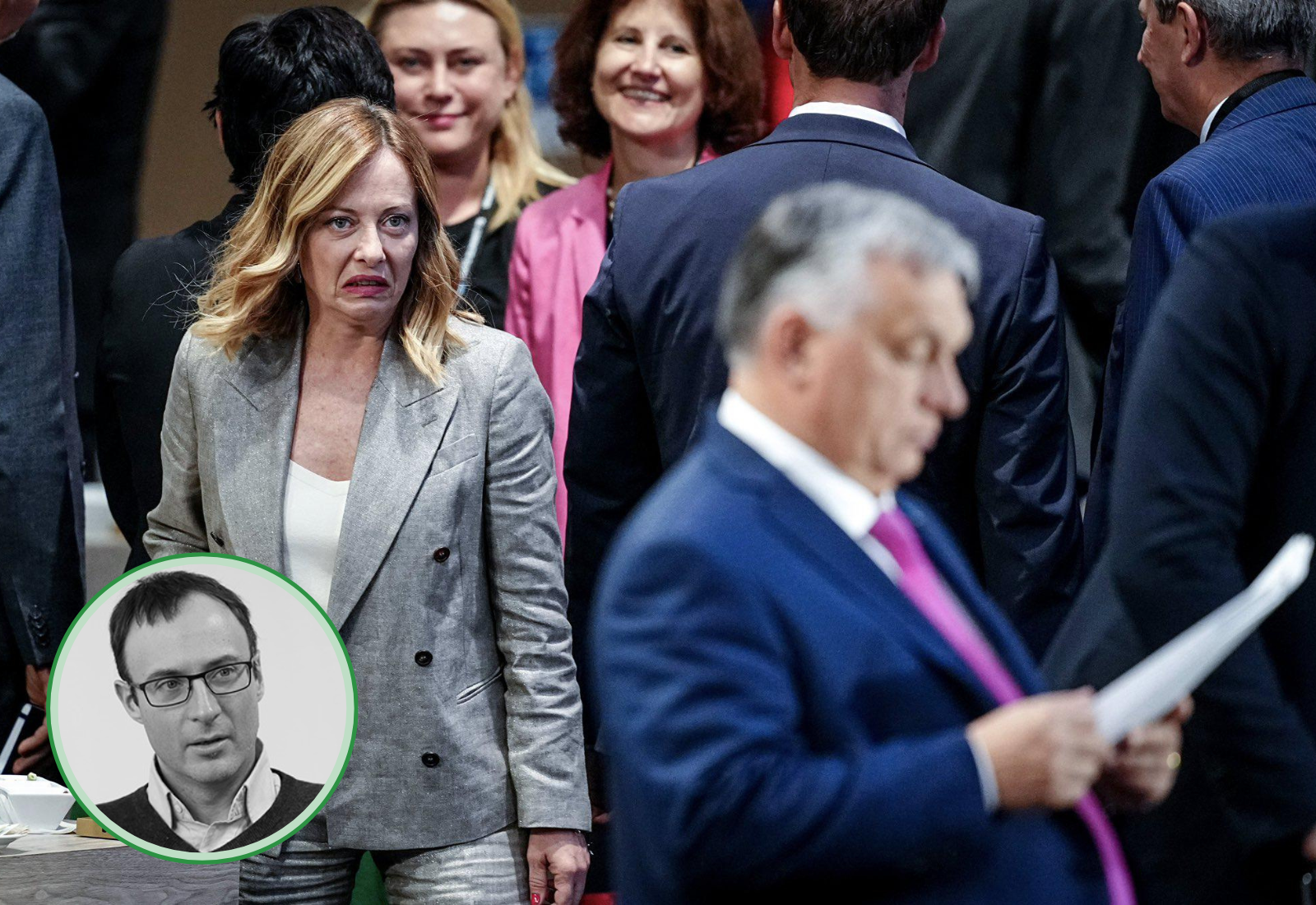
Meloni and Orbán are often treated as closely comparable political actors. However, their trajectories are widely divergent, and this is reflected in their respective understanding of both domestic political action and international alliances.
2.08.2024
Op-Eds and Essays
Europe’s Largest Minority Left Without Political Representation in the EP – Reflections on the Outcome of the European Elections
Despite the fact that it is difficult to meaningfully address Roma inclusion without effective political representation, the representation of Roma – Europe’s largest minority – has been severely neglected across the European political space, with no Roma candidate getting elected to the European Parliament this year.
31.07.2024

Op-Eds and Essays
Media Freedom Is in Peril Across the EU, and We Need More Than a New Law to Save It
By Jonathan Day The European Media Freedom Act aims to protect independent news organizations and journalists in EU member states, but it contains too many loopholes ripe for abuse. EU bodies must keep a constant eye on how key provisions will be enforced, but it is also the responsibility of civil society, self-regulatory bodies and journalists’ associations to play an active role in monitoring the implementation. Russia’s recent decision to ban 81 news outlets from European Union countries is a timely reminder that accurate, unbiased reporting is a source of dread for authoritarian governments – and an essential pillar of democracy. Yet despite its importance, media freedom is facing an existential crisis even within the EU. To survive, it needs more than just new legislation. That legislation, the European Media Freedom Act (EMFA), entered into force this May with the aim of better protecting independent journalists and media outlets in member states. Although legislative [...]
15.07.2024

Op-Eds and Essays
Navigating France’s New Political Era: Election Results and Their Implications
On Sunday 7 July 2024 at 20.00 pm, France – and a large part of EU Member States – welcomed the results of the second round of the legislative elections with immense relief: Marine Le Pen’s far-right party will not lead the second-largest economy in the EU for the coming years.
11.07.2024

Op-Eds and Essays
Try a Little Tenderness – EU–UK Relations after the Elections
Labour’s victory in Thursday’s UK elections will finally bring the era of Brexit to an end in European politics. Britain's exit has happened. Although most Brits today would vote in favour of their country's membership in the Union, in their minds and in those of EU citizens reunification does not appear to be an urgent matter for the coming years – Jean-Claude Juncker talks of a "century or two" as a possible time horizon for Britain's future EU membership. This does not mean that the relationship between the EU and Britain should not change fundamentally.
5.07.2024

Op-Eds and Essays
The UK General Election: What Might the Future Hold for Ethical Standards and Checks on Executive Power?
Tomorrow, the UK public will go to the polls. But the general election takes place in a climate of public distrust of politics, and against a backdrop of ethics scandals and the weakening of constitutional norms. What should we expect from the next government?
3.07.2024

Op-Eds and Essays
The European Union’s Hungary Problem
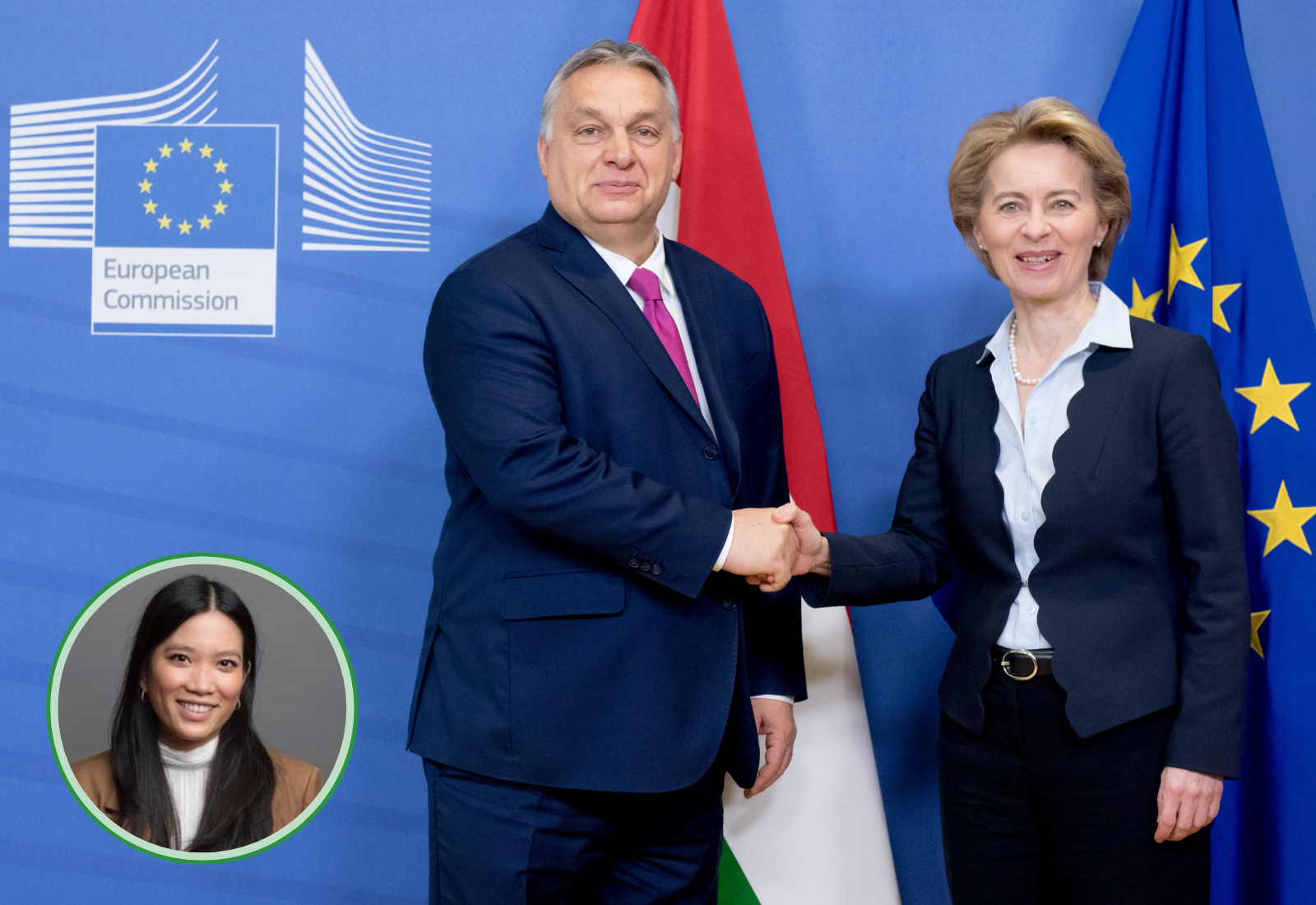
On July 1, 2024, Hungary will take over the rotating presidency of the Council of the European Union. The fact that a country with serious rule of law deficits will preside over one of the EU’s most important institutions for six months raises concerns. In a resolution in June 2023, the European Parliament questioned the extent to which Hungary could “credibly perform this task” and called on the European Council to “find an appropriate solution”—presumably by revoking Hungary’s presidency. (The European Council is the body of the 27 EU leaders; the Council of the European Union, informally also known as “the council,” is composed of the national ministers of all the member states; only the latter negotiates legislature, mostly with the European Parliament, and adopts it.)
1.07.2024
Op-Eds and Essays
Venelin Ganev on Westsplaining Versus Eastsplaining
Voicing opinions to explain political tensions from afar is contentious for those treated as mute subjects. Focusing solely on distant, global decision-making disguises local complexity. Acknowledging the perspectives of East Europeans on Russian aggression and NATO membership helps liberate the oppressed and open up the debate.
26.06.2024

Op-Eds and Essays
Emergency in Slovakia
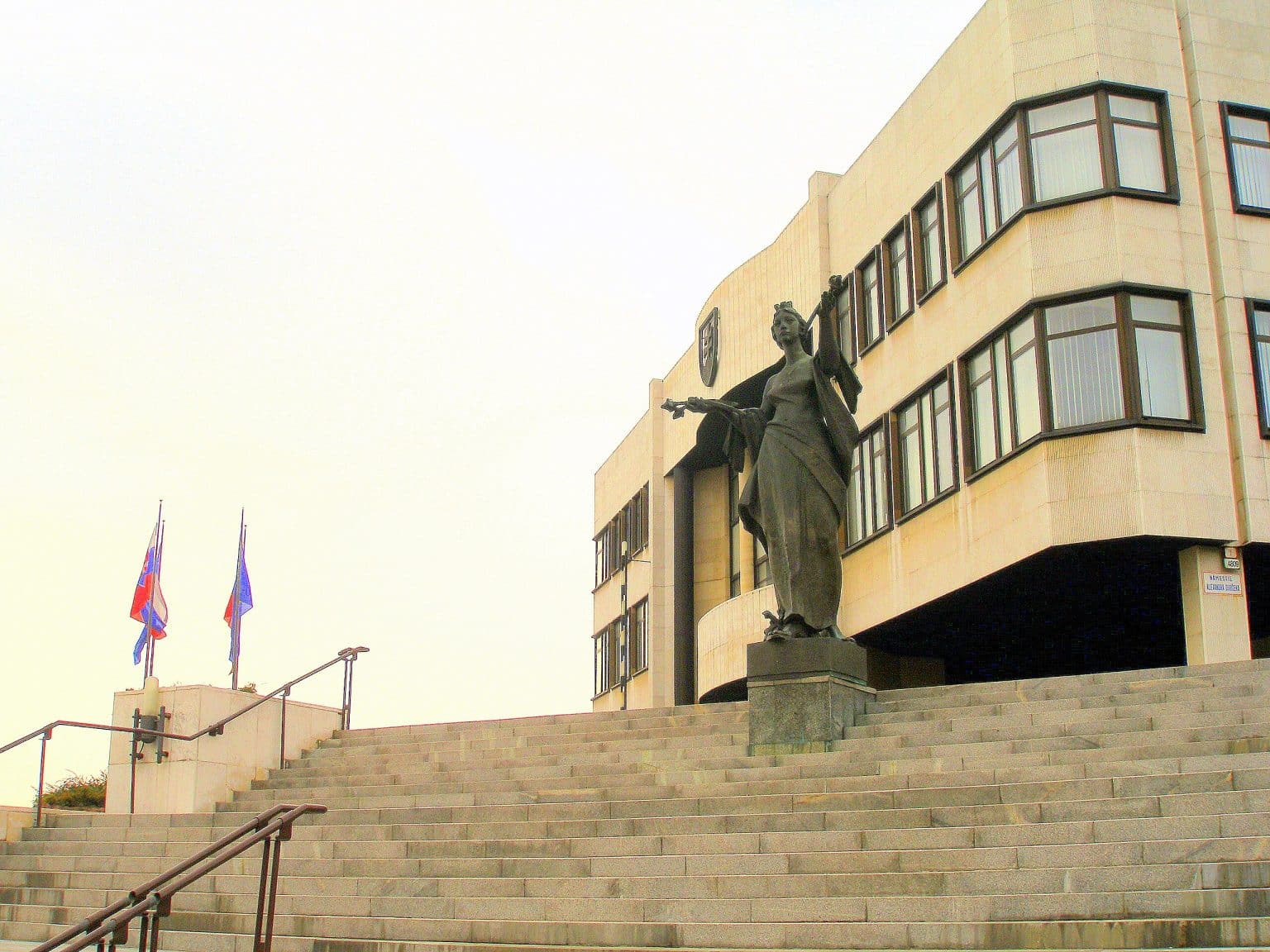
The climate of hostility in which the assassination attempt on Robert Fico took place has been a feature of Slovak politics for the past two decades. And Fico has played a decisive role in creating it. How the situation in Slovakia came about – and whether it will continue to deteriorate.
20.06.2024
Op-Eds and Essays
The Impact of Systemic Shocks on Africa’s Development – A Complexity Approach in a Context of Global Disorder
We are simultaneously experiencing a shift in global power, the growing strength of artificial intelligence, and climate shocks. Their concurrence and the associated instability that it will cause will inevitably impact development in Africa. Only a complexity approach can provide an adequate vehicle to pursue development interventions in this “brave new world.”
14.06.2024

Op-Eds and Essays
To Survive the EU Needs Its Own Political Space – Unpacking the Democratic Implications of the 2024 EU Elections
As the dust settles over the EU elections, it is worth taking a step back to fully grasp the democratic meaning of these elections – the 10th ever organized at the pan-EU level. Over the past week, approximately 50% of EU citizens took the time to vote in the EU elections, thus matching the record-high turn-out of the previous 2019 elections. These 180 million eligible voters voted on different dates between June 6 and 9, for national – not European – political parties and for national – not European – candidates who ran on national – not European – programs. So much for ‘European’ politics. After over 70 years of unprecedented socio-economic integration, the Union lacks an EU-wide electoral competition capable of fostering a genuine transnational space of debate and dialogue – both within institutions and outside them – where citizens can understand, influence and participate in decision-making affecting their common interests as Europeans.
13.06.2024

Op-Eds and Essays
A Decade of Rule of Law Backsliding: Lessons Learnt for the Next EU Legislative Period
For more than a decade, the European Union (EU) has witnessed a decay of the rule of law in some of its Member States, especially Hungary and Poland. The deliberate and systematic deconstruction of the rule of law and other pillars of democracy was particularly severe in Hungary and Poland. This backsliding quickly became a European matter as the EU is not only an economic alliance with free movement of goods, services and people, but also a legal union of values. Therefore, for safeguarding the rule of law, the behavioral aspects are as important as the systemic ones. Research suggests that press freedom, robust civic space, public support for democracy, and the compliance with the law of elected officials and decision-makers are as significant as pillars of rule of law resilience as a comprehensive constitutional design, independent judiciary, and a public administration that is free from political influence and corruption.
11.06.2024

Op-Eds and Essays
Fading Hopes for Change – Bulgaria and Romania
In Bulgaria and Romania, the EP elections coincide with national elections. Interminable political instability, corruption and socioeconomic tensions all contribute to voter fatigue. With the far right in the ascendant, 9 June could be a watershed.
6.06.2024

Op-Eds and Essays
The Péter Magyar Phenomenon
Veni, Vidi, Vici? We do not know yet. However, Hungarian public discourse in the past few months has revolved around the so-called “Péter Magyar Phenomenon.” Andrea Szabó and Annamária Sebestyén (HUN-REN Center for Social Sciences, Institute for Political Science) share their insights into the reasons behind Péter Magyar's success from a perspective that has so far been neglected: how a deepening political vacuum has fostered collective longings.
5.06.2024
Op-Eds and Essays
Debunking Myths About Populism in Power
'Populism' and 'power' have an uneasy relationship. Key texts reveal three assumptions about populism's 'fate' in power: first, it becomes mainstream; second, it turns authoritarian; third, it fails / succeeds to implement policies. Giorgos Venizelos argues we must look beyond populism's content or outcomes and turn instead to populism's function of constructing collective identities through discursive / affective performativity.
3.06.2024

Op-Eds and Essays
Cooperation or neocolonialism? The EU and SWANA
From migration to trade and energy, the EU’s partnerships with Mediterranean non-EU countries are influenced by a neocolonial mindset. The bloc must shift from its current tactics of exclusion and resource extraction towards genuine cooperation that respects the sovereignty and aspirations of these crisis-struck nations.
29.05.2024

Op-Eds and Essays
Nepali Bureaucracy: The Powerful Establishment
In this op-ed, Sushav Niraula explores the contradictory nature of Nepali bureaucracy, which can both resist and be subservient to elected representatives. This duality has resulted from increased bureaucratic power after the end of the monarchy. The op-ed discusses factors that have led to excess bureaucratic power and argues that governance reforms need to find a balance between power and accountability to make Nepali public service efficient.
24.05.2024

Op-Eds and Essays
The Federal Republic at 75 and the Unmaking of the Post-War Era
The Federal Republic of Germany turns 75 this week. As the post-war model of democracy has largely seized to function, there is a disorientation about the relation between this history and Germany’s current juncture. How urgent problems are approached, however, will depend on the meaning given to those years.
22.05.2024

Op-Eds and Essays
Why Did Erdoğan’s AK Party Win Again in 2023?
Despite expectations of an opposition victory, Erdogan and his Justice and Development Party (AKP) secured the highest vote share and were reelected in 2023. The long-term project of national developmentalism and strong support from women, along with more specific factors like Kılıçdaroğlu’s candidacy and the February 6th earthquakes, significantly influenced the results.
21.05.2024

Op-Eds and Essays
Correcting the Main Narrative – Student Media and the Protests at Columbia University
How do Columbia students who have been reporting on campus and amplifying voices of their fellows interpret the recent wave of student protests and its suppression? What do they find most surprising about the conflict’s escalation and how do they reflect on their own roles in such turbulent times?
20.05.2024

Op-Eds and Essays
Europe Turns East – Armenia, Azerbaijan, Belarus, Georgia, Moldova, Ukraine
Russia’s war of aggression in Ukraine has put eastern Europe firmly at the centre of the EU’s foreign policy agenda, transformed attitudes to defence and given fresh impetus to reforms by candidates for EU membership. But with rightwing movements and authoritarianism gaining ground, support for Ukraine and EU enlargement is under threat.
16.05.2024

Op-Eds and Essays
Learning to Belong-On Ukraine’s Path to the European Union
I was born in the Soviet Union right before its collapse. As I was only 1 year old when Ukraine became independent, I do not remember that ‘super state,’ though my birth certificate will always remind me of it. At the time of my birth, my parents could not even imagine that their daughter would get the opportunity to live abroad and do so in five different countries, four of them outside the boundaries of the then still existing Warsaw Pact, in what was then referred to as the ‘rotten, bourgeois, capitalist West.’ As a teenager, I became more interested and aware of the political situation in Europe and its implications for Ukraine. The year 2004, when I was 14, was full of important events and developments in the European Union as well as Ukraine. It was the year of the biggest EU enlargement, which included many countries that used to be in the ‘sphere of influence’ of the former USSR. The EU expanded and Ukraine became a country bordering the EU.
6.05.2024

Op-Eds and Essays
Europeanization Against All Odds – A Professional-Personal View on Two Decades of Central and Eastern European Countries’ EU Membership
A couple of days after Czechia entered the European Union in May 2004, I went to Vienna for a few days together with my wife and friends. The destination was no coincidence because, for Czechs in general and Southern Moravians like me in particular, Vienna had a profound symbolic meaning during the period of communism and the subsequent transition to democracy. As EU citizens, we visited the Austrian capital, an object of many historical longings and resentments, given the complicated Czech history under the Habsburg Empire. However, at the time of our visit, I perceived Vienna differently. For me, 2004 meant the symbolic end of the Cold War, a merger of ‘old’ and ‘new’ Europe, and completion of the dream we saw already shortly after the Velvet Revolution: the return to Europe.
3.05.2024

Op-Eds and Essays
Romania: Spartans, Helots, and the Rule of Law in Europe
Romania has entered the Union in 2007, together with Bulgaria and as a Big Bang afterthought. Both countries joined with Cooperation and Verification Mechanism (CVM) strings attached. The CVM, a sui generis stopgap whose very name conjured up ambivalence, was initially meant to lapse after three years. It was formally lifted only in 2023, albeit actual monitoring was discontinued for Bulgaria in 2019 and for Romania in 2022. Due to their geographical and cultural vicinity, accession twinning, and the CVM, these two countries have repeatedly been analogised, most recently with respect to Schengen enlargement. They are dissimilar in that, although the CVM formally applied very similar conditions to both (anticorruption, judicial independence), only Romania created strong anticorruption institutions.
2.05.2024

Op-Eds and Essays
How Time Has Stopped Again – Hungary and Europe Twenty Years after the EU’s Big Bang Enlargement
I would like to approach the 2004 EU accession from the perspective of time. Time is perceived to fly fast in certain periods, then it appears to slow down before speeding up again. In Hungary, for example, time stood still during the sleepy decades of state socialism before, from the late 1970s onward, transformations of historic significance occurred in no more than a couple of years. Still, although there were some cathartic episodes here and there, the change of the political and economic system took place peacefully: law professors, historians, and other intellectuals sat down at a table in 1989 to lay down the fundamentals of a new social and political order. None of them was really an expert on capitalism; they approached the issue as social scientists. The intent to create a more dynamic system—one that respected the full range of human rights as well as individual endeavors—connected these people, notwithstanding their varied backgrounds.
29.04.2024

Op-Eds and Essays
On Exceeded Expectations and Lost Illusions – How Its Legacies Haunt Europe Today
Having been born ‘behind the Iron Curtain,’ and now teaching history with a focus on Central and Eastern Europe in European Studies and liberal arts programs in Maastricht, my personal trajectory cannot be properly comprehended and would not even be imaginable without the EU’s ‘big bang enlargement.’ I happen to have received my bachelor’s degree from University College Utrecht back in 2003 when the possibilities of studying at Western institutions remained rare for students from Central and Eastern Europe.
26.04.2024

Op-Eds and Essays
US’s Confusing Role in Protecting Democracy in Bangladesh
Sheikh Hasina's Awami League secured power in Bangladesh for the fourth consecutive term through an uncontested election on January 7th, 2024. When it comes to engagement with Bangaldesh, the United States' commitment to democratic processes and its aspirations for immediate engagement with the government exhibits a gray area. In the intricate tapestry of global politics, the United States often finds itself in a precarious position as both an advocate for democracy and a pragmatist driven by its geopolitical interests. In few places is this as evident as in its engagement with Bangladesh, where a nuanced dance between democratic principles and strategic alliances unfolds.
19.04.2024

Op-Eds and Essays
Pellegrini won in Slovakia. So did Fico, Orbán, and the Kremlin
Peter Pellegrini won the presidential election in Slovakia last weekend with 53 percent of the vote. Pellegrini, who ran against former diplomat Ivan Korčok as the candidate of the ruling coalition led by Robert Fico, entered the race as the absolute favorite – for months before the campaign even started, Fico’s political ally of many years was already polling as the most likely potential candidate for the top constitutional post. The first round of the election two weeks ago changed that dynamic since Korčok emerged first then. As we understand now, it may have helped mobilize the part of the electorate that did not vote for Pellegrini at first but was absolutely opposed to Korčok. The part of the electorate in question is mainly composed of people who have for years been mobilized by far-right and anti-system politicians via emotions of fear and hate.
9.04.2024

Op-Eds and Essays
Opposition resurgence in Turkey’s local elections and its wider implications
After five years, the opposition achieved another remarkable victory at the Turkish local elections of March 31. The main opposition Republican People’s Party (CHP) emerged as the largest political force at the national level, consolidating its power in local governments across the country. Unofficial results indicate that in addition to the major cities it won already in 2019, the CHP also triumphed in another four as well as in eleven provinces.
8.04.2024

Op-Eds and Essays
‘From the river to the sea’: One slogan, many meanings
It is often maintained that the slogan ‘From the river to the sea, Palestine will be free’ expresses a genocidal and antisemitic intention. But this is generally not the case. On the contrary, the slogan has historically been used to articulate a wide variety of political strategies for Palestinian liberation.
27.03.2024

Op-Eds and Essays
What can Ukraine learn from Turkey’s failed EU candidacy?
The European Union (EU) has reinvigorated its most successful foreign policy tool after Russia started its war of aggression against Ukraine in February 2022. Enlargement policy had successfully persuaded candidate countries to reform their domestic institutions and policies within a specific timeline under the credible promise of membership but it had lost steam in recent years. The EU was occupied by both internal and external challenges in the region and its commitment to enlargement gradually declined. Candidate countries, on the other hand, were not enthusiastic for more reforms in the last decade. Among these, Turkey stands out as the least successful and may even be seen as a failure. Will Ukraine be able to join the EU before 2030, or will it share the fate of Turkey? What lessons can be drawn from Turkey’s experience with the EU? I will try to disentangle these questions in this short op-ed. I argue that, in order to avoid Turkey’s fate, Ukraine should benefit from the [...]
25.03.2024

Op-Eds and Essays
Who is afraid of the Doppelganger?
Until now, Naomi Klein has been chiefly known for her sharp arguments and passionate manifestos. Her new work Doppelganger: A Trip Into the Mirror World reveals her to be a consummate essayist who takes you on along her personal adventure that starts with her regularly being mistaken for another controversial writer. Eventually, this adventure, during times of COVID-19 and the digital attention economy, leads us straight into the shifting sands of politics.
20.03.2024

Op-Eds and Essays
Pakistan’s elections and its implications
Pakistan held a controversial election on 8 February 2024. It is only now, a month later, that we have some clarity as to the results of that election and on the formation of the government. After a week of negotiations, a consensus has been reached as of 21 February between the Pakistan Muslim League-Nawaz (PMLN) and the Pakistan People’s Party (PPP) to share power along with their allies. However, the Pakistan Tehreek-e-Insaaf (PTI) and other smaller parties continue to challenge the results of the election even as they seem to prepare to sit in opposition. Though a new coalition government is now emerging, the events both before and since the election must be understood in light of the cyclical nature of politicking in Pakistan’s hybrid regime. Persistent interference in political, judicial, administrative and economic processes by the military establishment has hamstrung parties and politicians, politicised the judiciary, and hindered economic development.
11.03.2024

Op-Eds and Essays
Why data matters for progress on gender equality
Data plays a fundamental role in mobilizing, focusing, and monitoring efforts to achieve gender equality. It helps identify gaps, streamline policies, and direct resources. However, the chronic underfunding of gender statistics and the inaccessibility of disaggregated data hamper efforts to these ends. Different kinds of data are needed. While current global efforts in tracking progress rely largely on official statistics, there’s also a need to understand the complexity and nuances of inequality - information that is hard to capture numerically. This commentary addresses progress, setbacks, and complementary data needed in the quest for gender equality. It draws from a recent assessment of the United Nation’s progress on gender equality across the Sustainable Development Goals, The Gender Snapshot 2023.
8.03.2024

Op-Eds and Essays
In Changing Geopolitical Context, EU Democracy Support Loses Momentum
Despite the launch of some new programs, the EU’s security and peacebuilding missions increasingly focused on containment of conflict, even though democracy support is defined as a central pillar of the EU’s conflict-resolution strategy - writes Zselyke Csaky.
22.02.2024

Op-Eds and Essays
Beautiful Russia of the Future is Dead
According to Russian official sources, Kremlin critic and leading opposition politician Alexei Navalny died in prison. Yuri Terekhov reflects on the news and his life. Today, at the age of 47, Alexei Navalny, one of the leading critics of the Kremlin, a star of the Russian liberal opposition, and the leader of the Anti-Corruption Foundation, passed away. He survived an assassination attempt, courageously returned to Russia three years ago, only to be sentenced to decades of torture in one of the most notorious Arctic prisons. Let’s be honest. This is an overt political assassination. I dare say that along with him, the dream of many Russians of a “Beautiful Russia of the Future,” of a chance for democratic change within the existing system through peaceful means, has finally perished. I remember chanting “Putin is a thief” at protest rallies, but that was a mistake. The past few years have vividly shown the world that he is a murderer and a maniac. [...]
16.02.2024

Op-Eds and Essays
The Provisional Measures Order in South Africa v. Israel: A Closer Look at the ICJ Bench
On Friday, 26 January, the International Court of Justice (ICJ) indicated six provisional measures in the case South Africa brought against Israel under the Genocide Convention. The highly-anticipated Provisional Measures Order has already been helpfully analyzed in various places (see, for example, here and here). Rather than attempting to add to substantive analyses of the Order, in this post, I will analyze the Order by giving it context from a different perspective: that from the bench. While the voting pattern suggests a very high level of agreement, the individual expressions of judges highlight why the Court prioritized this high level of agreement. The individual opinions shed light on the reasons why judges voted in favour of (or against) the provisional measures, but the opinions also reveal that South Africa will face a high threshold should the case reach the merits stage.
15.02.2024

Op-Eds and Essays
Again, What Is Populism?
Am I kidding? We still do not know what populism is? We do not know what we are talking about when we talk about populism? We are ignorant about the topic of an entire subdiscipline of political science? After tons of publications, various handbooks? With entire research centers, networks and an academic journal dedicated to populism studies? Well, not quite.
1.02.2024

Op-Eds and Essays
The old is dead and a new has been born: Welcome the Hindu Rashtra
On 22 January, the Hindu Right in India, with Modi at its helm, inaugurated a temple in the holy city of Ayodhya on a site where less than 22 years ago, a Mosque stood. This Mosque, known as the Babri Masjid, was destroyed by a violent Hindu nationalist mob on December 6, 1992. It was approximate 500 years old and was stated to have been constructed on a piece of land where previously a Hindu temple stood. This temple, Hindu Nationalists claim, marked the birthplace of Lord Rama, one of the most prominent gods in the Hindu pantheon. For this reason, the construction of the new temple is being seen by those in the Hindu Right as the return of Ram and as the inauguration of a new phase of Indian history – one of the Ram Rajya (Reign of Ram).
30.01.2024

Op-Eds and Essays
The Voice and Representative Democracy in Australia
Australian citizens recently rejected a constitutional amendment which aimed to provide indigenous Australians with formal constitutional recognition. The proposed amendment was intended to create the Voice, a representative body within parliament comprised of Indigenous Australians, to give advisory opinions on the impact of laws on the Indigenous community.
13.12.2023

Op-Eds and Essays
The Role of (EU) Competition Law in Defending the Rule of Law
Kati Cseres is an Associate Professor of Law at the Amsterdam Centre for European Law and Governance (ACELG) and Program Director of the EU Law Masters at the University of Amsterdam. This series of RevDem op-eds collects reflections on the contemporaneous challenges for the Rule of Law, which stemmed from the conference organized at Radboud University (Nijmegen) on 21-22 September in honour of Prof. Petra Bàrd. This is the latest entry following previous contributions by Benedetta Lobina on the Russo-Ukrainian war, and Pauline Thinus on EU spending conditionality.
27.11.2023

Op-Eds and Essays
Illiberal Liberalism: COVID and the Moral Crisis of the Left
by Muriel Blaive In the recent pandemic, the moderate left has failed the lower half, what we used to call the working class, which is now rather the working poor. What do I mean by the left? Its definition varies from country to country and almost from person to person. I leave aside the extreme left and focus in this article on the liberal left, which I use as a synonym for the moderate left or liberals, a current of thought largely represented amongst intellectuals and journalists, for instance those of the New York Times, the Guardian or the Washington Post that I will cite many times here. While this moderate left has historically claimed to represent the interests of the disadvantaged, I argue that with COVID they have focused instead on surviving at all costs at the expense of the poor, including – and this is my second point – by endorsing authoritarian means: censorship, repression, and public shaming. They rationalized their heavy-handed response with a narrative built [...]
17.11.2023

Op-Eds and Essays
The EU’s turn towards a transactional approach to Rule of Law enforcement? Spending conditionality in the 2020s
This series of RevDem op-eds collects reflections on the contemporaneous challenges for the Rule of Law, which stemmed from the conference organised at Radboud University (Nijmegen) on 21-22 September in honour of Prof. Petra Bàrd. Following Benedetta Lobina’s op-ed on the impacts of the Russo-Ukrainian war, Pauline Thinus addresses the consequences of the use of Rule of Law spending conditionality within the European Union (EU).
13.11.2023

Op-Eds and Essays
Taking Stock: The Polish Opposition Victory and the Rule of Law
By stark contrast to the worsening situation in Hungary, Poland may be facing a new dawn and a restoration of liberal democracy. But caution may be required to ensure that this dawn does not darken again into political acrimony and fragmentation.
26.10.2023

Op-Eds and Essays
The pro bono fight for the rule of law in the EU
Frenchman Laurent Pech is concerned about the rule of law in the European Union. With the pro bono network of academics known as “The Good Lobby Profs”, he goes into battle against constitutional breaches in Brussels. In fact, he sees our democracy in danger.
25.10.2023

Op-Eds and Essays
Why the Polish Elections Cannot Be Repeated in Orbán’s Hungary
Poland is returning to the path of democracy and could become one of the most influential member states of the European Union. By comparison, Hungary’s prospects look bleak.
23.10.2023

Op-Eds and Essays
From Your Ex-Yugo: The Doomsday Clock is Still Ticking
RevDem recently published two articles, by Veronica Anghel and Volodymyr Yermolenko on the consequences of the war in Ukraine for Europe, as part of a series of Eurozine, a network of magazines to which Revdem belongs. Today we are publishing another article from this series - by Vladimir Petrovic
18.10.2023

Op-Eds and Essays
Can the invasion of Ukraine be a breaking point for the appeasement of autocrats in Europe?
Benedetta Lobina (PhD candidate, University College Dublin) considers the Rule of Law impacts of the Russo-Ukrainian war
13.10.2023

Op-Eds and Essays
Europe’s Two Hearts
The war in Ukraine has shown up the limits of European pacifism and revived a long-forgotten precept: republican opposition to empire. Today’s imperial threat no longer comes disguised as democracy but is openly anti-democratic. Part of the series ‘Lessons of war: The rebirth of Europe revisited’. RevDem publishes today two articles on the consequences of the war in Ukraine for Europe, which are part of a series of Eurozine, a network of magazines to which Revdem belongs. In the coming days we will publish our responses to this debate.
20.09.2023

Op-Eds and Essays
The Power of Smaller Countries
Ukraine’s resistance to Russia’s imperialist war has discredited the spheres of influence theory once and for all. The EU is being forced to reappraise not just its security policy, but also its colonial mindset towards smaller countries beyond its borders. Part of the series ‘Lessons of war: The rebirth of Europe revisited’. RevDem publishes today two articles on the consequences of the war in Ukraine for Europe, which are part of a series of Eurozine, a network of magazines to which Revdem belongs. In the coming days we will publish our responses to this debate.
20.09.2023

Op-Eds and Essays
Black Knight and Pied Piper. Silvio Berlusconi: Populist Pioneer or Symptom of Italy’s Crisis?
In this op-ed, Stefano Bottoni discusses Silvio Berlusconi's political legacy in Italy.
27.06.2023

Op-Eds and Essays
From democracy to authoritarian capitalism
In this op-ed, Gábor Scheiring explores the latest Freedom House Nations in Transit Report, its implications for Hungary, and how the report only reveals the tip of the iceberg of the democratic backsliding in Hungary.
16.06.2023

Op-Eds and Essays
A life for power? Viktor Orbán’s long affair with Hungary
Do the familiar tropes of anti-tyrannical literature explain anything about what happened and is still happening in contemporary Hungary, a country that has changed so profoundly not only as compared to its post-1989 realities but from its 2010 self too?
30.05.2023

Op-Eds and Essays
Thailand’s Conscription: A Threat to Democracy and Freedom
Thailand is about to hold a general election in May 2023. Several progressive political parties are proposing to pass an act to abolish conscription. But the military, which has always meddled with Thai politics, has indicated it will block any efforts in this direction.
8.05.2023

Op-Eds and Essays
No Justin, No Martin, No Peace
Representative Pearson is part of this tradition of American political protest – a tradition that conservative conceptions of civility and peaceful protest mischaracterize and aim to delegitimize; a tradition against which Tennessee Republicans and Obama fundamentally stand, despite appearances. There’s no peace, Representative Pearson reminds us, without confrontation.
16.04.2023

Op-Eds and Essays
Rule of law and the structural inequalities of the European project: Europe and its dissenting peripheries
In this op-ed by Peter Agha, PhD, he argues for a different analysis of the current trouble with Europe, one which starts from the recognition of the irregularity of the rule of law policies and highlights how the clashes between the populist movements and the rule of law doctrine reflect the structural inequalities of the European project. This important aspect is often neglected because of the way we currently frame the discussions – as “the rule of law crisis”. As a result of this, our debates focus on juridical arrangements, whereas the distributional consequences of the EU and the role the legal structure plays in its maintenance remain (almost) invisible.
31.03.2023

Op-Eds and Essays
Heritage in War: A Key to Define the Future of Ukraine
Dóra Mérai, a lecturer of Cultural Heritage Studies at CEU, explores how heritage - often used to promote divisions - has also been reframed in Ukraine following Russia's invasion "to develop empathy, express solidarity, and help people cope with the difficulties".
28.03.2023

Op-Eds and Essays
Economic Sanctions are Insufficient to Stop the War
A year ago, Russia invaded Ukraine, catching many of us unprepared despite clear signs of impending conflict. The assumption that a European nation would conquer another in the 21st century appeared far-fetched. When the worst scenario happened, experts doubted Ukraine's ability to hold its ground for more than a few weeks. However, the country keeps resisting. The economic domain, along with warfare and geopolitics, presents many examples of events that did not turn out the way it was expected. This op-ed by Volodymyr Kulikov highlights three selected points about economic sanctions, corporate self-sanction, and energy wars.
24.03.2023

Op-Eds and Essays
Living with Double-Think
In this op-ed, the author describes life in Russia's propaganda machine, and how the internet provides venues for Russians to access media that is not controlled by the government.
23.03.2023

Op-Eds and Essays
Weak prospects for Russia’s democratization
Wolfgang Merkel offers a typological classification of Putin's Russia after exploring how it compares with fascist regimes in Germany and Italy as well as Stalinism, and opines that several factors will contribute to Russia's "poor prospects" for democratization.
22.03.2023

Op-Eds and Essays
Orbán as Ideologue
In this post by Zsolt Enyedi, Senior Research Fellow at the CEU Democracy Institute, he argues that Orbán's regime "advantages a well-defined set of values through the allocation of resources and its signatory policies are based on a coherent set of ideas."
17.03.2023

Op-Eds and Essays
Adam Michnik: The war in Ukraine is not a war between the Russian people and the Ukrainian people
This war, of which we are commemorating the anniversary today, is undoubtedly the most important war of our time, because it is a war in which the imperial-chauvinist-totalitarian project is struggling with the democratic, European, pluralist project on the one hand.
28.02.2023

Op-Eds and Essays
Why is the Russian bureaucracy failing in the face of war?
Vladimir Dubrovskiy, senior economist at CASE Ukraine, explores why the Russian state, which is based on the principle of "vertical power", appears to be inept in the face of war.
24.02.2023

Op-Eds and Essays
Ukraine in the Union, or the end-of-history thesis reinvigorated
In this op-ed, RevDem managing editor Michal Matlak looks at the relevance of the war in Ukraine to Fukuyama's often-mocked thesis of the end of history and addresses the implications of the accession process for Ukraine, as well as for the EU.
21.02.2023

Op-Eds and Essays
Constitutional Democracy’s Civic and Social Dimensions. On the Czech Presidential Election
Jiří Přibáň comments the outcome of the recent presidential elections in the Czech Republic.
1.02.2023

Op-Eds and Essays
It’s Time to Imagine a Future for Burma without Armed Forces
In this op-ed, authors Thiha Wint Aung and Htet Min Lwin argue for the abolition of the armed forces in Burma.
31.01.2023

Op-Eds and Essays
5 Key 2022 Books: Democracy in Literature
Kasia Krzyżanowska, RevDem editor of the Review of Books section at the Review of Democracy, presents five key books in democracy in literature in 2022.
21.12.2022

Op-Eds and Essays
Asking the wrong questions, the wrong way: Why replicating “national consultations” is an inadequate response to their success
Although national referenda have become a rare species in post-2010 Hungary, the use of another instrument of plebiscitarian democracy—non-binding informal polls called national consultations—has not only been serving as a legitimization tool of government policies, but it has also been adopted by an opposition movement as a mobilization technique. This article argues that the strategic adoption of populist democratic repertoires, along with their main procedural flaws, is a threat to democratic representation. There is a need to shift discussions toward how these processes can be improved.
19.12.2022

Op-Eds and Essays
Westernization by Preemptive Rejection: How Viktor Orbán Sells to U.S. Conservatives Their Own Obsessions
In this op-ed, Ferenc Laczó explores how Hungarian Prime Minister Viktor Orbán's regime "has been succeeding to a remarkable degree at translating key aspects of Hungarian ethnic nationalism into a wider panic about the future of Western civilization."
7.12.2022

Op-Eds and Essays
Belated Retribution: Polish Lustration After 2015
The transitional justice measures introduced by PiS are not only at odds both with the Polish Constitution and the European Convention on Human Rights, but are also a worrying sign of a departure from the model of inclusive democracy.
10.10.2022

Op-Eds and Essays
“Vacanze Romane” for the EU’s Values Crisis?
In his latest op-ed, RevDem editor Oliver Garner analyzes the Italian election results and their implications not only for Italy, but also for the European Union.
30.09.2022

Op-Eds and Essays
A turning point of democracy?
To mark the International Day of Democracy, we present an op-ed by Wolfgang Merkel examining the state of democracy around the world.
15.09.2022
Op-Eds and Essays
Change of framing and the need for peace in Ukraine: A reply to Szulecki and Wig
Responding to critiques of their op-ed on why the war in Ukraine should not be discussed using the "democracy vs. autocracy" framework, authors Irina Domurath and Stefano Palestini further develop why orienting the discussion around Russia's abuse of international law could draw more international support and avoid escalation into a Third World War.
25.05.2022

Op-Eds and Essays
Citizens’ Assemblies and the International Response on Climate Displacement
In this op-ed, Magdalena Smieszek explains how citizens' assemblies on the national level promote inclusive discourse because of their bottom-up approach; the variety of transnational and global citizens' assemblies focused on climate change; and what impact these assemblies might have on climate change action.
4.05.2022

Op-Eds and Essays
The war in Ukraine is all about democracy vs dictatorship
A dictatorship has just brutally attacked its democratic neighbor. It’s not the first time in history that happens, but there are good reasons to see the war in Ukraine as the first one defining the conflict lines of this century.
9.04.2022

Op-Eds and Essays
The Discourse of Privilege: Western Europe and the Russian War against Ukraine
In this op-ed by Elżbieta Kwiecińska and Pavel Skigin, they detail why "being a radical pacifist is a great privilege that only Westerners can afford nowadays."
7.04.2022

Op-Eds and Essays
Ukraine: not a war about democracy
In this op-ed by Irina Domurath and Stefano Palestini, they discuss the war in Ukraine and why the West should leave behind the narrative that this is a "war of values."
25.03.2022
Op-Eds and Essays
Big, but Distant Dreams. Political and Legal Implications of Moldova’s Quest for EU Membership
On 3 March 2022 Moldova applied for EU membership. After the Soviet Union’s dissolution, Moldova started to build its independent statehood based on democratic values. However, the question that arises is whether Moldova reached its political and legal maturity to join the EU.
25.03.2022

Op-Eds and Essays
The Conference on the Future of Europe as a technopopulist experiment
Carlo Invernizzi Accetti and Federico Ottavio Reho in their op-ed for RevDem claim that political parties and other intermediary bodies are central for the democratization of the European Union.
22.03.2022

Op-Eds and Essays
Kiran Klaus Patel: The European Union has unexpectedly become too important to ignore
Ferenc Laczó discusses with Kiran Klaus Patel his latest book "Europäische Integration. Geschichte und Gegenwart" (European Integration: History and the Present Day).
18.02.2022

Op-Eds and Essays
European support for democracy: stress-tests ahead in 2022
Ken Godfrey and Richard Youngs write about 5 issues on the horizon in 2022 that will test how far the EU really is committed to defending democratic values.
15.02.2022

Op-Eds and Essays
RevDem Thread: Transnational lists and beyond. How to democratise Europe?
This is our first RevDem thread – a series of short pieces answering key questions about modern democracies from top experts and practitioners in the field. We invite all interested authors to send further comments to our email address.
8.02.2022

Op-Eds and Essays
Montás: Why liberal education is the bedrock of modern-day democracy
In this conversation, hosted by RevDem editor Ferenc Laczó, Roosevelt Montás discusses his recent book "Rescuing Socrates: How the Great Books Changed My Life and Why They Matter for a New Generation".
26.01.2022

Op-Eds and Essays
Adam Bodnar: What new rights do we need to better protect ourselves from abuses of power
Adam Bodnar on new rights that should be included in the Charter of Fundamental Rights
20.01.2022

Op-Eds and Essays
Three tales about France and Eric Zemmour
Michał Matlak writes about the most controversial candidate in the French presidential elections - Eric Zemmour.
13.01.2022

Op-Eds and Essays
Oliver Garner: Bridging Brexit and Polexit? Reforming EU withdrawal
This op-ed considers whether the reforms to the EU withdrawal that use the lessons of Brexit to address the possibility of "Polexit" can be helpful in resolving the ongoing values crisis in the EU.
7.01.2022

Op-Eds and Essays
Three narratives about the Qatari elections
Máté Szalai considers the three key narratives that observers and analysts use when discussing the historic elections held in Qatar this October. The first narrative highlights the elections as a vital milestone in the slow process of democratization, the second noted the importance of identity politics and voting rights, and the final narrative opined that the elections were a PR stunt to bolster Qatar’s public image.
3.12.2021

Op-Eds and Essays
‘In the Name of the Family’: Conference Report on the Budapest Demographic Summit
The authors summarize and contextualize the content of the summit to argue that the conference not only provided an opportunity for its participants to address the ‘demographic crisis’ in Europe and the ‘family politics of conservative’ governments,’ but also amounted to an attempt to develop a transnational narrative for such self-declared conservatives that could unite political and ideological actors on various continents.
24.11.2021

Op-Eds and Essays
Unspoken Inequalities. The Problems of Men in Europe
In many developed countries, polarization of young women and men has been increasingly visible in polls and has been noted by public opinion.
23.11.2021

Op-Eds and Essays
Informal power – undermining democracy under the EU’s radar in Hungary and Poland
In this article, Edit Zgut discusses how the governments in Hungary and Poland have been able to undermine democracy using informal power, namely political clientism and media capture, while "flying beneath the radar" of EU's mechanisms which are meant to prevent such deteriorations.
12.11.2021

Op-Eds and Essays
The instability of the Northern Ireland Protocol: A present threat to the Rule of Law?
RevDem editor Oliver Garner reflects here on the present threat to the Rule of Law arising from the fraught context of renegotiation of the Protocol on Ireland/Northern Ireland.
10.11.2021

Op-Eds and Essays
How populists change parliaments
In their op-ed, Aleksandra Maatsch and Eric Miklin argue populist parties are both willing and able to weaken or even disempower representative institutions.
9.11.2021

Op-Eds and Essays
An Open Letter in Defense of Democracy
We are publishing an open letter signed by key figures from the American political life.
3.11.2021

Op-Eds and Essays
Peru: A Democracy That Does Not Deliver
Diego A Salazar-Morales analyses for us the political crisis in Peru.
16.10.2021
Op-Eds and Essays
Why is the collective protection of democracy in the Americas doomed to fail? The Inter-American Charter at 20
Stefano Palestini writes about the Inter-American Democratic Charter on the occasion of its 20th anniversary.
4.10.2021

Op-Eds and Essays
Is Democracy in Tunisia Threatened or is it on the Way to Consolidation?
Ameni Mehrez analyses the political situation in Tunisia after the summer wave of protests.
2.10.2021

Op-Eds and Essays
New Crises: Science, Morality and Democracy in the 21st Century
Wolfgang Merkel in his op-Ed analyses three aspects of democracy crises: scientistation, moralisation and polarisation.
8.09.2021

Op-Eds and Essays
After the Election in Iran: What to Expect From the New President?
Luíza Cerioli analyses the situation of Iran after the presidential elections, focusing on the international consequences of this choice.
30.07.2021

Op-Eds and Essays
How East-West Dynamics Define Europe
In his article, Ferenc Laczo writes about the roots of the division of Europe into East and West and its consequences for European politics today.
3.07.2021

Op-Eds and Essays
Legal impossibilism versus the rule of law
Our editor, Katarzyna Krzyżanowska, writes about the relation between the rule of law in Poland and the idea of legal impossibilism, providing some worrying empirical data on the administration of justice in Poland.
29.06.2021

Op-Eds and Essays
Editorial: Why yet another journal on democracy?
April 2021 marks the first month of the Review of Democracy, RevDem for short, an intellectual and academic journal founded by the CEU Democracy Institute. In our first editorial, we would like to inform our readers about the purpose of the Review and the main ideas behind it.
9.05.2021

Op-Eds and Essays
DI and RevDem Event: What Price the Rule of Law?
On 25 January the CEU Democracy Institute hosted Commissioner Didier Reynders and MEP Katalin Cseh for a debate on the new EU Regulation on Rule of Law conditionality. In this first editorial of the RevDem Rule of Law section, editor Oliver Garner and assistant editor Teodora Miljojkovic reflect on the implications for constitutional democracy of the impression that the Rule of Law comes at a price.
19.03.2021

Op-Eds and Essays
The Politics of Antipopulism
The mainstream media and academia as well as political elites identify populist movements as the most important threat to the current liberal democratic regime. Populist actors have indeed unsettled and begun reshaping the European political landscape.
19.03.2021

Op-Eds and Essays
To Protect Academic Freedom, Stop Rule of Law Backsliding
Rule of Law and academic freedom are cherished political ideals of the liberal tradition. Insights from our work at McGill University’s academic freedom monitoring clinic, conducted in partnership with Scholars at Risk Network, has underscored the mutually reinforcing relationship between these two notions.
19.03.2021

