History of Ideas
Section editor: Alexandra Kardos
This section covers new research in intellectual history and discusses the history of ideas that shape contemporary debates on democracy. Recent and ongoing focal points within the section include global intellectual history; the relationship between democracy, liberalism, and populism; memory and inclusivity, and contemporary European history.
Former section editor: Ferenc Laczo (2021-24)
History of Ideas
Shuk Ying Chan on Postcolonial Global Justice
In this episode of the Review of Democracy podcast, political theorist Shuk Ying Chan (UCL) discusses her new book Postcolonial Global Justice, which develops an account of postcolonial global justice as social equality by thinking with anticolonial leaders Aimé Césaire, Frantz Fanon, Kwame Nkrumah and Jawaharlal Nehru.
23.02.2026

History of Ideas
Democracy’s Double Helix: A Book Discussion with Lars Behrisch
About the book Democracy’s Double Helix (CUP, 2025) invites us to rethink a question that feels newly urgent: where did modern democracy really come from, and why does it so often feel unstable? Rather than treating democracy as history’s inevitable destination, the book traces its origins to a fusion of two distinct traditions: medieval political participation and the early modern rise of individual equality. These strands first intertwined during the American and French revolutions, producing a system that was never fully planned, never guaranteed, and remains perpetually under strain. By exploring the political habits and assumptions that existed before democracy’s emergence, the book reveals why its “double helix” has always carried tension at its core and why that tension helps explain democracy’s current crisis. Lars Behrisch is an Associate Professor of Political History in the Department of History and Art History at Utrecht University. His research focuses on [...]
5.02.2026
History of Ideas
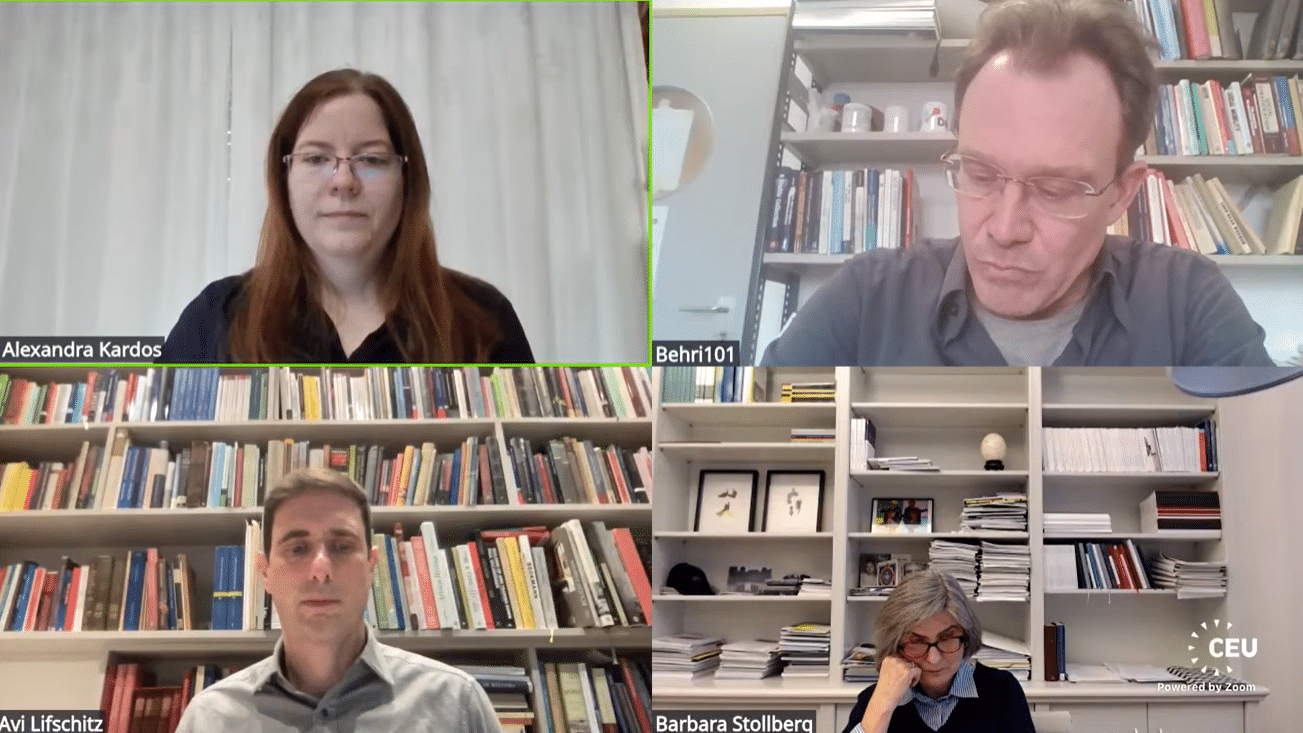
Why Democratic Strategy Must Rethink Authoritarianism Today
While observations of developments on the global scale always conceal a great amount of nuances, trends can nevertheless be discerned. One such significant trend in contemporary global society is the retreat of democracy: the world in general is more authoritarian than it was a decade or two ago.
3.02.2026

History of Ideas
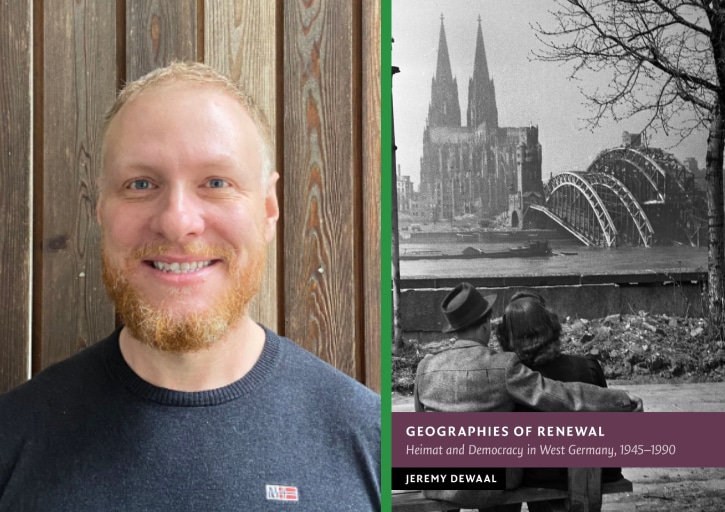
Heimat Revisited: Jeremy DeWaal on Place, Belonging and Post-war Politics in West Germany
What does it mean to feel “at home” in a place, and why does that matter for democracy? In this episode, historian Jeremy DeWaal talks about Heimat, a German word that is famously hard to translate. It is often rendered as “home” or “homeland”, but it also points to a deeper sense of belonging, memory and emotional attachment to specific places.
22.01.2026
History of Ideas
The Great War and the Transformation of Central Europe: A Conversation with Tara Zahra and Pieter Judson
The episode examines fears of democratisation and elite decision-making, the management of refugees and mass displacement, and the emergence of new welfare practices and administrative experiments, showing how these processes laid the foundations for the post-1918 order. By foregrounding shared experiences of scarcity, mobilisation, and repression across the Monarchy, the discussion examines what the Empire’s often improvised wartime policies reveal about processes of disintegration as well as unexpected capacities for adaptation.
12.01.2026

History of Ideas
Five Ideas Books in 2025
The five titles below are a snapshot of the works we covered in the History of Ideas section at RevDem over the past year. They share a common ambition: to reopen settled stories about democracy, political thought, and crisis by recovering neglected traditions, reframing canonical figures, and widening the conceptual and geographical horizons of our disciplines. Rather than offering neat solutions, each invites us to rethink what democracy and politics have been, and what they still might become.
6.01.2026

History of Ideas
The 50th anniversary of Operation Condor’s founding meeting in Chile
Fifty years after South America’s dictators formalized Operation Condor, new research and recent court rulings reveal both the scale of this transnational terror network and the extraordinary persistence required to expose it. Far from being an automatic product of democratization, today’s understanding of Condor’s crimes is the result of decades of mobilization by survivors, families, journalists, lawyers, and judges who challenged impunity across borders.
16.12.2025

History of Ideas
The Weakness of the Authoritarian Playbook
Across the world, strongmen follow the same playbook to dismantle democracy. But their favorite tool could also become their greatest weakness if democracy’s defenders learn to flip the script.
18.11.2025
History of Ideas
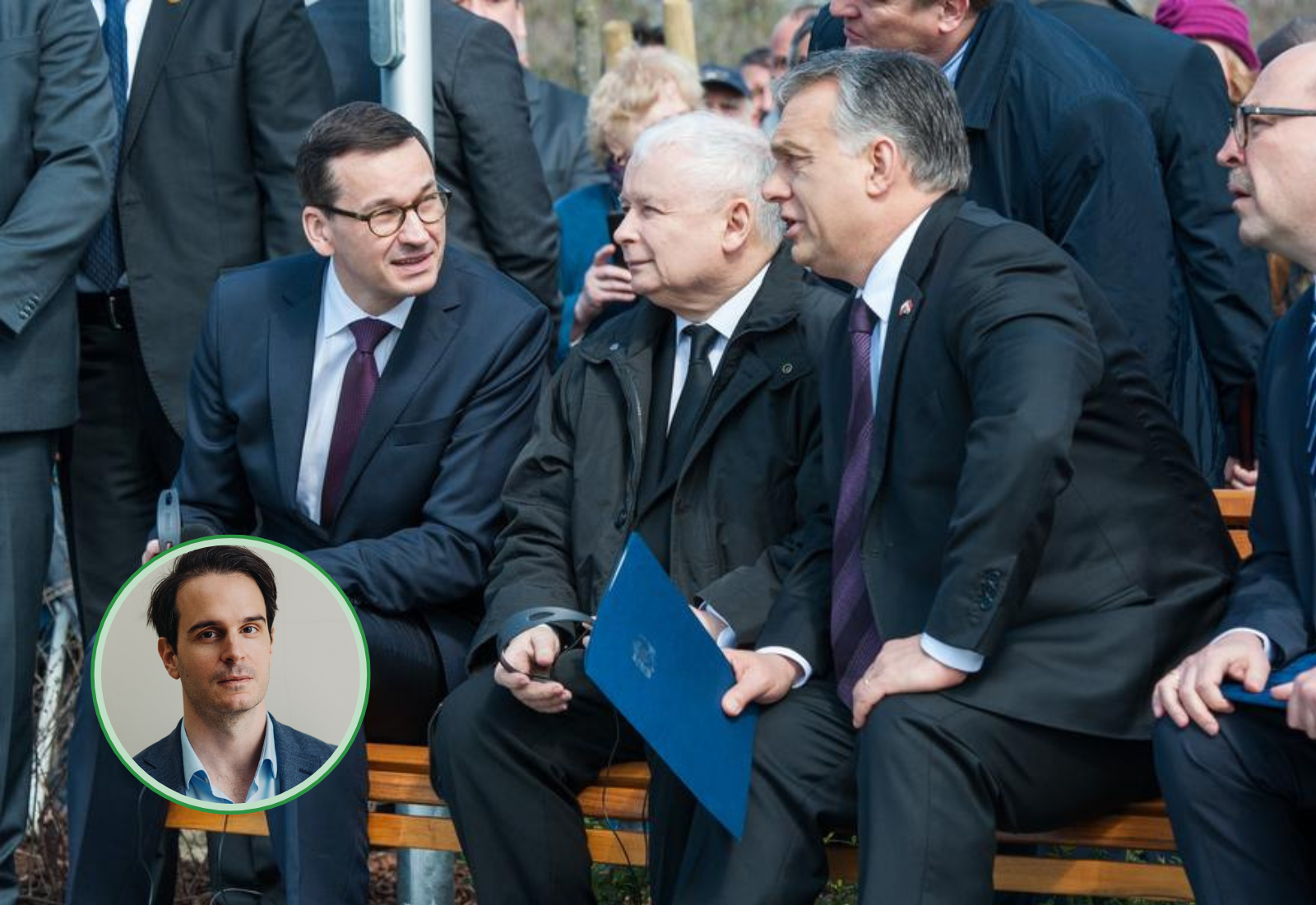
A Turning Point in American Politics? The Rise of Democratic Socialists of America and Zohran Mamdani
To what extent does Zohran Mamdani’s recent election represent a turn in American politics? In an interview for the Review of Democracy, Fabian Holt (Associate Professor at Roskilde University) discusses the political platform that made Zohran Mamdani’s victory possible. Throughout our conversation, Holt maps the evolution of the Democratic Socialists of America, as presented in his latest book “Organize or Burn: How New York Socialists Fight for Climate Survival”, published last month by NYU Press.
12.11.2025

History of Ideas
Radical Ecologies of the Right and Left: A Conversation with Ashton Kingdon and Balša Lubarda
In this new episode of the “When the Far Right and the Far Left Converge” series, which shares fresh research from a workshop organised by the CEU DI Democracy in History Work Group, we discuss with Dr Ashton Kingdon and Dr Balša Lubarda how both the far right and the far left mobilise ecological ideas, often drawing from the same language of resistance.
7.11.2025

History of Ideas
Flexible Illiberalism: How Democracy Survives Illiberally in Southeast Asia
Southeast Asia shows how democracy’s openness can be weaponized. Flexible illiberalism—the art of using democratic institutions to pursue illiberal ends—reveals how democracy endures not by collapsing, but by changing hands.
4.11.2025
History of Ideas
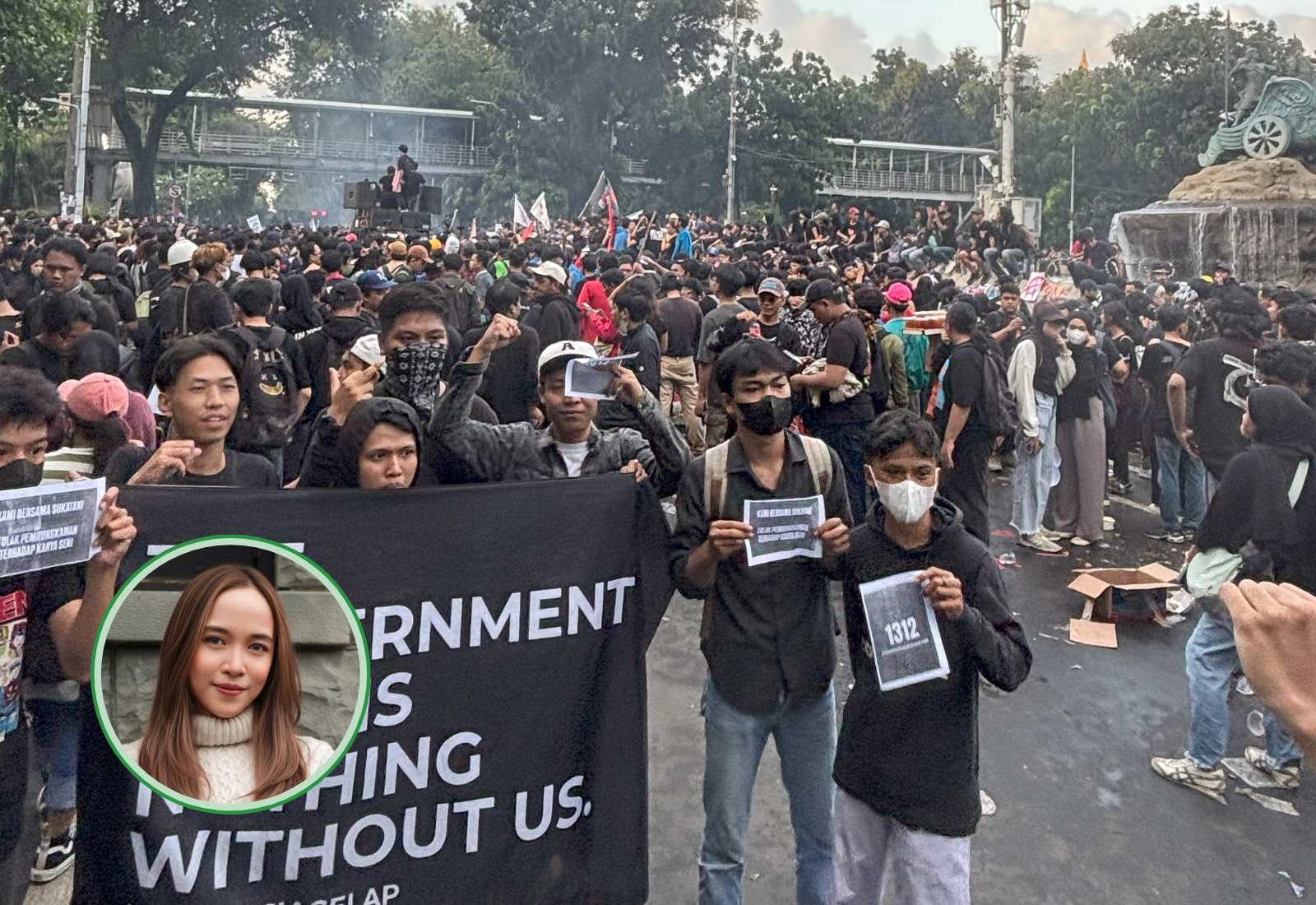
EU Research Spotlight: Zsolt Boda on Moral Emotions in Politics and Democracy
In the opening episode of Review of Democracy’s new podcast series on EU-funded research, Alexandra Kardos speaks with Professor Zsolt Boda, Director of the ELTE Centre for Social Sciences, about the MORES Moral Emotions in Politics project, a Horizon Europe Research and Innovation Action exploring how emotions shape democratic life.
30.10.2025

History of Ideas
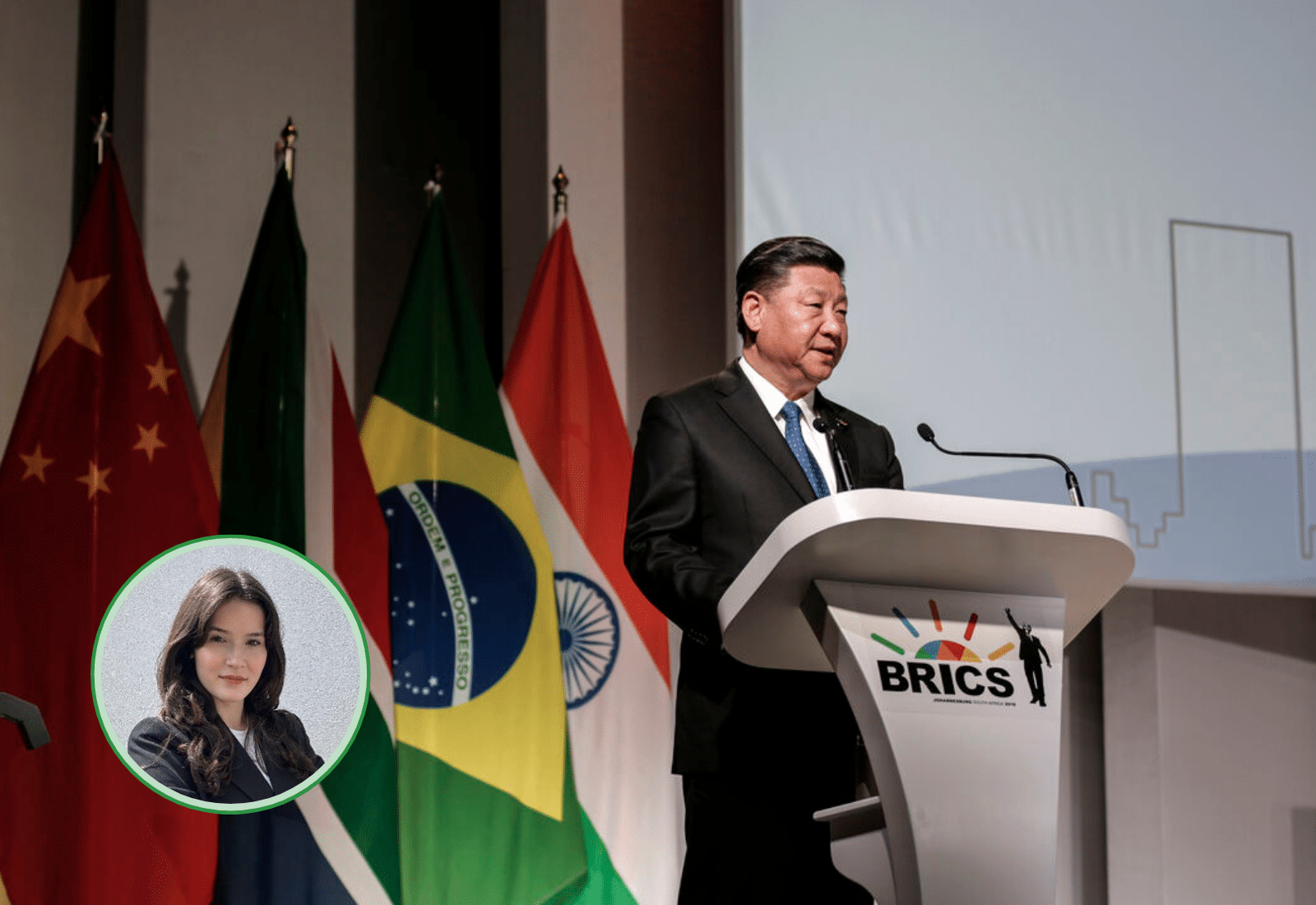
China’s Hybrid Ideological Convergence within BRICS
The power transition from the liberal Global North to the increasingly assertive Global South signals a shift from a unipolar to a multipolar international system, where emerging economies have the opportunity to contribute more significantly to shaping the global order. In this context, China plays a pivotal role. Being considered the architect of the BRICS group, Beijing successfully blends both far-left and far-right elements to design a hybrid ideological identity, aligned with its worldview.
3.10.2025
History of Ideas
The Co-optation of Antonio Gramsci’s Ideas by the Contemporary (Far-)Right
This episode, part of the series When the Far Right and the Far Left Converge, features Francesco Trupia and Marina Simakova discussing the ideological co-optation of Antonio Gramsci’s ideas by the contemporary (far-)right. They examine when and how right-wing actors adopted his political language, and how political conjunctures in and beyond Europe have shaped this process.
29.09.2025

History of Ideas
The Battle for the Past: Populism and Memory Politics in Contemporary India
Since 2014, the BJP has used its institutional influence to reinterpret history through a Hindutva lens, portraying India as an exclusive Hindu civilization. This effort goes beyond scholarship, reshaping how history is taught, remembered, and practiced, with narratives of Hindu pride framed as native resistance against foreign Muslim oppression and the BJP as custodian of this indigenous legacy. Supporters see these revisions as correcting omissions by earlier historians who, they argue, downplayed Hindu victories or overlooked figures like Maharana Pratap. For them, heroic retellings reclaim dignity and offer empowerment in a time of economic insecurity and social fragmentation.
26.09.2025

History of Ideas
Mapping Crisis Across Borders: Balázs Trencsényi on the Interwar Period, Intellectual History, and the Future of Democracy
In our new podcast, we speak with historian Balázs Trencsényi about his new book Intellectuals and the Crisis of Politics in the Interwar Period and Beyond: A Transnational History (OUP, 2025). Trencsényi offers a sweeping re-narration of modern European intellectual history through the lens of “crisis” — not only as an analytical category, but as a powerful tool of political mobilisation.
3.07.2025

History of Ideas
Reimagining Political Theory: A Global and Comparative Conversation
In this episode of the Review of Democracy podcast, Alexandra Medzibrodszky talks to Leigh Jenco and Paulina Ochoa Espejo—two of the three co-authors of the new textbook Political Theory: A Global and Comparative Introduction, published by SAGE. Co-authored with Murad Idris, this groundbreaking volume reimagines how political theory is taught and understood by moving beyond a Eurocentric focus and embracing a truly global and comparative framework. Rather than organizing content around geographical regions or national traditions, the book takes a thematic approach—exploring war, political action, development, ritual, and other enduring political questions through a rich array of sources from across cultures and time periods. In the conversation, we discuss what it means to think politically beyond the Western canon, how to work with texts that are often marginalized or excluded from mainstream syllabi, and what challenges arise when dealing with disciplinary boundaries.
26.06.2025

History of Ideas
Erased: Women, Power, and the Hidden History of International Relations
In this episode of the Review of Democracy podcast, Alexandra Medzibrodszky speaks with Patricia Owens, renowned professor of international relations at Oxford, about her bold and revelatory new book, Erased: A History of International Thought Without Man (Princeton University Press, 2025). Owens exposes the hidden foundations of international relations in Britain, not as a field founded solely by elite white men, but one deeply shaped by the intellectual work of women—figures such as Margery Perham, Merze Tate, Eileen Power, and Susan Strange—whose ideas and influence have long been buried under layers of academic erasure.
26.05.2025

History of Ideas
Eighty Years Ago – Eighty Years in the Future
Eighty years after WWII, the Netherlands can no longer rely on the war as a moral compass for today’s challenges. As global crises reshape our world, we must reflect on how our skills, networks, and past experiences prepare us to act or stay passive in shaping the future.
22.05.2025

History of Ideas
Memory as a Battlefield: The Second World War in the Italian Public Debate
Eighty years after WWII’s end, Italy remains gripped by a battle over its wartime memory. As historians lose ground to politicized narratives, far-right forces reshape public discourse, recasting aggressors as victims and challenging the legacy of the Resistance in a deeply polarized cultural memory war.
20.05.2025

History of Ideas
Citizen Marx: A Book Discussion with Bruno Leipold
This book discussion featured Citizen Marx, a groundbreaking book by Bruno Leipold that reinterprets Karl Marx’s political thought through the lens of republicanism. About the Book: Citizen Marx In Citizen Marx, Bruno Leipold challenges conventional interpretations of Karl Marx, presenting a compelling case that Marx’s thought was deeply shaped by republican ideals. Far from being anti-political, Marx envisioned democratic institutions as essential to overcoming the domination inherent in capitalist societies. Tracing Marx’s evolving relationship with republicanism—from early democratic activism, through critical rethinking during his communist transition, to his embrace of popular control after the Paris Commune—Leipold positions Marx as a theorist who placed democratic politics at the core of socialism. About the Author: Bruno Leipold is a political theorist and historian of political thought specialising in Karl Marx, the republican tradition, and theories of [...]
19.05.2025

History of Ideas
The Anthropocene in the Humanities and Social Sciences
This online roundtable brought together leading scholars from political science, anthropology, history, and environmental humanities to reflect on how the concept of the Anthropocene is shaping debates and methodologies across the humanities and social sciences. The Anthropocene, as both a scientific diagnosis and cultural concept, challenges traditional understandings of history, politics, and human agency. This event provided space for critical reflection on how the term is used across disciplines, its implications for global inequalities and democracy, and the new research questions and directions it might open up. Participants discussed how the Anthropocene intersects with ideas of justice, planetary governance, and human-nature relationships. The conversation also considered the value—and limitations—of the Anthropocene as a framework for understanding the socio-political dimensions of climate change and ecological crisis. Participants: Julia Adeney Thomas is Professor [...]
16.05.2025
History of Ideas
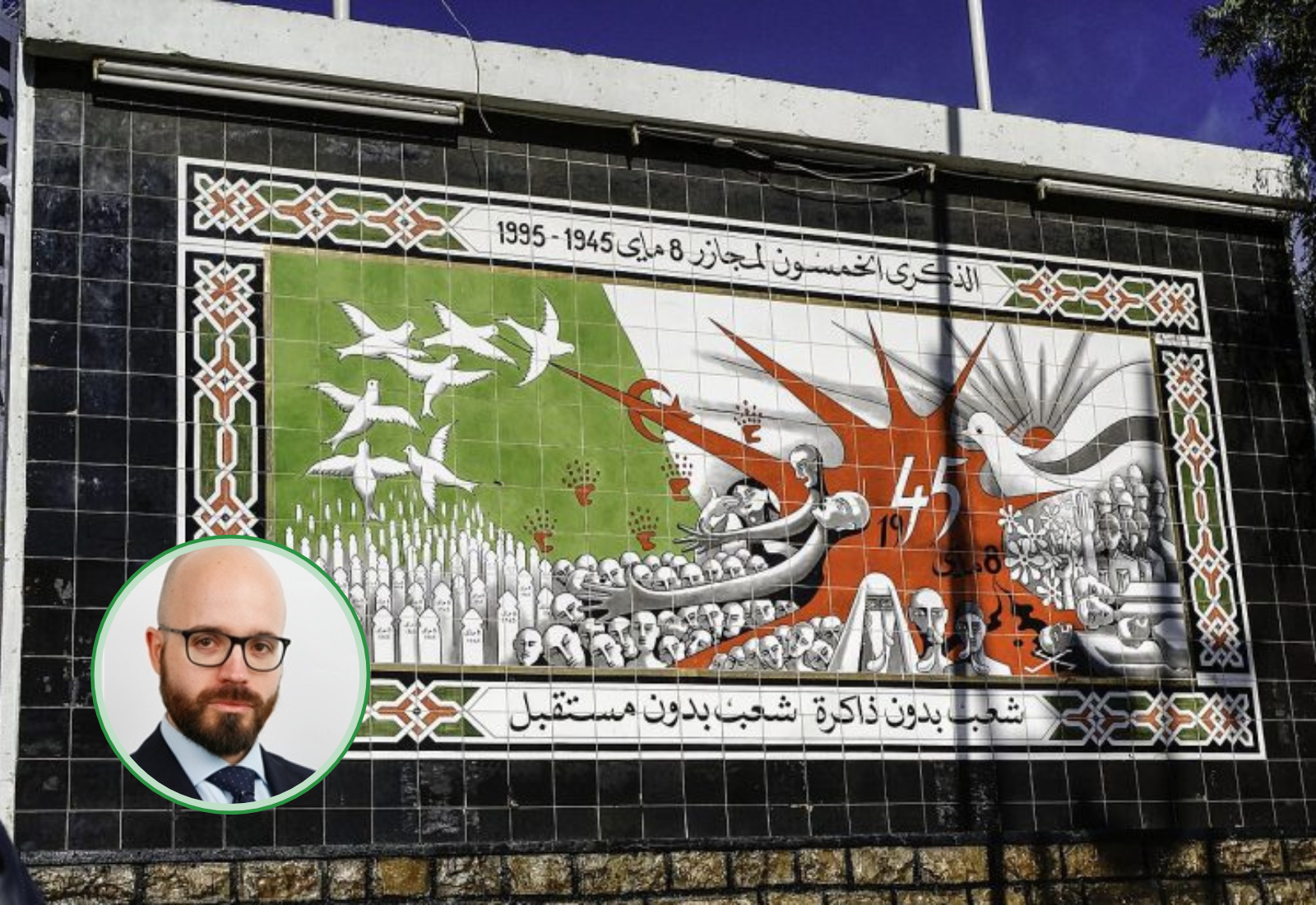
Shifting Memories of the Second World War in Times of Global Disorder
Eighty years on, the Second World War is losing its moral primacy as global memory shifts, challenged by postcolonial critiques, geopolitical upheaval, and ideological appropriation, reshape how Europe and the world confront the legacies of totalitarianism and liberal democracy.
15.05.2025

History of Ideas
The Significance of War Crimes Trials after 1945: A View from East Asia
The Second World War had a transformative effect on the development of international law. It continues to shape its practice and evolution. While the Nuremberg trials are often acknowledged as a watershed moment, however, scholars sometimes neglected the extent to which the post-war trials in East Asia shaped the development of international law and the process of decolonization. By breaking away from a ‘Eurocentric’ focus on the largest conflict of the twentieth century, we can see more clearly the enduring global legacies of the war.
14.05.2025

History of Ideas
The Untold Story of Schengen: A Conversation with Isaac Stanley-Becker
In this episode of the RevDem podcast, investigative journalist and historian Isaac Stanley-Becker discusses his revealing new book, Europe Without Borders: A History (Princeton University Press). Drawing on newly accessible archives and in-depth interviews, Stanley-Becker sheds light on the little-known origins of the Schengen Agreement—long celebrated as a cornerstone of European integration and free movement. Yet, as this conversation uncovers, the story behind Schengen is far more complex.
12.05.2025

History of Ideas
The Many Ends of the Second World War
The end of the Second World War was not a single moment defined by victory and defeat. Rather, it was a pluriform and drawn-out process perpetuated by colonial power politics in the Global South. By Thomas W. Bottelier This article is the third in our series commemorating the 80th anniversary of the end of World War II. It is sometimes said that the Second World War began in the Horn of Africa, in 1935, with Italy’s war of aggression on Ethiopia. It is almost never said that it ended there. And yet, it was the first place in the world where the fighting came to an end. Hostilities in Eritrea, then an Italian colony, ceased when the country was occupied by troops from the British Empire in the spring of 1941. Italian Somaliland, which covered the eastern seaboard of modern Somalia, was taken at the same time. Ethiopia, which the Italians had themselves occupied since 1936, was fully liberated that November, when the remnants of the Forze armate dell’Africa Orientale [...]
9.05.2025
History of Ideas
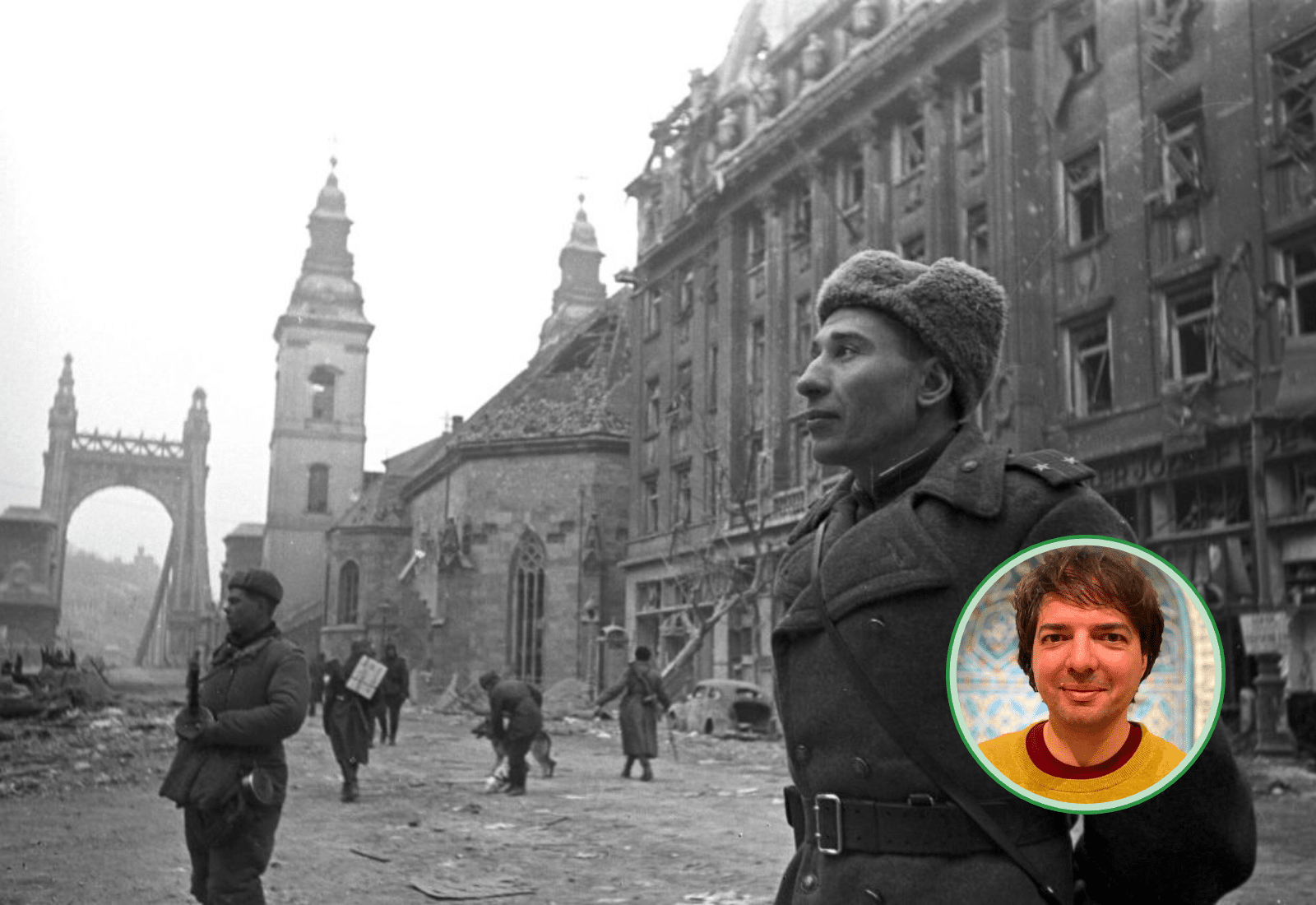
The Depoliticization of 1945
For much of the second half of the twentieth century, the Second World War and its aftermath were interlaced with western Europe’s present. The war was understood to have birthed the world that emerged in its wake. This is no longer so. Our present has been uncoupled from its twentieth-century past. The Second World War has consequently lost its explanatory function for making sense of contemporary socio-political realities.
8.05.2025

History of Ideas
A Clash of Revisionisms
The remembrance of the Second World War has shifted significantly in recent decades – and even more dramatic reinterpretations appear to be underway in our current moment of drastic uncertainty.
7.05.2025
History of Ideas
America’s Discontent with Democracy: What means patriotism in the 21st century?
There was a time when America's brightest minds worked hand in hand with the government to create world-changing technologies. DARPA and other agencies helped build the internet, GPS technology, search engines, and self-driving cars—the very foundation of Silicon Valley’s dominance. These innovations fueled economic prosperity and solidified the United States’ global standing.
11.04.2025

History of Ideas
Political Capacity: Gianna Englert on the Liberal Struggle for Democracy
Is democracy sustainable without informed, virtuous, and engaged citizens? Can political institutions shape the kind of citizenry democracy needs? These questions lie at the heart of Democracy Tamed: French Liberalism and the Politics of Suffrage, the compelling new book by political theorist Gianna Englert, who joins us in this episode of RevDem. As contemporary anxieties grow over the future of liberal democracy and the rise of populism, Englert turns our attention to 19th-century France, where liberal thinkers grappled with similar dilemmas in the wake of the French Revolution.
24.03.2025

History of Ideas
Lost Souls: Soviet Displaced Persons and the Cold War Struggle
What happens when war leaves millions stranded, stateless, and unwanted? In this episode of the Review of Democracy podcast, host Imogen Bayley discusses with renowned historian Sheila Fitzpatrick her latest book, Lost Souls: Soviet Displaced Persons and the Birth of the Cold War. Drawing from newly uncovered archival research, Fitzpatrick explores the lives of Soviet displaced persons—those who found themselves outside the USSR at the end of World War II and refused to return, despite intense Soviet pressure.
20.03.2025

History of Ideas
Texts, Contexts, and Feminist Voices in East-Central Europe
In this episode, we explore the newly published book Texts and Contexts from the History of Feminism and Women’s Rights in East-Central Europe, Second Half of the Twentieth Century (CEU Press, 2024) edited by Zsófia Lóránd, Adela Hîncu, Jovana Mihajlović Trbovc, and Katarzyna Stańczak-Wiślicz. Our conversation with the editors delves into the book's aim of highlighting the often-overlooked contributions of East Central European women to global feminist thought and activism. We discuss the selection process of a diverse range of texts and artworks that challenge the dominant political and intellectual canons, focusing on the importance of including works that don't necessarily self-identify as feminist but engage with themes of systemic oppression. The discussion also touches on how socialism and the post-socialist transitions shaped feminist movements in the region, notable figures and texts from the volume, encountered controversies during the process of editing as well as the [...]
7.03.2025

History of Ideas
Why Is the World Down on Democracy? – Richard Wike Discusses Current Global Attitudes and the Rising Dissatisfaction with the Way Democracies Work
In this conversation, Richard Wike – director of global attitudes research at Pew Research Center – presents the key facts of the growing dissatisfaction with the way democracy works; discusses which parts of society support which kinds of change in the direction of more representativity; explores how people view the impact of social media on democracy; and reflects on how democracies of the future might look different from past versions and how they could empower citizens more.
3.03.2025

History of Ideas
What Can Illiberal Disruptions Tell Us About a More Democratic Future?
With the shocking beginnings of Donald Trump’s second term, many suspect we may be nearing a tipping point in the global history of democracy. Numerous democracies have indeed been eroding, and the process appears to be accelerating these days. However, despite continuous setbacks over the past two decades, only a few formerly democratic regimes have openly embraced autocratic rule until now.
27.02.2025

History of Ideas
Radical Democratic Thought in India: Rethinking Representation with Tejas Parasher
In this episode of the Review of Democracy Podcast, host Alexandra Medzibrodszky talks to Tejas Parasher, Assistant Professor of Political Theory at UCLA, to explore the rich and often overlooked landscape of radical democratic thought in modern India. Drawing from his award-winning book, Radical Democracy in Modern Indian Political Thought, Parasher discusses the ideas of thinkers and activists from the 1910s to the 1970s who challenged the colonial legacies of liberal, representative democracy. These figures envisioned participatory, federalist models of governance that resisted elitism and corruption, offering bold alternatives to the political status quo.
24.02.2025
History of Ideas
Changing Perspectives on the Problems of Democracy, 1970 to 2020: An Organizational Approach
In his essay, our Editor-in-Chief and Director of the CEU Democracy Institute, László Bruszt argues that the organizational perspective on democracy might offer a solid framework for exploring the links among different perspectives on the problems of democracy. The organizational approach views democracy as an institutional mechanism for forming broad alliances that drive social, economic, and political change. It shapes power relations and fosters cooperation but also enables exclusion, which can fuel polarization, populism, and illiberalism, ultimately destabilizing democratic institutions.
6.02.2025

History of Ideas
This Land We Call Home: A History of “Criminal Tribes” in Modern India – An Interview With Nusrat F. Jafri
In this interview with Nusrat F. Jafri, we explore her much-acclaimed biographical fiction, This Land We Call Home. Drawing on her personal family history and extensive ethnographic research across northern and western India, Jafri raises a profound question for all democracies: How can democratic systems address historical prejudices and work toward creating a truly inclusive society?
29.01.2025

History of Ideas
An Uneven “History of Ideas”? – David Runciman on Equality, Justice, and Revolution
David Runciman’s History of Ideas is a ‘foxy’ book, in several senses. First, it is foxy in the Berlinian sense, as it covers a broad selection of intellectual currents. In a 1953 essay, Isaiah Berlin famously addressed the question of monism and pluralism of values by contrasting the fox and the hedgehog from a fable by Archilochus. ‘Foxes’, historical examples of which include Aristotle and Shakespeare, know many things, while ‘hedgehogs’, such as Plato or Dante, know one big thing. Secondly, The History of Ideas is ‘foxy’ in advancing Isaiah Berlin’s core argument about value pluralism. Like Berlin’s fox, it eschews monolithic truths in favor of moderation in exploring the messy realities of political and social life.
21.01.2025

History of Ideas
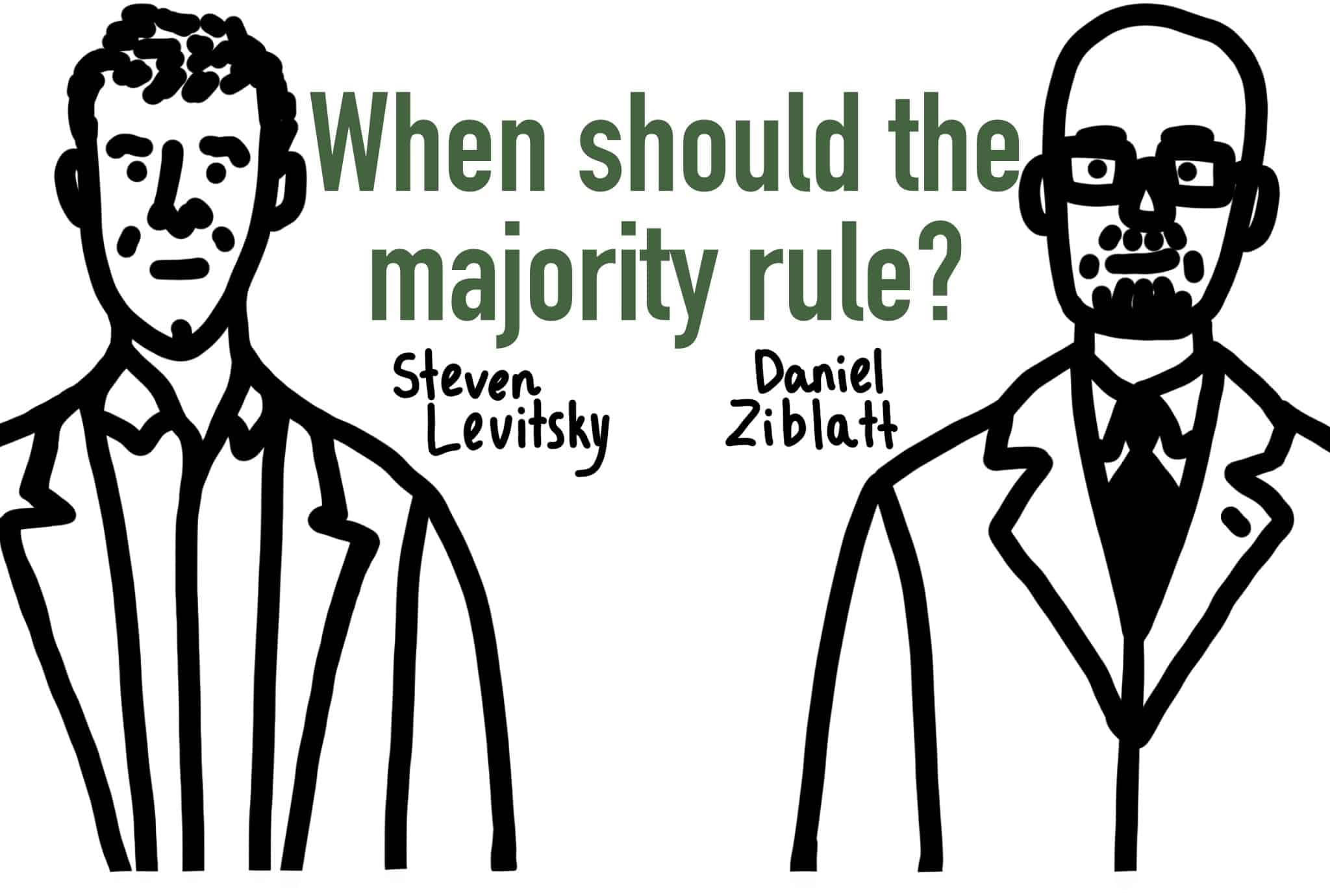
When Should the Majority Rule? – Steven Levitsky and Daniel Ziblatt on Countermajoritarian Institutions and the Question of Democratic Resilience
In this conversation, Harvard professors Steven Levitsky and Daniel Ziblatt examine the various types of countermajoritarian institutions and reflect on which are democracy-enhancing and which can potentially subvert democracy. Levitsky and Ziblatt show the connections between the strong countermajoritarian features of the U.S. political system and its ongoing democratic backsliding. They also consider how the trade-offs between countermajoritarianism and democratic stability have played out across the globe.
17.01.2025
History of Ideas
Five Ideas Books in 2024
Here come five recommendations from RevDem Ideas of books we covered in 2024 and which we think deserve to be widely read and discussed.
14.01.2025

History of Ideas
Overcoming Membership Fatalism – A Conversation with Tom Theuns on Democratic Theory and His Immanent Critique of the EU
In this conversation, Tom Theuns – author of Protecting Democracy in Europe: Pluralism, Autocracy and the Future of the EU – reflects on EU institutions’ rather narrow conception of democracy and their complicity in democratic backsliding in EU member states; considers how a more coherent and effective response to the latter processes could be designed; critiques the EU’s ‘membership fatalism’ and explains why he has proposed an expulsion mechanism; and positions his approach within political theory and discusses the reception of his ideas also beyond that field.
13.01.2025

History of Ideas
Democracy in Global Political Thought and Theory
The roundtable brought together scholars from varied backgrounds to share insights and challenge assumptions about democracy, helping to shape a broader, more inclusive understanding of its history, role and forms worldwide. It explored the diverse historical and contemporary contexts of democracy across the globe, emphasizing perspectives from regions such as Latin America, China, India, and the Muslim world. The conversation challenges traditional assumptions and fostered a broader understanding of democracy’s many forms and roles in global intellectual history. Participants Michaelle Browers (Wake Forest University): Expert in Arab and Islamic political thought, feminist theory, and democratic theory, with a focus on transcultural possibilities. Dongxian Jiang (Fordham University): Political theorist and intellectual historian specializing in Chinese and Asian political thought, comparative political theory, and intercultural dialogue. Nora Lafi (Leibniz-Zentrum Moderner [...]
6.12.2024

History of Ideas
Decentering Democracy: Developing Global Perspectives in Political Thought and Theory
This op-ed explores the study of democracy in global political thought and theory, arguing for a need to rethink entrenched frameworks and better understand diverse ways of political thinking. It examines high-level key challenges in terminology, methodology, translations, and collaboration, arguing for the need for interdisciplinary approaches and structural changes in academia to promote diverse perspectives on democracy.
28.11.2024

History of Ideas
Revising European Integration History in an Age of Uncertainty – Karin van Leeuwen, Aleksandra Komornicka, and Koen van Zon on Their Interdisciplinary Handbook with a Historical Focus
In this conversation at the Review of Democracy, Karin van Leeuwen, Aleksandra Komornicka, and Koen van Zon – contributors to The Unfinished History of European Integration that has now appeared in a revised edition – elucidate the main questions that organize their overview of European integration history; reflect on the applicability and usefulness of various influential theories when trying to narrate the history of European integration today; show what special contributions historians can make to the interdisciplinary study of the European Union; and discuss recent advances in the historiography of European integration, specifying questions that would deserve more attention in the future.
27.11.2024

History of Ideas
On Muslim Democracy: Essays and Dialogues
Join Review of Democracy Ideas Editor Alexandra Medzibrodszky as she hosts Professor Andrew March, a leading scholar of political philosophy and Islamic thought, to discuss On Muslim Democracy: Essays and Dialogues. The book focuses on Rached Ghannouchi’s political thought and offers a unique perspective on the intersection of Islamic principles and modern democratic governance.
25.11.2024

History of Ideas
How Does Planting Trees Strengthen the Roots of Democracy – Or Does It?
At first it may seem that planting trees serves the environment regardless of party or political affiliation, but this procedure has not been an innocent act of nature conservation for a long time. As a striking example, Boehi (2015, p.71) humorously cites Margaret Thatcher’s case who participated in a 10-minute tree-planting procedure between a 50-minute TV-interview and an 80-minute lunch in Canberra, Australia. In the case of trees planted by politicians, suddenly everything becomes symbolic: who plants with whom, when, where, what species, and how. It is not even a coincidence what happens to the tree years later. Virtual tree plantings that can never be fulfilled, which are increasingly common today, are usually just promises of an ongoing political campaign.
22.11.2024

History of Ideas
War is Peace – Trajectories of Failed Utopias in Eastern European Public Spaces
The political and cultural revival of Cold War narratives, the resurgence of authoritarian tendencies and, more recently, Russia’s aggression against Ukraine and Donald Trump’s liaison with Hungarian far-right policymakers is drawing renewed scholarly and public attention to the Central and Eastern European region. A common characteristic of post-1989 far-right movements in Central and Eastern Europe is the strong anti-communist ideology, which remains prominent in their rhetoric. These movements not only oppose contemporary leftist formations and anti-fascist movements but also reject the legacy of socialism – while recycling elements of the latter’s organizational strategies.
15.11.2024

History of Ideas
The Recipe Trump Will Hopefully Not Read Attentively – Measuring the US’ Political Prospects by the ‘Gold Standard’ of De-Democratization
Given all the grave concerns regarding the future of democratic norms and institutions in the US, Hungary’s transformation under Viktor Orbán’s rule offers the kind of warning that observers would ignore at their own peril. Considering the key ingredients on Orbán’s recipe of de-democratization can also help us develop a sense of proportions and nuance about what is likely to unfold under Donald Trump’s upcoming second term.
13.11.2024

History of Ideas
The Great Gender Divergence – In Conversation with Alice Evans
In this conversation at the Review of Democracy, Alice Evans discusses the great gender divergence and how we might explain that some countries are much more gender equal than others; considers whether the history of gender is essentially about female emancipation in modern times but also whether even the most gender equal countries in the world today remain rather patriarchal; and reflects on the special challenges of writing an interdisciplinary book that analyzes the history of gender on a truly global scale – and how such a project relates to the idea of a gender binary.
11.11.2024
History of Ideas
Insurgent Utopia: A Means for Transformation
As universities face increasing neoliberal pressures, they must choose between passive complicity or transformative action. By embracing Paulo Freire’s concept of inédito viável—untested viability—and the framework of insurgent utopia, inspired by movements like the MST, universities can reclaim their potential as catalysts for radical societal transformation.
8.11.2024

History of Ideas
Competing Internationalisms: Samuel Hirst on Soviet-Turkish Interwar Relations, Statist Internationalism and Rejecting the Liberal Order
In this episode of the Review of Democracy podcast, Alexandra Medzibrodszky interviews Samuel Hirst on his new book, Against the Liberal Order, the Soviet Union, Turkey and Statist Internationalism from 1919 to 1939. The book examines the collaboration between early Republican Turkey and the Soviet Union during the interwar period, exploring the diplomatic, economic, cultural and international dimensions of their relationship.
31.10.2024

History of Ideas
Downscaling by Upscaling – Timothy Shenk on the Center Left in Our Times
Left Adrift is a short, propulsively written book that tackles large arguments. The research that ultimately led to its publication began with a rather narrow question: How did Bill Clinton become president, anyway? Timothy Shenk grounds his learned and often entertaining response in intriguing characters who sought to explain the breakdown of the old Democratic majority forged via the New Deal – and to plan the next one. He contextualizes these efforts broadly, drawing on a host of "hard facts." The resulting book offers a series of original, insightful vignettes and engaging reflections on the battle over the future of the Democratic coalition in the U.S. and comparable parties across the globe.
25.10.2024

History of Ideas
J.M. Coetzee’s Jesus Trilogy as Meta-utopia or A Possibility for Democratic Thinking after Authoritarian Cultures
Meta-utopia could serve as a literary indicator of change in post-authoritarian cultures. Its presence exposes a space where every idea is subverted and where skeptical relativism is encouraged opposing any form of universalism following a great sense of betrayal and loss of faith in familiar socio-political forms.
17.10.2024

History of Ideas
Diana Dumitru on the Russian Invasion of Ukraine and the Question of Genocide
In this conversation at the Review of Democracy, Diana Dumitru – co-editor, with Dirk Moses, of the new collection The Russian Invasion of Ukraine. Victims, Perpetrators, Justice, and the Question of Genocide – discusses the motives of various Russian perpetrators in Ukraine and how those motives might have evolved over time; shows how useful the concept of genocide proves when studying the multifaceted violence unleashed during Russia’s war of aggression; reflects on whether the current debates around genocide in Ukraine might reshape or expanding our understanding of genocide and mass violence; and addresses the challenges in pursuing accountability for Russian crimes.
14.10.2024

History of Ideas
Maps That Give Power to the People – Jo Guldi on Participatory Spreadsheets, Global Archives, and the Triumph of Activist Movements
In this conversation at the Review of Democracy, Jo Guldi explores the relationship between data sciences and the humanities; shows how the struggle for occupancy rights can help us reconsider global history; explains how her new project approaches climate change; and discusses the type of scholarship she finds most inspiring.
10.10.2024

History of Ideas
Spirals of Radicalization – Reflections on a Terrifying Anniversary
Following the shocking crimes committed on October 7 last year, the leadership of the State of Israel has unwittingly walked into the terrifying trap set by Hamas. Its counterattack, which has resulted in mass casualties among Palestinians and the destruction of Gaza, has raised the Palestinian question to a whole new level while bringing the State of Israel’s international reputation to a nadir. Underlying the current cataclysm is Israel's growing inability to reconcile the fundamental contradiction between its Jewish identity and its democratic claims. Meanwhile, right-wing illiberal and radical leftist responses in the West bear clear marks of the spiral of radicalization in the Middle East, hampering the urgently needed process of reconciliation and the emergence of a viable long-term settlement.
7.10.2024
History of Ideas
A Revelation for the History of Social Movements in Hungary: Bernadett Sebály on “The Story of Our Struggles” Database
In this conversation, Bernadett Sebály discusses the inception and development of the online database of protest events in Hungary, 1989–2010, entitled Küzdelmeink története, or “The Story of Our Struggles”; its use in pedagogical settings for students, activists, teachers, and everyday citizens; and the importance of its place between activism and scholarly research in the Hungarian illiberal context.
26.09.2024

History of Ideas
How Utopia Is Incompatible with Democracy
In times of crisis we seem to long for utopia, or at least for utopian solutions. This should not be surprising today, especially in the face of pandemics, wars and climate change: The desire for something perfect, for something that will solve our problems, that can give us hope and make us dream for a better future, seems attractive even if it is unreachable. But why must it be unreachable? Can we not maybe will it into being? Can we not maybe design a world that is better, that is more just, that is more fulfilling? Can’t we turn a maybe into a certainty?
25.09.2024

History of Ideas
What Leads Idealists into Morally Disastrous Territory? – Adam Kirsch on the Ideology of Settler Colonialism and Preferable Traditions of the Oppressed
In this new conversation at the Review of Democracy, Adam Kirsch – author of the new book On Settler Colonialism. Ideology, Violence, and Justice – discusses the ideology of settler colonialism and how it leads idealists into morally disastrous territory; reflects on whether the application of this ideology to the State of Israel should be viewed as continuing the long, highly problematic tradition of antisemitism; considers whether there are valuable elements in this ideology that would be worth salvaging; and suggests preferable ways to think about the traditions of the oppressed.
23.09.2024

History of Ideas
How to Avoid a Digital Dystopia in the Era of Social Media?
Within a very short period of time, a utopian vision of social media as a liberating technology, capable of creating a new form of direct, participatory democracy, has given way to a pessimistic, even catastrophic outlook. Understanding and channeling the power of the current communication revolution is crucial for restoring the transformative and democratic potential of online platforms.
20.09.2024

History of Ideas
Off White – Anikó Imre and James Mark on Eastern Europe in the Global History of Race
In this conversation, Anikó Imre and James Mark – co-editors, with Catherine Baker and Bogdan Iacob, of the new volume Off White. Central and Eastern Europe and the Global History of Race – present the ambiguities of East Europeans’ whiteness and the major implications such ambiguities have had; analyze how the “two halves of Europe” compare when it comes to questions of white supremacy; explicate what their historical approach to nation building in Eastern Europe has yielded; discuss the place and role of East Europeans in global rightist networks today; and reflect on how they see their own role as mediators between political cultures and different scholarly traditions.
26.08.2024

History of Ideas
How Charm Shapes Politics – Julia Sonnevend on Personal Magnetism and Its Growing Impact in Our Age of Social Media
In this conversation at the Review of Democracy, Julia Sonnevend – author of the new book Charm. How Magnetic Personalities Shape Global Politics – analyzes the main techniques politicians use to appear charming; compares the uses of such techniques by liberal and illiberal political leaders; discusses how gendered the perception of charm has remained; and considers whether politicians are likely to become even more like social media influencers in the coming years.
19.08.2024
History of Ideas
How Illiberal Memory Regimes Paved the Way for the Erosion of Academic Autonomy – Lessons from Hungary
Operating at the intersection between politics and academia, National Memory Institutes across Central and Eastern Europe have developed appealing and resonant narratives and produced a “thick” ideology. Their rise has helped normalize the erosion of autonomous, scholarly expertise in the name of an idealized national community.
7.08.2024

History of Ideas
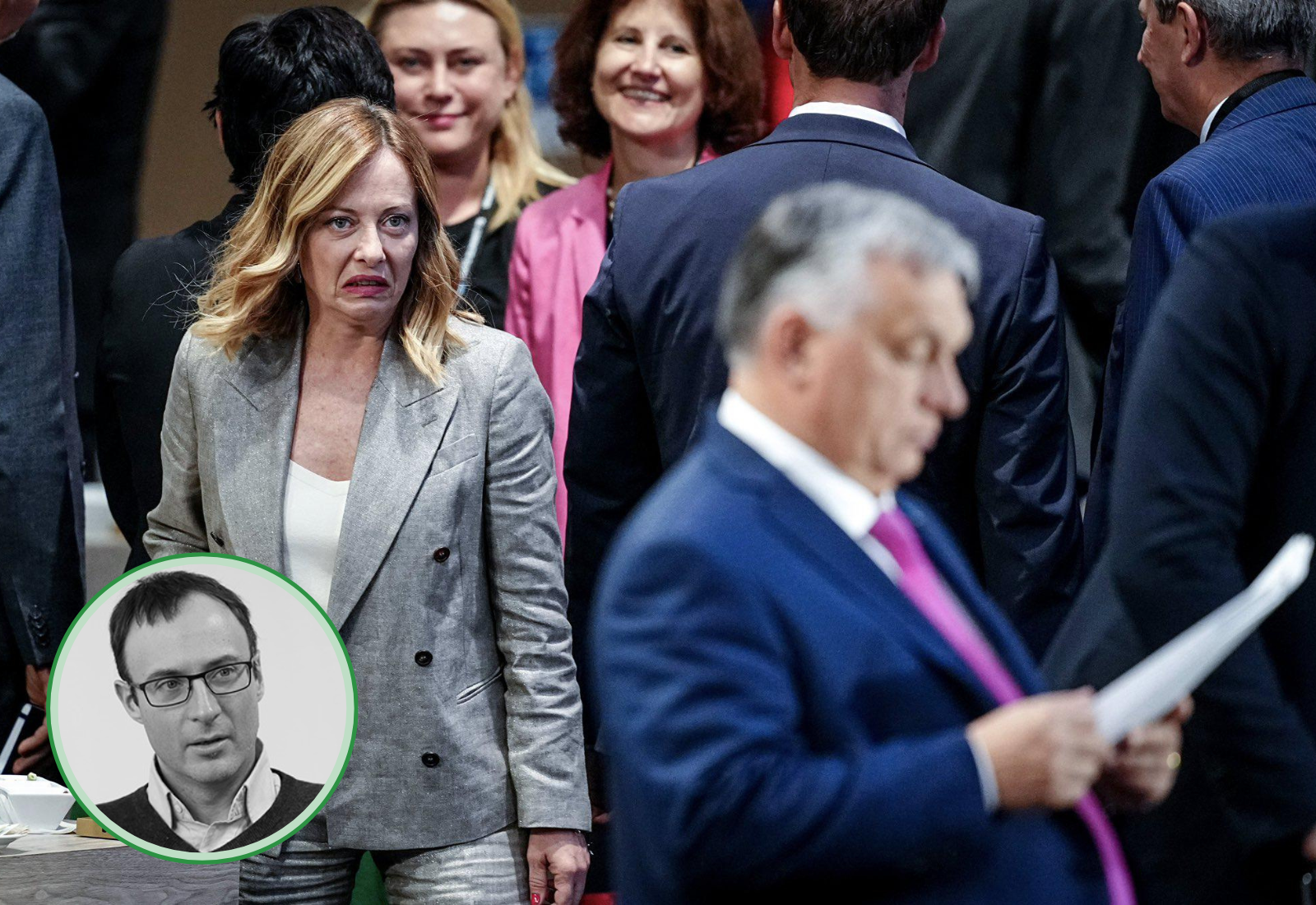
Two Paths to Power – What Unites Giorgia Meloni and Viktor Orbán? What Separates Them?
Meloni and Orbán are often treated as closely comparable political actors. However, their trajectories are widely divergent, and this is reflected in their respective understanding of both domestic political action and international alliances.
2.08.2024
History of Ideas
Why Do We See the Rise of Anti-Democrats in Democracies? – Zack Beauchamp on the Reactionary Spirit Across the Globe
In this conversation at the Review of Democracy, Zack Beauchamp – author of the new book The Reactionary Spirit. How America’s Most Insidious Political Tradition Swept the World – discusses the specific kind of antidemocratic politics that emerges in countries with democratic institutions; shows how the United States might to said to have invented competitive authoritarianism; explains the conclusions he drew from comparing countries from different continents and how those conclusions may help us correct Western misperceptions; and reflects on the major intellectual inspirations behind his book.
10.07.2024

History of Ideas
Why Was Central-South-East Europe Labeled as “Corrupt”? – Silvia Márton on Transnational Histories of Corruption
In this podcast, Silvia Márton, principal investigator within the ERC Project “Transnational Histories of ‘Corruption’ in Central-South-East Europe,” discusses the multiple understandings of the concept “corruption” in the context of Central-South-East Europe.
8.07.2024

History of Ideas
Habsburg Central Europe as a Crucible of World Order – Franz L. Fillafer Reviews Natasha Wheatley’s The Life and Death of States
This exquisite, stylish and scintillating book rediscovers Habsburg Central Europe as a crucible of world order, as a site where practically important knowledge of and for the world was produced. The composite nature of the Habsburg Monarchy made Central European lawyers and political activists of different stripes demolish the darling dogma of the “sovereign nation state”: To them the alleged key features of the state, its untrammelled self-sufficiency, eternal life, ethno-linguistic homogeneity, and unanimous will, seemed baleful and bloodless fictions.
28.06.2024

History of Ideas
Navigating Changes on the Danube – Steamboats, Epidemics, and Modernity in the 19th century
Discussions around the Danube's role in shaping modern East-Central Europe have captured significant attention among scholars in recent years. By now, there is a broad consensus that this river helped create and define a specific cultural space. By using terms such as the Danube Monarchy, Donauraum, or variations of the same idea, some scholars go as far as to center it as an alternative geography to East-Central Europe.
18.06.2024

History of Ideas
Finding the Pragmatist Middle Ground – Michael S. Roth on Being a Student and Student Activism Today
In this conversation at the Review of Democracy, Michael S. Roth sketches the main ways of being a student since ancient times; reflects on the process of learning “to be free”; explores the reasons behind the politicization of universities in the United States; considers what might be new about the adversarial relationship between students and university administrators these days; and sketches what “safe enough spaces” might look like in our turbulent times.
17.06.2024
History of Ideas
Towards a Position of Responsibility. Joshua Leifer on the Autumn of American Jewish Life, the Most Serious Test of the Jewish Left, and Much More
In this conversation at the Review of Democracy, Joshua Leifer – author of the new book Tablets Shattered. The End of an American Jewish Century and the Future of Jewish Life – analyzes the unravelling of the postwar American Jewish consensus and the reemergence of oppositional Jewish politics; discusses what he sees as the four main political-religious tendencies in our times and how his own relationship to them has evolved over the years; explores the radical potential of traditional Judaism; and reflects on how the diasporic double bind may be navigated today.
10.06.2024

History of Ideas
Racism Against East Europeans – Jannis Panagiotidis and Hans-Christian Petersen on the Applicability of a Key Concept and Today’s Ambiguous Terrain
In this conversation, Jannis Panagiotidis and Hans-Christian Petersen – authors of the new book Antiosteuropäischer Rassismus in Deutschland. Geschichte und Gegenwart (Racism Against East Europeans in Germany. History and the Present Day) – show why racism is an appropriate category when discussing stereotypes and prejudices against East Europeans; explain why there is a need for “an Eastern enlargement of the racism debate”; discuss how the most extreme, National Socialist forms of racism relate to what came before and after; consider how racism against East Europeans might be embedded in the larger, more global system of prejudices and domination; and reflect on the current stakes of their scholarly intervention.
4.06.2024

History of Ideas
Democracy, Populism, and the Myth of Rational Politics – In Conversation with Yannis Stavrakakis
In this conversation with Lorena Drakula, Yannis Stavrakakis – author of the new Research Handbook on Populism and the book Populist Discourse. Recasting Populism Research – discusses the past and future of populism research; analyzes the outdated stereotypes that shape the political role of the ‘populist’ label; and argues for returning passions to the very core of democratic representation. Yannis Stavrakakis is a Professor of Political Science at the Aristotle University of Thessaloniki and director of the Laboratory for the Study of Democracy. He was one of the founding co-conveners of the Populism Specialist Group of the Political Studies Association (UK) and also directed the POPULISMUS Observatory.
31.05.2024

History of Ideas
Social Justice in Twentieth-Century Europe: Martin Conway and Camilo Erlichman on the Malleability and Ideological Promiscuity of a Crucial Aspiration
In this conversation at the Review of Democracy, Martin Conway and Camilo Erlichman – editors of the new volume Social Justice in Twentieth-Century Europe – discuss how to approach the question of social justice historically; show how this aspiration may be placed at the confluence of key developments in the twentieth century; explain how focusing on this questions allows us to study the interactions between rulers and the ruled; sketch some of the main features of different eras of social justice; and consider whether social justice is still understood primarily by its absence as it so often was during the past century.
27.05.2024

History of Ideas
Judith Butler on the Anti-Gender Ideology Movement, Current Theories of Gender, and Their Ideas of Radical Democracy
In this conversation at the Review of Democracy, Judith Butler – author of the new book Who’s Afraid of Gender – discuss their interpretation of the anti-gender ideology movement and what makes it ‘inadvertently confessional’; explain why we should think about the material and the social as intertwined also when we reflect on issues of gender; show what a broader, more global discussion of such issues could yield; and illuminate how they think about radical democracy.
13.05.2024

History of Ideas
Reconstructing Shared Futures
Matteo Marenco reflects on Jonathan White’s "In the Long Run: The Future as a Political Idea."
10.05.2024

History of Ideas
The Spaces and Networks of Critical Theory – Philipp Lenhard Discusses the Frankfurt School on the Centenary of The Institute for Social Research
In this conversation at the Review of Democracy, Philipp Lenhard – author of the new book Café Marx. Das Institut für Sozialforschung von den Anfängen bis zur Frankfurter Schule (Café Marx. The Institute for Social Research from the Beginnings to the Frankfurt School) – discusses the history of the Institute For Social Research and the Frankfurt School and his approach to this subject; shows what his exploration of less famous actors in this history and his focus on spaces and networks have yielded; and reflects on what the impact of the Institute for Social Research and the Frankfurt School has been like – and what might be most relevant about critical theory today. Philipp Lenhard is a DAAD Professor at the Department of History, the University of California, Berkeley. He completed his PhD and Habilitation at the University of Munich. His research interests include Modern Jewish History; Modern German History; Intellectual History; Critical Theory and the Frankfurt School; and [...]
8.05.2024

History of Ideas
Adventures in Democracy
In this conversation at the Review of Democracy, Erica Benner – author of the new book Adventures in Democracy: The Turbulent World of People Power – shows what a more self-critical and down-to-earth understanding of democracy would entail; discusses what it means that there is a constant battle within democracies between principles of universal liberty, equality, and power-sharing, on the one hand, and the boys’ club logic, on the other; explains why self-restraint and acknowledging others’ fear of losing their share of power are crucially important; and reflects on the development of a truly global conversation about democracy.
2.04.2024

History of Ideas
Why Would You Call Donald Trump a Fascist?
Daniel Steinmetz-Jenkins on American Intellectuals, the Fascism Debate, and the Larger Political Stakes In this conversation at the Review of Democracy, Daniel Steinmetz-Jenkins – editor of the new collection Did It Happen Here? Perspectives on Fascism and America – discusses the intellectual stakes and political relevance of the fascism debate; reflects on how the fascism debate relates to discourses around democratic decline and the ongoing history wars; shows what a more global perspective on US American debates can reveal; and ponders whether the next round of the fascism debate might just be around the corner. Daniel Steinmetz-Jenkins is a historian of modern political and intellectual thought. He acts as Assistant Professor in the College of Social Studies at Wesleyan University. He runs a regular interview series at The Nation and is an editor at Modern Intellectual History. He also helps curate the History of Ideas section of the Review of Democracy. Did It Happen Here? [...]
18.03.2024

History of Ideas
Beauty is in the Street, Joachim Häberlen on protests, countercultures, and the courage to imagine different realities
In conversation with RevDem editor Lucie Hunter, Joachim Häberlen discusses his latest book, Beauty is in the Street: Protest and Counterculture in Post-War Europe (Allen Lane, 2023). Joachim Häberlen, Ph.D., is a historian of modern Europe and a writer focused on protest movements in post-war Europe and the experiences of Afghan and Syrian refugees in Germany. He received his academic training at the University of Chicago, where he graduated with a Ph.D. in Modern European History in 2011. Some of his publications include The Emotional Politics of the Alternative Left: West Germany, 1968-1984 (Cambridge University Press, 2018), Citizens and Refugees: Stories from Afghanistan and Syria to Germany (Routledge, 2022), and Beauty is in the Street: Protest and Counterculture in Post-War Europe (Allen Lane, 2023).
13.02.2024

History of Ideas
Grand Strategies of the Left – Van Jackson on US Foreign Policy and the Possibilities of Progressive Worldmaking
In this conversation with RevDem editor Ferenc Laczó, Van Jackson – author of the new book Grand Strategies of the Left. The Foreign Policy of Progressive Worldmaking – explains what distinguishes progressives from liberal internationalists; clarifies why he thinks that the tradition of grand strategy might be worth rescuing by and for progressives; discusses the three main progressive grand strategies that are recurrently articulated in the US these days, what they priorities are, and what risks they respectively contain; distils the main consensual points of progressive worldmaking; and reflects on what a global starting point for agendas comparable to his own might lead to.
9.02.2024
History of Ideas
Towards a Creative, Empathetic, and Solidaristic Culture of Remembrance – Mirjam Zadoff on Her Explorations of Global Memory in the 21st Century
In this conversation with RevDem editor Ferenc Laczó, Mirjam Zadoff – director of the Munich Documentation Centre for the History of National Socialism and author of Gewalt und Gedächtnis: Globale Erinnerung im 21. Jahrhundert – discusses what motivated her to publish a collection on global memory and which key themes she wanted to address.
19.01.2024

History of Ideas
Ukraine – An Exceptional or a Paradigmatic Case? Volodymyr Ishchenko on Deficient Revolutions and Authoritarian Tendencies
In this conversation with Lorena Drakula and Ferenc Laczó, Volodymyr Ishchenko – author of the new collection, Towards the Abyss: Ukraine from Maidan to War – explains how the study of contemporary Ukraine could contribute to our understanding of globally relevant processes. He reflects on the main political cleavage in the country and how the relationship between the various camps has evolved; and shows what led to the “deficient revolutions” in early 21st-century Ukraine and what have been their main outcomes. Finally, he discusses what he sees as the driving force behind the authoritarian tendencies in the country. Volodymyr Ishchenko is a research associate at the Institute of East European Studies, Freie Universität Berlin. Towards the Abyss: Ukraine from Maidan to War is published by Verso.
17.01.2024

History of Ideas
How Ukraine Has Won Its War of Independence Without Restoring Its Territorial Integrity – Yaroslav Trofimov on Russia’s Invasion and Ukraine’s Survival
In this conversation with RevDem editor Ferenc Laczó, Yaroslav Trofimov – author of the new book Our Enemies Will Vanish. The Russian Invasion and Ukraine’s War of Independence – shows how Ukraine has turned out to be much stronger than hoped whereas Russia has proven significantly weaker than feared; discusses the major crimes Russia has committed in Ukraine and the destruction its war of aggression has wrought; reflects on the experience of reporting on a major conflict in his country of origin; describes the evolving relationship between the Ukrainian leadership and its Western supporters; and shares his assessment of the prospects for Ukraine.
8.01.2024

History of Ideas
Five Ideas Books in 2023 (Plus Another Five) – by Ferenc Laczó
Ideas editors and podcasters have been invited to a continuous feast in 2023: the year has offered an unusual number of original publications of the highest caliber. Natasha Wheatley’s The Life and Death of States: Central Europe and the Transformation of Modern Sovereignty, the Vienna-based discussion of which we were proud to co-organize; Sam Moyn’s Liberalism Against Itself. Cold War Intellectuals and the Making of Our Times that substantially critiques the dominant form Western liberalism has taken; Danielle Allen’s exciting proposal of a power-sharing liberalism; George Steinmetz’s major monograph on the colonial origins of modern social thought in France; or Adam Shatz’s collection of essays on the radical imagination have all been evident highlights. Here comes an all too selective list of five recommendations from RevDem Ideas of books that deserve to be more widely read and discussed. Darrin M. McMahon’s new book offers a wide-ranging and beautifully crafted intellectual [...]
21.12.2023

History of Ideas
The Swarm That Didn’t Sting the Bourgeoisie–Arthur Borriello and Anton Jäger Interpret the Populist Left
In The Populist Moment, Arthur Borriello and Anton Jäger analyze a political cycle, “the long 2010s,” when left populists – perhaps most notably Syriza in Greece, Podemos in Spain, Jean-Luc Mélenchon and his various formations in France, Corbynism in the UK, and Sanders’ movement in the US – made notable attempts to rethink and revive the left by adopting a populist identity. The core agendas of this concise, dense, and engaging book are to investigate the specific origins and broader causes of this “populist moment”; to describe and explain the ebb and flow of its major representatives; to assess the major strengths and weaknesses of left populists in more general terms; and to conjecture about where such attempts to revive the left might be headed next. Borriello and Jäger manage to deliver on this ambitious agenda by offering numerous insights and developing a coherent overall interpretation – even though this comes at the price of somewhat narrow empirical foci and concerns.
30.11.2023

History of Ideas
Ukrainians Started as the Scots and Ended Up as the Irish – Yaroslav Hrytsak on the Global History of Ukraine
In this conversation with Visible Ukraine editor Marta Haiduchok and RevDem editor Ferenc Laczó, Yaroslav Hrytsak – author of the new book Ukraine: The Forging of a Nation – explains what makes Ukraine a geopolitically crucial borderland and why the Ukrainian question has become acute at the most critical turns in global history.
24.11.2023

History of Ideas
Illiberal Liberalism: COVID and the Moral Crisis of the Left
by Muriel Blaive In the recent pandemic, the moderate left has failed the lower half, what we used to call the working class, which is now rather the working poor. What do I mean by the left? Its definition varies from country to country and almost from person to person. I leave aside the extreme left and focus in this article on the liberal left, which I use as a synonym for the moderate left or liberals, a current of thought largely represented amongst intellectuals and journalists, for instance those of the New York Times, the Guardian or the Washington Post that I will cite many times here. While this moderate left has historically claimed to represent the interests of the disadvantaged, I argue that with COVID they have focused instead on surviving at all costs at the expense of the poor, including – and this is my second point – by endorsing authoritarian means: censorship, repression, and public shaming. They rationalized their heavy-handed response with a narrative built [...]
17.11.2023

History of Ideas
Peter Beinart on Resistance and De-Escalation
In this conversation with RevDem editor Ferenc Laczó, Peter Beinart discusses various aspects of the Palestinian-Israeli question.
10.11.2023

History of Ideas
Equality. Darrin M. McMahon on an Elusive and Resilient Idea
In this conversation with RevDem editor Ferenc Laczó, Darrin M. McMahon – author of the new book Equality: The History of an Elusive Idea – discusses his approach to the intellectual history of equality on the longue durée and explains why we shouldn’t think of this history as a triumphant march of progress; highlights the tensions between difference and sameness and explores the changing relationship between liberty and equality; and reflects on the globalization of our concern with equality – and our human ambivalence towards this resilient idea.
7.11.2023

History of Ideas
From Your Ex-Yugo: The Doomsday Clock is Still Ticking
RevDem recently published two articles, by Veronica Anghel and Volodymyr Yermolenko on the consequences of the war in Ukraine for Europe, as part of a series of Eurozine, a network of magazines to which Revdem belongs. Today we are publishing another article from this series - by Vladimir Petrovic
18.10.2023

History of Ideas
Maximilian Hess on the Economic War between Russia and the West
How Has Russia’s Attempt to Destroy the International Economic Order Backfired? In this conversation with RevDem editor Ferenc Laczó, Maximilian Hess – author of the new book Economic War: Ukraine and the Global Conflict between Russia and the West – shows how an economic war between Russia and the West has broken out in the 2010s; discusses why Russia’s large-scale invasion and brutal attempt to wreck Ukraine in 2022 has caused such disruption on the global scale; reflects on key features of the relationship between Russia and China today; and considers the future place of Russia in the international economic order. Maximilian Hess is the founder of the political risk consultancy Enmetena Advisory, a fellow at the Foreign Policy Research Institute, and associate fellow at the International Institute for Strategic Studies and at the Oxus Society for Central Asian Affairs. His research focuses on the relationship between trade, debt, international relations, and foreign policy as [...]
9.10.2023

History of Ideas
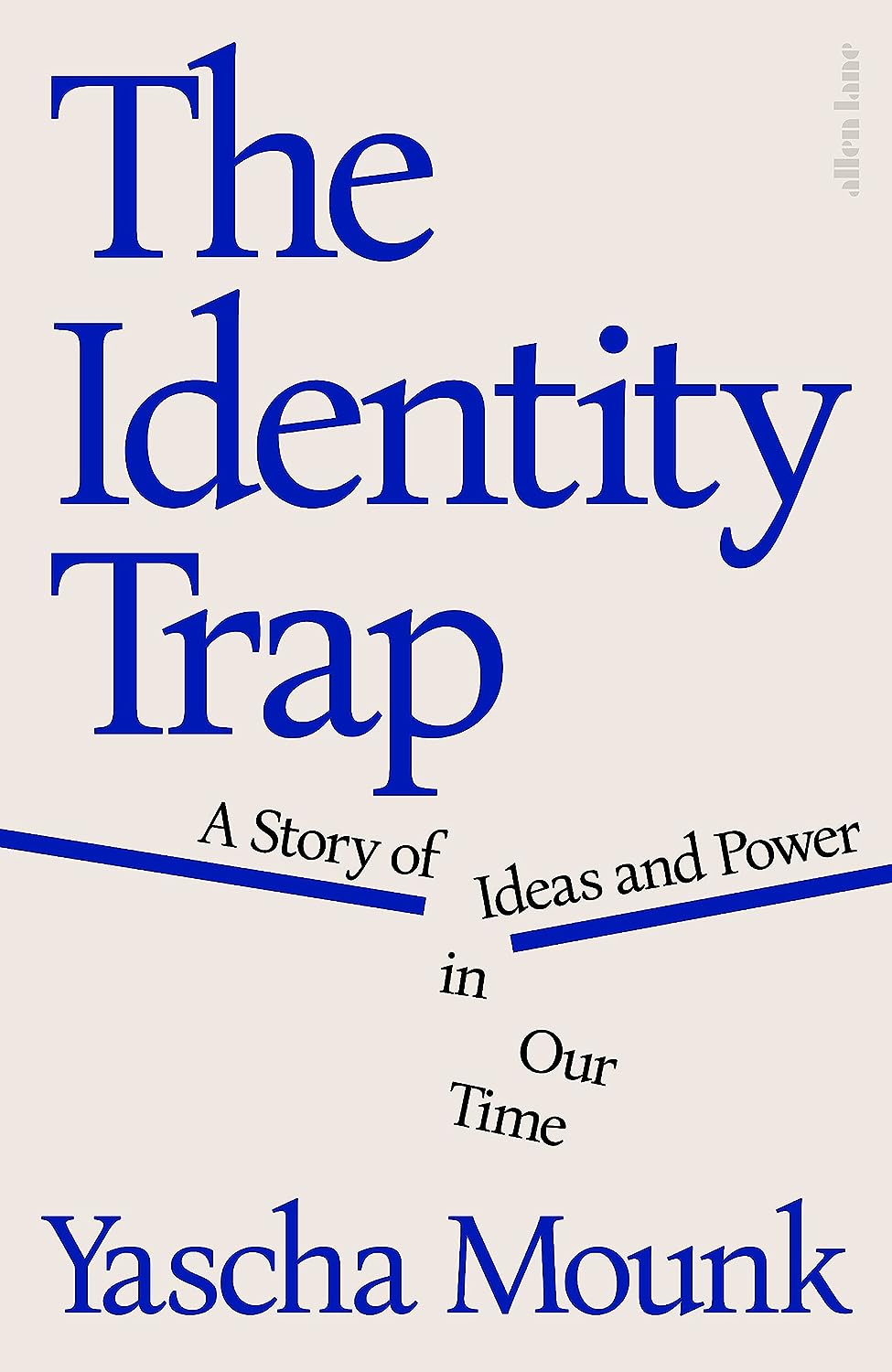
What Makes the Identity Synthesis a Trap? Yascha Mounk on the Emergence, Appeal, and Consequences of a Defining Ideology of Our Time
In this conversation with Ferenc Laczó, Yascha Mounk discusses his last book "The Identity Trap. A Story of Ideas and Power in Our Time".
26.09.2023
History of Ideas
The Darkened Light of Faith. Melvin L. Rogers on African American Political Thought
In this conversation Ferenc Laczó, Melvin Rogers introduces the thinkers he has studied and explains why he chose to engage with their ideas; discusses the normative vision of African American thinkers and what makes that vision distinctive; clarifies his own approach and analytical vocabulary; reflects on his inspirations and the connections between his recent books; and suggests critical responsiveness as an essential element of democracy.
25.09.2023

History of Ideas
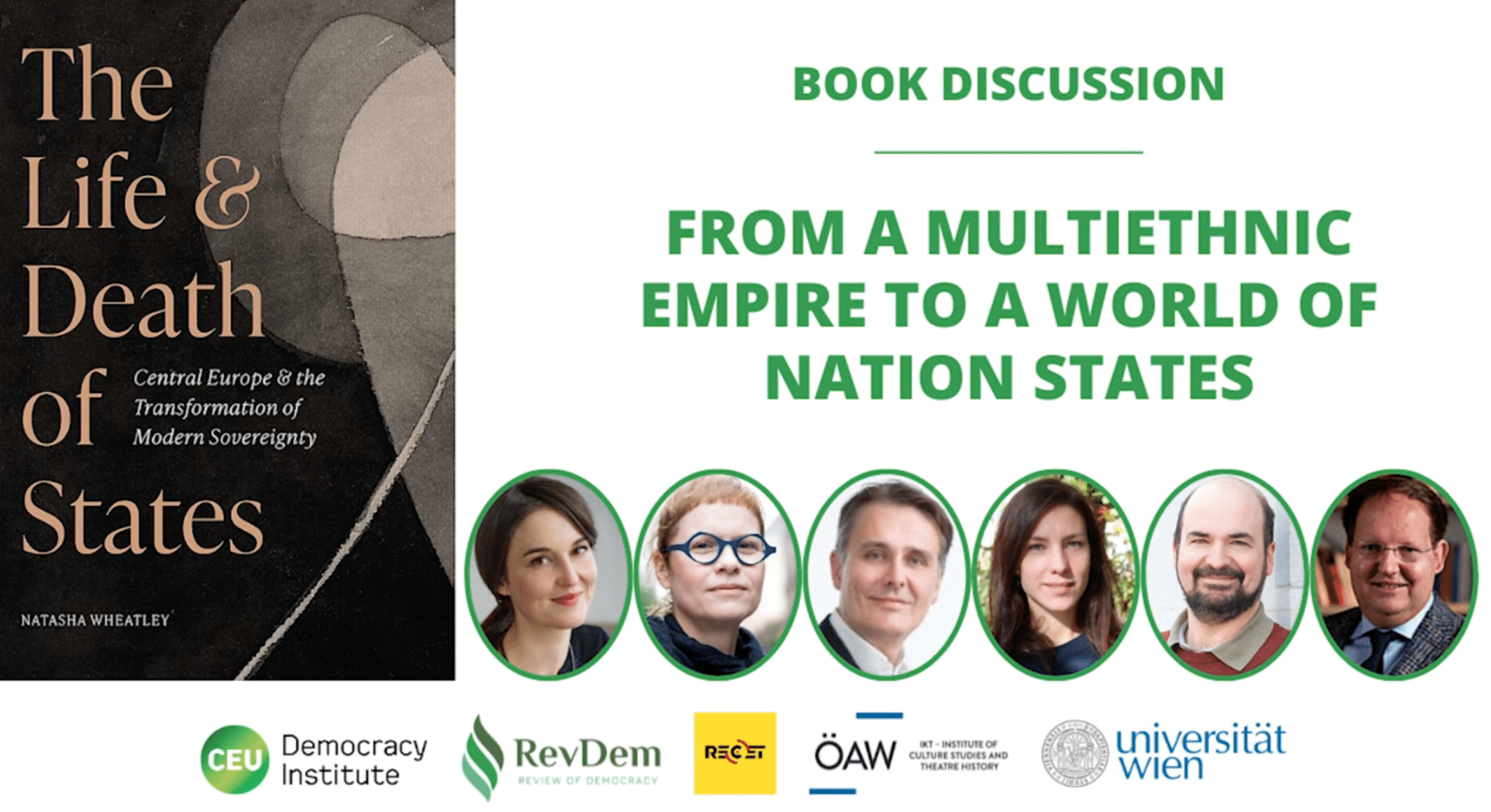
From a Multiethnic Empire to a World of Nation States
The CEU Democracy Institute’s journal, Review of Democracy, the Research Center for the History of Transformations (RECET), the Institute of Culture Studies and Theatre History at the Austrian Academy of Sciences (ÖAW/IKT) and the Department of European, International and Comparative Law at the Faculty of Law at the University of Vienna cordially organised a book discussion on Central Europe's function as a laboratory of our current world order based on Natasha Wheatley's bold and fascinating new book The Life and Death of States: Central Europe and the Transformation of Modern Sovereignty (Princeton University Press 2023)
13.09.2023
History of Ideas
Bloodless Murder: Stefano Bottoni on How the Orbán Regime Was Made and What Hungary Has Become
In this conversation with RevDem editor Ferenc Laczó, Stefano Bottoni – author of the new Hungarian-language book A hatalom megszállottja. Orbán Viktor Magyarországa (Obsessed with Power. Viktor Orbán’s Hungary) – discusses how the current political system has been built up in Hungary and which theories might help us analyse this process; reflects on the Orbán regime’s sources of legitimacy and internal contradictions; and explores the changing relationship of the country to the European Union and to Putin’s Russia.
6.09.2023

History of Ideas
The Freedom to Stay: Eva von Redecker on Positive Ecological Freedom and the Need for a New Temporal Literacy
In this conversation with RevDem editor Ferenc Laczó, Eva von Redecker – author of the new German-language book Bleibefreiheit (The Freedom to Stay) – shows what it means to think of freedom in terms of time rather than space; explains what implications it has that we are actually “born unfree but not alone”; reflects on the personal experiences and intellectual influences that inspired her; and sketches what the realization of positive ecological freedom might look like.
4.09.2023
History of Ideas
In Need of a Spiritual Renewal of Europe — Modern Counter-revolutionaries
In this conversation with RevDem editor, Kasia Krzyżanowska, Matthijs Lok answers these questions and more and discusses his newest book Europe Against Revolution: Conservatism, Enlightenment, and the Making of the Past (OUP 2023).
1.09.2023

History of Ideas
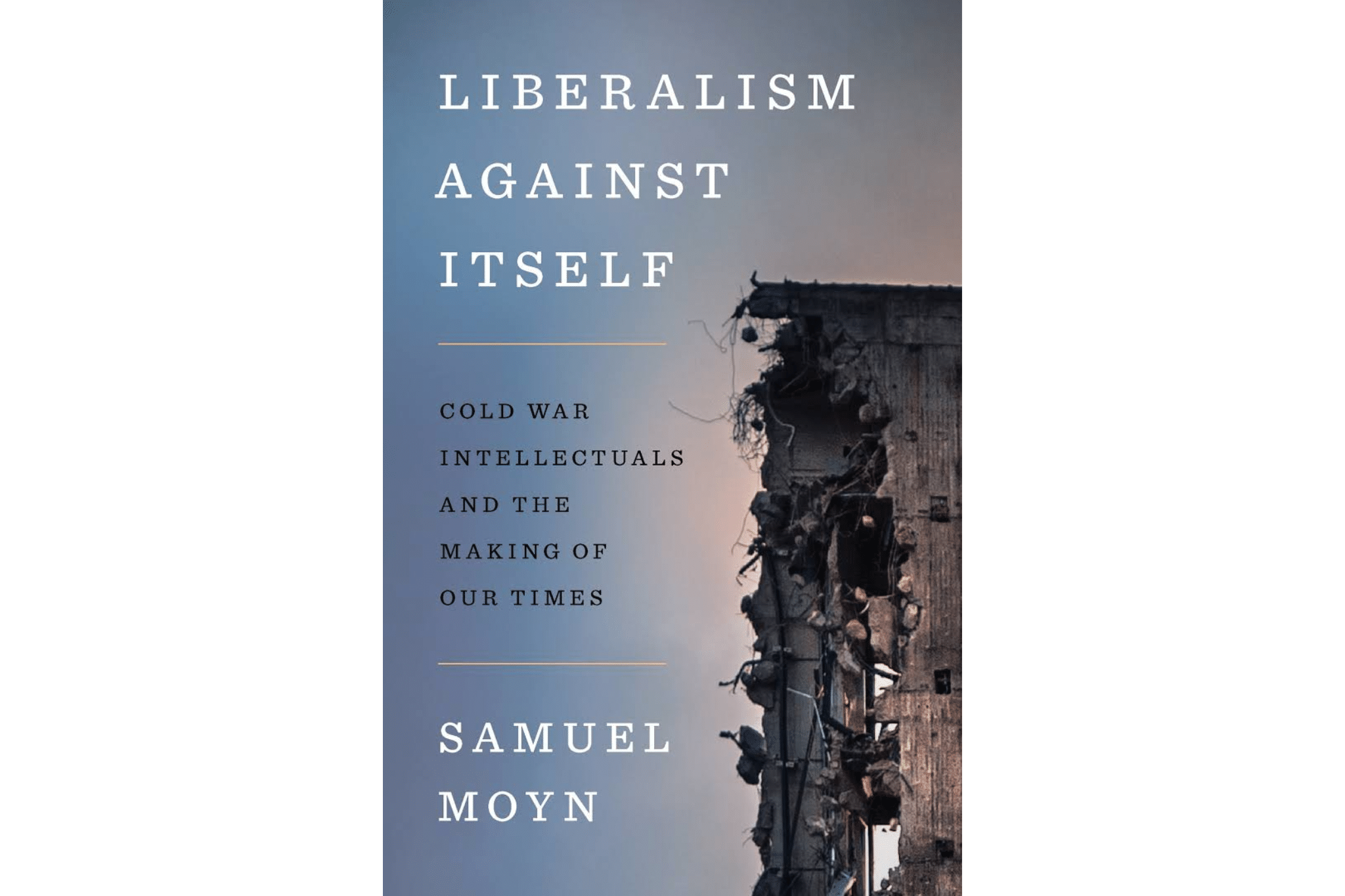
A Betrayal of Liberalism: Samuel Moyn on the Mistaken Path of Cold War Liberals
In this conversation with RevDem editor Ferenc Laczó, Samuel Moyn – author of the new book Liberalism Against Itself. Cold War Intellectuals and the Making of Our Times – discusses what motivated him to explore the Cold War liberal betrayal of previous liberal traditions; what their redefinition of the liberal canon and silences about crucial developments in their own lifetime may reveal about Cold War liberals; why the liberal establishment has failed to reexamine Cold War liberalism since 1989–91; and what would be minimally needed to make contemporary liberalism “credible enough for salvation.”
29.08.2023
History of Ideas
Negotiating Amidst Turmoil: Analyzing the Interplay of Dialogue and Conflict in Kosovo-Serbia Relations
In this conversation with assistant editor Lorena Drakula, Bodo Weber, a Senior Fellow at the Democratization Policy Council in Berlin, discusses the current situation, as well as the complex dynamics of the Kosovo-Serbia dialogue, unpacking its democratic implications, challenges, and opportunities.
22.07.2023

History of Ideas
Gregory Claeys on Utopianism and Democracy
In this public lecture, Gregory Claeys – Professor Emeritus of History – reviews the development of the anxious relationship between utopianism and democracy, touching on the fundamentally anti-political aspects of the utopian tradition, and the charge that the eternal search for near unanimity of opinion is fundamentally anti-democratic. The lecture examines the (mis)interpretation of utopia as "perfection", and the optimal role played by consent in utopian relationships. Finally, it asks whether we can achieve an environmental consensus in time to avert the catastrophic destruction of the planet, and what we can do in the absence of such a consensus.
21.07.2023

History of Ideas
“Neither Amnesia nor Nostalgia” Discussing the Non-Aligned Movement with Chiara Bonfiglioli, Agustín Cosovschi, and Paul Stubbs
In this conversation with RevDem contributor Una Blagojević, Paul Stubbs, Chiara Bonfiglioli, and Agustín Cosovschi discuss the different meanings of the Non-Aligned Movement and the need to rethink the “West–East–Non-Aligned” trajectories; approach Yugoslav foreign policy critically and explain why they attach such importance to imaginaries; show the importance of developing a “perspective from below” and analyze what a gendered perspective on the movement can yield; and reflect on possibilities of future research.
13.07.2023

History of Ideas
A Savage War of Russian Decline: Serhii Plokhy Discusses the Russo-Ukrainian War
In this conversation co-hosted by Marta Haiduchok (Visible Ukraine) and Ferenc Laczó (the Review of Democracy), Serhii Plokhy – author of the new book "The Russo-Ukrainian War" – discusses why Ukraine was so crucial to the Soviet collapse and how Ukraine and Russia diverged subsequently; explains what made Ukraine a focal point of competition in the post-Cold War decades and which factors enabled the current devastating war; dissects the origins of Russian imperialism and Russia’s current war aims; reflects on the state of Ukrainian Studies and suggests new questions concerning Ukrainian nationalism and Russian imperialism; elaborates on the stages of the unfolding war and the reasons behind Ukraine’s ability to fight back; and ponders what major geopolitical shifts the Russo-Ukrainian war might signal or reinforce.
30.06.2023

History of Ideas
Black Knight and Pied Piper. Silvio Berlusconi: Populist Pioneer or Symptom of Italy’s Crisis?
In this op-ed, Stefano Bottoni discusses Silvio Berlusconi's political legacy in Italy.
27.06.2023
History of Ideas
Germans and Genocide after the Holocaust. Andrew Port Discusses How Germans Have Responded to the Global History of Mass Atrocities
In this conversation with RevDem editor Ferenc Laczó, Andrew Port – author of the new book Never Again. Germans and Genocide after the Holocaust – describes and compares the German responses to mass atrocities in Cambodia, Bosnia, and Rwanda; explains which were the consensual and the most contested issues in German debates; discusses the “softer,” societal responses connected to German memory work and how these mass atrocities across the globe may have impacted the interpretations of Germany’s own past; and reflects on what might be most striking about the rather conflicted German response to Russia’s ongoing war of aggression against Ukraine.
21.06.2023

History of Ideas
How Europeans Live Now: Ben Judah on Capturing the Arc of Life in Our Time
In this conversation with RevDem editor Ferenc Laczó, Ben Judah – author of the new book This is Europe. How We Live Now – discusses what motivated him to tell stories on a continental scale, which authors and books have inspired him the most, and what has been his approach to narrating. He also reflects on key themes have emerged from his extensive travels and reportage and on what he sees as the most consequential new aspects of how Europeans live now.
14.06.2023

History of Ideas
The Art of Generous Critique: Adam Shatz on the Radical Imagination – and an Overdue Humbling
In this conversation with RevDem editor Ferenc Laczó, Adam Shatz – author of the new collection Writers and Missionaries: Essays on the Radical Imagination – discusses his approach to painting portraits of engaged intellectuals, clarifies his concept of “radical imagination,” reflects on how the history of Algeria has served as his prism, and explains why the predicament of Arab intellectuals may be much more similar to those in the West than is often assumed.
12.06.2023

History of Ideas
Nested Stories of Persecution: Ari Joskowicz Discusses the Asymmetrical Entanglements of Jews and Roma in History and Memory
In this conversation with RevDem editor Ferenc Laczó, Ari Joskowicz – author of the new book Rain of Ash: Roma, Jews, and the Holocaust – discusses the ways Jewish and Romani histories have been entangled and what motivated him to write a relational history of the two groups; illuminates why he considers it essential to explore the conditions of knowledge production and how to try to avoid reproducing injustices; shows what it has implied in concrete setting that the stories of persecution of one group of people have been nested within those of another; and reflects on what has truly changed in memory culture and what new dialogues could be pursued in the future.
5.06.2023

History of Ideas
The Curse of the Margin? Central Europe before and after Communism
In conversation with RevDem assistant editor Lucie Hunter, Dr. Aliaksei Kazharski discusses his newest book Central Europe Thirty Years after the Fall of Communism: A Return to the Margin? (Rowman & Littlefield, 2022, 2022).
26.05.2023

History of Ideas
Danielle Allen on Power-Sharing Liberalism
In this conversation with RevDem editor Ferenc Laczó, Danielle Allen – author of the new book "Justice by Means of Democracy" – discusses her proposal of a power-sharing liberalism and explains why she calls herself a “eudaemonist democratic pragmatist”; shows why it is essential to foster a connected society and measure that society by the principle of “difference without domination”; reflects on what a paradigm change in political economy could look like and which model of citizenship would be most suitable for our times.
24.05.2023

History of Ideas
The Curse of Russian Imperialism: Martin Schulze Wessel on Imperial Optics, False Dichotomies, and the Need to Reconsider East European History
In this conversation with RevDem editor Ferenc Laczó, Martin Schulze Wessel – author of the new book Der Fluch des Imperiums. Die Ukraine, Polen und der Irrweg in der Russischen Geschichte (Imperial Curse. Ukraine, Poland, and the False Paths in Russian History) – traces the ideas that have shaped Russian imperialism and reflects on their devastating contemporary force; explores key moments in the parallel and entangled histories of Poland and Ukraine and how those histories have been shaped by Russian imperialism across the centuries; dissects what he calls Germany’s “imperialism of a second order” and emphasizes the urgent need to revise Russia-centric interpretations of East European history.
20.05.2023

History of Ideas
Can the Center Hold? Thomas Biebricher on the International Crisis of Conservatism
In this conversation with RevDem editor Ferenc Laczó, Thomas Biebricher – author of the new book "Mitte/Rechts: Die international Krise des Konservatismus" (Center/Right: The International Crisis of Conservatism) – discusses conservatism’s various types and how each relates to the political center and to authoritarianism; illuminates the contemporary crisis of the center right in three major European countries; explains what has driven the culturalization of politics and the redrawing of enemy images, and why the authoritarian right has been a prime beneficiary of those trends; and reflects on how his approach and special emphases relate and add to other contributions to the ongoing debate on the present state and future prospects of liberal democracy.
18.05.2023

History of Ideas
A Paranational World — Naturalization, Fiction and Edges of Nationality
In conversation with RevDem editor Kasia Krzyżanowska, Dr. Stephanie DeGooyer discusses her recent publication Before Borders: A Legal and Literary History of Naturalization (Johns Hopkins University Press, 2022).
15.05.2023

History of Ideas
The Colonial Origins of Modern Social Thought: George Steinmetz on French Sociology and the Overseas Empire
In this conversation with RevDem editor Ferenc Laczó, George Steinmetz – author of the major new monograph "The Colonial Origins of Modern Social Thought. French Sociology and the Overseas Empire" – sketches the manifold entanglements of French sociology with the French Empire and colonialism; discusses the key ideas and innovations that have emerged in this context; dissects how indigenous scholars fared within the vast network of French institutions over time; illuminates his own approach to intellectual history he calls a historical socio-analysis of the social sciences; and reflect on how contemporary agendas of decolonization could be made more convincing and fruitful, not least by drawing on what French sociologists of colonialism have “partially and tentatively foreseen.”
11.05.2023

History of Ideas
Thailand’s Conscription: A Threat to Democracy and Freedom
Thailand is about to hold a general election in May 2023. Several progressive political parties are proposing to pass an act to abolish conscription. But the military, which has always meddled with Thai politics, has indicated it will block any efforts in this direction.
8.05.2023

History of Ideas
Navigating Hierarchies and Balkanist Discourses in Europeanization: A Conversation with Vjosa Musliu
In this conversation with assistant editor Lorena Drakula, Vjosa Musliu discusses her book "Europeanization and State Building as Everyday Practices. Performing Europe in the Western Balkans" (Routledge, 2021). The conversation critically examines mechanisms of Europeanization, discourses surrounding international interventions, and the processes of EU enlargement to the Western Balkans.
28.04.2023

History of Ideas
Clara Mattei: Why is austerity so persistent in spite of its incapacity to achieve economic growth and balanced budgets?
In this interview with RevDem assistant editor Giancarlo Grignaschi, Clara Mattei – Assistant Professor in the Economics Department of The New School for Social Research – talks about her new book "The Capital Order: How Economists Invented Austerity and Paved the Way to Fascism" (University of Chicago Press, 2022). The manuscript explores the historical origins of austerity and its intellectual underpinnings in interwar Britain and Italy. During this interview, the author presents the main arguments of the book, the comparison between the two countries, the role of politics and the decline in electoral participation, the relationship between austerity and populism, and the recent problem of rising inflation.
27.04.2023

History of Ideas
A World Without Democracy: Quinn Slobodian on jurisdictional cracks and the crackpots who made capitalism as we know it
In this conversation with Ferenc Laczó and Vera Scepanovic, Quinn Slobodian – author of the new book "Crack-Up Capitalism: Market Radicals and the Dream of a World Without Democracy" – discusses the unusual legal spaces and peculiar jurisdictions that have multiplied in recent decades and the libertarian ideas that propelled their rise; dissects the relationship of such zones to existing states and their sovereignty; shows how legal unevenness of contemporary globalization relates to earlier forms of imperial and colonial rule; and reflects on the more normative elements of his critique and on the future of the zones in an age of ‘de-globalization.’
25.04.2023

History of Ideas
Be Realistic, Demand Significant Change! Daniel Chandler on What a Progressive Liberal Society of the Future Could Look Like
In this conversation with RevDem editor Ferenc Laczó, Daniel Chandler – author of the new book "Free and Equal: What Would a Fair Society Look Like?" – discusses key principles that a better and fairer society could be based on; shows what makes John Rawls’ ideas so exceptionally relevant today and how they could help improve the democratic process; explains how placing questions of power, control, dignity, and self-respect at the center of liberal economic thinking would foster new economic arrangements; and discusses where egalitarian liberalism has already been practiced and with what consequences.
22.04.2023

History of Ideas
Playing Hardball: Political-Ethical Challenges of Illiberal Regimes
In this conversation with Kasia Krzyżanowska, Zoltán Gábor Szűcs discusses his newest book Political ethics in illiberal regimes. A realist interpretation.
17.04.2023

History of Ideas
No Justin, No Martin, No Peace
Representative Pearson is part of this tradition of American political protest – a tradition that conservative conceptions of civility and peaceful protest mischaracterize and aim to delegitimize; a tradition against which Tennessee Republicans and Obama fundamentally stand, despite appearances. There’s no peace, Representative Pearson reminds us, without confrontation.
16.04.2023

History of Ideas
Permanent Negotiation: Balázs Trencsényi on how new projects at the CEU Democracy Institute relink knowledge production, education, and civic engagement
Delving into the research conducted at the Democracy in History group of the CEU Democracy Institute and ongoing initiatives such as the Invisible University for Ukraine and the Academics Facing Autocracy Program with Lucija Balikić, Trencsényi provides historically informed insights into the modalities of relinking these structures and offers inspiring reflections on their potential for strengthening democratic societies across the globe.
13.04.2023

History of Ideas
The Challenges of Public History Under Illiberal Rule: Gábor Gyáni Launches the Jenő Szűcs Lecture Series
On February 21, 2023, the Democracy in History workgroup of the CEU Democracy Institute launched its Jenő Szűcs Series. The first public lecture in the series was delivered by Gábor Gyáni under the title “Telling the Truth (or Not?) About History. Dilemmas of Public History.” As emphasized by co-organizer Gábor Klaniczay in his opening remarks, the ongoing lecture series honours, adopts and develops the critical approach of the late Hungarian historian Jenő Szűcs regarding the ideologically defined viewpoint of authoritarian states on history and society.
5.04.2023

History of Ideas
Rule of law and the structural inequalities of the European project: Europe and its dissenting peripheries
In this op-ed by Peter Agha, PhD, he argues for a different analysis of the current trouble with Europe, one which starts from the recognition of the irregularity of the rule of law policies and highlights how the clashes between the populist movements and the rule of law doctrine reflect the structural inequalities of the European project. This important aspect is often neglected because of the way we currently frame the discussions – as “the rule of law crisis”. As a result of this, our debates focus on juridical arrangements, whereas the distributional consequences of the EU and the role the legal structure plays in its maintenance remain (almost) invisible.
31.03.2023

History of Ideas
Listening for Silences: Michael Freeden on the Role of Silence in Political Thinking
In this conversation with RevDem assistant editor Lorena Drakula, Michael Freeden – leading political theorist and author of the new book Concealed Silences and Inaudible Voices in Political Thinking – discusses the various forms of political silences; the problems of superimposing and inventing voices; the effects of the unnoticeable and the unknowable in political thinking, with the aim of understanding the complex and often hidden aspects of silence that shape our political beliefs and actions.
29.03.2023

History of Ideas
The Greatest Hits — Populist Edition. In conversation with Johannes Voelz
In this conversation with Kasia Krzyżanowska, Johannes Voelz discusses his theory of the aesthetics of populism, explains how Pierre Bourdieu and Norbert Elias can help us understand contemporary populism, elaborates on the concept of a (Trump) rally, talks about the culture of a dichotomized world, and shares his insights on the role of culture in helping to ease the deep political conflicts.
20.03.2023

History of Ideas
Orbán as Ideologue
In this post by Zsolt Enyedi, Senior Research Fellow at the CEU Democracy Institute, he argues that Orbán's regime "advantages a well-defined set of values through the allocation of resources and its signatory policies are based on a coherent set of ideas."
17.03.2023

History of Ideas
Aakar Patel on His New Toolkit to Protest and Peaceful Resistance
In this conversation with RevDem editor Ferenc Laczó, Aakar Patel – author of "The Anarchist Cookbook. A Toolkit to Protest and Peaceful Resistance" – discusses why he considers dissent essential to improving society; what lessons we can draw from successful recent examples of protest; which options activists have to amplify and maximize their efforts; and how egregious laws on the book, practices of denying rights, and the extreme disparities of Indian society have shaped activists’ possibilities and agenda.
13.03.2023
History of Ideas
Reacting to Globalization’s Discontents: Tara Zahra on Anti-Globalism and Mass Politics
In this conversation with RevDem editor Ferenc Laczó, Tara Zahra – author of the new monograph "Against the World: Anti-Globalism and Mass Politics Between the World Wars" – discusses the common features of anti-globalist agendas between the 1910s and the 1930s; explains what the main phases of anti-globalism looked like and how its various forms related to globalization; shows why centering women – as key actors as well as objects – and focusing on Central Europe amount to fruitful approaches; reflects on the long-term consequences of interwar anti-globalism – and how our present predicament may help us reconsider this history.
9.03.2023

History of Ideas
Conscious European, Critic of Hubris: Timothy Garton Ash’s Personal History of Contemporary Europe
Ferenc Laczó reviews "Homelands", Timothy Garton Ash’s personal account and interpretation of contemporary Europe, a history book illustrated by memoir. A “post-68er” who is equally accomplished as a historian and as a journalist, and a highly reputed member of the British and European liberal establishments, Garton Ash proceeds chronologically on the book’s pages to cover “the overlapping timeframes of post-war and post-Wall.”
1.03.2023

History of Ideas
Merchant of Ideas: Jerry Z. Muller on Jacob Taubes
In the conversation with Vilius Kubekas, Jerry Z. Muller discusses the life of German Jewish intellectual Jacob Taubes.
25.02.2023

History of Ideas
Why is the Russian bureaucracy failing in the face of war?
Vladimir Dubrovskiy, senior economist at CASE Ukraine, explores why the Russian state, which is based on the principle of "vertical power", appears to be inept in the face of war.
24.02.2023

History of Ideas
Dóra Piroska on Financial Nationalism
RevDem assistant editor Giancarlo Grignaschi in conversation with Dóra Piroska, assistant professor at CEU in Vienna at the department of International Relations, about her chapter on financial nationalism in the Elgar Handbook of Economic Nationalism, edited by Andreas Pickel.
16.02.2023

History of Ideas
Democracy First: Shadi Hamid on Why and How to Support Democratic Change
In this conversation with RevDem editor Ferenc Laczó, Shadi Hamid – author of the new book "The Problem of Democracy: America, the Middle East, and the Rise and Fall of an Idea" – addresses democratic dilemmas that cannot be wished away; explains how he distinguishes between liberalism and democracy and why he proposes a democracy-first strategy; assesses the democratic record of Islamist political movements and parties; and discusses how the US could use its leverage in the Middle East to support or even foster democratic change.
13.02.2023
History of Ideas
Fantasy and Trauma: Dan Stone on Writing the History of the Holocaust
In this conversation with RevDem editor Ferenc Laczó, Dan Stone – author of the new book The Holocaust: An Unfinished History – discusses various ways the history of the Holocaust has been misunderstood; addresses the challenges of narrating the Holocaust and clarifies his own interpretative framework; sketches the European dimension of the genocide and how German and non-German perpetrators interacted to execute it; and reflects on how perspectives on the Holocaust have changed over time and what studying it meant in the current moment.
6.02.2023

History of Ideas
Taming the Anthropocene: Zoltán Boldizsár Simon and Lars Deile on a New Era of Historical Understanding
In this conversation, our guest contributor Alexandra Medzibrodszky talks with Zoltán Boldizsár Simon and Lars Deile, the co-editors of the recently published volume "Historical Understanding: Past, Present, and Future" (Bloomsbury Academic, 2022). The conversation focuses on the theory of history, reflecting on our changing perceptions of historical time; the relationship between the past, present, and future; the concept of the Anthropocene and its importance for historians; as well as on the legacy of Reinhart Koselleck and the extent to which he remains significant to contemporary debates on the theory of history.
3.02.2023

History of Ideas
Dictionary of Received Ideas (About Fascism)
Engaging with the difficult task of deconstructing firmly rooted myths, Corner’s main goal is to answer two questions: (1) How far does the affirmation of “many good things” done by Fascism corresponds to the historical reality?; and (2) Why do so many people today share a “permissive memory” of Fascism?
19.01.2023

History of Ideas
Beverly Gage on J. Edgar Hoover and the American Century
In this conversation with RevDem editor Ferenc Laczó, Beverly Gage – author of the new biography "G-Man. J. Edgar Hoover and the Making of the American Century" – discusses how Hoover built and shaped the FBI and what made him enjoy such an exceptional and long-lasting career; dissects his contradictions, reflecting on the sources of his popularity and why his reputation got so badly damaged; and explains what original sources and innovative scholarship a new biography of him can utilize and what placing him at the center of the American Century can teach us.
13.01.2023

History of Ideas
5 Key 2022 Books: Ideas
Ferenc Laczó, editor of the History of Ideas section at the Review of Democracy, presents five key Ideas books in 2022.
20.12.2022
History of Ideas
Westernization by Preemptive Rejection: How Viktor Orbán Sells to U.S. Conservatives Their Own Obsessions
In this op-ed, Ferenc Laczó explores how Hungarian Prime Minister Viktor Orbán's regime "has been succeeding to a remarkable degree at translating key aspects of Hungarian ethnic nationalism into a wider panic about the future of Western civilization."
7.12.2022
History of Ideas
How the Necessary Cold War Ended – and Why an Unnecessary One Followed It: Archie Brown on the Political and the Personal in the Relationship Between the West and the Soviet Union/Russia
In this conversation with RevDem assistant editor Iker Itoiz Ciáurriz, Archie Brown – author of the recently released book "The Human Factor. Gorbachev, Reagan, and Thatcher, and the End of the Cold War" – explains why he approaches the end of the Cold War through the study of political leaders; explores the different personal formations and the varying relationships between his three main protagonists before and after 1985; elaborates on his views on when and how the Cold War ended; and elucidates why the relationship between Russia and the West has deteriorated in the post-Cold War decades.
5.12.2022

History of Ideas
Emancipating Jews from Narratives of Victimhood and Redemption: Susan Neiman Discusses Germany’s Current Memory Culture
In this conversation with RevDem editor Ferenc Laczó, Susan Neiman dissects what has made the articulation of universalistic Jewish commitments increasingly difficult in the German public sphere; explores why debates concerning global colonialism and the Nazi-colonial connection tend to be so fraught in the country; explains what post-colonial criticisms misunderstand about the intellectual heritage of the Enlightenment; and shows how both ignorance regarding Eastern Europe and social solidarity with the victims have shaped German responses to the ongoing Russian war of aggression against Ukraine.
2.12.2022

History of Ideas
How 2000 people made an impact at a time when society was silent: András Bozóki on the rolling transition of Hungary
In this discussion, RevDem Managing Editor Michał Matlak discusses with András Bozóki about his last book, "Rolling Transition and the Role of Intellectuals: Case of Hungary", published this year by Central European University Press, which tells a compelling story of the role of intellectuals in political and social change that took place in Hungary between 1977-1994.
29.11.2022

History of Ideas
Liberalism Hasn’t Provided Adequate Answers to Today’s Major Crises: Luke Savage on Contemporary Liberalism and Its Democratic Socialist Critique
In this conversation with RevDem editor Ferenc Laczó, Luke Savage – author of "The Dead Center. Reflections on Liberalism and Democracy After the End of History" – discusses key aspects of his critique of contemporary liberalism; reflects on the role of generational experiences in shaping the search for a political alternative; offers a detailed assessment of Joe Biden’s ongoing presidency; and ponders whether democratic socialists have managed to challenge the hegemony of liberal ways of thinking and transform the political conversation.
23.11.2022

History of Ideas
Why film matters: Oksana Sarkisova on the importance of documenting society
In this conversation with RevDem assistant editor Lucie Hunter, Oksana Sarkisova – Blinken OSA Research Fellow and the Director of Verzió International Human Rights Documentary Film Festival – discusses the role of filmmaking in today’s society; how festivals are reacting to contemporary global conflicts and challenges; the importance of safekeeping visual archives; and how micro-histories help us understand the wider context.
8.11.2022

History of Ideas
Why Do Autocracies Last? Lucan Way on the Longevity of Revolutionary Regimes
In this conversation with RevDem editor Ferenc Laczó, Lucan Way – co-author, with Steven Levitsky, of the new book "Revolution and Dictatorship: The Violent Origins of Durable Authoritarianism" – introduces what revolutionary autocracies are; explains why they tend to prove much more durable than other kinds of authoritarian regimes; discusses how the revolutionary sequences so crucial for the emergence of such regimes have played out in the various cases across the globe; and reflects on the contemporary relevance of the book’s findings concerning autocratic longevity.
3.11.2022

History of Ideas
The Trouble with Fortune: Zsuzsanna Szelényi on Hungary’s Tainted Democracy
In this conversation with RevDem editor Ferenc Laczó, Zsuzsanna Szelényi – author of the new book "Tainted Democracy. Viktor Orbán and the Subversion of Hungary" – analyzes the main characteristics of the Orbán regime and the techniques Hungary’s current rulers have employed to establish their dominance over the country’s economy; reflects on the dilemmas and strategies of the Hungarian opposition; examines the role of gendered practices in Hungarian politics; and discusses the reasons behind the sharp democratic reversal and decline of the early 21st century.
29.10.2022

History of Ideas
Why Waste Our Data in Online Malls? Ben Tarnoff on Democratizing the Internet
In this conversation with RevDem editor Ferenc Laczó, Ben Tarnoff – author of the new book "Internet for the People. The Fight for Our Digital Future" – discusses how the internet was created and how it has been privatized; how its current version fuels inequality and the rise of the political Right; why finding the right metaphors is crucial; and why the ongoing anti-monopoly push is not enough.
26.10.2022

History of Ideas
Democracy as a Way of Facing Obstacles: Lilia Moritz Schwarcz on Brazilian Authoritarianism and the Unfinished Project of Full Citizenship
In this conversation with RevDem editor Ferenc Laczó, Lilia Moritz Schwarcz – author of the book "Brazilian Authoritarianism" – contrasts mythological and critical-realistic versions of Brazilian history; discusses the main facets of authoritarianism in the country; compares the Bolsonaro phenomenon with the Trump one; and elaborates on her vision of democracy and full citizenship.
21.10.2022

History of Ideas
Building Majorities is the Essence of Democracy: Timothy Shenk on His New Biography of American Democracy
In this conversation with RevDem editor Ferenc Laczó, Timothy Shenk – author of "Realigners: Partisan Hacks, Political Visionaries, and the Struggle to Rule American Democracy" – discusses what motivated him to explore the making of majorities and key members of the democratic elite who made those majorities; how the strongest and strangest coalition in American history – the New Deal majority – was assembled; what a study of the parallel maturation of the civil rights revolution and the liberal establishment may reveal about the making and unmaking of that coalition; and why it has become so difficult to sustain majorities today.
18.10.2022

History of Ideas
Is There Something We Can Salvage of Universalism? Till van Rahden on Conceptual History and Liberal Democracy
In this conversation with RevDem editor Ferenc Laczó, Till van Rahden discusses his last book "Vielheit. Jüdische Geschichte und die Ambivalenzen des Universalismus" (Multitude. Jewish History and the Ambivalences of Universalism)
8.10.2022

History of Ideas
How to Best Manage the Unfolding Crisis of Everything: Gaia Vince on Key Implications of the Climate Crisis
In conversation with RevDem editor Ferenc Laczó, Gaia Vince – author of the new book "Nomad Century: How to Survive the Climate Upheaval" – sketches the transformations climate change and the accompanying rise in global average temperature are likely to bring in the coming decades; reflects on the most promising innovations when it comes to mitigating temperature rise and moving towards a circular economy; discusses ways to plan for lawful and safe mass migration at a time when large parts of the Earth are becoming uninhabitable; and addresses the key political questions of how to set the right priorities at the global level and how to act to enforce them.
6.10.2022

History of Ideas
A Path to Democracy Without Destabilization: Joseph Wong Explains the Types of Development and the Patterns of Uneven Democratization in Modern Asia
In this conversation with RevDem editor Ferenc Laczó, Joseph Wong – co-author with Dan Slater of the new monograph "From Development to Democracy. The Transformations of Modern Asia" – discusses when and why regimes have chosen to democratize in modern Asia; how come types rather than levels of development have shaped countries' democratic prospects; why Singapore and China remain significantly less democratic than one might expect; and how studying the patterns of modern Asia can help us rethink democracy promotion today.
4.10.2022

History of Ideas
Down-to-Earth Machines of Exploitation. Andreas Eckert on Colonialism, Slavery, and Current Debates
In this conversation with Norman Aselmeyer, Andreas Eckert – author of German-language overviews of the history of colonialism and of slavery – presents his approach to the history of colonialism.
24.09.2022

History of Ideas
Ambiguous Tests of Loyalty: Franziska Exeler about the Second World War and its Long Shadow in Belarus
In this extended conversation with RevDem editor Ferenc Laczó, Franziska Exeler – author of the new monograph "Ghosts of War: Nazi Occupation and Its Aftermath in Soviet Belarus" – discusses the extremely violent history of Belarus during the Second World War; analyses the various choices people made under the dire constrains of the Nazi German occupation and the challenges of drawing on Soviet sources to analyze those choices; zooms in on the issue of Soviet retribution and its ambiguities; and reflects on how the partisan experience and narrative has continued to shape the country.
21.09.2022

History of Ideas
In conversation with Francis Fukuyama: “Russia would not have invaded Ukraine if it had been a democracy”
In this interview with Francis Fukuyama, hosted by Laetitia Strauch-Bonart (Editor of the Ideas section in the French weekly L’Express) and Michał Matlak (RevDem Managing Editor), they discuss his latest book, the status of liberal and illiberal democracies in the world today, how this relates to Russia, China, and the US, the threats to American democracy today, and more.
19.09.2022

History of Ideas
What Does Right-Wing Anti-Gender Mobilization Have to Do with Progressive Gender Trends? Eszter Kováts Investigates the Politics of Fidesz and AfD
In this conversation with RevDem editor Ferenc Laczó, Eszter Kováts discusses the conclusions she has drawn from her comparison of the discourse coalitions around AfD in Germany and Fidesz in Hungary.
17.09.2022

History of Ideas
A turning point of democracy?
To mark the International Day of Democracy, we present an op-ed by Wolfgang Merkel examining the state of democracy around the world.
15.09.2022

History of Ideas
How Socialism Went Global – and Why It Withdrew. An Alternative Global History
RevDem editor Ferenc Laczó interviews three authors of the new collective monograph "Socialism Goes Global. The Soviet Union and Eastern Europe in the Age of Decolonization", Péter Apor, James Mark and Steffi Marung.
12.09.2022

History of Ideas
Democracies Proved More Successful at Breaking Promises. Fritz Bartel on the End of the Cold War and the Rise of Neoliberalism
RevDem section heads Vera Scepanovic and Ferenc Laczó talk with Fritz Bartel, author of "Triumph of Broken Promises. The End of the Cold War and the Rise of Neoliberalism".
8.09.2022

History of Ideas
A Crafted Gem: Giuseppe Martinico reviews ‘Anti-Constitutional Populism’
A review by Giuseppe Martinico of a book Anti-Constitutional Populism edited by M, Krygier, A. Czarnota, W. Sadurski (Cambridge University Press 2022)
6.09.2022

History of Ideas
It is a mistake to see the Eastern vision as undemocratic. Peter Verovšek on European memory
In this conversation with RevDem editor Kasia Krzyżanowska, Peter Verovšek — author of “Memory and the future of Europe. Rupture and integration in the wake of total war” — discusses the importance of foundational stories for communities; explains the influence of personal experience on the European integration; shows differences in remembering the past in West and East Europe and ponders on the consequences of Russian aggression on Ukraine for the European memory.
3.09.2022

History of Ideas
Repairing the Damage to Our Ethical Categories. A Conversation with Charlotte Wiedemann
In this conversation with RevDem editor Ferenc Laczó, Charlotte Wiedemann – author of the just released German-language volume Den Schmerz der Anderen begreifen. Holocaust und Weltgedächtnis (To Grasp the Pain of Others. Holocaust and Global Remembrance).
1.09.2022

History of Ideas
Rehabilitating the Principle of Hope in Modern History. Enzo Traverso on Revolutions
In conversation with Una Blagojević and Iker Itoiz Ciaurriz, Enzo Traverso discusses key themes in his newest book Revolution: An Intellectual History (Verso, 2021).
30.08.2022

History of Ideas
War in Ukraine: 10 essential readings and interviews
On the occasion of Ukraine's Independence Day, we present key texts and interviews on the Russian invasion and its aftermath
24.08.2022

History of Ideas
“Post-War Christian Democracy Was Relatively Short-Lived” Fabio Wolkenstein on the Dark Side of Christian Democratic History and Politics
In this conversation with Ferenc Laczó, Fabio Wolkenstein – author of the new book Die dunkle Seite der Christdemokratie. Geschichte einer autoritaeren Versuchung (The Dark Side of Christian Democracy. The History of an Authoritarian Temptation) – sketches the broad variety of Christian politics across modern Europe.
7.07.2022

History of Ideas
“War is for the Weak”: Stella Ghervas on the European Divorce between Peace and Empire
RevDem Editor Ferenc Laczó reviews Stella Ghervas’ major new monograph Conquering "Peace. From the Enlightenment to the European Union," a stylishly written, often stimulating, if slightly unusual scholarly monograph. Inspired, among others, by Robert de Traz’s 1936 book De l'alliance des rois à la ligue des peuples, Sainte-Alliance et SDN (From the Alliance of Kings to the League of Nations: The Holy Alliance and the League of Nations), Ghervas has penned what she calls “a theatrical dialogue in five acts that portrays Europe’s resistance to empires while trying to keep free of armed conflicts” (p.3).
1.07.2022

History of Ideas
Beyond the “mafia-state”: a comprehensive and innovative approach to post-communist regimes
Gábor Illés, Research Fellow at the Department for Democracy and Political Theory of the Hungarian Academy of Sciences Centre of Excellence, reviews "The Anatomy of Post-Communist Regimes: A conceptual framework" (CEU Press, 2021) by Bálint Magyar and Bálint Madlovics.
24.06.2022

History of Ideas
Democracy Depends on Those Who Are Harder to Fool: Daniel Treisman on the Changing Face of Dictatorship
In this conversation with RevDem editor Ferenc Laczó, Daniel Treisman – co-author, with Sergei Guriev, of "Spin Dictators: The Changing Face of Tyranny in the 21st Century" – discusses how ‘spin dictatorships’ differ from ‘fear dictatorships’; why such a new form of dictatorship has emerged and spread in recent decades; what might explain the at times notable popularity of such regimes and whether they are likely to represent the wave of the future; and why an informed citizenry should be seen as crucial to the defense of liberal democracy.
22.06.2022

History of Ideas
A Global History of Hungary: In Conversation with Ferenc Laczó, Bálint Varga, and Dóra Vargha
In this conversation with Bence Bari and Orsolya Sudár, editors Ferenc Laczó and Bálint Varga and contributor Dóra Vargha discuss the new volume "Magyarország globális története, 1869-2022 (A Global History of Hungary, 1869-2022)". The conversation focuses on some of the innovative questions posed by trying to reconceptualize the history of a Central and Eastern European country in a global frame; how the subjects of the volume’s one hundred chapters have been selected; the relation of this new book to other narratives of Hungarian history; and the more political stakes of releasing such a publication today.
20.06.2022

History of Ideas
Free Speech, Equality, and Tolerance Are Mutually Reinforcing: A Conversation with Jacob Mchangama
In this conversation with RevDem editor Ferenc Laczó, Jacob Mchangama discusses central ideas of his new monograph "Free Speech: A Global History from Socrates to Social Media". The conversation reflects on how to write a global history of this subject; contrasts egalitarian and elitist conceptions of free speech; explores facets of the free speech recession experienced in the early 21st century; and explains why the counterintuitive principle of free speech should be seen as essential.
17.06.2022

History of Ideas
Davide Rodogno on the Troubled History of Western Humanitarianism
In this conversation with guest contributor Nikola Pantić, Davide Rodogno discusses his new book Night on Earth: A History of International Humanitarianism in the Near East, 1918-1930 (Cambridge University Press, 2021). The conversation focuses on the reasons why the Middle East became a popular destination for Western humanitarian agencies in the first decades of the twentieth century, how these agencies operated among the local populations, what role religion played in these missions, and the ways in which the writing of history can give some agency to those whose voices have been omitted in the archives of these humanitarian institutions.
9.06.2022

History of Ideas
How to Avoid Further Escalation? A Conversation with Wolfgang Merkel on the Scholz Government and German Foreign Policy Today
In this conversation with RevDem editor Ferenc Laczó, Wolfgang Merkel talks about German foreign policy, describes key decisions and non-decisions of the new German government and reflects on the reasons that led him to sign the Open Letter to Chancellor Scholz.
8.06.2022
History of Ideas
The ‘New Europe’ Campaign: The Failure of Liberal Internationalism and the Resilience of Imperialism
Historians of the Habsburg Empire and the First World War analyze the fascinating story of Robert William Seton-Watson's propaganda for the dissolution of the Austro-Hungarian Empire and the creation of a 'New Europe.' They historicize ideas concerning the 'balance of power', European integration, anti-imperialist liberal internationalism, and the making of the post-Habsburg nation-states in Central Europe. The panel argues that while Seton-Watson's campaign was progressive in its ambition to reconcile ethnic diversity and democracy, it was also rooted in a primordial view of nationhood.
2.06.2022

History of Ideas
In Conversation with Eva Fodor: How the Carefare Gender Regime Shapes Hungary
RevDem Editor László Bence Bari in conversation with Éva Fodor, Professor at the Gender Studies and Pro-Rector of the Central European University about her latest book “The Gender Regime of Anti-Liberal Hungary”. In this book, she argues that the anti-liberal government of Hungary has established a specific kind of gender regime, the ’carefare’ policy which allows the government to stabilize and expand its rule over society and to support its ideological and political goals.
30.05.2022

History of Ideas
Brazilian Intellectuals and the French Social Sciences: Ian Merkel on Writing Anti-Diffusionist Intellectual History
In this conversation with RevDem editor Ferenc Laczó, Ian Merkel discusses why Brazil in the 1930s offered such a precious opportunity to innovate in the social sciences; shows the ways in which Brazilians were crucial interlocutors for French social scientists; explores how the terms of exchange between French and Brazilian scholars evolved over time; and reflects on the broader implications of these fascinating encounters for the writing of global intellectual history.
27.05.2022

History of Ideas
Change of framing and the need for peace in Ukraine: A reply to Szulecki and Wig
Responding to critiques of their op-ed on why the war in Ukraine should not be discussed using the "democracy vs. autocracy" framework, authors Irina Domurath and Stefano Palestini further develop why orienting the discussion around Russia's abuse of international law could draw more international support and avoid escalation into a Third World War.
25.05.2022

History of Ideas
The First Revolution Born in Oxford: Simon Kuper on the Tory Elite’s “Betrayal by Mistake”
In conversation with RevDem editor Ferenc Laczó, Simon Kuper – author of the new book "Chums: How a Tiny Caste of Oxford Tories Took Over the UK" – discusses why Oxford University was so crucial to the formation of the current Tory elite; how this highly influential generational cohort of Tories may be placed into the long continuum of British history and what might make it rather distinct; and which ideas and concerns shaped their attitude and relationship to the EU on the path to Brexit.
22.05.2022

History of Ideas
Chamstwo. A Story of the Polish Serfdom: in conversation with Kacper Pobłocki
In a conversation with our editor Kasia Krzyżanowska, Kacper Pobłocki discusses his recent book Chamstwo and reflects on how Polish society was historically based on violence; elaborates on the historical sources of the name “Cham”; compares Polish predicament with other European states and discusses current state of the academia.
19.05.2022

History of Ideas
Boyd van Dijk on the Making of the Geneva Conventions: The Most Important Rules Ever Formulated for Armed Conflict
In this conversation with Ferenc Laczó, Boyd van Dijk – author of the new monograph "Preparing for War: The Making of the Geneva Conventions" discusses what makes the Geneva Conventions such defining documents when it comes to formulating rules for armed conflict.
18.05.2022

History of Ideas
Interrogating the Fantasy and Impact of Displacement: A Conversation with Lorenzo Veracini on Settler Colonialism as a Political Idea
In this conversation, Lorenzo Veracini reflects on key ideas in his new intellectual history of settler colonialism The World Turned Inside Out. He outlines the transnational coherence of the political sensibilities and rhetorical traditions of settler colonialism and shows how attention to ideas and practices of displacement might help us make sense of the historical paradox that democracies are based on genocide and racial exclusion.
12.05.2022

History of Ideas
Realist Thought Between Empire-Building and Restraint: Matthew Specter on Why a Flawed Tradition Endures
In this conversation with RevDem editor Ferenc Laczó, Matthew Specter discusses key concepts and tropes in the language of realism; the comparisons across the Atlantic that have defined the realist tradition over the generations; the broad appeal of this manner of thinking despite its notable intellectual weaknesses; and the more normative elements of his critique.
7.05.2022

History of Ideas
Sarah Shortall on the Counter-politics of Theology
In this conversation with RevDem assistant editor Vilius Kubekas, Sarah Shortall discusses the history of the nouvelle théologie movement in France and brings into focus the political dimension of theology.
3.05.2022

History of Ideas
Can they ever win? The past and future prospects for an opposition victory in Hungary’s competitive authoritarian regime
By analyzing the recent parliamentary elections, the authors attempt to answer a key question for Hungary and Europe: is Viktor Orban and his ruling party defeatable?
30.04.2022

History of Ideas
Gary Gerstle on the Neoliberal Political Order: An Elite Promise of a World of Freedom and Emancipation (Part II)
In part II of this conversation with Gary Gerstle, he discusses opposed moral perspectives and their compatibility with the neoliberal political order; why the neoliberal order used the coercive power of the state to incarcerate millions; and the ways in which we can observe the retreat of neoliberal hegemony today.
29.04.2022

History of Ideas
What is Christian Democracy? A Book Discussion with Carlo Invernizzi Accetti
In September CEU Democracy Institute and the Review of Democracy held the symposium "The Past and Present of Christian Democracy" where leading scholars discussed the historical significance and contemporary state of Christian Democracy. The first panel was dedicated to Carlo Invernizzi Accetti’s book "What is Christian Democracy? Politics, Religion and Ideology". The book was discussed by three speakers, Giuliana Chamedes, James Chappel and Martin Conway, which was followed by a response from the author.
26.04.2022

History of Ideas
Gary Gerstle on the Neoliberal Political Order: An Elite Promise of a World of Freedom and Emancipation (Part I)
In this conversation with Ferenc Laczó, Gary Gerstle discusses key questions tackled in his new "The Rise and Fall of the Neoliberal Order: America and the World in the Free Market Era." Part I covers Gerstle’s interpretation of the longue durée history of liberalism; his encompassing approach to the study of political orders; how the neoliberal order became hegemonic in the US; and why the Soviet Union is crucial to the history of the US.
19.04.2022
History of Ideas
Book review: Giuseppe Martinico, Filtering Populist Claims to Fight Populism: The Italian Case in Comparative Perspective (CUP 2021)
Julian Scholtes, a lecturer in EU and Public Law at Newcastle University, reviews "Filtering Populist Claims to Fight Populism: The Italian Case in Comparative Perspective" by Giuseppe Martinico, "a wonderfully written in-depth analysis of the constitutional dimensions of populism in Italy."
12.04.2022

History of Ideas
The war in Ukraine is all about democracy vs dictatorship
A dictatorship has just brutally attacked its democratic neighbor. It’s not the first time in history that happens, but there are good reasons to see the war in Ukraine as the first one defining the conflict lines of this century.
9.04.2022

History of Ideas
Mark R. Beissinger: Revolutions have succeeded more often in our time, but their consequences have become more ambiguous
In this conversation with RevDem editor Ferenc Laczó, Mark R. Beissinger introduces his unique global dataset and probabilistic structural approach to revolution; analyzes the prevalent form of revolution in our age he calls “urban civic”; dissects how the consequences of revolution have shifted over time; and reflects on how revolution may be changing again today.
8.04.2022

History of Ideas
The Discourse of Privilege: Western Europe and the Russian War against Ukraine
In this op-ed by Elżbieta Kwiecińska and Pavel Skigin, they detail why "being a radical pacifist is a great privilege that only Westerners can afford nowadays."
7.04.2022

History of Ideas
Historians and Populism: Regional Perspectives and Entanglements
In light of the recent solidifying of what could be named as ‘populist international’, we are opening a conversation on one of the first areas and people that were targeted: history and historians. Populist regimes and their supporters feed themselves on historical myths, distortions and subversion of the public debate on historical themes.
5.04.2022

History of Ideas
George Soros’ philanthropy is based completely on values: A conversation with Peter Osnos
In this conversation with RevDem editor Ferenc Laczó, Peter Osnos discusses his new edited volume "George Soros: A Life in Full".
1.04.2022

History of Ideas
Joshua L. Cherniss on Liberalism and Ethical Commitment in Dark Times [LONG READ]
In this conversation with RevDem assistant editor Vilius Kubekas, Joshua L. Cherniss discusses the central role ethical commitment played in twentieth-century liberalism.
28.03.2022

History of Ideas
Ukraine: not a war about democracy
In this op-ed by Irina Domurath and Stefano Palestini, they discuss the war in Ukraine and why the West should leave behind the narrative that this is a "war of values."
25.03.2022
History of Ideas
Caroline Mezger: Youth and the Politicization of Germanness in Interwar Yugoslavia
A conversation with Caroline Mezger about her book, "Forging Germans: Youth, Nation and the National Socialist Mobilization of Ethnic Germans in Yugoslavia (1918-1944)."
18.03.2022

History of Ideas
In conversation with Robert Zaretsky: Irresistible Simone Weil
Simone Weil’s figure poses a challenge to each reader of hers. In this conversation, our editor Kasia Krzyżanowska speaks to prof. Robert Zarestky (professor at the University of Houston), about the heroine of his recently published biography: Simone Weil.
18.03.2022

History of Ideas
Crisis as a trigger for new ways of thinking about politics
A conversation with Cesare Cuttica, László Kontler, and Clara Maier concerning their recently released volume, "Crisis and Renewal in the History of European Political Thought."
16.03.2022

History of Ideas
5 Books on Putinism
Our editors Kasia Krzyzanowska and Michal Matlak have selected 5 books that encourage a better understanding of the aggressor: Vladimir Putin and the system he has created.
12.03.2022

History of Ideas
Maarten Prak: Democracy in medieval and early-modern towns was stronger than democracy post 1789
In this interview with Maarten Prak, hosted by Karen Culver, they discuss Maarten’s book Citizens without Nations: Urban Citizenship in Europe and the World c. 1000-1789. Maarten comments on how citizenship functioned in medieval and early modern Europe; why the term “urban governance” is preferable to “urban democracy”; how accessible guilds were at this time, and more.
11.03.2022

History of Ideas
Dunstan: Black thinkers have contested the principles of democracy in ways that are central to the experience of these democracies
Sarah Dunstan in conversation with Ferenc Laczó talks about her new monograph "Race, Rights and Reform", maps the landscape of Black activist thought across the French Empire and the United States from World War One to the Cold War; shows how gender operated in tandem with the dynamics of race and class; underlines how the end of empire connected rights to national belonging; and reflects on how positionality continues to define the canon in ways that need to be critically examined.
9.03.2022

History of Ideas
5 Books on Ukraine
nce the Russian invasion started on 24th February, two thousands of civilians have already died because of Russian missiles shot indiscriminately at Ukrainian cities and towns. However, the armed conflict begun much earlier, when Russia annexed Crimea and started its occupation of the Eastern part of Ukraine in 2014. Our editor Kasia Krzyżanowska has selected 5 books to encourage a better understanding of the Ukrainian state and Ukrainian modern history and culture. This list is by no means comprehensive and serves as an invitation to explore Ukraine’s recent history further
4.03.2022

History of Ideas
The competitive element in competitive authoritarianism is still very pertinent. Dimitar Bechev on Turkey Under Erdogan
Dimitar Bechev in conversation with Ferenc Laczó discusses the current shape of the Turkish political system.
22.02.2022

History of Ideas
Marlene Laruelle: Russian society is very different from its regime
Andrea Pető in conversation with Marlene Laruelle about illiberalism studies, whether Russia is fascist, the nature of Russia’s illiberalism, as well as its conservative softpower.
21.02.2022

History of Ideas
Kiran Klaus Patel: The European Union has unexpectedly become too important to ignore
Ferenc Laczó discusses with Kiran Klaus Patel his latest book "Europäische Integration. Geschichte und Gegenwart" (European Integration: History and the Present Day).
18.02.2022
History of Ideas
When Christian Democratic Youth Read Herbert Marcuse
In this conversation conducted by Vilius Kubekas, Anna von der Goltz discusses her recent book The Other ‘68ers: Student Protest and Christian Democracy in West Germany.
14.02.2022

History of Ideas
Suzanne Schneider: How the Apocalypticism of the Islamic State Reflects Global Transformations
Suzanne Schneider discusses the modernity of new forms of jihad; shows how the Islamic State’s organizational structure, understanding of the law, and spectacular violence reflect broader contemporary trends.
4.02.2022

History of Ideas
Michael Ignatieff: Liberalism has been weakened by its bloodless cosmopolitanism
Michał Matlak speaks with Michael Ignatieff about his recent book On Consolation: Finding Solace in Dark Times, the role of religion in the modern world, whether conservative liberalism is possible today, the cancel culture, the (im)possibility of European integration, and much more.
31.01.2022

History of Ideas
Stefano Bottoni: How a Child of Kádár’s Time Built a Post-democratic Autocracy [Part 2]
Luka Lisjak Gabrijelčič in conversation with Stefano Bottoni, author of a recent Italian-language book about Viktor Orbán.
27.01.2022

History of Ideas
Montás: Why liberal education is the bedrock of modern-day democracy
In this conversation, hosted by RevDem editor Ferenc Laczó, Roosevelt Montás discusses his recent book "Rescuing Socrates: How the Great Books Changed My Life and Why They Matter for a New Generation".
26.01.2022

History of Ideas
Stefano Bottoni: How a Child of Kádár’s Time Built a Post-democratic Autocracy [Part 1]
Luka Lisjak Gabrijelčič in conversation with Stefano Bottoni, author of a recent Italian-language book about Viktor Orbán.
21.01.2022

History of Ideas
The Rise of the EU Marked the End of the Universal Welfare State. Varela on People’s Histories
In this interview, Agnė Rimkutė discusses with Raquel Varela the importance of seeing the working classes as actors in the historical process and the implications of people’s history for our understanding of democracy.
6.01.2022

History of Ideas
Feinberg: De-Pathologizing the Recent History of Eastern Europe
Melissa Feinberg in a conversation with Ferenc Laczo on Her New Textbook Communism in Eastern Europe
5.01.2022

History of Ideas
Dirk Moses on the Diplomacy of Genocide and the Sinister Ambition of Permanent Security [Part II]
Dirk Moses in the second part of his conversation with Ferenc Laczo on the diplomacy of genocide and the deeply sinister ambitions of permanent security
27.12.2021
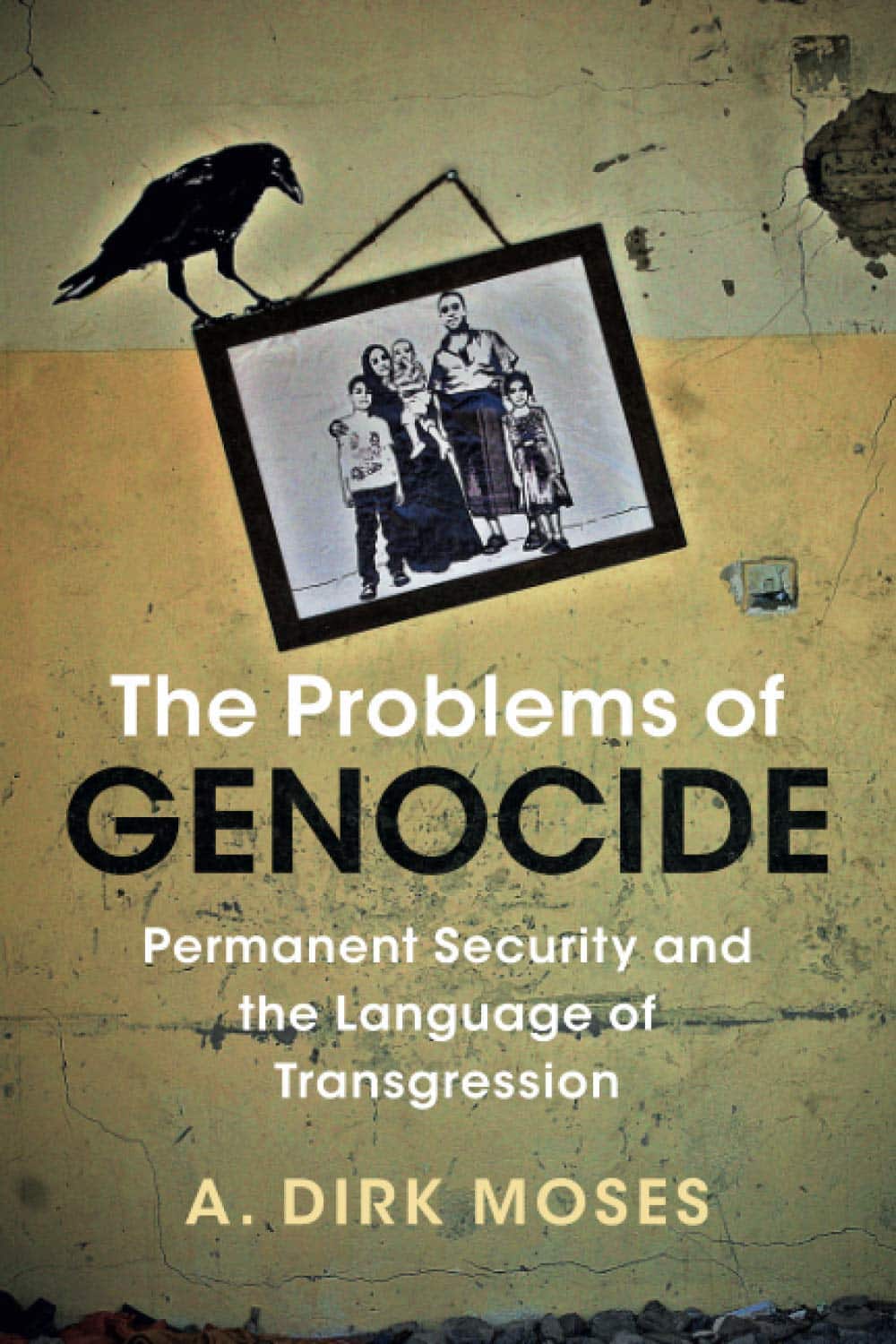
History of Ideas
5 Key 2021 Books in History of Ideas
Ferenc Laczó, editor of the History of Ideas section in the Review of Democracy, presents five key books in intellectual history published in 2021.
21.12.2021

History of Ideas
The Problems of Genocide: Dirk Moses on the Language of Transgression and the Genocide Convention in Context
Dirk Moses in conversation with Ferenc Laczo on his last book "The Problems of Genocide. Permanent Security and the Language of Transgression".
20.12.2021

History of Ideas
Marius Turda: The idea of race across centuries and our current moment of reckoning
Marius Turda in conversation with Ferenc Laczo about A Cultural History of Race.
16.12.2021

History of Ideas
Laszlo Bruszt: The EU confederal regime weakens vulnerable member states
In this interview Laszlo Bruszt, Co-Director of the CEU Democracy Institute and Editor-in-Chief of RevDem, explains the inspiration behind the CEU Democracy Institute and RevDem, how East-West and North-South divisions define Europe, and why the EU confederal regime weakens vulnerable member states.
8.12.2021

History of Ideas
Dimitry Kochenov: Why we shall abolish citizenship
Professor Dimitry Kochenov in conversation with Michał Matlak explains why he believes citizenship is a “perpetuation of the ideas of aristocracy,” sexism, and racism; what can be done to fix this issue; and what motivated him to write “Citizenship” (MIT Press, 2019).
4.12.2021

History of Ideas
Emily Greble: European History via the Experience of Muslims
Emily Greble in conversation with Ferenc Laczo discusses what foregrounding Muslims’ agency implies for the writing of European history; what were key legacies of the Ottoman Empire and how Muslims became a distinct legal minority; in what ways they related to the major political movements of the twentieth century; and how focusing on their experiences can help us reconceptualize questions of secularism and citizenship.
27.11.2021

History of Ideas
Linking sexual diversity to otherness is an old phenomenon
Bence Bari interviews Tamás Dombos, the representative of the Hungarian LGBTQI organization ‘Háttér Society’ concerning the recently adopted Hungarian anti-LGBT measures, their transnational and historical background with respect to the global dynamics of acceptance, and homophobia between the Western and Eastern hemisphere.
26.11.2021

History of Ideas
What After the Pandemic?
Kasia Krzyżanowska reviews for us “Pandemonium” by Luuk van Middelaar, a book that summarizes the crisis he deems as most important for the EU in decades: the coronavirus pandemic.
20.11.2021

History of Ideas
Emily Levine on the Hard Compromises behind Academic Innovation
In conversation with RevDem editor Ferenc Laczó, Emily Levine (Stanford University) discusses key ideas in her new book "Allies and Rivals: German-American Exchange and the Rise of the Modern Research University", a transatlantic monograph that draws on extensive historical research and applies sociological theory to study how the academic social contract was repeatedly renegotiated in the nineteenth and twentieth centuries.
16.11.2021

History of Ideas
The Price of Optimism. A Conversation with Geert Mak about Europe in Our Times
In this wide-ranging conversation occasioned by the release of his The Dream of Europe. Travels in the Twenty-First Century, Geert Mak discusses why he chose to write a sequel to "In Europe. Travels Through the Twentieth Century".
6.11.2021

History of Ideas
Márki-Zay would be a Never Trump Republican in America
In this conversation with RevDem editor Ferenc Laczó, Gábor Tóka talks about the Fall 2021 Hungarian opposition primaries
30.10.2021

History of Ideas
Zsolt Enyedi: Is it still possible to win an election in Hungary, if you’re not Viktor Orbán?
Michal Matlak interviews Zsolt Enyedi about the development of Church-State relations in Hungary, Viktor Orban’s vision of Christian Democracy, why the Democracy Institute plays an important symbolic role in Budapest, and about his recently published book, “Party System Closure: Party Alliances, Government Alternatives, and Democracy in Europe”
29.10.2021

History of Ideas
Lea Ypi: Ideas of freedom across a historical rupture
Lea Ypi in conversation with Ferenc Laczo about her new memoir "Free: Coming of Age at the End of History" and how the people who populate its pages help her connect historical experiences with philosophical thought; how she experienced and dealt with the rupture of 1990 that forced her to reassess her childhood; how that rupture placed her country, Albania, on a seemingly new trajectory with liberal-sounding concepts soon filling the conceptual void that emerged; how the new regime violently collapsed in 1997, just when she was about to graduate from secondary school; and how she relates to the overlapping ideas of freedom in the liberal and socialist traditions.
28.10.2021

History of Ideas
“History as Democracy”: Interview with László Kontler
In this podcast, our assistant editor Bence Bari interviews László Kontler, the research affiliate of the CEU Democracy Institute’s History workgroup project, titled “History as Democracy.”
27.10.2021

History of Ideas
The Chancellor. A conversation with Kati Marton about Angela Merkel
Ferenc Laczó in conversation with Kati Marton about her biography of Angela Merkel. The conversation focuses on Kati Marton’s motivation to paint a human portrait of Angela Merkel, on Merkel’s personality traits and how they have impacted the style and substance of her political leadership.
25.10.2021

History of Ideas
Thinking like Hannah Arendt
Our editor Kasia Krzyżanowska (EUI, CEU) talks with Samantha Rose Hill, professor at the Brooklyn Institute for Social Research, about her recently published biography of Hannah Arendt.
21.10.2021

History of Ideas
Aldo Madariaga: Neoliberalism is not a solution for democracy
Aldo Madariaga discusses his latest book “Neoliberal Resilience: Lessons in Democracy and Development from Latin America and Eastern Europe” with our editor, Giancarlo Grignaschi.
14.10.2021

History of Ideas
From Socialist to Capitalist Walls
Gábor Scheiring reviews „Taking stock of shock. Social consequences of the 1989 revolutions” by Kristen Ghodsee and Mitchell Orenstein
11.10.2021

History of Ideas
Why is the collective protection of democracy in the Americas doomed to fail? The Inter-American Charter at 20
Stefano Palestini writes about the Inter-American Democratic Charter on the occasion of its 20th anniversary.
4.10.2021

History of Ideas
An Authoritarian Liberal Europe? In Conversation with Michael Wilkinson
Oliver Garner interviews the author on his book ‘Authoritarian Liberalism and the Transformation of Modern Europe’
1.10.2021

History of Ideas
Democracy Rules. A Book Discussion with Jan-Werner Müller and His Critics
Gráinne de Búrca, Jan Kubik, Jeffrey Isaac, and Karolina Wigura comment on the new book by Jan Werner Müller. Afterwards the author responds to the commentators.
29.09.2021

History of Ideas
Deadlock of Western liberalism. Petr Agha Reviews a Book by Krastev and Holmes
The Light that Failed: A Reckoning fails to deliver a fresh interpretation which would venture beyond the traditional liberal mantra. It is a representation of the contemporary deadlock of Western liberalism.
28.09.2021

History of Ideas
Invernizzi Accetti: Christian Democracy That Can Counter Right-Wing Populists
Vilius Kubekas in conversation. with the author of the book "What is Christian Democracy? Politics, Religion and Ideology".
23.09.2021

History of Ideas
Will the EU survive the rise of democratorships within? Karolewski and Leggewie on the new quality of politics in the Visegrád states
Ireneusz Paweł Karolewski on the new quality of politics in the Visegrád states.
21.09.2021

History of Ideas
The West’s Strategic Mistakes and Broken Resolve. Jonathan Holslag on World Politics Since 1989
Our editor Ferenc Laczo interviews Jonathan Hoslag (Free University Brussels) on his book "World Politics Since 1989" (Polity Press).
17.09.2021

History of Ideas
LaTosha Brown: Culture will eat strategy for breakfast
RevDem editor Ferenc Laczo interviews LaTosha Brown, co-founder of the voting rights group Black Voters Matter.
16.09.2021

History of Ideas
Talisse: To Be a Democratic Citizen
Katarzyna Krzyżanowska talks with Robert Talisse, W. Alton Jones Professor of Philosophy at the Vanderbilt University in Nashville, on epistemology of democracy.
14.09.2021

History of Ideas
Konrad Jarausch on Realistic Progress
RevDem editor Ferenc Laczo interviewed historian Konrad H. Jarausch, Lurcy Professor of European Civilization at the University of North Carolina at Chapel Hill, about his latest book Embattled Europe: A Progressive Alternative, a rich and finely balanced portrait of contemporary Europe.
10.09.2021
History of Ideas
New Crises: Science, Morality and Democracy in the 21st Century
Wolfgang Merkel in his op-Ed analyses three aspects of democracy crises: scientistation, moralisation and polarisation.
8.09.2021

History of Ideas
Samuel Moyn on the US’ Attempt to Humanise its Imperial Burden
Ferenc Laczo in conversation with Samuel Moyn (Yale University) about his book "Humane. How the United States Abandoned Peace and Reinvented War".
6.09.2021

History of Ideas
A Not Wasted Life. Conversation with Zygmunt Bauman’s biographer Artur Domosławski
Artur Domoslawski, the author of a monumental Zygmunt Bauman’s biography in conversation with our managing editor, Michał Matlak
30.08.2021

History of Ideas
Rising Inequality in Egalitarian Societies
In conversation with our editor Ferenc Laczo, Mitchell Orenstein, Professor of Russian and East European Studies at the University of Pennsylvania, discusses post-communist transitions.
25.08.2021

History of Ideas
Contesting German Memory Culture. A Conversation with Jennifer Evans on the Catechism Debate
Ferenc Laczo talks with Jennifer Evans (Carleton University) about the new Holocaust memory debate.
23.07.2021

History of Ideas
Can Technology Save Democracy?
How can we employ technology to facilitate the democratic process? Which platforms are more democratic than others? These and more questions are answered by Kevin Esterling, Professor of Political Science and Public Policy at the University of California in a conversation with the RevDem assistant editor, Catherine Wright.
16.07.2021

History of Ideas
Statelessness and the Global Political Order. A Conversation with Mira Siegelberg
Ferenc Laczo discusses with Mira Siegelberg her latest book "Statelessness", the story of a much-contested legal category.
15.07.2021

History of Ideas
How East-West Dynamics Define Europe
In his article, Ferenc Laczo writes about the roots of the division of Europe into East and West and its consequences for European politics today.
3.07.2021

History of Ideas
What Are the Sources of Democratic Legitimacy? Till van Rahden on Democracy as a Way of Life
Elias Buchetmann talks to Till van Rahden about his latest book Demoracy: A Fragile Way of Life, which focuses on the history of democracy in the Federal Republic of Germany and raises fundamental questions about the nature of democracy around the world.
24.06.2021

History of Ideas
An American in a Strangely Familiar World. Ben Rhodes explores the world the U.S. has made
Ferenc Laczo reviews "After the Fall. Being American in the World We've Made" by Ben Rhodes.
21.06.2021
History of Ideas
How the U.S. decided to lead the world. Wertheim on the transformation of American internationalism
Ferenc Laczó spoke to Stephen Wertheim about his new book, Tomorrow, the World: The Birth of US Global Diplomacy. The book explores the moment in which the US decided to lead the post-war world.
16.06.2021

History of Ideas
A limited and cautious democracy. Interview with Martin Conway
Daniel Steinmetz-Jenkins and Ferenc Laczo discuss with Martin Conway his latest book "Western Europe’s Democratic Age,1945-1968". You can listen to the podcast or read the edited transcript below.
28.05.2021

History of Ideas
Remaking politics in response to the assault on natural world
RevDem Editor Ferenc Laczo is discussing the book "Planet on Fire. A Manifesto for the Age of Environmental Breakdown" by Mathew Lawrence and Laurie Laybourn-Langton with its authors.
20.05.2021

History of Ideas
[RevDem Launch Event] Conference on the Future of Europe: Democratic Innovation or Business as Usual?
May 9th marked the opening of the Conference on the Future of Europe. In the debate we organised one day later, the panellists discussed its objectives, how to achieve them and whether it can give a new impetus to European integration.
18.05.2021

History of Ideas
The New Logic of Democratic Politics [Podcast and Interview]
Our editor Ferenc Ferenc Laczó talks with Chris Bickerton about his latest book Technopopulism.
14.05.2021

History of Ideas
Ernst Fraenkel – a Jewish lawyer who resisted the Nazis
Kasia Krzyżanowska talks to Douglas G. Morris, a legal historian and practicing criminal defense attorney with Federal Defenders of New York, about his newest book on Ernst Fraenkel.
28.04.2021

History of Ideas
Stasavage: Democracy requires continuous effort (PODCAST AND LONG READ)
David Stasavage (New York University) in conversation with RevDem editor Ferenc Laczo (Maastricht University) about his recent book “The Decline and Rise of Democracy”, which presents the global history of democracies since ancient times.
23.04.2021

History of Ideas
Sustainable Democracy after 25 years. Conversation with Adam Przeworski
Our editor-in-chief Laszlo Bruszt asks Adam Przeworski about the contemporary relevance of "Sustainable democracy", a seminal book published 25 years ago.
21.04.2021
History of Ideas
Fascism to Populism and Back Again? [PODCAST AND LONG READ]
RevDem editor Ferenc Laczo (Maastricht University) talks with Federico Finchelstein (New School for Social Research, New York) about his two recent books: “From Fascism to Populism in History” and “A Brief History of Fascist Lies”.
16.04.2021

History of Ideas
A Certain Anachronistic Appeal. On Conversations with Francis Fukuyama
On the 3rd of May, the Georgetown University Press will publish "After the End of History. Conversation with Francis Fukuyama". Our editor Ferenc Laczo from Maastricht University reviews the volume.
13.04.2021

History of Ideas
We cannot analytically divide reason from emotion
In the second part of the conversation, Jan-Werner Müller interviewed by Luka Lisjak Gabrijelčič talks about populism and employment of emotions, and on bipartisanship and political conflict.
9.04.2021

History of Ideas
DI and RevDem Event: What Price the Rule of Law?
On 25 January the CEU Democracy Institute hosted Commissioner Didier Reynders and MEP Katalin Cseh for a debate on the new EU Regulation on Rule of Law conditionality. In this first editorial of the RevDem Rule of Law section, editor Oliver Garner and assistant editor Teodora Miljojkovic reflect on the implications for constitutional democracy of the impression that the Rule of Law comes at a price.
19.03.2021

History of Ideas
Far-right Demonstrations — They Are Not Going Anywhere
Michael Zeller, in a conversation with Kasia Krzyżanowska, talks about far-right mobilization campaigns and the processes of their de-mobilization.
19.03.2021

History of Ideas
For what does democracy need political parties?
Jan-Werner Müller, in an interview with Luka Lisjak Gabrijelčič, talks about the functions of contemporary political parties, the role of the constitutional courts and the future of European Christian Democracy.
19.03.2021
History of Ideas
The Politics of Antipopulism
The mainstream media and academia as well as political elites identify populist movements as the most important threat to the current liberal democratic regime. Populist actors have indeed unsettled and begun reshaping the European political landscape.
19.03.2021

History of Ideas
We’ve Gotten the Ogre Out of the Way
Samuel Moyn in an interview with RevDem editor Katarzyna Nowicka talks about the legacy of Donald Trump and the presidency of Joe Biden.
19.02.2021

History of Ideas
Enemies at the Liberal Democratic Gates
Is America living in the shadow of the post-Cold War liberalism? Daniel Steinmetz-Jenkins argues that some liberal intellectuals are still looking for an enemy who can give a cause to their political actions.
19.02.2021

