Interviews and Podcasts
Interviews and Podcasts
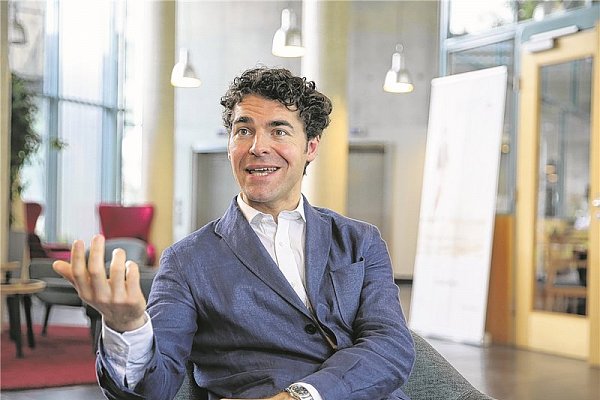
The Other Side of Law: Democracy, Rights, and Illiberalism
In this opening episode of a new Review of Democracy podcast series on law, rights, and democracy in Latin America, Gabriel Pereira speaks with Fabio de Sá e Silva about the increasingly complex role of law in contemporary struggles over democracy and rights.
9.10.2026
Interviews and Podcasts
Challenging Archives, Episode 3- Documenting the Human Rights Organizations during the Cold War
In our conversation, we discuss the Helsinki process, the role of culture and dissident networks, the challenges of archival research, and what the archives can reveal about the changing nature of international politics during the late Cold War.
5.10.2026

Interviews and Podcasts
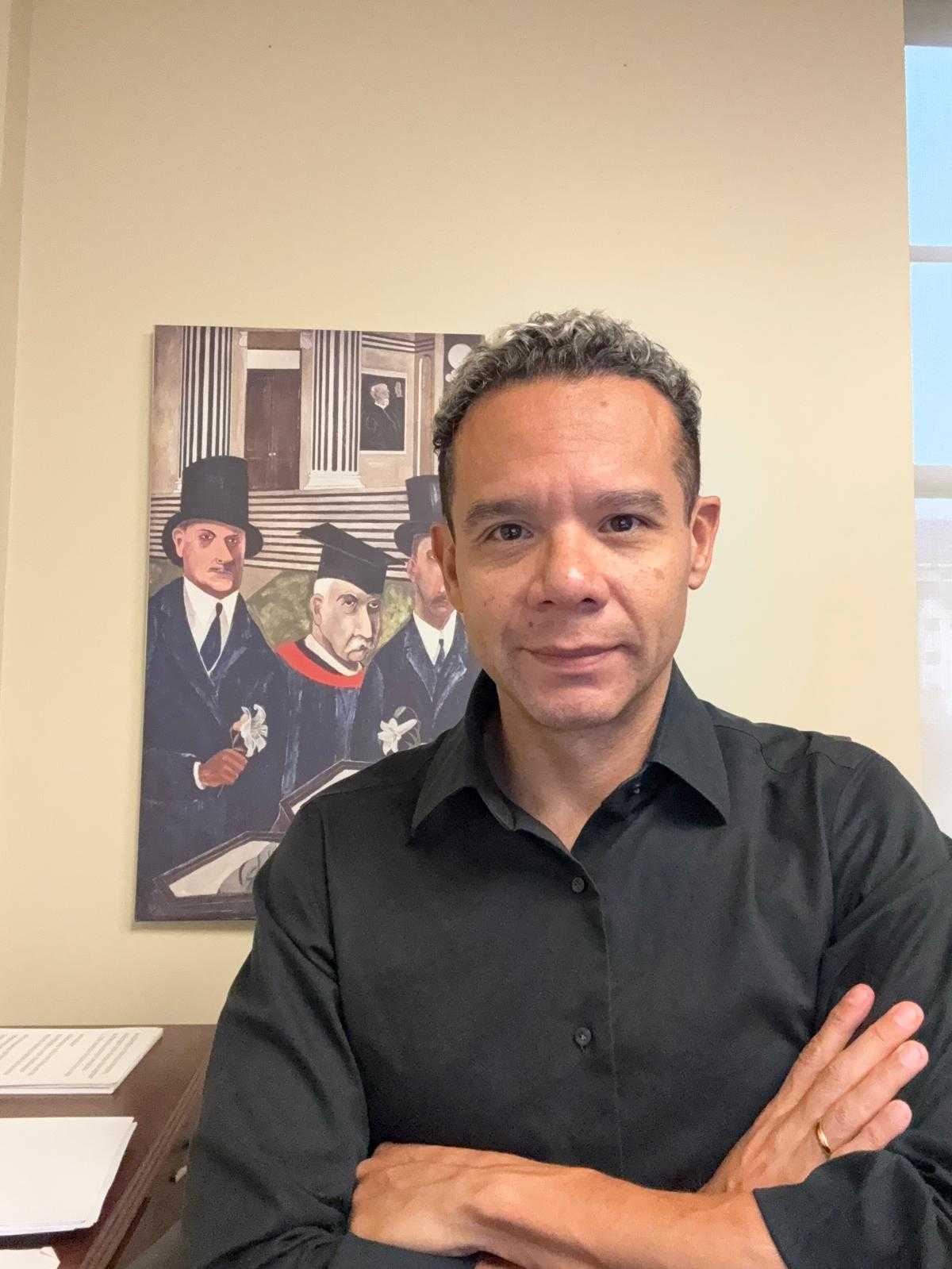
Decolonial Constitutionalism in the Caribbean – In Conversation with Ronnie Yearwood
In this conversation, Ronnie Yearwood analyzes the persistence of coloniality in Caribbean constitutionalism and asks what a decolonial constitutionalism, able to overcome the past and think the “new,” must look like.
1.10.2026

Interviews and Podcasts
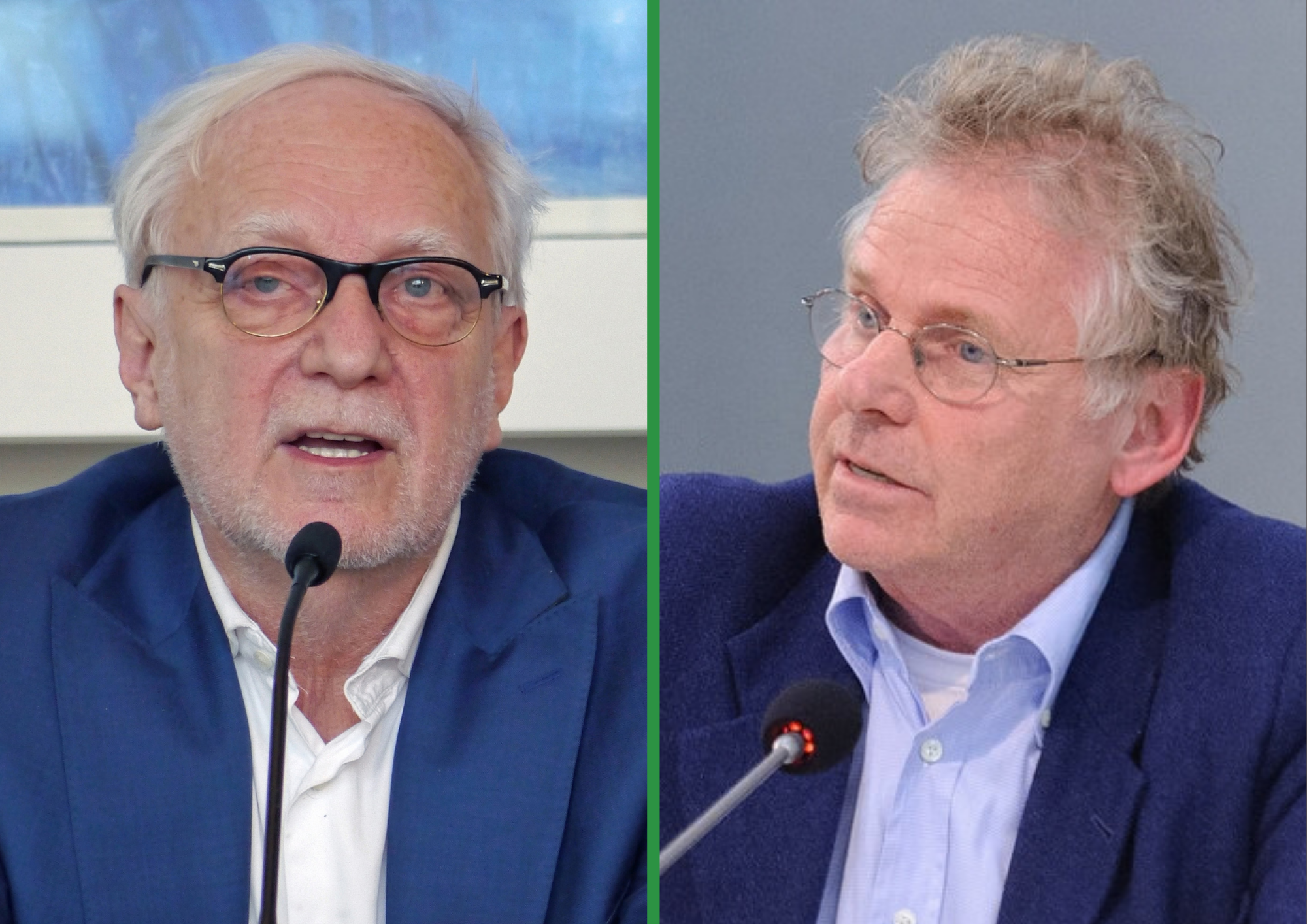
For a Utopian Realism: A Conversation with Daniel Cohn-Bendit and Claus Leggewie
In this conversation with Ferenc Laczó, Claus Leggewie and Daniel Cohn-Bendit discuss their political friendship, their self-positioning on the left, and whether the hopes of emancipation they cherished in their youth have been fulfilled. They also explore the idea of cosmopolitan universalism, new roles the EU would need to assume, and how a more optimistic political vision could emerge.
28.09.2026
Interviews and Podcasts
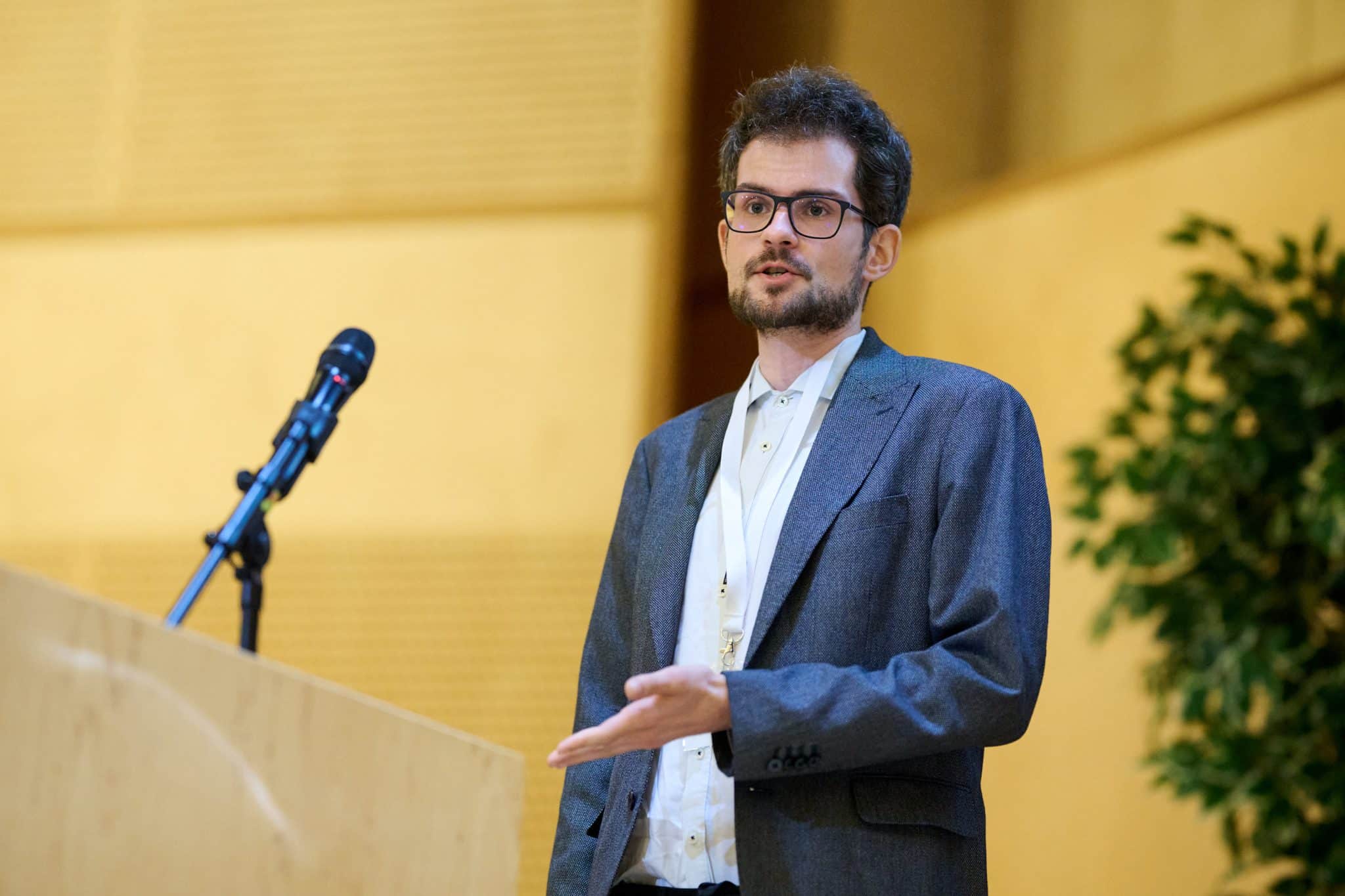
Progressive Pronatalism? A Conversation with Kristijan Fidanovski
In our new podcast, Kristijan Fidanovski discusses how social democratic policies could reclaim the debate on social reproduction and introduces the idea of “progressive pronatalism.” He tackles common misconceptions about the term, addressing critics who view the concept with skepticism, and also explores political implications.
24.09.2026
Interviews and Podcasts
Technocratic Governance Without Deliberation? –Yane Svetiev on Peer Review in Financial Regulation
As the world becomes increasingly interconnected, our lives are increasingly influenced by decisions made outside our national constituencies. Today, government actions are likely to affect many people who never participated in elections in which the government in question ran for office. This applies to various policy areas, but seems especially true in the financial sphere.
17.09.2026

Interviews and Podcasts
Challenging Bucharest’s “Little Paris” Myth: A Conversation with Alexandra Ghiţ
Between 1914 and 1941, Bucharest’s population tripled, approaching one million inhabitants.This rapid growth created new neighborhoods and new opportunities, but also brought new forms of poverty. While some historians portrayed the interwar Bucharest as ”the little Paris”, Alexandra Ghiţ’s book Welfare Work without Welfare: Women and Austerity in interwar Bucharest provides a much more nuanced perspective about this city by focusing on the women’s role in welfare work.
14.09.2026

Interviews and Podcasts
Who Gets to Shape the Future of the Arctic? A Conversation with Mia Bennett and Klaus Dodds
In this episode of the Review of Democracy podcast, Anna Niia Varfolomeeva speaks with Mia Bennett and Klaus Dodds about their book Unfrozen: The Fight for the Future of the Arctic . Together, they explore who gets to shape the region at this critical moment: as governments and global powers increasingly look northwards, whose interests guide its transformation? And how can northern and Indigenous communities retain meaningful agency over the places they call home?
10.09.2026

Interviews and Podcasts
America’s Disengagement and Its Consequences
In this podcast the participants discuss the United States’ disengagement from institutions of global governance and what that has meant for multilateral support for human rights and democracy; what main forms the strengthening of authoritarian forms of multilateralism has taken in the meantime; whether a new liberal coalition could emerge in the aftermath of the US’ disengagement; and what key threats a more fragmented world are likely to bring.
7.09.2026

Interviews and Podcasts
A State Within the State: Lessons from Iran and Beyond
In this special-series podcast with Saeid Golkar, we discuss his latest essay “Why IRGC is the war’s Biggest Winner” published in the Jully issue of the Journal of Democracy. Professor Golkar argues that Iran’s wars, security crises, and political upheavals have gradually transformed the IRGC from a revolutionary militia into a powerful institution that increasingly functions as a “state within the state.”
3.09.2026
Interviews and Podcasts
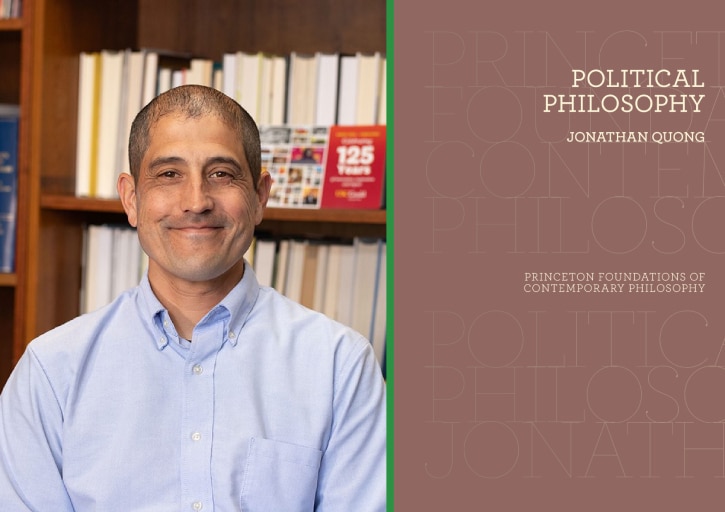
Can Unjust Laws Be Legitimate? A Conversation with Jonathan Quong
Can a law be unjust and still be legitimate? And if we believe a law is unjust, does that mean the state has no right to enforce it? He explains why disagreement about justice is an unavoidable part of living together in free and pluralistic societies, and why even well-functioning democracies will inevitably produce laws and policies that some of us have good reason to regard as unjust. How, then, should societies deal with these unavoidable political mistakes?
31.08.2026
Interviews and Podcasts
“Divisive Memories Can Create New Forms of Local Unity” – Aline Sierp on Memory Studies and Key Questions in European Remembrance
In our new podcast, Aline Sierp discusses central questions in contemporary European memory and surveys how EU institutions have attempted to deal with Europe’s past over the decades.
27.08.2026

Interviews and Podcasts
Backlash Against Rights: From Public Battles to Veiled Backlash
Across the world, political actors are challenging rights in increasingly sophisticated ways. But are we looking in the right places? In our new podcast, Gabriel Pereira speaks with María Paula Saffon about how we should understand backlash against rights today.
24.08.2026

Interviews and Podcasts
Towards Tempered Power – In Conversation with Martin Krygier
Always a controversial and often a confusing topic in academia, the rule of law has, since the late twentieth century, been elevated to almost a universal ideal. So much so that many of those once perceived as its staunchest enemies today claim to be rule of law enthusiasts. Large amounts of money have been spent, and much work has been done to lay its foundations in many places and for various reasons. And yet, today, despite all these efforts, many see the rule of law as increasingly threatened.
19.08.2026

Interviews and Podcasts
Kim Lane Scheppele on Hungary’s Democratic U-Turn
In this new episode of our podcast series produced in cooperation with the Journal of Democracy, Kim Lane Scheppele discusses the major challenges and dilemmas that the new Hungarian government led by Péter Magyar faces after 16 years of illiberal rule and illiberal state-building by Viktor Orbán and his cronies; how the prospects of Hungarian democracy look in comparative perspective; how European law and European funds are shaping those prospects – and what has surprised Kim Lane Scheppele the most in recent months.
17.08.2026

Interviews and Podcasts
How to Lean into Disruptive Change? – Mark Leonard on a New Artisanal Code for Europe
In our new podcast, Mark Leonard (co-founder and director of the European Council on Foreign Relations) discusses the conclusions he has drawn concerning “the four Cs:” capital, climate, chips, civilizations, and talks about what a new, more holistic approach to European security might prioritize.
20.07.2026

Interviews and Podcasts
The Battle for the Future of Democracy Begins in the Archive. A Conversation with István Rév
The panel Rethinking CEU’s Legacy: Education, Engagement, and Democratic Transformations, reflected on the thirty-five years of CEU’s role in democratic change across Central and Eastern Europe. Scholars from different generations formed within the CEU’s framework revisited the principal moments of this history. Within this panel, Prof. István Rév discussed the beginnings of the CEU.
16.07.2026
Interviews and Podcasts
Women’s Internationalism and Democracy in the Global South
In this episode with Durba Mitra, we discuss her latest book, The Future that Was (Princeton University Press, 2026). The podcast highlights the emergence of women's internationalism as both a political project and a mode of knowledge production that grew out of the crisis of Third World developmental nationalism in the 1970s and the search for new forms of international solidarity.
15.07.2026
Interviews and Podcasts
Why Politicians Talk About Migration Instead of Markets
Migration is usually discussed as a question of borders, identity, or national security. This angle might obscure other more fundamental aspects. The real question to pose is not simply who moves, but how decades of marketization transformed both labor and the politics of fear.
13.07.2026

Interviews and Podcasts
Postcolonial? – How Does the House of History Confront Europe’s Colonial Past and the “Colonial Matrix of Power”? Part II
This second part focuses on the links between the main themes of the exhibition and the history of European integration; asks whether there might be a risk here of offering a dichotomous and too moralizing reading of history; and considers what a thorough rethinking in the light of colonial history of how to be European today would imply – and what might be most in need of revision in the House of European History itself in accordance with that process of rethinking.
9.07.2026

Interviews and Podcasts
The EU in Constitutional Borderlands – In Conversation with Päivi Leino-Sandberg
Since the Treaty of Lisbon entered into force in 2009, the European Union has faced numerous significant crises. At the same time, the Union’s member states have largely proven unable or unwilling to amend the EU’s treaties. While this has often created impasses and deadlocks, it has not stopped the process of European Integration.
6.07.2026

Interviews and Podcasts
Postcolonial? – How Does the House of European History Confront Europe’s Colonial Past and the “Colonial Matrix of Power”? Part I
This spring, the House of European History – a flagship museum of the European Parliament – has opened a temporary exhibition under the title Postcolonial? that features unique artworks, historical objects, and personal stories.
2.07.2026

Interviews and Podcasts
Challenging Archives, Episode 2: The Apartment Universities in Czechoslovakia
Challenging Archives is a new series of podcasts jointly organized between Review of Democracy and Blinken Open Society Archives, based in Budapest. We will invite scholars to discuss about their investigation in this archive.
29.06.2026

Interviews and Podcasts
Challenging Archives, Episode 1: Hungarian-Language Theaters in Socialist Romania
Challenging Archives is a new series of podcasts jointly organized between Review of Democracy and Blinken Open Society Archives. In our first episode, we discuss about Hungarian-language theater in socialist Romania with Eszter Szabó-Reznek. Her case offers a unique perspective into how ideology, culture, and bureaucracy intertwined.
22.06.2026

Interviews and Podcasts
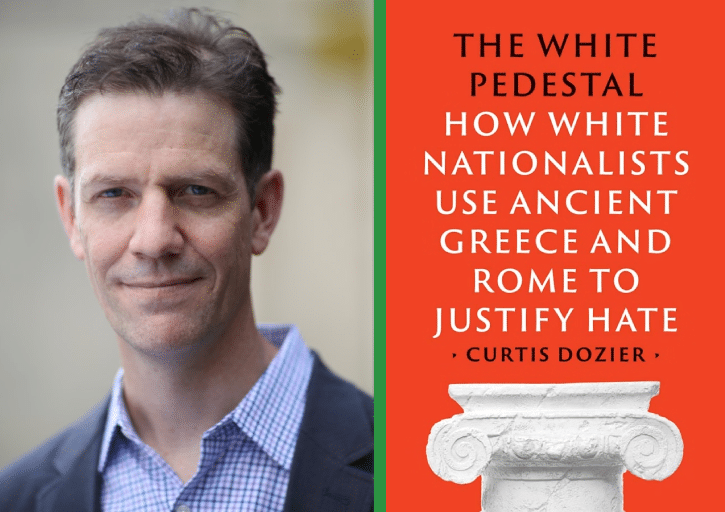
The Ancient World Mobilized for Hate: A Conversation with Curtis Dozier
Ancient Greece and Rome are often celebrated as the foundations of Western civilization, democracy, and political thought. But what happens when these revered historical traditions are mobilized to legitimize exclusionary and authoritarian politics? In this episode of the Review of Democracy podcast, we speak with Curtis Dozier, author of The White Pedestal – How White Nationalists Use Ancient Greece and Rome to Justify Hate (Yale University Press, 2026), about the enduring political power of classical antiquity. Drawing on years of research into extremist appropriations of the ancient world, Dozier explains why white nationalists are so drawn to Greece and Rome, how concepts such as race, hierarchy, decline, and Western civilization are anchored in selective readings of the classical past, and why these interpretations resonate far beyond the political fringes. The conversation explores the surprising continuities between extremist and mainstream narratives about antiquity, the [...]
18.06.2026
Interviews and Podcasts
Georgia’s Struggle Between Democracy and Autocracy – In Conversation with Ghia Nodia
In our latest episode of the special series produced in partnership with the Journal of Democracy, we discuss the recent article by Ghia Nodia, entitled “Georgia: Between Democracy and Autocracy” (Journal of Democracy, Vol. 37, No.2, April 2026). Over the last couple of years, Georgia has frequently been in foreign news due to two related issues. Firstly, in 2024, the current Georgian government, after a failed initial attempt, has adopted the law “On Transparency of Foreign Influence,” thereby joining a global trend of countries adopting so-called “Foreign Agents Laws.” While facially claiming to protect a country against threats posed by foreign interference, such laws are often used by governments with authoritarian tendencies to suppress their country’s civil society. The second related issue is the long protests of Georgian civil society against the authoritarian tendencies of the incumbent party, Georgian Dream. Georgia is known for its vibrant and active civil society, [...]
15.06.2026

Interviews and Podcasts
Constitutional Enthusiasm in Hungary – In Conversation with Gábor Halmai
Sixteen years of rule by Viktor Orbán’s Fidesz party have come to an end in Hungary. During this time, the country received prominence in debates about the rule of law like practically no other. Since winning a two-thirds majority in 2010, Fidesz had significantly altered the Hungarian constitutional system to ensure the persistence of its own power. According to many analysts, this set a blueprint that other right-wing populists around the world have followed. The victory of Peter Magyar’s Tisza-party has brought hope that Hungary will democratize and rebuild the rule of law – something many analysts had almost given up on. Finding the path to achieve this is likely to become challenging. Research has shown that successful returns to democratic governance after an authoritarian period are rare, and pro-democratic politicians who take over after an authoritarian incumbent often turn to authoritarian governance themselves. Yet, euphoria is currently running high in Hungary. Perhaps [...]
11.06.2026

Interviews and Podcasts
Mixed Families in Post-Conflict Societies- A Discussion with Karolina Lendák-Kabók and Lucija Balikić (Part 2)
Are interethnic marriages bridges or fault lines in post-conflict societies? What happens when the politics of national identity enter the intimacy of home? Who were the main agents to oppose or promote mixed marriages in East-Central Europe? Was it the Church? Was it the legal framework? Were it depending on local culture? Was it determined by class?
8.06.2026

Interviews and Podcasts
Dictocrats and Dictobrats – James Loxton on Why We Elect Former Dictators and Their Children
James Loxton discusses prominent cases of former dictators or the children of former dictators being elected democratically as president or prime minister; how such leaders deal with their authoritarian inheritance; what we might have misunderstood about democratization in the light of this rather widespread phenomenon; and how it might be countered more effectively in the future.
1.06.2026

Interviews and Podcasts
Worlds of Wartime: Duncan Kelly on the First World War and Modern Politics
How did the First World War reshape the way we think about politics, economics, empire, and democracy? In this episode of the Review of Democracy podcast, we speak with Duncan Kelly, Professor of Politics at the University of Cambridge, about his book Worlds of Wartime: The First World War and the Reconstruction of Modern Politics, published by Oxford University Press.
28.05.2026

Interviews and Podcasts
Birthright Citizens: Martha Jones on Race and Rights in the U.S.
In this conversation, Martha Jones explains the historical roots of birthright citizenship and the current U.S. administration’s attempt to undermine it.
25.05.2026
Interviews and Podcasts
Beyond National Democracy: China’s Ideas and Ideas of China
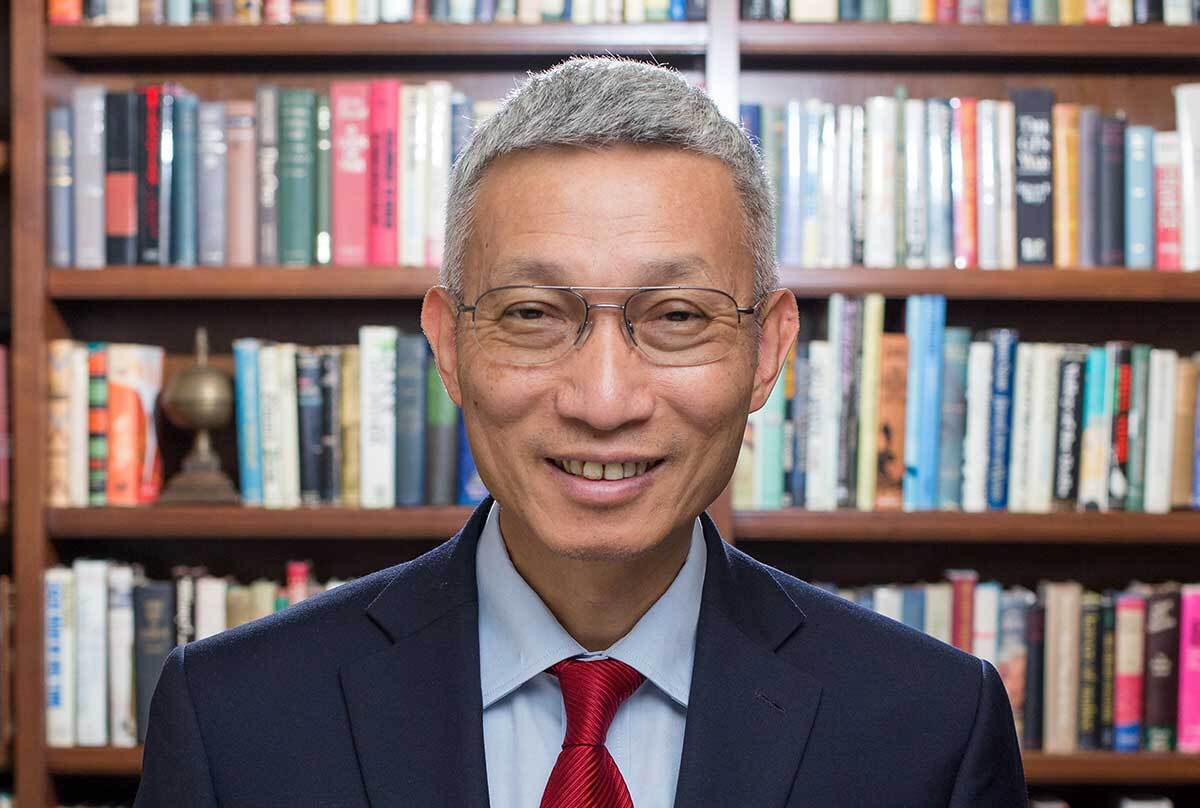
This interview with historian Professor Xu Guoqi explores the major themes of his latest book The Idea of China at a moment marked by the weakening of the international order and the global resurgence of nationalism. We begin by tracing the changing meanings of “China” and “Chineseness.” The conversation then moves to thinking about Chinese universalism, its alignments and tensions with Western liberalism, conflicts between evolving historical identities and the projection of a stable national order, and the role of “cooked past” in constructing modern Chinese identity.
21.05.2026

Interviews and Podcasts
Mixed Families in Post-Conflict Societies- A Discussion with Karolina Lendák-Kabók and Lucija Balikić (Part 1)
Are interethnic marriages bridges or fault lines in post-conflict societies? What happens when the politics of national identity enter the intimacy of home? Who were the main agents to oppose or promote mixed marriages in East-Central Europe? Was it the Church? Was it the legal framework? Were it depending on local culture? Was it determined by class?
18.05.2026
Interviews and Podcasts
The “Backsliders” and What We Can Do About Them – In Conversation with Susan Stokes
In a recent article in the Journal of Democracy, Susan Stokes examines several questions that arise from this phenomenon: Why is there an increase in democratic erosion at this point in history? What factors leave some countries more at risk than others? And, perhaps most importantly, what can be done to counter these developments?
14.05.2026
Interviews and Podcasts
How to Secure Democracy After Authoritarianism? Venezuela and the Problem of Credible Transitions
The conversation explores how concepts such as adverse selection and signaling help explain this dynamic, and what it would take for democratic leaders to build trust with key actors. It also introduces a novel framework for transitional justice—one that differentiates between actors based on both responsibility and strategic importance.
11.05.2026

Interviews and Podcasts
Abandoning Democracy for the Nation –In Conversation with Filip Milačić
Today, in almost the whole world, processes of democratic backsliding, autocratization, and a rise of the far-right can be observed. Again, nationalism is said to play an important role in this. In this conversation, Filip Milačić considers the influence of nationalism on current processes of democratic backsliding and proposes counterstrategies.
7.05.2026

Interviews and Podcasts
How Helpful Are AI Tools for Autocrats?
In the new episode of our series produced in partnership with the Journal of Democracy, Ferenc Laczó speaks with L. Jason Anastasopoulos and Jie (Jason) Lian about their article, “The Limits of Authoritarian AI.”
4.05.2026

Interviews and Podcasts
The “Ukraine Question” in Hungarian Culture Today – Diána Vonnák on Bilaterial Relations, Questions of Responsibility, and Paths Forward
In our new podcast, Diána Vonnák discusses the recent past and present state of relations between Hungary and Ukraine. Focusing on questions of scholarship, culture and media, the conversation explores how prevalent Hungarian perspectives on Ukraine may be characterized and contextualized; how ties between Hungarians and Ukrainians have been transformed since 2022; and how this highly sensitive – and controversial – relationship could be improved in the near future.
29.04.2026

Interviews and Podcasts
When Populism Can be Good: A Conversation with Pepper Culpepper
In this episode of our podcast series produced in collaboration with the Journal of Democracy, we discuss with Pepper Culpepper the article When Populism Can be Good, jointly written by Pepper Culpepper and Taeku Lee. This discussion reframes populism as a differentiated and politically consequential phenomenon rather than a uniformly anti-democratic force.
27.04.2026

Interviews and Podcasts
Back to the Roots of the Rule of Law – In Conversation with Fernanda Pirie
According to the Rule of Law Index, prepared yearly by the World Justice Project, in 2025, 68% of countries worldwide experienced a decline in the rule of law, a bleak contrast to 57% the previous year. In what feels like a permanent rule of law crisis, revisiting the origins of the concept offers much-needed distance and room for reflection.
20.04.2026

Interviews and Podcasts
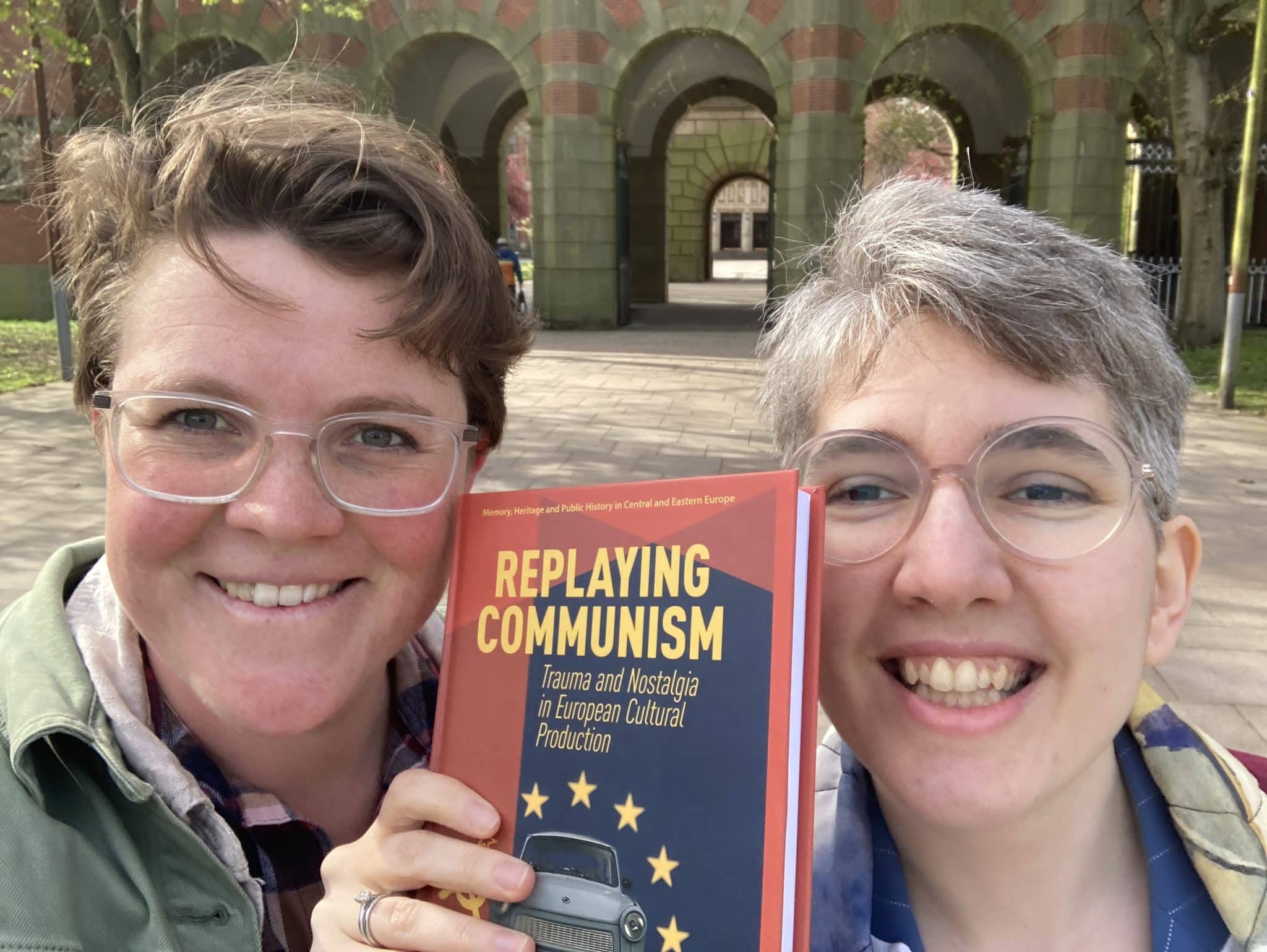
From Television Series to Board Games: Replaying Communism’s Afterlife in Culture- A Conversation with Anna Váradi and Lucy Jeffery
In our conversation with Anna Váradi and Lucy Jeffery, built around their edited volume Replaying Communism: Trauma and Nostalgia in European Cultural Production, this tension comes into focus. Published this year by the Central European University Press/ Amsterdam University Press, the book presents how cultural productions do not simply represent the socialist period but also give new meanings and emotional textures.
13.04.2026
Interviews and Podcasts
Gen-Z: An Emerging Political Force? – A Discussion with Răzvan Petri and Vlad Adamescu
In our new podcast, Vlad Adamescu and Răzvan Petri discuss the new wave of youth engagement in Romanian politics. Starting from their own Politică la Minut (Instant Politics) initiative that aims to increase political participation among young Romanians, they analyze how the current political situation in Romania has moved away from the divide between post-communist and anticommunist factions and is now similar to the landscape in other European states, where the conflict occurs between liberal and conservative forces.
8.04.2026

Interviews and Podcasts
Why Would Elected Leaders Hollow Out Their States?
In this episode of our podcast series produced in collaboration with the Journal of Democracy, Ferenc Laczó speaks with Andrés Mejía Acosta and Javier Pérez Sandoval about their new article, “Why Populists Hollow Out Their States.” They discuss how, why, and when elected leaders seek to undermine the state; what libertarians and leftists share when it comes to practices of state erosion and where they might differ.
6.04.2026

Interviews and Podcasts
Ultimate Failure Via Major Accomplishments – Julian E. Zelizer on the Paradoxes of Joe Biden’s Presidency
Julian E. Zelizer – editor of the new volume The Presidency of Joseph R. Biden. A First Historical Assessment – discusses the key accomplishments of Joe Biden’s presidency as well as the sources of his ultimate failure to fulfil his promise. He explores the historical origins of the Biden presidency, reflects on its foreign policy record, and considers the questions future historians will be debating.
2.04.2026

Interviews and Podcasts
Did Fear of Vampires Inspire Early Scientific Inquiry? A Discussion with Ádám Mézes
In our third podcast, we host Ádám Mézes, with whom we discuss the fascinating topic of vampire contagion in the Habsburg Empire and its broader impact on the history of science. As in the earlier conversation with Kateryna Dysa on witchcraft trials, the discussion begins with a deceptively simple question: what exactly is a vampire, and who has the authority to define it?
30.03.2026

Interviews and Podcasts
Democracy on a Tightrope: Politics, Bureaucracy, and the Risks of Imbalance
In this episode of the Review of Democracy podcast, Gabriel Pereira speaks with Gabriela Lotta about Democracy on a Tightrope: Politics and Bureaucracy in Brazil, co-authored with Pedro Abramovay and recently published by Central European University Press.
23.03.2026

Interviews and Podcasts
EU Research Spotlight: Nils-Christian Bormann on Violence, Elites, and Democratic Stability
The conversation explores the project’s core questions, including how violence interacts with democratic stability and what role political elites play in moments of crisis. We also discuss the project’s mixed-methods approach, combining large-scale data collection with in-depth historical case studies, as well as innovative open-source datasets and visualisations. The episode highlights key early findings, most notably the relationship between local violence and support for extremist parties and reflects on what these historical patterns might tell us about the vulnerabilities of contemporary democracies.
19.03.2026

Interviews and Podcasts
How Courts Can Hold Authoritarian Leaders Accountable
In many democracies today, elected leaders challenge institutions, undermine electoral rules, and test the limits of constitutional order. Yet legal accountability for such actions remains rare. In this episode of the Review of Democracy podcast, produced in cooperation with the Journal of Democracy, Gabriel Pereira speaks with Luciano Da Ros and Manoel Gehrke about their article “How to Bring Authoritarians to Justice.”
16.03.2026
Interviews and Podcasts
Anticipating Autocracies: A History of Contemporary China
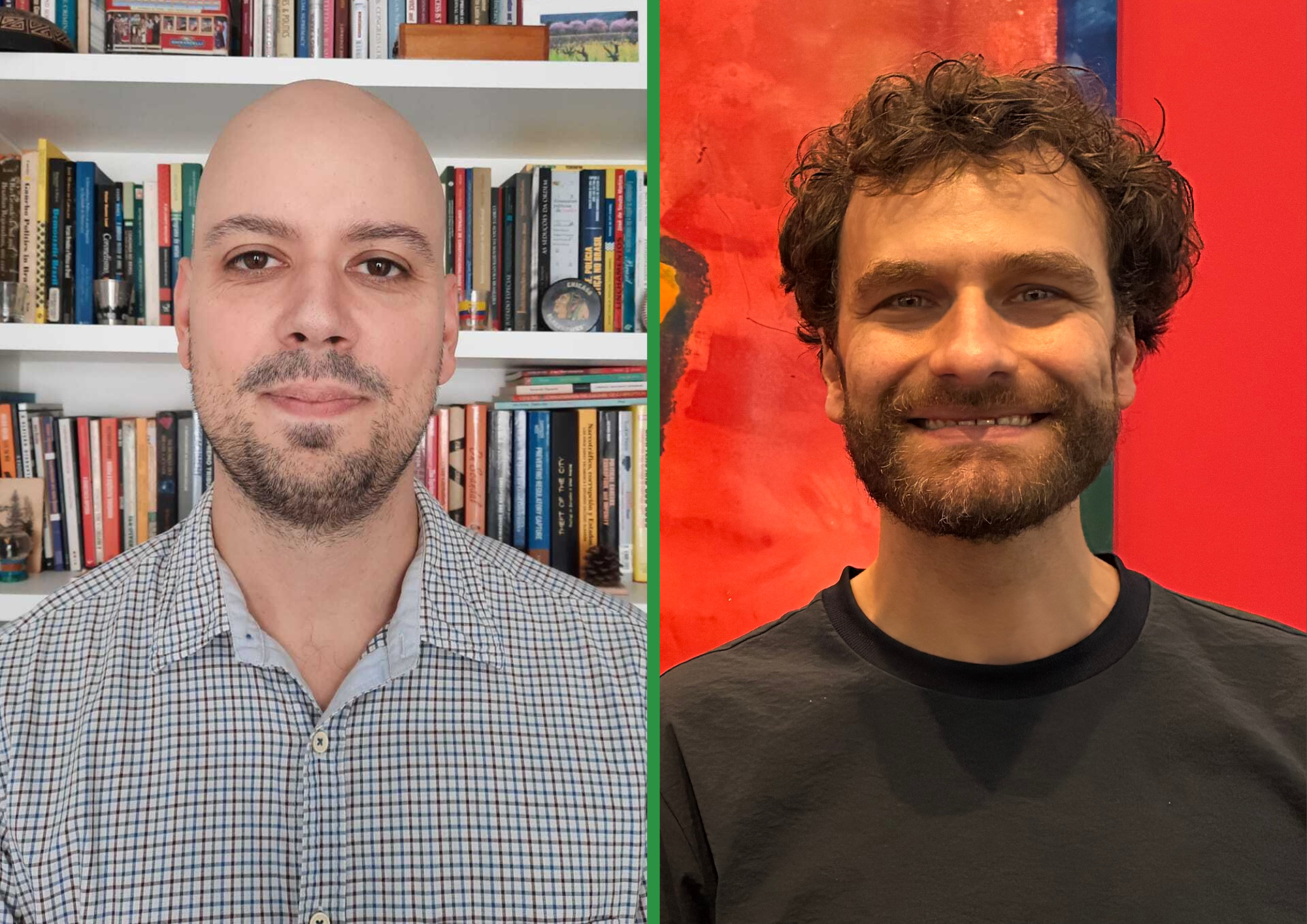
In this latest conversation, we speak with Minxin Pei about his latest book, The Broken China Dream: How Reform Revived Totalitarianism (Princeton University Press, 2025), which challenges the enduring assumption that economic development naturally leads to democracy. Pei argues that China’s post-Mao reforms produced not political liberalization but a resilient, adaptive form of authoritarianism.
9.03.2026
Interviews and Podcasts
The Distinct Logic of Ukrainian Witchcraft
In our second podcast of this series, we have as guest Kateryna Dysa, with whom we will discuss her extremely fascinating book Ukrainian Witchcraft Trials: Volhynia, Podolia, and Ruthenia, 17th and 18th Centuries, published by the CEU Press in 2023. In this research, she reconstructs the history of witchcraft in Ukraine, with a particular focus on the three so-called “Ruthenian” palatinates of the Polish-Lithuanian Commonwealth: Podolia, Ruthenia, and Volhynia.
5.03.2026

Interviews and Podcasts
Why Gen-Z is Rising: Erica Chenoweth and Matthew Cebul on How We Might be Witnessing a Profound Generational Transformation
Erica Chenoweth and Matthew Cebul discuss the political profile of Gen-Z protesters, what ignited their recent protests across the globe, and how those protests unfolded in various places. They reflect on the promises and perils of those protests – and how the related question of violence and non-violence has played out.
2.03.2026

Interviews and Podcasts
Shuk Ying Chan on Postcolonial Global Justice
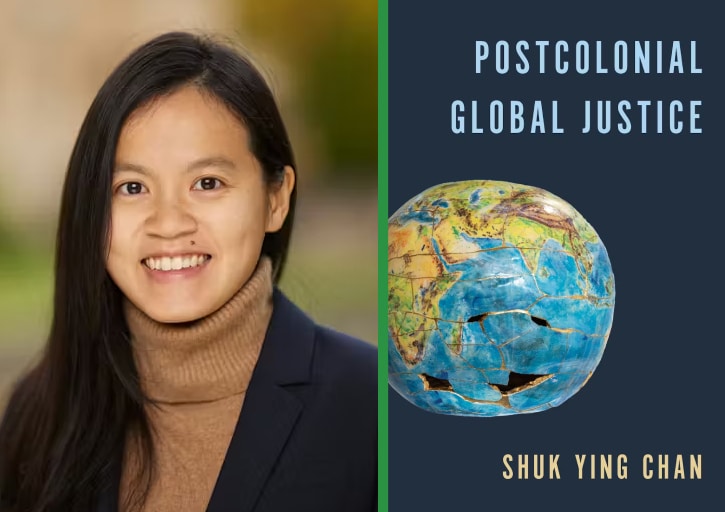
In this episode of the Review of Democracy podcast, political theorist Shuk Ying Chan (UCL) discusses her new book Postcolonial Global Justice, which develops an account of postcolonial global justice as social equality by thinking with anticolonial leaders Aimé Césaire, Frantz Fanon, Kwame Nkrumah and Jawaharlal Nehru.
23.02.2026
Interviews and Podcasts
Digging Up the Dead: What Vampire Panics Reveal About Power
In our first podcast of this series, we discuss with Prof. John Blair, around his latest book Killing the Dead: Vampire Epidemics from Mesopotamia to the New World, published by Princeton University Press. John Blair reconstructs a world in which the dead were not metaphor but menace. His book follows the concept of restless bodies which stirred various social anxieties and created symbolic meanings.
16.02.2026

Interviews and Podcasts
A Midwife’s Confession: Democracy Hasn’t Democratized the Home in India
“How many babies have you killed, roughly?” This is a question that tolls through the 2024 BBC documentary, The Midwife’s Confession. Available for free streaming on YouTube, the documentary centres around Katihar in the Kosi region of Bihar, India. The documentary deals with the outlawed yet prevalent practice of female infanticide. A result of the National-award winning journalist and filmmaker Amitabh Parashar’s twenty-eight-year-long journalistic engagement with the topic in Bihar, the documentary investigates the fraught socio-political terrain informed by gender biases and caste realities that forces the midwives to kill the girl children they help bring to life.
10.02.2026

Interviews and Podcasts
Women’s Participation in Ukraine’s Euromaidan- A Conversation with Olena Nikolayenko
In the podcast, Olena Nikolayenko places women’s protest within a broader framework, which includes the Arab Spring and Belarus. Her claim is that age, class, region and political experience shape women’s forms of engagement. Based on these observation, Invisible Revolutionaries distinguishes between three models of participation: patriarchal, emancipatory, and hybrid.
9.02.2026

Interviews and Podcasts
Adjudicating in Times of War – In Conversation with Stanislav Kravchenko
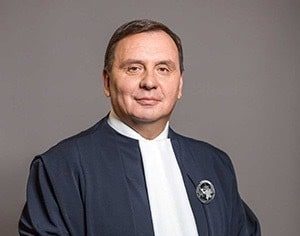
Even as parts of the country are ravaged by lawless attacks, the judiciary continues to function and ensure the operation of Ukraine’s legal system. A new challenge has emerged with the process of Ukraine’s accession to the European Union (EU). The country’s legal system must adapt to the EU’s requirements.
5.02.2026
Interviews and Podcasts
Crime, Crackdowns, and Democracy in Ecuador
Ecuador has experienced one of the most dramatic surges in criminal violence in Latin America, alongside growing pressure on democratic institutions. In this episode of the Review of Democracy podcast—produced in cooperation with the Journal of Democracy—Gabriel Pereira speaks with Galo Mayorga and Kai M. Thaler about how state weakness, militarized security policies, and public fear are reshaping Ecuador’s democracy.
2.02.2026

Interviews and Podcasts
Why Honduras Is Facing Election Chaos
In this episode of the Review of Democracy podcast, Gabriel Pereira speaks with Rachel A. Schwartz about her recent Journal of Democracy article, “Why Honduras Is Facing Election Chaos.” They examine how logistical failures, elite conflict, and long-term democratic erosion combined to produce uncertainty over the outcome, how US backing shaped post-election politics, and what the new government may mean for Honduras’s democratic future.
29.01.2026

Interviews and Podcasts
End of Year Podcast Part II: – Looking Ahead to 2026
As Review of Democracy turns its attention from 2025 to the uncertainties of 2026, our editors Adrian Matus (Democracy and Culture) and Anubha Anushree (Cross-Regional Dialogue) discuss the intellectual questions that might shape the year ahead.
27.01.2026

Interviews and Podcasts
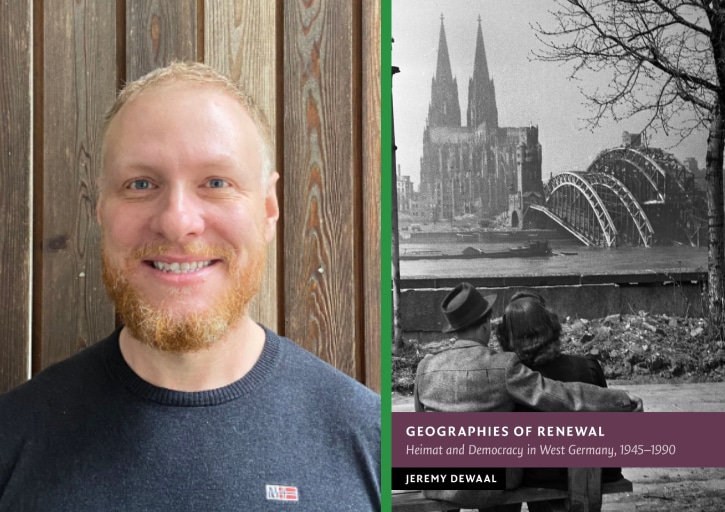
Heimat Revisited: Jeremy DeWaal on Place, Belonging and Post-war Politics in West Germany
What does it mean to feel “at home” in a place, and why does that matter for democracy? In this episode, historian Jeremy DeWaal talks about Heimat, a German word that is famously hard to translate. It is often rendered as “home” or “homeland”, but it also points to a deeper sense of belonging, memory and emotional attachment to specific places.
22.01.2026
Interviews and Podcasts
Stiliagi and Soviet Masculinities- A Conversation with Alla Myzelev Part II
In the Soviet Union, youth fashion meant more than just a way of expression. In our latest episode, we discuss with Alla Myzelev about the stiliagi, a flamboyant youth subculture that emerged in the late Stalinist and early post-Stalinist Soviet Union. Myzelev situates the stiliagi not simply as fashion-conscious rebels, but as a distinctly embodied and aesthetic form of dissent that challenged dominant socialist norms of respectability, discipline, and masculinity.
19.01.2026

Interviews and Podcasts
On Genocide: Omer Bartov in Conversation about Palestine, Israel, and Germany
Over the last two years, the world has witnessed atrocities beyond imagination. The killing of approximately 1,200 people by Hamas in Israel on October 7, 2023, was followed by a war in which the Israeli Defense Forces have, according to recent reports, killed over 67,000 Palestinians.
15.01.2026

Interviews and Podcasts
The Great War and the Transformation of Central Europe: A Conversation with Tara Zahra and Pieter Judson
The episode examines fears of democratisation and elite decision-making, the management of refugees and mass displacement, and the emergence of new welfare practices and administrative experiments, showing how these processes laid the foundations for the post-1918 order. By foregrounding shared experiences of scarcity, mobilisation, and repression across the Monarchy, the discussion examines what the Empire’s often improvised wartime policies reveal about processes of disintegration as well as unexpected capacities for adaptation.
12.01.2026

Interviews and Podcasts
Stiliagi and Soviet Masculinities- A Conversation with Alla Myzelev
In our latest episode, we discuss with Alla Myzelev about the stiliagi, a flamboyant youth subculture that emerged in the late Stalinist and early post-Stalinist Soviet Union. Myzelev situates the stiliagi not simply as fashion-conscious rebels, but as a distinctly embodied and aesthetic form of dissent that challenged dominant socialist norms of respectability, discipline, and masculinity. Through their brightly coloured clothing, enthusiasm for jazz, and stylised modes of self-presentation, stiliagi exposed the fragility of Soviet ideals of the “proper” socialist male citizen. Rather than overt political opposition, their subversion operated through taste, leisure, and the body, revealing how cultural practices could quietly unsettle authoritarian norms even in highly regulated societies.
8.01.2026
Interviews and Podcasts
Benjamin Gedan and Elias French on the Threat to Latin American Term Limits
The desire of leaders to remain in office indefinitely has haunted democracy since its inception. Politicians have found various ways to circumvent democratic accountability and sideline the people’s will for a change in leadership, from military coups to rigged elections or the installation of puppet leaders. One of the most widely used tools to constrain such practices is the establishment of presidential term limits. Many of today’s constitutions impose a limit on the number of times a person can run for office.
5.01.2026

Interviews and Podcasts
End of the Year Podcast 2025 – Part I: Reflections and Reckonings
As 2025 draws to a close, RevDem editors Alexandra Kardos (History of Ideas), Gabriel Pereira (Cross-Regional Dialogue), and Kristóf Szombati (Political Economy and Inequalities) take stock of a turbulent democratic year through three keywords: imagination, frustration, and realignment.
22.12.2025

Interviews and Podcasts
Carceral Politics: “Public Life” of Prisons in Modern Iran and Beyond
In this latest conversation with Golnar Nikpour, we discuss her book, The Incarcerated Modern: Prisons and Public Life in Iran (Stanford University Press, 2024). We discuss how modern Iranian prisons illuminate broader questions about political modernity, state formation, and democratic aspiration.
18.12.2025

Interviews and Podcasts
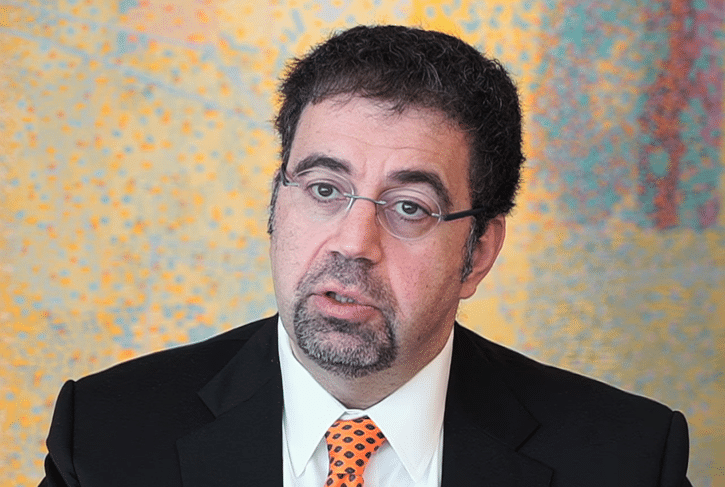
2025 in Perspective: Daron Acemoğlu on Democracy, Delivery, and the Crisis Within
In this exclusive end-of-year conversation with our Co-Managing Editor Ece Özbey, Nobel Prize–winning political economist Daron Acemoğlu reflects on what 2025 revealed, and failed to resolve, about the state of democracy.
15.12.2025
Interviews and Podcasts
An Authoritarian Turn in Contemporary Germany? – In Conversation with Robin Celikates
The threat of the far-right dominates politics in Germany today. The ascendance of the AfD marks the first time since the end of World War II that such a force has attracted a considerable share of the German electorate. This regularly leads politicians from centrist parties to emphasize the importance of preventing German history from repeating itself. However, these same actors have simultaneously brought far-right policies into the mainstream and adopted practices that resemble the playbook of autocrats. Such practices have been particularly visible in the repression of pro-Palestinian voices over the last two years. In recent articles, Prof. Robin Celikates has argued that these developments indicate an authoritarian turn in contemporary Germany.
11.12.2025

Interviews and Podcasts
Social Media, AI-Chatbots and the Death of the Evening News: How to Restore Trust in a Fragmented Media World – A Conversation with Raluca Radu
In a conversation for the Review of Democracy, Raluca Radu explains how social platforms like TikTok, WhatsApp groups, and AI-driven chatbots reconfigure the trust towards information. As Raluca Radu clearly emphasizes, COVID-19 marked a shift in media consumption. During the pandemic, the main source of information became the short-form video content on platforms such as TikTok. Some newsrooms recognized that their audiences migrated elsewhere and rushed to follow. They tried to adapt to this changing landscape by establishing social media presence. By now, social media is not only an additional channel of dissemination but, in some cases, the only way to reach citizens who do not read traditional websites or watch TV. Thus, social media and algorithms redefine the public sphere worldwide.
8.12.2025

Interviews and Podcasts
How to Resist Illiberalism: Pedro Abramovay on Reimagining Democracy in Latin America
In this podcast, Pedro Abramovay offers a wide-ranging analysis of the rise of illiberal forces in Latin America and the democratic vulnerabilities they exploit.
4.12.2025

Interviews and Podcasts
Exiles and Diasporas in the Crosshairs of Authoritarian States – Nate Schenkkan on the Rise of Transnational Repression and What Can Be Done to Counter It
In this discussion with Nate Schenkkan, an independent authority on human rights and global authoritarianism and former senior director of research at Freedom House, we examine the growing issue of transnational repression—a practice wherein states pursue individuals and groups beyond their own borders whom they regard as threats to those in power.
1.12.2025

Interviews and Podcasts
An Authoritarian Turn in Contemporary Germany? – In Conversation with Robin Celikates
In Part 1 of this podcast, Prof. Celikates examines the German government’s repression of pro-Palestinian protests and voices, discusses Germany’s broader protest culture, and reflects on the notion of Staatsräson.
26.11.2025
Interviews and Podcasts
How’s the Rule of Law in Poland? – In Conversation with Jakub Jaraczewski
In this podcast, Jakub Jaraczewski examines the progress the Bodnar ministry made in undoing the consequences of eight years of Law and Justice rule. He also discusses the challenges that lie ahead for Minister Żurek, with Nawrocki being widely seen as more confrontational than his predecessor in the Presidential Palace, Andrzej Duda.
17.11.2025

Interviews and Podcasts
Delivering Democracies: Maya Tudor on “What Democracy Does…And Does Not Do?”
In this conversation, Maya Tudor discusses her recent article published in the Journal of Democracy and argues that today’s decline in trust in democracy stems from misconceptions about its achievements, such as expanding education, extending life expectancy, promoting relative peace, and fostering economic progress.
14.11.2025

Interviews and Podcasts
A Turning Point in American Politics? The Rise of Democratic Socialists of America and Zohran Mamdani
To what extent does Zohran Mamdani’s recent election represent a turn in American politics? In an interview for the Review of Democracy, Fabian Holt (Associate Professor at Roskilde University) discusses the political platform that made Zohran Mamdani’s victory possible. Throughout our conversation, Holt maps the evolution of the Democratic Socialists of America, as presented in his latest book “Organize or Burn: How New York Socialists Fight for Climate Survival”, published last month by NYU Press.
12.11.2025

Interviews and Podcasts
Radical Ecologies of the Right and Left: A Conversation with Ashton Kingdon and Balša Lubarda
In this new episode of the “When the Far Right and the Far Left Converge” series, which shares fresh research from a workshop organised by the CEU DI Democracy in History Work Group, we discuss with Dr Ashton Kingdon and Dr Balša Lubarda how both the far right and the far left mobilise ecological ideas, often drawing from the same language of resistance.
7.11.2025

Interviews and Podcasts
Will AI Crack the Foundations of Democracy? Dean Jackson and Samuel Woolley on Longer-term Threats and Ways to Counter Them
In this episode of our special series produced in partnership with the Journal of Democracy, we explore “AI’s Real Dangers for Democracy,” the new article penned by Dean Jackson and Samuel Woolley (Journal of Democracy, Vol. 36, No. 4, October 2025)
3.11.2025

Interviews and Podcasts
EU Research Spotlight: Zsolt Boda on Moral Emotions in Politics and Democracy
In the opening episode of Review of Democracy’s new podcast series on EU-funded research, Alexandra Kardos speaks with Professor Zsolt Boda, Director of the ELTE Centre for Social Sciences, about the MORES Moral Emotions in Politics project, a Horizon Europe Research and Innovation Action exploring how emotions shape democratic life.
30.10.2025

Interviews and Podcasts
When Democracies Start to Self-Destruct: Rachel Myrick on how Polarization Becomes a Geopolitical Threat
In our podcast, Rachel Myrick, the Douglas & Ellen Lowey Associate Professor of Political Science at Duke University, discusses with us how extreme partisan polarization threatens not only domestic governance but also global stability. Drawing on her new book, Polarization and International Politics: How Extreme Partisanship Threatens Global Stability (Princeton University Press, 2025), Myrick argues that polarization in democracies affects foreign policymaking.
27.10.2025

Interviews and Podcasts
The Authoritarian Resurgence in World Politics – In Conversation with Alexander Dukalskis and Alexander Cooley
The end of the last century brought about what scholars have called a “unipolar moment.” With the fall of the Soviet Union, liberalism lost its enemy on the global stage, which led the United States to try to establish an international liberal order by promoting liberalism transnationally. This latter approach has not only been harshly criticized for often being executed hypocritically and sometimes causing disastrous wars, but also ultimately seems to have failed.
22.10.2025

Interviews and Podcasts
Negotiating Sexuality in Socialist Poland: In Conversation with Anna Dobrowolska
Anna Dobrowolska’s new book Polish Sexual Revolutions. Negotiating Sexuality and Modernity behind the Iron Curtain, published at the Oxford University Press this year, reveals fresh perspectives in the scholarship about the socialist states. In our podcast, she explains how Poland and Eastern Europe developed their own distinct approaches to sexual modernity under state socialism. While Western observers assumed sexual liberation was incompatible with communist rule, Poland was quietly developing its own sophisticated approach to sexual modernity. In her book, Anna Dobrowolska aimed to map these differences and nuances. Throughout the conversation, we learn that the conventional narrative of state oppression versus societal resistance proves to be inadequate when examining Poland’s sexual revolution. Dobrowolska’s archival research reveals a complex ecosystem of actors: sexologists, journalists, cultural institutions, who negotiated sexual discourse largely independent of [...]
20.10.2025

Interviews and Podcasts
The Hungarian Border That Took Years to Draw
Borders are rarely born in conference halls. As the newly edited book The Disputed Austro-Hungarian Border: Agendas, Actors, and Practices in Western Hungary/Burgenland after World War I, published this year by Bergahn Books shows that the borders are created by wars and conflicts and then changed by clerks, soldiers, smugglers and villagers trying to make sense of a new world order. By focusing on one of the seemingly post-1918 quieter frontiers, the line separating Austria from Hungary, the book challenges the narrative that the Treaty of Trianon neatly decided everything with a stroke of the pen.
16.10.2025

Interviews and Podcasts
Contentious Politics and Democratic Resilience
In this episode, we sit down with Professor Mohammad Ali Kadivar to explore the urgent and timely question of popular protests amid global democratic backsliding. Drawing from his acclaimed monograph, Popular Politics and the Path to Durable Democracy, Kadivar poses the following questions: What role does dissent play in sustaining democracies? Do protests reinforce or undermine democratic institutions?
13.10.2025
Interviews and Podcasts
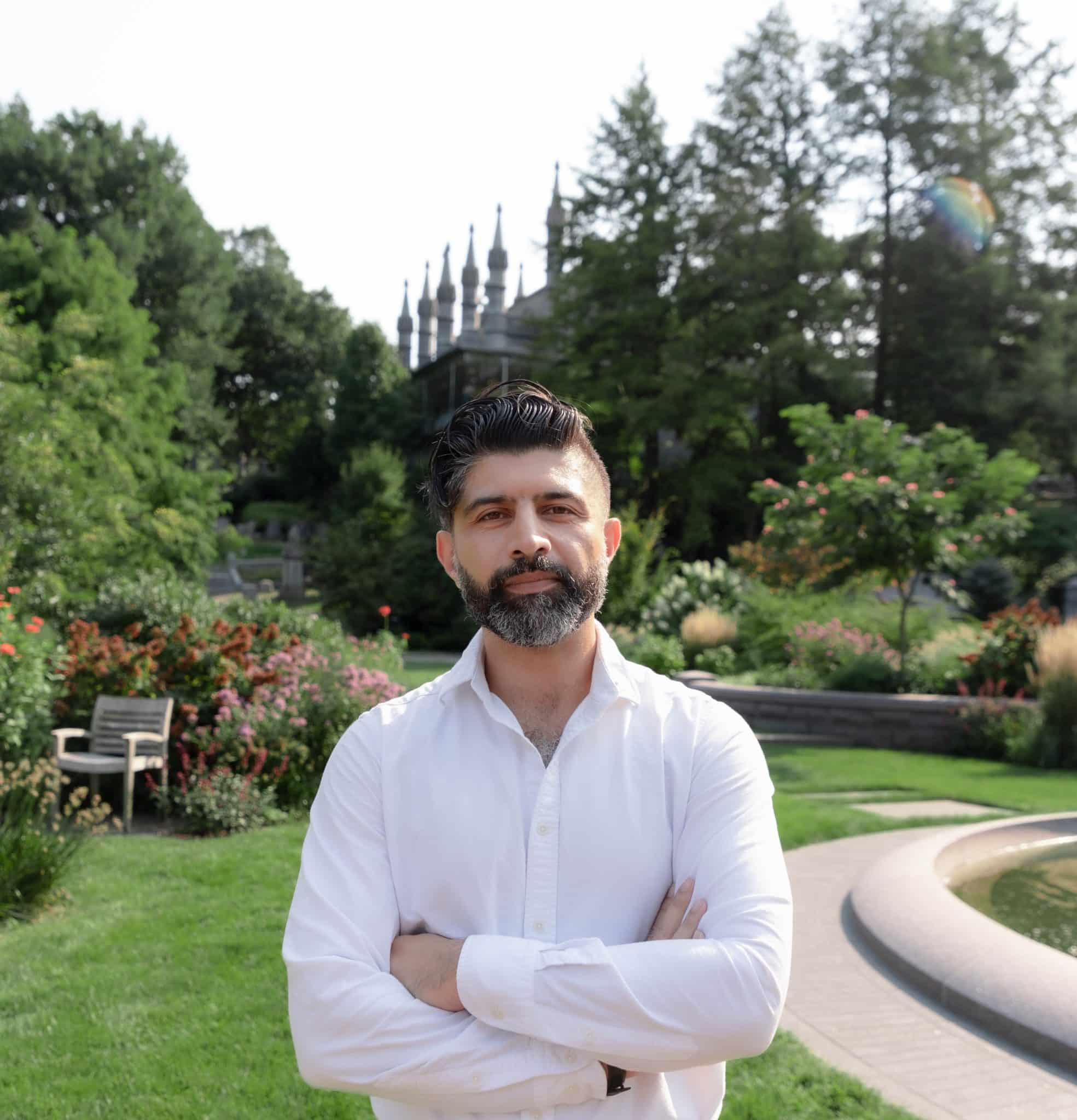
The Myth of Democratic Resilience – In Conversation with Jennifer Cyr and Nic Cheeseman
In our latest episode of the special series produced in partnership with the Journal of Democracy, we discuss the recent article co-authored by Jennifer Cyr, Nic Cheeseman and Matías Bianchi, entitled “The Myth of Democratic Resilience” (Journal of Democracy, Vol. 36, No.3, July 2025)
6.10.2025

Interviews and Podcasts
The Co-optation of Antonio Gramsci’s Ideas by the Contemporary (Far-)Right
This episode, part of the series When the Far Right and the Far Left Converge, features Francesco Trupia and Marina Simakova discussing the ideological co-optation of Antonio Gramsci’s ideas by the contemporary (far-)right. They examine when and how right-wing actors adopted his political language, and how political conjunctures in and beyond Europe have shaped this process.
29.09.2025

Interviews and Podcasts
Transformations of the Latin American Right: From Pink Tide to Polarization – Part 2
In the second part of our special two-part episode of the Review of Democracy podcast, we continue our conversation with André Borges, Ryan Lloyd, and Gabriel Vommaro. Building on our first discussion of parties, movements, and leaders, this episode turns to the demand side of the region’s political transformation. We explore how voters’ attitudes, cultural conflicts, and deepening polarization are reshaping right-wing politics across Latin America.
25.09.2025

Interviews and Podcasts
Transformations of the Latin American Right: From Pink Tide to Polarization – Part1
The conversation explores how Latin America’s right has been reshaped since the early 2000s — from the rise of new political parties and movements to the growing role of voters and cultural conflicts. In part one, we focus on the supply side: parties, movements, and leaders redefining right-wing politics in the region. In part two, we turn to the demand side, examining voters, polarization, and the societal forces driving this transformation. Join us as we map out the new generations of conservative and radical right-wing actors that are changing the political landscape across Latin America — and consider what this means for the future of democracy.
22.09.2025
Interviews and Podcasts
The Politics of Migration Narratives – In Conversation with Andrew Geddes
Migration is one of the most salient issues in European politics today. While its importance for voting decisions is widely acknowledged, many of its key characteristics remain the subject of vivid debate. Opinions about migration often diverge sharply: Does migration pose a threat to European societies, or is it essential for economic survival? Are public attitudes becoming more hostile, or more welcoming? Should European countries restrict migration, or embrace it? Competing narratives seem to strongly shape migration policy and the laws through which it is implemented.
17.09.2025

Interviews and Podcasts
Colonial Roots and Continuities in Europe’s Migration System –In Conversation with Janine Silga
When the first treaties that laid the groundwork for today’s European Union and the European Convention on Human Rights were signed after the Second World War, many of today’s member states were still significant colonial powers—empires. It was only in the years that followed that these European empires eroded, and many countries in the Global South gained independence. However, while colonialism formally ended, many have argued that coloniality has persisted. Although this applies to different areas, one of the most important is migration governance. Here, European countries have been accused of replacing explicitly racialized mechanisms with a facially race-neutral apparatus that nonetheless constitutes a system of neocolonial racial borders that benefits some and disadvantages others.
15.09.2025
Interviews and Podcasts
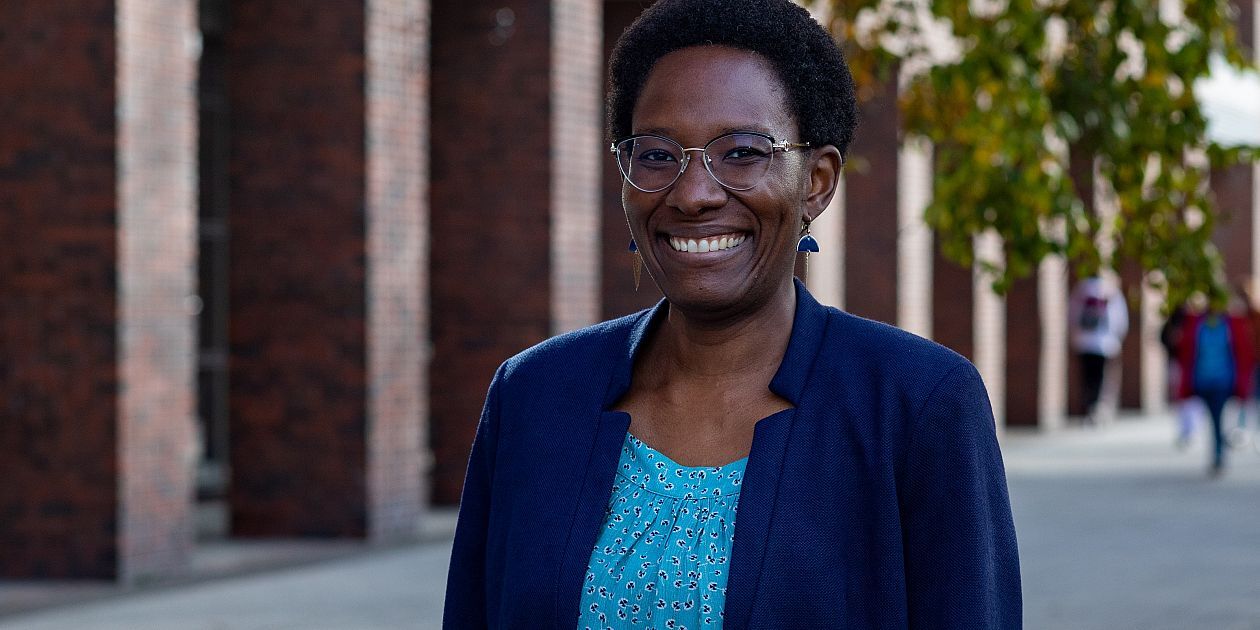
Capitalism’s Democracy: Competition and Resilience in Twenty-First Century
In our latest episode of the special series produced in partnership with the Journal of Democracy, we discuss the recent article co-authored by Steven Levitsky, Semuhi Sinanoglu, and Lucan Way, entitled “Can Capitalism Save Democracy?”
11.09.2025

Interviews and Podcasts
Scripts of Revolutions: A Conversation with Dan Edelstein
In this episode of Democracy and Culture, we speak with Dan Edelstein, William H. Bonsall Professor of French at Stanford University, about his new book The Revolution to Come: A History of an Idea from Stasis to Lenin (Princeton University Press, 2025). His academic investigations range across literary studies, historiography, political thought and digital humanities. Throughout our conversation, we focus on providing a new understanding of the concept of revolution. In his latest book, by tracing the conceptual distinction between stasis and metabolē through Roman, medieval, and Renaissance thought, he recovers the overlooked role of Polybius in shaping the constitutional imagination of early modern Europe.
8.09.2025

Interviews and Podcasts
A New Constitutional Settlement for Poland? – In Conversation with Maciej Kisilowski (Part 2)
In this part, Professor Kisilowski lays out his proposals for a new constitutional settlement for Poland, aimed at addressing the roots and consequences of the severe polarization of the Polish society. He builds upon the arguments expounded in a volume edited by him and Professor Anna Wojciuk, Umówmy się na Polskę (ZNAK 2023), in which thinkers from all across the political spectrum shared their ideas for changing Poland’s political status quo.
4.09.2025

Interviews and Podcasts
The Illiberal Trap: Stanley Bill and Ben Stanley on Trilemmas and Warnings from Poland
In this new episode of our special series produced in partnership with the Journal of Democracy, Stanley Bill and Ben Stanley draw on their new article “Democracy After Illiberalism: A Warning from Poland” (July 2025, Vol. 26, No. 3) to discuss the challenges, dilemmas, and paradoxes of liberalism after illiberalism in Poland. They reflect on the concepts of liberalism and illiberalism to dissect the approach Donald Tusk’s current government has taken and its major consquences. They also consider the wider lessons that may be drawn from recent and ongoing Polish experiences.
1.09.2025

Interviews and Podcasts
From Competitive Authoritarian to Hegemonic: Berk Esen on the Decline of Turkish Democracy and the Prospects for Its Revival (Part 2)
In Part 2 of our latest episode in the special series produced in partnership with the Journal of Democracy, Berk Esen turns to the other side of the equation: how Turkey’s opposition is pushing back against an increasingly hegemonic regime. This episode builds on Part 1, where we explored the regime’s authoritarian escalation through the courts, media, and economic coercion.
25.08.2025

Interviews and Podcasts
War, Oligarchs, and the Future of Ukraine’s Political Economy – Inna Melnykovska on Civic Transformation, Reconstruction and EU Influence in Wartime Ukraine
How is war transforming Ukraine’s economy—and its oligarchs? In this Review of Democracy podcast, political economist Inna Melnykovska (Central European University) discusses how the full-scale Russian invasion has led to surprising shifts in business-state relations, including a turn toward civic responsibility among Ukraine’s biggest companies.
20.08.2025

Interviews and Podcasts
From Competitive Authoritarian to Hegemonic: Berk Esen on the Decline of Turkish Democracy and the Prospects for Its Revival (Part 1)
In Part 1 of our latest edition in the special series in partnership with the Journal of Democracy, Berk Esen unpacks how Turkey’s competitive authoritarian regime is veering toward full autocracy.
13.08.2025

Interviews and Podcasts
Holding Frontex Accountable – In Conversation with Joyce De Coninck
In current public discourse, human rights violations at the EU’s borders are inextricably linked to one specific actor: the European Border and Coast Guard Agency – or, in short, Frontex. Since its establishment in 2004, human rights activists have become increasingly aware of various rights violations committed by the agency, particularly in the Mediterranean. To name just one example, Frontex has been accused of providing the locations of migrants intercepted at sea to the Libyan coast guard, which then transported them to camps where they have been systematically raped, tortured, and enslaved. Remarkably, despite accusations of the most severe human rights violations, Frontex has largely managed to avoid legal consequences. Currently, Frontex stands before the Grand Chamber of the Court of Justice of the EU for the first time in its history.
11.08.2025

Interviews and Podcasts
The Aftermath of Poland’s Presidential Election – In Conversation with Maciej Kisilowski (Part 1)
In Part 1 of this podcast, Maciej Kisilowski examines the results of Poland’s presidential election as well as its implications for Poland’s political dynamics over the next few years. In particular, he addresses the issue of whether Polish liberals and progressives are capable of correctly identifying the prevailing sentiments in a deeply divided society.
6.08.2025

Interviews and Podcasts
The Paradox of Dynastic Democracy: Richard Javad Heydarian on Current Developments in the Philippines, Sharpening Global Competition, and the Prospects of a Liberal-Progressive Breakthrough
In this new episode of our monthly special created in partnership with the Journal of Democracy, Richard Javad Heydarian discusses the Philippines’ dynastic democracy and political prospects in a truly global framework.
4.08.2025

Interviews and Podcasts
The Rise of Legislative Authoritarianism –In Conversation with Paolo Sosa-Villagarcia and Moisés Arce
In the latest episode of our special series produced in collaboration with the Journal of Democracy, Paolo Sosa-Villagarcia and Moisés Arce discuss the rise of legislative authoritarianism, compare it with more traditional forms of authoritarian rule, and explore its implications both in theory and in practice.
7.07.2025

Interviews and Podcasts
Mapping Crisis Across Borders: Balázs Trencsényi on the Interwar Period, Intellectual History, and the Future of Democracy
In our new podcast, we speak with historian Balázs Trencsényi about his new book Intellectuals and the Crisis of Politics in the Interwar Period and Beyond: A Transnational History (OUP, 2025). Trencsényi offers a sweeping re-narration of modern European intellectual history through the lens of “crisis” — not only as an analytical category, but as a powerful tool of political mobilisation.
3.07.2025

Interviews and Podcasts
Curating Europe’s Memory: A Conversation with Simina Bădică about the House of European History
In this episode of Open Space(s) series, the Review of Democracy brings to your attention one of Europe’s most ambitious cultural institutions: the House of European History. Founded by the European Parliament in 2017 in Brussels, this unique institution explores Europe’s past from a transnational perspective and provides a platform for debating shared memory. The House of European History curates exhibitions, fosters debates, and research the shared European histories.
30.06.2025

Interviews and Podcasts
Reimagining Political Theory: A Global and Comparative Conversation
In this episode of the Review of Democracy podcast, Alexandra Medzibrodszky talks to Leigh Jenco and Paulina Ochoa Espejo—two of the three co-authors of the new textbook Political Theory: A Global and Comparative Introduction, published by SAGE. Co-authored with Murad Idris, this groundbreaking volume reimagines how political theory is taught and understood by moving beyond a Eurocentric focus and embracing a truly global and comparative framework. Rather than organizing content around geographical regions or national traditions, the book takes a thematic approach—exploring war, political action, development, ritual, and other enduring political questions through a rich array of sources from across cultures and time periods. In the conversation, we discuss what it means to think politically beyond the Western canon, how to work with texts that are often marginalized or excluded from mainstream syllabi, and what challenges arise when dealing with disciplinary boundaries.
26.06.2025

Interviews and Podcasts
Startup Democracy: Meritocracy and Gender in Bangalore, A Conversation with Hemangini Gupta
Startups have become one of the defining features of the 21st-century economy, celebrated as engines of innovation, meritocracy, and social mobility. Entrepreneurs—from Silicon Valley to Bangalore—are increasingly influential in shaping not just markets but also political discourse. Governments around the world are investing heavily in building startup ecosystems, often presenting them as neutral, technocratic spaces of economic growth and opportunity.
24.06.2025

Interviews and Podcasts
Shaping the Culture of a City: A Conversation with Bohdan Shumylovych
In this episode of Open Space(s), the Review of Democracy focuses on Lviv, where the Center for Urban History offers a unique institutional model at the intersection between memory, space, and digital innovation. Founded in 2004 and located at 6 Bohomoltsia Street, Lviv, the Center for Urban History has become a vital node in public history and digital humanities. It defines itself as a hybrid institution with a hybrid audience.
20.06.2025

Interviews and Podcasts
Can Courts Save Democracy? In Conversation with Samuel Moyn
Samuel Moyn discusses the risks of focusing too heavily on legality in the fight against rising authoritarianism. Since the beginning of the year, the Trump administration has been trampling on different sectors of the U.S. state. Numerous commentators, both from the U.S. and abroad, have argued that the issue of a potential “constitutional crisis”—one that could pave the way for authoritarianism—essentially hinges on whether the government complies with court orders. In contrast, Professors Ryan Doerfler and Samuel Moyn have argued that this focus is, at the very least, misplaced. So far, rather than protecting democracy, the courts have helped pave the way for the current situation. This raises important questions about the right pro-democratic strategy—not only in the U.S., but also in European countries such as Germany, where the far-right is on the rise and the judiciary is widely seen as the bulwark against authoritarianism. In this conversation, Samuel Moyn explains the [...]
16.06.2025

Interviews and Podcasts
Survival, Resistance and Readiness in Dark Times – Vincent Liegey on the Trajectory and Future of the Degrowth Movement
In this interview Review of Democracy political economy editor Kristóf Szombati speaks with Vincent Liegey — degrowth activist, essayist, lecturer and editorial advisor of the new Routledge Handbook of Degrowth — about the roots, trajectory, and challenges of the degrowth movement.
12.06.2025
Interviews and Podcasts
Instrumentalization of Migration? – In Conversation with Nora Markard
In recent years, the EU’s increasingly right-leaning discourse on migration has given rise to a new narrative: the instrumentalization of migration. EU member states strive for lower human rights standards, arguing that Belarus, under the authoritarian rule of Alexander Lukashenko, deliberately sends individuals who have fled countries such as Afghanistan and Iraq to the EU’s borders in order to overwhelm them, at times even accusing these individuals of collaborating with Belarusian authorities. Currently, three cases related to this situation are pending before the European Court of Human Rights.
9.06.2025

Interviews and Podcasts
Can Democracy Deliver? Francis Fukuyama and Beatriz Magaloni on Performance, Legitimacy, and Public Trust
In the latest episode of our monthly special in cooperation with the Journal of Democracy, Francis Fukuyama and Beatriz Magaloni discuss why democratic legitimacy increasingly hinges on governments’ ability to deliver tangible results.
5.06.2025

Interviews and Podcasts
David vs. Goliath: Defeating Russian Autocracy
In the new episode of our monthly special in cooperation with the Journal of Democracy, Serhii Plokhii discusses the key aspects of Russia’s war in Ukraine, the clash between democracy and autocracy.
2.06.2025
Interviews and Podcasts
Erased: Women, Power, and the Hidden History of International Relations
In this episode of the Review of Democracy podcast, Alexandra Medzibrodszky speaks with Patricia Owens, renowned professor of international relations at Oxford, about her bold and revelatory new book, Erased: A History of International Thought Without Man (Princeton University Press, 2025). Owens exposes the hidden foundations of international relations in Britain, not as a field founded solely by elite white men, but one deeply shaped by the intellectual work of women—figures such as Margery Perham, Merze Tate, Eileen Power, and Susan Strange—whose ideas and influence have long been buried under layers of academic erasure.
26.05.2025

Interviews and Podcasts
The Unequal Republic and the Egalitarian State: Democracy, Authoritarianism, and the Politics of Redistribution in India and China
In this conversation with Professor Vamsi Vakulabharanam, we explore the relationship between democracy and economic inequality by examining the divergent trajectories of China and India, as detailed in his recently published book, Class and Inequality in China and India, 1950-2010 (Oxford University Press, 2024). Through a comparative lens, Vamsi probes how political regimes—one authoritarian, the other democratic—shaped the economic responses to inequality in each country. While both nations began their postcolonial histories with ambitious visions of development, their political systems produced markedly different outcomes. In India, democratic governance allowed for broad participation but was also shaped by elite consensus. Post-independence reforms, though grounded in democratic ideals, often took a top-down form that prioritized the interests of rural capitalists and dominant castes. This constrained the potential for deep structural transformation, despite the formal [...]
19.05.2025

Interviews and Podcasts
The Untold Story of Schengen: A Conversation with Isaac Stanley-Becker
In this episode of the RevDem podcast, investigative journalist and historian Isaac Stanley-Becker discusses his revealing new book, Europe Without Borders: A History (Princeton University Press). Drawing on newly accessible archives and in-depth interviews, Stanley-Becker sheds light on the little-known origins of the Schengen Agreement—long celebrated as a cornerstone of European integration and free movement. Yet, as this conversation uncovers, the story behind Schengen is far more complex.
12.05.2025

Interviews and Podcasts
Authoritarian Waves Crashing: Dan Slater Reinterprets the Third Wave of Democratization
In the new episode of our monthly special in cooperation with the Journal of Democracy, Dan Slater discusses the authoritarian origins of the third wave of democratization.
5.05.2025
Interviews and Podcasts
Hydro-hegemony: Water Modernization in Nepal and Beyond
In this wide-ranging conversation on hydrology and climate change, Dr. Dipak Gyawali, former Minister of Water Resources for Nepal, offers a series of crucial insights into the often indifferent, selectively inadequate, and politically compromised responses to the climate crisis. Arguing for a more sophisticated, multipronged approach, Dr. Gyawali critiques dominant Western scientific paradigms for failing to recognize the climate crisis primarily as a crisis of water. He highlights how these frameworks not only marginalize water-related concerns but also frequently dismiss indigenous hydrological knowledge systems as unscientific or primitive, thereby reinforcing global hierarchies of knowledge and power.
28.04.2025
Interviews and Podcasts
Valeurs de l’Union – In Conversation with Luke Dimitrios Spieker
Since the seminal 2018 Portuguese Judges case, it has been established that violations of values enshrined in Article 2 of the Treaty on European Union (TEU) can be litigated before the Court of Justice of the European Union (CJEU). Currently, proceedings are ongoing in the European Commission’s infringement action against Hungary, the argument being that its anti-LGBTQI+ laws breach provisions of the internal market, several Charter rights, and, importantly, the common values enshrined in Article 2 TEU. The case, known as Valeurs de l’Union, has been hailed as the “largest human rights battle in EU history.” In this RevDem Rule of Law podcast episode, our co-managing editor, Dr. Oliver Garner, discusses the enforcement of the Union’s values at the Member State level as well as at the Union’s institutional level with Dr. Luke Dimitrios Spieker. Dr. Spieker is Senior Research Fellow at the Max Planck Institute for Comparative Public Law and International Law and Postdoctoral [...]
22.04.2025

Interviews and Podcasts
Illiberal Transatlantic Ties and the Reshaping of Democracy: Lessons From the US and Hungary
In this episode of the Democracy After 2024 series, Zsuzsanna Végh and Daniel Hegedűs examine transatlantic cooperation between state and non-state actors in the United States and Hungary. They analyze commonalities in narratives and shared practices, assessing their impact on democracy in Central and Eastern Europe and beyond. Disclaimer: The views and opinions expressed in this episode are solely those of the speakers and do not necessarily reflect the positions of the German Marshall Fund of the United States or any institutions or organizations with which they are affiliated. Zsuzsanna Végh is a program officer at the German Marshall Fund of the United States and an associate researcher at the European Council on Foreign Relations. Her analytical focus is on the populist radical right in Central and Eastern Europe, its impact on foreign policy and democratic quality, and the foreign and EU policies of the Visegrád countries. Daniel Hegedüs is a German Marshall Fund of the [...]
16.04.2025

Interviews and Podcasts
Ex-Ministers as Constitutional Judges – In Conversation with Mathias Möschel
Debates about the politicization of constitutional courts are as old as the institution itself. The concept’s originator, Hans Kelsen, emphasized the importance of preventing members of the government and parliament from sitting on constitutional courts, “because their acts are the acts to be controlled by the court.” While this idea is deeply entrenched—at least to the extent that simultaneous membership in the executive or legislative and judicial branches is widely prohibited—the same does not hold true across other temporal dimensions. In his new book Ex-Ministers as Constitutional Judges, published by Oxford University Press, Prof. Mathias Möschel examines the effects—both negative and positive—of this practice, focusing on the constitutional courts of France, Italy, Austria, and Germany.
14.04.2025

Interviews and Podcasts
Trapped in the Cycle? – Giorgos Venizelos on the Year of Elections and Politics of (Anti-) Populism
Populism is often framed as a challenge to democracy. But what about anti-populism? Does opposing populism protect democratic institutions, or does it risk pushing politics toward elitism and exclusion, eroding social cohesion and deepening polarization? With the latest global developments, including Donald Trump’s resurgence in the United States and the growing influence of Alternative für Deutschland in Germany, these questions have never felt more urgent.
10.04.2025

Interviews and Podcasts
Historical Archives of the European Union – a Space of Knowledge Production
Archives are vital for knowledge formation. Historians and social scientists rely on these spaces to shape new narratives and question the past. Yet, archives often seem to be unveiled in a sort of mystery, which might be partly due to the access restrictions for the specialists and broader public alike. However, not all the archives follow this restrictive approach. On the contrary, many institutions started to favour openness and transparency. Rather than limiting access for the researchers and the larger public, they encourage interactions on different levels.
9.04.2025
Interviews and Podcasts
Why Eco-authoritarianism Is Not the Solution – Nomi Claire Lazar and Jeremy Wallace on Why, Despite Its Many Flaws, We Should Stick to Democracy in Our Quest to Solve the Climate Crisis
In this conversation with Nomi Lazar, Professor of Public and International Affairs at the University of Ottawa, and Jeremy Wallace, Professor of China Studies at the Johns Hopkins School of Advanced International Studies, we engage with their spirited defense of democracy in the face of calls for the deployment of emergency powers to come up with solutions to the worsening climate crisis. Nomi and Jeremy highlight the pitfalls of emergency legislation and spell out the key resources that in their view democracies and only democracies bring to the table in the combat to prevent climate breakdown. The conversation also touches on China’s impressive climate record, the shortcomings of liberal democratic government, the need for more egalitarian forms of democracy, and some of the ways in which well-designed emergency legislation could still prove useful.
7.04.2025

Interviews and Podcasts
How the European Council Leads – In Conversation with Martina Vass
The European Council brings together all of the heads and states of government of the European Union in order to drive policy. In the last decade the EU has faced crises of the economy, membership, values, and migration. This conversation between our co-managing editor Oliver Garner and Dr Martina Vass considers these issues through the lens of the latter's monograph.
31.03.2025

Interviews and Podcasts
Political Capacity: Gianna Englert on the Liberal Struggle for Democracy
Is democracy sustainable without informed, virtuous, and engaged citizens? Can political institutions shape the kind of citizenry democracy needs? These questions lie at the heart of Democracy Tamed: French Liberalism and the Politics of Suffrage, the compelling new book by political theorist Gianna Englert, who joins us in this episode of RevDem. As contemporary anxieties grow over the future of liberal democracy and the rise of populism, Englert turns our attention to 19th-century France, where liberal thinkers grappled with similar dilemmas in the wake of the French Revolution.
24.03.2025

Interviews and Podcasts
Lost Souls: Soviet Displaced Persons and the Cold War Struggle
What happens when war leaves millions stranded, stateless, and unwanted? In this episode of the Review of Democracy podcast, host Imogen Bayley discusses with renowned historian Sheila Fitzpatrick her latest book, Lost Souls: Soviet Displaced Persons and the Birth of the Cold War. Drawing from newly uncovered archival research, Fitzpatrick explores the lives of Soviet displaced persons—those who found themselves outside the USSR at the end of World War II and refused to return, despite intense Soviet pressure.
20.03.2025

Interviews and Podcasts
Foreign Hands, Local Democracy: Toxic Legacies of Cold War in India
In this conversation with Paul McGarr, we discuss his latest book, Spying in South Asia (Cambridge, 2024). From the influence of espionage on international relations to the role of conspiracy and rumor in shaping domestic politics, McGarr highlights the complexities of intelligence dynamics between the West and India. He reveals how during the Cold War, democratic aspirations in the Global South were often dismissed by American and British intelligence and foreign policy establishments. Challenging the widely held belief that the Western powers championed democracy in the region, McGarr argues that Cold War geostrategic priorities frequently undermined democratic movements in South Asia. Yet, despite these external pressures, local actors and political institutions in India played a crucial role in shaping intelligence outcomes, resisting imposed narratives, and asserting their own democratic agency.
17.03.2025

Interviews and Podcasts
Liberal Democratic Standards Are Not Just an Opinion – Karolina Wigura on Polish Politics, Liberal Emotions, and Her Major Concerns
In the latest episode of our Democracy After 2024 series, Karolina Wigura discusses Poland’s current role in Europe and the changing polarization between liberal and illiberal forces; analyzes the role of emotions in contemporary liberal politics; reflects on how we distinguish between agendas of accountability, on the one hand, and of retribution and revenge, on the other; and explains what she will watch particularly closely in the coming months.
12.03.2025

Interviews and Podcasts
An Open Marketplace for Members of Parliament in European countries? In Conversation with Emiljana Krali
In the latest RevDem podcast our co-managing editor Dr Oliver Garner discusses processes for becoming an MP today in Europe with Dr Emiljana Krali.Dr Krali is a generalist Equity Research Analyst who has experience in telecommunications, fintech, software, and hardware among other fields. She holds degrees from the University of Bari in physics and from the University of Surrey in nanotechnology. Her Ph.D. was obtained from Imperial College London.She is currently undertaking the selection process to become a candidate for the governing Socialist Party in Albania.
10.03.2025

Interviews and Podcasts
Texts, Contexts, and Feminist Voices in East-Central Europe
In this episode, we explore the newly published book Texts and Contexts from the History of Feminism and Women’s Rights in East-Central Europe, Second Half of the Twentieth Century (CEU Press, 2024) edited by Zsófia Lóránd, Adela Hîncu, Jovana Mihajlović Trbovc, and Katarzyna Stańczak-Wiślicz. Our conversation with the editors delves into the book's aim of highlighting the often-overlooked contributions of East Central European women to global feminist thought and activism. We discuss the selection process of a diverse range of texts and artworks that challenge the dominant political and intellectual canons, focusing on the importance of including works that don't necessarily self-identify as feminist but engage with themes of systemic oppression. The discussion also touches on how socialism and the post-socialist transitions shaped feminist movements in the region, notable figures and texts from the volume, encountered controversies during the process of editing as well as the [...]
7.03.2025

Interviews and Podcasts
Beyond Narratives, Personas and Spectacles: A Conversation on Illiberal and Authoritarian Practices
In this episode of the Democracy After 2024 series, Dorjana Bojanovska Popovska hosts Marlies Glasius for a discussion that goes beyond traditional regime-type classifications and the public/private divide, by looking at examples of illiberal and authoritarian practices that emerged or peaked in 2024 as well as their diffusion across different contexts.
6.03.2025

Interviews and Podcasts
The Right against Rights in Latin America
In this conversation with the Review of Democracy, Professor Leigh Payne, Dr. Julia Zulver, and Dr. Simon Escoffier discuss the development of right-against-rights movements that have grown in numbers, strength, and influence in recent years in Latin America. The discussion draws on their latest book, “The Right against Rights in Latin America,” published by Oxford University Press, in which they show that new anti-rights groups are intent on blocking, rolling back, and reversing social movements' legislative advances by obstructing justice and accountability processes and influencing politicians across the region.
5.03.2025

Interviews and Podcasts
Why Is the World Down on Democracy? – Richard Wike Discusses Current Global Attitudes and the Rising Dissatisfaction with the Way Democracies Work
In this conversation, Richard Wike – director of global attitudes research at Pew Research Center – presents the key facts of the growing dissatisfaction with the way democracy works; discusses which parts of society support which kinds of change in the direction of more representativity; explores how people view the impact of social media on democracy; and reflects on how democracies of the future might look different from past versions and how they could empower citizens more.
3.03.2025

Interviews and Podcasts
The Continuous History of Disruptions in Lahore: A Conversation with Manan Ahmed Asif
In this discussion with Manan Ahmed, we consider the political history of South Asia from the perspective of one of its most vibrant and famed cities, Lahore. Drawing from his latest book, The Disrupted City: Walking the Pathways of Memory and History in Lahore (The New Press, 2024), we consider the various episodic and modular histories of cities in the Global South, their role in forming new kinds of tactile consciousness towards politics, and their presence in colonial and postcolonial political imagination. Enchanting yet tragic, monumental yet fragmented, Lahore—as depicted by Ahmed—embodies a dual legacy. It bears the scars of the 1947 partition of South Asia into India and Pakistan while also reflecting its own vibrant, if imperfect, history of religious and cultural cosmopolitanism—a legacy sacrificed to the nationalizing imperatives of what Ahmed calls “Prophetic Pakistan.”
26.02.2025

Interviews and Podcasts
Radical Democratic Thought in India: Rethinking Representation with Tejas Parasher
In this episode of the Review of Democracy Podcast, host Alexandra Medzibrodszky talks to Tejas Parasher, Assistant Professor of Political Theory at UCLA, to explore the rich and often overlooked landscape of radical democratic thought in modern India. Drawing from his award-winning book, Radical Democracy in Modern Indian Political Thought, Parasher discusses the ideas of thinkers and activists from the 1910s to the 1970s who challenged the colonial legacies of liberal, representative democracy. These figures envisioned participatory, federalist models of governance that resisted elitism and corruption, offering bold alternatives to the political status quo.
24.02.2025
Interviews and Podcasts
Public Attitudes and Dynamics of Opposition in Russia Since 2022
In this episode of the Democracy After 2024 series, Denys Tereshchenko hosts Margarita Zavadskaya to discuss the asymmetries of power between the state and civil society in Russia, public attitudes toward the full-scale invasion of Ukraine among Russians inside and outside Russia, and the reasons behind the failure of anti-war protests.
20.02.2025

Interviews and Podcasts
How to Battle Abusive Governments? – Kenneth Roth on the Strategies and Impact of Human Rights Watch
In this podcast, Kenneth Roth – who is about to publish Righting Wrongs. Three Decades on the Front Lines Battling Abusive Governments – explains what has made the strategies of Human Rights Watch distinct in the world of human rights-related advocacy and activism, and discusses cases where they managed to have a real impact; considers how the extension of the catalogue of human rights over time has shaped their interests and profile; reflects on HRW’s relationship with different types of governments; and explains how HRW has related to the question of humanitarian intervention and drawn on international humanitarian law across the decades.
17.02.2025
Interviews and Podcasts
How To Counter the Mainstreaming of Extremist Ideas? – Julia Ebner on Radicalization Processes and Our Fraught Moment
In the latest episode of our Democracy After 2024 series, Julia Ebner discusses major developments regarding the mainstreaming of extremist ideas; explains how social media platforms have contributed to radicalization processes and considers whether we might be experiencing a new turning point right now; and sketches effective counterstrategies – and reflects on what might be missing from our current toolbox.
13.02.2025

Interviews and Podcasts
Exporting Medical Expertise During the Cold War: Medical Humanitarianism, Ideological Expansion or Pragmatism? A Conversation With Bogdan Iacob
The medical aid programs established by socialist states nuance the Cold War dichotomy regarding the transfer of knowledge. The latest RevDem Democracy and Culture podcast with Bogdan Cristian Iacob explores the legacy of socialist regimes in the transnational circulation of expert knowledge during the Cold War, with a particular focus on medical aid.
10.02.2025

Interviews and Podcasts
Ukraine Under Martial Law – Transformations of Domestic Policies and Civil Society
In this episode, a part of the Democracy After 2024 series, Oleksandra Kokhan is joined by Taras Fedirko and Serhiy Kudelia to discuss the transformations of domestic policies in Ukraine following the 2022 invasion and under martial law, the (im)possibility of holding elections, and the role of civil society today.
5.02.2025

Interviews and Podcasts
Shouldn’t Ukraine Negotiate with Putin? – Robert Person on Obstacles to a Negotiated Ending of Russia’s Ongoing War of Aggression
In the newest episode of our monthly special in cooperation with the Journal of Democracy, Robert Person discusses key issues that pose nearly insurmountable obstacles to a negotiated ending of Russia’s war against Ukraine; dissects the Putin regime’s main aims regarding Ukraine over the past twenty years; and reflects on why arguments in favor of a ‘peace deal’ have gained in popularity – and what European supporters of Ukraine should be preparing for.
3.02.2025

Interviews and Podcasts
The Significance and Trajectory of Ukrainian Democracy Since 2022
In this episode of the Democracy After 2024 series, Ukrainian journalist and editor Arina Kravchenko hosts Ukrainian poet, prose writer, and essayist Mykola Riabchuk. They discuss the significance of democracy to Ukrainian national identity and the country’s social fabric. The conversation focuses especially on Ukrainian democracy’s trajectory since the beginning of Russia’s full-scale invasion in 2022 as viewed from within Ukrainian society and as a rediscovered object of interest from the outside. Mykola Riabchuk is the president of the Ukrainian PEN-center and a senior research fellow at the Institute of Political and Nationalities’ Studies, the Academy of Sciences of Ukraine. His most recent publications include At the Fence of Metternich’s Garden. Essays on Europe, Ukraine, and Europeanization (Stuttgart, 2021) and Nationalist’s Lexicon (in Ukrainian), a collection of essays published in 2022. Arina Kravchenko is a Ukrainian journalist, editor, and book reviewer. Artwork: [...]
31.01.2025

Interviews and Podcasts
This Land We Call Home: A History of “Criminal Tribes” in Modern India – An Interview With Nusrat F. Jafri
In this interview with Nusrat F. Jafri, we explore her much-acclaimed biographical fiction, This Land We Call Home. Drawing on her personal family history and extensive ethnographic research across northern and western India, Jafri raises a profound question for all democracies: How can democratic systems address historical prejudices and work toward creating a truly inclusive society?
29.01.2025

Interviews and Podcasts
European Values and Democratic Links – In Conversation with Miriam Schuler
In the last decade the Court of Justice of the EU has rapidly developed its case-law on the enforcement of EU values. Following multiple cases in which the Court enforced provisions that instrumentalize the Rule of Law in actions involving the ‘backsliding’ Member States of Poland and Hungary, the question now arises as to whether EU action may be justified to protect the co-foundational value of democracy during national elections in the EU’s Member States. The upcoming elections in the Federal Republic of Germany in February will bring these issues into sharp relief. In the latest RevDem Rule of Law podcast, Oliver Garner discusses these themes with Miriam Schuler (King’s College London), whose PhD research analyzes the protection of values within the European Union. The Current State of Play While Article 2 of the Treaty on European Union (TEU) outlines a broad set of foundational values, Schuler argues that, over the past decade, EU actions have [...]
28.01.2025

Interviews and Podcasts
Reimagining European Prosperity – A Conversation with Marija Bartl on the Role of Legal Imaginaries in Shaping European Political Economy
In this conversation at the Review of Democracy, Marija Bartl – author of Reimagining Prosperity: Toward a New Imaginary of Law and Political Economy in the EU – warns that the post-2008 crisis of neoliberalism created an ideological vacuum that would either be filled by a new vision of shared prosperity or by tribal imaginaries. She explains why the EU, despite its neoliberal origins, might be uniquely placed to articulate such a new vision of prosperity, and argues that European law is already being transformed to support it.
24.01.2025

Interviews and Podcasts
Who Is Going to Represent European Interests in the Future? – Zsuzsanna Szelényi on the Transformation of the EU and Our New Era of Uncertainty
In this conversation at the Review of Democracy, Zsuzsanna Szelényi discusses key questions in contemporary politics with a focus on European affairs. She explores the main priorities of Ursula von der Leyen’s second Commission and what might change as compared to her previous term. She also discusses the main challenges the EU faces when it comes to transatlantic relations and how Trump’s second term could impact the unfolding and outcome of Russia’s war of aggression against Ukraine – and whether the position and role of Hungary’s Orbán regime might change in international politics.
20.01.2025

Interviews and Podcasts
When Should the Majority Rule? – Steven Levitsky and Daniel Ziblatt on Countermajoritarian Institutions and the Question of Democratic Resilience
In this conversation, Harvard professors Steven Levitsky and Daniel Ziblatt examine the various types of countermajoritarian institutions and reflect on which are democracy-enhancing and which can potentially subvert democracy. Levitsky and Ziblatt show the connections between the strong countermajoritarian features of the U.S. political system and its ongoing democratic backsliding. They also consider how the trade-offs between countermajoritarianism and democratic stability have played out across the globe.
17.01.2025

Interviews and Podcasts
Overcoming Membership Fatalism – A Conversation with Tom Theuns on Democratic Theory and His Immanent Critique of the EU
In this conversation, Tom Theuns – author of Protecting Democracy in Europe: Pluralism, Autocracy and the Future of the EU – reflects on EU institutions’ rather narrow conception of democracy and their complicity in democratic backsliding in EU member states; considers how a more coherent and effective response to the latter processes could be designed; critiques the EU’s ‘membership fatalism’ and explains why he has proposed an expulsion mechanism; and positions his approach within political theory and discusses the reception of his ideas also beyond that field.
13.01.2025

Interviews and Podcasts
How Did Right-Wing Populists Win the Immigration Debate and What Can Mainstream Parties Do About It? – Sheri Berman on the Representation Gap Between Voters and Mainstream Parties Over Immigration in Western Europe
In this conversation with Sheri Berman, Professor of Political Science at Barnard College, we engage with her key argument that growing support for right-wing populism is primarily a consequence of mainstream parties’ failure to address popular concerns about immigration. We dissect the ‘representation gap’ argument, discuss alternative explanations (namely, the issue of racism and xenophobia), explore salient differences between center-left and center-right parties, and highlight strategies that mainstream parties have used and could use to respond to citizens’ concerns and demands on immigration.
6.01.2025

Interviews and Podcasts
End of the Year Podcast 2024
What were the defining events of 2024? Which new publications impressed us the most? What do we expect from the upcoming year in global politics and in terms of new intellectual trends? Today, we, editors of the Review of Democracy bring you our traditional end of the year podcast.
18.12.2024

Interviews and Podcasts
Landing the Paris Climate Agreement – Todd Stern on a Groundbreaking Document and What It Took to Make It Happen
In this conversation at the Review of Democracy, Todd Stern – former United States Special Envoy for Climate Change – explains what made the Paris Climate Agreement such a groundbreaking document and what kind of bargaining and compromises it took to make it happen; discusses the place and role of the US within its broad coalition as well as his extensive engagement with his crucial Chinese partners; and considers major new possibilities to tackle climate change effectively and current obstacles to do so.
16.12.2024

Interviews and Podcasts
Authoritarian International Law? – In Conversation with Tom Ginsburg
International law is a live instrument in the current global geopolitical crisis. This latest RevDem Rule of Law podcast, conducted by Konstantin Kipp with Professor Tom Ginsburg, reflects upon the potentially authoritarian nature of international law in its function of enabling relations between states.
13.12.2024

Interviews and Podcasts
The Mystic Candidate – Călin Georgescu’s Blend of Orthodox Faith, Mysticism, and Power
In this conversation at the Review of Democracy, Ionuț Biliuță discusses the connections between Orthodoxy and nationalism in Romania and to what extent they have influenced this year’s presidential elections; the revival of narratives concerning ‘fascist martyrs’ by Călin Georgescu and other radicals; the impact the 2018 Constitutional referendum on same-sex marriage had on radicalization; the ideas in transnational circulation that have inspired Georgescu's statements, including Alexander Dugin’s and those of Donald Trump’s Evangelical supporters; and the steps that the Romanian Orthodox Church could take to dissociate itself from far right discourses.
9.12.2024
Interviews and Podcasts
The Rise of Successful Political Outsiders in Latin America: Lessons Learned from Argentine President Javier Milei
The podcast focuses on and draws lessons from the experience of current Argentine president Javier Milei. It delves into pivotal questions: How do outsiders get elected in a political system designed to secure electoral competition among established political leaders? How do they navigate constraints posed by legislatures dominated by opposition? Does the rise of political outsiders from the global north influence the progress of these Latin American leaders? Does the radical right-wing ideology of outsiders make them more effective? What are the lessons for understanding current Latin American politics?
4.12.2024
Interviews and Podcasts
The Return of Dictatorship – Grzegorz Ekiert and Noah Dasanaike on Dictatorial Drift, Autocracy Promotion and Strategies to Oppose Them
In this conversation, Grzegorz Ekiert and Noah Dasanaike explain their concept of dictatorial drift and how various countries have moved toward full autocracy in recent years; discuss new features of dictatorships in the early 21st century and how such regimes relate to each other; consider whether it makes sense to compare the growing trend of autocracy promotion with democracy promotion; and reflect on how full autocracies might be opposed more effectively in the future.
2.12.2024
Interviews and Podcasts
Revising European Integration History in an Age of Uncertainty – Karin van Leeuwen, Aleksandra Komornicka, and Koen van Zon on Their Interdisciplinary Handbook with a Historical Focus
In this conversation at the Review of Democracy, Karin van Leeuwen, Aleksandra Komornicka, and Koen van Zon – contributors to The Unfinished History of European Integration that has now appeared in a revised edition – elucidate the main questions that organize their overview of European integration history; reflect on the applicability and usefulness of various influential theories when trying to narrate the history of European integration today; show what special contributions historians can make to the interdisciplinary study of the European Union; and discuss recent advances in the historiography of European integration, specifying questions that would deserve more attention in the future.
27.11.2024

Interviews and Podcasts
On Muslim Democracy: Essays and Dialogues
Join Review of Democracy Ideas Editor Alexandra Medzibrodszky as she hosts Professor Andrew March, a leading scholar of political philosophy and Islamic thought, to discuss On Muslim Democracy: Essays and Dialogues. The book focuses on Rached Ghannouchi’s political thought and offers a unique perspective on the intersection of Islamic principles and modern democratic governance.
25.11.2024

Interviews and Podcasts
Coalitional History of Democracy During Emergency (1975-77) in India – In Conversation with Kristin Plys
In this conversation with Kristin M. Plys, we delve deeply into the nature and quality of Indian democracy by examining the legacy and impact of its resistance movements. Plys’ recent book, Brewing Resistance (Cambridge University Press, 2020), studies the Indian Coffee House movement—a unique, worker-driven cooperative that flourished in the 1970s. This movement not only symbolized a shared space for political discourse but also became a hub for anti-authoritarian sentiment, especially during the turbulent years of the Emergency (1975-77), when democratic freedoms were severely curtailed by Prime Minister Indira Gandhi's government.
19.11.2024

Interviews and Podcasts
International Law and the ‘Second World’: In Conversation with Patryk I. Labuda
The Second World Approaches to International Law (SWAIL) project, which will be launched at Central European University in Vienna in February 2025, aims to establish a more accurate way of conceptualising East Central Europe’s position in, and relationship with, international law. Three themes arise continuously throughout the podcast: liminality, domination, and the emancipatory potential of international law.
18.11.2024

Interviews and Podcasts
Authoritarian Regimes Learn from Each Other – In Conversation with Mikal Hem
In our new podcast, Mikal Hem discusses what modern dictators and autocrats seem to have learned from their predecessors, reflects on what might drive voters toward leaders with autocratic tendencies, considers what democratic societies can learn from the survival strategies of dictators, and contemplates how the resilience of free media could be strengthened in autocracies.
12.11.2024

Interviews and Podcasts
The Great Gender Divergence – In Conversation with Alice Evans
In this conversation at the Review of Democracy, Alice Evans discusses the great gender divergence and how we might explain that some countries are much more gender equal than others; considers whether the history of gender is essentially about female emancipation in modern times but also whether even the most gender equal countries in the world today remain rather patriarchal; and reflects on the special challenges of writing an interdisciplinary book that analyzes the history of gender on a truly global scale – and how such a project relates to the idea of a gender binary.
11.11.2024
Interviews and Podcasts
Screening Human Rights Documentaries in Hungary for More than 20 Years- Enikő Gyureskó on Verzió Festival’s Mission in Human Rights and Education
In this conversation at the Review of Democracy, Enikő Gyureskó- the Festival Director of Verzió International Human Rights Documentary Film Festival – discusses the program of the Verzió Film Festival, which will take place between 6-13 November; the rationale of choosing specific foci in this year's program; the importance of documentaries in raising awareness about contemporary human rights issues; the collaborations between Verzió with other European festivals to promote human rights; the relevance of educational initiatives and university partnerships to foster critical engagement in Hungary.
5.11.2024

Interviews and Podcasts
Majoritarianism without Majorities – In Conversation with Kanchan Chandra
We are thrilled to publish the first episode of our monthly special series, produced in cooperation with the Journal of Democracy. In the framework of this new partnership, authors shall discuss outstanding articles from the newest print issue of the Journal of Democracy each month. In this conversation, hosted by Ferenc Laczo and Anubha Anushree, Professor Kanchan Chandra offers an incisive exploration of the strengths and limitations of modern democracies.
4.11.2024

Interviews and Podcasts
The U.S. Elections with Levente Littvay
Join hosts Erin K. Jenne and Letitia Roman as they sit down with political scientist Levente Littvay to discuss the 2024 U.S. presidential election. Together, they explore why Donald Trump remains a prominent GOP candidate despite numerous legal challenges, how polarization and populism intertwine, and the role of conspiracy theories in today’s political climate. They also examine parallels between U.S. and European populism and the future of both major parties. Tune in for a deep dive into the complex dynamics shaping this year's election.
4.11.2024
Interviews and Podcasts
Competing Internationalisms: Samuel Hirst on Soviet-Turkish Interwar Relations, Statist Internationalism and Rejecting the Liberal Order
In this episode of the Review of Democracy podcast, Alexandra Medzibrodszky interviews Samuel Hirst on his new book, Against the Liberal Order, the Soviet Union, Turkey and Statist Internationalism from 1919 to 1939. The book examines the collaboration between early Republican Turkey and the Soviet Union during the interwar period, exploring the diplomatic, economic, cultural and international dimensions of their relationship.
31.10.2024

Interviews and Podcasts
The Authority of the EU Legislature: In Conversation with Martijn van den Brink
In June 2024, Martijn van den Brink’s monograph, Legislative Authority and Interpretation in the European Union was published by Oxford University Press. The book tackles deep conceptual issues about the EU legal order, and yet its insights are also relevant for some of the most pressing practical issues facing Europe today. Martijn van den Brink is an Assistant Professor of EU law at Maastricht University, and he has previously held positions at the Hertie School of Governance in Berlin, the University of Oxford. and the Max Planck Institute for the Study of Religious and Ethnic Diversity in Göttingen.
30.10.2024

Interviews and Podcasts
Shadowing the European Commission on Rule of Law? In Conversation with Laurent Pech and Petra Bárd
The European Commission published its fifth annual Rule of Law Report in July 2024. In this RevDem Rule of Law podcast Oliver Garner discusses the effectiveness of this mechanism for upholding the EU's values with Professor Petra Bárd and Professor Laurent Pech. They have collaborated with the CEU Democracy Institute's rule of law clinic to produce a shadow report that will turn the lens back on the EU itself.
27.10.2024

Interviews and Podcasts
We Need Democratization, Not of Nuclear Energy Debate but Energy Debate in General. In Conversation with Professor M. V. Ramana
In this conversation with M. V. Ramana, we delve into one of the most pressing issues of our time: the climate crisis. In response to this crisis, various solutions have been proposed, with nuclear energy emerging as one of the most prominent. After more than a decade of caution following the 2011 Fukushima nuclear disaster, a global consensus has gradually formed around nuclear power as a viable and efficient solution to meet energy demands. Advocates argue that nuclear energy can not only complement fossil fuels but also fulfil the growing energy needs of the world.
22.10.2024
Interviews and Podcasts
Lia Tsuladze on How Georgian Dream Has Diverted Away from Europe and Its Implications for the Upcoming Elections
The Georgia Dream movement came to power over a decade ago. It initially claimed to want to uphold the European integration policies of its predecessor, but has slowly moved towards a more sovereign discourse. Over time, Georgia Dream has increasingly fueled affective political polarization, and now accuses its pro-European critics of wanting to drag Georgia into a war with Russia. It has furthermore vehemently defended adopting controversial anti-democratic legislation such as the so called ‘foreign agents’ law.
21.10.2024

Interviews and Podcasts
What Drives Ordinary People to Espouse Authoritarian Figures? Kristóf Szombati on the Spatial Origins of Right-Wing Authoritarianism
The countryside has often been seen as a space where politics flows to, but does not grow out of. When it comes to the authoritarian right, this could not be further from the truth. So what draws people in rural areas to seek an ordered world? In this first episode of their new podcast This Authoritarian Life RevDem Editor Kristóf Szombati and his co-host Erdem Evren embark on an exploration of the origins of contemporary authoritarianism by inspecting the case of rural Hungary, where Kristóf had worked both as an anthropologist and a community worker. What dislocations fueled the rise of the far-right Jobbik party and what did Viktor Orbán’s Fidesz party offer to temper popular discontents?
15.10.2024

Interviews and Podcasts
Diana Dumitru on the Russian Invasion of Ukraine and the Question of Genocide
In this conversation at the Review of Democracy, Diana Dumitru – co-editor, with Dirk Moses, of the new collection The Russian Invasion of Ukraine. Victims, Perpetrators, Justice, and the Question of Genocide – discusses the motives of various Russian perpetrators in Ukraine and how those motives might have evolved over time; shows how useful the concept of genocide proves when studying the multifaceted violence unleashed during Russia’s war of aggression; reflects on whether the current debates around genocide in Ukraine might reshape or expanding our understanding of genocide and mass violence; and addresses the challenges in pursuing accountability for Russian crimes.
14.10.2024

Interviews and Podcasts
The Special Tribunal for Russian Crimes of Aggression in Ukraine: In Conversation with Kateryna Busol
Russia’s aggression against Ukraine has been ongoing for 10 years. It started with the occupation of Crimea and parts of the Donbas in 2014 and culminated in the full-scale invasion in 2022. Various domestic and international justice initiatives to ensure accountability for war crimes and other conflict related violations have been unfolding since 2014. However, 2022 marked the start of a new important debate. How can Russia be held accountable for the underlying crime of aggression? In this RevDem Rule of Law podcast Oliver Garner discusses the proposal for a special tribunal to address Russia's crime of aggression in Ukraine with Kateryna Busol.
11.10.2024
Interviews and Podcasts
Maps That Give Power to the People – Jo Guldi on Participatory Spreadsheets, Global Archives, and the Triumph of Activist Movements
In this conversation at the Review of Democracy, Jo Guldi explores the relationship between data sciences and the humanities; shows how the struggle for occupancy rights can help us reconsider global history; explains how her new project approaches climate change; and discusses the type of scholarship she finds most inspiring.
10.10.2024

Interviews and Podcasts
The Regime Change Has To Be Performed by Russians Themselves – Roland Freudenstein on Russia, the War in Ukraine, and Autocrats in Europe
In our new podcast, Roland Freudenstein, Director of the Free Russia Foundation Brussels, and Founder and Executive Officer of the Brussels Freedom Hub discusses Russia’s geopolitical ambitions, how the war in Ukraine may end, and the potentials for a regime change in Moscow; reflects on democratic backsliding in EU Member States; and shares his thoughts about autocrats and how societies can be more resilient against authoritarianism.
9.10.2024

Interviews and Podcasts
Ask What You Can Do for Your City – Benedek Jávor on European Politics, Representing Budapest, and the Green Transition
In this conversation at the Review of Democracy, Benedek Jávor – Head of the Representation of Budapest to the European Union – discusses his current role and the evolving relationship between the European Union, the city of Budapest, and the Hungarian government; reflects on the green transition and critiques Hungary’s current energy policies; and pleads for talking responsibility locally.
4.10.2024
Interviews and Podcasts
If There Was Not That Principled Element of Protecting the Liberal in Us, There Would Be No Need for the Harder Edge – Nathalie Tocci on the EU’s Global Strategy, Current Transformation, and Its New Sense of Mortality
In this conversation at the Review of Democracy, Nathalie Tocci – Director of the Istituto Affari Internazionali and part-time professor at the School of Transnational Governance, European University Institute – discusses the direction the EU has taken in recent years in the light of its global strategy and how far it has managed to become strategically autonomous; reflects on what principled pragmatism implies in the context of the rise of illiberalism; and considers what could change during the second European Commission headed by Ursula von der Leyen – and whether the EU’s centre of gravity might be shifting.
3.10.2024

Interviews and Podcasts
We Need Better Cohesion in Europe Because We Need Reforms and New Resources – Mikuláš Dzurinda on Slovakia’s Path, the European People’s Party, and the Future of Ukraine
In our latest podcast, Mikuláš Dzurinda – President of the Wilfried Martens Centre and former Prime Minister of Slovakia – discusses the changes that EU membership has brought to Slovakia; reflects on the recent rightward shift in Europe and how this might influence the EPP's priorities; analyzes potential changes in Slovak foreign policy and the relationship with Hungary; and argues for Ukraine’s NATO accession.
30.09.2024

Interviews and Podcasts
A Revelation for the History of Social Movements in Hungary: Bernadett Sebály on “The Story of Our Struggles” Database
In this conversation, Bernadett Sebály discusses the inception and development of the online database of protest events in Hungary, 1989–2010, entitled Küzdelmeink története, or “The Story of Our Struggles”; its use in pedagogical settings for students, activists, teachers, and everyday citizens; and the importance of its place between activism and scholarly research in the Hungarian illiberal context.
26.09.2024

Interviews and Podcasts
What Leads Idealists into Morally Disastrous Territory? – Adam Kirsch on the Ideology of Settler Colonialism and Preferable Traditions of the Oppressed
In this new conversation at the Review of Democracy, Adam Kirsch – author of the new book On Settler Colonialism. Ideology, Violence, and Justice – discusses the ideology of settler colonialism and how it leads idealists into morally disastrous territory; reflects on whether the application of this ideology to the State of Israel should be viewed as continuing the long, highly problematic tradition of antisemitism; considers whether there are valuable elements in this ideology that would be worth salvaging; and suggests preferable ways to think about the traditions of the oppressed.
23.09.2024

Interviews and Podcasts
How to Overturn the Tech Coup? – Marietje Schaake on the Erosion of Democracy, the Need for Global Regulation, and the Democratic Internet Policy of the Future
In this conversation, Marietje Schaake – author of the new book The Tech Coup. How to Save Democracy from Silicon Valley – discusses how tech companies have been eroding democracy and what makes their growing power into a systemic problem; compares the policies of democratic and authoritarian regimes; identifies issues where regulation would be urgently needed on the global level; and spells out crucial aspects of a specifically democracy-focused internet policy.
17.09.2024

Interviews and Podcasts
“True Romanianness” – Marius Turda on Racism and Eugenics in Romanian History
In this conversation at the Review of Democracy, Marius Turda – author of the new book În Căutarea Românului Perfect. Specific național, degenerare rasială și selecție socială în România modernă (In Search of the Perfect Romanian. National Specificity, Racial Degeneration, and Social Selection in Modern Romania) – discusses the intersection between eugenics and racism in Romanian nation-building; presents the main historical moments that influenced the evolution of eugenics and racism; and analyzes the influence of interwar debates around eugenics and racism on socialist and post-socialist Romania.
13.09.2024

Interviews and Podcasts
The Crowd Never Left the Scene… – Nusrat Sabina Chowdhury on Crowd Politics in Bangladesh
In this conversation at the Review of Democracy, Nusrat Sabina Chowdhury – author of the recent book Paradoxes of the Popular: Crowd Politics in Bangladesh (Stanford UP, 2019) – discusses the various layers of democracy in Bangladesh. Analysing the differences between the English word “crowd” and the Bengali term “jonata,” Professor Chowdhury deliberates upon the recent events in Bangladesh through the lens of the country’s long history of popular dissent and street mobilization. She describes how the Western category of “the people” fails to capture the tenuous, fleeting, and ephemeral materiality of the crowd in the context of Bangladesh and beyond.
9.09.2024

Interviews and Podcasts
Commodification of Ethnic Sexuality and Social Belonging – George Paul Meiu on Political Representation and the Role of Objects
In this conversation at the Review of Democracy, George Paul Meiu clarifies his concept of ethno-erotic economy and the commodification of ethnic sexuality; reflects on the role of objects in shaping political representations; discusses belonging and citizenship as well as mobility, memory, and materiality – and shares his insights concerning possible interpretations of the Greek God Dionysus episode at the Opening Ceremony of the Paris Olympic Games.
30.08.2024

Interviews and Podcasts
Off White – Anikó Imre and James Mark on Eastern Europe in the Global History of Race
In this conversation, Anikó Imre and James Mark – co-editors, with Catherine Baker and Bogdan Iacob, of the new volume Off White. Central and Eastern Europe and the Global History of Race – present the ambiguities of East Europeans’ whiteness and the major implications such ambiguities have had; analyze how the “two halves of Europe” compare when it comes to questions of white supremacy; explicate what their historical approach to nation building in Eastern Europe has yielded; discuss the place and role of East Europeans in global rightist networks today; and reflect on how they see their own role as mediators between political cultures and different scholarly traditions.
26.08.2024

Interviews and Podcasts
The Trojan Horse Has Arrived – András Bozóki on Autocratization, External Constraints, and the Role of His Own Generation
In this conversation at the Review of Democracy, András Bozóki – author of the new collection Töréspontok. Tanulmányok az autokrácia kialakulásáról (Breaking Points. Studies on the Formation of Autocracy) – reflects on what has made the anti-democratic turn in Hungary so effective and discusses what has surprised him the most about the evolution of the Orbán regime; comments on the regime’s attempted remaking of Hungarian elite groups and its uses of ideology to legitimate its rule; evaluates his thesis on the Orbán regime being an “externally constrained hybrid regime” in light of more recent developments; and assesses the role of his own generation, the 1989ers, in the longer arc of history.
21.08.2024

Interviews and Podcasts
How Charm Shapes Politics – Julia Sonnevend on Personal Magnetism and Its Growing Impact in Our Age of Social Media
In this conversation at the Review of Democracy, Julia Sonnevend – author of the new book Charm. How Magnetic Personalities Shape Global Politics – analyzes the main techniques politicians use to appear charming; compares the uses of such techniques by liberal and illiberal political leaders; discusses how gendered the perception of charm has remained; and considers whether politicians are likely to become even more like social media influencers in the coming years.
19.08.2024

Interviews and Podcasts
Populism in Power – A Conversation with Giorgos Venizelos
There's indeed a lot of confusion about populism, even though there's so much literature about it. Without going too deep in this heated debate, I should say that scholars agree that populism is organised around two notions: people- centrism and anti-elitism. Of course, there are very different approaches to these two operational criteria related to the people and the elite. For me, populist communication is not just about rhetoric, but also bodily gestures, accents and aesthetics that resemble, represent and enact ‘the people.’ When we talk about populism, we also talk about a certain logic, a certain style or performance. And it can also be said that populism operates with a political cleavage that is distinct from the typical left-right political cleavage – it's a cleavage between ‘the populists’ or ‘the people’ at the bottom and ‘the elite’ or ‘the anti-populists’ at the top. There is non-populist politics as well, of course, politics or discourses that do not have these [...]
14.08.2024

Interviews and Podcasts
The Vehicle of Change is Always Politics – Sanjay Kumar on the 2024 Elections in India
In this conversation at the Review of Democracy, eminent psephologist and political analyst Sanjay Kumar discusses the recently concluded elections in India. Kumar weighs in on some of the unique features of the Indian elections in 2024, the emerging patterns of change, and what the election verdicts mean for democracy and politics in the Global South.
5.08.2024
Interviews and Podcasts
Ukraine Will Not Slide into Authoritarianism – A Conversation with Pat Cox
In this conversation, Pat Cox reflects on the new term of the European Parliament and the importance of the rise of the Right in the Union and its member states. He also discusses his work in Ukraine after 2012 – when he led a mission to free political prisoners imprisoned by President Viktor Yanukovych – as well as in more recent years when he has co-directed the Jean Monnet Dialogues which aim to build consensus between the main political parties represented in the Ukrainian Parliament.
29.07.2024

Interviews and Podcasts
Why Do We See the Rise of Anti-Democrats in Democracies? – Zack Beauchamp on the Reactionary Spirit Across the Globe
In this conversation at the Review of Democracy, Zack Beauchamp – author of the new book The Reactionary Spirit. How America’s Most Insidious Political Tradition Swept the World – discusses the specific kind of antidemocratic politics that emerges in countries with democratic institutions; shows how the United States might to said to have invented competitive authoritarianism; explains the conclusions he drew from comparing countries from different continents and how those conclusions may help us correct Western misperceptions; and reflects on the major intellectual inspirations behind his book.
10.07.2024

Interviews and Podcasts
Why Was Central-South-East Europe Labeled as “Corrupt”? – Silvia Márton on Transnational Histories of Corruption
In this podcast, Silvia Márton, principal investigator within the ERC Project “Transnational Histories of ‘Corruption’ in Central-South-East Europe,” discusses the multiple understandings of the concept “corruption” in the context of Central-South-East Europe.
8.07.2024

Interviews and Podcasts
A Paradoxical Relationship? – Gergő Medve-Bálint on the First Two Decades of Hungary’s EU Membership
In this conversation, Gergő Medve-Bálint – co-editor, with András Bíró-Nagy of the new volume Húsz év az Európai Unióban. Magyarország uniós tagságának közpolitikai mérlege (Twenty Years in the European Union. A Balance Sheet of Hungary’s Membership and Public Policies) – discusses the achievements and shortcomings of Hungary’s EU membership; what continuities and ruptures there have been across these two decades; in what ways Hungary has been a reliable member of the club and where it has deviated from common agendas and policies; and what the case of Hungary may reveal about how the semi-peripheries have fared within the EU since 2004.
24.06.2024

Interviews and Podcasts
Finding the Pragmatist Middle Ground – Michael S. Roth on Being a Student and Student Activism Today
In this conversation at the Review of Democracy, Michael S. Roth sketches the main ways of being a student since ancient times; reflects on the process of learning “to be free”; explores the reasons behind the politicization of universities in the United States; considers what might be new about the adversarial relationship between students and university administrators these days; and sketches what “safe enough spaces” might look like in our turbulent times.
17.06.2024

Interviews and Podcasts
What Stops China from Ruling the World? – Ho-fung Hung on the Problems Plaguing China’s Development Model and Its Limited Influence in the World
In this conversation with the Review of Democracy, Ho-fung Hung shares his eye-opening analysis of the internal contradictions and external limitations plaguing China’s export-led development model and offers novel insights into the difficulties its political leadership is encountering in challenging US hegemony and extending its global sphere of influence. While acknowledging China’s impressive achievements, Hung emphasizes China’s technological dependency and chronic industrial overcapacity, the impact of the rise of protectionism, the hegemony of the US dollar, and China’s lack of confidence in its military capabilities. At the same time, he forecasts the intensification of US-Chinese rivalry in connection with the gradual decoupling of the US and Chinese economies.
12.06.2024

Interviews and Podcasts
Towards a Position of Responsibility. Joshua Leifer on the Autumn of American Jewish Life, the Most Serious Test of the Jewish Left, and Much More
In this conversation at the Review of Democracy, Joshua Leifer – author of the new book Tablets Shattered. The End of an American Jewish Century and the Future of Jewish Life – analyzes the unravelling of the postwar American Jewish consensus and the reemergence of oppositional Jewish politics; discusses what he sees as the four main political-religious tendencies in our times and how his own relationship to them has evolved over the years; explores the radical potential of traditional Judaism; and reflects on how the diasporic double bind may be navigated today.
10.06.2024

Interviews and Podcasts
Incremental Rule of Law Restoration? Polish Minister of Justice Adam Bodnar in Budapest
What are the most important legal and political challenges in rebuilding the Rule of Law in Poland? Polish Minister of Justice Adam Bodnar highlighted them in his lecture at the CEU Democracy Institute in Budapest. On May 27 the CEU Democracy Institute Rule of Law clinic was launched with an inaugural lecture from the Minister for Justice of Poland Adam Bodnar. The event provided a unique opportunity to hear a sitting member of an anti-illiberal government explain how the Rule of Law will be restored after nearly a decade of backsliding under the previous government. The key theme of the lecture was the endorsement of incrementalism over revolution as a means to rebuild a ‘sustainable’ Rule of Law.
7.06.2024

Interviews and Podcasts
Racism Against East Europeans – Jannis Panagiotidis and Hans-Christian Petersen on the Applicability of a Key Concept and Today’s Ambiguous Terrain
In this conversation, Jannis Panagiotidis and Hans-Christian Petersen – authors of the new book Antiosteuropäischer Rassismus in Deutschland. Geschichte und Gegenwart (Racism Against East Europeans in Germany. History and the Present Day) – show why racism is an appropriate category when discussing stereotypes and prejudices against East Europeans; explain why there is a need for “an Eastern enlargement of the racism debate”; discuss how the most extreme, National Socialist forms of racism relate to what came before and after; consider how racism against East Europeans might be embedded in the larger, more global system of prejudices and domination; and reflect on the current stakes of their scholarly intervention.
4.06.2024

Interviews and Podcasts
Democracy, Populism, and the Myth of Rational Politics – In Conversation with Yannis Stavrakakis
In this conversation with Lorena Drakula, Yannis Stavrakakis – author of the new Research Handbook on Populism and the book Populist Discourse. Recasting Populism Research – discusses the past and future of populism research; analyzes the outdated stereotypes that shape the political role of the ‘populist’ label; and argues for returning passions to the very core of democratic representation. Yannis Stavrakakis is a Professor of Political Science at the Aristotle University of Thessaloniki and director of the Laboratory for the Study of Democracy. He was one of the founding co-conveners of the Populism Specialist Group of the Political Studies Association (UK) and also directed the POPULISMUS Observatory.
31.05.2024

Interviews and Podcasts
Why Have Color Revolutions Become Much Less Likely? – Mike Smeltzer Reflects on De-Democratization, Promising Developments, and Urgent Tasks
In this conversation at the Review of Democracy, Mike Smeltzer – Senior Research Analyst at Freedom House who has just co-led the research on the Nations in Transit 2024 report – clarifies how the research they conduct into the broad and diverse post-communist region conceives of democracy; explains how the newest developments in these twenty-nine countries can be related to long-term trends and how these countries may fit broader patterns; discusses what autocratizing hybrid regimes – such as Georgia, Hungary, or Serbia – have in common and how autocracies help each other these days; and reflects on the most positive developments and urgent tasks for democrats.
30.05.2024

Interviews and Podcasts
Securitization of EU Refugee Law: In Conversation with Aleksandra Ancite-Jepifánova
Since the 2015 refugee crisis there has been an increasing ‘securitization’ of EU refugee law that has only been exacerbated by the Russia-Ukraine conflict. In this latest RevDem Rule of Law podcast Oliver Garner discusses this phenomenon with Aleksandra Ancite- Jepifánova. She is a Research Affiliate with the Refugee Law Initiative at the University of London and Visiting Fellow at the Centre of Law and Society at Cardiff University.
28.05.2024

Interviews and Podcasts
Social Justice in Twentieth-Century Europe: Martin Conway and Camilo Erlichman on the Malleability and Ideological Promiscuity of a Crucial Aspiration
In this conversation at the Review of Democracy, Martin Conway and Camilo Erlichman – editors of the new volume Social Justice in Twentieth-Century Europe – discuss how to approach the question of social justice historically; show how this aspiration may be placed at the confluence of key developments in the twentieth century; explain how focusing on this questions allows us to study the interactions between rulers and the ruled; sketch some of the main features of different eras of social justice; and consider whether social justice is still understood primarily by its absence as it so often was during the past century.
27.05.2024

Interviews and Podcasts
The State of Democracy and Constitutionalism in India: with Tarunabh Khaitan
In this interview with Tarunabh Khaitan, we discuss the ongoing crisis of democracy and constitutionalism in India. At the time of conducting the interview, elections are underway in India, with approximately a month left for results to be declared. In this context, we discuss the differences between the first and the second term of the Modi government, India’s place in the ongoing wave of global populism, suggestions for recovering constitutional democracy, and the dangers of “Scholactivism”.
23.05.2024

Interviews and Podcasts
Judith Butler on the Anti-Gender Ideology Movement, Current Theories of Gender, and Their Ideas of Radical Democracy
In this conversation at the Review of Democracy, Judith Butler – author of the new book Who’s Afraid of Gender – discuss their interpretation of the anti-gender ideology movement and what makes it ‘inadvertently confessional’; explain why we should think about the material and the social as intertwined also when we reflect on issues of gender; show what a broader, more global discussion of such issues could yield; and illuminate how they think about radical democracy.
13.05.2024

Interviews and Podcasts
Tensions in EU internal market law: In Conversation with Vilija Velyvyte
In the latest RevDem Rule of Law podcast Oliver Garner discusses the substantive and constitutional tensions caused by the Court of Justice of the EU’s internal market case-law with Dr Vilija Velyvyte. She is a Lecturer in Law at the University of Reading and was previously a Lecturer in EU Law and Constitutional Law at the University of Oxford. She is the author of Judicial Authority in EU Internal Market Law: Implications for the Balance of Competences and Powers (Hart Publishing, 2022).
9.05.2024

Interviews and Podcasts
The Spaces and Networks of Critical Theory – Philipp Lenhard Discusses the Frankfurt School on the Centenary of The Institute for Social Research
In this conversation at the Review of Democracy, Philipp Lenhard – author of the new book Café Marx. Das Institut für Sozialforschung von den Anfängen bis zur Frankfurter Schule (Café Marx. The Institute for Social Research from the Beginnings to the Frankfurt School) – discusses the history of the Institute For Social Research and the Frankfurt School and his approach to this subject; shows what his exploration of less famous actors in this history and his focus on spaces and networks have yielded; and reflects on what the impact of the Institute for Social Research and the Frankfurt School has been like – and what might be most relevant about critical theory today. Philipp Lenhard is a DAAD Professor at the Department of History, the University of California, Berkeley. He completed his PhD and Habilitation at the University of Munich. His research interests include Modern Jewish History; Modern German History; Intellectual History; Critical Theory and the Frankfurt School; and [...]
8.05.2024

Interviews and Podcasts
To push for as large a change as our democratic system will permit: Joseph Stiglitz on economics and the good society
In this conversation at the Review of Democracy, Joseph Stiglitz discusses key features of progressive, social democratic capitalism; explains what motivated him to want to reclaim the language of freedom from the Right; and reflects on what the toolkit of the economist can contribute to our understanding of the relationship between freedom and democracy.
24.04.2024

Interviews and Podcasts
The presidential subversion of the Mexican judiciary: In conversation with Azul A. Aguiar Aguilar
I wanted to explore how the dynamics of attacks from the President on the judiciary are evolving and what are the causes, conditions, and the timing of these rhetorical attacks. I wanted to explore this because the judiciary is an important institution in presidential and constitutional democracies as it guarantees the separation of powers and checks and balances. I wanted to study this and put it into a research program because, since the arrival of our current President Andrés Manuel Lopez Obrador in 2018, we have seen variations in how the president refers to the judges and constitutional judges in the judiciary. I started my discussion in the working paper from the 1994 judicial reform. This reform is very important for us because it radically transformed the performance of the judiciary. The 1994 reform introduced judicial independence for the courts and a professional system of judges. But the most important change in this reform was that it empowered the courts through a [...]
22.04.2024
Interviews and Podcasts
The Movement for Roma Emancipation in Hungary – Angéla Kóczé Discusses the Life and Times of Ágnes Daróczi
In this conversation at the Review of Democracy, Angéla Kóczé introduces civil rights icon Ágnes Daróczi, and sketches her paths and the development of her consciousness as a Roma woman; covers the main facets of the movement of Roma emancipation in Hungary and the roles Daróczi has played in them; discusses why the nationality question has been so crucial in Daróczi’s understanding and how her agenda might be placed in transnational contexts; and reflects on the achievements and shortcomings of Hungary’s post-89 democracy and how she perceives the legacies of Daróczi.
15.04.2024

Interviews and Podcasts
How Prehistories Reflect the Modern World
In this conversation at the Review of Democracy, Stefanos Geroulanos – author of The Invention of Prehistory. Empire, Violence, and Our Obsession with Human Origins – sketches the major ways the story of humanity’s emergence has been conceived over the past two and a half centuries; shows how such conceptions can shed light on the history of the modern world; discusses what has made this generative intellectual tradition also one of the most ruinous; and reflects on what our fashionable prehistories may reveal about the kind of world we currently live in.
12.04.2024

Interviews and Podcasts
Weaken Constitutional Review, Strengthen European Democracy – In Conversation with Nik de Boer
Are constitutional judges well equipped to deal with fundamental constitutional questions about the EU? Should national constitutional courts aim to address the EU democratic deficit? Several scholars see national constitutional courts as a constructive force in the EU legal order. Nik de Boer argues differently, and reasons why is it better to leave certain issues to parliaments rather than constitutional courts? In this conversation with Kasia Krzyżanowska, Nik de Boer discusses his recent book “Judging European Democracy. The Role and Legitimacy of National Constitutional Courts in the EU” (Oxford University Press 2023). The transcript was amended to improve readability and clarity.
9.04.2024

Interviews and Podcasts
Still a long way to go
In this conversation with our guest editor Eszter Horvath, Phillip Ayoub discusses recent developments in the LGBT movement, introduces the concept of locally rooted messaging, and his own trajectory from activism to academia. Phillip Ayoub is a Professor in the Department of Political Science and School of Public Policy at University College London. He also serves as Editor of the European Journal of Politics & Gender. Ayoub's research bridges international relations and comparative politics, engaging with literature on transnational politics, sexuality and gender, norm diffusion, and the study of social movements, with a strong interest in how the transnational mobilization of marginalized peoples and international channels of visibility influence socio-legal change across states. He is the author of When States Come Out: Europe’s Sexual Minorities and the Politics of Visibility (Cambridge University Press, 2016), and The Global Fight Against LGBTI Rights: How Transnational [...]
4.04.2024

Interviews and Podcasts
Adventures in Democracy
In this conversation at the Review of Democracy, Erica Benner – author of the new book Adventures in Democracy: The Turbulent World of People Power – shows what a more self-critical and down-to-earth understanding of democracy would entail; discusses what it means that there is a constant battle within democracies between principles of universal liberty, equality, and power-sharing, on the one hand, and the boys’ club logic, on the other; explains why self-restraint and acknowledging others’ fear of losing their share of power are crucially important; and reflects on the development of a truly global conversation about democracy.
2.04.2024

Interviews and Podcasts
Some Like it Dark – In Conversation with Alessandro Nai
Who is a dark politician? How do dark politicians perform in the elections and in handling crises? What does being “dark” mean for female politicians? Why some people like it dark? In this conversation with Kasia Krzyżanowska, Alessandro Nai discusses his newest book “Dark Politics. The Personality of Politicians and the Future of Democracy,” co-authored with Jürgen Maier.
22.03.2024

Interviews and Podcasts
Why Would You Call Donald Trump a Fascist?
Daniel Steinmetz-Jenkins on American Intellectuals, the Fascism Debate, and the Larger Political Stakes In this conversation at the Review of Democracy, Daniel Steinmetz-Jenkins – editor of the new collection Did It Happen Here? Perspectives on Fascism and America – discusses the intellectual stakes and political relevance of the fascism debate; reflects on how the fascism debate relates to discourses around democratic decline and the ongoing history wars; shows what a more global perspective on US American debates can reveal; and ponders whether the next round of the fascism debate might just be around the corner. Daniel Steinmetz-Jenkins is a historian of modern political and intellectual thought. He acts as Assistant Professor in the College of Social Studies at Wesleyan University. He runs a regular interview series at The Nation and is an editor at Modern Intellectual History. He also helps curate the History of Ideas section of the Review of Democracy. Did It Happen Here? [...]
18.03.2024

Interviews and Podcasts
Colonialism and European Integration – In Conversation with Hanna Eklund
In this conversation with Kasia Krzyżanowska, Hanna Eklund discusses her recent article, “Peoples, Inhabitants and Workers: Colonialism in the Treaty of Rome”, published in the European Journal of International Law. She talks about the “coded language” of colonialism in the Treaty of Rome, explains the approach of the Treaty drafters to the African independence movements, and reflects on the colonial legacies of contemporary EU law.
14.03.2024

Interviews and Podcasts
What makes solidarity so essential and how could it become even more transformative?
In this conversation at the Review of Democracy, Leah Hunt-Hendrix – co-author, with Astra Taylor, of the new book Solidarity. The Past, Present, and Future of a World Changing Idea – shows what makes solidarity so essential in social movements that advance and expand democratic ambitions; explains why philanthropy should be adapted to grassroots movements rather than vice versa; discusses how solidaristic organizing could become more transformative in the future; and reflects on the intellectual historical context of their book.
13.03.2024

Interviews and Podcasts
The Rule of Law Restoration in Poland – Legal and Political Challenges
In this conversation with RevDem editor and a re:constitution fellow Kasia Krzyżanowska, Krzysztof Izdebski (Batory Foundation) and Bartosz Pilitowski (Court Watch Poland) discuss all the current challenges the Polish government is facing with the legal legacy left by the Law and Justice party. How to restore trust in the judicial institutions? How to deal with the irregularly established Constitutional Tribunal and the National Council of the Judiciary? What should be the role of the judges in designing the judicial system?
6.03.2024

Interviews and Podcasts
Politics of Uncertainty: Una Bergmane on Cold War superpowers, Soviet disintegration and a relentless Baltic push for independence
Una Bergmane’s main research interests are the history of the Soviet collapse, the Baltic states, diasporas, transnational networks, collective memory, and the post-Cold War transitions in the Baltic Sea region. She is currently an Academy of Finland research fellow at the Aleksanteri Institute in Helsinki. Before joining the Institute, she held various fellowships across the world; she was a postdoctoral fellow at Cornell University in the US, a teaching fellow at the London School of Economics, and a postdoctoral researcher at the Academy of Finland-funded BALTRANS project. She obtained her Ph.D. from Sciences Po in Paris. The focus of our podcast today is Una’s first book, which was published by Oxford University Press in 2023. As already mentioned, the title of the book is "Politics of Uncertainty: the United States, the Baltic Question, and the Collapse of the Soviet Union". In a nutshell, the book tells the story of how Cold War superpowers tried to deal with the Baltic [...]
4.03.2024

Interviews and Podcasts
Militant Rule of Law and Not-So-Bad Law: in conversation with András Sajó
The question of how to reverse illiberal backsliding after regime change is becoming live within Europe and beyond. This Rule of Law section podcast between Oliver Garner and András Sajó (Professor at the Central European University and Senior Research Fellow at the CEU Democracy Institute) considers this dilemma through the recently published lens of the CEU DI working paper ‘Militant Rule of Law and Not-So-Bad Law’.
28.02.2024

Interviews and Podcasts
Autonomous but with no bridges built: Fernando Casal Bértoa on inter-party relations in Spain -Party Co-Op Series
For most of its existence the Spanish party system has been dominated by the Socialist Party, PSOE, and the People’s Party, PP. Accordingly, and somewhat unusually in Europe, the governments tended to be based on a single party. However, parties have been repeatedly forced to cooperate in parliament and since 2020 they must share office in government. This change is obviously related to the fact that recently new actors have appeared on the scene, challenging the center-right and the center-left.
26.02.2024

Interviews and Podcasts
The Geopolitics of Shaming – In Conversation with Rochelle Terman
In this interview with RevDem editor Kasia Krzyżanowska, Rochelle Terman discusses her most recent book The Geopolitics of Shaming: When Human Rights Pressure Works—and When It Backfires published with Princeton University Press (2023). Rochelle Terman -- an assistant professor of the Department of Political Science at the University of Chicago. Her first book, The Geopolitics of Shaming: When Human Rights Pressure Works—and When It Backfires, was published in 2023 with Princeton University Press.
19.02.2024

Interviews and Podcasts
Beauty is in the Street, Joachim Häberlen on protests, countercultures, and the courage to imagine different realities
In conversation with RevDem editor Lucie Hunter, Joachim Häberlen discusses his latest book, Beauty is in the Street: Protest and Counterculture in Post-War Europe (Allen Lane, 2023). Joachim Häberlen, Ph.D., is a historian of modern Europe and a writer focused on protest movements in post-war Europe and the experiences of Afghan and Syrian refugees in Germany. He received his academic training at the University of Chicago, where he graduated with a Ph.D. in Modern European History in 2011. Some of his publications include The Emotional Politics of the Alternative Left: West Germany, 1968-1984 (Cambridge University Press, 2018), Citizens and Refugees: Stories from Afghanistan and Syria to Germany (Routledge, 2022), and Beauty is in the Street: Protest and Counterculture in Post-War Europe (Allen Lane, 2023).
13.02.2024

Interviews and Podcasts
Ukraine – An Exceptional or a Paradigmatic Case? Volodymyr Ishchenko on Deficient Revolutions and Authoritarian Tendencies
In this conversation with Lorena Drakula and Ferenc Laczó, Volodymyr Ishchenko – author of the new collection, Towards the Abyss: Ukraine from Maidan to War – explains how the study of contemporary Ukraine could contribute to our understanding of globally relevant processes. He reflects on the main political cleavage in the country and how the relationship between the various camps has evolved; and shows what led to the “deficient revolutions” in early 21st-century Ukraine and what have been their main outcomes. Finally, he discusses what he sees as the driving force behind the authoritarian tendencies in the country. Volodymyr Ishchenko is a research associate at the Institute of East European Studies, Freie Universität Berlin. Towards the Abyss: Ukraine from Maidan to War is published by Verso.
17.01.2024

Interviews and Podcasts
How Ukraine Has Won Its War of Independence Without Restoring Its Territorial Integrity – Yaroslav Trofimov on Russia’s Invasion and Ukraine’s Survival
In this conversation with RevDem editor Ferenc Laczó, Yaroslav Trofimov – author of the new book Our Enemies Will Vanish. The Russian Invasion and Ukraine’s War of Independence – shows how Ukraine has turned out to be much stronger than hoped whereas Russia has proven significantly weaker than feared; discusses the major crimes Russia has committed in Ukraine and the destruction its war of aggression has wrought; reflects on the experience of reporting on a major conflict in his country of origin; describes the evolving relationship between the Ukrainian leadership and its Western supporters; and shares his assessment of the prospects for Ukraine.
8.01.2024

Interviews and Podcasts
Democracy cannot really function if it is not liberal. Interview with Cas Mudde
Among the challengers to liberal democracy in Europe, we can count populists, autocrats, and the increasingly often mentioned illiberals. But who are they and what is illiberalism? How does it relate to populism? Can illiberals be democrats at all? What are the policy implications of having illiberal politicians, especially of the radical right, in power in the EU? This interview explores these questions with Professor Cas Mudde. It covers various issues at the intersection of academic and policy research on populism, illiberalism, democracy, and the radical right. It discusses whether the growing body of literature on illiberalism addresses something that is fundamentally new on the global political agenda, how this literature relates to academic research on populism, and if illiberalism and democracy are reconcilable against the backdrop of a global trend of autocratization, which many scholars of democracy have noted, and which is often attributed to illiberal and populist [...]
8.12.2023

Interviews and Podcasts
To Free Everybody Through Inclusion – Leila Farsakh on Settler Colonial Violence and the Palestinian Path to Emancipation
In this conversation with RevDem editor Ferenc Laczó, Leila Farsakh explains what has been truly novel and devastating about the conflict in Palestine and Israel this fall; discusses how the Israeli occupation has evolved in recent decades and what major consequences that has had; clarifies why she pleads for prioritizing citizenship rights for Palestinians over the partition paradigm of the last century; reflects on how Palestinian voices and the Palestinian struggle have acquired greater resonance in the United States; and sketches how a resolution based on equality might be achieved.
7.12.2023

Interviews and Podcasts
Central and Eastern Europe after the Polish Elections: In Conversation with Daniel Hegedüs
Despite the Polish opposition election victory in the 15 October elections on 27 November President Duda swore in the Law and Justice Party ahead of a confidence vote that the incumbents seem set inevitably to lose. In this latest Rule of Law podcast, Oliver Garner and Daniel Hegedüs discuss the implications of the election for Central and Eastern Europe. Daniel is a German Marshall Fund fellow with expertise in populism and democratic backsliding and the foreign affairs of the Visegrad countries.
4.12.2023

Interviews and Podcasts
The Rule of Law in Malta: In Conversation with Jenny Orlando-Salling
In the latest RevDem Rule of Law podcast, Oliver Garner discusses the current state of the Rule of Law, democracy, and corruption in Malta with Jenny Orlando-Salling. Jenny is a Ph.D. researcher at the University of Copenhagen, and she previously worked at the Permanent Representation of Malta to the EU and as Deputy Head of Mission and Consul to the Embassy of Malta in Egypt and Sudan.
2.11.2023

Interviews and Podcasts
Peoples of Europe — National Leaders and Public Opinion in The Post-Maastricht Era: In Conversation With Dermot Hodson
Why was the ratification of the Maastricht Treaty a significant moment for the EU? Who are the right-wing populists in the EU and how has their modus operandi changed throughout the decades? Why did the national leaders engage in the EU politics? In this conversation with RevDem editor Kasia Krzyżanowska, Dermot Hodson talks about his most recent book Circle of Stars. A History of the EU and the People Who Made It published by Yale University Press. Dermot Hodson — Professor of Political Economy and Digital Technologies at Loughborough University London and Visiting Professor at the College of Europe. He has published widely on EU governance and integration and previously worked as an economist at the European Commission’s Directorate General for Economic and Financial Affairs. Circle of Stars: A History of the EU and the People Who Made It was published by Yale University Press on 10 October 2023. Kasia Krzyżanowska: As Perry Anderson has famously put it, most of the [...]
16.10.2023

Interviews and Podcasts
Ruzha Smilova on Bulgaria gripped by political instability
In conversation with Flora Hevesi, Ruzha Smilova explores Bulgaria's complex and ongoing political crisis, which has left a profound mark on the country's political landscape.
3.10.2023

Interviews and Podcasts
Disabusing Constitutional Identity? In Conversation with Julian Scholtes
The monograph The Abuse of Constitutional Identity in the European Union (OUP, 2023) by Julian Scholtes (Lecturer in Public Law, University of Glasgow) was published in September. In this latest RevDem Rule of law podcast, Oliver discuss constitutional identity and its implications for the Rule of Law and democracy in Europe today. Oliver Garner: I found that your distinction between generative, substantive, and relational aspects of constitutional identity abuse is an impressive attempt to categorize such illegitimate practices systematically. How do these concepts advance our understanding of constitutional identity and its abuse? Do you believe they can be operationalized to allow the identification of abusive identity claims in practice? Julian Scholtes: I think we need to distinguish this idea of constitutional identity, that is quite commonly used in comparative constitutional law, as an analytical lens which allows us to look into the relationship between [...]
29.09.2023

Interviews and Podcasts
What Makes the Identity Synthesis a Trap? Yascha Mounk on the Emergence, Appeal, and Consequences of a Defining Ideology of Our Time
In this conversation with Ferenc Laczó, Yascha Mounk discusses his last book "The Identity Trap. A Story of Ideas and Power in Our Time".
26.09.2023
Interviews and Podcasts
The Darkened Light of Faith. Melvin L. Rogers on African American Political Thought
In this conversation Ferenc Laczó, Melvin Rogers introduces the thinkers he has studied and explains why he chose to engage with their ideas; discusses the normative vision of African American thinkers and what makes that vision distinctive; clarifies his own approach and analytical vocabulary; reflects on his inspirations and the connections between his recent books; and suggests critical responsiveness as an essential element of democracy.
25.09.2023

Interviews and Podcasts
Bloodless Murder: Stefano Bottoni on How the Orbán Regime Was Made and What Hungary Has Become
In this conversation with RevDem editor Ferenc Laczó, Stefano Bottoni – author of the new Hungarian-language book A hatalom megszállottja. Orbán Viktor Magyarországa (Obsessed with Power. Viktor Orbán’s Hungary) – discusses how the current political system has been built up in Hungary and which theories might help us analyse this process; reflects on the Orbán regime’s sources of legitimacy and internal contradictions; and explores the changing relationship of the country to the European Union and to Putin’s Russia.
6.09.2023

Interviews and Podcasts
The Freedom to Stay: Eva von Redecker on Positive Ecological Freedom and the Need for a New Temporal Literacy
In this conversation with RevDem editor Ferenc Laczó, Eva von Redecker – author of the new German-language book Bleibefreiheit (The Freedom to Stay) – shows what it means to think of freedom in terms of time rather than space; explains what implications it has that we are actually “born unfree but not alone”; reflects on the personal experiences and intellectual influences that inspired her; and sketches what the realization of positive ecological freedom might look like.
4.09.2023

Interviews and Podcasts
A Betrayal of Liberalism: Samuel Moyn on the Mistaken Path of Cold War Liberals
In this conversation with RevDem editor Ferenc Laczó, Samuel Moyn – author of the new book Liberalism Against Itself. Cold War Intellectuals and the Making of Our Times – discusses what motivated him to explore the Cold War liberal betrayal of previous liberal traditions; what their redefinition of the liberal canon and silences about crucial developments in their own lifetime may reveal about Cold War liberals; why the liberal establishment has failed to reexamine Cold War liberalism since 1989–91; and what would be minimally needed to make contemporary liberalism “credible enough for salvation.”
29.08.2023
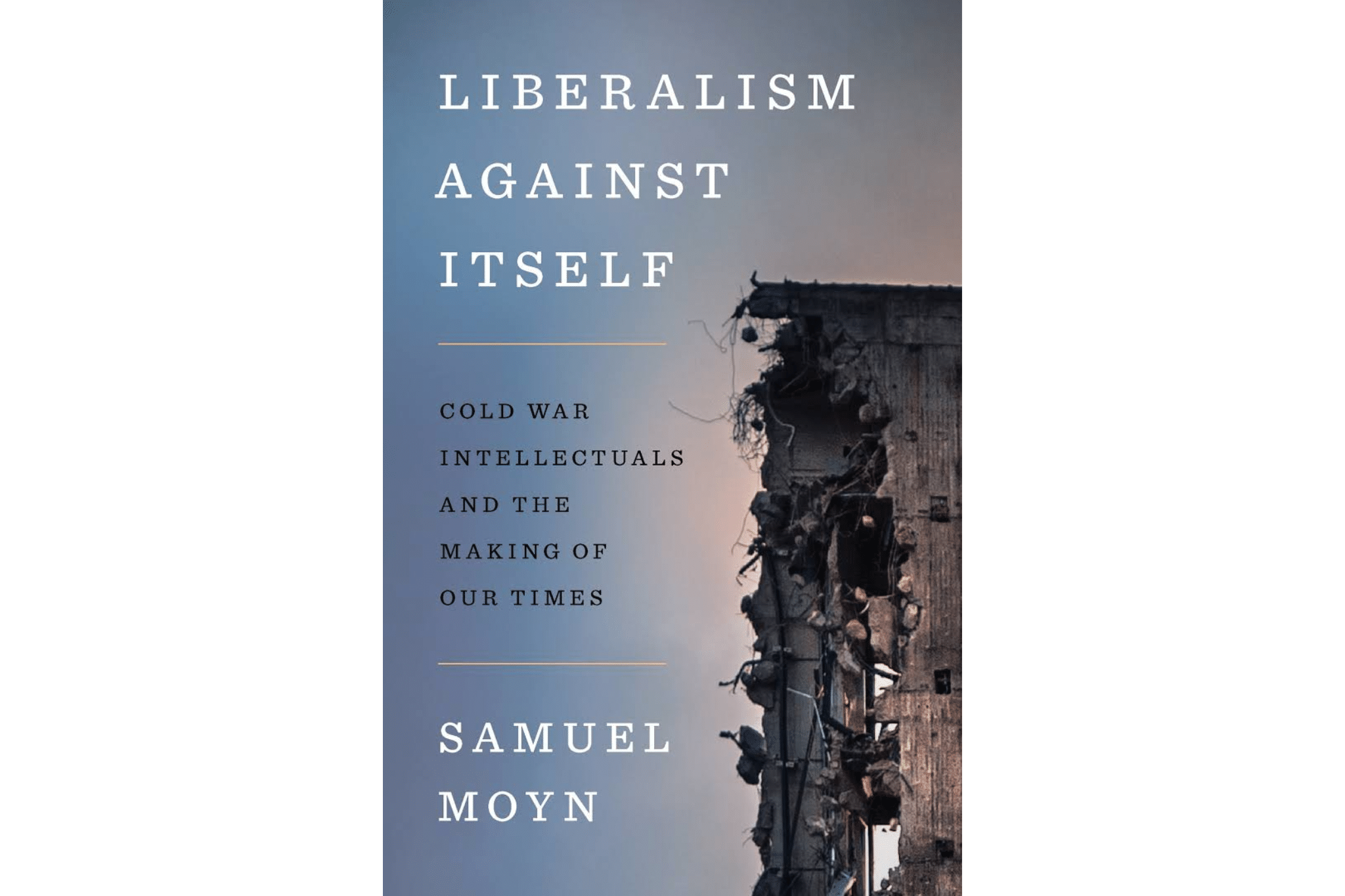
Interviews and Podcasts
Negotiating Amidst Turmoil: Analyzing the Interplay of Dialogue and Conflict in Kosovo-Serbia Relations
In this conversation with assistant editor Lorena Drakula, Bodo Weber, a Senior Fellow at the Democratization Policy Council in Berlin, discusses the current situation, as well as the complex dynamics of the Kosovo-Serbia dialogue, unpacking its democratic implications, challenges, and opportunities.
22.07.2023

Interviews and Podcasts
Models of Judicial Independence in Europe: In Conversation with Pablo Castillo Ortiz
In this latest RevDem Rule of Law podcast, assistant editor Teodora Miljojkovic discusses the different models of judicial independence in Spain and beyond with Pablo Castillo Ortiz.
19.07.2023

Interviews and Podcasts
“Neither Amnesia nor Nostalgia” Discussing the Non-Aligned Movement with Chiara Bonfiglioli, Agustín Cosovschi, and Paul Stubbs
In this conversation with RevDem contributor Una Blagojević, Paul Stubbs, Chiara Bonfiglioli, and Agustín Cosovschi discuss the different meanings of the Non-Aligned Movement and the need to rethink the “West–East–Non-Aligned” trajectories; approach Yugoslav foreign policy critically and explain why they attach such importance to imaginaries; show the importance of developing a “perspective from below” and analyze what a gendered perspective on the movement can yield; and reflect on possibilities of future research.
13.07.2023

Interviews and Podcasts
India’s Basic Structure Doctrine: Past, Present, and Future: In Conversation with Moiz Tundawala and Anuj Bhuwania
In this episode, assistant editor Rohit Sarma discusses the “basic structure” doctrine of the Indian Constitution on the occasion of its 50th anniversary with Moiz Tundawala and Anuj Bhuwania, Professors of Constitutional Law at the Jindal Global Law School in India.
12.07.2023

Interviews and Podcasts
A Savage War of Russian Decline: Serhii Plokhy Discusses the Russo-Ukrainian War
In this conversation co-hosted by Marta Haiduchok (Visible Ukraine) and Ferenc Laczó (the Review of Democracy), Serhii Plokhy – author of the new book "The Russo-Ukrainian War" – discusses why Ukraine was so crucial to the Soviet collapse and how Ukraine and Russia diverged subsequently; explains what made Ukraine a focal point of competition in the post-Cold War decades and which factors enabled the current devastating war; dissects the origins of Russian imperialism and Russia’s current war aims; reflects on the state of Ukrainian Studies and suggests new questions concerning Ukrainian nationalism and Russian imperialism; elaborates on the stages of the unfolding war and the reasons behind Ukraine’s ability to fight back; and ponders what major geopolitical shifts the Russo-Ukrainian war might signal or reinforce.
30.06.2023

Interviews and Podcasts
Germans and Genocide after the Holocaust. Andrew Port Discusses How Germans Have Responded to the Global History of Mass Atrocities
In this conversation with RevDem editor Ferenc Laczó, Andrew Port – author of the new book Never Again. Germans and Genocide after the Holocaust – describes and compares the German responses to mass atrocities in Cambodia, Bosnia, and Rwanda; explains which were the consensual and the most contested issues in German debates; discusses the “softer,” societal responses connected to German memory work and how these mass atrocities across the globe may have impacted the interpretations of Germany’s own past; and reflects on what might be most striking about the rather conflicted German response to Russia’s ongoing war of aggression against Ukraine.
21.06.2023

Interviews and Podcasts
The War in Ukraine and Transition: In Conversation with Maria Popova
Despite, or perhaps due to, the war in Ukraine there have been positive developments in combating corruption and other issues in anticipation of EU membership. In this RevDem Rule of Law podcast Teodora Miljojkovic discusses these issues around transition with Professor Maria Popova.
20.06.2023

Interviews and Podcasts
Turkish parties have always been authoritarian. Tezcan Gümüs on the results of the presidential election in Turkey
Turkey's presidential election was held on 28 May, with incumbent President Recep Tayyip Erdogan winning against Kemal Kilicdaroglu. Kasper Ly Netterstrom talks to Tezcan Gümüs, author of “Turkey's Political Leaders - authoritarian tendencies in a democratic state”, about the reasons for his victory and its consequences.
15.06.2023

Interviews and Podcasts
How Europeans Live Now: Ben Judah on Capturing the Arc of Life in Our Time
In this conversation with RevDem editor Ferenc Laczó, Ben Judah – author of the new book This is Europe. How We Live Now – discusses what motivated him to tell stories on a continental scale, which authors and books have inspired him the most, and what has been his approach to narrating. He also reflects on key themes have emerged from his extensive travels and reportage and on what he sees as the most consequential new aspects of how Europeans live now.
14.06.2023

Interviews and Podcasts
The Art of Generous Critique: Adam Shatz on the Radical Imagination – and an Overdue Humbling
In this conversation with RevDem editor Ferenc Laczó, Adam Shatz – author of the new collection Writers and Missionaries: Essays on the Radical Imagination – discusses his approach to painting portraits of engaged intellectuals, clarifies his concept of “radical imagination,” reflects on how the history of Algeria has served as his prism, and explains why the predicament of Arab intellectuals may be much more similar to those in the West than is often assumed.
12.06.2023

Interviews and Podcasts
Suspending Hungary’s Presidency of the Council of the EU? In Conversation with John Morijn and Alberto Alemanno
In recent weeks proposals by the Meijers Committee to suspend Hungary’s Presidency of the Council of the EU in 2024 have received support in a resolution of the European Parliament. In this RevDem Rule of Law podcast, Oliver Garner discusses these proposals in the wider context of the Rule of Law crisis with John Morijn and Alberto Alemanno.
9.06.2023

Interviews and Podcasts
Nested Stories of Persecution: Ari Joskowicz Discusses the Asymmetrical Entanglements of Jews and Roma in History and Memory
In this conversation with RevDem editor Ferenc Laczó, Ari Joskowicz – author of the new book Rain of Ash: Roma, Jews, and the Holocaust – discusses the ways Jewish and Romani histories have been entangled and what motivated him to write a relational history of the two groups; illuminates why he considers it essential to explore the conditions of knowledge production and how to try to avoid reproducing injustices; shows what it has implied in concrete setting that the stories of persecution of one group of people have been nested within those of another; and reflects on what has truly changed in memory culture and what new dialogues could be pursued in the future.
5.06.2023

Interviews and Podcasts
Constitutional Conflicts are Inevitable: In Conversation with Orlando Scarcello
In this conversation with RevDem editor Kasia Krzyżanowska, Orlando Scarcello discusses his newest book Radical Constitutional Pluralism in Europe (Routledge 2022). He elaborates on the descriptive nature of the theory of constitutional pluralism, stresses the inevitability of constitutional conflicts in the EU, and ponders on the political side of these conflicts. Orlando Scarcello —a postdoctoral fellow at Institute for European Law, KU Leuven. His research fields are EU law and comparative constitutional law. Kasia Krzyżanowska: What is the concept of radical constitutional pluralism? What are the alternative versions of conceptualizing the relationship between the EU legal order and domestic legal orders? Finally, why do you think that radical pluralism is the best framework for understanding the experience of living under two constitutions? Orlando Scarcello: Here we have a bit of a conundrum. The member states of the European Union clearly have their own constitutions, and [...]
31.05.2023

Interviews and Podcasts
The Curse of the Margin? Central Europe before and after Communism
In conversation with RevDem assistant editor Lucie Hunter, Dr. Aliaksei Kazharski discusses his newest book Central Europe Thirty Years after the Fall of Communism: A Return to the Margin? (Rowman & Littlefield, 2022, 2022).
26.05.2023

Interviews and Podcasts
Danielle Allen on Power-Sharing Liberalism
In this conversation with RevDem editor Ferenc Laczó, Danielle Allen – author of the new book "Justice by Means of Democracy" – discusses her proposal of a power-sharing liberalism and explains why she calls herself a “eudaemonist democratic pragmatist”; shows why it is essential to foster a connected society and measure that society by the principle of “difference without domination”; reflects on what a paradigm change in political economy could look like and which model of citizenship would be most suitable for our times.
24.05.2023

Interviews and Podcasts
Accession Through War? Ukraine and the EU: In Conversation with Roman Petrov
In this podcast, Oliver Garner speaks to Professor Roman Petrov on this subject of “accession through war”. Professor Petrov is the Jean Monney Chair in EU Law and Head of the Centre of Excellence in EU Studies at the National University of Kyiv-Mohyla Academy. He is currently a British Academy Research Fellow at the British Institute of International and Comparative Law.
23.05.2023

Interviews and Podcasts
The Curse of Russian Imperialism: Martin Schulze Wessel on Imperial Optics, False Dichotomies, and the Need to Reconsider East European History
In this conversation with RevDem editor Ferenc Laczó, Martin Schulze Wessel – author of the new book Der Fluch des Imperiums. Die Ukraine, Polen und der Irrweg in der Russischen Geschichte (Imperial Curse. Ukraine, Poland, and the False Paths in Russian History) – traces the ideas that have shaped Russian imperialism and reflects on their devastating contemporary force; explores key moments in the parallel and entangled histories of Poland and Ukraine and how those histories have been shaped by Russian imperialism across the centuries; dissects what he calls Germany’s “imperialism of a second order” and emphasizes the urgent need to revise Russia-centric interpretations of East European history.
20.05.2023

Interviews and Podcasts
Can the Center Hold? Thomas Biebricher on the International Crisis of Conservatism
In this conversation with RevDem editor Ferenc Laczó, Thomas Biebricher – author of the new book "Mitte/Rechts: Die international Krise des Konservatismus" (Center/Right: The International Crisis of Conservatism) – discusses conservatism’s various types and how each relates to the political center and to authoritarianism; illuminates the contemporary crisis of the center right in three major European countries; explains what has driven the culturalization of politics and the redrawing of enemy images, and why the authoritarian right has been a prime beneficiary of those trends; and reflects on how his approach and special emphases relate and add to other contributions to the ongoing debate on the present state and future prospects of liberal democracy.
18.05.2023

Interviews and Podcasts
Informal Power in Hungary and Poland: In Conversation with Edit Zgut-Przybylska
Formal Rule of Law backsliding in Hungary and Poland has been well-publicized. Yet this is just the tip of the iceberg of a system of informal power connections that are undermining the Rule of Law and democracy. In this RevDem Rule of Law podcast Oliver Garner discusses this informal power with Edit Zgut-Przybylska.
12.05.2023

Interviews and Podcasts
The Colonial Origins of Modern Social Thought: George Steinmetz on French Sociology and the Overseas Empire
In this conversation with RevDem editor Ferenc Laczó, George Steinmetz – author of the major new monograph "The Colonial Origins of Modern Social Thought. French Sociology and the Overseas Empire" – sketches the manifold entanglements of French sociology with the French Empire and colonialism; discusses the key ideas and innovations that have emerged in this context; dissects how indigenous scholars fared within the vast network of French institutions over time; illuminates his own approach to intellectual history he calls a historical socio-analysis of the social sciences; and reflect on how contemporary agendas of decolonization could be made more convincing and fruitful, not least by drawing on what French sociologists of colonialism have “partially and tentatively foreseen.”
11.05.2023

Interviews and Podcasts
Helsinki in Budapest: In Conversation with András Kádár and Márta Pardavi
In the latest RevDem Rule of Law podcast Oliver Garner discusses the work of the Hungarian Helsinki Committee. András Kádár is an attorney at law and co-chair of the Committee. Amongst other engagements and positions he is the Hungarian member of the European Network of Legal Experts in the Non-Discrimination field. Márta Pardavi is the other co-chair of the Committee and she also co-leads the Recharging Advocacy for Rights in Europe (RARE) program. Previously, she has been a policy leader fellow at the EUI School of Transnational Governance in Florence.
3.05.2023

Interviews and Podcasts
Illiberalism in Israel? The Protests against Judicial Reform: In Conversation with Adam Shinar
In this podcast, Assistant Editor of the Rule of Law section Teodora Miljojkovic discusses the reforms with Professor Adam Shinar, Associate Professor at Harry Radzyner Law School, Reichman University. Professor Shinar is a member of the Board of Directors of the Association for Civil Rights in Israel, and he is an academic advisory board member of the Israel Supreme Court Project at Cardozo Law School, Yeshiva University.
28.04.2023

Interviews and Podcasts
Navigating Hierarchies and Balkanist Discourses in Europeanization: A Conversation with Vjosa Musliu
In this conversation with assistant editor Lorena Drakula, Vjosa Musliu discusses her book "Europeanization and State Building as Everyday Practices. Performing Europe in the Western Balkans" (Routledge, 2021). The conversation critically examines mechanisms of Europeanization, discourses surrounding international interventions, and the processes of EU enlargement to the Western Balkans.
28.04.2023

Interviews and Podcasts
Clara Mattei: Why is austerity so persistent in spite of its incapacity to achieve economic growth and balanced budgets?
In this interview with RevDem assistant editor Giancarlo Grignaschi, Clara Mattei – Assistant Professor in the Economics Department of The New School for Social Research – talks about her new book "The Capital Order: How Economists Invented Austerity and Paved the Way to Fascism" (University of Chicago Press, 2022). The manuscript explores the historical origins of austerity and its intellectual underpinnings in interwar Britain and Italy. During this interview, the author presents the main arguments of the book, the comparison between the two countries, the role of politics and the decline in electoral participation, the relationship between austerity and populism, and the recent problem of rising inflation.
27.04.2023

Interviews and Podcasts
A World Without Democracy: Quinn Slobodian on jurisdictional cracks and the crackpots who made capitalism as we know it
In this conversation with Ferenc Laczó and Vera Scepanovic, Quinn Slobodian – author of the new book "Crack-Up Capitalism: Market Radicals and the Dream of a World Without Democracy" – discusses the unusual legal spaces and peculiar jurisdictions that have multiplied in recent decades and the libertarian ideas that propelled their rise; dissects the relationship of such zones to existing states and their sovereignty; shows how legal unevenness of contemporary globalization relates to earlier forms of imperial and colonial rule; and reflects on the more normative elements of his critique and on the future of the zones in an age of ‘de-globalization.’
25.04.2023

Interviews and Podcasts
Be Realistic, Demand Significant Change! Daniel Chandler on What a Progressive Liberal Society of the Future Could Look Like
In this conversation with RevDem editor Ferenc Laczó, Daniel Chandler – author of the new book "Free and Equal: What Would a Fair Society Look Like?" – discusses key principles that a better and fairer society could be based on; shows what makes John Rawls’ ideas so exceptionally relevant today and how they could help improve the democratic process; explains how placing questions of power, control, dignity, and self-respect at the center of liberal economic thinking would foster new economic arrangements; and discusses where egalitarian liberalism has already been practiced and with what consequences.
22.04.2023

Interviews and Podcasts
Racialized Labor — Eastern Europeans on The Western Market
In this conversation with RevDem editor Kasia Krzyzanowska, Aleksandra Lewicki discusses her recently published article “East-west inequalities and the ambiguous racialization of ‘Eastern Europeans’”. Lewicki elaborates on the racialized imaginary of the Western European discourses on migration, talks about how the stereotype of hard-working Eastern Europeans negatively impacts their labor conditions, and ponders on the influence of neoliberal policies on the precarization of labor.
19.04.2023

Interviews and Podcasts
Playing Hardball: Political-Ethical Challenges of Illiberal Regimes
In this conversation with Kasia Krzyżanowska, Zoltán Gábor Szűcs discusses his newest book Political ethics in illiberal regimes. A realist interpretation.
17.04.2023

Interviews and Podcasts
Permanent Negotiation: Balázs Trencsényi on how new projects at the CEU Democracy Institute relink knowledge production, education, and civic engagement
Delving into the research conducted at the Democracy in History group of the CEU Democracy Institute and ongoing initiatives such as the Invisible University for Ukraine and the Academics Facing Autocracy Program with Lucija Balikić, Trencsényi provides historically informed insights into the modalities of relinking these structures and offers inspiring reflections on their potential for strengthening democratic societies across the globe.
13.04.2023

Interviews and Podcasts
Party alliances in Turkey have never been as relevant and as transparent as today [Party Co-Op Series]
In this episode of the party cooperation series, Zsolt Enyedi talks with Murat Somer, professor at Koç University, on Turkish party alliances ahead of the parliamentary and presidential elections scheduled to take place on 14th of May.
11.04.2023

Interviews and Podcasts
Listening for Silences: Michael Freeden on the Role of Silence in Political Thinking
In this conversation with RevDem assistant editor Lorena Drakula, Michael Freeden – leading political theorist and author of the new book Concealed Silences and Inaudible Voices in Political Thinking – discusses the various forms of political silences; the problems of superimposing and inventing voices; the effects of the unnoticeable and the unknowable in political thinking, with the aim of understanding the complex and often hidden aspects of silence that shape our political beliefs and actions.
29.03.2023

Interviews and Podcasts
Weak prospects for Russia’s democratization
Wolfgang Merkel offers a typological classification of Putin's Russia after exploring how it compares with fascist regimes in Germany and Italy as well as Stalinism, and opines that several factors will contribute to Russia's "poor prospects" for democratization.
22.03.2023

Interviews and Podcasts
The Greatest Hits — Populist Edition. In conversation with Johannes Voelz
In this conversation with Kasia Krzyżanowska, Johannes Voelz discusses his theory of the aesthetics of populism, explains how Pierre Bourdieu and Norbert Elias can help us understand contemporary populism, elaborates on the concept of a (Trump) rally, talks about the culture of a dichotomized world, and shares his insights on the role of culture in helping to ease the deep political conflicts.
20.03.2023

Interviews and Podcasts
Constitutionalism — An Opium for the Lawyers
In this conversation with Kasia Krzyżanowska, Martin Loughlin discusses his newest book Against Constitutionalism (Harvard University Press 2022).
15.03.2023

Interviews and Podcasts
Aakar Patel on His New Toolkit to Protest and Peaceful Resistance
In this conversation with RevDem editor Ferenc Laczó, Aakar Patel – author of "The Anarchist Cookbook. A Toolkit to Protest and Peaceful Resistance" – discusses why he considers dissent essential to improving society; what lessons we can draw from successful recent examples of protest; which options activists have to amplify and maximize their efforts; and how egregious laws on the book, practices of denying rights, and the extreme disparities of Indian society have shaped activists’ possibilities and agenda.
13.03.2023
Interviews and Podcasts
Reacting to Globalization’s Discontents: Tara Zahra on Anti-Globalism and Mass Politics
In this conversation with RevDem editor Ferenc Laczó, Tara Zahra – author of the new monograph "Against the World: Anti-Globalism and Mass Politics Between the World Wars" – discusses the common features of anti-globalist agendas between the 1910s and the 1930s; explains what the main phases of anti-globalism looked like and how its various forms related to globalization; shows why centering women – as key actors as well as objects – and focusing on Central Europe amount to fruitful approaches; reflects on the long-term consequences of interwar anti-globalism – and how our present predicament may help us reconsider this history.
9.03.2023

Interviews and Podcasts
In Conversation with Danuta Hübner — Ukraine’s Road to EU Accession
In this conversation with Kasia Krzyżanowska, Danuta Hübner explains the specificities of the EU accession path for Ukraine, elaborates on the difficulties other countries had to overcome (most notably Poland), showcases the problems with Turkey’s and Western Balkans’ EU accession, discusses the criteria of joining the EU, and shares her visions of the future EU.
6.03.2023

Interviews and Podcasts
In conversation with Jakub Jaraczewski: The European Commission’s latest action against Poland and Hungary
In this latest RevDem Rule of Law podcast, Oliver Garner speaks to Jakub Jaraczewski about the European Commission’s latest actions to defend the EU’s values against backsliding Member States. Jakub is a Research Coordinator at Democracy Reporting International, a Berlin based NGO, and one of the coordinators of the “re:constitution” programme.
3.03.2023

Interviews and Podcasts
Merchant of Ideas: Jerry Z. Muller on Jacob Taubes
In the conversation with Vilius Kubekas, Jerry Z. Muller discusses the life of German Jewish intellectual Jacob Taubes.
25.02.2023

Interviews and Podcasts
Dóra Piroska on Financial Nationalism
RevDem assistant editor Giancarlo Grignaschi in conversation with Dóra Piroska, assistant professor at CEU in Vienna at the department of International Relations, about her chapter on financial nationalism in the Elgar Handbook of Economic Nationalism, edited by Andreas Pickel.
16.02.2023

Interviews and Podcasts
Democracy First: Shadi Hamid on Why and How to Support Democratic Change
In this conversation with RevDem editor Ferenc Laczó, Shadi Hamid – author of the new book "The Problem of Democracy: America, the Middle East, and the Rise and Fall of an Idea" – addresses democratic dilemmas that cannot be wished away; explains how he distinguishes between liberalism and democracy and why he proposes a democracy-first strategy; assesses the democratic record of Islamist political movements and parties; and discusses how the US could use its leverage in the Middle East to support or even foster democratic change.
13.02.2023
Interviews and Podcasts
Fantasy and Trauma: Dan Stone on Writing the History of the Holocaust
In this conversation with RevDem editor Ferenc Laczó, Dan Stone – author of the new book The Holocaust: An Unfinished History – discusses various ways the history of the Holocaust has been misunderstood; addresses the challenges of narrating the Holocaust and clarifies his own interpretative framework; sketches the European dimension of the genocide and how German and non-German perpetrators interacted to execute it; and reflects on how perspectives on the Holocaust have changed over time and what studying it meant in the current moment.
6.02.2023

Interviews and Podcasts
Taming the Anthropocene: Zoltán Boldizsár Simon and Lars Deile on a New Era of Historical Understanding
In this conversation, our guest contributor Alexandra Medzibrodszky talks with Zoltán Boldizsár Simon and Lars Deile, the co-editors of the recently published volume "Historical Understanding: Past, Present, and Future" (Bloomsbury Academic, 2022). The conversation focuses on the theory of history, reflecting on our changing perceptions of historical time; the relationship between the past, present, and future; the concept of the Anthropocene and its importance for historians; as well as on the legacy of Reinhart Koselleck and the extent to which he remains significant to contemporary debates on the theory of history.
3.02.2023

Interviews and Podcasts
Wolfgang Merkel: “Democracy and capitalism are forcibly married”
In this interview with Bascha Mika, political scientist Wolfgang Merkel on the close connection between open societies and capitalist economic systems and the consequences of social inequality.
27.01.2023
Interviews and Podcasts
In Conversation with Anna Wójcik: 2023 – The 8th Season of the Poland Rule of Law Telenovela
In autumn 2023, Polish parliamentary elections will take place 8 years after the Law and Justice Party came to power and the “Rule of Law crisis” with the EU commenced. In this first RevDem Rule of Law podcast of the year our editor Oliver Garner discusses the “8th season of the Polish telenovela” with Dr. Anna Wójcik.
26.01.2023

Interviews and Podcasts
Illiberalism and Gender in Post-communist Europe
The podcast is based on the conference and the special issue of Politics and Governance, No. 3 in 2022 edited by Matthijs Bogaards (CEU Department of Political Science, CEU Democracy Institute) and Andrea Pető (CEU Department of Gender Studies, CEU Democracy Institute).
24.01.2023

Interviews and Podcasts
In Conversation with Bruce Robbins — Criticism and Politics
In this conversation with RevDem editor Kasia Krzyżanowska, Bruce Robbins discusses his newest book Criticism and Politics. A Polemical Introduction.
17.01.2023

Interviews and Podcasts
Building Enduring Democracies: Filip Milačić on the Effects of Nation and State Building on Democratic Consolidation
In this conversation with RevDem assistant editor Lorena Drakula, Filip Milačić – author of the book "Stateness and Democratic Consolidation. Lessons from Former Yugoslavia" – discusses the effects unresolved issues of stateness can have on the trajectories of democratic consolidation; how political actors can instrumentalize polarization in society to justify authoritarian measures; and what can be learned for democracy promotion projects today.
16.01.2023

Interviews and Podcasts
Beverly Gage on J. Edgar Hoover and the American Century
In this conversation with RevDem editor Ferenc Laczó, Beverly Gage – author of the new biography "G-Man. J. Edgar Hoover and the Making of the American Century" – discusses how Hoover built and shaped the FBI and what made him enjoy such an exceptional and long-lasting career; dissects his contradictions, reflecting on the sources of his popularity and why his reputation got so badly damaged; and explains what original sources and innovative scholarship a new biography of him can utilize and what placing him at the center of the American Century can teach us.
13.01.2023

Interviews and Podcasts
New Year Special
In a special edition of the RevDem podcast, our editors Laszlo Bruszt, Oliver Garner, Kasia Krzyżanowska, Ferenc Laczo, Michał Matlak, and Renata Uitz discuss their favorite RevDem content, best books and articles they have read, most important political events of 2022 and more. At the end of the episode, they are joined by the authors of the most popular piece of 2022 published by RevDem: an op-ed by Elżbieta Krzyżanowska and Pavel Skigin “The discourse of privilege: Western Europe and the Russian War against Ukraine.”
11.01.2023

Interviews and Podcasts
The Hungarian Government Became Hostage of Its Own Propaganda
In this conversation with RevDem Editor Robert Nemeth, Hungarian journalist Szabolcs Panyi talks about the Hungarian government’s response to the war in Ukraine, why it is not willing to counter Russian infiltration in Hungary, the reasons behind the anti-US sentiment of Prime Minister Viktor Orban and his inner circle, and anti-Western propaganda in Hungary. He also discusses how being targeted by the Pegasus spyware impacted him.
16.12.2022

Interviews and Podcasts
The EU Prize for Literature — In Conversation with Anne Bergman-Tahon
What is the EUPL? What is the story behind and what are its aims? Is there a European-wide readership? How to promote European literature? These and more questions are answered by Anne Bergman-Tahon in this conversation with editor Kasia Krzyżanowska.
15.12.2022

Interviews and Podcasts
Cannibal Capitalism: Nancy Fraser on How the Global Economic Order Consumes the Foundations of Our Democracy and Society
In this conversation with RevDem Political Economy and Inequalities section co-head Vera Scepanovic, Nancy Fraser – whose newest book "Cannibal Capitalism" has just been released – explains why the ongoing crises of democracy, healthcare, climate, and racial injustice are really manifestations of a single broader crisis of capitalism; how the ability of capitalism to survive by redrawing boundaries between the economic and non-economic realms is being challenged; and what an emancipatory coalition building might look like that ambitions more than greater inclusion into the existing system.
14.12.2022

Interviews and Podcasts
Informal Powers as a Barrier to EU Accession. Nino Tsereteli on Georgia’s EU Candidacy
In this podcast episode, Teodora Miljojkovic discusses with Nino Tsereteli the roadblocks to Georgia's accession to the European Union. Their discussion covers how the response from Georgian citizen’s differs from the response of the Georgian government; what reforms are needed in order for Georgia to get closer to the compliance with the Copenhagen criteria; how informal powers negatively impact Georgian governance and how they can be overcome; and if Nino Tsereteli believes the will in both Georgia and the EU remain for progress towards EU accession.
12.12.2022

Interviews and Podcasts
How the Necessary Cold War Ended – and Why an Unnecessary One Followed It: Archie Brown on the Political and the Personal in the Relationship Between the West and the Soviet Union/Russia
In this conversation with RevDem assistant editor Iker Itoiz Ciáurriz, Archie Brown – author of the recently released book "The Human Factor. Gorbachev, Reagan, and Thatcher, and the End of the Cold War" – explains why he approaches the end of the Cold War through the study of political leaders; explores the different personal formations and the varying relationships between his three main protagonists before and after 1985; elaborates on his views on when and how the Cold War ended; and elucidates why the relationship between Russia and the West has deteriorated in the post-Cold War decades.
5.12.2022

Interviews and Podcasts
Emancipating Jews from Narratives of Victimhood and Redemption: Susan Neiman Discusses Germany’s Current Memory Culture
In this conversation with RevDem editor Ferenc Laczó, Susan Neiman dissects what has made the articulation of universalistic Jewish commitments increasingly difficult in the German public sphere; explores why debates concerning global colonialism and the Nazi-colonial connection tend to be so fraught in the country; explains what post-colonial criticisms misunderstand about the intellectual heritage of the Enlightenment; and shows how both ignorance regarding Eastern Europe and social solidarity with the victims have shaped German responses to the ongoing Russian war of aggression against Ukraine.
2.12.2022

Interviews and Podcasts
The Stories We Tell Ourselves — In Conversation with Peter Brooks
In this conversation with RevDem editor Kasia Krzyżanowska, Peter Brooks — author of the new book Seduced by Story. The Use and Abuse of Narrative — discusses the "storyfication" of reality; explains why we need stories; ponders the impact fiction has on our lives; and depicts the dangers oversimplified narratives pose to our democratic societies.
30.11.2022

Interviews and Podcasts
How 2000 people made an impact at a time when society was silent: András Bozóki on the rolling transition of Hungary
In this discussion, RevDem Managing Editor Michał Matlak discusses with András Bozóki about his last book, "Rolling Transition and the Role of Intellectuals: Case of Hungary", published this year by Central European University Press, which tells a compelling story of the role of intellectuals in political and social change that took place in Hungary between 1977-1994.
29.11.2022

Interviews and Podcasts
RevDem Debate | Rainbow Families in the EU: Obstacles to Full Equality
Alina Tryfonidou (Neapolis University Paphos) presented the main points of her work on the obstacles that rainbow families face on the road to equality in the European Union. The presentation was followed by comments from Ivana Isailović (University of Amsterdam) and Dimitra Kochenov (Central European University), who also chaired the debate.
24.11.2022

Interviews and Podcasts
Liberalism Hasn’t Provided Adequate Answers to Today’s Major Crises: Luke Savage on Contemporary Liberalism and Its Democratic Socialist Critique
In this conversation with RevDem editor Ferenc Laczó, Luke Savage – author of "The Dead Center. Reflections on Liberalism and Democracy After the End of History" – discusses key aspects of his critique of contemporary liberalism; reflects on the role of generational experiences in shaping the search for a political alternative; offers a detailed assessment of Joe Biden’s ongoing presidency; and ponders whether democratic socialists have managed to challenge the hegemony of liberal ways of thinking and transform the political conversation.
23.11.2022

Interviews and Podcasts
Why film matters: Oksana Sarkisova on the importance of documenting society
In this conversation with RevDem assistant editor Lucie Hunter, Oksana Sarkisova – Blinken OSA Research Fellow and the Director of Verzió International Human Rights Documentary Film Festival – discusses the role of filmmaking in today’s society; how festivals are reacting to contemporary global conflicts and challenges; the importance of safekeeping visual archives; and how micro-histories help us understand the wider context.
8.11.2022

Interviews and Podcasts
Why Do Autocracies Last? Lucan Way on the Longevity of Revolutionary Regimes
In this conversation with RevDem editor Ferenc Laczó, Lucan Way – co-author, with Steven Levitsky, of the new book "Revolution and Dictatorship: The Violent Origins of Durable Authoritarianism" – introduces what revolutionary autocracies are; explains why they tend to prove much more durable than other kinds of authoritarian regimes; discusses how the revolutionary sequences so crucial for the emergence of such regimes have played out in the various cases across the globe; and reflects on the contemporary relevance of the book’s findings concerning autocratic longevity.
3.11.2022

Interviews and Podcasts
The Trouble with Fortune: Zsuzsanna Szelényi on Hungary’s Tainted Democracy
In this conversation with RevDem editor Ferenc Laczó, Zsuzsanna Szelényi – author of the new book "Tainted Democracy. Viktor Orbán and the Subversion of Hungary" – analyzes the main characteristics of the Orbán regime and the techniques Hungary’s current rulers have employed to establish their dominance over the country’s economy; reflects on the dilemmas and strategies of the Hungarian opposition; examines the role of gendered practices in Hungarian politics; and discusses the reasons behind the sharp democratic reversal and decline of the early 21st century.
29.10.2022

Interviews and Podcasts
Why Waste Our Data in Online Malls? Ben Tarnoff on Democratizing the Internet
In this conversation with RevDem editor Ferenc Laczó, Ben Tarnoff – author of the new book "Internet for the People. The Fight for Our Digital Future" – discusses how the internet was created and how it has been privatized; how its current version fuels inequality and the rise of the political Right; why finding the right metaphors is crucial; and why the ongoing anti-monopoly push is not enough.
26.10.2022

Interviews and Podcasts
Democracy as a Way of Facing Obstacles: Lilia Moritz Schwarcz on Brazilian Authoritarianism and the Unfinished Project of Full Citizenship
In this conversation with RevDem editor Ferenc Laczó, Lilia Moritz Schwarcz – author of the book "Brazilian Authoritarianism" – contrasts mythological and critical-realistic versions of Brazilian history; discusses the main facets of authoritarianism in the country; compares the Bolsonaro phenomenon with the Trump one; and elaborates on her vision of democracy and full citizenship.
21.10.2022

Interviews and Podcasts
Magic Mountain on Goodreads — On Experiencing Mann’s novel
In this conversation with RevDem editor Kasia Krzyżanowska, Karolina Watroba discusses her first book “Mann’s Magic Mountain: World Literature and Closer Reading,” published with Oxford University Press.
19.10.2022

Interviews and Podcasts
Building Majorities is the Essence of Democracy: Timothy Shenk on His New Biography of American Democracy
In this conversation with RevDem editor Ferenc Laczó, Timothy Shenk – author of "Realigners: Partisan Hacks, Political Visionaries, and the Struggle to Rule American Democracy" – discusses what motivated him to explore the making of majorities and key members of the democratic elite who made those majorities; how the strongest and strangest coalition in American history – the New Deal majority – was assembled; what a study of the parallel maturation of the civil rights revolution and the liberal establishment may reveal about the making and unmaking of that coalition; and why it has become so difficult to sustain majorities today.
18.10.2022

Interviews and Podcasts
The (Re)making of Constitutional Democracy? In conversation with Paolo Sandro
In this latest RevDem Rule of Law section podcast, Oliver Garner speaks to Paolo Sandro, Lecturer in Law at the University of Leeds. Sandro’s recently published monograph The Making of Constitutional Democracy: From Creation to Application of Law (Hart Publishing, 2022) confronts the topic from a legal theoretical perspective. Their conversation considers the practical application of his work and the theme of (re)making constitutional democracy following recent significant events in Europe.
15.10.2022

Interviews and Podcasts
Ramona Coman on the emergence of the EU’s rule of law policy shaped by growing dissensus
In this discussion with Ramona Coman by RevDem managing editor Michał Matlak, they discuss the questions addressed in her recent book "The Politics of the Rule of Law in the EU Polity: Actors, Tools and Challenges" (Palgrave 2022), including the difference between liberal and anti-liberal ideas, and how "dissensus shapes the EU’s rule of law policy and tools."
14.10.2022

Interviews and Podcasts
Is There Something We Can Salvage of Universalism? Till van Rahden on Conceptual History and Liberal Democracy
In this conversation with RevDem editor Ferenc Laczó, Till van Rahden discusses his last book "Vielheit. Jüdische Geschichte und die Ambivalenzen des Universalismus" (Multitude. Jewish History and the Ambivalences of Universalism)
8.10.2022

Interviews and Podcasts
How to Best Manage the Unfolding Crisis of Everything: Gaia Vince on Key Implications of the Climate Crisis
In conversation with RevDem editor Ferenc Laczó, Gaia Vince – author of the new book "Nomad Century: How to Survive the Climate Upheaval" – sketches the transformations climate change and the accompanying rise in global average temperature are likely to bring in the coming decades; reflects on the most promising innovations when it comes to mitigating temperature rise and moving towards a circular economy; discusses ways to plan for lawful and safe mass migration at a time when large parts of the Earth are becoming uninhabitable; and addresses the key political questions of how to set the right priorities at the global level and how to act to enforce them.
6.10.2022

Interviews and Podcasts
A Path to Democracy Without Destabilization: Joseph Wong Explains the Types of Development and the Patterns of Uneven Democratization in Modern Asia
In this conversation with RevDem editor Ferenc Laczó, Joseph Wong – co-author with Dan Slater of the new monograph "From Development to Democracy. The Transformations of Modern Asia" – discusses when and why regimes have chosen to democratize in modern Asia; how come types rather than levels of development have shaped countries' democratic prospects; why Singapore and China remain significantly less democratic than one might expect; and how studying the patterns of modern Asia can help us rethink democracy promotion today.
4.10.2022

Interviews and Podcasts
The Way Europeans Stop Migration is Absolutely Horrific: A Conversation with Sally Hayden
In conversation with RevDem editor Ferenc Laczó, Sally Hayden – author of "My Fourth Time, We Drowned: Seeking Refuge on the World's Deadliest Migration Route" – discusses the various detention centers across Libya and sketches the profiles of the people detained in them; reflects on her ambition of centering the voices of the victims and her dilemmas concerning what to release and what not to release about their cruel treatment, and more.
26.09.2022
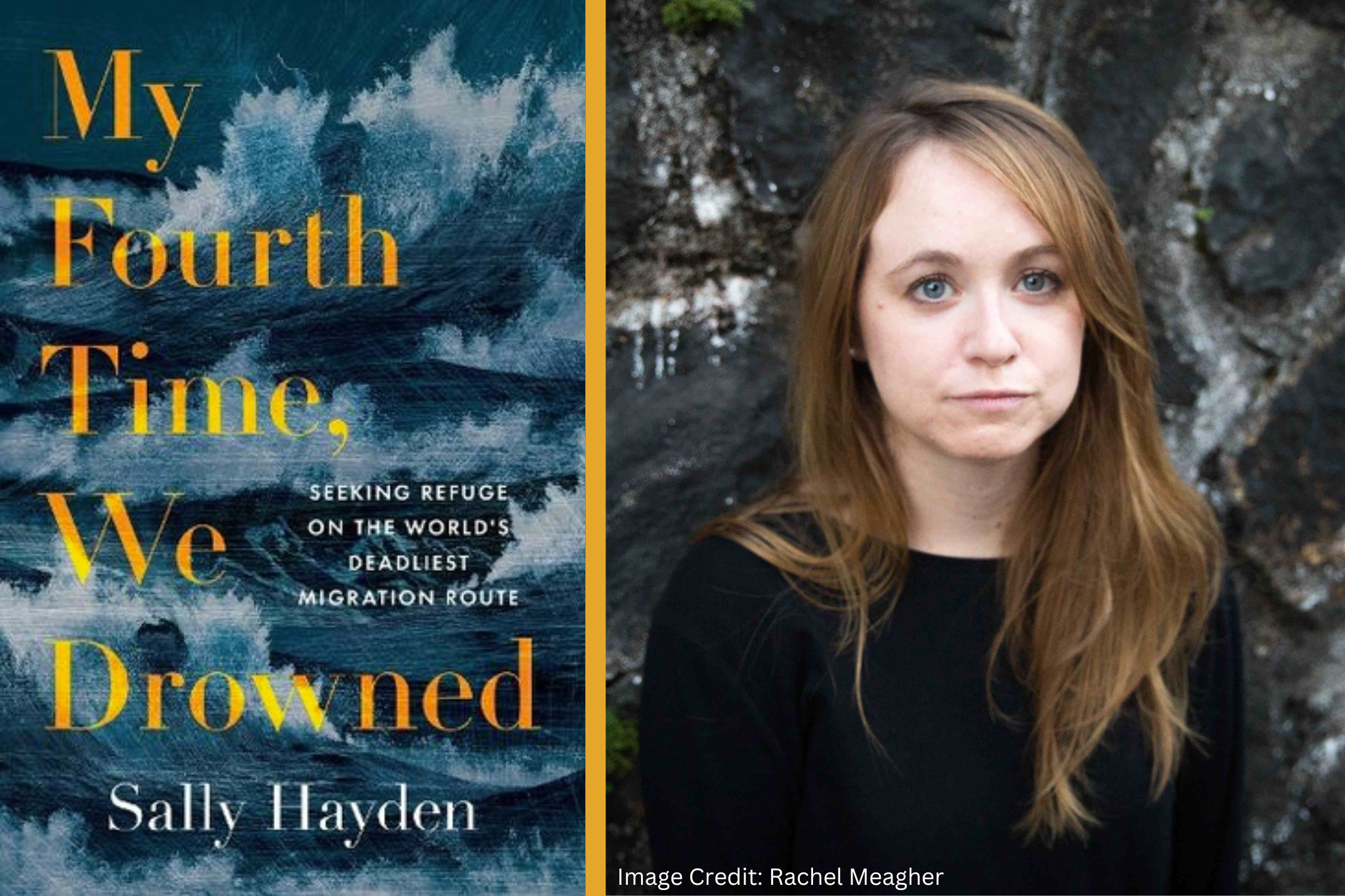
Interviews and Podcasts
Down-to-Earth Machines of Exploitation. Andreas Eckert on Colonialism, Slavery, and Current Debates
In this conversation with Norman Aselmeyer, Andreas Eckert – author of German-language overviews of the history of colonialism and of slavery – presents his approach to the history of colonialism.
24.09.2022

Interviews and Podcasts
Ambiguous Tests of Loyalty: Franziska Exeler about the Second World War and its Long Shadow in Belarus
In this extended conversation with RevDem editor Ferenc Laczó, Franziska Exeler – author of the new monograph "Ghosts of War: Nazi Occupation and Its Aftermath in Soviet Belarus" – discusses the extremely violent history of Belarus during the Second World War; analyses the various choices people made under the dire constrains of the Nazi German occupation and the challenges of drawing on Soviet sources to analyze those choices; zooms in on the issue of Soviet retribution and its ambiguities; and reflects on how the partisan experience and narrative has continued to shape the country.
21.09.2022

Interviews and Podcasts
In conversation with Francis Fukuyama: “Russia would not have invaded Ukraine if it had been a democracy”
In this interview with Francis Fukuyama, hosted by Laetitia Strauch-Bonart (Editor of the Ideas section in the French weekly L’Express) and Michał Matlak (RevDem Managing Editor), they discuss his latest book, the status of liberal and illiberal democracies in the world today, how this relates to Russia, China, and the US, the threats to American democracy today, and more.
19.09.2022

Interviews and Podcasts
What Does Right-Wing Anti-Gender Mobilization Have to Do with Progressive Gender Trends? Eszter Kováts Investigates the Politics of Fidesz and AfD
In this conversation with RevDem editor Ferenc Laczó, Eszter Kováts discusses the conclusions she has drawn from her comparison of the discourse coalitions around AfD in Germany and Fidesz in Hungary.
17.09.2022

Interviews and Podcasts
How Socialism Went Global – and Why It Withdrew. An Alternative Global History
RevDem editor Ferenc Laczó interviews three authors of the new collective monograph "Socialism Goes Global. The Soviet Union and Eastern Europe in the Age of Decolonization", Péter Apor, James Mark and Steffi Marung.
12.09.2022

Interviews and Podcasts
Democracies Proved More Successful at Breaking Promises. Fritz Bartel on the End of the Cold War and the Rise of Neoliberalism
RevDem section heads Vera Scepanovic and Ferenc Laczó talk with Fritz Bartel, author of "Triumph of Broken Promises. The End of the Cold War and the Rise of Neoliberalism".
8.09.2022

Interviews and Podcasts
It is a mistake to see the Eastern vision as undemocratic. Peter Verovšek on European memory
In this conversation with RevDem editor Kasia Krzyżanowska, Peter Verovšek — author of “Memory and the future of Europe. Rupture and integration in the wake of total war” — discusses the importance of foundational stories for communities; explains the influence of personal experience on the European integration; shows differences in remembering the past in West and East Europe and ponders on the consequences of Russian aggression on Ukraine for the European memory.
3.09.2022

Interviews and Podcasts
Repairing the Damage to Our Ethical Categories. A Conversation with Charlotte Wiedemann
In this conversation with RevDem editor Ferenc Laczó, Charlotte Wiedemann – author of the just released German-language volume Den Schmerz der Anderen begreifen. Holocaust und Weltgedächtnis (To Grasp the Pain of Others. Holocaust and Global Remembrance).
1.09.2022

Interviews and Podcasts
Rehabilitating the Principle of Hope in Modern History. Enzo Traverso on Revolutions
In conversation with Una Blagojević and Iker Itoiz Ciaurriz, Enzo Traverso discusses key themes in his newest book Revolution: An Intellectual History (Verso, 2021).
30.08.2022

Interviews and Podcasts
In Conversation with John Shattuck: “Rights, if you can keep them”
Teodora Miljojkovic interviews Professor John Shattuck, international legal scholar, diplomat, human rights leader and previous CEU rector. Teodora and Professor Shattuck discussed the book “Holding Together - the Hijacking of Rights in America and How to Reclaim Them for Everyone” by Professor Shattuck, Sushma Rahman and Matthias Riss from the Carr Centre for Human Rights Policy at Harvard University.
9.07.2022

Interviews and Podcasts
“Post-War Christian Democracy Was Relatively Short-Lived” Fabio Wolkenstein on the Dark Side of Christian Democratic History and Politics
In this conversation with Ferenc Laczó, Fabio Wolkenstein – author of the new book Die dunkle Seite der Christdemokratie. Geschichte einer autoritaeren Versuchung (The Dark Side of Christian Democracy. The History of an Authoritarian Temptation) – sketches the broad variety of Christian politics across modern Europe.
7.07.2022

Interviews and Podcasts
5 QUESTIONS to a Scholar: Jeffrey Goldfarb
This is the beginning of a new RevDem series where we talk with academics in the field of democracy studies and inquire about their most formative cultural experiences. For our first installment, RevDem Editor Kasia Krzyżanowska invited Professor Jeffrey C. Goldfarb to explain which films and books have impacted him throughout his life.
30.06.2022

Interviews and Podcasts
Danica Fink-Hafner: Voters turn towards symbolic personalities when they are disappointed with political parties [Party Co-Op Series]
Zsolt Enyedi discusses party cooperation in Slovenia with Danica Fink-Hafner, professor and Head of the Political Science Research Programme at University of Ljubljana, and expert on party politics, European integration, nation-building, interest-representation and democratization.
28.06.2022

Interviews and Podcasts
Democracy Depends on Those Who Are Harder to Fool: Daniel Treisman on the Changing Face of Dictatorship
In this conversation with RevDem editor Ferenc Laczó, Daniel Treisman – co-author, with Sergei Guriev, of "Spin Dictators: The Changing Face of Tyranny in the 21st Century" – discusses how ‘spin dictatorships’ differ from ‘fear dictatorships’; why such a new form of dictatorship has emerged and spread in recent decades; what might explain the at times notable popularity of such regimes and whether they are likely to represent the wave of the future; and why an informed citizenry should be seen as crucial to the defense of liberal democracy.
22.06.2022

Interviews and Podcasts
A Global History of Hungary: In Conversation with Ferenc Laczó, Bálint Varga, and Dóra Vargha
In this conversation with Bence Bari and Orsolya Sudár, editors Ferenc Laczó and Bálint Varga and contributor Dóra Vargha discuss the new volume "Magyarország globális története, 1869-2022 (A Global History of Hungary, 1869-2022)". The conversation focuses on some of the innovative questions posed by trying to reconceptualize the history of a Central and Eastern European country in a global frame; how the subjects of the volume’s one hundred chapters have been selected; the relation of this new book to other narratives of Hungarian history; and the more political stakes of releasing such a publication today.
20.06.2022

Interviews and Podcasts
Free Speech, Equality, and Tolerance Are Mutually Reinforcing: A Conversation with Jacob Mchangama
In this conversation with RevDem editor Ferenc Laczó, Jacob Mchangama discusses central ideas of his new monograph "Free Speech: A Global History from Socrates to Social Media". The conversation reflects on how to write a global history of this subject; contrasts egalitarian and elitist conceptions of free speech; explores facets of the free speech recession experienced in the early 21st century; and explains why the counterintuitive principle of free speech should be seen as essential.
17.06.2022

Interviews and Podcasts
Ghostwriting the European Union — In Conversation with Tommaso Pavone
In a conversation with our editor Kasia Krzyżanowska, professor Tommaso Pavone discusses his newly published book The Ghostwriters. Lawyers and the Politics behind the Judicial Construction of Europe [CUP 2022].
14.06.2022

Interviews and Podcasts
Christine Nissen: Danish Euroscepticism has been in decline since Brexit
On the 1st of June Denmark voted to remove its opt-out on EU’s common security and defense cooperation by an unprecedented large margin – 66,9 % yes against 33,1 % no. Kasper Ly Netterstrøm sat down with Christine Nissen researcher at Danish Institute for International Studies to understand the result and its importance.
10.06.2022

Interviews and Podcasts
Davide Rodogno on the Troubled History of Western Humanitarianism
In this conversation with guest contributor Nikola Pantić, Davide Rodogno discusses his new book Night on Earth: A History of International Humanitarianism in the Near East, 1918-1930 (Cambridge University Press, 2021). The conversation focuses on the reasons why the Middle East became a popular destination for Western humanitarian agencies in the first decades of the twentieth century, how these agencies operated among the local populations, what role religion played in these missions, and the ways in which the writing of history can give some agency to those whose voices have been omitted in the archives of these humanitarian institutions.
9.06.2022

Interviews and Podcasts
How to Avoid Further Escalation? A Conversation with Wolfgang Merkel on the Scholz Government and German Foreign Policy Today
In this conversation with RevDem editor Ferenc Laczó, Wolfgang Merkel talks about German foreign policy, describes key decisions and non-decisions of the new German government and reflects on the reasons that led him to sign the Open Letter to Chancellor Scholz.
8.06.2022
Interviews and Podcasts
Imperialism in Russian Literature
In this conversation with our editor Kasia Krzyżanowska, professor Ewa Thompson discusses the imperialistic features of the Russian Federations; elaborates on how Russian writers advanced the imperial message of Russia, and shows the persistence of the imperialistic motifs in the Russian literature.
7.06.2022

Interviews and Podcasts
The State of the Rule of Law in the USA and the EU: In Conversation with Niels Kirst
In this interview for the Rule of Law section, RevDem Editor Oliver Garner converses with Niels Kirst about the state of the Rule of Law in the USA and the EU.
3.06.2022

Interviews and Podcasts
The ‘New Europe’ Campaign: The Failure of Liberal Internationalism and the Resilience of Imperialism
Historians of the Habsburg Empire and the First World War analyze the fascinating story of Robert William Seton-Watson's propaganda for the dissolution of the Austro-Hungarian Empire and the creation of a 'New Europe.' They historicize ideas concerning the 'balance of power', European integration, anti-imperialist liberal internationalism, and the making of the post-Habsburg nation-states in Central Europe. The panel argues that while Seton-Watson's campaign was progressive in its ambition to reconcile ethnic diversity and democracy, it was also rooted in a primordial view of nationhood.
2.06.2022

Interviews and Podcasts
In Conversation with Eva Fodor: How the Carefare Gender Regime Shapes Hungary
RevDem Editor László Bence Bari in conversation with Éva Fodor, Professor at the Gender Studies and Pro-Rector of the Central European University about her latest book “The Gender Regime of Anti-Liberal Hungary”. In this book, she argues that the anti-liberal government of Hungary has established a specific kind of gender regime, the ’carefare’ policy which allows the government to stabilize and expand its rule over society and to support its ideological and political goals.
30.05.2022

Interviews and Podcasts
Brazilian Intellectuals and the French Social Sciences: Ian Merkel on Writing Anti-Diffusionist Intellectual History
In this conversation with RevDem editor Ferenc Laczó, Ian Merkel discusses why Brazil in the 1930s offered such a precious opportunity to innovate in the social sciences; shows the ways in which Brazilians were crucial interlocutors for French social scientists; explores how the terms of exchange between French and Brazilian scholars evolved over time; and reflects on the broader implications of these fascinating encounters for the writing of global intellectual history.
27.05.2022

Interviews and Podcasts
Re-establishing the Epistemological Foundations of EU Law: In Conversation with Renáta Uitz
Oliver Garner interviews Renáta Uitz, Co-Director of the CEU Democracy Institute and Co-Editor-in-Chief of RevDem, on the distinct but interconnected roles of the European Parliament and the Court of Justice in combatting the Rule of Law crisis.
26.05.2022

Interviews and Podcasts
The First Revolution Born in Oxford: Simon Kuper on the Tory Elite’s “Betrayal by Mistake”
In conversation with RevDem editor Ferenc Laczó, Simon Kuper – author of the new book "Chums: How a Tiny Caste of Oxford Tories Took Over the UK" – discusses why Oxford University was so crucial to the formation of the current Tory elite; how this highly influential generational cohort of Tories may be placed into the long continuum of British history and what might make it rather distinct; and which ideas and concerns shaped their attitude and relationship to the EU on the path to Brexit.
22.05.2022

Interviews and Podcasts
Reflections of a European Man
In conversation with RevDem editor Kasia Krzyżanowska, Stefan Auer discusses his new book European Disunion. Democracy, Sovereignty, and the Politics of Emergency (Hurst&Company 2022). In a conversation, he points out to the EU hubris, discusses crises that hit the EU recently, puts into a broader context Russian invasion of Ukraine, and shares his scepticism on the future of Europe.
20.05.2022

Interviews and Podcasts
Chamstwo. A Story of the Polish Serfdom: in conversation with Kacper Pobłocki
In a conversation with our editor Kasia Krzyżanowska, Kacper Pobłocki discusses his recent book Chamstwo and reflects on how Polish society was historically based on violence; elaborates on the historical sources of the name “Cham”; compares Polish predicament with other European states and discusses current state of the academia.
19.05.2022

Interviews and Podcasts
Boyd van Dijk on the Making of the Geneva Conventions: The Most Important Rules Ever Formulated for Armed Conflict
In this conversation with Ferenc Laczó, Boyd van Dijk – author of the new monograph "Preparing for War: The Making of the Geneva Conventions" discusses what makes the Geneva Conventions such defining documents when it comes to formulating rules for armed conflict.
18.05.2022

Interviews and Podcasts
Laetitia Strauch-Bonart: Conservatism has little to do with populism
In this discussion with Laetitia Strauch-Bonart hosted by RevDem Editor Michał Matlak, they discuss French President Emmanuel Macron’s ideology; the differences between conservatives and populists; her thoughts on Brexit and Frexit, and more.
13.05.2022

Interviews and Podcasts
Interrogating the Fantasy and Impact of Displacement: A Conversation with Lorenzo Veracini on Settler Colonialism as a Political Idea
In this conversation, Lorenzo Veracini reflects on key ideas in his new intellectual history of settler colonialism The World Turned Inside Out. He outlines the transnational coherence of the political sensibilities and rhetorical traditions of settler colonialism and shows how attention to ideas and practices of displacement might help us make sense of the historical paradox that democracies are based on genocide and racial exclusion.
12.05.2022

Interviews and Podcasts
Local oil, global finance, and democracies without citizen-creditors: in conversation with Helen Thompson
In conversation with Vera Šćepanović, Helen Thompson explains how concentrating on energy can reshape our understanding of contemporary history, political economy, and transnational finance; discusses how international relations are simultaneously shaped by zero-sum attitudes and tacit cooperation; asks what it means when representative democracies no longer rely on ‘citizen-creditors’; and reflects on how the profound economic shock triggered by Russia’s invasion of Ukraine might play out across the world.
11.05.2022

Interviews and Podcasts
Digital Constitutionalism and Democratic Participation: In Conversation with Moritz Schramm
With the EU moving forward with the new Digital Services Act, in today’s episode of the RevDem Rule of Law podcast, our assistant editor Alexander Lazović sits down with Moritz Schramm to talk about the connections between digital constitutionalism, the Rule of Law, the role of court-like settlement bodies, and democratic participation in the digital sphere.
10.05.2022

Interviews and Podcasts
Realist Thought Between Empire-Building and Restraint: Matthew Specter on Why a Flawed Tradition Endures
In this conversation with RevDem editor Ferenc Laczó, Matthew Specter discusses key concepts and tropes in the language of realism; the comparisons across the Atlantic that have defined the realist tradition over the generations; the broad appeal of this manner of thinking despite its notable intellectual weaknesses; and the more normative elements of his critique.
7.05.2022

Interviews and Podcasts
Sarah Shortall on the Counter-politics of Theology
In this conversation with RevDem assistant editor Vilius Kubekas, Sarah Shortall discusses the history of the nouvelle théologie movement in France and brings into focus the political dimension of theology.
3.05.2022

Interviews and Podcasts
Gary Gerstle on the Neoliberal Political Order: An Elite Promise of a World of Freedom and Emancipation (Part II)
In part II of this conversation with Gary Gerstle, he discusses opposed moral perspectives and their compatibility with the neoliberal political order; why the neoliberal order used the coercive power of the state to incarcerate millions; and the ways in which we can observe the retreat of neoliberal hegemony today.
29.04.2022

Interviews and Podcasts
What is Christian Democracy? A Book Discussion with Carlo Invernizzi Accetti
In September CEU Democracy Institute and the Review of Democracy held the symposium "The Past and Present of Christian Democracy" where leading scholars discussed the historical significance and contemporary state of Christian Democracy. The first panel was dedicated to Carlo Invernizzi Accetti’s book "What is Christian Democracy? Politics, Religion and Ideology". The book was discussed by three speakers, Giuliana Chamedes, James Chappel and Martin Conway, which was followed by a response from the author.
26.04.2022

Interviews and Podcasts
Norms & Narratives in the Constitution of the United Kingdom: In conversation with Nick Barber
In the newest episode of the RevDem Rule of Law podcast, assistant editor Gaurav Mukherjee talks to Nick Barber to discuss democratic backsliding in the UK, the role of courts in protecting democratic procedures, and the state of Parliamentary Sovereignty in the face of Brexit and COVID-19.
25.04.2022

Interviews and Podcasts
From leisure time to oligarchs: A conversation with Iván Szelényi about his six decades of researching social inequality
In this conversation with RevDem guest contributor Máté Rigó, Iván Szelényi discusses his career as a sociologist in Hungary, Australia, and the United States through the theme of social inequality.
21.04.2022

Interviews and Podcasts
Immediate EU membership for Ukraine? In conversation with Dimitry Kochenov
This interview, conducted by Rule of Law section editor Oliver Garner, considers the feasibility of immediate EU accession for Ukraine with Prof. Dimitry Kochenov, Professor in the CEU Legal Studies Department and Lead Researcher in the Democracy Institute Rule of Law work group.
20.04.2022

Interviews and Podcasts
Gary Gerstle on the Neoliberal Political Order: An Elite Promise of a World of Freedom and Emancipation (Part I)
In this conversation with Ferenc Laczó, Gary Gerstle discusses key questions tackled in his new "The Rise and Fall of the Neoliberal Order: America and the World in the Free Market Era." Part I covers Gerstle’s interpretation of the longue durée history of liberalism; his encompassing approach to the study of political orders; how the neoliberal order became hegemonic in the US; and why the Soviet Union is crucial to the history of the US.
19.04.2022
Interviews and Podcasts
For a Democracy, It Is Vital to Be Able to Tell Facts Apart
Our editor Robert Nemeth talks to Marius Dragomir and Astrid Söderström, authors of a recent study on the state of state media globally, which covers 546 state media outlets in 151 countries in the world, and it found that government control has reached extremely high levels: nearly 80% of these state-administered media companies lack editorial independence.
13.04.2022

Interviews and Podcasts
Mark R. Beissinger: Revolutions have succeeded more often in our time, but their consequences have become more ambiguous
In this conversation with RevDem editor Ferenc Laczó, Mark R. Beissinger introduces his unique global dataset and probabilistic structural approach to revolution; analyzes the prevalent form of revolution in our age he calls “urban civic”; dissects how the consequences of revolution have shifted over time; and reflects on how revolution may be changing again today.
8.04.2022

Interviews and Podcasts
Criminalizing backsliding judges? In Conversation with Armin von Bogdandy
In March, before the Hungarian elections, our editor Oliver Garner sat down with Professor Armin von Bogdandy. They discussed Professor von Bogdandy’s recent article, published with Luke Dimitrios Spieker, on restoring the rule of law through criminal responsibility.
6.04.2022

Interviews and Podcasts
Historians and Populism: Regional Perspectives and Entanglements
In light of the recent solidifying of what could be named as ‘populist international’, we are opening a conversation on one of the first areas and people that were targeted: history and historians. Populist regimes and their supporters feed themselves on historical myths, distortions and subversion of the public debate on historical themes.
5.04.2022

Interviews and Podcasts
George Soros’ philanthropy is based completely on values: A conversation with Peter Osnos
In this conversation with RevDem editor Ferenc Laczó, Peter Osnos discusses his new edited volume "George Soros: A Life in Full".
1.04.2022

Interviews and Podcasts
Does England Love Coalitions? Party cooperation in the UK [Party Co-Op Series]
As part of the Party Co-Op series, Alan Wager discusses his upcoming work on party alliances in England with the host, Zsolt Enyedi.
30.03.2022

Interviews and Podcasts
In Conversation with Tarunabh Khaitan: Checking the Ascendant Executive in India
India, like many countries, faces democratic backsliding. Our editor Gaurav Mukherjee talks to Tarunabh Khaitan about his recent work on the phenomenon of democratic backsliding in India, the rise of an unchecked executive, and the role that courts and opposition parties play in protecting democracy.
29.03.2022

Interviews and Podcasts
Wolfgang Streeck: Life is easier if you’re not telling others how to behave
In this conversation, sociologist Wolfgang Streeck discusses the EU and European integration, the future of the EU, and more with RevDem editors Laszlo Bruszt and Michal Matlak.
29.03.2022

Interviews and Podcasts
Joshua L. Cherniss on Liberalism and Ethical Commitment in Dark Times [LONG READ]
In this conversation with RevDem assistant editor Vilius Kubekas, Joshua L. Cherniss discusses the central role ethical commitment played in twentieth-century liberalism.
28.03.2022

Interviews and Podcasts
The War in Ukraine and the Refugee Crisis
Dr. Marta Jaroszewicz elaborates on the current refugee crisis as the result of the war in Ukraine, the situation in the neighbouring countries, and the EU refugee protection.
24.03.2022

Interviews and Podcasts
Latin America: When parties become cartels, people are going to rebel against them [Party Co-Op Series]
In this episode, Zsolt Enyedi and Jennifer McCoy examine party cooperation in Nicaragua, Chile, Venezuela and Colombia.
23.03.2022

Interviews and Podcasts
Caroline Mezger: Youth and the Politicization of Germanness in Interwar Yugoslavia
A conversation with Caroline Mezger about her book, "Forging Germans: Youth, Nation and the National Socialist Mobilization of Ethnic Germans in Yugoslavia (1918-1944)."
18.03.2022

Interviews and Podcasts
In conversation with Robert Zaretsky: Irresistible Simone Weil
Simone Weil’s figure poses a challenge to each reader of hers. In this conversation, our editor Kasia Krzyżanowska speaks to prof. Robert Zarestky (professor at the University of Houston), about the heroine of his recently published biography: Simone Weil.
18.03.2022

Interviews and Podcasts
Signe Larsen: The Federal Telos of the European Union
In this conversation with our editor, Kasia Krzyżanowska, Dr. Signe Larsen talks about the (largely unacknowledged) nature of the EU as a federation, varieties of constitutionalism within EU Member States, and the impact of colonial legacies on the EU.
17.03.2022

Interviews and Podcasts
Although the liberal democrats won, the word ‘liberal’ is still not popular in Czechia [Party Co-Op Series]
Zsolt Enyedi in conversation with Krystof Dolezal, political scientist and strategist about party cooperation in Czechia during the 2021 parliamentary elections. They discuss the rationales behind the establishment of the two opposition blocks, the reasons for their respective levels of success, and the lessons that can be drawn from Czech party cooperation.
15.03.2022

Interviews and Podcasts
In Conversation with Antonia Baraggia: Using Money to Protect the Rule of Law?
In this podcast, Oliver Garner and Antonia Baraggia discuss the judgment on the budget conditionality regulation and conditionality as a constitutional tool.
14.03.2022

Interviews and Podcasts
Maarten Prak: Democracy in medieval and early-modern towns was stronger than democracy post 1789
In this interview with Maarten Prak, hosted by Karen Culver, they discuss Maarten’s book Citizens without Nations: Urban Citizenship in Europe and the World c. 1000-1789. Maarten comments on how citizenship functioned in medieval and early modern Europe; why the term “urban governance” is preferable to “urban democracy”; how accessible guilds were at this time, and more.
11.03.2022

Interviews and Podcasts
Dunstan: Black thinkers have contested the principles of democracy in ways that are central to the experience of these democracies
Sarah Dunstan in conversation with Ferenc Laczó talks about her new monograph "Race, Rights and Reform", maps the landscape of Black activist thought across the French Empire and the United States from World War One to the Cold War; shows how gender operated in tandem with the dynamics of race and class; underlines how the end of empire connected rights to national belonging; and reflects on how positionality continues to define the canon in ways that need to be critically examined.
9.03.2022

Interviews and Podcasts
In Conversation with Ana Bobic: Disentangling Primacy and the Rule of Law Crisis
In this podcast, RevDem assistant editor Teodora Miljojkovic interview Dr Ana Bobić on whether primacy and the Rule of Law crisis can be separated. They also discuss the benefits of a theory of constitutional pluralism that adheres to a normative core for judicial dialogue and democratic legitimacy in the EU.
7.03.2022

Interviews and Podcasts
A Stigma of a Latecomer. In Conversation With Dr. Molly Krasnodębska
newest book “Politics of Stigmatization. Poland as a Latecomer in the European Union” (Palgrave Macmillan 2021). The interview touches on the political equality of Member States within the EU, the stigma of a latecomer applied to Poland (and other Eastern European countries), and the discursive hierarchy inside the EU.
5.03.2022

Interviews and Podcasts
Martin Krygier: Three Ways Not to Think About the Rule of Law
In this lecture, Martin Krygier discusses three conventional ways of approaching the rule of law, each of which seems to me misconceived and misleading. The first starts in the wrong place. The second goes on in the wrong way. The third misconstrues the point and destination of the quest.
1.03.2022

Interviews and Podcasts
The competitive element in competitive authoritarianism is still very pertinent. Dimitar Bechev on Turkey Under Erdogan
Dimitar Bechev in conversation with Ferenc Laczó discusses the current shape of the Turkish political system.
22.02.2022

Interviews and Podcasts
Marlene Laruelle: Russian society is very different from its regime
Andrea Pető in conversation with Marlene Laruelle about illiberalism studies, whether Russia is fascist, the nature of Russia’s illiberalism, as well as its conservative softpower.
21.02.2022

Interviews and Podcasts
Kiran Klaus Patel: The European Union has unexpectedly become too important to ignore
Ferenc Laczó discusses with Kiran Klaus Patel his latest book "Europäische Integration. Geschichte und Gegenwart" (European Integration: History and the Present Day).
18.02.2022

Interviews and Podcasts
In Conversation with Joelle Grogan: Two Years On – COVID-19 and the Rule of Law
Oliver Garner interviews Dr Joelle Grogan about the legacy of the pandemic for the Rule of Law, democracy, and other constitutional values around the world.
17.02.2022

Interviews and Podcasts
When Christian Democratic Youth Read Herbert Marcuse
In this conversation conducted by Vilius Kubekas, Anna von der Goltz discusses her recent book The Other ‘68ers: Student Protest and Christian Democracy in West Germany.
14.02.2022

Interviews and Podcasts
Hungary two months before the elections – can the opposition win? Zsolt Enyedi in conversation with Daniel Rona [Party Co-Op Series]
Zsolt Enyedi discusses with Daniel Rona, director of the 21 research center the key questions related to the cooperation between the opposition parties before the April elections.
11.02.2022

Interviews and Podcasts
Suzanne Schneider: How the Apocalypticism of the Islamic State Reflects Global Transformations
Suzanne Schneider discusses the modernity of new forms of jihad; shows how the Islamic State’s organizational structure, understanding of the law, and spectacular violence reflect broader contemporary trends.
4.02.2022

Interviews and Podcasts
Michael Ignatieff: Liberalism has been weakened by its bloodless cosmopolitanism
Michał Matlak speaks with Michael Ignatieff about his recent book On Consolation: Finding Solace in Dark Times, the role of religion in the modern world, whether conservative liberalism is possible today, the cancel culture, the (im)possibility of European integration, and much more.
31.01.2022

Interviews and Podcasts
In conversation with Tom Theuns: An EU 2.0? Mass Withdrawal of Pro-Democratic Member States
Oliver Garner interviews Tom Theuns about the possibility and justification of a mass-exodus of democratically minded Member States via Article 50 of the Treaty on European Union and the founding of an EU 2.0 in response to Member States becoming autocratic.
28.01.2022

Interviews and Podcasts
Stefano Bottoni: How a Child of Kádár’s Time Built a Post-democratic Autocracy [Part 2]
Luka Lisjak Gabrijelčič in conversation with Stefano Bottoni, author of a recent Italian-language book about Viktor Orbán.
27.01.2022

Interviews and Podcasts
Montás: Why liberal education is the bedrock of modern-day democracy
In this conversation, hosted by RevDem editor Ferenc Laczó, Roosevelt Montás discusses his recent book "Rescuing Socrates: How the Great Books Changed My Life and Why They Matter for a New Generation".
26.01.2022

Interviews and Podcasts
Stefano Bottoni: How a Child of Kádár’s Time Built a Post-democratic Autocracy [Part 1]
Luka Lisjak Gabrijelčič in conversation with Stefano Bottoni, author of a recent Italian-language book about Viktor Orbán.
21.01.2022

Interviews and Podcasts
The Rise of the EU Marked the End of the Universal Welfare State. Varela on People’s Histories
In this interview, Agnė Rimkutė discusses with Raquel Varela the importance of seeing the working classes as actors in the historical process and the implications of people’s history for our understanding of democracy.
6.01.2022

Interviews and Podcasts
Feinberg: De-Pathologizing the Recent History of Eastern Europe
Melissa Feinberg in a conversation with Ferenc Laczo on Her New Textbook Communism in Eastern Europe
5.01.2022

Interviews and Podcasts
Dirk Moses on the Diplomacy of Genocide and the Sinister Ambition of Permanent Security [Part II]
Dirk Moses in the second part of his conversation with Ferenc Laczo on the diplomacy of genocide and the deeply sinister ambitions of permanent security
27.12.2021
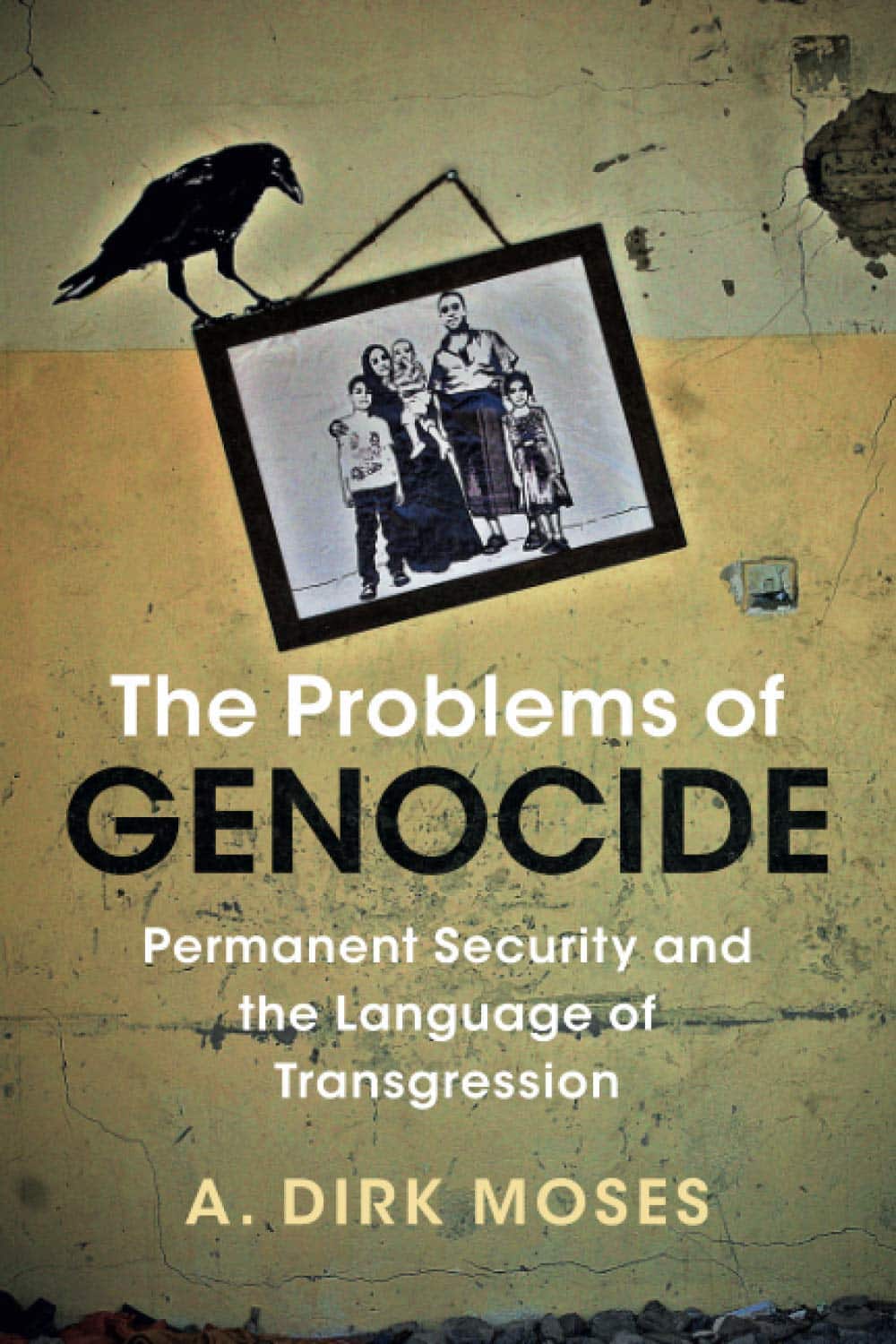
Interviews and Podcasts
2021’s End of Year Special
Our editors Laszlo Bruszt, Oliver Garner, Kasia Krzyżanowska, Ferenc Laczo, and Michal Matlak discuss their favorite RevDem content, as well as the year's highlights and the most significant developments of the year.
24.12.2021

Interviews and Podcasts
The Problems of Genocide: Dirk Moses on the Language of Transgression and the Genocide Convention in Context
Dirk Moses in conversation with Ferenc Laczo on his last book "The Problems of Genocide. Permanent Security and the Language of Transgression".
20.12.2021

Interviews and Podcasts
Future of Europe: It’s Not about Treaty Change, It’s about European Democracy
Michal Matlak interviews Alberto Alemanno in the aftermath of the publication of the first batch of recommendations coming from the Conference on the Future of Europe Citizens’ Panel. This initiative provides an opportunity for a highly diverse group of randomly selected ‘ordinary’ European citizens to voice their wishes with EU-level decisionmakers on how to change the European Union.
18.12.2021

Interviews and Podcasts
Marius Turda: The idea of race across centuries and our current moment of reckoning
Marius Turda in conversation with Ferenc Laczo about A Cultural History of Race.
16.12.2021

Interviews and Podcasts
Richard Youngs on the Resilience of Democracy
Richard Youngs in conversation with Michal Matlak about citizens’ attitudes towards democracy, transformative power of protests movements, citizens’ assemblies as well as democratic innovations on the European level.
10.12.2021

Interviews and Podcasts
Laszlo Bruszt: The EU confederal regime weakens vulnerable member states
In this interview Laszlo Bruszt, Co-Director of the CEU Democracy Institute and Editor-in-Chief of RevDem, explains the inspiration behind the CEU Democracy Institute and RevDem, how East-West and North-South divisions define Europe, and why the EU confederal regime weakens vulnerable member states.
8.12.2021

Interviews and Podcasts
In conversation with Barbara Grabowska-Moroz: The escalation of Poland’s Rule of Law crisis
Barbara Grabowska-Moroz discusses the current state of the rule of law crisis in Poland, the arduous relationship between the EU and Polish courts, and how this impacts EU Member States.
2.12.2021

Interviews and Podcasts
Emily Greble: European History via the Experience of Muslims
Emily Greble in conversation with Ferenc Laczo discusses what foregrounding Muslims’ agency implies for the writing of European history; what were key legacies of the Ottoman Empire and how Muslims became a distinct legal minority; in what ways they related to the major political movements of the twentieth century; and how focusing on their experiences can help us reconceptualize questions of secularism and citizenship.
27.11.2021

Interviews and Podcasts
Linking sexual diversity to otherness is an old phenomenon
Bence Bari interviews Tamás Dombos, the representative of the Hungarian LGBTQI organization ‘Háttér Society’ concerning the recently adopted Hungarian anti-LGBT measures, their transnational and historical background with respect to the global dynamics of acceptance, and homophobia between the Western and Eastern hemisphere.
26.11.2021

Interviews and Podcasts
Julie Smith: Brexit negotiations have been damaging for both sides
Michal Matlak interviewed Professor Julie Smith, Baroness of Newnham, who is a Liberal Democrat parliamentarian in the British House of Lords. They discuss referendums, the causes and outcomes of Brexit, the negotiation strategies of both the EU and UK, the likelihood of the UK returning to the EU in the future, and how the COVID-19 pandemic has complicated post-Brexit evaluations.
19.11.2021

Interviews and Podcasts
Emily Levine on the Hard Compromises behind Academic Innovation
In conversation with RevDem editor Ferenc Laczó, Emily Levine (Stanford University) discusses key ideas in her new book "Allies and Rivals: German-American Exchange and the Rise of the Modern Research University", a transatlantic monograph that draws on extensive historical research and applies sociological theory to study how the academic social contract was repeatedly renegotiated in the nineteenth and twentieth centuries.
16.11.2021

Interviews and Podcasts
The Price of Optimism. A Conversation with Geert Mak about Europe in Our Times
In this wide-ranging conversation occasioned by the release of his The Dream of Europe. Travels in the Twenty-First Century, Geert Mak discusses why he chose to write a sequel to "In Europe. Travels Through the Twentieth Century".
6.11.2021

Interviews and Podcasts
Democracy’s Least Appreciated Strength Is Its Ability to Reform Itself – Dean Starkman on The Pandora Papers
In conversation with RevDem editor Robert Nemeth, Dean Starkman, senior editor at the International Consortium of Investigative Journalists, talks about the Pandora Papers and how tax avoidance and secrecy endangers democracy.
2.11.2021

Interviews and Podcasts
Márki-Zay would be a Never Trump Republican in America
In this conversation with RevDem editor Ferenc Laczó, Gábor Tóka talks about the Fall 2021 Hungarian opposition primaries
30.10.2021

Interviews and Podcasts
Zsolt Enyedi: Is it still possible to win an election in Hungary, if you’re not Viktor Orbán?
Michal Matlak interviews Zsolt Enyedi about the development of Church-State relations in Hungary, Viktor Orban’s vision of Christian Democracy, why the Democracy Institute plays an important symbolic role in Budapest, and about his recently published book, “Party System Closure: Party Alliances, Government Alternatives, and Democracy in Europe”
29.10.2021

Interviews and Podcasts
Lea Ypi: Ideas of freedom across a historical rupture
Lea Ypi in conversation with Ferenc Laczo about her new memoir "Free: Coming of Age at the End of History" and how the people who populate its pages help her connect historical experiences with philosophical thought; how she experienced and dealt with the rupture of 1990 that forced her to reassess her childhood; how that rupture placed her country, Albania, on a seemingly new trajectory with liberal-sounding concepts soon filling the conceptual void that emerged; how the new regime violently collapsed in 1997, just when she was about to graduate from secondary school; and how she relates to the overlapping ideas of freedom in the liberal and socialist traditions.
28.10.2021

Interviews and Podcasts
“History as Democracy”: Interview with László Kontler
In this podcast, our assistant editor Bence Bari interviews László Kontler, the research affiliate of the CEU Democracy Institute’s History workgroup project, titled “History as Democracy.”
27.10.2021

Interviews and Podcasts
The Chancellor. A conversation with Kati Marton about Angela Merkel
Ferenc Laczó in conversation with Kati Marton about her biography of Angela Merkel. The conversation focuses on Kati Marton’s motivation to paint a human portrait of Angela Merkel, on Merkel’s personality traits and how they have impacted the style and substance of her political leadership.
25.10.2021

Interviews and Podcasts
Thinking like Hannah Arendt
Our editor Kasia Krzyżanowska (EUI, CEU) talks with Samantha Rose Hill, professor at the Brooklyn Institute for Social Research, about her recently published biography of Hannah Arendt.
21.10.2021

Interviews and Podcasts
Annie Ernaux and History
“More often than not, we get the sense that events are unfolding in the background, often detached from individuals, and that yet they will somehow influence individual lives” says Dr Elise Hugueny-Léger, Senior Lecturer in French at the University of St Andrews, in this interview with Kasia Krzyżanowska.
20.10.2021

Interviews and Podcasts
Ruling by Cheating? In Conversation with András Sajó
Our assistant editor Teodora Miljojković (CEU) talks with András Sajó, Professor in the Law Department of Central European University and former judge of the European Court of Human Rights about his new book, the tactics of illiberal regimes, their relationship to the rule of law, and shortfalls in the EU’s reaction.
19.10.2021

Interviews and Podcasts
Aldo Madariaga: Neoliberalism is not a solution for democracy
Aldo Madariaga discusses his latest book “Neoliberal Resilience: Lessons in Democracy and Development from Latin America and Eastern Europe” with our editor, Giancarlo Grignaschi.
14.10.2021

Interviews and Podcasts
An Authoritarian Liberal Europe? In Conversation with Michael Wilkinson
Oliver Garner interviews the author on his book ‘Authoritarian Liberalism and the Transformation of Modern Europe’
1.10.2021

Interviews and Podcasts
Invernizzi Accetti: Christian Democracy That Can Counter Right-Wing Populists
Vilius Kubekas in conversation. with the author of the book "What is Christian Democracy? Politics, Religion and Ideology".
23.09.2021

Interviews and Podcasts
Krygier: Institutionalizing and Deinstitutionalizing the Rule of Law
Martin Krygier on how to understand the rule of law crisis from a teleological perspective.
22.09.2021

Interviews and Podcasts
Will the EU survive the rise of democratorships within? Karolewski and Leggewie on the new quality of politics in the Visegrád states
Ireneusz Paweł Karolewski on the new quality of politics in the Visegrád states.
21.09.2021

Interviews and Podcasts
The West’s Strategic Mistakes and Broken Resolve. Jonathan Holslag on World Politics Since 1989
Our editor Ferenc Laczo interviews Jonathan Hoslag (Free University Brussels) on his book "World Politics Since 1989" (Polity Press).
17.09.2021

Interviews and Podcasts
LaTosha Brown: Culture will eat strategy for breakfast
RevDem editor Ferenc Laczo interviews LaTosha Brown, co-founder of the voting rights group Black Voters Matter.
16.09.2021

Interviews and Podcasts
The Rule of Law – A Courtroom Drama: A conversation with Laurent Pech
Our editor Oliver Garner discusses with Laurent Pech the ongoing tensions between Poland and the Court of Justice of the EU.
15.09.2021

Interviews and Podcasts
Talisse: To Be a Democratic Citizen
Katarzyna Krzyżanowska talks with Robert Talisse, W. Alton Jones Professor of Philosophy at the Vanderbilt University in Nashville, on epistemology of democracy.
14.09.2021

Interviews and Podcasts
Konrad Jarausch on Realistic Progress
RevDem editor Ferenc Laczo interviewed historian Konrad H. Jarausch, Lurcy Professor of European Civilization at the University of North Carolina at Chapel Hill, about his latest book Embattled Europe: A Progressive Alternative, a rich and finely balanced portrait of contemporary Europe.
10.09.2021
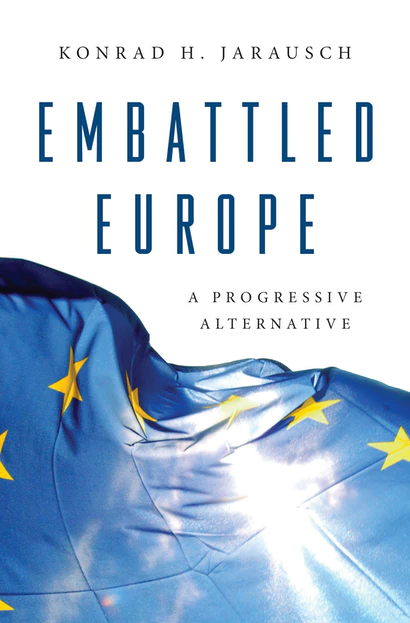
Interviews and Podcasts
Samuel Moyn on the US’ Attempt to Humanise its Imperial Burden
Ferenc Laczo in conversation with Samuel Moyn (Yale University) about his book "Humane. How the United States Abandoned Peace and Reinvented War".
6.09.2021

Interviews and Podcasts
A Not Wasted Life. Conversation with Zygmunt Bauman’s biographer Artur Domosławski
Artur Domoslawski, the author of a monumental Zygmunt Bauman’s biography in conversation with our managing editor, Michał Matlak
30.08.2021

Interviews and Podcasts
Rising Inequality in Egalitarian Societies
In conversation with our editor Ferenc Laczo, Mitchell Orenstein, Professor of Russian and East European Studies at the University of Pennsylvania, discusses post-communist transitions.
25.08.2021

Interviews and Podcasts
Cuban Spring in the Summer? Elaine Acosta on the Cuban protest
Stefano Palestini speaks with Cuban sociologist Elaine Acosta about the meaning and causes of the popular uprising against the Cuban government
2.08.2021

Interviews and Podcasts
Contesting German Memory Culture. A Conversation with Jennifer Evans on the Catechism Debate
Ferenc Laczo talks with Jennifer Evans (Carleton University) about the new Holocaust memory debate.
23.07.2021

Interviews and Podcasts
Can Technology Save Democracy?
How can we employ technology to facilitate the democratic process? Which platforms are more democratic than others? These and more questions are answered by Kevin Esterling, Professor of Political Science and Public Policy at the University of California in a conversation with the RevDem assistant editor, Catherine Wright.
16.07.2021

Interviews and Podcasts
Statelessness and the Global Political Order. A Conversation with Mira Siegelberg
Ferenc Laczo discusses with Mira Siegelberg her latest book "Statelessness", the story of a much-contested legal category.
15.07.2021

Interviews and Podcasts
Future of Europe: What is not forbidden is allowed. RevDem Interview with Guy Verhofstadt
Last week three RevDem editors interviewed Guy Verhofstadt, co-chair of the Conference on the Future of Europe. Today we are publishing the edited transcript of this conversation.
13.07.2021

Interviews and Podcasts
Owning the Constitution: Chile’s Unexpected Civil Revolution
On 4 July 2021, Chile's "unexpected" Constitutional Convention commenced following a grassroots civil revolution against the current regime since 2019. Co-Head of Section for Cross-Regional Dialogue Stefano Palestini Céspedes (Catholic University of Chile) interviews Julieta Suárez-Cao (Catholic University of Chile) and Patricia Politzer (Journalist and Member of the Chilean Constitutional Assembly) to discuss their roles in this process.
9.07.2021

Interviews and Podcasts
Corrective power of the populists
Do populists pose a threat to constitutional democracy? Are populists always the villains in our tales about democracy? Bojan Bugarič answers these questions in a conversation with Kasia Krzyżanowska. He also talks about his recent book on the relationship between constitutionalism and populism, co-authored with Mark Tushnet.
7.07.2021

Interviews and Podcasts
What Are the Sources of Democratic Legitimacy? Till van Rahden on Democracy as a Way of Life
Elias Buchetmann talks to Till van Rahden about his latest book Demoracy: A Fragile Way of Life, which focuses on the history of democracy in the Federal Republic of Germany and raises fundamental questions about the nature of democracy around the world.
24.06.2021

Interviews and Podcasts
How the U.S. decided to lead the world. Wertheim on the transformation of American internationalism
Ferenc Laczó spoke to Stephen Wertheim about his new book, Tomorrow, the World: The Birth of US Global Diplomacy. The book explores the moment in which the US decided to lead the post-war world.
16.06.2021

Interviews and Podcasts
“I Won’t Remain Silent”: Interview on Human Rights Activism in Hungary
In an interview with Bence Bari, Vera Mérő, Hungarian journalist, media researcher and human rights activist, discusses the questions of representation, popularization, internal conflicts and successes, challenges and leeways provided by the political and the social sphere when it comes to human rights activism in Hungary since 2016
9.06.2021

Interviews and Podcasts
Populism and Antipopulism: Beyond the Post-1989 Paradigm
Petr Agha, a postdoctoral research fellow at the University of Copenhagen in the iCourts Centre of Excellence for International Courts of the University of Copenhagen, discusses the clash between populism and antipopulism, and the implications for Europe, in conversation with Oliver Garner.
8.06.2021

Interviews and Podcasts
Rule of Law is not like IKEA furniture
What is the societal dimension of the rule of law? How can we improve democracy on the European Union level? Is there a place for citizens engagement in design of the Conference on the Future of Europe? Paul Blokker, an associate professor at the University of Bologna, in a conversation with Kasia Krzyżanowska, unpacked all these issues.
2.06.2021

Interviews and Podcasts
“The Future Cannot be Stopped”: Interview on Feminism in Hungary
In an interview with our assistant editor Bence Bari, Lili Rutai, Hungarian feminist journalist and podcaster, co-founder and co-host of the popular podcast series "Vénusz Projekt," discusses the representation and the popularization of feminism in Hungary
1.06.2021

Interviews and Podcasts
A limited and cautious democracy. Interview with Martin Conway
Daniel Steinmetz-Jenkins and Ferenc Laczo discuss with Martin Conway his latest book "Western Europe’s Democratic Age,1945-1968". You can listen to the podcast or read the edited transcript below.
28.05.2021

Interviews and Podcasts
Remaking politics in response to the assault on natural world
RevDem Editor Ferenc Laczo is discussing the book "Planet on Fire. A Manifesto for the Age of Environmental Breakdown" by Mathew Lawrence and Laurie Laybourn-Langton with its authors.
20.05.2021

Interviews and Podcasts
The New Logic of Democratic Politics [Podcast and Interview]
Our editor Ferenc Ferenc Laczó talks with Chris Bickerton about his latest book Technopopulism.
14.05.2021

Interviews and Podcasts
Citizens as Masters of the EU Treaties [Interview and Podcast]
Who are really the masters of the EU treaties and where does constituent power in the European Union lie — Markus Patberg, interviewed by Kasia Krzyżanowska, offers his answers to these questions.
12.05.2021

Interviews and Podcasts
It’s not only about the rule of law: Poland and Hungary in the EU [Podcast and Interview]
The EU rule of law framework is not the best way to check compliance with the EU’s basic values, says Gábor Halmai in a conversation with RevDem’s assistant editor Teodora Miljojković.
10.05.2021

Interviews and Podcasts
There is still hope. Interview with Adam Bodnar, Polish Ombudsman
On April 21, Review of Democracy and CEU Democracy Institute hosted Adam Bodnar, Polish Ombudsman.
30.04.2021

Interviews and Podcasts
Ernst Fraenkel – a Jewish lawyer who resisted the Nazis
Kasia Krzyżanowska talks to Douglas G. Morris, a legal historian and practicing criminal defense attorney with Federal Defenders of New York, about his newest book on Ernst Fraenkel.
28.04.2021

Interviews and Podcasts
Stasavage: Democracy requires continuous effort (PODCAST AND LONG READ)
David Stasavage (New York University) in conversation with RevDem editor Ferenc Laczo (Maastricht University) about his recent book “The Decline and Rise of Democracy”, which presents the global history of democracies since ancient times.
23.04.2021

Interviews and Podcasts
Sustainable Democracy after 25 years. Conversation with Adam Przeworski
Our editor-in-chief Laszlo Bruszt asks Adam Przeworski about the contemporary relevance of "Sustainable democracy", a seminal book published 25 years ago.
21.04.2021
Interviews and Podcasts
Fascism to Populism and Back Again? [PODCAST AND LONG READ]
RevDem editor Ferenc Laczo (Maastricht University) talks with Federico Finchelstein (New School for Social Research, New York) about his two recent books: “From Fascism to Populism in History” and “A Brief History of Fascist Lies”.
16.04.2021

Interviews and Podcasts
We cannot analytically divide reason from emotion
In the second part of the conversation, Jan-Werner Müller interviewed by Luka Lisjak Gabrijelčič talks about populism and employment of emotions, and on bipartisanship and political conflict.
9.04.2021

Interviews and Podcasts
Vaccination passports – the way to go?
In the newest episode of the RevDem podcast Giancarlo Grignaschi interviews Luiza Bialasiewicz (University of Amsterdam) and Prof. Oskar Josef Gstrein (University of Groningen). They discussed the latest proposal of the European Commission - vaccination passports (or certificates).
2.04.2021

Interviews and Podcasts
Myanmar After the Coup
In a conversation with Assistant Editor Gaurav Mukherjee, Melissa Crouch discusses the rapidly evolving situation involving the military coup in Myanmar on 1 February 2021.
19.03.2021

Interviews and Podcasts
Academic Freedom and the Rule of Law
In the latest RevDem Rule of Law podcast, Oliver Garner interviews Professor Nandini Ramanujam, Full Professor (Professional) at the Faculty of Law of McGill University and the Co-Director of the Center for Human Rights and Legal Pluralism, where she supervises the academic freedom monitoring clinic.
19.03.2021

Interviews and Podcasts
Far-right Demonstrations — They Are Not Going Anywhere
Michael Zeller, in a conversation with Kasia Krzyżanowska, talks about far-right mobilization campaigns and the processes of their de-mobilization.
19.03.2021

Interviews and Podcasts
For what does democracy need political parties?
Jan-Werner Müller, in an interview with Luka Lisjak Gabrijelčič, talks about the functions of contemporary political parties, the role of the constitutional courts and the future of European Christian Democracy.
19.03.2021
Interviews and Podcasts
Adding Bite to the Member States’ Rule of Law Bark?
Oliver Garner interviews Professor Dimitry Kochenov on the prospects for Member State to Member State infringement actions to enforce the Rule of Law in the EU.
25.02.2021

Interviews and Podcasts
We’ve Gotten the Ogre Out of the Way
Samuel Moyn in an interview with RevDem editor Katarzyna Nowicka talks about the legacy of Donald Trump and the presidency of Joe Biden.
19.02.2021

Interviews and Podcasts
Enemies at the Liberal Democratic Gates
Is America living in the shadow of the post-Cold War liberalism? Daniel Steinmetz-Jenkins argues that some liberal intellectuals are still looking for an enemy who can give a cause to their political actions.
19.02.2021

Interviews and Podcasts
Rule of Law Conditionality: The Sharpest New Tool in the Box?
In an interview with Oliver Garner, Professor Petra Bard argues that the new Regulation on budget conditionality could strengthen the EU’s enforcement prong in response to Rule of Law violations.
19.02.2021

Interviews and Podcasts
Conference on the Future of Europe: Process more important than outcome
Conference on the Future of Europe: The process is more important than the outcome. Interview with Alberto Alemanno, Jean Monnet Professor in European Union Law & Policy at the HEC in Paris.
18.02.2021

Interviews and Podcasts
RevDem Podcast with Alberto Alemanno on the Future of Europe
The RevDem, an online journal of the CEU Democracy Institute, presents a podcast interview with Professor Alberto Alemanno (HEC, Paris) and the founder of Good Lobby about the upcoming Conference on the Future of Europe, interviewed by RevDem editor Michal Matlak.
1.02.2021